Is NVIDIA Going to Become a Shareholder of Upbit?

marsbitPublicado em 2026-07-27Última atualização em 2026-07-27

Resumo

NVIDIA announced a $1 billion investment in South Korean internet giant Naver, acquiring approximately 4.5% of its shares. This strategic move aims to bolster AI data center infrastructure in Korea through a partnership between Naver and Brookfield. The investment draws attention from the cryptocurrency sector because Naver's financial arm, Naver Financial, is in the process of acquiring Dunamu, the parent company of South Korea's leading crypto exchange, Upbit, in a share-swap deal valued around $9.9 billion. However, this acquisition has faced delays, primarily due to an ongoing antitrust review by South Korea's Fair Trade Commission. The regulator is assessing potential market concentration risks from combining Naver's internet dominance with Upbit's leading position in crypto trading. The completion date has been pushed back to December 31, 2026. Therefore, while NVIDIA is becoming a significant shareholder in Naver, it does not directly own a stake in Upbit. A potential indirect link exists only if Naver Financial's acquisition of Dunamu is successfully finalized, which remains uncertain pending regulatory approval.

By Azuma(@azuma_eth)
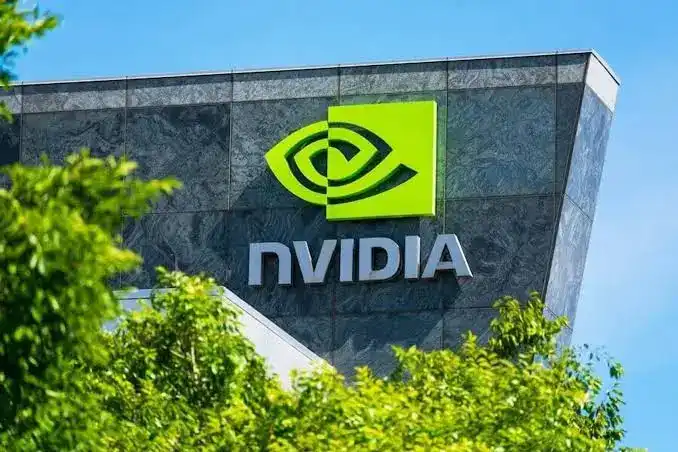
On July 24th Beijing time, NVIDIA officially announced a $1 billion investment in the South Korean internet giant Naver to further boost AI infrastructure construction in South Korea. According to subsequent disclosures by Naver, through this strategic investment, NVIDIA will acquire approximately 4.5% of Naver's shares, becoming a significant shareholder of Naver.

This investment is not merely a financial stake acquisition but will involve deeper strategic cooperation centered on AI data centers. Bloomberg added in its report that the funds NVIDIA is injecting will be used to support an AI data center project currently under construction by Naver. This data center, jointly developed by Naver and the US private equity firm Brookfield, will fully utilize NVIDIA's AI computing hardware in the future, with its overall scale expected to more than double.

For NVIDIA, this investment in Naver represents another crucial step in its ongoing expansion around AI computing power, data centers, and the supply chain system. For Naver, this collaboration will further strengthen its position in the competition for AI infrastructure in South Korea.

Another Identity of Naver: The 'Quasi' Parent Company of Upbit

For the cryptocurrency industry, the reason NVIDIA's equity investment in Naver has attracted additional attention lies not in Naver's own AI infrastructure layout, but because the company is currently, through its financial subsidiary Naver Financial, advancing a significant transaction involving the South Korean cryptocurrency industry — the acquisition of Upbit's parent company, Dunamu.

Naver Financial was established in 2017 and is primarily responsible for operating services like Naver Pay.

As early as 2021, Naver showed strong interest in the cryptocurrency field by attempting to acquire the major South Korean crypto exchange Bithumb. Although this effort ultimately did not succeed, it revealed Naver's ambitions in digital assets.

Despite the initial setback, Naver did not cease its exploration of the cryptocurrency space.

In 2025, Naver Financial began in-depth cooperation with Dunamu and gradually extended its business reach into digital asset payments — the two parties discussed collaboration around KRW stablecoin payment services, with Naver Pay handling payment scenarios and Dunamu providing digital asset-related technical support.

On September 25th of the same year, Naver Financial officially announced that it would jointly promote a share swap transaction with Dunamu to achieve a full acquisition of the latter. According to the plan disclosed by both parties, Naver Financial will issue new shares to exchange for the shares held by Dunamu's shareholders. Upon completion of the transaction, Dunamu will become a wholly-owned subsidiary of Naver Financial, and Upbit under it will enter the Naver ecosystem.

  • Odaily Note: For details, please refer to 《From Missing Bithumb to Acquiring Upbit: The Evolution of Naver's Crypto Ambitions》.

As one of South Korea's largest cryptocurrency exchanges, Upbit was launched by Dunamu in 2017 and has long held a significant position in the South Korean digital asset trading market. If this transaction is successfully completed, it will signify a deep integration between a traditional South Korean internet giant and a cryptocurrency trading platform.

According to information previously disclosed by South Korean media, the valuation of the share swap transaction between Naver Financial and Dunamu is approximately $9.9 billion. Upon completion, it is expected to create one of South Korea's largest fintech enterprises.

However, due to some unforeseen reasons, this transaction has not been completed as of now.

Acquisition Intent Agreed, But Stuck on Antitrust Regulation

According to the initial plan of Naver Financial and Dunamu, both parties hoped to complete the integration within 2026. However, due to its involvement in multiple regulatory areas such as South Korean finance, digital assets, and the combination of large enterprises, the approval process for the transaction has not progressed smoothly.

The biggest obstacle comes from the antitrust review by the Korea Fair Trade Commission (KFTC). Since Naver is a major player in the South Korean internet sector, and Upbit has long held a leading position in the South Korean cryptocurrency trading market, the combination of the two companies could form a vast business system covering payments, financial services, and digital asset trading. Therefore, regulators need to assess whether this would impact market competition.

In addition, this transaction involves multiple regulatory approval stages, including approvals related to the change of the largest shareholder of Naver Financial, and relevant declarations by Dunamu according to South Korea's "Specific Financial Transaction Information Act."

In July 2026, Naver Financial and Dunamu announced another delay in the transaction completion date. The share swap transaction originally scheduled for completion in September 2026 was postponed to December 31st of this year.

However, both parties have not abandoned the deal. Naver Financial stated that the company will continue to actively cooperate with the regulatory review process and promote the smooth completion of the transaction; Dunamu also emphasized that the cooperation aims to enhance the competitiveness of South Korean enterprises in the digital finance field.

Although the acquisition intent between Naver and Dunamu was agreed upon long ago, whether this transaction valued at approximately $9.9 billion will ultimately materialize still depends on the final regulatory approval. This will also determine whether Upbit officially becomes part of Naver's financial landscape.

So, Is NVIDIA Really Going to Become a Shareholder of Upbit?

Is NVIDIA really going to become a shareholder of Upbit? Based on the current progress of the acquisition between Naver and Dunamu, the strict answer is still no.

NVIDIA will acquire approximately 4.5% of Naver's shares, not directly hold any equity in Upbit or its parent company Dunamu. If the full acquisition transaction between Naver and Dunamu proceeds smoothly in the future, as Upbit is integrated into Naver's financial system, the exchange could indeed establish an indirect equity connection with NVIDIA.

However, for now, this remains only a potential future relationship. A more accurate description of the current situation is that a yet-to-be-completed capital connection path has emerged between Upbit, South Korea's Top 1 cryptocurrency exchange, and NVIDIA, the world's Top 1 market capitalization giant.

Perguntas relacionadas

QWhat is the nature of Nvidia's $1 billion investment in Naver, and what strategic goal does it serve for Nvidia?

ANvidia's $1 billion investment is a strategic move to acquire approximately 4.5% of Naver's shares. The primary goal is to deepen strategic cooperation, specifically by supporting Naver's AI data center project, which will be equipped with Nvidia's AI computing hardware. This investment is part of Nvidia's broader expansion in AI computing power, data centers, and supply chains.

QWhy does Nvidia's investment in Naver draw significant attention from the cryptocurrency industry?

AIt draws attention because Naver, through its subsidiary Naver Financial, is in the process of acquiring Dunamu, the parent company of Upbit, which is a leading cryptocurrency exchange in South Korea. Therefore, Nvidia's indirect link to Naver could potentially create a future capital connection to the crypto exchange market.

QWhat is the current status and primary obstacle for Naver Financial's acquisition of Dunamu (Upbit's parent company)?

AThe acquisition, a stock-swap transaction valued at approximately $9.9 billion, has been agreed upon by both parties but has not yet been completed. The primary obstacle is the antitrust review by South Korea's Fair Trade Commission (FTC), which is concerned about the potential impact on market competition due to the combination of Naver's internet dominance and Upbit's leading position in the crypto trading market.

QBased on the article, is it accurate to say that Nvidia has become a direct shareholder of Upbit?

ANo, it is not accurate. Currently, Nvidia is set to become a shareholder of Naver, not Upbit or its parent company Dunamu. A potential indirect connection to Upbit would only exist if Naver Financial successfully completes its acquisition of Dunamu, integrating Upbit into Naver's ecosystem.

QWhat is the potential future relationship described in the article between Nvidia and Upbit?

AThe article describes a potential, yet currently incomplete, capital connection path. If Naver's acquisition of Dunamu is finalized, Upbit would become part of Naver's financial system. Since Nvidia is investing in Naver, this would create an indirect link between the world's top市值 company (Nvidia) and South Korea's top cryptocurrency exchange (Upbit).

Leituras Relacionadas

Interview with Robinhood Executive: Meme + Tokenized US Stocks as "Barbell" Customer Acquisition Strategy, All Business Lines Achieve Hundreds of Millions in Revenue

Interview with Robinhood executive Johann Kerbrat reveals the company's "barbell" customer acquisition strategy for its new Robinhood Chain, combining meme tokens with tokenized stocks. Three weeks after mainnet launch, the chain has seen over $3B in weekly DEX volume and 105M transactions. Kerbrat explains the logic behind the permissionless chain: meme tokens attract DeFi users, while tokenized real-world assets (RWA), currently over 90 US stocks and ETFs accessible in 120+ countries, serve global users. The goal is to bring Robinhood's 27 million funded accounts on-chain by simplifying DeFi with a user-friendly interface, exemplified by features like Robinhood Earn which offers yield without requiring wallet management. Built on Arbitrum's technology stack for its speed, low cost, and Ethereum's security, the chain focuses on financial products like Earn, spot trading, and perpetuals. Kerbrat downplays direct competition with platforms like Base, emphasizing the goal of expanding the overall market for on-chain assets. He details selective partnerships (e.g., Morpho, Lighter) based on compliance, unique UX, and differentiation. While regulatory clarity is pending for US perpetuals, the expansion continues via Bitstamp in Europe. Finally, Kerbrat positions Robinhood as a "super app" integrating stocks, options, crypto, banking, and AI trading, with all major business lines generating hundreds of millions in revenue. For the chain, current priority is driving adoption over maximizing gas fee revenue.

marsbitHá 53m

Interview with Robinhood Executive: Meme + Tokenized US Stocks as "Barbell" Customer Acquisition Strategy, All Business Lines Achieve Hundreds of Millions in Revenue

marsbitHá 53m

Fidelity Q3 Report: BTC, ETH, and SOL Continue to Build Bottoms; How Much Further Will This Crypto Bear Market Go?

Fidelity's Q3 Crypto Signal Report analyzes the current bear market, noting Bitcoin (BTC), Ethereum (ETH), and Solana (SOL) are in a prolonged bottoming phase. Key indicators like the weighted Net Unrealized Profit/Loss (NUPL) have turned negative (-0.01), signaling the market is slightly below its aggregate cost basis, with BTC acting as the primary stabilizing asset. BTC's dominance has risen to 68%, indicating a lack of capital rotation to other digital assets. Performance has been weak across the board, with BTC, ETH, and SOL down significantly year-to-date. Market sentiment is depressed, exacerbated by substantial outflows from spot ETPs and a challenging macro environment. The report compares the current ~203-day downtrend to historical ~300-day bottoming cycles, suggesting the process may be two-thirds complete, with late 2026 as a potential timeframe to monitor. For Bitcoin, NUPL at 0.09 indicates cautious sentiment, while momentum signals remain negative. The Yardstick metric points to potential undervaluation relative to network security (hashrate). Ethereum's NUPL is deep in the "capitulation" zone at -0.43, a historically positive signal for future returns, though its momentum and network fee revenue are negative. Solana shows the deepest NUPL at -0.72 but demonstrates relative resilience in on-chain activity and stablecoin transfer volume. The report concludes that while several metrics are near historical capitulation levels, a definitive market bottom has not yet been established. The path forward likely involves continued consolidation, with BTC's relative strength and fundamental on-chain usage for ETH and SOL providing key areas for investor observation.

marsbitHá 1h

Fidelity Q3 Report: BTC, ETH, and SOL Continue to Build Bottoms; How Much Further Will This Crypto Bear Market Go?

marsbitHá 1h

Trading

Spot
活动图片