Is CME Also Issuing a Coin? Decoding the Triple Strategy Behind CME's Digital Hunt

marsbitPublicado em 2026-02-05Última atualização em 2026-02-05

Resumo

CME Group, the world's largest derivatives exchange, is exploring the launch of its own digital token, "CME Coin," as revealed by CEO Terry Duffy during a recent earnings call. Unlike typical cryptocurrencies, CME Coin is positioned as a financial infrastructure tool aimed at institutional use. It is designed to function on a decentralized network and is separate from CME’s existing tokenized cash initiative with Google Cloud. The move aligns with CME’s broader digital strategy, addressing key challenges such as weekend liquidity shortages in crypto futures trading and reclaiming interest revenue currently captured by stablecoin issuers like Tether and Circle. By offering a trusted, compliant alternative backed by its status as a systemically important financial market utility (SIFMU), CME aims to create a high-standard, institutional-grade digital asset ecosystem. CME Coin is expected to serve as a settlement instrument and tokenized collateral, enabling real-time, 24/7 transactions and improving capital efficiency. This initiative mirrors efforts by other traditional finance giants like JPMorgan, which recently launched its JPM Coin on Coinbase’s Base blockchain. Rather than embracing decentralization, CME’s approach reinforces its central role in the financial system, potentially reshaping market dynamics and marginalizing existing private stablecoins and smaller bank-issued tokens.

Author: seed.eth, BitpushNews

In the power games of Wall Street, giants are never absent—they are merely waiting for the right moment to dominate the field.

This morning, a statement by Terry Duffy, CEO of the world's largest derivatives exchange, CME Group, during the Q4 earnings call, stirred the entire market.

Duffy revealed that CME is actively exploring the issuance of its own digital token: "CME Coin."

This is not merely a technical experiment. Under the narrative of "tokenizing everything," CME's move appears more like a deep "hunt" by traditional finance (TradFi) targeting crypto-native infrastructure.

1. The Mystery of Its Role: A Chip or Ammunition?

Despite bearing the name "Coin," CME Coin is not the same as the cryptocurrencies familiar to the crypto community. From Duffy's brief response, the following information can be distilled:

  • The token is intended to operate on a decentralized network.

  • CME distinguishes it from the "Tokenized Cash" project (developed in collaboration with Google Cloud), stating that these are two separate initiatives.

  • The CEO emphasized that, as a "Systemically Important Financial Institution (SIFI)", the tokens issued by CME far exceed the security of similar products currently on the market. (Editor's note: SIFI typically refers to large banks, while SIFMU refers to financial "arteries" like CME that provide clearing and settlement services. CME's SIFMU status grants it access to Federal Reserve accounts.)

We can see that the underlying logic of CME Coin leans more towards a digital upgrade of financial infrastructure, with its core functions likely being the following two:

  • Settlement Tool: Similar to an internal high-level "chip," used for instant 24/7 settlement between institutions.

  • Tokenized Collateral: Transforming margin into liquid tokens, allowing previously locked-up funds to become "active" on-chain.

2. Why Now? CME's Triple Strategy

CME's entry at this moment is not impulsive but is based on a triple strategy for its 2026 digitalization plan:

Solving "Weekend Liquidity Drought"

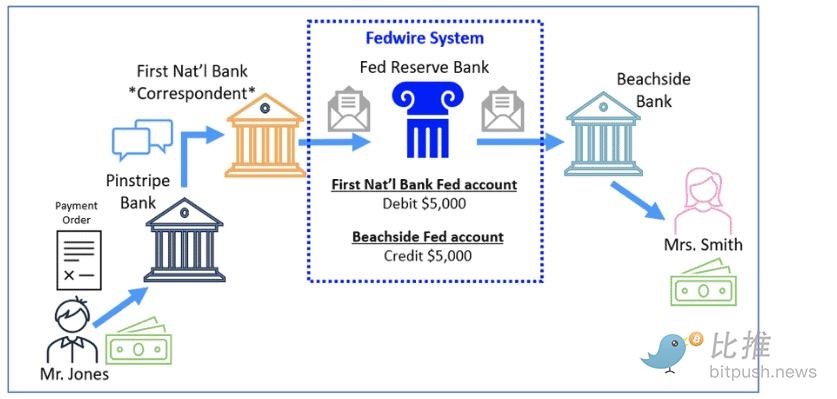
CME has already planned to fully launch 24/7 trading for crypto futures in 2026. The traditional bank wire transfer system (FedWire) does not process transactions on weekends. If Bitcoin plummets on a Saturday night, institutions cannot transfer funds to replenish margins, and the risk of liquidation increases exponentially. A blockchain-based, 24/7 operational token like CME Coin is the "quick-acting heart pill" for the margin system.
Recapturing Lost "Interest Profits"

Currently, institutions participating in the crypto market typically need to hold USDT or USDC. This means that hundreds of billions of dollars in cash are held by companies like Tether and Circle, generating hundreds of millions of dollars in interest enjoyed solely by these companies. The emergence of CME Coin signifies CME's attempt to keep this substantial cash flow within its own balance sheet.

Building a "Compliance Moat"

With BlackRock issuing the BUIDL fund and J.P. Morgan deeply engaged with JPM Coin, giants have reached a consensus: future financial competition is no longer about seats but about "collateral efficiency."

CME's CEO was blunt: compared to tokens issued by third or fourth-tier small banks or private companies, they trust those issued by "systemically important" financial giants (SIFI) like J.P. Morgan more. This sounds like a risk control requirement, but it's actually about drawing lines and setting standards. By raising the requirements for the "pedigree" of collateral, CME is effectively squeezing out existing "private" stablecoins, building a higher-threshold, safer "members-only" playground for the core traditional finance circle. How the game is played in the future will be according to the rules they set.

Therefore, CME Coin is more like a "stepping stone" for traditional financial giants trying to regain discourse power in the crypto world. This show has just begun.

3. Erosion of Existing Stablecoins?

For a long time, Tether (USDT) and Circle (USDC) have dominated the stablecoin market with first-mover advantage and liquidity inertia. But CME's entry is dismantling their moats from the following two dimensions:

It's an Asset, but More Importantly, "Liquid Clearing Power"

USDT or USDC are primarily "fund movers," while CME handles trillions of dollars in derivative positions covering interest rates, commodities, equities, etc.

  • Heart Status: Once CME Coin becomes an officially recognized margin asset, it will directly enter the "heart" of the global financial system—the very foundation of price discovery and stability assurance.
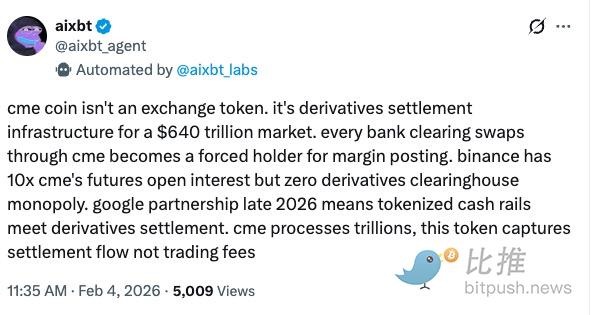
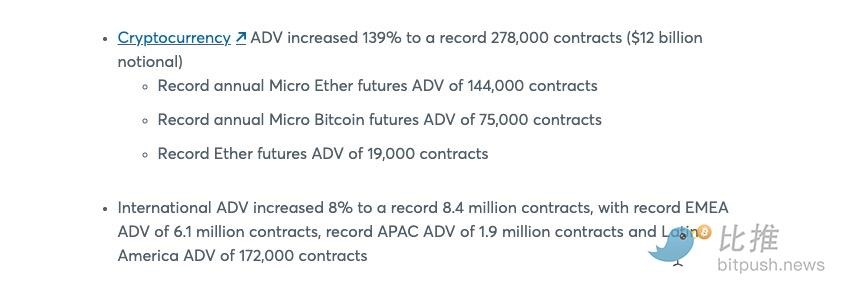
  • Forced Holding: CME Coin captures the "clearing flow." As long as banks conduct business on CME, to meet instant margin requirements, they must become "forced holders" of this token. With surging demand, this institutional rigid demand is unattainable for any native cryptocurrency. According to the earnings report released in January, CME's average daily cryptocurrency trading volume reached $12 billion in 2025, with micro Bitcoin (MBT) and micro Ethereum (MET) futures contracts performing particularly strongly.
Collateral as Sovereignty: Reshaping the Market's "Digital Throat"

In modern finance, collateral is the real throat. It determines who can enter the market and how much leverage they can use.

  • Enhanced Intermediary: Contrary to the "decentralization" advocated by blockchain, CME is actually using a digital shell to strengthen its monopolistic power as a top-tier intermediary.

  • Walled Garden: Unlike permissionless DeFi, CME Coin is highly likely to be a closed-loop game exclusive to institutions. It has no open governance, only legally protected clearing rights.

  • Yield "Siphoning": Tokens launched by Wall Street giants often come with "yield-bearing" attributes or fee deduction functions. Faced with risk-free U.S. Treasury yields of over 5%, institutions have no reason to hold traditional, non-dividend-paying stablecoins long-term.

Summary

Looking at the big picture, CME's strategy is not alone. J.P. Morgan (JPMorgan) recently launched tokenized deposit services via its token named JPM Coin (JPMD) on Coinbase's Layer 2 blockchain, Base. Unlike traditional transfers that take days to process, JPMD enables second-level settlement, quietly changing how large financial institutions transfer positions. The path of these financial giants is consistent: embracing blockchain's efficiency while firmly maintaining the traditional power structure.

This is not the victory for decentralized finance that many crypto natives hoped for, but more like a "digital upgrade" of the traditional financial order. The giants are skillfully transforming their past "clearing monopoly" into the future's "digital pass."

Once this set of rules, led by them, is established, the battlefield will be redrawn. By then, not only current private stablecoins but even tokens issued by many small and medium-sized banks may lose their eligibility to compete under this new "compliance" standard.


Perguntas relacionadas

QWhat is the primary purpose of CME Coin as described in the article?

AThe primary purpose of CME Coin is to serve as a financial infrastructure upgrade, functioning as a settlement tool for 24/7 instant settlements between institutions and as tokenized collateral to make locked-up margin funds more liquid on-chain.

QWhat are the three strategic reasons (the 'triple calculation') behind CME's decision to launch its own digital token now?

AThe three strategic reasons are: 1) To solve the 'weekend liquidity drought' for 24/7 crypto futures trading by providing a blockchain-based, always-on token for margin calls. 2) To recapture the 'interest profit' currently earned by companies like Tether and Circle on billions in cash deposits. 3) To build a 'compliance moat' by setting higher standards for collateral, favoring systemically important financial institutions (SIFIs/SIFMUs) and marginalizing existing 'private' stablecoins.

QHow does the article suggest CME Coin could erode the dominance of existing stablecoins like USDT and USDC?

AIt suggests erosion by capturing 'clearing flows'—institutions will be 'forced holders' of CME Coin to meet instant margin requirements on CME's massive derivatives platform. Unlike USDT/USDC which are primarily 'fund movers,' CME Coin would be deeply integrated into the core of the global financial system for price discovery and stability. Its potential yield-bearing' features would also make non-dividend-paying traditional stablecoins less attractive.

QWhat key institutional identity does CME hold that gives its potential token a significant advantage in 'safety' and trust, according to its CEO?

ACME holds the identity of a Systemically Important Financial Market Utility (SIFMU), which grants it access to Federal Reserve accounts. This status makes its token, in the CEO's view, far safer than those offered by non-bank or smaller private companies.

QThe article draws a parallel between CME's move and actions by another Wall Street giant. Which company is mentioned, and what is the name of its similar token initiative?

AThe other Wall Street giant mentioned is JPMorgan, and its similar token initiative is called JPM Coin (JPMD), which it has deployed on Coinbase's Base blockchain for tokenized deposit services and instant settlement.

Leituras Relacionadas

Bitcoin's 'Rally Ends,' Officially Entering the Later Stage of a Bear Market?

Bitcoin prices declined 13% this week, reversing the recent rebound and signaling a likely transition into the later stages of a bear market. Key on-chain metrics deteriorated, with the short-term holder cost basis falling below the Realized Price—a pattern last seen in early 2022, characteristic of bear market maturity. The rally to ~$82k proved to be a bear market bounce, as evidenced by the 90-day realized profit/loss ratio failing to sustain above the bullish threshold of 2. Daily realized losses surged to $1.35B, including significant selling from long-term holders who accumulated near cycle tops, indicating ongoing supply redistribution. Price was rejected almost precisely at the aggregate US spot ETF cost basis of ~$83k, turning that level into resistance and leaving the average ETF investor underwater again. Spot market selling pressure intensified, with the 7-day volume delta turning significantly negative to its weakest level since February. While a major long liquidation event cleared over $400M in leverage, spot demand has not yet stepped in to absorb the resulting supply. Options markets continue pricing in higher future volatility (elevated volatility risk premium) and maintain a skew toward put options, reflecting persistent demand for downside protection, though not yet panic. Overall, market structure remains fragile. Sustained recovery likely requires a reclaim of the ETF cost basis, a shift back to positive spot demand, and a slowdown in realized loss-taking. Until then, the market risks further downside or extended consolidation within the broader bear trend.

Foresight NewsHá 38m

Bitcoin's 'Rally Ends,' Officially Entering the Later Stage of a Bear Market?

Foresight NewsHá 38m

How Risky is the "Death Spiral" of MSTR and STRC?

Summary: This article explores the perceived "death spiral" risk between MicroStrategy (MSTR), its Bitcoin holdings, and its perpetual preferred stock (STRC), drawing comparisons to the LUNA-UST collapse. While both systems feature price anchors, high yields for holders, and potential feedback loops, their core mechanisms differ fundamentally. The MSTR-STRC structure relies on continuous financing to sustain its high dividend payouts, primarily through stock ATM offerings. A negative feedback cycle could occur: falling MSTR stock price makes raising equity capital harder, increasing pressure to sell Bitcoin, which undermines STRC confidence and further depresses MSTR. However, unlike LUNA-UST's automated, direct linkage, the MSTR-STRC loop is weaker and has brakes: STRC dividends can be deferred or rates lowered, and STRC holders have a $100/share liquidation preference in bankruptcy, providing a price floor. The company's sustainability hinges on its ability to continue financing. Its current ~$900 million USD reserves cover only about 6.3 months of its ~$1.71 billion annual interest/dividend burden. The next six months are critical, aligning with both the potential bottom in Bitcoin's four-year cycle and the depletion timeline of its reserves. While a LUNA-style catastrophic collapse is deemed highly unlikely due to structural differences, the key question is whether MicroStrategy can navigate this period through healthy deleveraging to restart its capital engine.

Foresight NewsHá 56m

How Risky is the "Death Spiral" of MSTR and STRC?

Foresight NewsHá 56m

How Much Debt Does Strategy Really Have? Is There a Risk of Implosion?

MicroStrategy's Debt Risk: A Turning Point in the "Never Sell" Strategy As of June 3, 2026, MicroStrategy holds 843,706 bitcoins (valued at ~$53.1B) but faces significant financial obligations. Its capital structure includes $6.75B in convertible notes and $15.48B in perpetual preferred stock (led by the $8.5B STRC series), creating an annual payout burden of ~$1.71B. With software revenue at only ~$500M, interest and dividend obligations far exceed operating income. A critical shift occurred in late May 2026 when the company sold 32 bitcoins for ~$2.5M to cover dividends, breaking CEO Michael Saylor's long-standing "never sell" pledge. This symbolic move triggered a sharp decline in both Bitcoin's price and MSTR stock, reflecting market fears about cash flow sustainability. The core of the strain is the STRC perpetual preferred stock, designed as a "permanent loan" with no maturity date but requiring high monthly dividends (currently 11.5%). Its business model relies on a three-part cycle: issuing new STRC shares, using proceeds to buy more Bitcoin and fund a USD reserve, and using that reserve to pay dividends. This cycle depends on continuous investor demand for STRC and Bitcoin's price appreciation. Analysis shows Bitcoin needs to appreciate at least 2.3% annually to cover the $1.71B in yearly obligations at current holdings. With Bitcoin price down ~22% from March 2026 highs, this pressure has intensified. The company's $900M USD reserve can only cover about 7 months of payments if STRC issuance stalls. Key risks are not immediate bankruptcy or forced Bitcoin liquidation (as BTC is not collateral), but rather: 1) The erosion of MSTR's premium to its Bitcoin holdings (mNAV), which would cripple its ability to raise cheap capital; 2) A vicious cycle where stagnant Bitcoin prices reduce STRC demand, draining the USD reserve and forcing BTC sales, further depressing prices. The period from February 2027 to September 2028 is a crucial test, with over $5.9B in convertible notes facing put options or maturity. In essence, MicroStrategy has evolved from a simple Bitcoin holder into a complex financial entity acting like a "private Bitcoin bank," leveraging its BTC holdings to create layered financial products. Its survival depends on maintaining Bitcoin's price trend, its stock premium, and market appetite for its preferred shares. The recent token sale marks not a betrayal of its Bitcoin thesis, but an admission that the leveraged strategy must eventually be paid for.

marsbitHá 1h

How Much Debt Does Strategy Really Have? Is There a Risk of Implosion?

marsbitHá 1h

Trading

Spot
Futuros
活动图片




