Is CFTC ‘ready to take responsibility’ for $3T crypto market?

ambcryptoPublicado em 2026-04-02Última atualização em 2026-04-02

Resumo

The U.S. Commodity Futures Trading Commission (CFTC) is positioning itself as a leading regulator for the $3 trillion cryptocurrency market. Chair Michael Selig stated the agency is prepared to take on this responsibility and is working with the SEC to harmonize federal oversight. This shift comes amid broader U.S. regulatory improvements, which have supported significant market growth, including a stablecoin market cap exceeding $319 billion. The CFTC has taken steps like publishing a crypto-asset system and offering regulatory relief to developers. However, key legislation, such as the CLARITY Act, remains stalled in Congress. A clearer regulatory framework is seen as crucial for further industry expansion.

Cryptocurrency adoption has accelerated in recent years, prompting governments to develop clearer regulatory frameworks. The United States leads in public adoption and maintains a relatively strong regulatory environment, with scores of 7.7 and 6.2 out of 10, respectively.
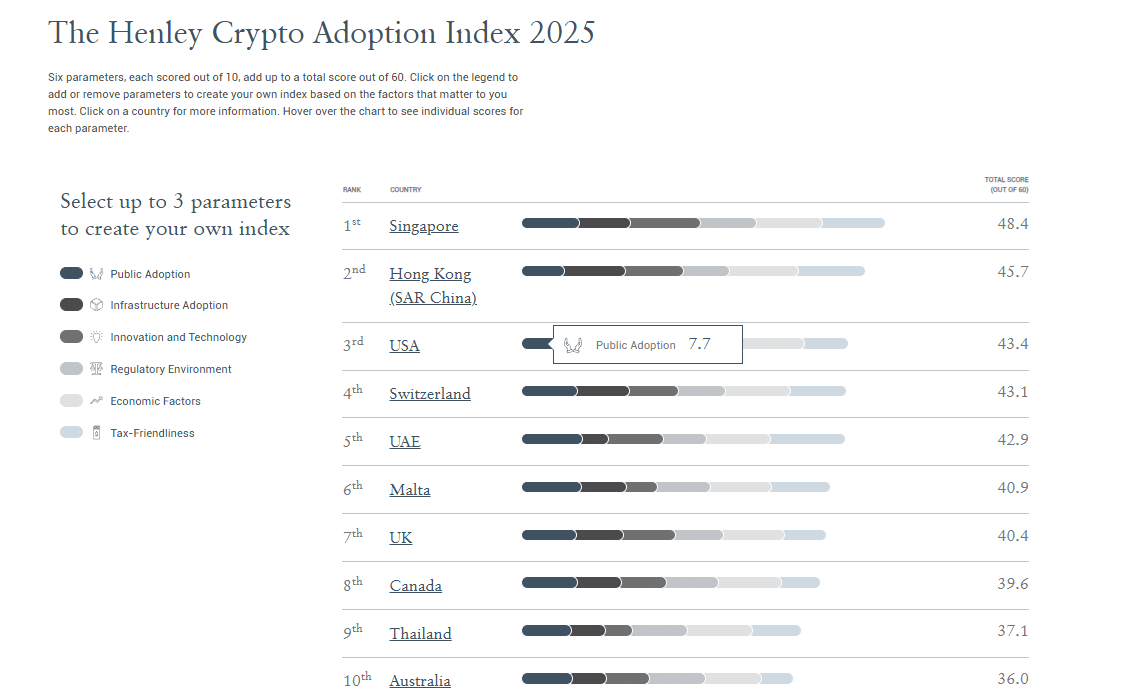
Source: Henley Global

A more favorable regulatory tone, particularly during the Trump administration, has strengthened its position. As the sector expands, the Commodity Futures Trading Commission [CFTC] has taken on a more prominent role, aiming to reduce regulatory burdens and support industry growth.

CFTC signals readiness to oversee crypto market

CFTC Chair Michael Selig said the agency is well prepared to regulate the crypto industry. As part of a summary marking his 100 days in the office, Selig stated,

CFTC is ready to take responsibility for a $3 trillion crypto asset market.

In his statement, he reported that the CFTC and the SEC have formed a joint effort to harmonize federal oversight of the crypto asset market. However, he did not provide a timeline for when Congress might pass a formal market structure bill.

The recent remarks came as the United States Senate continued to review the CLARITY Act. The bill has stalled in the committee amid a dispute over stablecoin yield and related provisions.

Easing crypto regulation accelerates growth.

Besides CFTC’s willingness to lead the crypto industry, the Chair noted major regulatory steps taken to caution the sector.

Selig criticized the prior administration over the use of enforcement in crypto regulation. In doing so, he stated that the agency had improved the regulatory environment by providing no-action relief to digital wallet software developers.

The CFTC published the Taxonomy, the first crypto-asset classification system, which distinguishes digital securities from commodities. Also, the agency argued that it had addressed clarity concerns over tokenized collateral and had launched an innovation task force.

Notably, improvements in regulatory environments, especially with the passage of the GENIUS Act, strengthened market adoption. In fact, stablecoins have grown substantially, exceeding $319 billion in market cap and over $100 billion in trading volume.
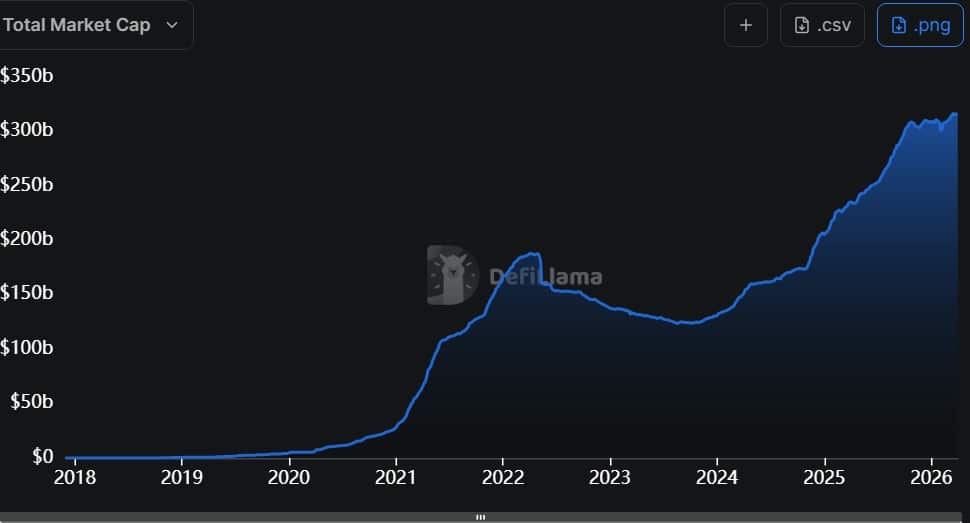
Source: DeFiLlama

The sector’s growth underscores the need for legal clarity, and if properly enacted, the entire crypto market could grow further. Thus, improving regulatory conditions is good news for the broader crypto market and could significantly boost the market if further progress is made.


Final Summary

  • The Commodity Futures Trading Commission is emerging as a key regulator, signaling readiness to oversee a $3 trillion crypto asset market.
  • CFTC Chair Michael Selig confirmed coordination with the Securities and Exchange Commission to align federal oversight.


Perguntas relacionadas

QWhat is the CFTC's stated readiness regarding the crypto market, and what specific market size was mentioned?

ACFTC Chair Michael Selig stated that the agency is ready to take responsibility for a $3 trillion crypto asset market.

QWhich two US agencies have formed a joint effort to harmonize federal oversight of the crypto market?

AThe Commodity Futures Trading Commission (CFTC) and the Securities and Exchange Commission (SEC) have formed a joint effort for this purpose.

QWhat major legislative act is currently stalled in the US Senate, and what is the primary dispute causing the delay?

AThe CLARITY Act is stalled in committee, primarily due to a dispute over stablecoin yield and related provisions.

QWhat specific action did the CFTC take to improve the regulatory environment for digital wallet software developers?

AThe CFTC provided no-action relief to digital wallet software developers.

QWhat is the name of the first crypto-asset classification system published by the CFTC, and what is its primary function?

AThe CFTC published the Taxonomy, which is the first crypto-asset classification system designed to distinguish digital securities from commodities.

Leituras Relacionadas

Polymarket's "2028 Presidential Election" Volume King Is... LeBron James???

An article from Odaily Planet Daily, authored by Azuma, discusses a peculiar phenomenon observed on the prediction market platform Polymarket regarding the "2028 US Presidential Election" event. Despite having a real-time probability of less than 1%, unlikely candidates such as NBA star LeBron James (with $48.41 million in trading volume), celebrity Kim Kardashian ($33.84 million), and even ineligible figures like Elon Musk ($23.14 million) and New York City Mayor Zohran Mamdani ($18.39 million) account for approximately 70% of the total trading volume. In contrast, high-probability candidates like Vice President JD Vance ($10.58 million), California Governor Gavin Newsom ($15.71 million), and Secretary of State Marco Rubio ($9.32 million) have significantly lower trading activity. The article explains that this counterintuitive trend is not driven by irrational speculation but by rational strategies. Polymarket offers a 4% annualized holding reward for certain markets, including the 2028 election, to maintain long-term pricing accuracy. This yield exceeds the current 5-year US Treasury rate (3.98%), attracting large investors ("whales") to hold "NO" shares on low-probability candidates for risk-free returns. Additionally, some users utilize a platform feature that allows converting a set of "NO" shares into corresponding "YES" shares for better liquidity or pricing efficiency, rather than directly buying "YES" shares for their preferred candidates. Thus, the seemingly absurd trading activity is strategically motivated.

marsbitHá 44m

Polymarket's "2028 Presidential Election" Volume King Is... LeBron James???

marsbitHá 44m

Dialogue with ViaBTC CEO Yang Haipo: Is the Essence of Blockchain a Libertarian Experiment?

"ViaBTC CEO Yang Haipo: Blockchain as a Hardcore Libertarian Experiment" In a deep-dive interview, ViaBTC CEO Yang Haipo reframes the essence of blockchain, arguing it is not merely a new technology or infrastructure but a hardcore libertarian experiment. This experiment, born from the 2008 financial crisis and decades of cypherpunk ideology, tests a fundamental question: to what extent can freedom and self-organization exist without centralized trust? The discussion highlights the experiment's verified outcomes. On one hand, it has proven its core value of censorship resistance, providing critical financial lifelines for entities like WikiLeaks and individuals in hyperinflationary or sanctioned countries via tools like stablecoins. However, Yang points out a key paradox: the most successful product, USDT, is itself a centralized compromise, showing users prioritize a less-controlled pipeline over pure decentralization. On the other hand, the experiment has exposed the severe costs of this freedom—a "dark forest" without safeguards. Events like the collapses of LUNA, Celsius, and FTX, resulting in massive wealth destruction and prison sentences for founders, underscore the system's fragility and the inherent risks of an unregulated environment. Yang observes that despite decentralized protocols, human nature inevitably recreates centralized power structures, speculative frenzies, and narrative-driven cycles (from ICOs to Meme coins), where emotion and belonging often trump technological substance. Looking forward, he believes blockchain's future is significant but niche. Its real value lies in serving specific, real-world needs for financial sovereignty and bypassing traditional controls, not as a universal infrastructure replacing all centralized systems. For the average participant, Yang's crucial advice is to cultivate independent judgment. True freedom is not holding a crypto wallet, but possessing a mind resilient to groupthink and narrative hype in a high-risk, often irrational market.

marsbitHá 58m

Dialogue with ViaBTC CEO Yang Haipo: Is the Essence of Blockchain a Libertarian Experiment?

marsbitHá 58m

Trading

Spot
Futuros
活动图片