Intelligent Computing Convergence: The Deep Integration Architecture, Paradigm Evolution, and Application Landscape of AI and Cryptocurrency Industries

marsbitPublicado em 2026-03-17Última atualização em 2026-03-17

Resumo

The deep integration of AI and cryptocurrency represents a fundamental paradigm shift, moving beyond mere technological convergence to reshape economic and computational infrastructures. By 2025, the crypto market cap surpassed $4 trillion, signaling its maturation, while AI evolved from centralized models toward decentralized, transparent “open intelligence.” Key architectural innovations include decentralized physical infrastructure networks (DePINs) like Render and Akash, which aggregate global idle GPU resources, and platforms like Ritual that embed AI models into blockchain execution environments. Verification mechanisms such as ZKML and TEE ensure computational integrity and privacy. Bittensor introduces a token-incentivized marketplace for machine intelligence, using its Yuma consensus to reward high-performing models dynamically. AI agents have transitioned from tools to autonomous on-chain entities, capable of managing finances and executing DeFi strategies via protocols like x402 and Olas. Privacy advancements through FHE (e.g., Zama), ZKML, and TEE enable confidential on-chain computations, critical for high-stakes applications. AI also enhances security via automated smart contract auditing and real-time threat prevention systems. This fusion drives enterprise efficiency through cost reduction and secure data processing, while empowering individuals via intent-based agents and data monetization. The future points to “intelligent ledgers” where AI and block...

Authored by: GO2MARS WEB3 Research

Symbiosis of Algorithm and Ledger: A Major Shift in Global Technological Paradigm

In the third decade of the 21st century, the convergence of artificial intelligence (AI) and cryptocurrency (Crypto) is no longer merely the combination of two buzzwords, but a profound revolution in technological paradigms. As the global cryptocurrency market capitalization officially surpassed the $4 trillion mark in 2025, the industry has completed its transition from an experimental niche market to an essential component of the modern economy.

One of the core drivers of this transformation is the deep convergence between AI as an extremely powerful decision-making and processing layer, and blockchain as a transparent, immutable execution and settlement layer. This combination is addressing the respective pain points of both: AI is at a critical juncture of transitioning from monopolization by centralized giants to a decentralized, transparent era of "Open Intelligence"; meanwhile, the crypto industry, after the gradual maturation of its infrastructure, urgently needs AI to solve problems such as complex on-chain interactions, fragile security, and insufficient application utility.
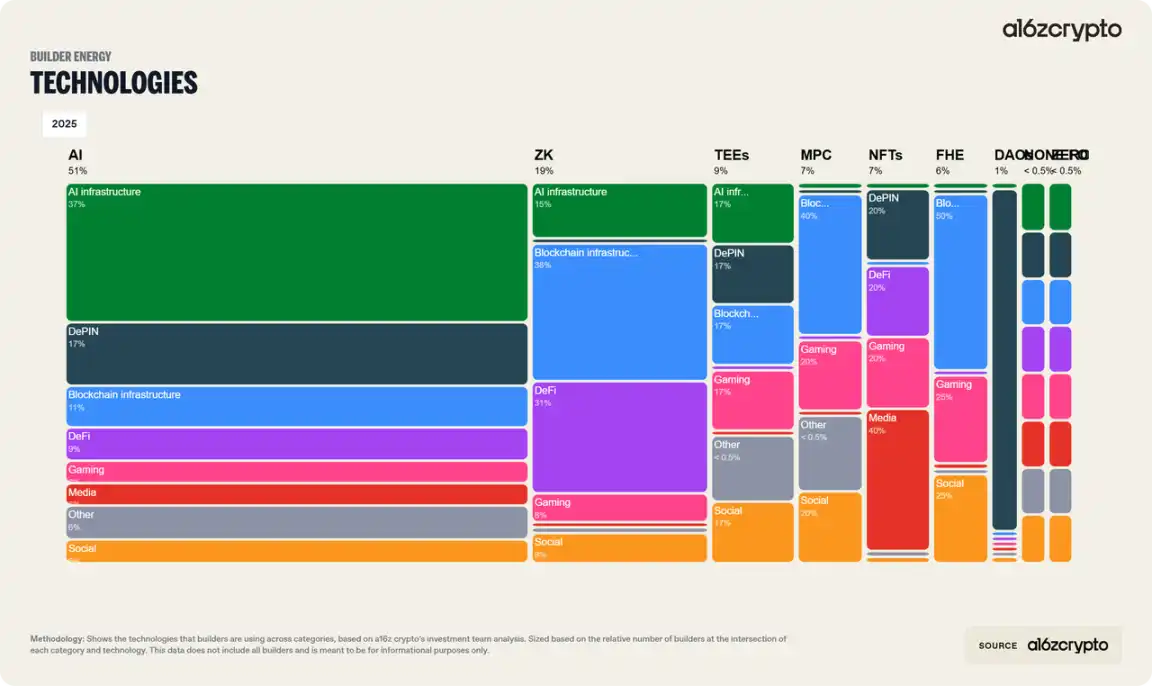
From the perspective of capital flow, the strategic divergence among top-tier venture capital firms also confirms this trend. a16z Crypto completed its fifth fundraising round of $2 billion in 2025, firmly positioning the intersection of AI and Crypto as its long-term strategic core, believing blockchain is the necessary infrastructure to prevent AI censorship and control.

Meanwhile, institutions like Paradigm are attempting to capture cross-industry dividends from technological convergence by expanding their investment boundaries to robotics and generalized AI. According to OECD data, by 2025, venture capital in the global AI sector accounted for 51% of total global investments, while within the Web3 space, the proportion of funding for AI-related projects is also steadily rising, reflecting the market's high recognition of the "decentralized intelligence" narrative.

1. Infrastructure Restructuring: Decentralized Computing Power and Computational Integrity

There is a natural contradiction between AI's insatiable appetite for Graphics Processing Units (GPUs) and the fragility of the current global supply chain. Between 2024 and 2025, GPU shortages became the norm, providing fertile ground for the explosion of Decentralized Physical Infrastructure Networks (DePIN).

1.1 Dual Evolution of Decentralized Computing Markets

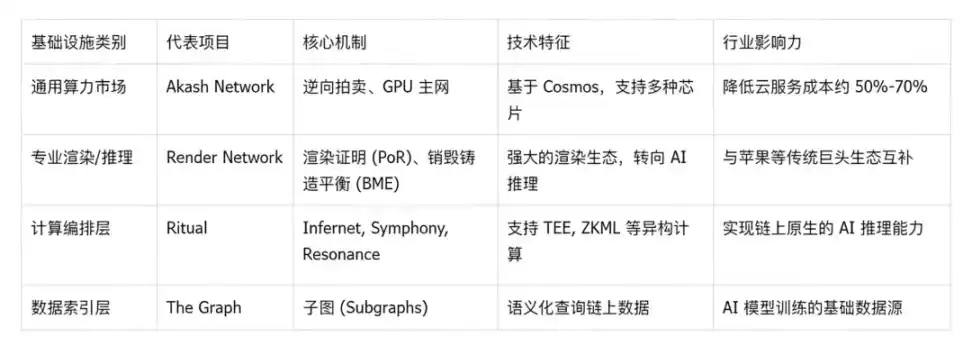
Current decentralized computing platforms are mainly divided into two camps. The first is represented by Render Network (RNDR) and Akash Network (AKT), which aggregate idle GPU computing power from around the world by building decentralized two-sided markets. Render Network has become a benchmark for distributed GPU rendering, not only reducing the cost of 3D creation but also supporting AI inference tasks through blockchain coordination functions, enabling creators to access high-performance computing power at lower prices. Akash, after 2023, achieved a leap forward with its GPU mainnet (Akash ML), allowing developers to rent high-spec chips for large-scale model training and inference.

The second category is represented by new computational orchestration layers like Ritual. Ritual's uniqueness lies in not trying to directly replace existing cloud services, but rather acting as an open, modular sovereign execution layer that embeds AI models directly into the blockchain's execution environment. Its Infernet product allows smart contracts to seamlessly call AI inference results, solving the long-standing technical bottleneck that "on-chain applications cannot natively run AI".
1.2 Computational Integrity and Breakthroughs in Verification Technology

In decentralized networks, verifying "whether computation has been executed correctly" is a core challenge. The technological progress in 2025 has mainly focused on the integrated application of Zero-Knowledge Machine Learning (ZKML) and Trusted Execution Environments (TEE).

The Ritual architecture, through its proof-system agnostic design, allows nodes to choose between TEE code execution or ZK proofs based on task requirements. This flexibility ensures that every inference result generated by an AI model is traceable, auditable, and guaranteed integrity, even in highly decentralized environments.

2. Democratization of Intelligence: The Rise of Bittensor and Commoditized Markets

The emergence of Bittensor (TAO) marks the entry of the AI and Crypto combination into a new stage of "marketization of machine intelligence." Unlike traditional single computing power platforms, Bittensor aims to create an incentive mechanism that allows various machine learning models worldwide to connect, learn from each other, and compete for rewards.

2.1 Yuma Consensus: From Linguistics to Consensus Algorithm

The core of Bittensor is the Yuma Consensus (YC), a subjective utility consensus mechanism inspired by Gricean pragmatics.

YC's operational logic assumes: an efficient cooperator tends to output true, relevant, and information-rich answers, as this is the optimal strategy for obtaining the highest reward in the incentive landscape. Technically, YC calculates token emissions through validators' weighted evaluation of miners' performance. Its core logic for allocating emission shares can be represented by the following LaTeX formula:
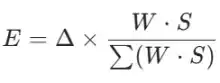
Where E is the emission reward, Δ is the daily total supply increment, W is the matrix of validator evaluation weights, and S is the corresponding staking weight. To prevent malicious collusion or bias, YC introduces a Clipping mechanism, which cuts weight settings that exceed the consensus baseline, ensuring the system's robustness.

2.2 Subnet Economy and the Dynamic TAO Paradigm

By 2025, Bittensor has evolved into a multi-layered architecture. The underlying layer is the Subtensor ledger managed by the Opentensor Foundation, while the upper layer consists of dozens of vertically specialized subnets (Subnets), focusing on specific tasks such as text generation, audio prediction, image recognition, etc.
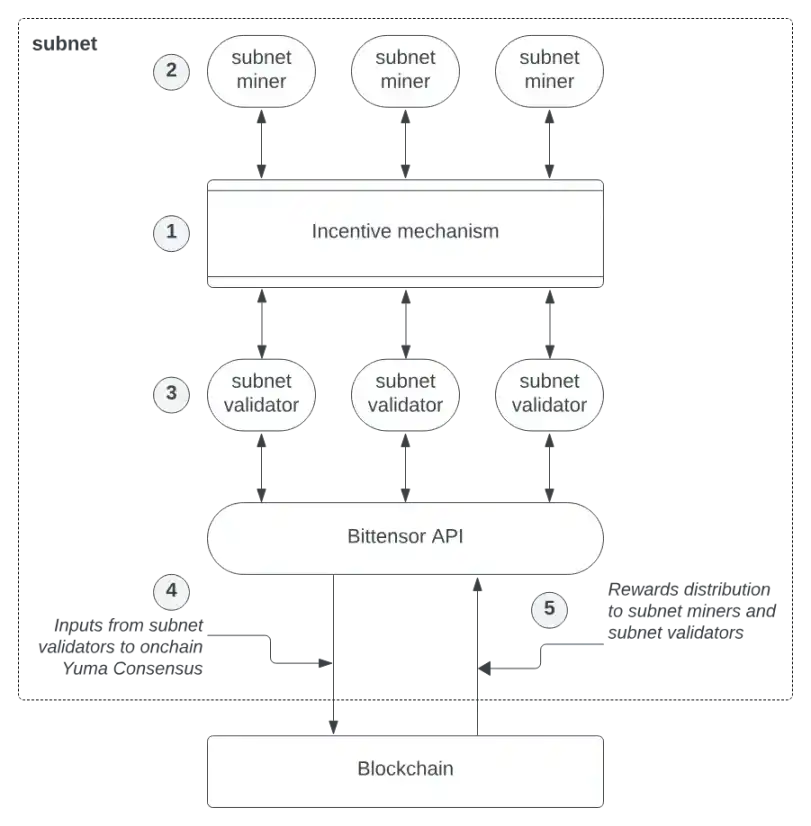
The introduced "Dynamic TAO" mechanism creates independent value reserve pools for each subnet through an Automated Market Maker (AMM), with its price determined by the ratio of TAO to Alpha tokens:
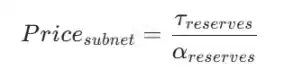
This mechanism enables automatic resource allocation: subnets with high demand and high-quality output will attract more staking, thereby receiving a higher proportion of daily TAO emissions. This competitive market structure is aptly compared to an "Olympic Games of Intelligence," naturally selecting out inefficient models.

3. The Rise of the Agent Economy: AI Agents as First-Class Citizens in Web3

In the 2024-2025 cycle, AI Agents are undergoing a fundamental transformation from "auxiliary tools" to "native on-chain entities." This evolution is reflected not only in the increasing complexity of the technical architecture but also in the fundamental expansion of their roles and permissions within the decentralized finance (DeFi) ecosystem.

Below is an in-depth analysis of this trend:

3.1 Agent Architecture: Closed Loop from Data to Execution

Current on-chain AI agents are no longer simple scripts but mature systems built on three complex logical layers:

Data Input Layer: Agents fetch real-time on-chain data such as liquidity pools, trading volume through blockchain nodes or APIs (like Ethers.js), and incorporate off-chain information like social media sentiment and centralized exchange prices through oracles (like Chainlink).

AI/ML Decision Layer (AI/ML Layer): Agents utilize Long Short-Term Memory networks (LSTM) to analyze price trends, or use Reinforcement Learning to continuously iterate optimal strategies in complex market games. The integration of Large Language Models (LLMs) also empowers agents to understand vague human intentions.

Blockchain Interaction Layer: This is the key to achieving "financial autonomy." Agents can now manage non-custodial wallets, automatically calculate optimal Gas fees, handle nonces, and even integrate MEV protection tools (e.g., Jito Labs) to prevent front-running in transactions.

3.2 Financial Rails and Agent-to-Agent Transactions

a16z's 2025 report particularly emphasized the financial backbone of AI agents—protocols like x402 and similar micro-payment standards. These standards allow agents to pay API fees or purchase services from other agents without human intervention. For example, the Olas (formerly Autonolas) ecosystem already processes over 2 million automated transactions between agents monthly, covering tasks from DeFi swaps to content creation.
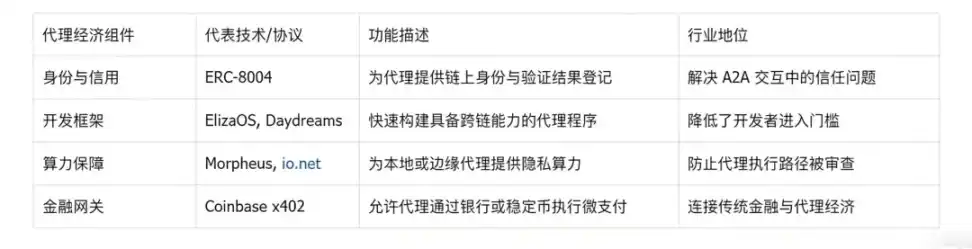
This trend is tangibly reflected in market data. In terms of growth rate, the AI agent market is on the verge of an explosion. According to research data from MarketsandMarkets, the global AI agent market is expected to grow from $7.84 billion in 2025 to $52.62 billion in 2030, with a compound annual growth rate (CAGR) of 46.3%. Furthermore, Grand View Research provides a similar long-term forecast, estimating the market size to reach $50.31 billion by 2030.

Meanwhile, standard tools at the development layer are also taking shape. The ElizaOS framework, strongly promoted by a16z, has become the infrastructure for the AI agent space, comparable to "Next.js" in front-end development. It allows developers to easily deploy AI agents with full financial capabilities on mainstream social platforms like X, Discord, and Telegram. As of early 2025, the total market capitalization of Web3 projects built on this framework has exceeded $20 billion.

4. Privacy Computing and Confidentiality: The Game of FHE, TEE, and ZKML

Privacy is one of the most challenging issues in the convergence of AI and Crypto. When enterprises run AI strategies on public chains, they neither want to leak private data nor disclose their core model parameters. Currently, the industry has formed three main technical paths: Fully Homomorphic Encryption (FHE), Trusted Execution Environment (TEE), and Zero-Knowledge Machine Learning (ZKML).

4.1 Zama and the Industrialization Journey of FHE

Zama, as a leading unicorn in this field, has made its fhEVM the standard for achieving "full-process encrypted computation." FHE allows computers to perform mathematical operations on data without decrypting it, and the results after decryption are identical to those from plaintext operations.

By 2025, Zama's technology stack has achieved significant performance leaps: for a 20-layer Convolutional Neural Network (CNN), computation speed increased by 21 times, and for a 50-layer CNN, it increased by 14 times. This progress makes "privacy stablecoins" (where transaction amounts are encrypted externally but the protocol can still verify legitimacy) and "sealed-bid auctions" possible on mainstream chains like Ethereum.

4.2 Verification Efficiency of ZKML and Integration with LLM

Zero-Knowledge Machine Learning (ZKML) focuses on "verification" rather than "computation." It allows one party to prove that it correctly ran a complex neural network model without exposing the input data or model weights. The latest zkLLM protocol can already perform end-to-end inference verification for a 13 billion parameter model, reducing proof generation time to within 15 minutes, with a proof size of only 200 KB. This technology is crucial for high-value financial audits and medical diagnostics.

4.3 Synergy between TEE and GPU: The Power of Hopper H100

Compared to FHE and ZKML, TEE (Trusted Execution Environment) offers execution speeds close to native performance. NVIDIA's H100 GPU introduces confidential computing capabilities, isolating memory through hardware-level firewalls, with inference overhead typically below 7%. Protocols like Ritual are heavily adopting GPU-based TEE to support AI agent applications requiring low latency and high throughput.

Privacy computing technology has officially moved from the idealistic conception of the laboratory into a new era of "production-level industrialization." Fully Homomorphic Encryption (FHE), Zero-Knowledge Machine Learning (ZKML), and Trusted Execution Environment (TEE) are no longer isolated technical tracks but together constitute a "modular confidentiality stack" for decentralized artificial intelligence.

This fusion is completely rewriting the underlying logic of Web3 and leads to the following three core conclusions:

FHE is the "HTTPS" underlying standard for Web3: As unicorns like Zama improve computational performance dozens of times, FHE is achieving a qualitative change from "everything public" to "encrypted by default." It solves the privacy challenge of on-chain state processing, enabling privacy stablecoins and fully MEV-resistant trading systems to move from theory to large-scale compliant applications.

ZKML is the mathematical endpoint for algorithmic accountability: The "ZKML singularity" arriving in the second half of 2025 marks a dramatic decrease in verification costs. By compressing the inference proof of a 13 billion parameter (13B) model to within 15 minutes, ZKML provides "mathematical-level consistency" guarantees for high-value financial audits and credit ratings, ensuring AI is no longer an untrustworthy black box.

TEE is the performance foundation of the agent economy: Compared to software solutions, TEE based on hardware like NVIDIA H100 offers near-native execution speeds with overhead below 7%. It is currently the only economically viable solution to support hundreds of millions of AI Agents making 24/7 real-time decisions, ensuring that agents securely hold private keys and execute complex strategies within hardware-level firewalls.
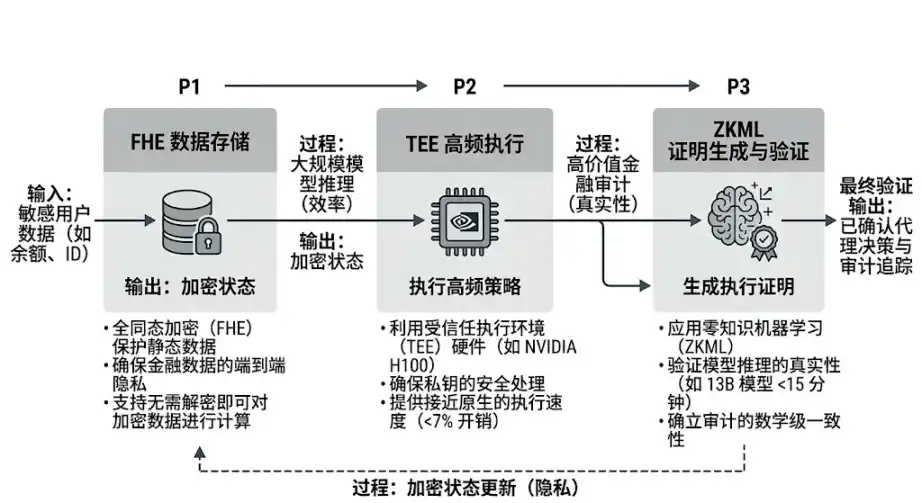
The future technological trend is not the victory of a single path, but the comprehensive popularization of "Hybrid Confidential Computing." In a complete AI business flow: use TEE for large-scale, high-frequency model inference to ensure efficiency; use ZKML at key nodes to generate execution proofs to ensure authenticity; and let FHE handle the encryption of sensitive financial states (such as account balances and private IDs).

This "trinity" fusion is reshaping the crypto industry from a "public transparent ledger" to a "sovereign privacy-enabled intelligent system," truly ushering in the era of an automated agent economy worth trillions of dollars.

5. Industry Security and Automated Auditing: AI as Web3's "Immune System"

The cryptocurrency industry has long been plagued by huge losses caused by smart contract vulnerabilities. The introduction of AI is changing this passive defense situation, shifting it from expensive manual audits to real-time AI monitoring.

5.1 Innovation in Static and Dynamic Audit Tools

Tools like Slither and Mythril have deeply integrated machine learning models by 2025, capable of scanning Solidity contracts for reentrancy attacks, suicidal functions, or Gas consumption abnormalities in sub-second speeds. Furthermore, fuzzing tools like Foundry and Echidna use AI to generate extreme input data to probe deeply hidden logical vulnerabilities.

5.2 Real-time Threat Prevention Systems

In addition to pre-deployment audits, real-time defense has also made significant progress. Systems like Guardrail's Guards AI and CUBE3.AI can monitor all pending transactions (Mempool) across chains. Upon detecting malicious attack signals (such as governance attacks or oracle manipulation), they can automatically trigger contract pauses or intercept malicious transactions. This "active immunity" significantly reduces the risk of DeFi protocol hacks.
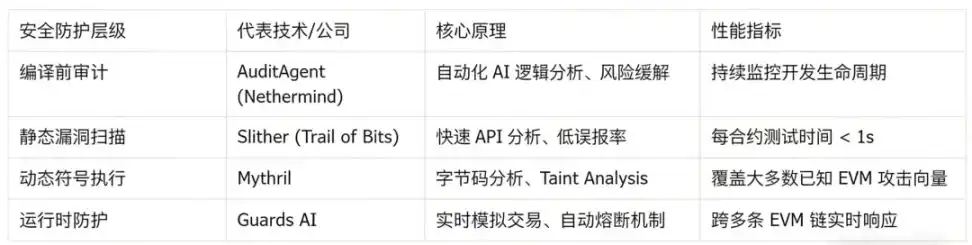
Practical Roadmap for Leveraging AI to Develop Crypto

In the future digital landscape, the convergence of AI and Crypto is no longer a technological experiment but a deep revolution concerning "productivity efficiency" and "wealth distribution rights." This combination not only gives AI an independently controlled "wallet" but also gives Crypto an autonomously thinking "brain," jointly opening the era of an autonomous agent economy worth trillions of dollars.

The following is the core benefits and practical map of this convergence at the enterprise and individual levels:

1. Enterprise Level: From "Cost Reduction and Efficiency Increase" to "Business Boundary Expansion"

For enterprises, the combination of AI and Crypto primarily solves the structural contradiction between high computing power costs, fragile system security, and data privacy protection.

Drastic reduction in infrastructure costs (DePIN effect): Leveraging distributed computing power networks (like Akash or Render), enterprises are no longer trapped by expensive NVIDIA H100 cluster procurement. Actual measurement data shows that renting global idle GPUs can reduce costs by 39% to 86% compared to traditional cloud service providers. This "computing freedom" allows startups to afford fine-tuning and training of ultra-large-scale models.

Automation and cost reduction of security barriers: Traditional contract audit cycles are long and expensive. Now, by deploying AI security agents like AuditAgent, driven by neural networks, enterprises can achieve "sentry monitoring" throughout the entire development lifecycle. They can identify logical vulnerabilities like reentrancy attacks the moment code is submitted and can automatically trigger contract circuit breakers at the mempool level the instant a hacker's command is issued, protecting protocol assets from loss.

"Encrypted Computing" for core business secrets: With Fully Homomorphic Encryption (FHE) and networks like Nillion's "Blind Compute," enterprises can run AI strategies on public chains without disclosing core model parameters and private customer data. This not only establishes data sovereignty but also allows financial and medical data, previously restricted by compliance risks, to enter the decentralized collaboration network.

2. Individual Level: From "Financial Blind Spots" to "Intelligent Sovereign Economy"

For individual users, the fusion of AI and Crypto means the complete disappearance of technical barriers and the opening of new income channels.

Intent-oriented "Private Banker": Future users will no longer need to understand what Gas fees or cross-chain bridges are. AI agents built on frameworks like ElizaOS will achieve "radical abstraction"—you just need to say: "Help me deposit this $1000 in the place with the highest interest and safest," and the AI will autonomously monitor APY across the network and automatically close positions during risk fluctuations. Ordinary people can thus enjoy asset management at the level of top hedge funds.

Assetization of personal data (Data Yield Farming): Your digital footprint is no longer taken for free by giants. Through platforms like Synesis One, users can participate in "Train2Earn," providing labeled data for AI training and directly obtaining token rewards. You can even earn passive dividends every time an AI calls a specific knowledge entry by holding a Kanon NFT, truly realizing "data as an asset."

Ultimate protection of privacy and identity: Using Worldcoin or cryptographic identity protocols, you can prove you are human and not an AI, while using privacy computing networks to protect sensitive information like your personal schedule and home address from being leaked to AI service providers. This "blind interaction" mode ensures that while you benefit from AI convenience, you still hold the highest right of interpretation over your digital sovereignty.

This two-way architectural evolution is handing "trust" to the blockchain and "efficiency" to AI. It is not only reconstructing the moats of enterprises but also building a ladder for every ordinary person to access the intelligent sovereign economy.

Evolution Prediction: Towards a New Era of "Intelligent Ledger"

In summary, how can AI and Crypto combine better? The answer lies in shifting from "simple tool stacking" to "deep architectural coupling."

First, blockchain must evolve into a platform capable of supporting large-scale computation. Efforts by protocols like Ritual and Starknet are making ZKML as simple as calling a standard library. Second, AI agents must become legitimate entities in economic life. With the proliferation of identity standards like ERC-8004, we will see an "intelligent network" composed of hundreds of millions of agents, engaging in 24/7 resource gaming and value exchange on-chain.

Finally, this fusion will reshape human financial sovereignty. Privacy payments realized through FHE, fair creator distribution achieved through provenance protocols, and algorithmic democratization realized through markets like Bittensor, together constitute a blueprint for a fairer, more efficient, and decentralized future digital economy.

In this technological marathon, the crypto industry provides not just capital, but a philosophical framework about "transparency" and "trust"; while AI provides the "brain" that makes these frameworks operate. As 2026 approaches, this convergence will not be limited to technical circles but will reach billions of ordinary users globally through more intuitive AI interaction interfaces.

Perguntas relacionadas

QWhat are the two main types of decentralized computing platforms mentioned in the article, and what are their key characteristics?

AThe two main types are: 1) Decentralized bilateral markets like Render Network (RNDR) and Akash Network (AKT), which aggregate idle global GPU power to provide cost-effective computing for tasks like rendering and AI inference. 2) New computational orchestration layers like Ritual, which act as an open, modular sovereign execution layer that embeds AI models directly into a blockchain's execution environment, allowing smart contracts to natively call AI inference results.

QHow does Bittensor's Yuma consensus mechanism work to incentivize and validate machine learning models?

ABittensor's Yuma consensus (YC) is a subjective utility consensus mechanism inspired by Gricean pragmatics. It operates on the logic that an efficient collaborator is incentivized to output truthful, relevant, and informative answers to gain the highest rewards. Validators evaluate the performance of miners (ML models), and token emissions are calculated based on a matrix of these validator-assigned weights and corresponding staking weights. A clipping mechanism is used to cut weights that exceed a consensus benchmark, ensuring system robustness against collusion or bias.

QWhat are the three primary technical paths for ensuring privacy in AI and Crypto applications, as discussed in the article?

AThe three primary technical paths for privacy are: 1) Fully Homomorphic Encryption (FHE), exemplified by Zama's fhEVM, which allows computation on encrypted data. 2) Zero-Knowledge Machine Learning (ZKML), which focuses on verifying that a complex neural network model was run correctly without revealing input data or model weights. 3) Trusted Execution Environments (TEE), such as those utilizing NVIDIA's H100 GPU, which provide hardware-level memory isolation for high-speed, confidential computation with low overhead.

QAccording to the article, how is AI transforming security and auditing in the Web3 space?

AAI is transforming Web3 security by moving from expensive manual audits to real-time AI monitoring. Tools like Slither and Mythril now integrate machine learning models to scan smart contracts for vulnerabilities at sub-second speeds. Furthermore, real-time threat prevention systems like Guardrail's Guards AI and CUBE3.AI monitor the mempool across chains, automatically intercepting malicious transactions or triggering contract pauses upon detecting attack signals, such as governance attacks or oracle manipulation, thus providing a proactive 'immune system' for DeFi protocols.

QWhat is the predicted future trend for the architecture of decentralized AI, particularly concerning privacy technologies?

AThe predicted future trend is not the victory of a single path but the comprehensive adoption of 'Hybrid Confidential Computing.' In a complete AI workflow, TEE would be used for large-scale, high-frequency model inference to ensure efficiency; critical nodes would use ZKML to generate execution proofs for verifiability; and sensitive financial states (like account balances) would be handled by FHE for encrypted storage. This 'trinity' fusion is reshaping the crypto industry from a 'transparent ledger' into a 'sovereign privacy intelligent system' capable of powering a multi-trillion-dollar automated agent economy.

Leituras Relacionadas

Polymarket's "2028 Presidential Election" Volume King Is... LeBron James???

An article from Odaily Planet Daily, authored by Azuma, discusses a peculiar phenomenon observed on the prediction market platform Polymarket regarding the "2028 US Presidential Election" event. Despite having a real-time probability of less than 1%, unlikely candidates such as NBA star LeBron James (with $48.41 million in trading volume), celebrity Kim Kardashian ($33.84 million), and even ineligible figures like Elon Musk ($23.14 million) and New York City Mayor Zohran Mamdani ($18.39 million) account for approximately 70% of the total trading volume. In contrast, high-probability candidates like Vice President JD Vance ($10.58 million), California Governor Gavin Newsom ($15.71 million), and Secretary of State Marco Rubio ($9.32 million) have significantly lower trading activity. The article explains that this counterintuitive trend is not driven by irrational speculation but by rational strategies. Polymarket offers a 4% annualized holding reward for certain markets, including the 2028 election, to maintain long-term pricing accuracy. This yield exceeds the current 5-year US Treasury rate (3.98%), attracting large investors ("whales") to hold "NO" shares on low-probability candidates for risk-free returns. Additionally, some users utilize a platform feature that allows converting a set of "NO" shares into corresponding "YES" shares for better liquidity or pricing efficiency, rather than directly buying "YES" shares for their preferred candidates. Thus, the seemingly absurd trading activity is strategically motivated.

marsbitHá 1h

Polymarket's "2028 Presidential Election" Volume King Is... LeBron James???

marsbitHá 1h

Dialogue with ViaBTC CEO Yang Haipo: Is the Essence of Blockchain a Libertarian Experiment?

"ViaBTC CEO Yang Haipo: Blockchain as a Hardcore Libertarian Experiment" In a deep-dive interview, ViaBTC CEO Yang Haipo reframes the essence of blockchain, arguing it is not merely a new technology or infrastructure but a hardcore libertarian experiment. This experiment, born from the 2008 financial crisis and decades of cypherpunk ideology, tests a fundamental question: to what extent can freedom and self-organization exist without centralized trust? The discussion highlights the experiment's verified outcomes. On one hand, it has proven its core value of censorship resistance, providing critical financial lifelines for entities like WikiLeaks and individuals in hyperinflationary or sanctioned countries via tools like stablecoins. However, Yang points out a key paradox: the most successful product, USDT, is itself a centralized compromise, showing users prioritize a less-controlled pipeline over pure decentralization. On the other hand, the experiment has exposed the severe costs of this freedom—a "dark forest" without safeguards. Events like the collapses of LUNA, Celsius, and FTX, resulting in massive wealth destruction and prison sentences for founders, underscore the system's fragility and the inherent risks of an unregulated environment. Yang observes that despite decentralized protocols, human nature inevitably recreates centralized power structures, speculative frenzies, and narrative-driven cycles (from ICOs to Meme coins), where emotion and belonging often trump technological substance. Looking forward, he believes blockchain's future is significant but niche. Its real value lies in serving specific, real-world needs for financial sovereignty and bypassing traditional controls, not as a universal infrastructure replacing all centralized systems. For the average participant, Yang's crucial advice is to cultivate independent judgment. True freedom is not holding a crypto wallet, but possessing a mind resilient to groupthink and narrative hype in a high-risk, often irrational market.

marsbitHá 1h

Dialogue with ViaBTC CEO Yang Haipo: Is the Essence of Blockchain a Libertarian Experiment?

marsbitHá 1h

Trading

Spot
Futuros

Artigos em Destaque

O que é GROK AI

Grok AI: Revolucionar a Tecnologia Conversacional na Era Web3 Introdução No panorama em rápida evolução da inteligência artificial, a Grok AI destaca-se como um projeto notável que liga os domínios da tecnologia avançada e da interação com o utilizador. Desenvolvida pela xAI, uma empresa liderada pelo renomado empreendedor Elon Musk, a Grok AI procura redefinir a forma como interagimos com a inteligência artificial. À medida que o movimento Web3 continua a florescer, a Grok AI visa aproveitar o poder da IA conversacional para responder a consultas complexas, proporcionando aos utilizadores uma experiência que é não apenas informativa, mas também divertida. O que é a Grok AI? A Grok AI é um sofisticado chatbot de IA conversacional projetado para interagir com os utilizadores de forma dinâmica. Ao contrário de muitos sistemas de IA tradicionais, a Grok AI abraça uma gama mais ampla de perguntas, incluindo aquelas tipicamente consideradas inadequadas ou fora das respostas padrão. Os principais objetivos do projeto incluem: Raciocínio Fiável: A Grok AI enfatiza o raciocínio de senso comum para fornecer respostas lógicas com base na compreensão contextual. Supervisão Escalável: A integração de assistência de ferramentas garante que as interações dos utilizadores sejam monitorizadas e otimizadas para qualidade. Verificação Formal: A segurança é primordial; a Grok AI incorpora métodos de verificação formal para aumentar a fiabilidade das suas saídas. Compreensão de Longo Contexto: O modelo de IA destaca-se na retenção e recordação de um extenso histórico de conversas, facilitando discussões significativas e contextualizadas. Robustez Adversarial: Ao focar na melhoria das suas defesas contra entradas manipuladas ou maliciosas, a Grok AI visa manter a integridade das interações dos utilizadores. Em essência, a Grok AI não é apenas um dispositivo de recuperação de informações; é um parceiro conversacional imersivo que incentiva um diálogo dinâmico. Criador da Grok AI A mente por trás da Grok AI não é outra senão Elon Musk, um indivíduo sinónimo de inovação em vários campos, incluindo automóvel, viagens espaciais e tecnologia. Sob a égide da xAI, uma empresa focada em avançar a tecnologia de IA de maneiras benéficas, a visão de Musk visa reformular a compreensão das interações com a IA. A liderança e a ética fundacional são profundamente influenciadas pelo compromisso de Musk em ultrapassar os limites tecnológicos. Investidores da Grok AI Embora os detalhes específicos sobre os investidores que apoiam a Grok AI permaneçam limitados, é reconhecido publicamente que a xAI, a incubadora do projeto, é fundada e apoiada principalmente pelo próprio Elon Musk. As anteriores empreitadas e participações de Musk fornecem um forte apoio, reforçando ainda mais a credibilidade e o potencial de crescimento da Grok AI. No entanto, até agora, informações sobre fundações ou organizações de investimento adicionais que apoiam a Grok AI não estão prontamente acessíveis, marcando uma área para exploração futura potencial. Como Funciona a Grok AI? A mecânica operacional da Grok AI é tão inovadora quanto a sua estrutura conceptual. O projeto integra várias tecnologias de ponta que facilitam as suas funcionalidades únicas: Infraestrutura Robusta: A Grok AI é construída utilizando Kubernetes para orquestração de contêineres, Rust para desempenho e segurança, e JAX para computação numérica de alto desempenho. Este trio assegura que o chatbot opere de forma eficiente, escale eficazmente e sirva os utilizadores prontamente. Acesso a Conhecimento em Tempo Real: Uma das características distintivas da Grok AI é a sua capacidade de aceder a dados em tempo real através da plataforma X—anteriormente conhecida como Twitter. Esta capacidade concede à IA acesso às informações mais recentes, permitindo-lhe fornecer respostas e recomendações oportunas que outros modelos de IA poderiam perder. Dois Modos de Interação: A Grok AI oferece aos utilizadores a escolha entre “Modo Divertido” e “Modo Regular”. O Modo Divertido permite um estilo de interação mais lúdico e humorístico, enquanto o Modo Regular foca em fornecer respostas precisas e exatas. Esta versatilidade assegura uma experiência adaptada que atende a várias preferências dos utilizadores. Em essência, a Grok AI combina desempenho com envolvimento, criando uma experiência que é tanto enriquecedora quanto divertida. Cronologia da Grok AI A jornada da Grok AI é marcada por marcos fundamentais que refletem as suas fases de desenvolvimento e implementação: Desenvolvimento Inicial: A fase fundamental da Grok AI ocorreu ao longo de aproximadamente dois meses, durante os quais o treinamento inicial e o ajuste do modelo foram realizados. Lançamento Beta do Grok-2: Numa evolução significativa, o beta do Grok-2 foi anunciado. Este lançamento introduziu duas versões do chatbot—Grok-2 e Grok-2 mini—cada uma equipada com capacidades para conversar, programar e raciocinar. Acesso Público: Após o seu desenvolvimento beta, a Grok AI tornou-se disponível para os utilizadores da plataforma X. Aqueles com contas verificadas por um número de telefone e ativas há pelo menos sete dias podem aceder a uma versão limitada, tornando a tecnologia disponível para um público mais amplo. Esta cronologia encapsula o crescimento sistemático da Grok AI desde a sua concepção até ao envolvimento público, enfatizando o seu compromisso com a melhoria contínua e a interação com o utilizador. Principais Características da Grok AI A Grok AI abrange várias características principais que contribuem para a sua identidade inovadora: Integração de Conhecimento em Tempo Real: O acesso a informações atuais e relevantes diferencia a Grok AI de muitos modelos estáticos, permitindo uma experiência de utilizador envolvente e precisa. Estilos de Interação Versáteis: Ao oferecer modos de interação distintos, a Grok AI atende a várias preferências dos utilizadores, convidando à criatividade e personalização na conversa com a IA. Base Tecnológica Avançada: A utilização de Kubernetes, Rust e JAX fornece ao projeto uma estrutura sólida para garantir fiabilidade e desempenho ótimo. Consideração de Discurso Ético: A inclusão de uma função de geração de imagens demonstra o espírito inovador do projeto. No entanto, também levanta considerações éticas em torno dos direitos autorais e da representação respeitosa de figuras reconhecíveis—uma discussão em curso dentro da comunidade de IA. Conclusão Como uma entidade pioneira no domínio da IA conversacional, a Grok AI encapsula o potencial para experiências transformadoras do utilizador na era digital. Desenvolvida pela xAI e impulsionada pela abordagem visionária de Elon Musk, a Grok AI integra conhecimento em tempo real com capacidades avançadas de interação. Esforça-se por ultrapassar os limites do que a inteligência artificial pode alcançar, mantendo um foco nas considerações éticas e na segurança do utilizador. A Grok AI não apenas incorpora o avanço tecnológico, mas também representa um novo paradigma de conversas no panorama Web3, prometendo envolver os utilizadores com conhecimento hábil e interação lúdica. À medida que o projeto continua a evoluir, ele permanece como um testemunho do que a interseção da tecnologia, criatividade e interação humana pode alcançar.

350 Visualizações TotaisPublicado em {updateTime}Atualizado em 2024.12.26

O que é GROK AI

O que é ERC AI

Euruka Tech: Uma Visão Geral do $erc ai e as suas Ambições no Web3 Introdução No panorama em rápida evolução da tecnologia blockchain e das aplicações descentralizadas, novos projetos surgem frequentemente, cada um com objetivos e metodologias únicas. Um desses projetos é a Euruka Tech, que opera no vasto domínio das criptomoedas e do Web3. O foco principal da Euruka Tech, particularmente do seu token $erc ai, é apresentar soluções inovadoras concebidas para aproveitar as capacidades crescentes da tecnologia descentralizada. Este artigo tem como objetivo fornecer uma visão abrangente da Euruka Tech, uma exploração das suas metas, funcionalidade, a identidade do seu criador, potenciais investidores e a sua importância no contexto mais amplo do Web3. O que é a Euruka Tech, $erc ai? A Euruka Tech é caracterizada como um projeto que aproveita as ferramentas e funcionalidades oferecidas pelo ambiente Web3, focando na integração da inteligência artificial nas suas operações. Embora os detalhes específicos sobre a estrutura do projeto sejam um tanto elusivos, ele é concebido para melhorar o envolvimento dos utilizadores e automatizar processos no espaço cripto. O projeto visa criar um ecossistema descentralizado que não só facilita transações, mas também incorpora funcionalidades preditivas através da inteligência artificial, daí a designação do seu token, $erc ai. O objetivo é fornecer uma plataforma intuitiva que facilite interações mais inteligentes e um processamento eficiente de transações dentro da crescente esfera do Web3. Quem é o Criador da Euruka Tech, $erc ai? Neste momento, a informação sobre o criador ou a equipa fundadora da Euruka Tech permanece não especificada e algo opaca. Esta ausência de dados levanta preocupações, uma vez que o conhecimento sobre o histórico da equipa é frequentemente essencial para estabelecer credibilidade no setor blockchain. Portanto, categorizamos esta informação como desconhecida até que detalhes concretos sejam disponibilizados no domínio público. Quem são os Investidores da Euruka Tech, $erc ai? De forma semelhante, a identificação de investidores ou organizações de apoio para o projeto Euruka Tech não é prontamente fornecida através da pesquisa disponível. Um aspeto que é crucial para potenciais partes interessadas ou utilizadores que consideram envolver-se com a Euruka Tech é a garantia que vem de parcerias financeiras estabelecidas ou apoio de empresas de investimento respeitáveis. Sem divulgações sobre afiliações de investimento, é difícil tirar conclusões abrangentes sobre a segurança financeira ou a longevidade do projeto. Em linha com a informação encontrada, esta seção também se encontra no estado de desconhecido. Como funciona a Euruka Tech, $erc ai? Apesar da falta de especificações técnicas detalhadas para a Euruka Tech, é essencial considerar as suas ambições inovadoras. O projeto procura aproveitar o poder computacional da inteligência artificial para automatizar e melhorar a experiência do utilizador no ambiente das criptomoedas. Ao integrar IA com tecnologia blockchain, a Euruka Tech visa fornecer funcionalidades como negociações automatizadas, avaliações de risco e interfaces de utilizador personalizadas. A essência inovadora da Euruka Tech reside no seu objetivo de criar uma conexão fluida entre os utilizadores e as vastas possibilidades apresentadas pelas redes descentralizadas. Através da utilização de algoritmos de aprendizagem automática e IA, visa minimizar os desafios enfrentados por utilizadores de primeira viagem e agilizar as experiências transacionais dentro do quadro do Web3. Esta simbiose entre IA e blockchain sublinha a importância do token $erc ai, que se apresenta como uma ponte entre interfaces de utilizador tradicionais e as capacidades avançadas das tecnologias descentralizadas. Cronologia da Euruka Tech, $erc ai Infelizmente, devido à informação limitada disponível sobre a Euruka Tech, não conseguimos apresentar uma cronologia detalhada dos principais desenvolvimentos ou marcos na jornada do projeto. Esta cronologia, tipicamente inestimável para traçar a evolução de um projeto e compreender a sua trajetória de crescimento, não está atualmente disponível. À medida que informações sobre eventos notáveis, parcerias ou adições funcionais se tornem evidentes, atualizações certamente aumentarão a visibilidade da Euruka Tech na esfera cripto. Esclarecimento sobre Outros Projetos “Eureka” É importante abordar que múltiplos projetos e empresas partilham uma nomenclatura semelhante com “Eureka.” A pesquisa identificou iniciativas como um agente de IA da NVIDIA Research, que se concentra em ensinar robôs a realizar tarefas complexas utilizando métodos generativos, bem como a Eureka Labs e a Eureka AI, que melhoram a experiência do utilizador na educação e na análise de serviços ao cliente, respetivamente. No entanto, estes projetos são distintos da Euruka Tech e não devem ser confundidos com os seus objetivos ou funcionalidades. Conclusão A Euruka Tech, juntamente com o seu token $erc ai, representa um jogador promissor, mas atualmente obscuro, dentro do panorama do Web3. Embora os detalhes sobre o seu criador e investidores permaneçam não divulgados, a ambição central de combinar inteligência artificial com tecnologia blockchain destaca-se como um ponto focal de interesse. As abordagens únicas do projeto em promover o envolvimento do utilizador através da automação avançada podem diferenciá-lo à medida que o ecossistema Web3 avança. À medida que o mercado cripto continua a evoluir, as partes interessadas devem manter um olhar atento sobre os avanços em torno da Euruka Tech, uma vez que o desenvolvimento de inovações documentadas, parcerias ou um roteiro definido pode apresentar oportunidades significativas no futuro próximo. Neste momento, aguardamos por insights mais substanciais que possam desvendar o potencial da Euruka Tech e a sua posição no competitivo panorama cripto.

397 Visualizações TotaisPublicado em {updateTime}Atualizado em 2025.01.02

O que é ERC AI

O que é DUOLINGO AI

DUOLINGO AI: Integrar a Aprendizagem de Línguas com Inovação Web3 e IA Numa era em que a tecnologia transforma a educação, a integração da inteligência artificial (IA) e das redes blockchain anuncia uma nova fronteira para a aprendizagem de línguas. Apresentamos DUOLINGO AI e a sua criptomoeda associada, $DUOLINGO AI. Este projeto aspira a unir o poder educativo das principais plataformas de aprendizagem de línguas com os benefícios da tecnologia descentralizada Web3. Este artigo explora os principais aspectos do DUOLINGO AI, analisando os seus objetivos, estrutura tecnológica, desenvolvimento histórico e potencial futuro, mantendo a clareza entre o recurso educativo original e esta iniciativa independente de criptomoeda. Visão Geral do DUOLINGO AI No seu cerne, DUOLINGO AI procura estabelecer um ambiente descentralizado onde os alunos podem ganhar recompensas criptográficas por alcançar marcos educativos em proficiência linguística. Ao aplicar contratos inteligentes, o projeto visa automatizar processos de verificação de habilidades e alocação de tokens, aderindo aos princípios do Web3 que enfatizam a transparência e a propriedade do utilizador. O modelo diverge das abordagens tradicionais de aquisição de línguas ao apoiar-se fortemente numa estrutura de governança orientada pela comunidade, permitindo que os detentores de tokens sugiram melhorias ao conteúdo dos cursos e à distribuição de recompensas. Alguns dos objetivos notáveis do DUOLINGO AI incluem: Aprendizagem Gamificada: O projeto integra conquistas em blockchain e tokens não fungíveis (NFTs) para representar níveis de proficiência linguística, promovendo a motivação através de recompensas digitais envolventes. Criação de Conteúdo Descentralizada: Abre caminhos para educadores e entusiastas de línguas contribuírem com os seus cursos, facilitando um modelo de partilha de receitas que beneficia todos os colaboradores. Personalização Através de IA: Ao empregar modelos avançados de aprendizagem de máquina, o DUOLINGO AI personaliza as lições para se adaptar ao progresso de aprendizagem individual, semelhante às características adaptativas encontradas em plataformas estabelecidas. Criadores do Projeto e Governança A partir de abril de 2025, a equipa por trás do $DUOLINGO AI permanece pseudónima, uma prática frequente no panorama descentralizado das criptomoedas. Esta anonimidade visa promover o crescimento coletivo e o envolvimento das partes interessadas, em vez de se concentrar em desenvolvedores individuais. O contrato inteligente implementado na blockchain Solana indica o endereço da carteira do desenvolvedor, o que significa o compromisso com a transparência em relação às transações, apesar da identidade dos criadores ser desconhecida. De acordo com o seu roteiro, o DUOLINGO AI pretende evoluir para uma Organização Autónoma Descentralizada (DAO). Esta estrutura de governança permite que os detentores de tokens votem em questões críticas, como implementações de funcionalidades e alocação de tesouraria. Este modelo alinha-se com a ética de empoderamento comunitário encontrada em várias aplicações descentralizadas, enfatizando a importância da tomada de decisão coletiva. Investidores e Parcerias Estratégicas Atualmente, não existem investidores institucionais ou capitalistas de risco publicamente identificáveis ligados ao $DUOLINGO AI. Em vez disso, a liquidez do projeto origina-se principalmente de trocas descentralizadas (DEXs), marcando um contraste acentuado com as estratégias de financiamento das empresas tradicionais de tecnologia educacional. Este modelo de base indica uma abordagem orientada pela comunidade, refletindo o compromisso do projeto com a descentralização. No seu whitepaper, o DUOLINGO AI menciona a formação de colaborações com “plataformas de educação blockchain” não especificadas, com o objetivo de enriquecer a sua oferta de cursos. Embora parcerias específicas ainda não tenham sido divulgadas, estes esforços colaborativos sugerem uma estratégia para misturar inovação em blockchain com iniciativas educativas, expandindo o acesso e o envolvimento dos utilizadores em diversas vias de aprendizagem. Arquitetura Tecnológica Integração de IA O DUOLINGO AI incorpora dois componentes principais impulsionados por IA para melhorar as suas ofertas educativas: Motor de Aprendizagem Adaptativa: Este motor sofisticado aprende a partir das interações dos utilizadores, semelhante a modelos proprietários de grandes plataformas educativas. Ele ajusta dinamicamente a dificuldade das lições para abordar desafios específicos dos alunos, reforçando áreas fracas através de exercícios direcionados. Agentes Conversacionais: Ao empregar chatbots alimentados por GPT-4, o DUOLINGO AI oferece uma plataforma para os utilizadores se envolverem em conversas simuladas, promovendo uma experiência de aprendizagem de línguas mais interativa e prática. Infraestrutura Blockchain Construído na blockchain Solana, o $DUOLINGO AI utiliza uma estrutura tecnológica abrangente que inclui: Contratos Inteligentes de Verificação de Habilidades: Esta funcionalidade atribui automaticamente tokens aos utilizadores que passam com sucesso em testes de proficiência, reforçando a estrutura de incentivos para resultados de aprendizagem genuínos. Emblemas NFT: Estes tokens digitais significam vários marcos que os alunos alcançam, como completar uma seção do seu curso ou dominar habilidades específicas, permitindo-lhes negociar ou exibir as suas conquistas digitalmente. Governança DAO: Membros da comunidade com tokens podem participar na governança votando em propostas-chave, facilitando uma cultura participativa que incentiva a inovação nas ofertas de cursos e funcionalidades da plataforma. Cronologia Histórica 2022–2023: Conceituação O trabalho preliminar para o DUOLINGO AI começa com a criação de um whitepaper, destacando a sinergia entre os avanços em IA na aprendizagem de línguas e o potencial descentralizado da tecnologia blockchain. 2024: Lançamento Beta Um lançamento beta limitado introduz ofertas em línguas populares, recompensando os primeiros utilizadores com incentivos em tokens como parte da estratégia de envolvimento comunitário do projeto. 2025: Transição para DAO Em abril, ocorre um lançamento completo da mainnet com a circulação de tokens, promovendo discussões comunitárias sobre possíveis expansões para línguas asiáticas e outros desenvolvimentos de cursos. Desafios e Direções Futuras Obstáculos Técnicos Apesar dos seus objetivos ambiciosos, o DUOLINGO AI enfrenta desafios significativos. A escalabilidade continua a ser uma preocupação constante, particularmente no equilíbrio dos custos associados ao processamento de IA e à manutenção de uma rede descentralizada responsiva. Além disso, garantir a criação e moderação de conteúdo de qualidade num ambiente descentralizado apresenta complexidades na manutenção dos padrões educativos. Oportunidades Estratégicas Olhando para o futuro, o DUOLINGO AI tem o potencial de aproveitar parcerias de micro-certificação com instituições académicas, proporcionando validações verificadas em blockchain das habilidades linguísticas. Além disso, a expansão cross-chain poderia permitir que o projeto acedesse a bases de utilizadores mais amplas e a ecossistemas de blockchain adicionais, melhorando a sua interoperabilidade e alcance. Conclusão DUOLINGO AI representa uma fusão inovadora de inteligência artificial e tecnologia blockchain, apresentando uma alternativa focada na comunidade aos sistemas tradicionais de aprendizagem de línguas. Embora o seu desenvolvimento pseudónimo e o modelo económico emergente tragam certos riscos, o compromisso do projeto com a aprendizagem gamificada, educação personalizada e governança descentralizada ilumina um caminho a seguir para a tecnologia educativa no domínio do Web3. À medida que a IA continua a avançar e o ecossistema blockchain evolui, iniciativas como o DUOLINGO AI poderão redefinir a forma como os utilizadores interagem com a educação linguística, empoderando comunidades e recompensando o envolvimento através de mecanismos de aprendizagem inovadores.

383 Visualizações TotaisPublicado em {updateTime}Atualizado em 2025.04.11

O que é DUOLINGO AI

Discussões

Bem-vindo à Comunidade HTX. Aqui, pode manter-se informado sobre os mais recentes desenvolvimentos da plataforma e obter acesso a análises profissionais de mercado. As opiniões dos utilizadores sobre o preço de AI (AI) são apresentadas abaixo.

活动图片