Inside The White House’s Crucial Crypto Meeting With Banks: Main Takeaways

bitcoinistPublicado em 2026-02-03Última atualização em 2026-02-03

Resumo

White House officials met with crypto industry leaders and major banking trade groups to address a key regulatory dispute stalling the CLARITY Act. The central issue was whether stablecoin issuers and third parties should be allowed to offer rewards on stablecoin holdings. Banks advocate for restrictions, arguing it protects financial stability, while the crypto industry claims such limits unfairly favor traditional banks. The two-hour discussion was described as constructive, with progress noted on balancing risks and benefits. Attendees included major banks, crypto firms like Coinbase and Ripple, and industry groups. Despite positive dialogue, the legislative path remains uncertain as the Senate Banking Committee has yet to advance its portion of the bill.

White House officials met on Monday with leaders from the crypto industry and major banking trade groups in an effort to ease a key regulatory dispute that has slowed progress on the long‐anticipated crypto market structure legislation, known as the CLARITY Act.

The meeting focused on one of the most contentious issues holding up the bill: whether stablecoin issuers and related third parties should be allowed to offer yield or rewards on stablecoin holdings.

Stablecoin Rewards Debate

The discussion comes against the backdrop of intense lobbying from the banking sector. Banks have been pushing lawmakers to insert language into the CLARITY Act that would prohibit not only issuers, but also third parties, from providing rewards tied to stablecoins.

The cryptocurrency industry, however, argues that such restrictions would tilt the playing field in favor of traditional financial institutions, which they say are increasingly concerned about competition from digital asset firms.

Additional details about the meeting were shared by Eleanor Terrett of Crypto In America, who cited sources familiar with the discussion. According to Terrett, the session lasted two hours and was described as constructive, with a balanced exchange around both the risks and potential benefits of stablecoin yield.

The meeting brought together a broad range of stakeholders. Representatives from major banking organizations, including the American Bankers Association, Bank Policy Institute, Financial Services Forum, Consumer Bankers Association, and the Independent Community Bankers of America.

Attendees also included Fidelity, PayPal, Paradigm, SoFi, Coinbase, Paxos, Crypto.com, Kraken, Ripple, and Tether, as well as advocacy groups like the Blockchain Association, Digital Chamber, and Crypto Council. Additional participants included Stripe, Galaxy Digital, Multicoin, Circle, and Cantor.

Crypto And Banking Leaders Signal Progress

Following the meeting, Cody Carbone, who heads the Digital Chamber and leads its crypto policy efforts, described the talks as a meaningful step forward.

Carbone said the meeting represented “exactly the kind of progress needed to find a resolution to one of the biggest issues blocking next steps in market structure legislative progress.”

The White House’s Crypto Council Executive Director, Patrick Witt, echoed that sentiment, thanking participants from both the crypto and banking industries for engaging in what he described as a fact‐based and solutions‐oriented conversation.

Witt noted that policymakers and industry leaders have made progress in recent months on several policy challenges once thought to be unsolvable, and expressed confidence that the stablecoin rewards issue could also be resolved through continued dialogue.

The banking groups involved in the meeting also released a joint statement reinforcing their position. They stressed that any final legislation should continue to support local lending to families and small businesses, safeguard the stability of the financial system, and promote sustainable economic growth.

Despite the apparent progress, the legislative path forward remains uncertain. It is still unclear whether the Senate Banking Committee will follow the lead of the Senate Agriculture Committee, which cleared a significant procedural hurdle last Thursday by approving its portion of the CLARITY Act during a scheduled markup.

The 1-D chart shows the total crypto market cap at $2.6 trillion. Source: TOTAL on TradingView.com

Featured image from OpenArt, chart from TradingView.com

Criptomoedas em alta

Perguntas relacionadas

QWhat was the main topic of discussion at the White House meeting between crypto industry leaders and banking trade groups?

AThe meeting focused on the contentious issue of whether stablecoin issuers and related third parties should be allowed to offer yield or rewards on stablecoin holdings, which is a key point holding up the CLARITY Act.

QWhat is the banking sector's position on stablecoin rewards as mentioned in the article?

ABanks have been lobbying to insert language into the CLARITY Act that would prohibit both issuers and third parties from providing rewards tied to stablecoins.

QHow did participants from the crypto industry describe the meeting?

AParticipants like Cody Carbone from the Digital Chamber described the talks as a 'meaningful step forward' and 'exactly the kind of progress needed,' while the White House’s Crypto Council Executive Director called it a 'fact-based and solutions-oriented conversation.'

QWhich major organizations and companies attended the meeting according to the article?

AAttendees included major banking organizations (e.g., American Bankers Association, Bank Policy Institute), crypto companies (e.g., Fidelity, PayPal, Coinbase, Ripple, Tether), and advocacy groups (e.g., Blockchain Association, Digital Chamber).

QWhat remains uncertain despite the progress made in the meeting?

AThe legislative path forward remains uncertain, as it is unclear whether the Senate Banking Committee will follow the lead of the Senate Agriculture Committee, which recently approved its portion of the CLARITY Act.

Leituras Relacionadas

A 'Overlooked' Market Event: Joint US-Japan-South Korea Intervention, Rare US Treasury Involvement, and Bessent's Quiet 'Market Rescue'?

Summary: The United States, Japan, and South Korea executed their largest coordinated foreign exchange intervention in nearly 30 years. The action targeted depreciation pressure on the Japanese yen and South Korean won. This move is seen as a significant effort by the US to stabilize the financial markets of its key allies and prevent the spillover of risks. Key details: * Japan reportedly intervened on July 30 using approximately 8.45 trillion yen (about $52.8 billion). South Korean authorities also intervened that day, selling dollars to support the won. * Notably, the US Treasury Department intervened directly in yen markets for the first time in roughly 30 years. The New York Fed, reportedly acting on behalf of the Treasury, sold euros to buy yen via Goldman Sachs and Morgan Stanley on July 31. Analysts view the use of the euro-yen pair as a way to alleviate yen pressure without adding selling pressure to the US dollar. * Prior to the action, the New York Fed conducted "rate checks" on both USD/JPY and EUR/JPY, a newer signaling tool that falls between verbal and physical intervention. The intervention is interpreted as going beyond traditional currency stabilization. Analysts, such as Michael Hartnett of Bank of America, suggest it resembles a "Price Keeping Operation" for the AI era. The core US objectives are perceived to be: 1. Preventing rapid yen depreciation from triggering a sharp rise in Japanese government bond yields. 2. Containing financial stress from spreading across Asian markets like South Korea and Japan. 3. Reducing the risk of disorderly capital flows impacting the US bond market. This coordinated action underscores the importance of Japan and South Korea as critical partners in the US semiconductor and AI supply chain. Stabilizing their financial markets is seen as vital to mitigating risks to the broader tech industry and the US market itself. The intervention coincides with market pressures, including the KOSDAQ index hitting a low since October 2022. While seen as a move to control volatility, some analysts caution it may not fundamentally reverse existing market trends.

marsbitHá 3m

A 'Overlooked' Market Event: Joint US-Japan-South Korea Intervention, Rare US Treasury Involvement, and Bessent's Quiet 'Market Rescue'?

marsbitHá 3m

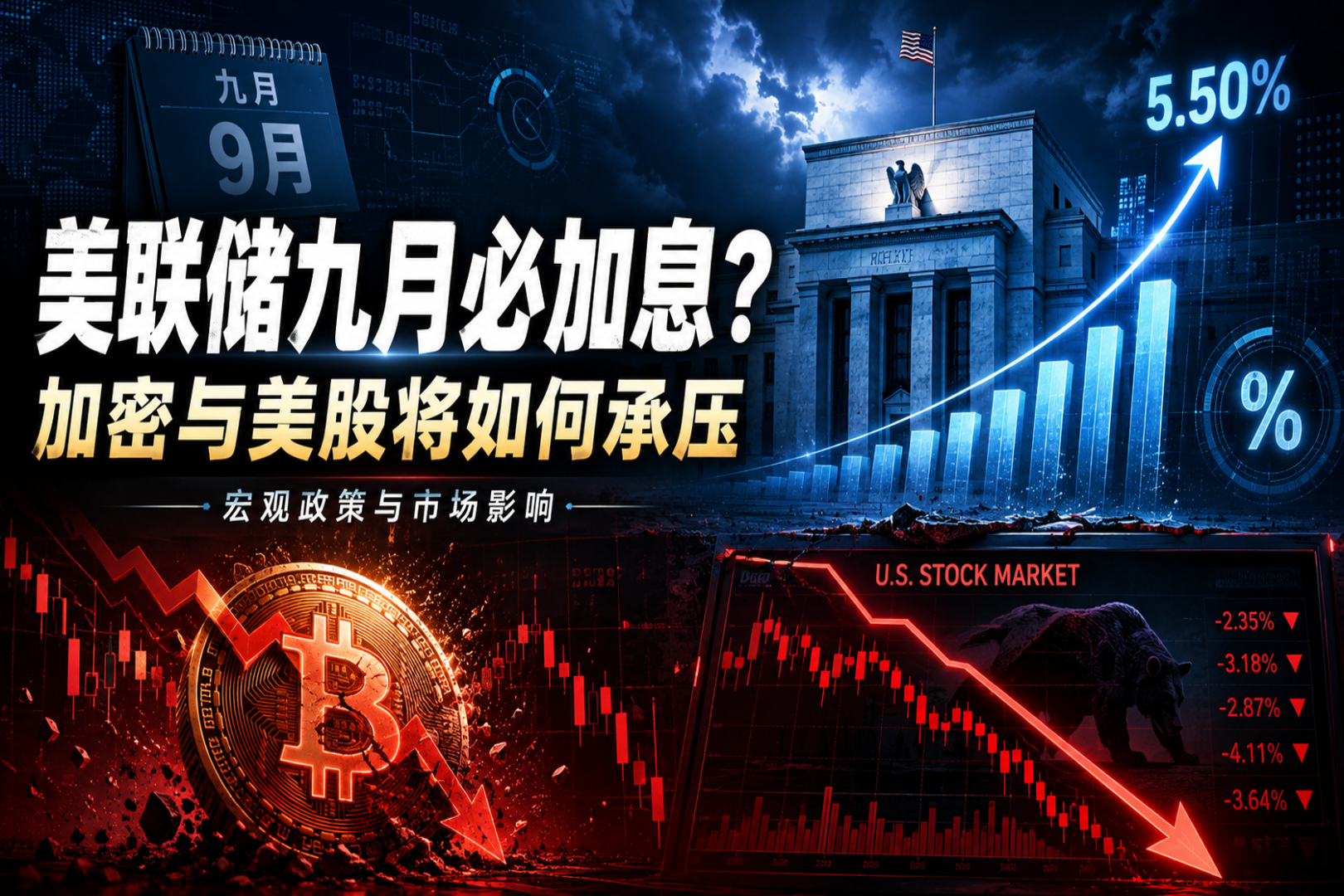
Will the Federal Reserve Definitely Raise Interest Rates in September? How Will Cryptocurrencies and US Stocks Bear the Pressure?

In early August 2024, market expectations for a September Federal Reserve rate hike surged dramatically, from below 50% to over 80%, driven by renewed inflation concerns. This shift followed a contentious July FOMC meeting where a 9-3 vote to hold rates revealed a growing hawkish faction advocating for an immediate hike, citing prolonged above-target inflation. The key catalyst is escalating conflict near the Strait of Hormuz, which has pushed oil prices up approximately 20% in July, threatening to reignite inflation. The next critical data point is the July CPI report on August 12th; a hot reading could solidify hike expectations. For crypto assets, particularly Bitcoin, this represents near-term pressure. Bitcoin continues to exhibit high-beta, risk-on characteristics, making it sensitive to tightening liquidity and higher opportunity costs. However, historical precedent suggests that if a hike is perceived as the cycle's end rather than its start, the negative impact may be brief, with markets quickly pivoting to anticipate future rate cuts. U.S. stocks, especially crypto-linked equities like Coinbase and high-valuation tech stocks, face amplified volatility. Higher rates increase discount rates in valuation models, pressuring growth stocks. This coincides with a pivotal tech earnings season where investor focus has shifted from massive AI capital expenditures to demonstrable revenue and cash flow generation. Companies with negative cash flows and weak growth narratives could see severe pressure if a September hike materializes, as financing costs would rise. Key indicators to watch include oil prices, upcoming inflation data, and Fed commentary at events like the Jackson Hole symposium.

Odaily星球日报Há 3m

Will the Federal Reserve Definitely Raise Interest Rates in September? How Will Cryptocurrencies and US Stocks Bear the Pressure?

Odaily星球日报Há 3m

From South Korea to the United States: Blue-Collar Jobs Are Becoming Increasingly Popular, Thanks to AI

AI is reshaping the labor market's value proposition. The traditional four-year college degree is losing its appeal as a guaranteed career path, while skilled blue-collar trades like electricians, welders, and plumbers are experiencing historic demand and wage premiums. This shift is driven by dual pressures: AI's displacement of certain white-collar roles and a booming need for physical infrastructure and data center construction. Data confirms the trend. In the U.S., vocational school revenue surged, and a significant portion of recent layoffs are AI-related. Surveys show a majority of Gen Z adults plan to pursue blue-collar work, citing better job security against AI automation. Vocational education interest has exploded recently. Experts cite a psychological shift as younger generations seek tangible, AI-resistant careers and avoid high student debt. In many cases, salaries for skilled trades now match or exceed those requiring a bachelor's degree. In South Korea, semiconductor vocational high schools boast near-total employment, with graduates securing high-paying roles at companies like Samsung. The shortage is structural, exacerbated by a retiring baby boomer workforce and massive infrastructure projects. Companies like JPMorgan Chase, Meta, and Lowe's are investing heavily in training programs. However, overcoming historical stigma and a "perception gap" around trade careers remains a key challenge to closing the talent gap.

marsbitHá 1h

From South Korea to the United States: Blue-Collar Jobs Are Becoming Increasingly Popular, Thanks to AI

marsbitHá 1h

Trading

Spot

Artigos em Destaque

Como comprar HOUSE

Bem-vindo à HTX.com!Tornámos a compra de Housecoin (HOUSE) simples e conveniente.Segue o nosso guia passo a passo para iniciar a tua jornada no mundo das criptos.Passo 1: cria a tua conta HTXUtiliza o teu e-mail ou número de telefone para te inscreveres numa conta gratuita na HTX.Desfruta de um processo de inscrição sem complicações e desbloqueia todas as funcionalidades.Obter a minha contaPasso 2: vai para Comprar Cripto e escolhe o teu método de pagamentoCartão de crédito/débito: usa o teu visa ou mastercard para comprar Housecoin (HOUSE) instantaneamente.Saldo: usa os fundos da tua conta HTX para transacionar sem problemas.Terceiros: adicionamos métodos de pagamento populares, como Google Pay e Apple Pay, para aumentar a conveniência.P2P: transaciona diretamente com outros utilizadores na HTX.Mercado de balcão (OTC): oferecemos serviços personalizados e taxas de câmbio competitivas para os traders.Passo 3: armazena teu Housecoin (HOUSE)Depois de comprar o teu Housecoin (HOUSE), armazena-o na tua conta HTX.Alternativamente, podes enviá-lo para outro lugar através de transferência blockchain ou usá-lo para transacionar outras criptomoedas.Passo 4: transaciona Housecoin (HOUSE)Transaciona facilmente Housecoin (HOUSE) no mercado à vista da HTX.Acede simplesmente à tua conta, seleciona o teu par de trading, executa as tuas transações e monitoriza em tempo real.Oferecemos uma experiência de fácil utilização tanto para principiantes como para traders experientes.

443 Visualizações TotaisPublicado em {updateTime}Atualizado em 2026.06.02

Como comprar HOUSE

Discussões

Bem-vindo à Comunidade HTX. Aqui, pode manter-se informado sobre os mais recentes desenvolvimentos da plataforma e obter acesso a análises profissionais de mercado. As opiniões dos utilizadores sobre o preço de HOUSE (HOUSE) são apresentadas abaixo.

活动图片