Author: Wall Street News Agency
U.S. stocks staged a strong rebound in August, with the S&P 500 hitting a new record high as investors returned to the technology and leveraged sectors. Robust corporate earnings and cooling inflation provided fuel, but surging oil prices, persistently high long-term bond yields, and conflicting cross-asset signals have made this "golden era" trade increasingly fragile.
After a sharp sell-off in chip stocks in July, market fear came and went quickly. The S&P 500 has gained about 4% month-to-date, surpassing the 7800-point mark this week to reach an all-time high; the Nasdaq 100 Index, which briefly entered a technical correction, is now only about 2.5% away from its June peak. This week, both Citi and JPMorgan raised their year-end 2026 targets for the S&P 500, underscoring the recent bullish sentiment.
Capital continues to flow in. According to State Street's custody data tracking over $50 trillion in institutional assets, institutional demand for U.S. information technology stocks has rebounded to a five-year high over the past month. Meanwhile, speculative tools such as leveraged ETFs and call options are regaining popularity, with both retail and institutional investors increasing their risk exposure.
However, the rapid return of bullish bets has also raised alarms among some analysts—the current market pricing of a "perfectly good" combination leaves almost no room for error.
The core driver of this rally is an earnings season described by analysts as "incredible."
Second-quarter earnings for S&P 500 component companies grew over 50% year-over-year; excluding investment gains from Amazon and Alphabet, growth was still strong at around 30%. Scott Chronert, head of U.S. equity strategy at Citi, raised his year-end target to 8100 points this week, saying, "This degree of earnings surprise is something you rarely, if ever, see." Dubravko Lakos-Bujas, global head of market strategy at JPMorgan, wrote in a client note that the U.S. stock "earnings picture remains strong and broadly distributed across sectors," with some ultra-large-scale cloud computing companies showing early signs that their massive AI investments are beginning to pay off. The bank raised its S&P 500 year-end target from 7800 points to 8000 points, implying a 16.5% gain for the year.
Kevin Gordon, director of macro research and strategy at Charles Schwab, said, "In terms of the degree to which the tech sector can swing the index, this is the new normal." Nonetheless, analysts also note that earnings growth is spreading to other parts of the economy, which is seen as a healthy sign for the bull market's continuation.
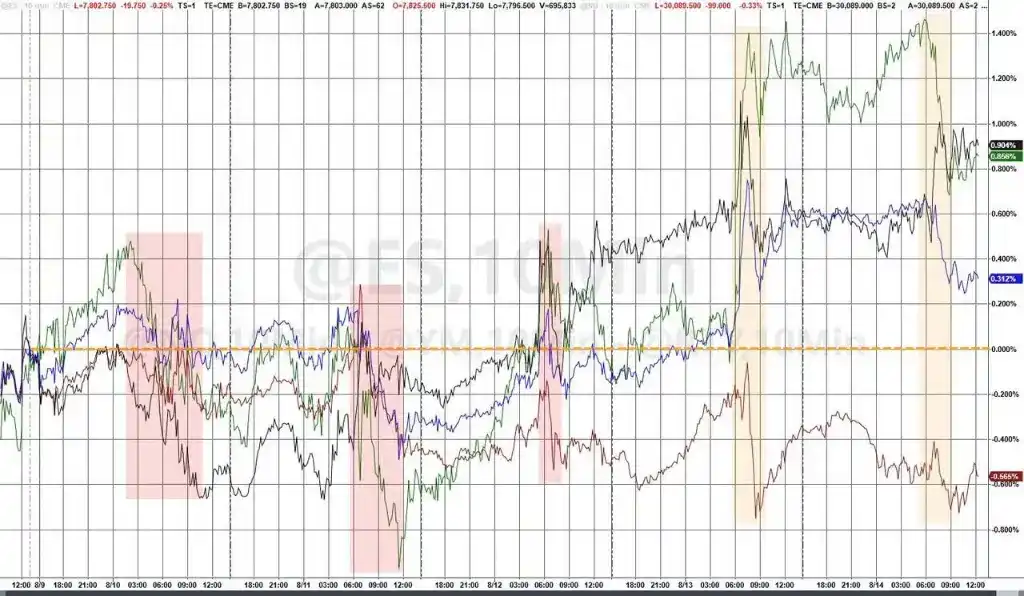
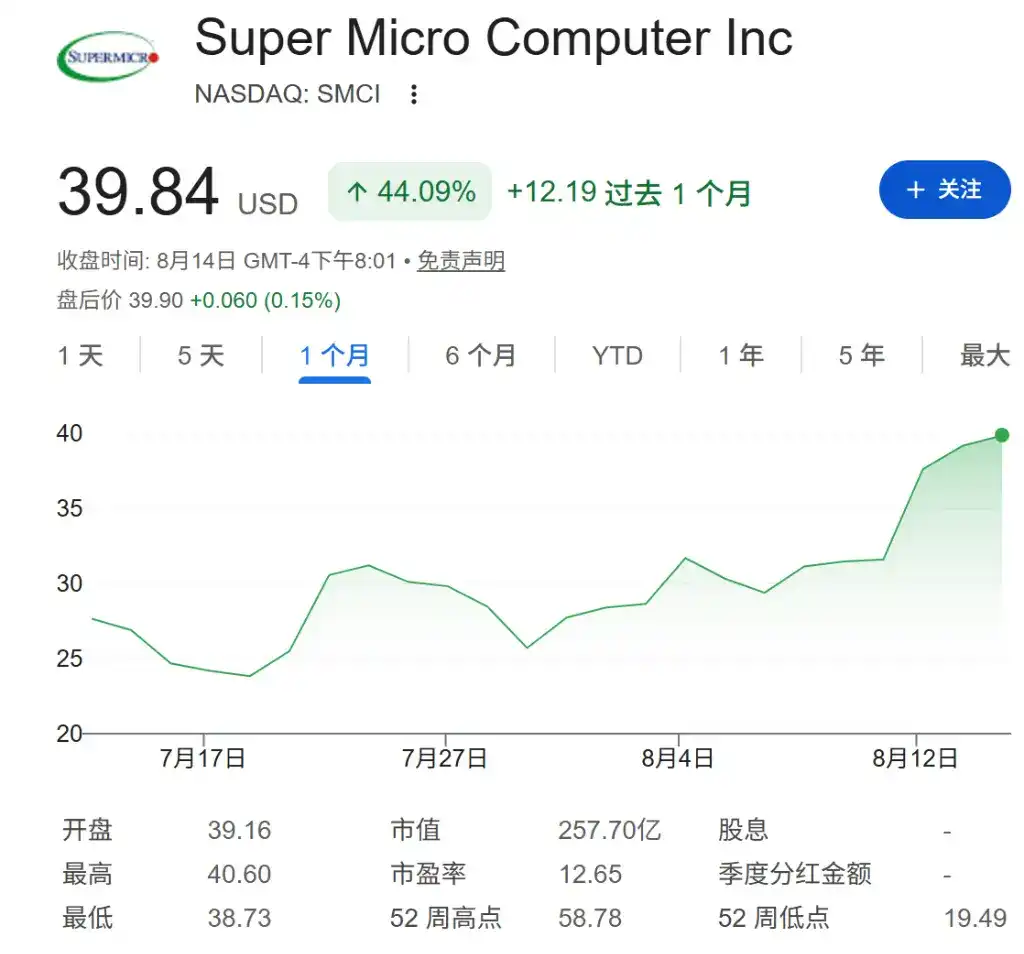
Leading the rebound are precisely the sectors that fell the hardest in July.
Super Micro Computer has gained about 38% month-to-date in August, memory company Sandisk is up over 33%, cloud computing firms CoreWeave and Nebius have each risen more than 40% in the past two weeks; Micron and Intel are both up about 15%.
The leveraged ETF market is also seeing a major return of the "gambling instinct." According to Bloomberg Intelligence data, leveraged index funds have collectively created nearly $50 billion in wealth so far this year, while leveraged single-stock funds have lost about $4 billion over the same period. This stark contrast reveals a harsh reality: broad-based leveraged strategies betting on sustained rallies have outperformed, while strategies attempting to magnify gains in individual hot stocks have been hit hard.
James Seyffart, ETF analyst at Bloomberg Intelligence, noted:
"Single-stock products are riskier and more volatile; investors can get burned more easily. But this space is so new, with new products launching almost daily, and people just keep buying."
Among the most popular products, the $25 billion Direxion Daily Semiconductor Bull 3X ETF, despite falling about 20% over the past month, attracted the most inflows; the Direxion Daily TSLA Bull 2X ETF, despite losing over 50% year-to-date, also ranked high in inflows. Adam Phillips, chief investment officer at EP Wealth Advisors, said, retail investors have recently shown "disciplined buying" characteristics during volatility, "in some ways, becoming the smart money."
Adding macro fuel to this rebound is a series of lower-than-expected inflation data.
U.S. July CPI increased about 3.4% year-over-year, with core inflation continuing to decline; July PPI was flat month-over-month, below expectations; July retail sales fell 0.6% month-over-month, the largest drop in over a year. These data prompted traders to sharply reduce bets on further Fed rate hikes, with the probability of a September hike plummeting from 75% at the end of July to about 25%.
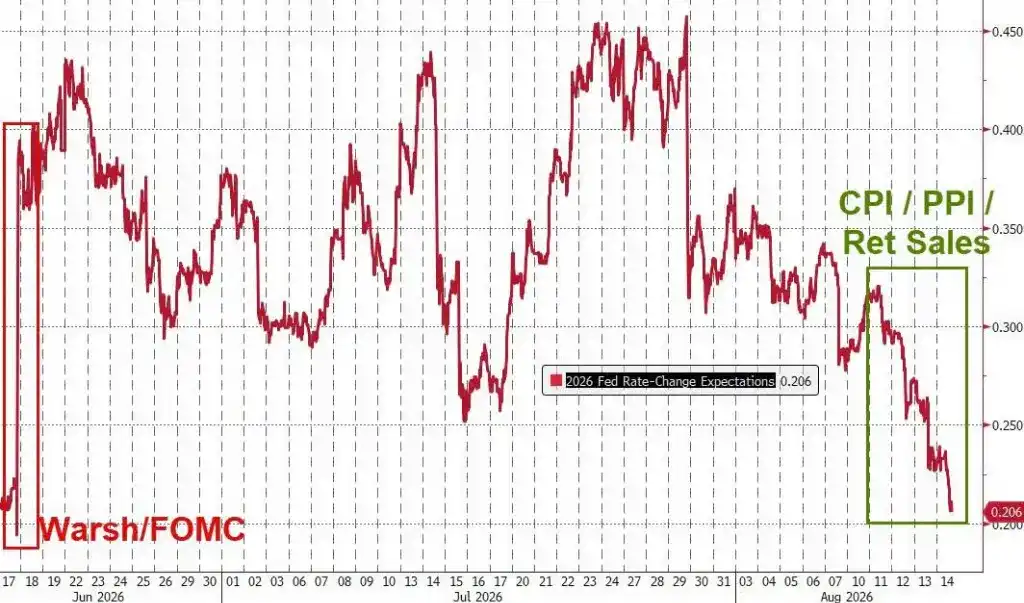
The U.S. dollar index subsequently fell to a three-month low, erasing all gains made since Fed Chairman Wash's hawkish path. Michael Metcalfe, head of macro strategy at State Street, believes the U.S. tech trade "is bulletproof, at least for now"—"Against the noise of geopolitics and the economy, earnings remain so strong, reinforcing the judgment that this is a structural trade, not a cyclical one."
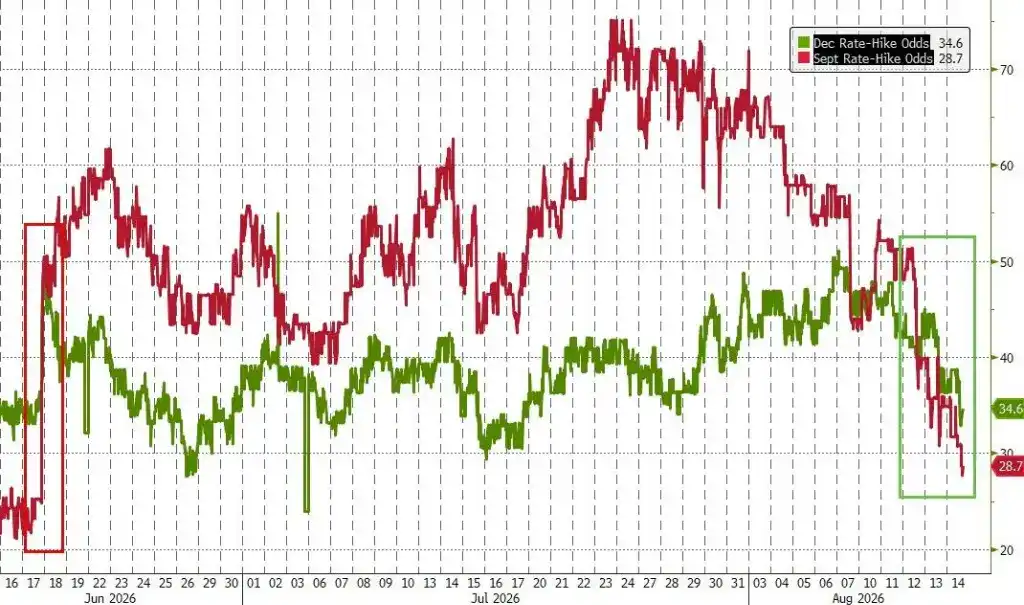
Movements in the options market also reflect the shift in sentiment.
According to Cboe data, the S&P 500 Skew index—which measures the cost of hedging downside risk relative to call options—fell to a one-year low in early August. Mandy Xu, head of derivatives market intelligence at Cboe, said investors "sold hedges and chased calls to ride the rally."
Meanwhile, the VIX fear index has declined for the fourth consecutive week, even as oil prices surged, tensions in Iran persisted, and long-term Treasury yields remained elevated. This sends a clear signal: the market believes almost every piece of bad news carries its own bullish hedge—weak employment means the Fed won't hike, slowing consumption means the Fed won't hike, rising oil prices are considered temporary, and AI earnings can outweigh everything.
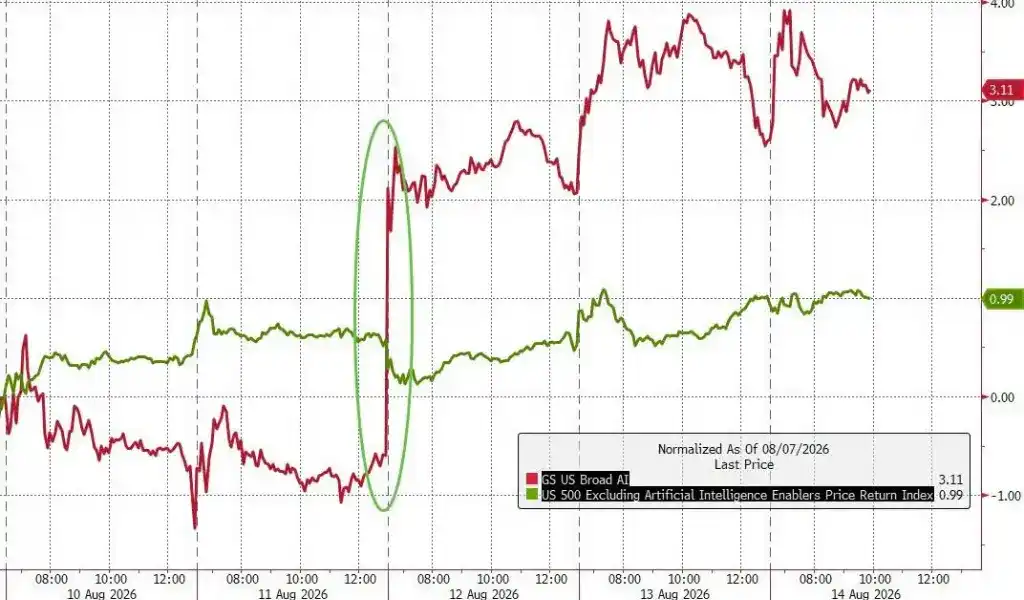
However, the gap between asset prices is widening and cannot be ignored.
Oil prices rose about 6% this week, with Brent crude approaching $90 per barrel, driven by stalled talks over the Strait of Hormuz and U.S. threats to escalate sanctions.
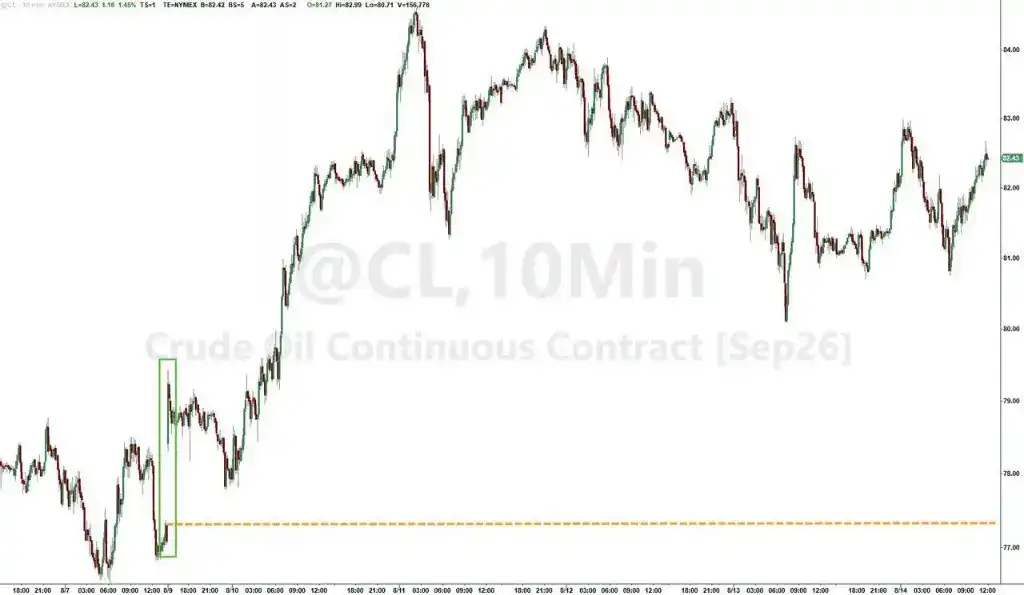
Meanwhile, this week's 30-year U.S. Treasury auction cleared at the highest yield in 25 years, with the 10-year auction yield also at historically high levels; although short-term rates fell due to receding Fed hike expectations, long-term rates continued to rise, pushing the term premium higher and significantly steepening the yield curve.
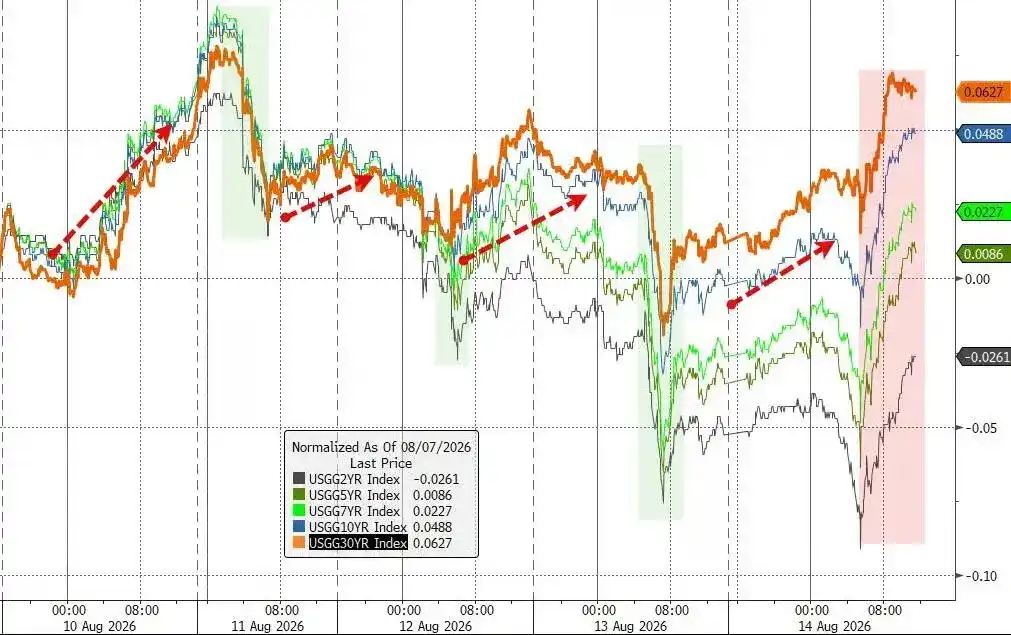
This means: the market may believe the Fed is largely done with rate hikes, but it does not believe inflation is over.
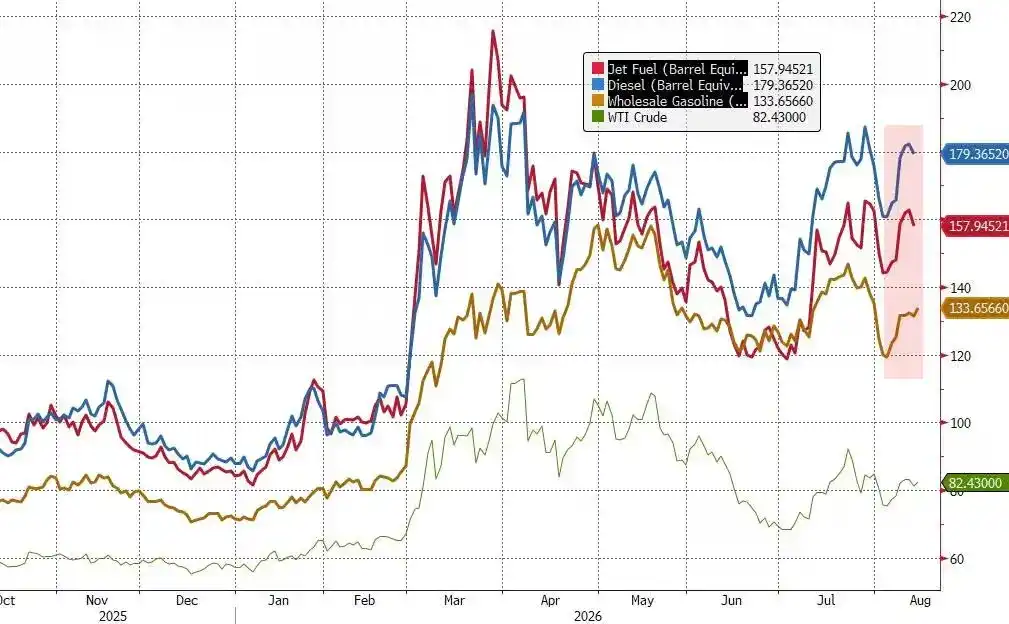
Henry Allen, macro strategist at Deutsche Bank, warned, "The market is currently pricing in a goldilocks combination: growth remains strong, central bank hikes are limited, supply shocks prove temporary, and oil prices fall again." He said, "This leaves almost no room for error. It's hard to imagine all these completely benign conditions holding simultaneously."
Michael Contopoulos, head of multi-asset macro investing at Janus Henderson Investors, also noted that while strong fundamentals and an overweight position in equities are justified, "chasing crowded and expensive areas of the market is a huge risk; we would avoid that."
Currently, a contest is forming between a "Goldilocks" scenario and bond bears. The stock market is betting on a soft landing and an AI earnings supercycle, while the long end of the bond market is pricing in fiscal deficits and supply pressures; both cannot be right simultaneously. Which side ultimately prevails may become the most important market theme for the second half of 2026.