How to Build a Polymarket Passive Income Bot from Scratch

Odaily星球日报Publicado em 2025-12-10Última atualização em 2025-12-10

Resumo

Polymarket, a leading prediction market platform on Polygon, allows users to bet on real-world events using USDC. Its open API, transparent order book, low fees, and numerous human traders making errors create a fertile ground for automated trading bots. This article breaks down bot strategies from basic to advanced. Beginner-level bots include airdrop farming bots that generate volume by repeatedly buying and selling the same position, and volatility捕捉 bots that bet on mean reversion after sharp price swings. Intermediate strategies involve market-making bots, which profit from bid-ask spreads and liquidity rewards by placing limit orders, though they require significant capital and risk losses during sudden market moves. Advanced bots include arbitrage bots that exploit pricing inefficiencies between related outcomes (e.g., YES/NO shares summing under 100%), and AI-powered bots that integrate multiple data sources—historical prices, news, on-chain activity, social sentiment—to identify mispriced probabilities and execute trades across hundreds of markets. All bots require access to Polymarket’s API, a Polygon wallet for USDC transactions, historical data storage (e.g., PostgreSQL), and a Python-based toolchain. Bots succeed due to their speed, discipline, scalability, and data-processing capabilities. However, effective risk management is crucial, as strategies can fail due to liquidity issues, unexpected news, or intense competition. Building a profitable AI bot is par...

Source:Archive

Compiled|Odaily Planet Daily(@OdailyChina);Translator|Azuma(@azuma_eth)
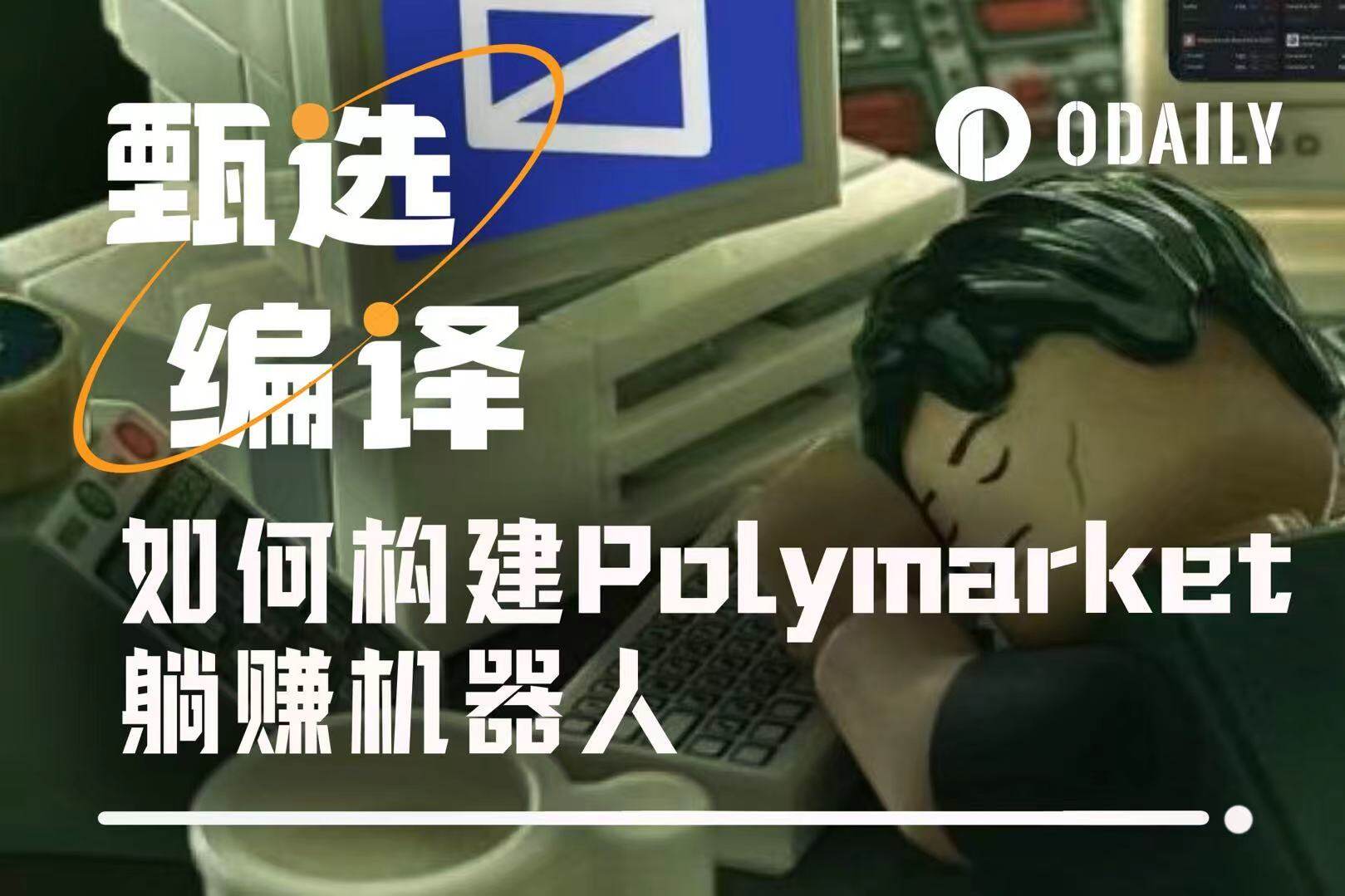
Polymarket is the hottest prediction market platform where people use real money to bet on real-world event outcomes, such as US elections, sports matches, asset prices, policy changes, and more.

Polymarket operates on the Polygon network, uses USDC for settlement, and offers transparent, fast transactions with almost no fees.

There are also bots on Polymarket that profit massively by identifying traders' mistakes faster than others and repeatedly exploiting these errors through thousands of executions.

Why do bots thrive so well on Polymarket? The reasons are:

  • Open API, transparent order book — bots can see everything;
  • Extremely low fees, instant settlement — micro-spread arbitrage works effectively;
  • Millions of human users trade manually, and many of them frequently make mistakes.

This is not an article advertising bots. It's a breakdown from the dumbest bot to a true money-making AI monster.

I. Entry-Level Bots

Airdrop Farming Bot: Volume Spammer

The market expects that interacting with Polymarket will yield generous airdrop rewards. These bots continuously buy and immediately sell the same position, repeating the cycle just to inflate trading volume — no real intent, purely for volume.

The operation is simple — choose a market with good liquidity, for example, buy a "YES" position for $10, then instantly sell it for $10, and the trading volume is boosted just like that.

Pros:

  • None.

Cons:

  • No one knows the specific criteria for the airdrop;
  • The platform might not count such trades;
  • The airdrop might not exist; you might be working for nothing.

Volatility Capture Bot: Specializes in Panic Moments

This type of bot looks for sharp price fluctuations and bets against the market, expecting mean reversion — prices will eventually return to normal.

The bot continuously monitors price history, calculating the deviation of the current price from the recent average. Once the price surges or plummets violently, the bot quickly takes a reverse position, betting that the market overreacted.

Pros:

  • Operable with small capital;
  • Simple and easy-to-understand logic;
  • Profits from human emotions and mistakes.

Cons:

  • Not all fluctuations are false; sometimes real big news causes market moves;
  • If stop-loss or target levels are set wrong, fees alone can make you lose money;
  • Risk management must be strict, otherwise it's a slow bleed.

II. Intermediate-Level Bots

Market Making Bot: Spread Harvester

This type of bot profits by continuously placing limit orders on both the buy and sell sides.

The bot places buy orders slightly below the current price and sell orders slightly above. When both are filled, the spread is captured. Additionally, Polymarket rewards liquidity provision, meaning dual income.

Pros:

  • Dual income sources: spread + platform rewards;
  • Surprisingly stable returns in calm, low-volatility markets;
  • Effective if the right markets are chosen.

Cons:

  • Requires at least $10,000+ in capital for the spread to be meaningful;
  • Very afraid of sudden market swings: if your buy order gets filled just before a crash, you'll be stuck at a high point;
  • One bad market can wipe out a week's profits.

III. Advanced-Level Bots

Arbitrage Bot

An arbitrage opportunity exists when the sum of the prices of correlated outcomes (e.g., the basic "YES" and "NO") is below 100%.

More complex tests involve arbitraging between different correlated markets (different phrasings of the same event, time windows, compound conditions, etc.). As long as the position is constructed, you can lock in profits regardless of the outcome.

Pros:

  • Properly constructed arbitrage strategies do not depend on the event outcome;
  • Profits from market inefficiencies that humans cannot process quickly.

Cons:

  • The more arbitrage bots, the faster the opportunity window closes — profits get thinner;
  • Paper-perfect arbitrage strategies can fail during execution from lack of liquidity.

AI Bot

These bots don't just look at prices; they can estimate the true probability more accurately than the market. They integrate and analyze historical prices, trading volume, news, on-chain data, whale behavior, and other clues, sometimes even analyzing collective sentiment on social media.

If the model determines the market is pricing a 40% probability while the true probability is 60%, the bot buys low and sells high, operating 24/7.

Pros:

  • A successful AI bot can operate across politics, sports, macro, and other fields, running one model across hundreds of markets;
  • Can cover multiple signal sources: statistical, on-chain, news, behavioral indicators.

Cons:

  • High barrier to entry.

You need to have data pipelines, infrastructure, machine learning skills, financial intuition, a risk framework, and also invest resources in data storage, processing, continuous model retraining, monitoring, and building a bulletproof risk management system. This isn't a side project; it's equivalent to starting a startup.

Tech Stack (Required for All Bots)

Polymarket API Access: The official documentation contains all real-time data and order placement interfaces. Nothing can be done without this.

Polygon Wallet: Transactions are conducted in USDC on Polygon. You need a wallet private key to sign transactions and manage balances.

Historical Data Storage:

  • Bots need: price, volume, spread, market metadata.
  • Recommended PostgreSQL or SQL + columnar storage hybrid for fast data aggregation.

Python + Common Toolchain: For API requests, asynchronous processing, data analysis, machine learning libraries.

Why Do Bots Always Win?

  • Speed: No emotions, no hesitation;
  • Discipline: Strictly follows system rules;
  • Scale: One bot can monitor thousands of markets while you sleep;
  • Data Depth: Combines price, order book, news, behavioral patterns into signals you can't calculate manually;

In summary, using trading bots on Polymarket is a powerful tool for achieving automated income — but only if you manage risk properly.


Perguntas relacionadas

QWhat are the main reasons why trading bots are so effective on Polymarket?

ATrading bots are effective on Polymarket due to the open API and transparent order book, extremely low fees and instant settlement, and the presence of millions of human traders who frequently make mistakes.

QWhat is the primary purpose of an airdrop farming bot on Polymarket?

AThe primary purpose of an airdrop farming bot is to repeatedly buy and immediately sell the same position to artificially inflate trading volume, with the sole intention of qualifying for a potential future airdrop reward.

QWhat is a key disadvantage of using a market making bot on Polymarket?

AA key disadvantage is the risk of sudden market volatility; if the market crashes right after a buy order is filled, the bot can be left holding a losing position.

QHow does an arbitrage bot on Polymarket generate profit?

AAn arbitrage bot profits by identifying and exploiting pricing inefficiencies, such as when the combined price of correlated outcomes (e.g., YES and NO shares) is below 100%, allowing for a risk-free profit if the positions are constructed correctly.

QWhat additional capabilities does an AI-powered bot have compared to simpler bots?

AAn AI-powered bot can integrate and analyze multiple data sources like historical prices, trading volume, news, on-chain data, whale activity, and even social media sentiment to more accurately estimate the true probability of an event and trade on those insights.

Leituras Relacionadas

US Stocks Suffer Worst Plunge Since 2025: Three Triggers Ignite Tech Stock Valuation Reset

The US stock market experienced its most severe sell-off since the 2025 tariff crisis on June 5th, 2025. The Nasdaq Composite plummeted 4.18%, the S&P 500 fell 2.64%, and the Dow Jones dropped 695 points. The panic stemmed from three converging factors. First, Broadcom's earnings report ignited fears of a slowdown in AI growth. While its AI chip revenue surged 143% YoY to $10.8B, its Q3 AI revenue guidance of $16B fell short of the $17.2B consensus. This triggered a massive sector-wide sell-off, with the Philadelphia Semiconductor Index crashing 10.26% and semiconductor stocks losing roughly $1.3 trillion in market value in a single day. Second, a shockingly strong May jobs report crushed hopes for Federal Reserve rate cuts. Non-farm payrolls added 172,000 jobs, doubling expectations. This robust data, combined with persistently high oil prices above $92/barrel due to the ongoing Iran war and blockade of the Strait of Hormuz, drastically increased market expectations for a potential Fed rate hike instead of a cut. Higher interest rates compress the valuations of growth-heavy tech stocks. Third, the prolonged Iran conflict continues to fuel inflationary pressures, complicating the Fed's policy decisions and undermining the "inflation is tamed" narrative. Together, these events challenged the twin pillars of the market rally: the "limitless AI growth" story and expectations for imminent monetary easing. The sell-off spread globally, impacting Asian and European markets and cryptocurrencies. The article posits this is likely a severe "valuation repricing" rather than the end of the AI story. The underlying demand for AI remains strong, but investor expectations for growth speed and the prices they are willing to pay are being recalibrated. Key upcoming factors include the June FOMC meeting, future AI company earnings, and developments in the Iran conflict.

marsbitHá 46m

US Stocks Suffer Worst Plunge Since 2025: Three Triggers Ignite Tech Stock Valuation Reset

marsbitHá 46m

From Madison Square Garden to Kalshi: Prediction Markets Break into the NBA Finals

From Madison Square Garden to Kalshi: Prediction Markets Break into the NBA Finals Prediction markets are playing a significant role in the 2026 NBA Finals, particularly around the New York Knicks' unexpected 2-0 series lead. Platforms like Kalshi and Polymarket have seen massive trading volumes, exceeding hundreds of millions of dollars on championship and related markets. Their influence extends beyond online trading. Kalshi's official partnership with Madison Square Garden has given it prominent physical branding at the arena. Furthermore, local businesses like The Jeffrey bar are using prediction market contracts to hedge the risk of game-result-based promotions, turning potential losses into manageable costs—a concept similar to the famous "Mattress Mack" strategy from traditional sports betting. These markets differentiate themselves by offering a wider, more entertainment-focused range of "event contracts" beyond typical game outcomes, such as predicting celebrity attendance. They also have broader accessibility across the U.S. compared to age- and location-restricted traditional sportsbooks. However, their rapid integration into sports raises regulatory and ethical questions. The NBA is cautiously engaging, discussing integrity frameworks with regulators like the CFTC. While the league permits minor investments like Giannis Antetokounmpo's stake in Kalshi, it advocates for strict rules to prevent insider trading. Many fans express concern on platforms like Reddit, fearing that the close ties between prediction markets, the league, and players could compromise the game's integrity. The NBA Finals has thus become a high-stakes testing ground, showcasing prediction markets' commercial potential while challenging traditional boundaries between financial trading, entertainment, and gambling.

marsbitHá 2h

From Madison Square Garden to Kalshi: Prediction Markets Break into the NBA Finals

marsbitHá 2h

Recursive Self-Improvement AI Gains Traction, Google Pours Cold Water, While DeepSeek and Others Approach the Fringes

The term "recursive self-improvement" (RSI), where AI improves itself autonomously, is gaining momentum in the AI industry. Startups like Recursive Superintelligence and projects such as Andrej Karpathy's Auto-Research aim to create systems where AI designs, implements, and validates its own research, moving toward superintelligence. While Google CEO Sundar Pichai cautions that such exponential acceleration is not yet a reality, progress is evident. For instance, Anthropic reported its Claude Code writes nearly 100% of the team's code, though it still lacks true self-direction. Analysts frame RSI development in stages: "adequacy" (systems functioning without humans), "parity" (matching human research quality), and "supremacy" (exceeding human-AI collaboration). Reaching parity could trigger rapid, unpredictable advancement due to AI's continuous operation. In China, companies like DeepSeek and Baidu incorporate self-optimization techniques without explicitly branding them as RSI, focusing on algorithmic efficiency and reinforcement learning. However, challenges remain, including "model collapse" from training on AI-generated data and the immense computational and open-collaboration requirements. Ultimately, RSI represents a trend of increasing automation in AI development, potentially reducing human oversight in the creation process itself.

marsbitHá 3h

Recursive Self-Improvement AI Gains Traction, Google Pours Cold Water, While DeepSeek and Others Approach the Fringes

marsbitHá 3h

Trading

Spot
Futuros

Artigos em Destaque

Como comprar BILL

Bem-vindo à HTX.com!Tornámos a compra de Billions Network (BILL) simples e conveniente.Segue o nosso guia passo a passo para iniciar a tua jornada no mundo das criptos.Passo 1: cria a tua conta HTXUtiliza o teu e-mail ou número de telefone para te inscreveres numa conta gratuita na HTX.Desfruta de um processo de inscrição sem complicações e desbloqueia todas as funcionalidades.Obter a minha contaPasso 2: vai para Comprar Cripto e escolhe o teu método de pagamentoCartão de crédito/débito: usa o teu visa ou mastercard para comprar Billions Network (BILL) instantaneamente.Saldo: usa os fundos da tua conta HTX para transacionar sem problemas.Terceiros: adicionamos métodos de pagamento populares, como Google Pay e Apple Pay, para aumentar a conveniência.P2P: transaciona diretamente com outros utilizadores na HTX.Mercado de balcão (OTC): oferecemos serviços personalizados e taxas de câmbio competitivas para os traders.Passo 3: armazena teu Billions Network (BILL)Depois de comprar o teu Billions Network (BILL), armazena-o na tua conta HTX.Alternativamente, podes enviá-lo para outro lugar através de transferência blockchain ou usá-lo para transacionar outras criptomoedas.Passo 4: transaciona Billions Network (BILL)Transaciona facilmente Billions Network (BILL) no mercado à vista da HTX.Acede simplesmente à tua conta, seleciona o teu par de trading, executa as tuas transações e monitoriza em tempo real.Oferecemos uma experiência de fácil utilização tanto para principiantes como para traders experientes.

244 Visualizações TotaisPublicado em {updateTime}Atualizado em 2026.06.02

Como comprar BILL

O que é ATWO

I. Introdução ao ProjetoArena Two é uma plataforma interativa descentralizada que permite aos fãs desempenhar um papel ativo e tokenizado nos resultados de eventos em tempo real. Ao contrário dos modelos tradicionais de transmissão que reduzem os fãs a espectadores passivos, a Arena Two utiliza a tecnologia blockchain para permitir que os fãs votem diretamente em tempo real e influenciem os resultados em campo.II. Informação sobre o TokenNome do token: ATWO(Arena Two)III. Links RelacionadosWebsite:https://arenatwo.com/Exploradores:https://basescan.org/token/0x499D35eBE6cEe9B2Ac35Fd003fcBbeeB9CFc7B32Twitter:https://x.com/arenatwoXNota: A introdução ao projeto provém dos materiais publicados ou fornecidos pela equipa oficial do projeto, que é apenas para referência e não constitui aconselhamento de investimento. A HTX não se responsabiliza por quaisquer perdas diretas ou indiretas resultantes.

213 Visualizações TotaisPublicado em {updateTime}Atualizado em 2026.06.02

O que é ATWO

Como comprar ATWO

Bem-vindo à HTX.com!Tornámos a compra de Arena Two (ATWO) simples e conveniente.Segue o nosso guia passo a passo para iniciar a tua jornada no mundo das criptos.Passo 1: cria a tua conta HTXUtiliza o teu e-mail ou número de telefone para te inscreveres numa conta gratuita na HTX.Desfruta de um processo de inscrição sem complicações e desbloqueia todas as funcionalidades.Obter a minha contaPasso 2: vai para Comprar Cripto e escolhe o teu método de pagamentoCartão de crédito/débito: usa o teu visa ou mastercard para comprar Arena Two (ATWO) instantaneamente.Saldo: usa os fundos da tua conta HTX para transacionar sem problemas.Terceiros: adicionamos métodos de pagamento populares, como Google Pay e Apple Pay, para aumentar a conveniência.P2P: transaciona diretamente com outros utilizadores na HTX.Mercado de balcão (OTC): oferecemos serviços personalizados e taxas de câmbio competitivas para os traders.Passo 3: armazena teu Arena Two (ATWO)Depois de comprar o teu Arena Two (ATWO), armazena-o na tua conta HTX.Alternativamente, podes enviá-lo para outro lugar através de transferência blockchain ou usá-lo para transacionar outras criptomoedas.Passo 4: transaciona Arena Two (ATWO)Transaciona facilmente Arena Two (ATWO) no mercado à vista da HTX.Acede simplesmente à tua conta, seleciona o teu par de trading, executa as tuas transações e monitoriza em tempo real.Oferecemos uma experiência de fácil utilização tanto para principiantes como para traders experientes.

127 Visualizações TotaisPublicado em {updateTime}Atualizado em 2026.06.02

Como comprar ATWO

Discussões

Bem-vindo à Comunidade HTX. Aqui, pode manter-se informado sobre os mais recentes desenvolvimentos da plataforma e obter acesso a análises profissionais de mercado. As opiniões dos utilizadores sobre o preço de A (A) são apresentadas abaixo.

活动图片