How Does HashKey Build Institutional-Grade On-Chain Financial Infrastructure?

marsbitPublicado em 2026-02-10Última atualização em 2026-02-10

Resumo

In a recent "Charting a New Institutional Strategy" event held ahead of Consensus, HashKey Cloud and HashKey CaaS introduced a comprehensive on-chain financial infrastructure solution tailored for institutional clients. The event highlighted the growing demand for secure, efficient, and regulatory-compliant services as institutions enter the crypto ecosystem. Leo, CEO of HashKey’s On-Chain Business Group, expressed optimism about the industry’s compliance-driven future, emphasizing Web3’s potential as transparent and secure financial infrastructure, particularly in regions with less developed financial systems. HashKey Cloud, represented by Product Lead Shen Jun, showcased its institutional-grade staking and yield services, operating under a non-custodial model to enable secure asset tokenization and yield generation. The platform supports multi-chain services and offers insurance-backed staking solutions. HashKey CaaS, introduced by Business Development Manager Yu Yi, provides end-to-end services including asset tokenization, staking for ETFs and digital assets, on-chain transactions, and risk management. It aims to bridge traditional finance with crypto through compliant, globally-trusted infrastructure. The event also featured roundtables with participants from firms like Victory Securities, Zodia Custody, WisdomTree, Ether.fi, Lido, and others, discussing the integration of traditional finance with on-chain yields, new earning opportunities with ETH and BTC, and the t...

Yesterday, on the eve of Consensus, HashKey Cloud and HashKey CaaS jointly held a launch event titled "Towards an On-Chain Future: Charting a New Strategic Blueprint for Institutions." The event focused on the needs of global institutional clients in digital transformation, showcasing a one-stop on-chain financial infrastructure solution designed to provide secure, efficient, and regulatory-compliant service support for institutions entering the crypto ecosystem.

Leo, CEO of HashKey's On-Chain Business Group; Shen Jun, Product Head of HashKey Cloud; and Yu Yi, Senior Business Development Manager of HashKey CaaS, along with other core business leaders, attended the event. During the launch, the leaders shared HashKey's practical experience and technical expertise in supporting institutional clients in deploying digital assets, based on real cases and industry insights, demonstrating HashKey's professional capabilities in risk management and infrastructure.

Additionally, expert representatives from institutions such as Quzhi Group, Victory Securities, Zodia Custody, WisdomTree, Ether.fi, Lido, Babylon, Quantum Solutions, Silver Age Limited, Eddid Financial, Black Horse Aurum Ltd, and JunHe Law Offices were invited to participate. They engaged in in-depth discussions around three key areas: the integration of traditional finance and on-chain yields, the new landscape of digital asset yields, and the tokenization of precious metal physical assets.

Leo, CEO of HashKey's On-Chain Business Group, delivered an opening speech.
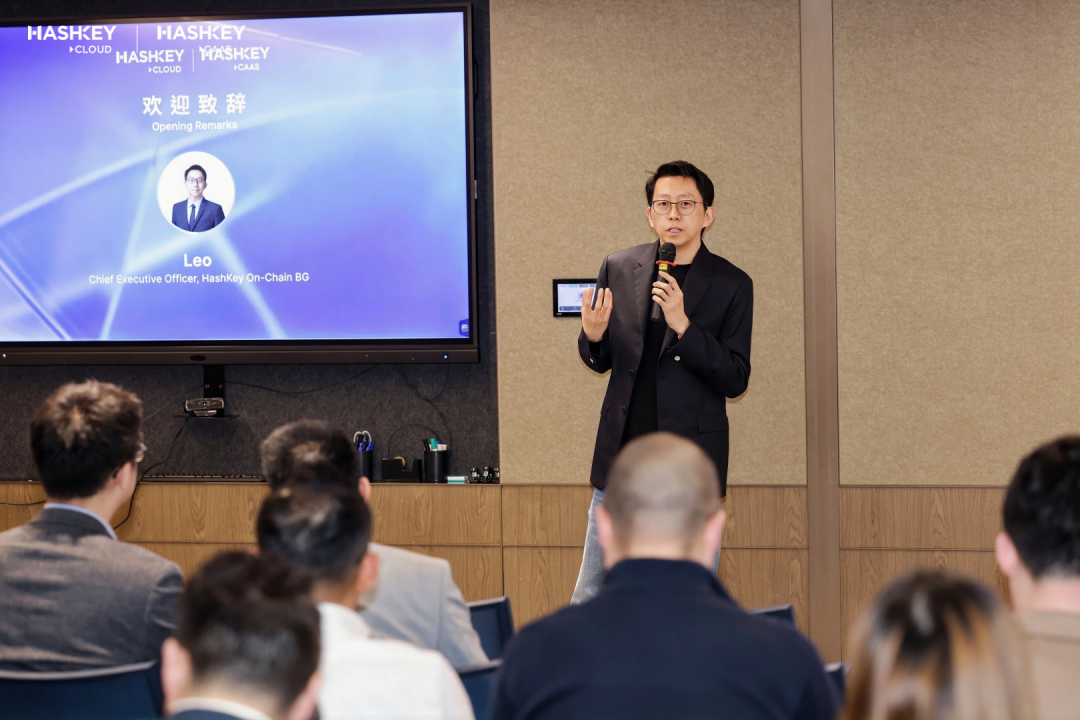
Leo stated that recent significant fluctuations in various assets are a normal cyclical phenomenon, not unique to the crypto industry. He expressed optimism about the future development of the industry, believing that it is accelerating towards compliance, with positive signals from Hong Kong's stablecoin regulations and RWA-related policies. Leo emphasized that Web3, with its transparent, timely, and secure features, can become a critical financial infrastructure, particularly in countries with weaker financial systems, where its value has already been validated through use cases like stablecoins.

Leo indicated that HashKey's future direction is to combine real-world application scenarios to help unlock the maximum value of on-chain assets and promote blockchain's role in serving inclusive finance.

HashKey Cloud: The Infrastructure for Institutional On-Chain Yields

Shen Jun, Product Head of HashKey Cloud, shared the mature practical experience of serving multiple global mainstream ETF companies and provided a detailed breakdown of the compliance framework and technical implementation path for institutional staking services.
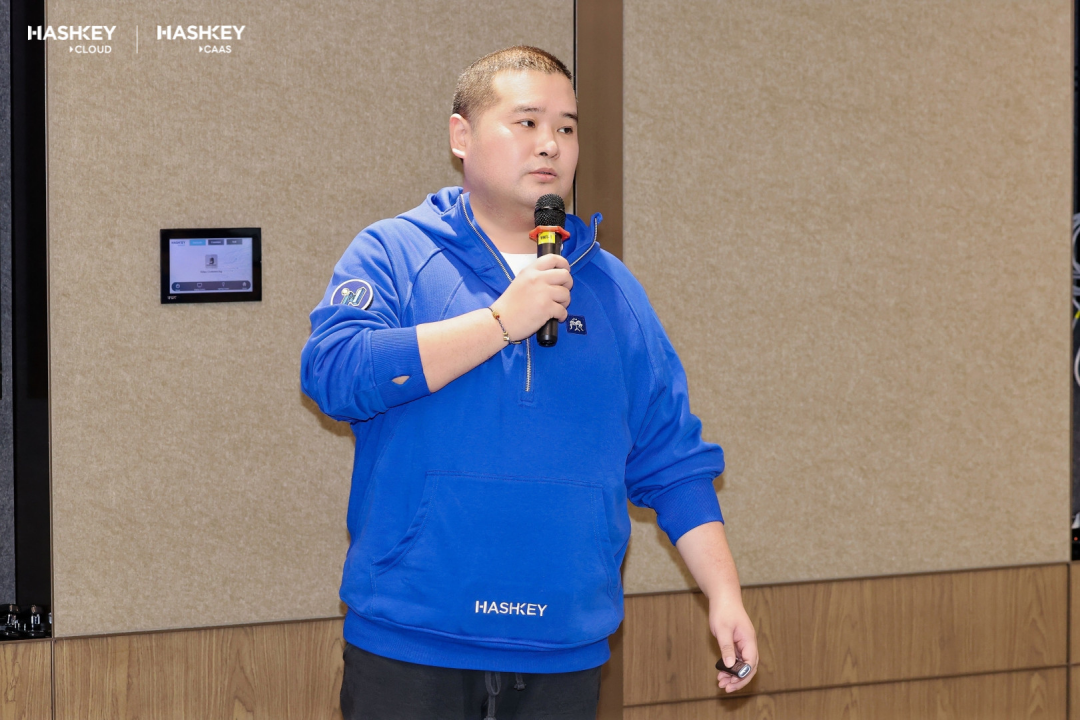
Shen Jun stated that HashKey Cloud, as a leading global institutional-grade, compliant digital asset staking and yield infrastructure, leverages the group's licensing advantages to provide secure and compliant multi-chain services for asset management institutions and other clients. HashKey Cloud adopts a non-custodial model, not directly handling user assets, and helps clients achieve tokenized appreciation and natural yield generation through APIs and online custody. Shen Jun further introduced HashKey Cloud's Staking service, which features non-custodial, on-chain verifiable, and insurance-covered core advantages, offering diversified solutions for different types of clients.

HashKey CaaS: The Core Engine for Institutional-Grade Web3 Ecosystems

Yu Yi, Senior Business Development Manager of HashKey CaaS, systematically presented HashKey CaaS's integrated institutional service system, detailing its complete layout and professional capabilities from underlying infrastructure to upper-layer yield management.
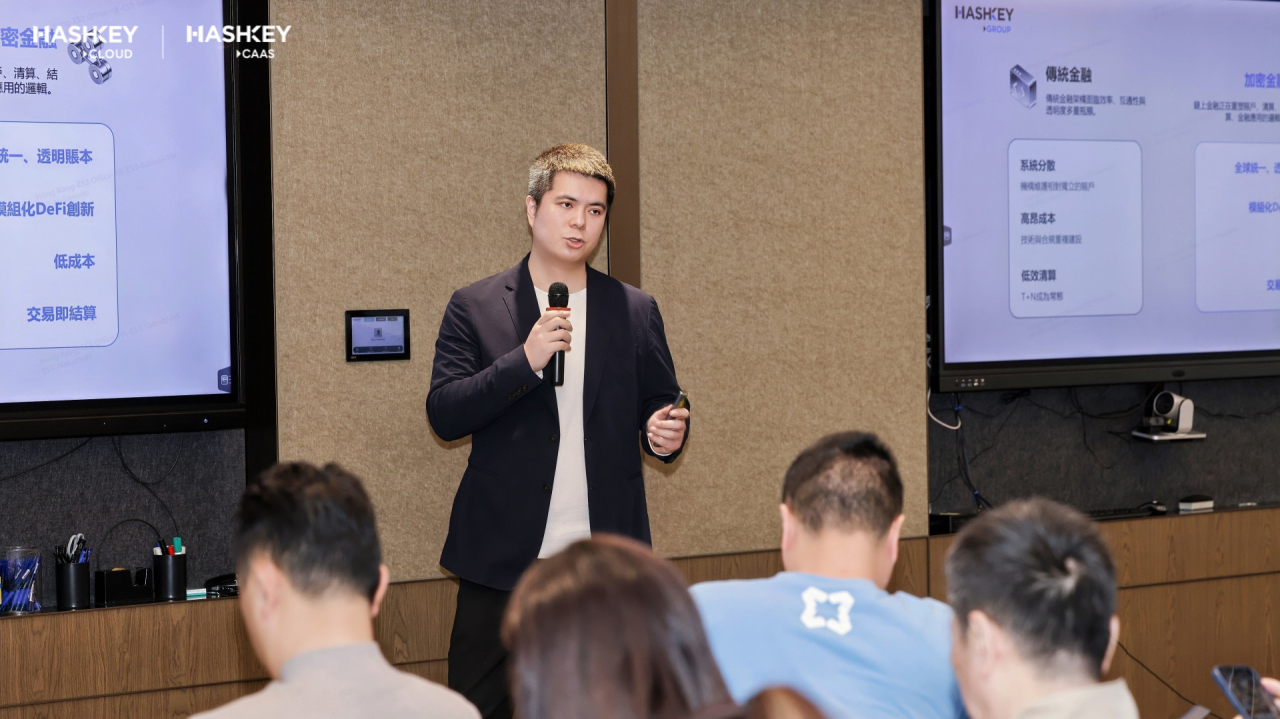
Yu Yi explained that HashKey CaaS primarily addresses traditional financial bottlenecks and helps institutions seamlessly connect to crypto finance through four core modules: asset tokenization, DAT/ETF staking, on-chain transactions and payments, and security and risk control. He noted that in asset tokenization, HashKey CaaS provides end-to-end services from design to distribution, covering products, technology, and distribution platforms. Additionally, Yu Yi stated that HashKey CaaS, with its global compliance layout and industry experience, accelerates product implementation and has gained widespread trust from leading global institutions.

The Integration Path of Traditional Finance and On-Chain Yields

In the roundtable discussion on "The Convergence of Traditional Finance and On-Chain Yields," guests from Quzhi Group, Victory Securities, and Zodia Custody focused on practical implementation experiences in real business scenarios, exploring the integration path of traditional finance and on-chain yields.

New Yield Landscape: The Fusion of ETH, BTC, and Institutional Capital
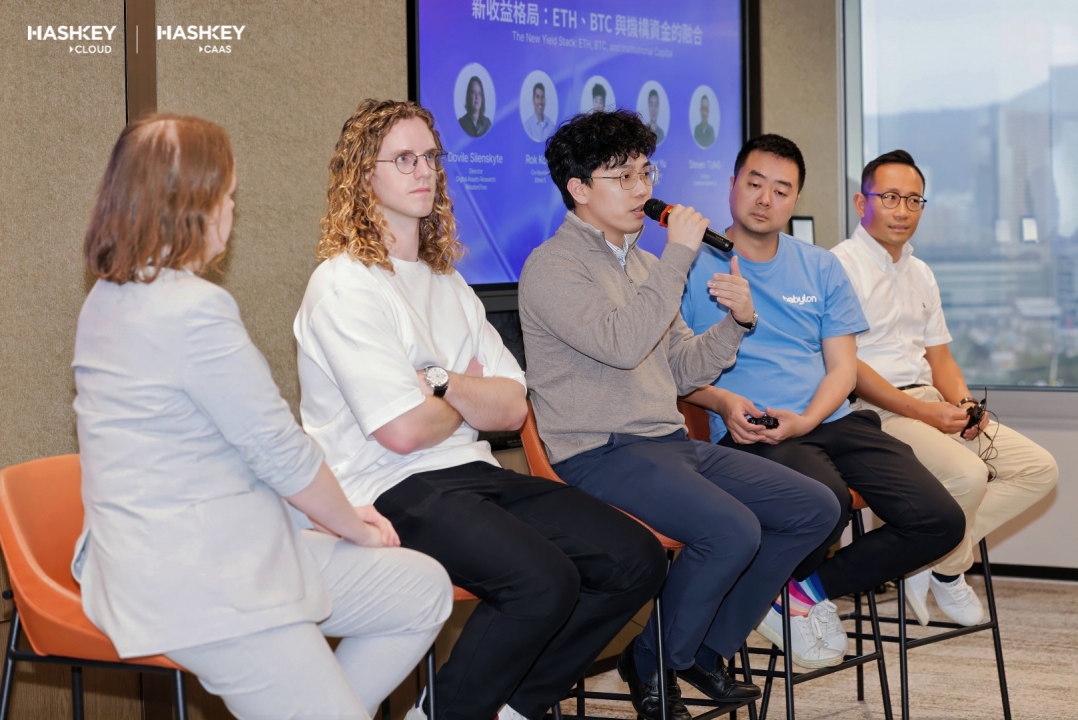
In the digital asset sector, during the roundtable on "New Yield Landscape: The Fusion of ETH, BTC, and Institutional Capital," ecosystem partners such as WisdomTree, Ether.fi, Lido, Babylon, and Quantum Solutions discussed the yield landscape of mainstream digital assets like ETH and BTC, as well as the participation models for institutional capital, exploring industry practices and development directions under the new yield landscape.

Future Prospects for Tokenizing Precious Metal Physical Assets
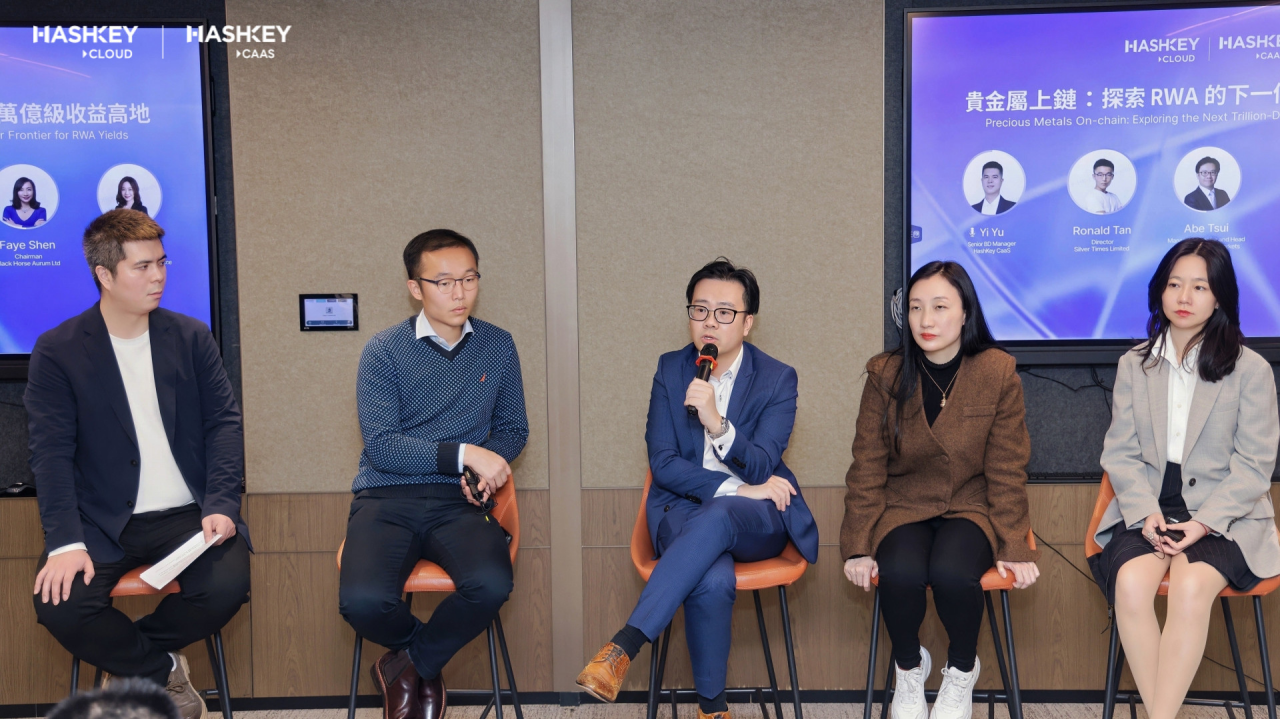
In the roundtable session titled "Precious Metals On-Chain: Exploring the Next Trillion-Dollar Yield Opportunity in RWA," guests from HashKey CaaS, Silver Age Limited, Eddid Financial, Black Horse Aurum Ltd, and JunHe Law Offices, in light of current hot topics, delved into the tokenization potential of precious metals like gold and silver, exploring the yield space and development prospects of RWA assets within the on-chain financial ecosystem.

At this launch event, HashKey Cloud and HashKey CaaS comprehensively demonstrated the core capabilities of their integrated institutional solutions, showcasing HashKey's strategic upgrade from a compliant trading platform to an institutional-grade on-chain financial infrastructure provider. This has fostered industry consensus for the accelerated implementation of institutional-grade on-chain finance in Hong Kong in 2026. With the gradual maturity of compliant products, the continuous deepening of CaaS construction, and the diversified layout of RWA on-chain development, HashKey will continue to promote the deep integration of traditional finance and on-chain assets, driving the development of institutional-grade on-chain finance in Hong Kong and globally.


Perguntas relacionadas

QWhat is the main focus of HashKey's recent launch event and its provided solutions?

AThe event focused on the needs of global institutional clients in digital transformation, showcasing a one-stop on-chain financial infrastructure solution. It aims to provide secure, efficient, and regulatory-compliant service support for institutions entering the crypto ecosystem.

QHow does HashKey Cloud ensure security and compliance in its staking services for institutional clients?

AHashKey Cloud adopts a non-custodial model, meaning it does not directly handle user assets. It utilizes APIs and online custody methods to help clients achieve tokenized value appreciation and natural interest generation. Its staking services emphasize non-custody, on-chain verifiability, and insurance coverage.

QWhat are the four core modules of HashKey CaaS that help institutions integrate into crypto finance?

AThe four core modules of HashKey CaaS are asset tokenization, DAT/ETF staking, on-chain trading and payment, and security and risk control. These modules work together to break through traditional financial bottlenecks and enable seamless connection to crypto finance.

QWhat positive signals does Leo, CEO of HashKey On-Chain Business Group, see for the future development of the industry?

ALeo holds a positive outlook, believing the industry is accelerating towards compliance. He cites Hong Kong's stablecoin regulations and RWA-related policies as positive signals. He also emphasizes Web3's potential as a key financial infrastructure due to its transparency, timeliness, and security.

QWhat was a key topic discussed regarding the fusion of traditional finance and on-chain assets during the roundtables?

AA key topic was the tokenization potential of physical assets like gold and silver, exploring RWA (Real World Assets) as the next trillion-dollar revenue opportunity in the on-chain financial ecosystem. This was discussed in the roundtable titled 'Precious Metals On-Chain: Exploring the Next Trillion-Dollar Revenue Frontier for RWA'.

Leituras Relacionadas

STRC Major De-pegging's First Financial Report, How Will Strategy Repair Its Capital Flywheel?

Bitcoin treasury company Strategy released its Q2 2026 earnings report on July 31. Despite a 6.9% year-over-year revenue increase to $122 million, the company recorded a net loss of $8.22 billion, largely due to $8.32 billion in unrealized losses from Bitcoin price fluctuations. As of quarter-end, Strategy holds 843,775 BTC with an average cost of $75,000 per coin, and Bitcoin per share increased. The report highlights a critical shift in Strategy's capital model following the de-pegging of its key financing tool, STRC (Strategic Coin), which fell below its $100 target. Management's top priority is restoring STRC to its target value, aiming for a recovery by September 8. They rule out discounted STRC issuances and plan to maintain its dividend yield at 12%, instead focusing on bolstering its $3.75 billion cash reserve. Strategy has moved from a one-way "buy-and-hold" Bitcoin strategy to active capital management. This new approach, part of its "Digital Credit Capital Framework," involves flexibly managing its balance sheet across four elements: BTC, USD cash, common stock (MSTR), and digital credit securities like STRC. This allows for BTC monetization (having sold $218.4 million in BTC so far), strategic repurchases of discounted securities, and debt optimization, as seen with a $1.5 billion convertible bond buyback. The company's future hinges on two key tests: successfully re-pegging STRC to restore market confidence in its digital credit system, and a long-term recovery in Bitcoin's price to ultimately support its growth thesis.

marsbitHá 37m

STRC Major De-pegging's First Financial Report, How Will Strategy Repair Its Capital Flywheel?

marsbitHá 37m

STRC's First Financial Report Post-Depegging, How is Strategy Restoring the Capital Flywheel?

On July 31, 2026, Bitcoin treasury company Strategy released its Q2 financial report. Despite a 6.9% year-over-year increase in revenue to $122 million, the company recorded a substantial net loss of $8.22 billion, primarily due to $8.32 billion in unrealized losses from Bitcoin holdings. While Strategy's core Bitcoin strategy remains intact—its holdings grew 11% to 843,775 BTC—the company is undergoing a fundamental shift in its capital model. Following the de-pegging of its key financing tool, the STRCoin (STRC), from its $100 target in May, Strategy has pivoted from a one-directional "raise funds, buy Bitcoin" cycle to a more dynamic, multi-asset capital management approach. A key part of this new framework is the "Monetization Program," through which Strategy has sold approximately $218.4 million worth of BTC to bolster liquidity. The company's top priority is repairing STRC's peg, committing not to issue discounted shares until it returns to its target range. It has initiated a $1 billion buyback program for discounted digital credit securities, having repurchased $28.9 million face value of STRC so far. Management aims to restore the peg around September 8, 2026. Strategy now actively manages a matrix of assets: Bitcoin (for accumulation or strategic sales), USD cash reserves (now at $3.75 billion), common stock (MSTR), and digital credit securities like STRC. This allows for tactical moves like repurchasing discounted debt or equity to capture value. The future success of Strategy's "capital flywheel" hinges on two factors: the short-term ability to successfully re-peg STRC to restore market confidence in its digital credit system, and the long-term price trajectory of Bitcoin, upon which its entire investment thesis ultimately depends.

Odaily星球日报Há 42m

STRC's First Financial Report Post-Depegging, How is Strategy Restoring the Capital Flywheel?

Odaily星球日报Há 42m

With Two Consecutive Quarters of Losses, Coinbase Must Rely on Paths Beyond Trading

Coinbase posted its second consecutive quarterly net loss of $359 million on $1.22 billion in revenue for Q2, highlighting its vulnerability to crypto market cycles where weaker prices and lower volatility reduce user trading. However, the report also reveals a strategic shift in its business model. Despite a 25% quarter-over-quarter decline in global spot trading volume, Coinbase increased its market share to a company-record 10.3%. This suggests its position as a compliant U.S. on-ramp is strengthening even in a cooler market. A key development is the diversification of revenue streams. Transaction revenue fell to $599 million, nearly equaling subscription and services revenue of $555 million. Stablecoin services, generating $292 million, are becoming a crucial revenue "floor." This income, derived from interest on the $20 billion average USDC balance held on its platform, is less tied to daily trading activity. Furthermore, while spot trading volume dropped significantly, derivatives volume held steady at $1.03 trillion. Coinbase is pushing to integrate spot, stablecoin, and derivatives liquidity to create a more interconnected and sticky ecosystem for users. The GAAP net loss includes non-cash expenses like stock-based compensation and crypto asset valuation changes. Its adjusted EBITDA remained positive at $208 million for the 14th straight quarter, indicating core operations can cover ongoing costs. The company is also reducing expenses to manage the downturn. The central question moving forward is whether Coinbase's growing market share, stablecoin revenues, and expanding product integration can sufficiently offset the inherent cyclicality of its core trading business during future market contractions.

marsbitHá 57m

With Two Consecutive Quarters of Losses, Coinbase Must Rely on Paths Beyond Trading

marsbitHá 57m

Trading

Spot
活动图片