Hot Interactions Collection | Surf Launches Points System; MemeMax's MaxPacks Event Ongoing (January 30th)

Odaily星球日报Publicado em 2026-01-30Última atualização em 2026-01-30

Resumo

Hot Interaction Roundup: Surf Launches Points System; MemeMax's MaxPacks Campaign Underway (Jan 30) Surf, an AI platform built for the crypto space, has officially launched its version 1.5 and introduced a personal points system. Users can earn "Surf Waves" points by subscribing to paid membership tiers (Plus, Pro, Max), actively using the platform for research, or inviting friends. The project recently completed a $15 million funding round led by Pantera Capital. MemeMax, a decentralized exchange platform for Meme tokens on the MemeCore chain, is running a Pre-Launch campaign. Users can earn MaxPacks by sending 10 transactions on the MemeCore chain before 8:00 AM UTC on January 31. Additionally, Twin, a platform that allows users to build infinitely scalable AI agents using natural language without coding, was featured. It recently secured $10 million in seed funding. Users can interact with its platform to earn 500 points and set up AI agents for tasks like price alerts.

Original | Odaily Planet Daily (@OdailyChina)

Author | Asher (@Asher_ 0210)

Surf: An AI Platform Built for the Crypto Space

Project Introduction

Surf is an AI platform built specifically for the crypto space, developed by the Cyber team. Its core highlight is the use of AI technology to accurately analyze on-chain data and user queries, offering high knowledge density and a smooth interactive experience. On December 10, 2025, Surf announced the completion of a $15 million funding round, led by Pantera Capital, with participation from Coinbase Ventures and Digital Currency Group.

On January 21st, Surf posted on platform X announcing that Surf version 1.5 is officially live and has introduced a personal points system.

Interaction Tutorial

STEP 1. Go to the interaction website (Link: https://asksurf.ai/), and log in to your personal account using your Google email.

STEP 2. Click on "Surf Waves" to view your current personal points.
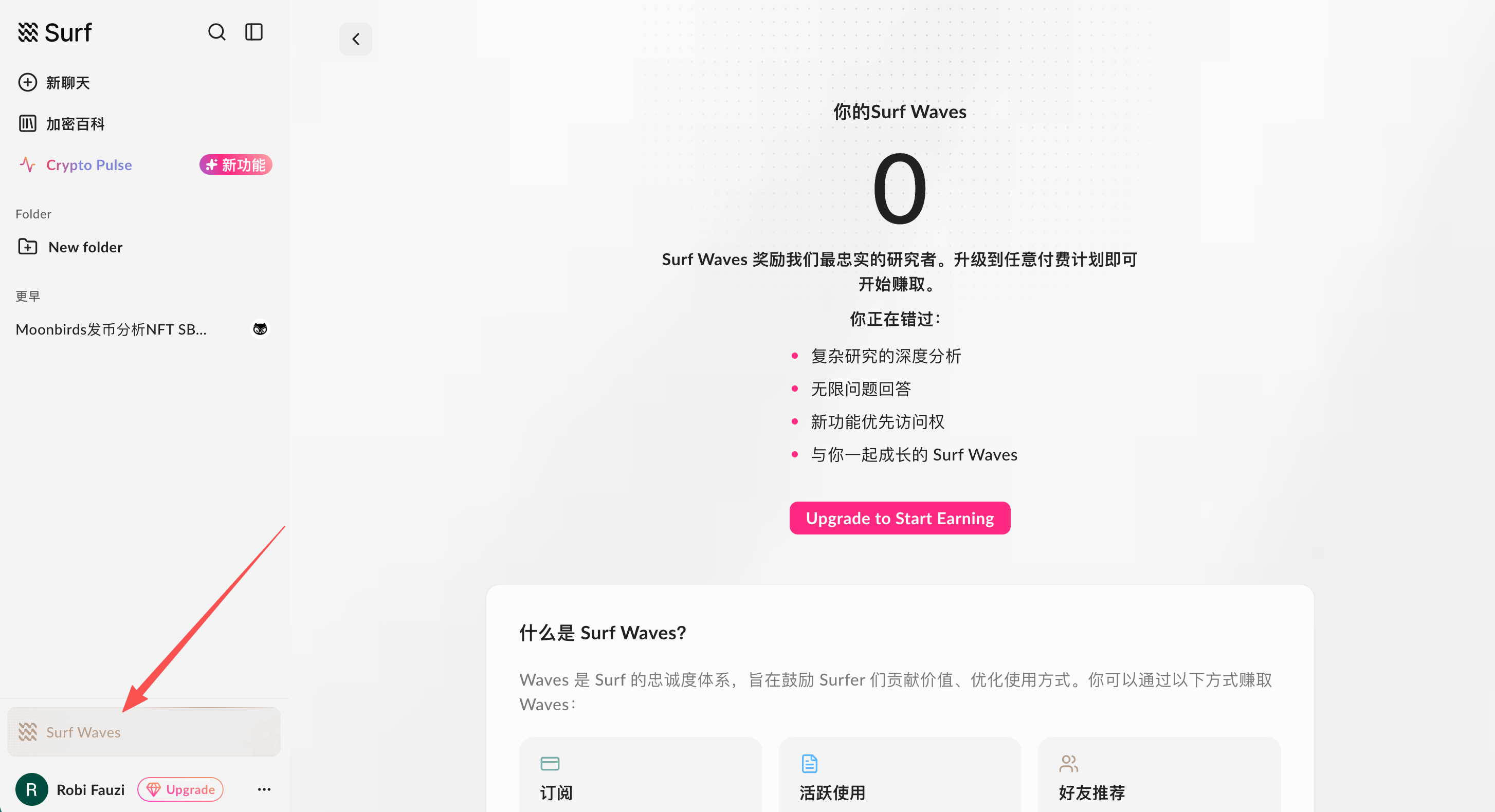
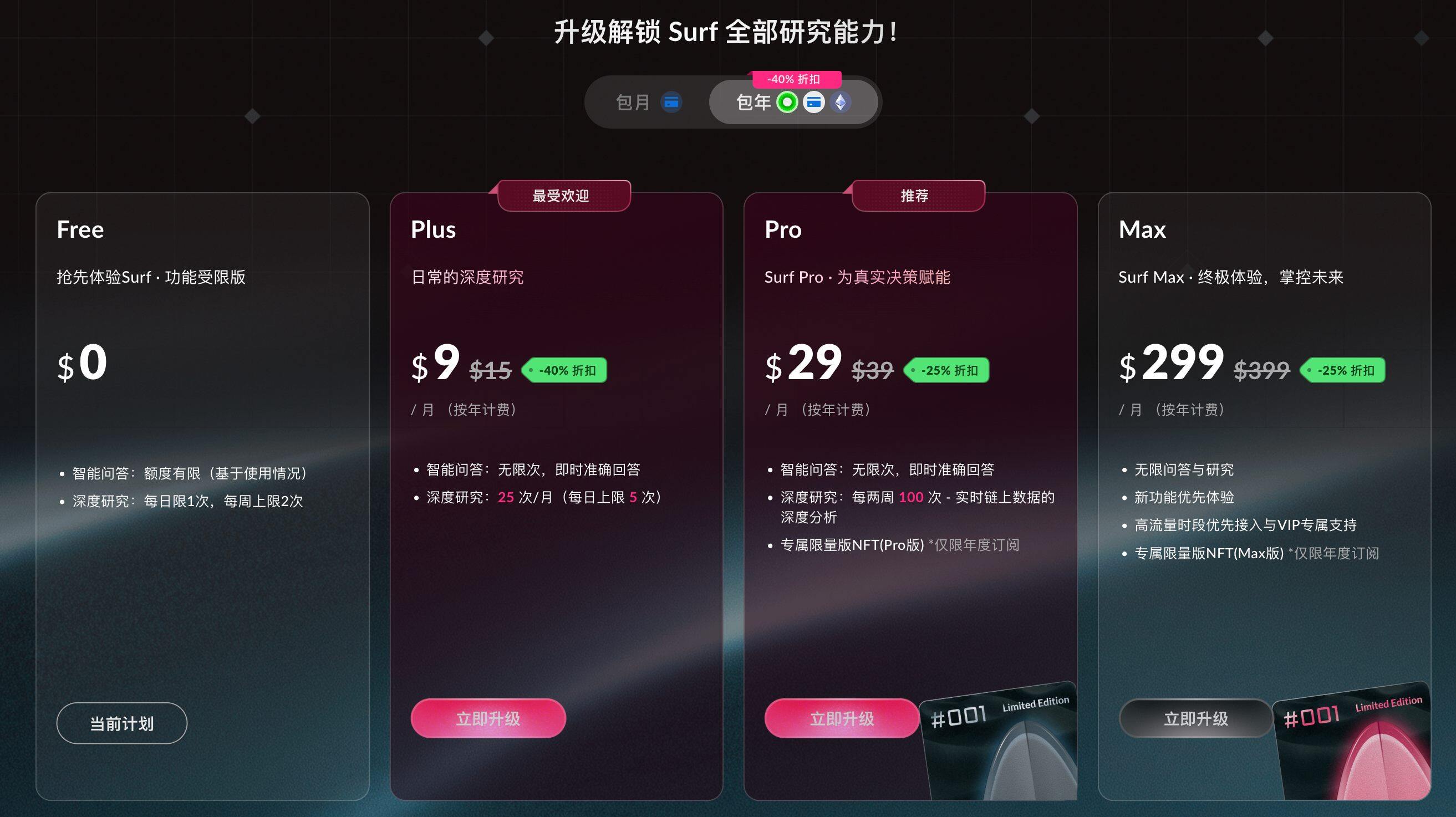
STEP 3. There are currently three ways to earn points: 1. Pay for a subscription to Plus, Pro, and Max level memberships (40% discount for annual payment) to receive points; 2. Actively use the platform - Pro users can perform 100 deep researches every two weeks, Plus users can perform 25 deep researches per month, and free users get 2 deep research opportunities per week; 3. Invite friends to earn points.
MemeMax: A Decentralized Exchange Built for Memes

Project Introduction

MemeMax is a decentralized exchange built specifically for Memes, operating on the MemeCore chain. Yesterday, MemeMax posted on platform X announcing that the Pre-Launch event will end at 8:00 AM Beijing Time on January 31st. You can still send 10 transactions on the MemeCore chain to obtain MaxPacks.

Interaction Tutorial

STEP 1. Go to the interaction website (Link: https://mememax.com/), connect your wallet to log into your personal account, and link your X account.
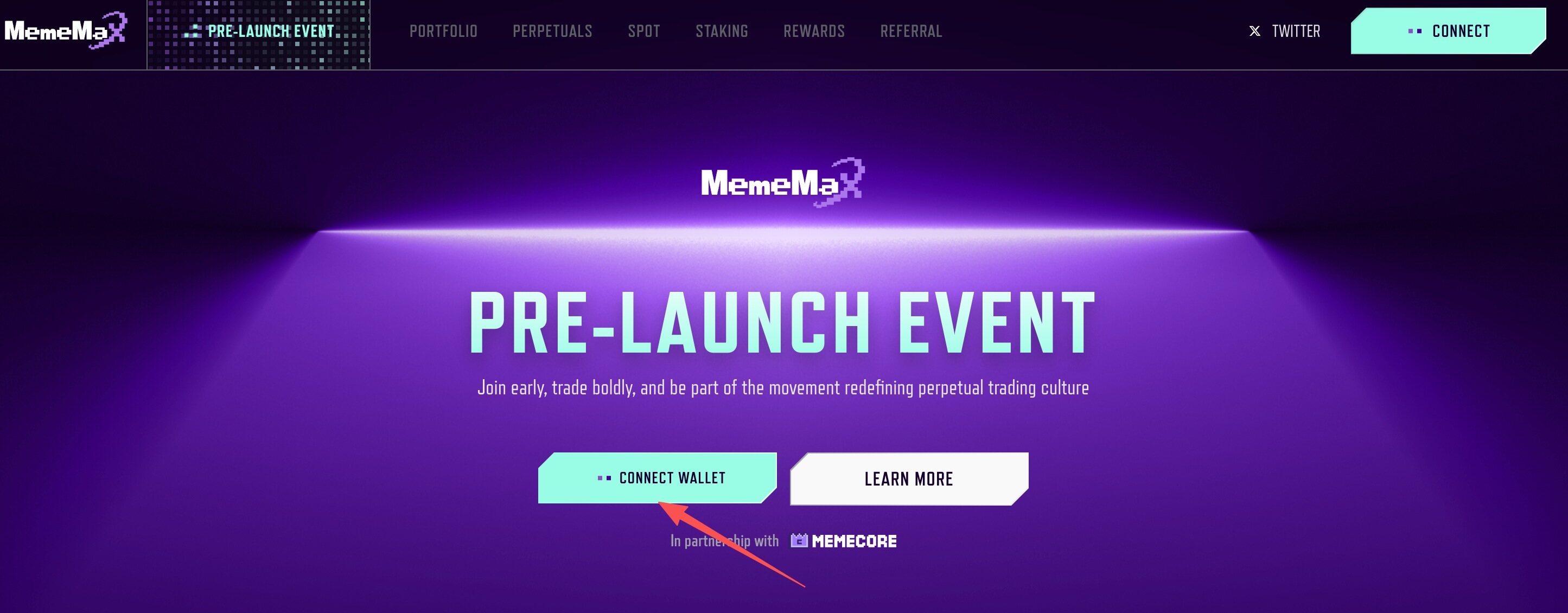
STEP 2. Send 10 transactions on the MemeCore chain to obtain MaxPacks.

Twin: Build Infinitely Scalable AI Agents with One Click

Project Introduction

Twin is a platform that allows users to build infinitely scalable AI agents with one click using natural language. It enables users to create, deploy, and run fully autonomous AI agents to automate complex business processes, operational tasks, and even build entire autonomous companies (such as AI hedge funds, retail automation, etc.) without writing code.

Recently, Twin announced the completion of a $10 million seed funding round, which was subsequently shared by Zama founder Rand, who mentioned that the project's CTO is a former engineer at Zama.

Interaction Tutorial

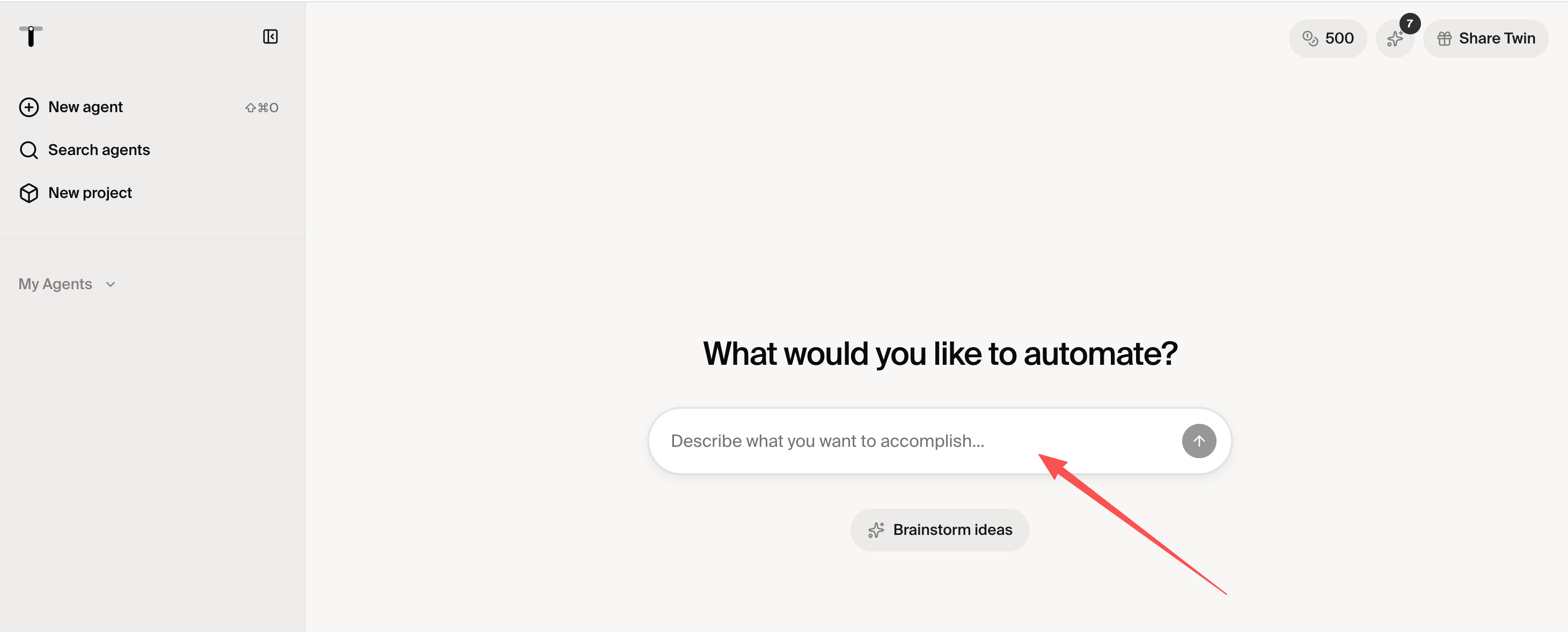
STEP 1. Visit the interaction website (Link: https://builder.twin.so/), log in to your personal account using your Google email to receive 500 points.
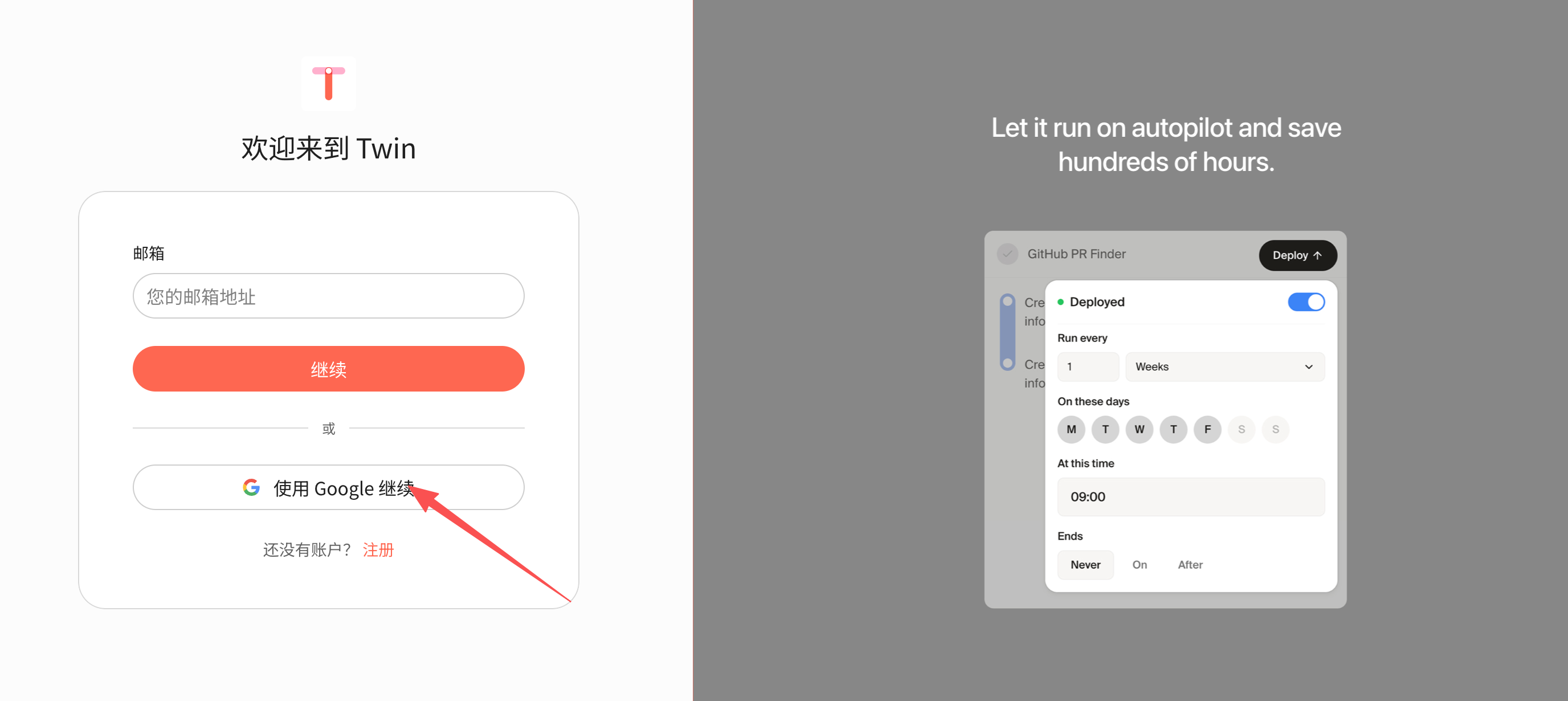
STEP 3. Click on the middle chatbox to converse with the bot; launching the AI Agent will enable real-time email alerts for prices of Bitcoin, gold, silver, etc.
Perguntas relacionadas

QWhat is Surf and what recent update did it announce on January 21st?

ASurf is an AI platform built for the crypto space, developed by the Cyber team. On January 21st, it announced the official launch of Surf 1.5 and introduced a personal points system.

QHow can users earn points on the Surf platform?

AUsers can earn points in three ways: 1. By paying for a Plus, Pro, or Max membership (with a 40% discount for annual payment). 2. By actively using the platform (Pro users get 100 deep research opportunities every two weeks, Plus users get 25 per month, and free users get 2 per week). 3. By inviting friends.

QWhat is MemeMax and what is the deadline for its Pre-Launch activity mentioned in the article?

AMemeMax is a decentralized trading platform built specifically for Meme tokens, operating on the MemeCore chain. The Pre-Launch activity is set to end at 8:00 AM Beijing Time on January 31st.

QWhat recent funding milestone did Twin achieve and who was one of its notable supporters?

ATwin recently completed a $10 million seed round of funding. The project gained recognition after a转发 (repost/endorsement) from Rand, the founder of Zama, who also mentioned that Twin's CTO is a former Zama engineer.

QWhat is the primary function of the Twin platform as described in the article?

ATwin's primary function is to allow users to build infinitely scalable AI agents using natural language, without writing code. Users can create, deploy, and run fully autonomous AI agents to automate complex business processes, operational tasks, or even build entire autonomous companies.

Leituras Relacionadas

The Changing Landscape: What Are Crypto VCs Experiencing?

Title: The Shifting Landscape of Crypto Venture Capital The era of dedicated crypto venture capital funds is undergoing a significant transformation. Once essential for navigating the sector's complexity and high risk, these specialized funds are now facing an identity crisis as the market matures. This shift mirrors historical patterns in other specialized investment classes like cleantech and SPACs, where initial information advantages dissipate as technologies become mainstream and integrated into existing industry frameworks. The article argues that crypto is reaching a critical inflection point, transitioning from a "building phase" to an "integration phase." Major players like Stripe, BlackRock, and Visa now engage with crypto not for its novel mechanics but as a foundational financial infrastructure. Their needs—regulatory compliance, banking partnerships, distribution channels—align with traditional fintech, a domain easily understood by large, generalist funds like Sequoia and Founders Fund. This evolution creates a "barbell effect" within the VC landscape. On one end are massive, diversified platforms that can incorporate crypto as one vertical among many. On the other are small, nimble funds focused on niche, experimental projects. The middle ground—medium-sized dedicated crypto funds—is being squeezed out. Their typical fund size makes it impossible to generate sufficient returns solely from early-stage crypto bets, yet they cannot compete with giants for later-stage deals. Consequently, leading crypto-native firms like Paradigm and Framework Ventures are expanding into AI, robotics, and other sectors, driven partly by LP pressure for better returns amid a broader VC DPI crisis. Others, like Dragonfly and a16z, have narrowed their crypto focus predominantly to financial infrastructure like stablecoins, reframing the sector's core narrative. For crypto entrepreneurs, this consolidation presents challenges. While generalist funds offer larger checks and broader resources, crypto projects now compete fiercely with AI for attention and capital within these firms. Furthermore, the long-term, non-commercial foundational work that built the ecosystem—funded by dedicated crypto VCs—is less likely to attract generalist capital focused on direct returns. The conclusion is that "crypto investor" as a standalone category is becoming obsolete, akin to "internet investor." Crypto is becoming a baseline infrastructure layer. The future will see a barbell structure: large-scale growth financing handled by generalist funds, while pioneering, speculative projects are funded by small, specialized vehicles. The dedicated crypto funds of the 2017-2021 boom, which incubated core infrastructure, are giving way to this new, bifurcated reality.

Foresight NewsHá 17m

The Changing Landscape: What Are Crypto VCs Experiencing?

Foresight NewsHá 17m

As Consensus Accelerates, What Are Young Investors Betting On?

Title: As Consensus Forms Faster, What Are Young Investors Betting On? In the rapid evolution of tech investment, a new generation of young investors is navigating a landscape where AI, robotics, commercial aerospace, and quantum computing are advancing simultaneously. Traditional investment logic based on financial models is giving way to a need for deep technical understanding and the ability to act before industry consensus forms. An analysis of trends from the "WAIC FUTURE TECH" list of young investment leaders reveals key shifts in focus. The first major trend is the movement of AI from the digital screen into the physical world. Investment is shifting from large language models and chatbots towards embodied AI, robotics, AI hardware, and edge computing. While demonstrations generate excitement, the real challenge lies in achieving scalable, reliable, and cost-effective delivery in complex real-world environments like factories and logistics. Success depends not just on algorithms but on the integration of sensors, actuators, and control systems. Second, the competitive focus for large models is moving beyond raw capability toward building an "intelligence flywheel." The goal is to create self-reinforcing systems where user interaction generates data, improving the model, which in turn enhances the user experience and attracts more engagement. Companies that successfully embed AI into workflows to create these closed-loop systems can build lasting value that isn't easily erased by the next model upgrade. Third, facing a potential bottleneck in high-quality human-generated data, investors are looking at new underlying technologies. Reinforcement learning and self-play, as demonstrated by AlphaGo Zero, offer paths for AI to generate its own experience. Scientific foundation models, which aim to build general AI capabilities for fields like life sciences and materials discovery, represent a non-consensus direction that could unlock new frontiers of knowledge and data. Finally, in deep-tech areas like quantum computing, commercial aerospace, and space-based infrastructure, patient capital is essential. These fields have long, uncertain development and validation cycles involving complex engineering, supply chains, and regulations. Investment here requires a long-term view, focusing on foundational team capabilities and the eventual emergence of market demand, even if commercial returns are distant. Collectively, these trends illustrate how young investors are adapting to a new era. They are learning to make earlier, technically-informed judgments, balance hype with real-world viability, and provide the patient capital needed to build the deep-tech foundations of the future.

marsbitHá 45m

As Consensus Accelerates, What Are Young Investors Betting On?

marsbitHá 45m

Can Japan Buy Growth with AI? Will the Bond Market Believe It?

Japan's cabinet has introduced the 2026 Basic Policy on Economic and Fiscal Management and Reform, shifting its primary fiscal target. The new framework moves away from the traditional annual primary balance goal and instead prioritizes a stable reduction of the debt-to-GDP ratio. This change is tied to a strategy of increased "responsible proactive fiscal" spending, aiming to boost long-term growth through investments in strategic sectors like AI, semiconductors, energy, and robotics. The government estimates total public and private investment in 62 key technologies could exceed 370 trillion yen by 2040. The market reaction has been mixed and cautious. While equity markets may respond to policy signals, bond markets are focused on fiscal credibility. Concerns center on whether the weakening of the clear primary balance anchor could lead to looser fiscal discipline. If investors doubt that these strategic investments will generate sufficient productivity gains, tax revenue, and nominal growth to outpace rising interest costs, they may demand higher yields on Japanese Government Bonds (JGBs). Recent volatility in the yen and JGB yields, with the 10-year yield briefly reaching 2.9%, reflects this skepticism. The success of this new framework hinges on two factors: whether Japan can achieve a nominal growth rate consistently higher than its long-term interest rates, and whether future budgets demonstrate disciplined control over bond issuance. The government's narrative is that strategic investment is essential to break Japan's cycle of low growth, aging, and labor shortages. However, the bond market will continuously assess the credibility of this plan, pricing the risk that it may represent fiscal expansion rather than a viable growth strategy.

marsbitHá 1h

Can Japan Buy Growth with AI? Will the Bond Market Believe It?

marsbitHá 1h

Trading

Spot
活动图片





