Hot Interactions Collection | Surf Launches Points System; MemeMax's MaxPacks Event Ongoing (January 30th)

Odaily星球日报Publicado em 2026-01-30Última atualização em 2026-01-30

Resumo

Hot Interaction Roundup: Surf Launches Points System; MemeMax's MaxPacks Campaign Underway (Jan 30) Surf, an AI platform built for the crypto space, has officially launched its version 1.5 and introduced a personal points system. Users can earn "Surf Waves" points by subscribing to paid membership tiers (Plus, Pro, Max), actively using the platform for research, or inviting friends. The project recently completed a $15 million funding round led by Pantera Capital. MemeMax, a decentralized exchange platform for Meme tokens on the MemeCore chain, is running a Pre-Launch campaign. Users can earn MaxPacks by sending 10 transactions on the MemeCore chain before 8:00 AM UTC on January 31. Additionally, Twin, a platform that allows users to build infinitely scalable AI agents using natural language without coding, was featured. It recently secured $10 million in seed funding. Users can interact with its platform to earn 500 points and set up AI agents for tasks like price alerts.

Original | Odaily Planet Daily (@OdailyChina)

Author | Asher (@Asher_ 0210)

Surf: An AI Platform Built for the Crypto Space

Project Introduction

Surf is an AI platform built specifically for the crypto space, developed by the Cyber team. Its core highlight is the use of AI technology to accurately analyze on-chain data and user queries, offering high knowledge density and a smooth interactive experience. On December 10, 2025, Surf announced the completion of a $15 million funding round, led by Pantera Capital, with participation from Coinbase Ventures and Digital Currency Group.

On January 21st, Surf posted on platform X announcing that Surf version 1.5 is officially live and has introduced a personal points system.

Interaction Tutorial

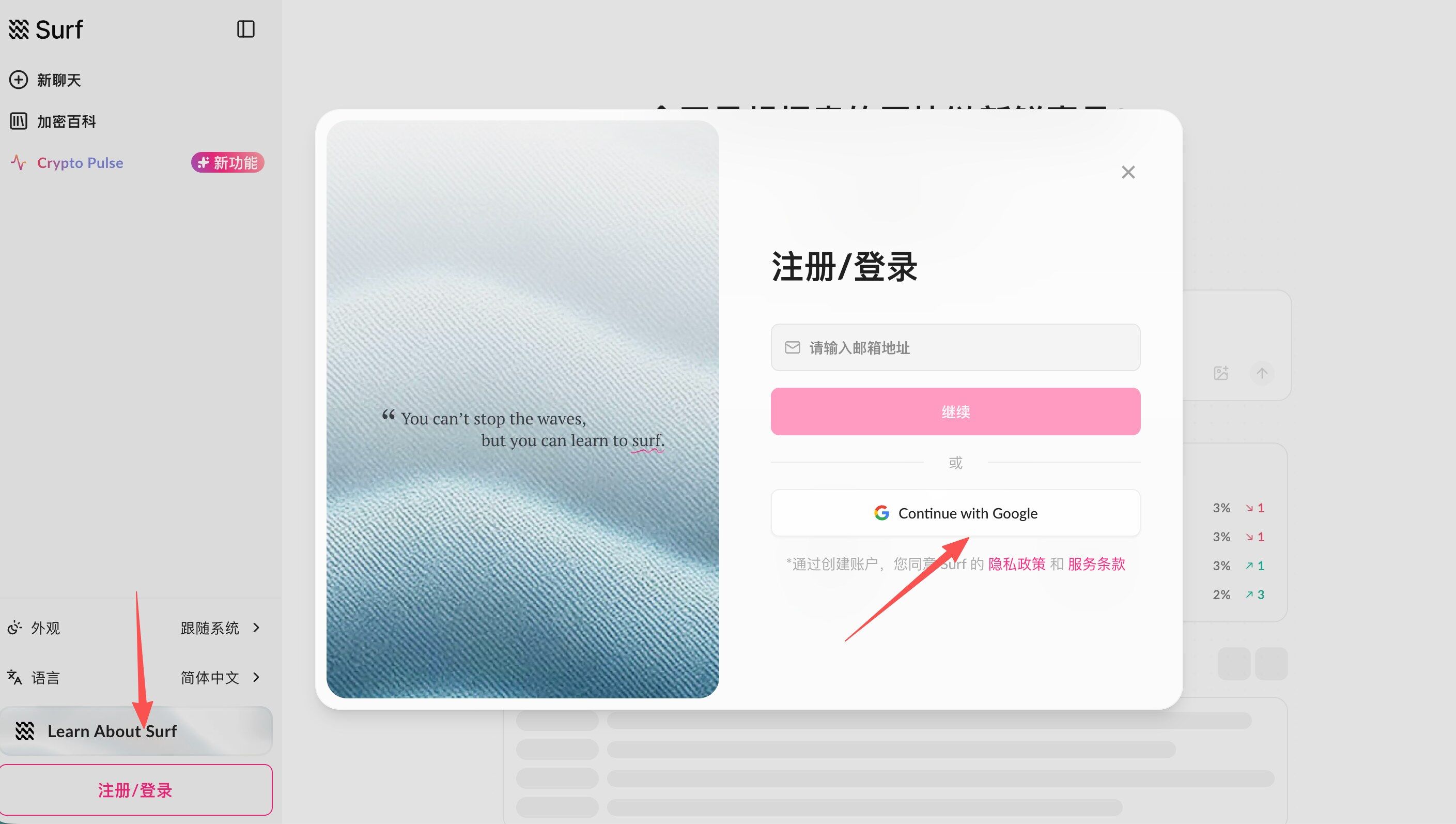
STEP 1. Go to the interaction website (Link: https://asksurf.ai/), and log in to your personal account using your Google email.
STEP 2. Click on "Surf Waves" to view your current personal points.
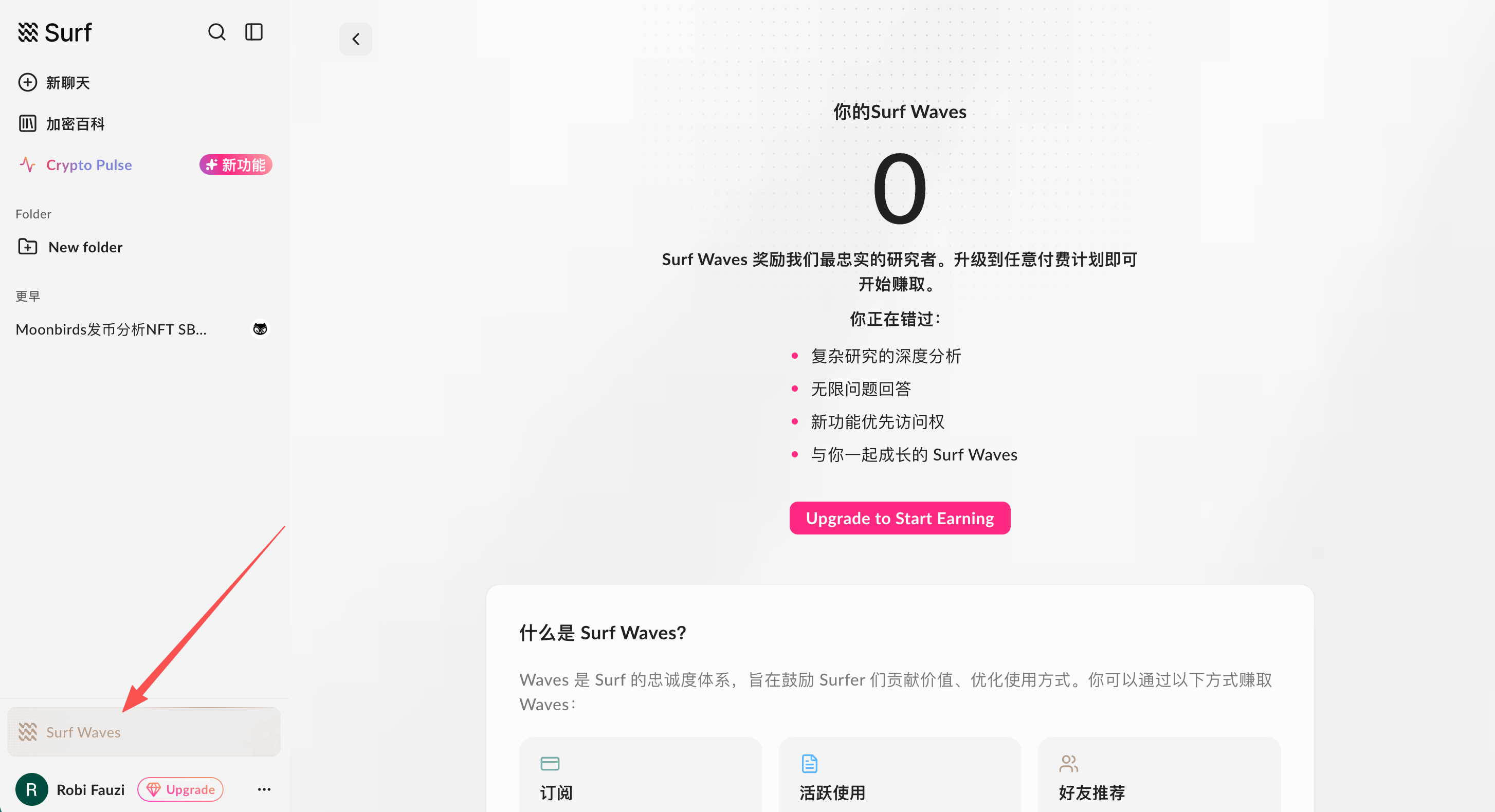
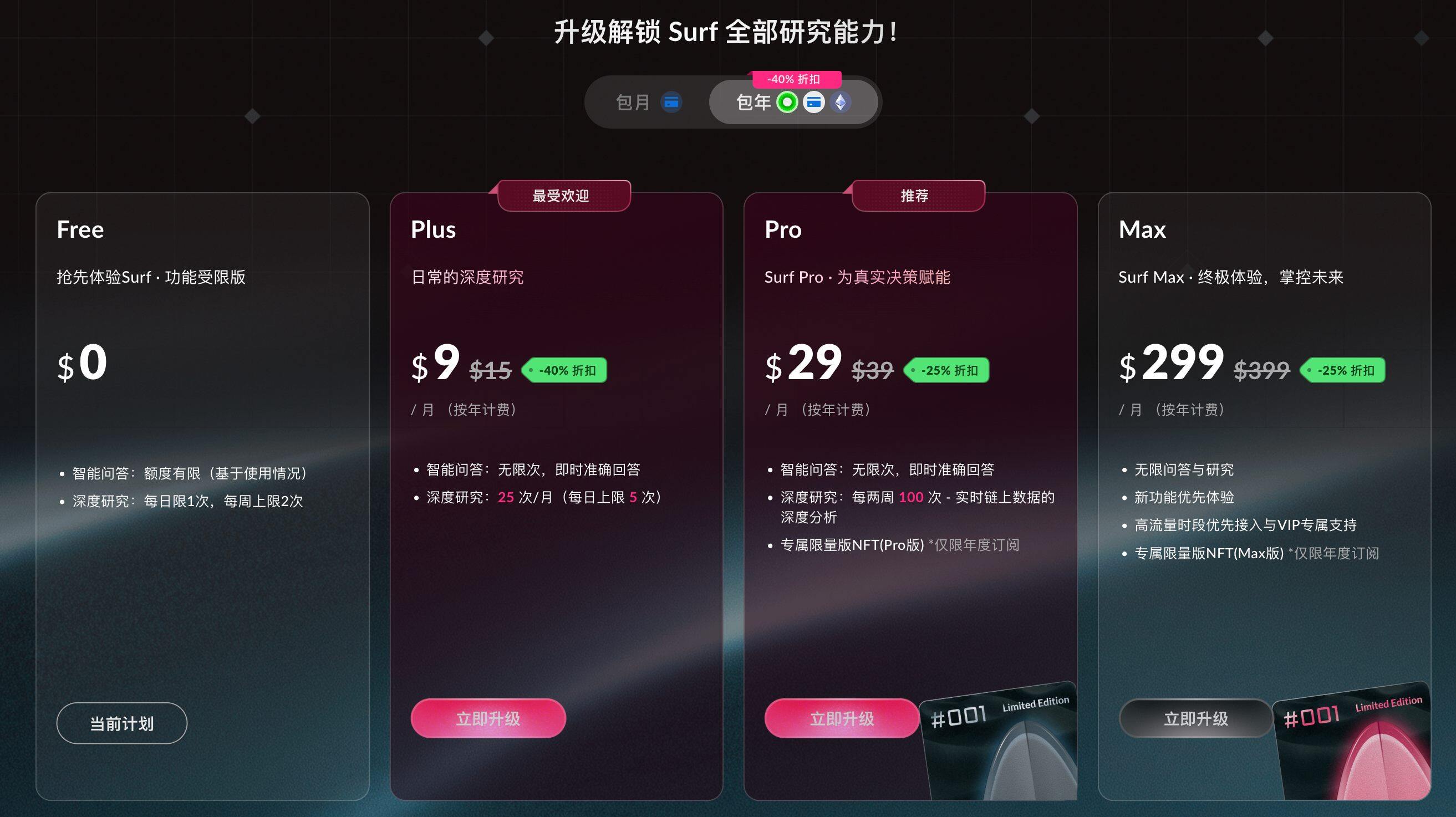
STEP 3. There are currently three ways to earn points: 1. Pay for a subscription to Plus, Pro, and Max level memberships (40% discount for annual payment) to receive points; 2. Actively use the platform - Pro users can perform 100 deep researches every two weeks, Plus users can perform 25 deep researches per month, and free users get 2 deep research opportunities per week; 3. Invite friends to earn points.
MemeMax: A Decentralized Exchange Built for Memes

Project Introduction

MemeMax is a decentralized exchange built specifically for Memes, operating on the MemeCore chain. Yesterday, MemeMax posted on platform X announcing that the Pre-Launch event will end at 8:00 AM Beijing Time on January 31st. You can still send 10 transactions on the MemeCore chain to obtain MaxPacks.

Interaction Tutorial

STEP 1. Go to the interaction website (Link: https://mememax.com/), connect your wallet to log into your personal account, and link your X account.
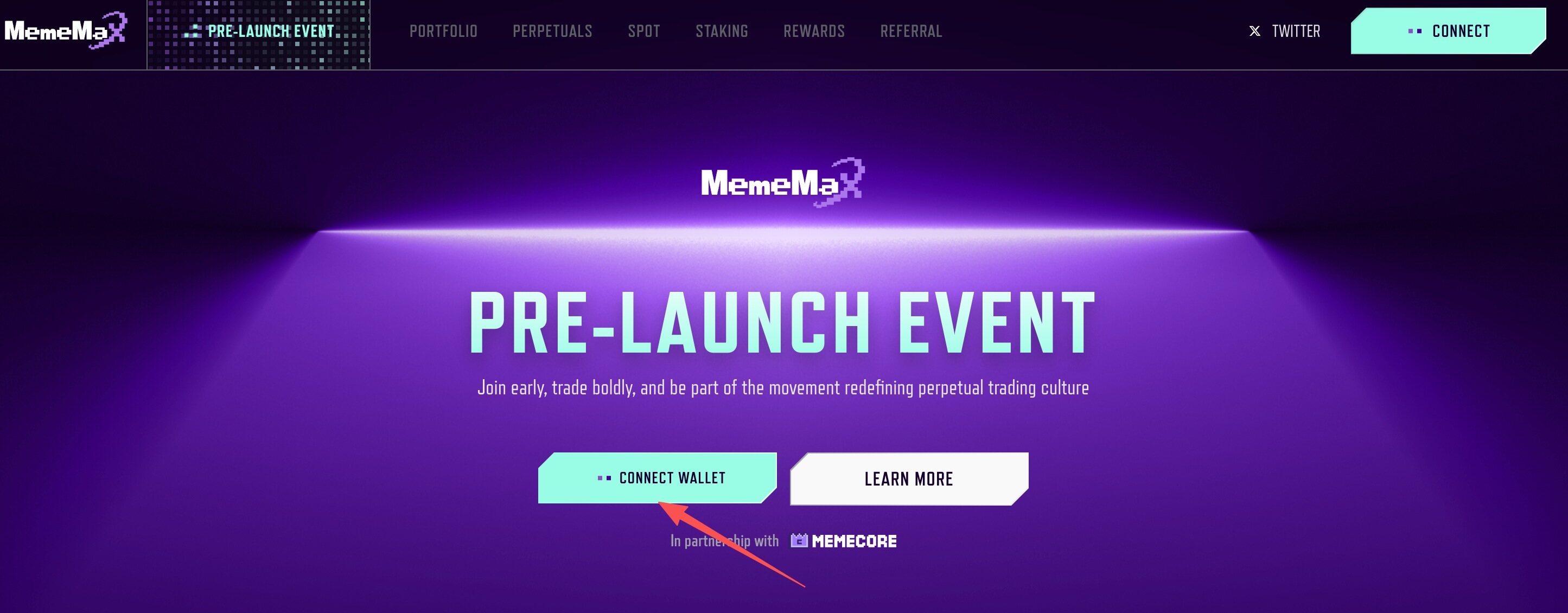
STEP 2. Send 10 transactions on the MemeCore chain to obtain MaxPacks.

Twin: Build Infinitely Scalable AI Agents with One Click

Project Introduction

Twin is a platform that allows users to build infinitely scalable AI agents with one click using natural language. It enables users to create, deploy, and run fully autonomous AI agents to automate complex business processes, operational tasks, and even build entire autonomous companies (such as AI hedge funds, retail automation, etc.) without writing code.

Recently, Twin announced the completion of a $10 million seed funding round, which was subsequently shared by Zama founder Rand, who mentioned that the project's CTO is a former engineer at Zama.

Interaction Tutorial

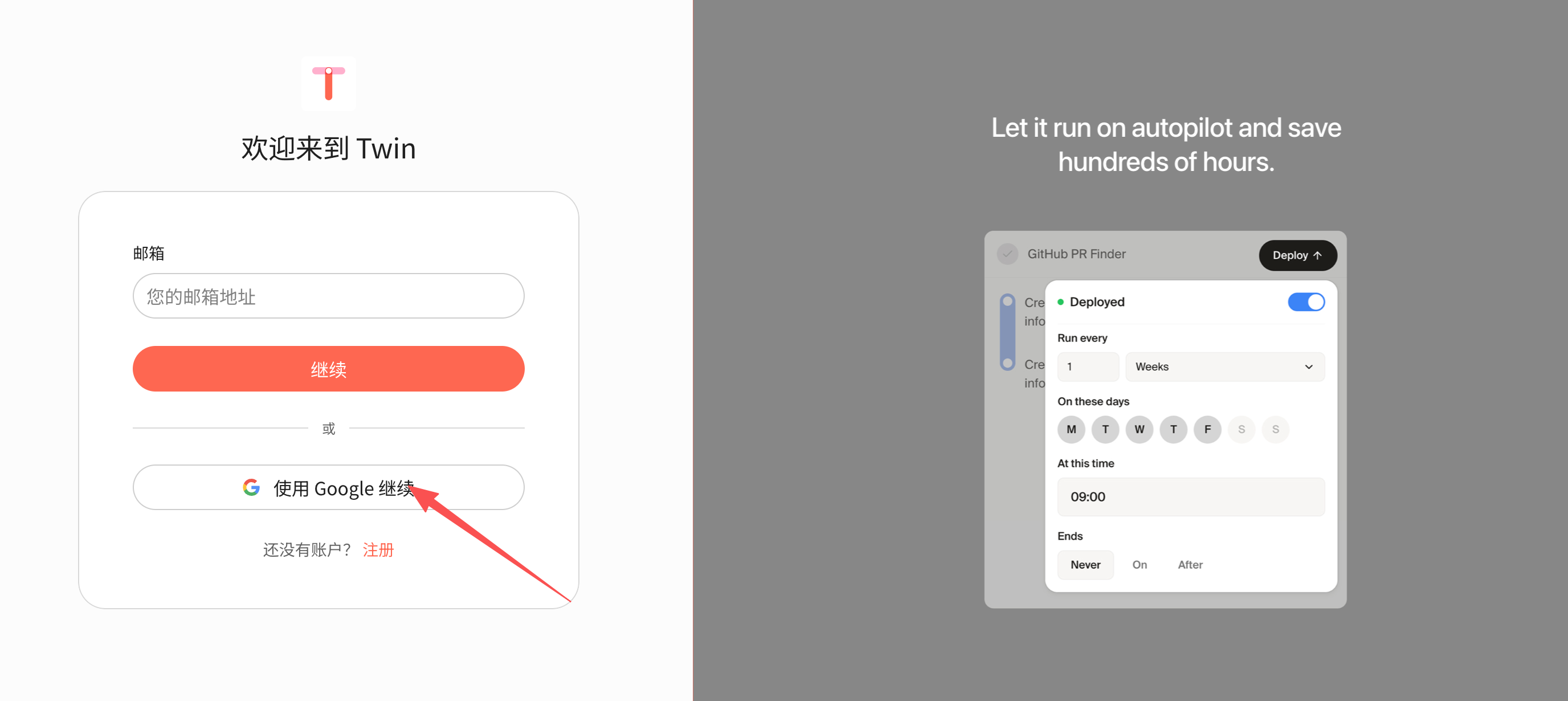
STEP 1. Visit the interaction website (Link: https://builder.twin.so/), log in to your personal account using your Google email to receive 500 points.
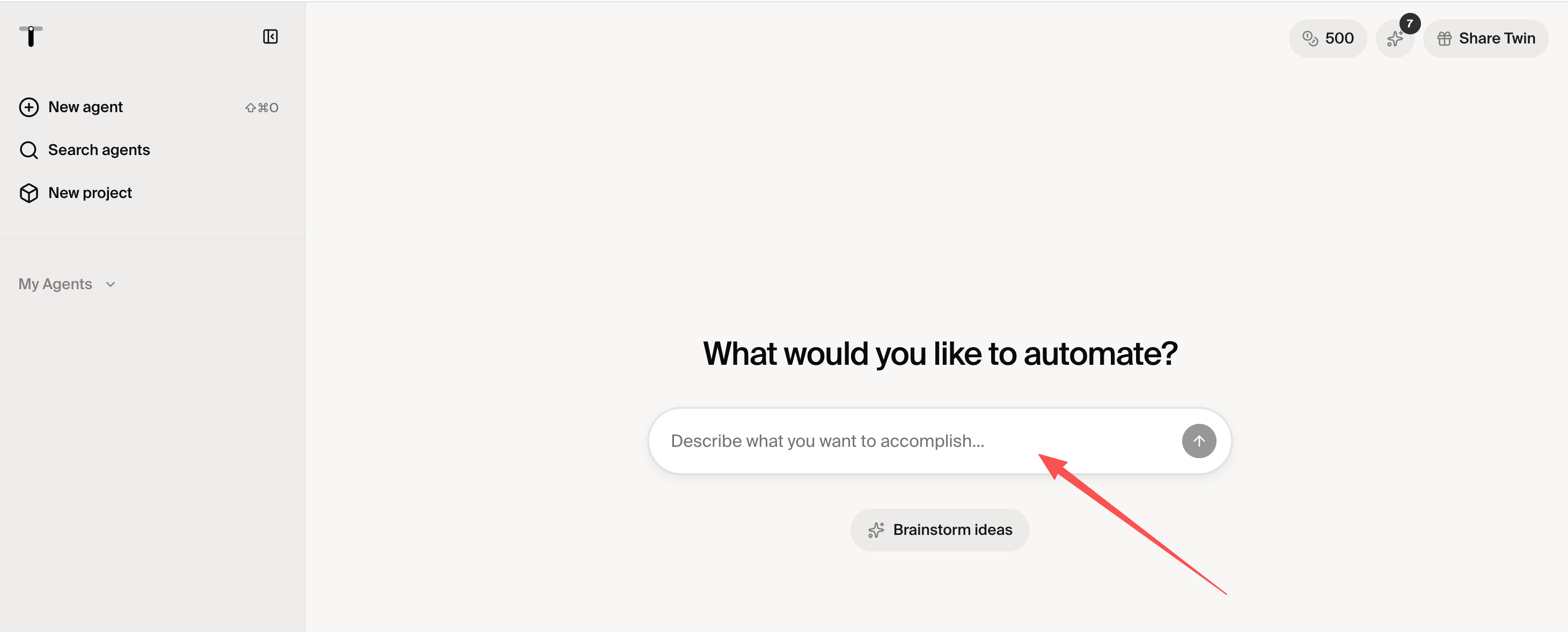
STEP 3. Click on the middle chatbox to converse with the bot; launching the AI Agent will enable real-time email alerts for prices of Bitcoin, gold, silver, etc.
Perguntas relacionadas

QWhat is Surf and what recent update did it announce on January 21st?

ASurf is an AI platform built for the crypto space, developed by the Cyber team. On January 21st, it announced the official launch of Surf 1.5 and introduced a personal points system.

QHow can users earn points on the Surf platform?

AUsers can earn points in three ways: 1. By paying for a Plus, Pro, or Max membership (with a 40% discount for annual payment). 2. By actively using the platform (Pro users get 100 deep research opportunities every two weeks, Plus users get 25 per month, and free users get 2 per week). 3. By inviting friends.

QWhat is MemeMax and what is the deadline for its Pre-Launch activity mentioned in the article?

AMemeMax is a decentralized trading platform built specifically for Meme tokens, operating on the MemeCore chain. The Pre-Launch activity is set to end at 8:00 AM Beijing Time on January 31st.

QWhat recent funding milestone did Twin achieve and who was one of its notable supporters?

ATwin recently completed a $10 million seed round of funding. The project gained recognition after a转发 (repost/endorsement) from Rand, the founder of Zama, who also mentioned that Twin's CTO is a former Zama engineer.

QWhat is the primary function of the Twin platform as described in the article?

ATwin's primary function is to allow users to build infinitely scalable AI agents using natural language, without writing code. Users can create, deploy, and run fully autonomous AI agents to automate complex business processes, operational tasks, or even build entire autonomous companies.

Leituras Relacionadas

Claude Code Introduces Dynamic Workflows: Enabling AI to Form Teams and Collaborate

Claude Code introduces dynamic workflows, enabling AI to coordinate teams of specialized agents for complex tasks. This transforms Claude from a code assistant into a programmable workbench. Workflows address key limitations of single-agent systems: agentic laziness (premature task completion), self-preferential bias (favoring own outputs), and goal drift (losing sight of original objectives). The system allows Claude to dynamically create execution frameworks using JavaScript. It can split tasks, dispatch parallel agents for isolated work (e.g., in separate worktrees), implement adversarial validation, run tournaments, and synthesize results. This multi-agent approach is valuable for tasks requiring deep research, factual verification, code migration, root cause analysis, large-scale triage, and qualitative sorting. Key patterns include: classify-and-route, fan-out-and-synthesize, adversarial verification, generate-and-filter, tournaments, and loop-until-done. While token usage is higher, workflows excel where tasks resemble programming—needing problem decomposition, isolated context, hypothesis testing, and handling many details. They extend Claude Code's utility beyond technical work to areas like business plan review, resume screening, and naming brainstorm. The feature is not a universal solution but points to a future where AI tool competitiveness depends on organizing reliable, reusable, and auditable execution flows for complex goals.

marsbitHá 23m

Claude Code Introduces Dynamic Workflows: Enabling AI to Form Teams and Collaborate

marsbitHá 23m

Hyperliquid, Wall Street's 24/7 Trading Convenience Store

Hyperliquid: The 24/7 Trading "Convenience Store" for Wall Street Hyperliquid, a decentralized cryptocurrency exchange, has become a go-to platform for Wall Street traders seeking to trade around the clock, especially during traditional market closures. Founded by Jeff Yan, a former quantitative trader, after the FTX collapse, the platform emphasizes user self-custody of assets. It offers a wide range of perpetual contracts—leveraged derivatives with no expiry—on assets from Bitcoin and crude oil to the S&P 500 and even pre-IPO companies like SpaceX. A notable example involves a hedge fund trader who capitalized on geopolitical news over a weekend, securing a 243% return on oil derivatives before markets reopened. The platform, run by just 11 employees, generated approximately $800 million in revenue last year, and its native token HYPE has seen significant growth. Its rise highlights the merging of traditional finance and crypto. While U.S. users are currently restricted, recent CFTC rule changes could open access. The platform is known for its transparency, having processed $10 billion in liquidations during a market crash while competitors faltered. Regulators warn of the high risks and complexity of perpetual contracts for retail investors. Key to its appeal is a strong community culture, direct engagement with founders, and a simple interface. Despite rules against VPN use, it attracts global users with its permissionless approach. Hyperliquid plans to expand into prediction markets and options, aiming to eventually host all financial activity.

marsbitHá 24m

Hyperliquid, Wall Street's 24/7 Trading Convenience Store

marsbitHá 24m

Who Funds the Agents?

**Summary: Who Funds AI Agents?** OpenAI recently shut down a feature allowing AI agents to shop for users, highlighting the challenge of creating a secure and regulated environment for agent-driven transactions. While payment infrastructure exists, a crucial governance layer—defining spending limits, fraud detection, tax handling, and return policies—is largely missing. The potential is enormous: AI agents already processed $73M across 176M transactions last year, with McKinsey forecasting this could grow to $3-5T in global consumer commerce by 2030. The core competition isn't just about processing payments, which can be very cheap (especially with crypto-based settlement), but about controlling the rules that govern agent spending. Key players like Stripe and Coinbase are racing to dominate this governance layer. Stripe's acquisition of wallet provider Privy allows it to set spending policies, identity checks, and human-in-the-loop approvals directly at the wallet level. Similarly, Coinbase's stack, including its x402 protocol and AgentKit, embeds governance rules. This vertical integration across settlement, wallet, and governance layers is becoming the dominant strategy. Control over the governance layer is where significant future value lies. If agents handle trillions in transactions, even a small fee for managing compliance, fraud prevention, and policy enforcement could generate billions in annual revenue. The companies that successfully integrate across the payment stack will capture value from idle agent balances, transaction fees, and governance services, positioning themselves as the foundational banks of the AI agent economy.

marsbitHá 51m

Who Funds the Agents?

marsbitHá 51m

Trading

Spot
Futuros
活动图片