Hong Kong Prepares To Grant Limited Batch Of Stablecoin Licenses In March – Report

bitcoinistPublicado em 2026-02-03Última atualização em 2026-02-03

Resumo

Hong Kong's financial authorities, led by the Hong Kong Monetary Authority (HKMA), are preparing to issue the first limited batch of stablecoin issuer licenses in March. Chief Executive Eddie Yue confirmed that a "very small number" of licenses will be granted after the review process for applications nears completion. Over 30 companies, including Ant Group's overseas arm, have applied since the Stablecoins Ordinance was enacted in August, requiring any issuer of fiat-referenced stablecoins in Hong Kong to be licensed. The HKMA is focusing on use cases, risk management, AML measures, and asset backing. This move is part of Hong Kong's broader strategy to become a regulated global crypto hub, despite potential challenges from mainland China's strict stance against stablecoins.

Hong Kong financial authorities have announced that they will soon grant the first, limited batch of stablecoin provider licenses as the review process for applications is almost completed.

HKMA To Grant Limited Stablecoin Licenses Soon

On Monday, the Hong Kong Monetary Authority (HKMA)’s Chief Executive, Eddie Yue, announced that the regulatory agency is preparing to grant the first batch of the highly anticipated stablecoin licenses next month.

At a Legislative Council meeting, Yue affirmed that the financial authority expects to issue a “very small number” of stablecoin issuer licenses in March, according to a Reuters report.

In August, the HKMA enacted the Stablecoins Ordinance, which directs any individual or entity seeking to issue any fiat-referenced stablecoin (FRS) in Hong Kong, or any Hong Kong Dollar (HKD)-denominated token, to obtain a license from the regulator.

Local news outlets have reported that more than 30 companies have applied for the license, including the overseas arm of Chinese mainland financial technology giant Ant Group and logistics technology firm Reitar Logtech.

In December, legal experts suggested that Hong Kong’s ambitions to become a key regulated hub for stablecoins could be clouded by the People’s Bank of China’s explicit crackdown on the sector.

As reported by Bitcoinist, top financial regulators affirmed that stablecoins don’t qualify as legal tender in the mainland, which could delay the original early 2026 schedule and affect the HKMA’s approval of projects involving the yuan or mainland Chinese institutions.

Nonetheless, Hong Kong’s Financial Secretary, Paul Chan Mo-po, recently confirmed the regulators’ plan to grant stablecoin issuers licenses in the first quarter of the year at the World Economic Forum in Davos.

During a Monday media briefing, HKMA’s Chief Executive reportedly noted that their application review process is near its completion. Yue also highlighted that the regulator is focusing on use cases, risk management, anti-money laundering (AML) measures, and asset backing.

Moreover, he asserted that licensed issuers must comply with local regulations for cross-border activities, but added that “mutual recognition arrangements with other jurisdictions could be explored in the future.”

Hong Kong Continues Crypto Regulation Efforts

Hong Kong has been actively developing a comprehensive framework to support the expansion of the digital assets industry as part of its long-term strategy to become a global crypto hub.

Notably, financial authorities have been exploring rules to enable insurance companies to invest in cryptocurrencies and the infrastructure sector. In addition, the jurisdiction is among the 76 markets committed to implementing the Organisation for Economic Co-operation and Development’s (OECD) new global standard for exchanging tax information related to crypto assets.

The upcoming crypto reporting framework, the Crypto Asset Reporting Framework (CARF), is intended to bring crypto users across borders under global tax transparency rules, thereby preventing tax evasion. Hong Kong is set to begin its first cross-border exchanges of crypto reporting data in 2028.

However, the Hong Kong Securities & Futures Professionals Association (HKSFPA) has expressed its concerns about the implementation of the OECD’s CARF and the related amendments made to Hong Kong’s Common Reporting Standard (CRS).

The group noted that it mostly supports the proposals, but urged regulators to ease the record-keeping requirements for dissolved entities and the uncapped per-account penalties for minor technical errors. The Professionals Association warned that these elements of the CARF and CRS amendments could create operational and liability risks for market participants.
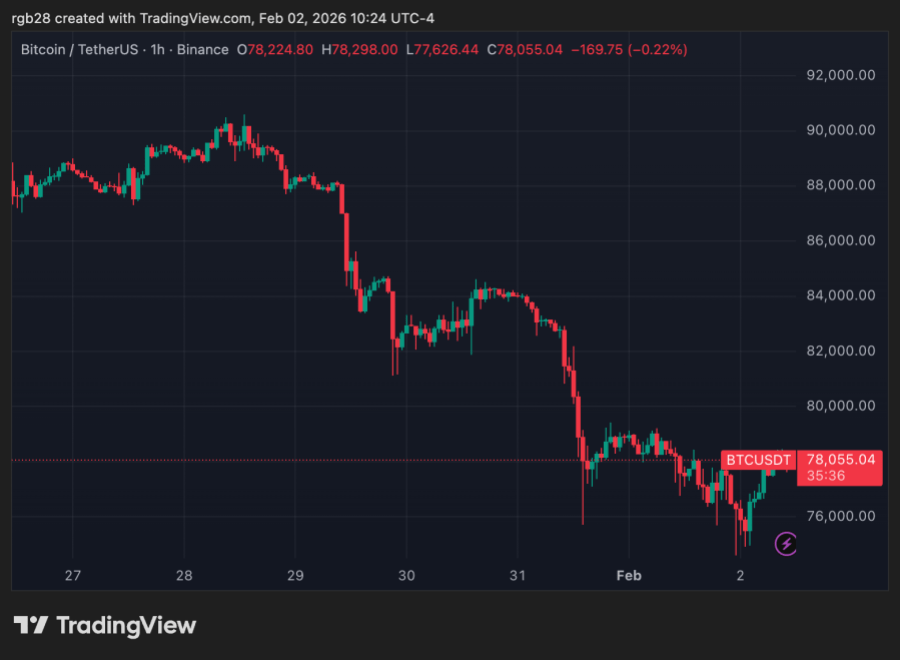
Bitcoin (BTC) trades at $78,055 in the one-week chart. Source: BTCUSDT on TradingView


Perguntas relacionadas

QWhen is the Hong Kong Monetary Authority (HKMA) preparing to grant the first batch of stablecoin licenses?

AThe HKMA is preparing to grant the first batch of stablecoin licenses in March.

QWhat is the name of the ordinance that requires a license to issue fiat-referenced stablecoins in Hong Kong?

AThe ordinance is called the Stablecoins Ordinance.

QWhich two companies were mentioned as having applied for a stablecoin license in Hong Kong?

AThe overseas arm of Ant Group and the logistics technology firm Reitar Logtech were mentioned as applicants.

QWhat potential challenge to Hong Kong's stablecoin hub ambitions was raised by legal experts in December?

ALegal experts suggested that the People's Bank of China's explicit crackdown on the stablecoin sector could cloud Hong Kong's ambitions.

QWhat new global standard for crypto tax information is Hong Kong committed to implementing?

AHong Kong is committed to implementing the Organisation for Economic Co-operation and Development’s (OECD) Crypto Asset Reporting Framework (CARF).

Leituras Relacionadas

A Clod of Chinese Soil Chokes Two Japanese Giants

"Chinese Soil Chokes Japanese Giants" The production of a key electronic specialty gas, tungsten hexafluoride (WF6), vital for manufacturing AI chips, was halted by two leading Japanese producers—Kanto Denka and Central Glass. Their shutdown was not due to a technological failure but a sudden, critical shortage of a raw material they had long taken for granted: ultra-high-purity (6N-grade) tungsten powder, which is almost entirely sourced from China. Following a quiet Chinese export announcement in January 2026, tungsten powder shipments to Japan dropped to zero for months. Despite frantic efforts, Japanese companies found no viable alternative; imported powder was three times more expensive and lacked the required purity. Their existing stockpiles were exhausted by mid-2026. WF6 is essential for depositing tungsten into the microscopic contact holes of High Bandwidth Memory (HBM) chips, which are crucial for advanced processors like those from Nvidia. While Japanese firms had mastered producing ultra-pure WF6 gas, their entire supply chain relied on China's 6N tungsten powder—a dependency now revealed as a fatal vulnerability. China's dominance in this "soil" results from decades of painstaking R&D by companies like Xiamen Tungsten and China Tungsten & Hightech. They overcame immense technical hurdles, such as separating chemically similar molybdenum from tungsten, to achieve mass production of the world's purest tungsten powder. With their primary suppliers gone, Kanto Denka and Central Glass announced a permanent halt to WF6 production starting July 1, 2026. This immediately created a supply crisis for major semiconductor manufacturers like Samsung and SK Hynix, forcing them to urgently seek and certify new Chinese suppliers for WF6 itself. The reversal marks a dramatic shift: China has moved from exporting low-value raw materials to controlling the high-purity foundation of a critical global tech supply chain, upending a long-established industrial hierarchy.

marsbitHá 31m

A Clod of Chinese Soil Chokes Two Japanese Giants

marsbitHá 31m

Without Tencent, What's Left for Suiyuan?

The article centers on the crucial question posed in the title: what is Seyond Technology really worth if its dominant customer, Tencent, were to stop purchasing its AI chips? As the last of China's "Four AI Chip Dragons" to secure approval for a public listing, Seyond's IPO filing reveals a profound and controversial dependency. In 2025, 74.9% to over 80% of its revenue came from Tencent. The piece argues that this extreme customer concentration is not merely a vulnerability but a strategic outcome of China's AI industry evolution. It contrasts Seyond's path with its peers (Moore Thread, Biren Technology, and MetaX), noting that while others raced to market with ambitious stories, Seyond focused first on securing and delivering for a major client. Its explosive revenue growth—with Q1 2026 up 1474.85% year-on-year—is driven by concentrated orders from Tencent, which itself faces massive, escalating AI compute demands for products like its Yuanbao and Hunyuan models. The relationship is framed as a deliberate, symbiotic cultivation of a supply chain. As both a major shareholder (20.26%) and primary client, Tencent is actively fostering Seyond to build a controllable, stable alternative to NVIDIA, similar to how global tech giants historically nurtured key suppliers. The high switching costs—involving software stacks and deployed systems—create a deep "ecological moat" for Seyond within Tencent's ecosystem. The analysis positions the AI chip landscape in three tiers: NVIDIA as the global leader, Huawei's Ascend as the state-backed player, and commercial firms like Seyond competing for market orders. Seyond is increasingly seen as "Tencent's compute foundation," with its product roadmap closely aligned with the tech giant's needs. The conclusion is that the industry's metric for success is shifting from fundraising and technical specs to real orders, delivery capability, and ecosystem binding. Seyond's value, therefore, lies not just in its chips but in holding a massive, multi-year procurement order from China's largest internet company—a tangible asset arguably more telling than any technical whitepaper in the current climate. The core insight is that for domestic chips, the ultimate challenge isn't just catching up technologically with NVIDIA, but earning the trust, scenarios, and recurring orders from a major anchor client.

marsbitHá 1h

Without Tencent, What's Left for Suiyuan?

marsbitHá 1h

War Trade Unwinding | TradeXYZ Weekend Observations

Weekend markets saw a clear return of risk appetite. Major indices rose broadly, with significant gains in tech and precious metals, while energy sectors fell sharply on the "end of war" narrative. On June 14, oil prices initially rose on reports Iran had not yet finalized a memorandum of understanding. Later, YNET reported Trump might immediately lift the maritime blockade on Iran and the Strait of Hormuz. At 21:30, Trump confirmed on Truth Terminal that a deal with Iran was done, authorizing an immediate end to the US blockade and toll-free opening of the Strait. Iran's deputy foreign minister simultaneously announced an immediate and permanent halt to military actions on multiple fronts. Oil prices had already fallen to weekend boundaries, pre-pricing the news. The S&P 500 subsequently touched 7530. Markets will likely remain in a waiting period until the formal peace deal signing on June 19. At the moment of the deal announcement, gold jumped from ~4,221 to a high of 4,337, and silver from ~67.85 to 70.83, before stabilizing at higher levels. Individual stocks and ETFs like NBIS, RKLB, and LITE performed strongly. NBIS, added to the Nasdaq index, saw a target price increase due to strong AI cloud growth. RKLB, also added to the index, benefited from positive SpaceX valuation sentiment. LITE received a $1,130 target from JPMorgan. SPCX rose quickly after Musk tweeted SpaceX could potentially reach ~$1 trillion in revenue by 2030. In summary, the market shock from the multi-month war is beginning to dissipate. Israel's actions remain the key variable before the June 19 signing. Upcoming events like Fed Chair Warsh's debut and BoJ rate hike expectations will also significantly impact markets this week.

marsbitHá 2h

War Trade Unwinding | TradeXYZ Weekend Observations

marsbitHá 2h

Trading

Spot
Futuros
活动图片