By Foresee Energy
Against the backdrop of deep losses across the entire photovoltaic industry chain, a number of PV companies are setting their sights on semiconductors.
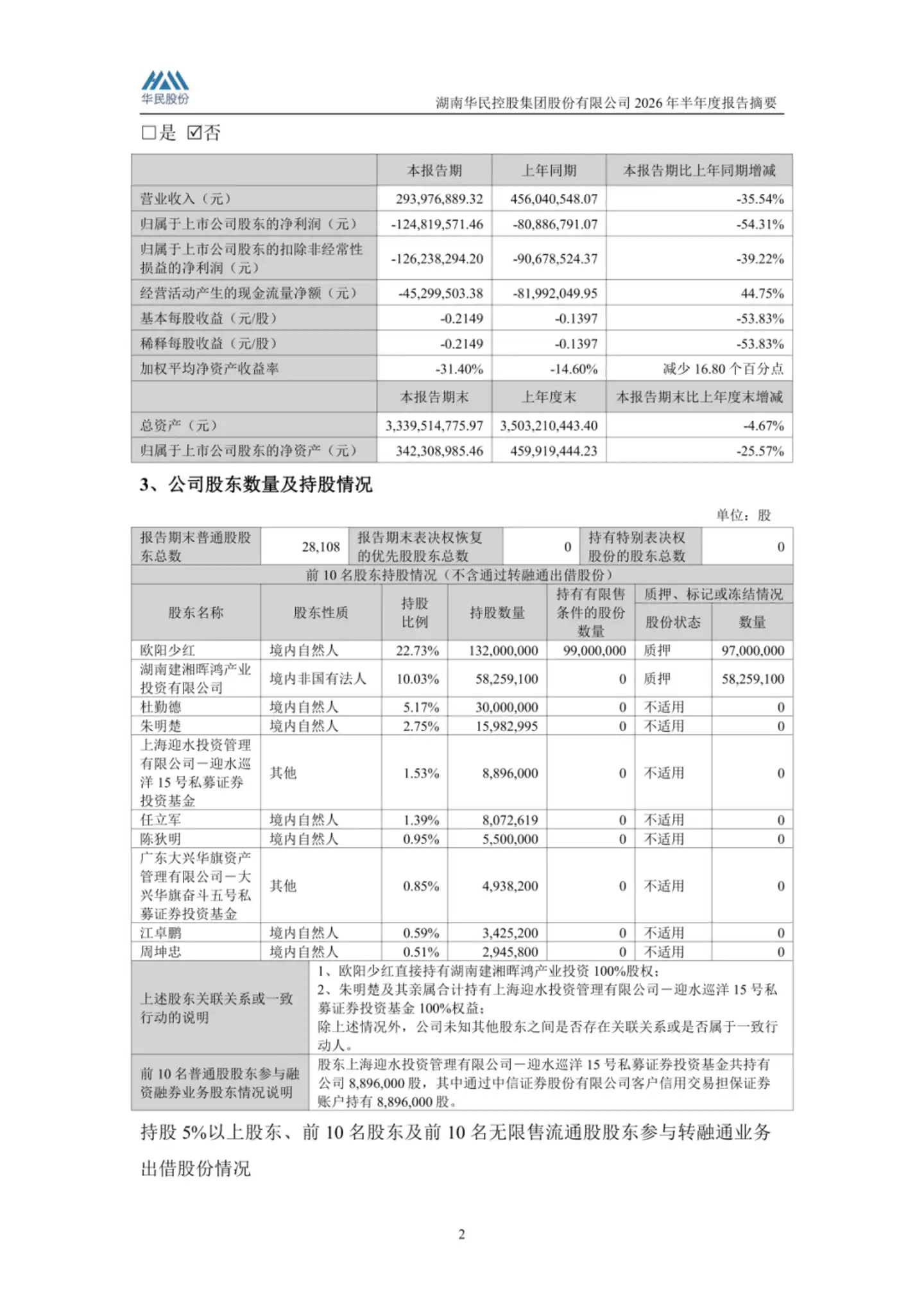
Foresee Energy notes that the financial data from Huamin Shares' interim report is unfavorable: revenue of 294 million yuan, a year-on-year decrease of 35.54%; net profit attributable to shareholders of -125 million yuan; and an asset-liability ratio that has climbed to 93.11%. Of the total debt of 885 million yuan, short-term debt accounts for a high proportion of 95.03%. Notably, the semiconductor business revenue was 2.91 million yuan with a gross margin of 62.14%, forming a stark contrast with the photovoltaic main business revenue of 250 million yuan and a gross margin of -25.78%.
As early as August 6, Huamin Shares announced a strategic cooperation agreement with Huachuan Semiconductor, a Sino-Korean joint venture, to enter the semiconductor etching equipment core silicon component track. Perhaps because Huachuan Semiconductor has long been a supplier to SK Hynix, the stock price deviated cumulatively by over 30% for three consecutive trading days after the cooperation news was announced.
Foresee Energy believes that this company, which crossed over into photovoltaics just four years ago, is experiencing a typical "second curve timing mismatch." The new track direction is correct, but the bleeding rate of the old business is far faster than the hematopoietic capacity of the new business.
Losses in the Photovoltaic Main Business Are Still Accelerating
In fact, Huamin Shares' financial data can no longer be simply explained by the four words "industry cycle."
In the first half of the year, the company's gross margin was -18.84%, net margin was -54.49%, and return on equity was -31.4%. Photovoltaic products contributed 85.11% of revenue, but the gross margin has fallen to -25.78%. Looking at non-GAAP net profit, the company has suffered losses for eight consecutive years since 2017.
The deeper issue lies in the debt structure. Of the total debt of 885 million yuan, short-term debt accounts for 95.03%, with short-term loans as high as 384 million yuan. As of the reporting period end, the net assets attributable to the listed company's shareholders were only 342 million yuan, a decrease of 25.57% compared to the end of the previous year.
This means that Huamin Shares must repay almost all its debt in a very short time, while the cash-generating capacity of its photovoltaic main business continues to deteriorate. Net cash flow from operating activities was -45.2995 million yuan, and monetary funds decreased by 40.80% compared to the beginning of the year. The company explained this as "increased demand for debt repayment and working capital."
The silicon wafer segment is one of the most severely loss-making sections in the entire industry. In the first half of 2026, mainstream monocrystalline N-type silicon wafer prices fell from 1.40 yuan per piece to 0.88 yuan per piece, a drop of 37.14%.
Calculations by the China Photovoltaic Industry Association show that the fully burdened production cost including tax for N-type G12R silicon wafers is 1.945 yuan per piece, while the actual transaction price is only between 1.2 and 1.3 yuan per piece.
However, Huamin Shares' predicament is not an isolated case. GCL System Integration Technology pre-reported a loss of 590 to 690 million yuan for the first half; Tongwei and LONGi have reported losses for 10 consecutive quarters. But what makes Huamin Shares special is that its balance sheet is more fragile than most peers. A liability ratio of 93.11% far exceeds the industry average.
The industry consensus now is that the capacity clearance in photovoltaics is far from over. This is equivalent to saying that the company's most critical revenue source shows no sign of stopping the bleeding in the short term.
Technologically Homologous, But the Entry Thresholds Are Not on the Same Order of Magnitude
Of course, the logic behind Huamin Shares' move into semiconductor silicon components, as mentioned earlier, is not imagined out of thin air.
Photovoltaic-grade monocrystalline silicon and semiconductor-grade monocrystalline silicon share technological origins in core processes such as crystal pulling, doping, and slicing, differing mainly in precision requirements. Photovoltaic-grade monocrystalline silicon generally requires a purity of six nines (99.9999%), while semiconductor-grade commonly requires ten to eleven nines.
Huamin Shares already possesses the R&D and pulling capabilities for large-diameter semiconductor-grade silicon ingots up to 450mm, and has mastered the mass production technology route for low-oxygen, low-defect single crystals without a magnetic field.
Other companies, such as TCL Zhonghuan, Liancheng CNC, and Jingsheng Mechanical & Electrical, are also deploying along this path. It is reported that TCL Zhonghuan plans to invest 11.96 billion yuan to build a large semiconductor wafer project in Shenzhen, raising the total planned capacity for 12-inch wafers to 2.1 million pieces per month. Liancheng CNC holds about an 18% market share in the PV single crystal furnace field and is in the process of horizontally transferring its single crystal furnace technology to semiconductor-grade equipment.
The shared judgment of these leading companies is that equipment and process accumulation in the silicon material segment of photovoltaics and semiconductors can be reused, and the gross margin and customer stickiness of the semiconductor business are far superior to those of photovoltaics.
However, the difference in entry barriers between the two cannot be ignored. The silicon components for etching chambers have long been dominated by foreign original manufacturers, with domestic localization in mainland China less than 10%. In the global silicon components market, the American company Silfex (a subsidiary of LAM) holds about a 55.3% market share, Korea's Hana about 13.3%, and Japan's Mitsubishi Materials about 8.4%. This means Huamin Shares is not facing a blue ocean, but a highly concentrated market dominated by foreign giants for decades.
Therefore, space for import substitution does exist. Industry forecasts indicate that the domestic silicon component market's localization rate will increase from the current 5% to over 50% in the next 3 to 5 years, with the global silicon component market for etching reaching 20.7 billion yuan by 2027.
But the distance between "space exists" and "can we get a piece of it" is precisely the hardest pass: customer certification.
A Race Between Certification Cycles and Cash Flow
Semiconductor silicon components are key process consumables for equipment. The customer certification process involves sample verification, small-batch machine testing, long-term running tests, stability verification, mass production introduction, and other stages. The overall certification cycle generally ranges from several months to over a year. For a company to go global and connect with overseas leading memory manufacturers, the cycle from factory audit to product certification to mass production may take as long as 18 to 36 months.
Jiangsu Shentong Semiconductor also explicitly stated in investor communications that its downstream customers have extremely strict qualification procedures for suppliers, with long and complex certification cycles.
Facing this situation, Huamin Shares' strategy is to leverage the channels of Huachuan Semiconductor.
It is understood that Huachuan Semiconductor is a Sino-Korean joint venture. The Korean shareholder, SeongHyun Technology, has been deeply involved in the field of semiconductor etching process silicon components for many years, long providing core supporting components for Samsung and SK Hynix. Its flagship product, the CSR high-end silicon ring, is a core component in 3D-NAND flash memory etching equipment.
Previously, Huamin Shares' semiconductor silicon ingot products have penetrated the Korean industrial chain and currently have about four customers.
The problem is the lack of time.
Huamin Shares' equity incentive plan requires revenue from semiconductor-grade silicon ingot and silicon component products in 2026, 2027, and 2028 to be no less than 6 million yuan, 30 million yuan, and 80 million yuan, respectively.
From 2.91 million yuan in the first half of this year to a full-year target of 6 million yuan, an increase of about 3.09 million yuan is needed in the second half. This target is not aggressive. However, the 30 million yuan target for 2027 implies a several-fold growth, which depends on whether customer certification can be completed and introduced in the first half of next year.
Meanwhile, the pressure to repay short-term debt will not wait for the certification cycle.
Huamin Shares' monetary funds on the books are continuously decreasing. The company is attempting to lower its debt scale by replacing capital expenditures with operating leases, debt-to-equity swaps, and monetizing existing assets. But debt-to-equity swaps involve negotiations with creditors, and the pace of monetizing existing assets is not entirely under the company's control.
Furthermore, even if the semiconductor business progresses according to the company's plan, Huamin Shares still faces a structural risk.
Semiconductor business revenue in the first half was only 2.91 million yuan. Even with a gross margin as high as 62.14%, the absolute profit contribution would be only about 1.8 million yuan. And what is the gross loss of the photovoltaic main business? Revenue of 250 million yuan multiplied by a gross margin of -25.78% means the gross profit loss from photovoltaic products alone exceeds 64 million yuan.
Foresee Energy judges that even if Huamin Shares' semiconductor business achieves revenue of 30 million yuan in 2027 and maintains a 60% gross margin, the contributed gross profit of about 18 million yuan would still be difficult to cover the continuous losses of the photovoltaic main business.
Therefore, the financial significance of semiconductors as a second growth curve will, for a considerable period, be reflected more in valuation logic than on the income statement.
From an industry perspective, the transition of photovoltaic equipment manufacturers to semiconductors is not new. It is understood that Maxwell Technology achieved revenue of 662 million yuan in semiconductors and displays in 2025, Laplace raised 2.2 billion yuan in a private placement to boost its semiconductor business, and Jinchen Shares plans to invest 1 billion yuan to build a semiconductor equipment project.
The common characteristic of these companies is that their semiconductor business already has a certain revenue scale, and although their photovoltaic main business is under pressure, it has not yet reached the brink of insolvency.
In contrast, Huamin Shares' situation is more extreme. Eight consecutive years of non-GAAP losses, a liability ratio of 93%, and a semiconductor business just getting started. Huamin Shares' semiconductor transformation is logically sound in terms of technology. The capability for 450mm silicon ingots, cooperation with Huachuan Semiconductor, and the binding effect of equity incentives all point to a seriously pursued strategic direction. But analysis should not only look at direction but also at timing.
The valuation elasticity of the semiconductor business exists in the long term, while the pressure to repay short-term debt exists in the present. The company needs to find a balance between these two time dimensions, and currently available information is insufficient to judge where this balance point lies.
The indicators truly worth following are not the growth rate of semiconductor business revenue, but two more leading signals. First, whether short-term loans can gain breathing room through extension or refinancing. Second, whether semiconductor customer certification can make substantial progress before the fourth quarter of 2026.
These two variables will determine whether Huamin Shares' story is one of "transformation pains" or a "liquidity crisis."
The following are excerpts from Huamin Shares' interim report: