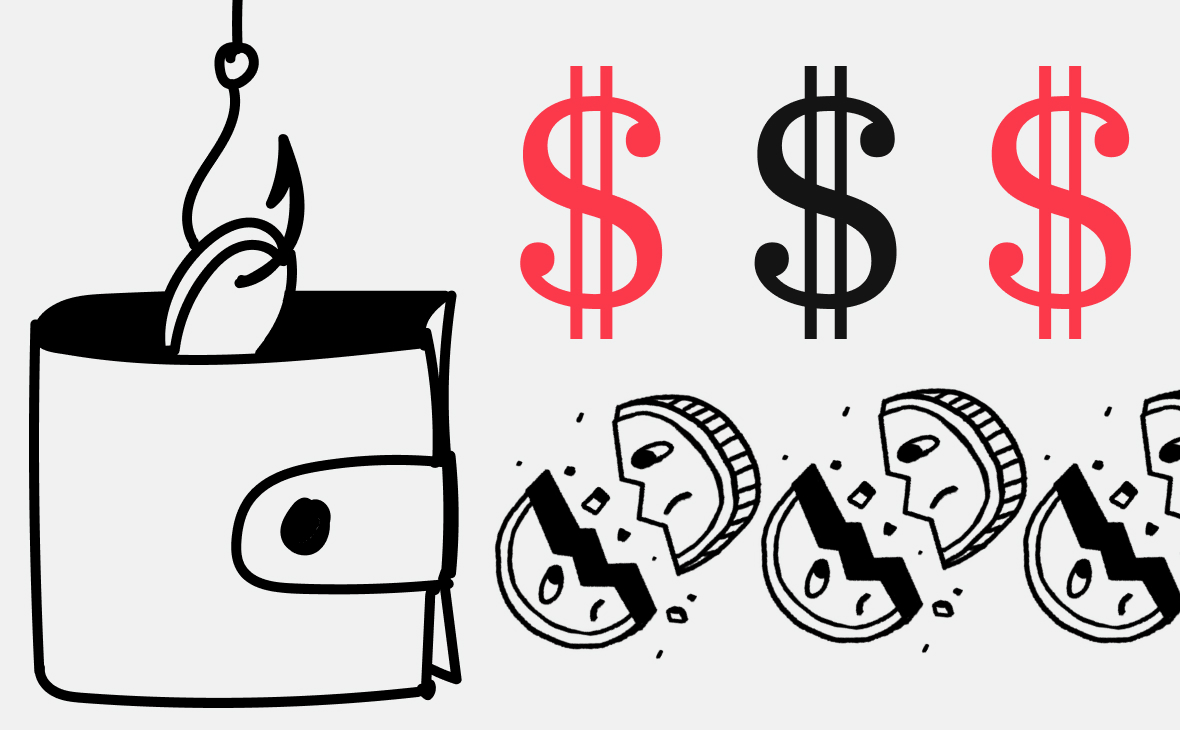
Hackers and Scammers Stole $4 Billion in Cryptocurrencies in 2025

RBK-cryptoPublicado em 2026-01-13Última atualização em 2026-01-13

Resumo

In 2025, hackers and fraudsters stole over $4 billion in cryptocurrencies, a 34.2% increase compared to the $3.01 billion stolen in 2024, according to analytics firm PeckShieldAlert. The total damage exceeded $4.04 billion, with $2.67 billion (a 24.2% annual increase) attributed to hacks and $1.37 billion (a 64.2% increase) to fraud cases. A strategic shift was noted towards a rise in scams utilizing social engineering methods, such as psychological manipulation to trick victims into revealing confidential information, which accounted for 12% of the losses. The most significant single incident was the $1.4 billion hack of the Bybit exchange in February of the previous year. An additional 22% of losses came from scams, including 'rug pulls' and pseudo-crypto investment schemes. Another key change was the increasing share of centralized services among the affected platforms. Their share of losses grew from just over 35% in 2023 to around 45% in 2024, and exceeded 70% in 2025. Only about $334.9 million of the stolen funds were frozen or returned during the year, a decrease from the $488.5 million recovered in 2024.

Damage to crypto industry participants increased by 34% compared to 2024

Due to hacks and fraud with cryptocurrencies in 2025, more than $4 billion was lost, according to analysts at PeckShieldAlert. According to their data, this is 34.2% more than in 2024, when $3.01 billion worth of cryptocurrency was stolen.

Damage from hacks and fraud with cryptocurrencies in 2025. Source: PeckShield

The total damage in 2025 exceeded $4.04 billion. Of this, $2.67 billion came from losses due to hacks (a 24.2% year-on-year increase) and $1.37 billion was attributed to cases of fraud (a 64.2% increase).

RBC-Crypto Telegram Channel — subscribe and stay up to date with the most important and relevant news about cryptocurrencies.

Join the RBC-Crypto forum on Telegram to discuss news and trends in the crypto world.

The report emphasizes that a strategic shift is occurring — the number of thefts using social engineering methods (psychological techniques and manipulations that force the victim to disclose confidential information that the attacker could use to steal funds) is growing. Analysts attributed 12% of the losses in 2025 to incidents where such methods were used.

66% of the total damage came from hacks, the most serious being the theft of $1.4 billion from the Bybit exchange in February of last year. Another 22% of losses came from scams, including "rug pulls" (when developers withdraw liquidity at the price peak) and pseudo-cryptoinvestments.

Another important change was the increase in the share of centralized services among the affected platforms. If in 2023 they accounted for just over 35%, in 2024 it was already around 45%, and in 2025 — over 70%.

Over the year, only about $334.9 million of the stolen funds was frozen or returned. PeckShield noted a decrease compared to 2024, when $488.5 million was recovered.

Cardano Founder: Trump's Policy Pushed Suburbs Away from Cryptocurrency

Former New York 'Bitcoin Mayor' Faces Charges in Crypto Fraud

The First Bitcoin Transaction Was Executed 17 Years Ago. Who Received These Coins

Perguntas relacionadas

QHow much was stolen in cryptocurrencies due to hacks and fraud in 2025 according to PeckShieldAlert?

A$4 billion was stolen in cryptocurrencies in 2025.

QWhat was the percentage increase in losses from crypto hacks and fraud in 2025 compared to 2024?

ALosses increased by 34.2% in 2025 compared to 2024.

QWhat was the largest single crypto theft incident mentioned in the report for 2025?

AThe largest single theft was the $1.4 billion hack of the Bybit exchange in February of the previous year.

QWhat significant shift in attack methods did the PeckShield report highlight for 2025?

AThe report highlighted a strategic shift towards an increase in the number of scams using social engineering methods, which accounted for 12% of the losses.

QWhat percentage of the total losses in 2025 were attributed to centralized services?

AOver 70% of the total losses in 2025 were attributed to centralized services.

Leituras Relacionadas

From Theft to Re-entry: How Was $292 Million "Laundered"?

A sophisticated crypto laundering operation was executed following the $292 million hack of Kelp DAO on April 18. The attack, attributed to the North Korean Lazarus group, began with anonymous infrastructure preparation using Tornado Cash to fund wallets untraceably. The hacker exploited a vulnerability in Kelp’s cross-chain bridge, stealing 116,500 rsETH. To avoid crashing the market, the attacker used Aave and Compound as laundering tools—depositing the stolen rsETH as collateral to borrow $190 million in clean, liquid ETH. This move triggered a bank run on Aave, causing an $8 billion drop in TVL. After consolidating funds, the attacker fragmented them across hundreds of wallets to evade detection. A major breakpoint was THORChain, where over $460 million in volume—30 times its usual activity—was processed in 24 hours, converting ETH into Bitcoin. This shift to Bitcoin’s UTXO model exponentially increased tracing complexity by shattering funds into countless untraceable fragments. The final destination was Tron-based USDT, the primary channel for illicit crypto flows. From there, funds were cashed out via OTC brokers in China and Southeast Asia, using unlicensed underground banks and UnionPay networks outside Western sanctions scope. Ultimately, the laundered money supports North Korea’s weapons programs, which rely heavily on crypto hacking for foreign currency. The incident underscores structural challenges in DeFi: its openness, composability, and lack of central control make such laundering not just possible, but inherently difficult to prevent.

marsbitHá 3h

From Theft to Re-entry: How Was $292 Million "Laundered"?

marsbitHá 3h

Trading

Spot
Futuros

Artigos em Destaque

Como comprar 4

Bem-vindo à HTX.com!Tornámos a compra de 4 (4) simples e conveniente.Segue o nosso guia passo a passo para iniciar a tua jornada no mundo das criptos.Passo 1: cria a tua conta HTXUtiliza o teu e-mail ou número de telefone para te inscreveres numa conta gratuita na HTX.Desfruta de um processo de inscrição sem complicações e desbloqueia todas as funcionalidades.Obter a minha contaPasso 2: vai para Comprar Cripto e escolhe o teu método de pagamentoCartão de crédito/débito: usa o teu visa ou mastercard para comprar 4 (4) instantaneamente.Saldo: usa os fundos da tua conta HTX para transacionar sem problemas.Terceiros: adicionamos métodos de pagamento populares, como Google Pay e Apple Pay, para aumentar a conveniência.P2P: transaciona diretamente com outros utilizadores na HTX.Mercado de balcão (OTC): oferecemos serviços personalizados e taxas de câmbio competitivas para os traders.Passo 3: armazena teu 4 (4)Depois de comprar o teu 4 (4), armazena-o na tua conta HTX.Alternativamente, podes enviá-lo para outro lugar através de transferência blockchain ou usá-lo para transacionar outras criptomoedas.Passo 4: transaciona 4 (4)Transaciona facilmente 4 (4) no mercado à vista da HTX.Acede simplesmente à tua conta, seleciona o teu par de trading, executa as tuas transações e monitoriza em tempo real.Oferecemos uma experiência de fácil utilização tanto para principiantes como para traders experientes.

596 Visualizações TotaisPublicado em {updateTime}Atualizado em 2025.10.20

Como comprar 4

Discussões

Bem-vindo à Comunidade HTX. Aqui, pode manter-se informado sobre os mais recentes desenvolvimentos da plataforma e obter acesso a análises profissionais de mercado. As opiniões dos utilizadores sobre o preço de 4 (4) são apresentadas abaixo.

活动图片