Governance Deadlock Triggers 'Defection': Zcash Core Team Collectively Departs to Start New Venture

比推Publicado em 2026-01-09Última atualização em 2026-01-09

Resumo

In early 2026, Zcash’s core development team, the Electric Coin Company (ECC), collectively resigned following a governance crisis with Bootstrap, the nonprofit overseeing Zcash’s development. ECC CEO Josh Swihart described the departure as a “constructive discharge,” accusing Bootstrap of creating an unworkable environment and deviating from Zcash’s mission. The conflict centered on the proposed privatization of Zashi, Zcash’s flagship mobile wallet. ECC advocated for a commercial approach to accelerate development, while Bootstrap, as a 501(c)(3) nonprofit, opposed it due to legal risks and fiduciary obligations to protect public assets. The former ECC team announced a new company and a replacement wallet named cashZ, pledging to continue Zcash protocol development without issuing a new token. They aim to uphold Zcash’s privacy-focused ethos under a more flexible commercial structure. Zcash co-founder Zooko Wilcox remained neutral, while the Zcash Foundation reaffirmed its commitment to the protocol’s decentralization, assuring users that network integrity remains unaffected. The incident highlights ongoing tension between nonprofit governance and commercial innovation in crypto.

Written by: KarenZ, Foresight News

Original title: Who Betrayed Whom? Zcash Internal Strife, ECC Collective Departure


After achieving a 1200% price surge in 2025 and witnessing a comprehensive revival of privacy technology, Zcash has now taken a major stumble in the quagmire of governance.

On January 8, 2026, Josh Swihart, the CEO of Electric Coin Company (ECC), which originally served as Zcash's core development team, announced that the entire ECC team was collectively forced to resign.

This is not a layoff, nor a restructuring, but a complete "collective exodus." Following this, the price of ZEC fell by 20% in a short period, once dropping below $400, and has since rebounded to above $440.

Who Is the Target?

According to Josh Swihart, this collective departure was not voluntary but a passive "Constructive Discharge." This is a legal term meaning that the employer created a hostile or intolerable work environment or exerted other forms of pressure or coercion, forcing employees to resign or quit.

Josh Swihart directly pointed the finger at Bootstrap—a nonprofit organization established under Section 501(c)(3) of the U.S. Internal Revenue Code, which supports Zcash by managing the Electric Coin Company.

First, a brief explanation of the core attributes of a 501(c)(3) organization. Such organizations are tax-exempt nonprofits recognized by the IRS, primarily established for specific public benefit purposes such as religion, charity, education, science, and literature. Their income is exempt from federal income tax, and donors can deduct contributions from their personal income taxes. Crucially, these organizations must adhere to strict regulations and cannot distribute profits to individuals.

"Over the past few weeks, the majority of the Bootstrap board has clearly deviated from Zcash's core mission. They unilaterally altered employment terms, making it completely impossible for us to perform our duties normally." Josh Swihart defined this series of actions as malicious governance sabotage and simultaneously announced that, to protect the team's R&D成果 and uphold Zcash's original intent, the former ECC team plans to establish an independent new company to continue advancing technological development.

Flashpoint of Conflict: The Privatization of Zashi Wallet

What exactly ignited this governance crisis?

The Bootstrap board subsequently responded, clarifying that the core disagreement lies in the privatization and commercialization plan for the Zashi wallet—Zcash's flagship mobile wallet, independently developed by ECC. The two sides reached an irreconcilable impasse over its future direction.

The ECC team advocated for privatizing the Zashi wallet, introducing external capital, and adopting a more flexible commercial structure to accelerate technological iteration and ecosystem expansion. However, this proposal was firmly opposed by the Bootstrap board, which deemed it to carry significant legal risks.

From the standpoint of a nonprofit organization, Bootstrap emphasized that all its assets (including intellectual property related to Zashi) must serve the public interest and绝不能 be misappropriated or transferred to private entities. If privatization were to proceed, past donors to Bootstrap could file lawsuits citing "improper asset disposal"; the board also cited the case of OpenAI as a cautionary tale, noting that its transition from a nonprofit to a for-profit structure triggered multiple lawsuits and regulatory investigations—a precedent not to be ignored.

At its essence, this struggle is a clash of two philosophies: ECC views the nonprofit structure as a "shackle" constraining innovation and commercialization,渴望 greater entrepreneurial freedom; while Bootstrap believes it is fulfilling its legal responsibilities to protect public assets from private acquisition and prevent legal and political risks.

Opportunities and Uncertainties of the New Company

On January 9, Josh Swihart announced that the former ECC and Zashi R&D team would launch a new Zcash wallet, "cashZ," based on the Zashi codebase. He also承诺 that the original team would remain 100% focused on Zcash protocol development and would not issue any new tokens.

The cashZ website outlines three core purposes for the new company's establishment: adhering to Zcash's cypherpunk origins, restoring consistency in ecosystem development, and promoting the large-scale adoption of privacy technology. By repeatedly emphasizing "cypherpunk spirit" and "privacy as a human right," Josh Swihart positions his team as defenders of idealism.

This could be an opportunity, but it harbors unknown risks. The opportunity lies in the fact that, freed from the constraints of a nonprofit organization, the new team can flexibly seek financing, make decisions quickly, and boldly advance commercial布局 without having to compromise for the board's risk aversion.

However, the challenges are equally severe: How will the new company secure funding? How will its legal relationship with the Zcash protocol be defined? And how will it rebuild community trust in the team? These questions urgently await answers from time.

How Do the Relevant Parties View This?

Most intriguing is the stance of Zcash co-founder Zooko Wilcox. This legendary figure, who stepped down as ECC CEO at the end of 2023, has chosen an extremely微妙 neutral position. His statement seems to say he is not taking sides. This might not be a simple matter of black and white but rather the inevitable eruption of a structural矛盾.

The Zcash Foundation issued a statement on January 9, reaffirming its commitment to maintaining Zcash as a decentralized open-source protocol. It emphasized that, regardless of organizational changes, Zcash's network, user assets, and privacy features remain unaffected. This stance is wise. In times of crisis, reaffirming the protocol's decentralized nature does more to stabilize community confidence than getting involved in organizational disputes.

Sean Bowe, a former ECC engineer who left ECC a year ago, stated, "ECC is regrouping under a new structure. This will free it from the broken and misaligned nonprofit structure of Bootstrap and allow it to continue building for Zcash. The potential contained within this is enormous."

Summary

Zcash's turbulent start to 2026 is a mirror for the entire industry.

It reminds us: Protocols can be decentralized, but the organizations that maintain them often are not, or find it very difficult to be. We still haven't found a perfect model that can simultaneously accommodate 'decentralized ideals, innovative vitality, legal compliance, and financial sustainability.'

Amid the tug-of-war between理想 and reality, the balance between innovation and compliance, and the博弈 between freedom and responsibility, the crypto industry continues to explore its path forward.


Twitter:https://twitter.com/BitpushNewsCN

Bitpush TG Discussion Group:https://t.me/BitPushCommunity

Bitpush TG Subscription: https://t.me/bitpush

Original article link:https://www.bitpush.news/articles/7601324

Criptomoedas em alta

Perguntas relacionadas

QWhat was the main reason behind the collective departure of the Zcash core development team (ECC)?

AThe main reason was a governance conflict with the non-profit organization Bootstrap, which managed ECC. The dispute centered on the proposed privatization and commercialization of the Zashi wallet, leading to an untenable work environment that the ECC team considered a 'constructive discharge'.

QWhat is the name of the new company and wallet announced by the former ECC team?

AThe former ECC team announced a new company and a new Zcash wallet called 'cashZ', which is based on the Zashi codebase. They committed to focusing 100% on Zcash protocol development and not issuing any new tokens.

QWhat legal structure is Bootstrap, and why did it oppose the privatization of the Zashi wallet?

ABootstrap is a U.S. 501(c)(3) non-profit organization. It opposed the privatization of the Zashi wallet because, as a non-profit, its assets must serve the public interest and cannot be transferred to private entities. It feared legal risks, including potential lawsuits for 'improper asset disposal' and regulatory scrutiny, citing the example of OpenAI's legal challenges.

QHow did the Zcash community and related entities react to the governance crisis?

AThe Zcash Foundation reaffirmed its commitment to maintaining Zcash as a decentralized, open-source protocol, assuring users that the network and their assets remained unaffected. Zooko Wilcox, a Zcash co-founder, remained neutral. Former ECC engineer Sean Bowe expressed optimism, seeing potential in the new structure free from Bootstrap's constraints.

QWhat impact did the ECC team's departure have on the price of ZEC?

AFollowing the announcement of the ECC team's collective departure, the price of ZEC (Zcash's native token) dropped by 20% in a short period, falling below $400. It later rebounded to above $440.

Leituras Relacionadas

Analyzing the Impact of AI on Economic Growth and Productivity

**Title: Analyzing AI's Impact on Economic Growth and Productivity** This article examines three contrasting views on AI's influence on economic growth and productivity. **The Optimistic View** posits that AI, especially through automating R&D ("recursive self-improvement"), could dramatically accelerate growth, even triggering a technological "singularity" with explosive, potentially infinite, economic expansion. **The Moderate/Mainstream View** acknowledges AI's productivity benefits but emphasizes significant real-world constraints that could limit its impact. These include: limited cost savings per task, structural ceilings on which jobs and industries are "exposed" to AI, adoption bottlenecks (e.g., compute, energy, regulatory hurdles), and the "weak link" effect where non-automatable tasks cap overall gains. Consequently, the realized AI dividend may be far lower than optimistic projections, with estimates typically ranging from 0.1% to 1.3% annual productivity growth. **The Pessimistic View** stems from two strands. The first aligns with the moderate view but applies extremely conservative assumptions about task exposure and efficiency gains, yielding minimal projected impact. The second introduces a demand-side critique: if AI primarily replaces rather than augments labor, it could depress labor's share of income, weaken consumer demand, and create a "demand trap" that ultimately stifles growth, unless offset by redistribution policies. **The authors' assessment** is nuanced: * **Short-term (1-2 years):** AI will support growth primarily through investment spending, not significant productivity gains. * **Medium-term (3-5 years):** Three potential paths emerge based on AI demand and bottleneck severity: 1. **"Optimistic Path":** High demand, few bottlenecks. Rapid productivity gains but risk of major job displacement and social conflict without redistribution. 2. **"Moderate Path" (most likely):** High demand but significant, surmountable bottlenecks. Leads to moderate productivity gains, financial market volatility (K-shaped returns), and sectoral job losses. 3. **"Pessimistic Path":** Low demand or severe bottlenecks. Minimal productivity and growth impact, triggering financial market corrections but allowing a smoother societal transition with less labor disruption. * **Long-term:** AI holds potential for a major productivity revolution and prosperity. The conclusion stresses that no path is smooth. Technologically "optimistic" outcomes could be socially detrimental, while "pessimistic" technological diffusion might be more socially stable. Policymakers must monitor developments and prepare balanced responses to manage economic, financial, and social sustainability.

marsbitHá 3m

Analyzing the Impact of AI on Economic Growth and Productivity

marsbitHá 3m

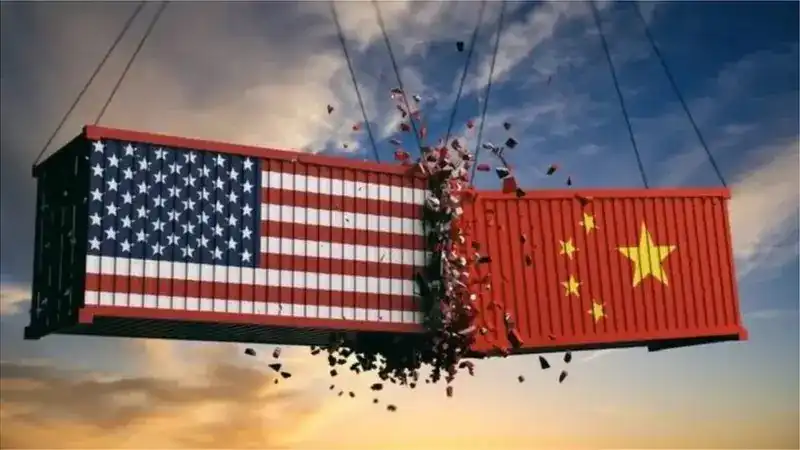
The New Cold War is a Tech Stock War

The New Cold War is a Tech Stock War The article argues that the contemporary geopolitical and economic rivalry between the US and China represents a "New Cold War," but one fundamentally fought through technology and financial markets, not physical barriers or conventional trade. Historically, US dominance was secured through financial systems. The Soviet Union, reliant on the rigid "Transferable Ruble," was ultimately undermined by its dependency on the US dollar for oil trade. Later, Japan's semiconductor challenge was countered not just by tariffs (e.g., Plaza Accord, 301 investigations) but by binding it to US Treasury bonds. China presents a more complex, "embedded" challenger. While it holds vast dollar reserves and US debt like Japan, its industrial base is stronger and more diversified than the Soviet Union's. Surviving the initial 2018 trade war phase, the conflict has evolved into a "tech-financial war." The core battlefield is now the stock market. US tech stocks (AI, semiconductors) are treated as sovereign assets, buoyed by bipartisan national will. China is pushing to strengthen its own financial markets to convert industrial strength into financial power and fund its tech ambitions. Companies like ChangXin (semiconductors), Moonshot AI, and DJI compete not just for market share but as financial proxies for their respective systems. The new paradigm is moving from globally efficient monopolies (Apple, Google) towards companies that achieve monopolistic profits within their respective geopolitical spheres. This competition over "pricing power" and financial valuation in segmented markets defines the current era, making the stock market the primary arena for this tech-centric struggle.

marsbitHá 13m

The New Cold War is a Tech Stock War

marsbitHá 13m

RWA Weekly: Ten European Financial Institutions Establish Tokenized Asset Cooperative; Ondo Launches New Execution Network Ondo Network

RWA Weekly: European Banks Form Tokenized Asset Cooperative; Ondo Launches New Execution Network Ondo Network Covering July 24-31, 2026, the RWA sector saw a steady on-chain total value locked (TVL) of $36.8 billion, with holder count hitting a record high. However, stablecoin transfer volumes fell sharply (~30%), indicating low on-chain settlement demand. Key regulatory moves include South Korea advancing stablecoin legislation and a push to scrap crypto taxes, Kenya lowering capital requirements for stablecoin issuers, and Zimbabwe approving seven projects for its crypto sandbox. In project developments, BIS-led Project Agorá successfully tested cross-border payments with tokenized funds across six currencies. Ten major European financial institutions formed the RL1 blockchain cooperative to build tokenized asset infrastructure. Other notable updates: Aviva launched a tokenized dollar liquidity fund on XRPL, POSCO International tokenized commercial invoices on Injective, and a Brazilian farmer used tokenized cattle as collateral for a loan. Additional progress includes BNY Mellon migrating its core transfer agent operations to blockchain, Securitize gaining SEC investment advisor registration, and Tether’s compliant stablecoin USA₮ launching on Celo. Ondo Finance introduced Ondo Network, a new execution layer focused on speed and privacy, moving away from its initial chain plans. An analysis highlights that despite the growing scale of on-chain RWAs (~$32B), approximately 90% remain underutilized in DeFi, pointing to a critical challenge in unlocking liquidity and fostering real-world application beyond mere issuance.

marsbitHá 13m

RWA Weekly: Ten European Financial Institutions Establish Tokenized Asset Cooperative; Ondo Launches New Execution Network Ondo Network

marsbitHá 13m

South Korean Stock Market Sees Sharp Rebound After Forceful De-leveraging, SK Hynix Rises 30%

On July 31, South Korean stocks staged a historic rebound. The benchmark KOSPI index surged 18.27%, with chipmaker SK Hynix hitting a 30% gain limit. This followed a brutal, near-40% decline in the KOSPI over the previous month, driven largely by a deleveraging spiral involving leveraged ETFs. Analysts attributed the sharp sell-off to structural liquidity issues rather than deteriorating corporate fundamentals. The rally was triggered by a confluence of positive catalysts. Firstly, strong earnings from U.S. cloud giants Microsoft and Amazon alleviated fears of an "AI bubble burst," boosting global tech sentiment. Secondly, SK Group Chairman Chey Tae-won made a rare personal purchase of SK Hynix shares, seen as a strong vote of confidence. Thirdly, the South Korean government announced a 20 trillion won ($139 billion) AI investment fund. In response to the market turmoil, South Korean regulators are tightening controls on leveraged ETFs, admitting oversight shortcomings. Measures include raising minimum cash保证金 requirements for散户 investors and suspending new product launches. While the rebound signals eased liquidity pressure, analysts note deep structural issues remain. The market's future stability is seen as dependent on global tech capital expenditure trends and memory chip price cycles, with some viewing the surge as a technical correction rather than a definitive trend reversal.

marsbitHá 33m

South Korean Stock Market Sees Sharp Rebound After Forceful De-leveraging, SK Hynix Rises 30%

marsbitHá 33m

Trading

Spot

Artigos em Destaque

Como comprar CORE

Bem-vindo à HTX.com!Tornámos a compra de CORE (CORE) simples e conveniente.Segue o nosso guia passo a passo para iniciar a tua jornada no mundo das criptos.Passo 1: cria a tua conta HTXUtiliza o teu e-mail ou número de telefone para te inscreveres numa conta gratuita na HTX.Desfruta de um processo de inscrição sem complicações e desbloqueia todas as funcionalidades.Obter a minha contaPasso 2: vai para Comprar Cripto e escolhe o teu método de pagamentoCartão de crédito/débito: usa o teu visa ou mastercard para comprar CORE (CORE) instantaneamente.Saldo: usa os fundos da tua conta HTX para transacionar sem problemas.Terceiros: adicionamos métodos de pagamento populares, como Google Pay e Apple Pay, para aumentar a conveniência.P2P: transaciona diretamente com outros utilizadores na HTX.Mercado de balcão (OTC): oferecemos serviços personalizados e taxas de câmbio competitivas para os traders.Passo 3: armazena teu CORE (CORE)Depois de comprar o teu CORE (CORE), armazena-o na tua conta HTX.Alternativamente, podes enviá-lo para outro lugar através de transferência blockchain ou usá-lo para transacionar outras criptomoedas.Passo 4: transaciona CORE (CORE)Transaciona facilmente CORE (CORE) no mercado à vista da HTX.Acede simplesmente à tua conta, seleciona o teu par de trading, executa as tuas transações e monitoriza em tempo real.Oferecemos uma experiência de fácil utilização tanto para principiantes como para traders experientes.

372 Visualizações TotaisPublicado em {updateTime}Atualizado em 2026.06.02

Como comprar CORE

Discussões

Bem-vindo à Comunidade HTX. Aqui, pode manter-se informado sobre os mais recentes desenvolvimentos da plataforma e obter acesso a análises profissionais de mercado. As opiniões dos utilizadores sobre o preço de CORE (CORE) são apresentadas abaixo.

活动图片