Author: Rita
Cryptocurrency trading volume fell 30% in July and another 21% in August, marking a continuous decline for ten months, exceeding the median duration of the previous five cycles. However, in its Americas Brokers & Cryptocurrency Industry Report published on August 24, Goldman Sachs expressed a "cautiously optimistic" outlook for the second half of the year. A recovery in the crypto market would provide additional upside optionality.
Traditional brokers base their logic on a seasonal rebound in September, prediction markets tout a 1160% structural growth story over two years, while the crypto sector's appeal lies in the possibility of a reversal as the downturn approaches historical limits. Goldman Sachs believes the current valuation for the entire sector is only at the 30th percentile of its historical range over the past five years, suggesting a favorable risk-reward ratio is already in place.
Crypto Downturn Nearing Historical Limits
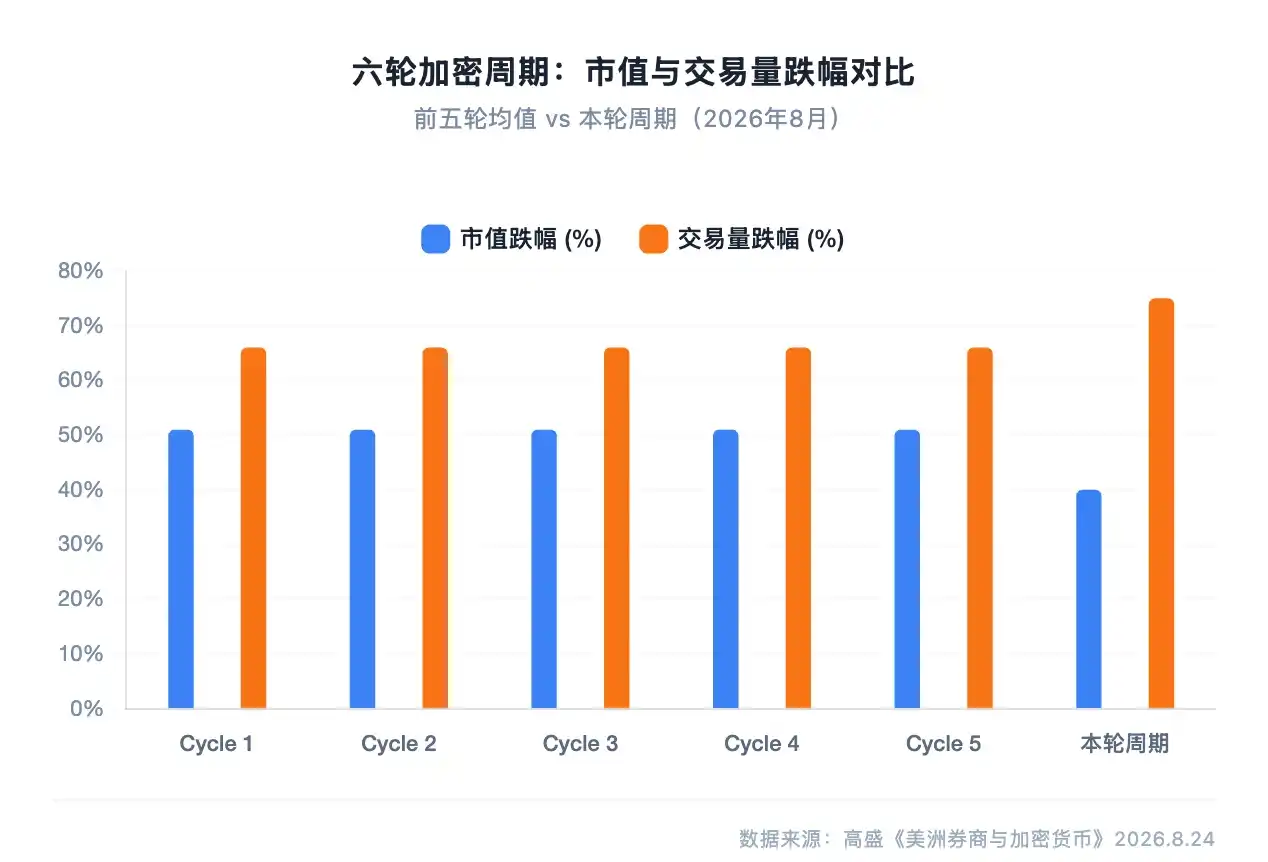
The current decline in crypto trading volume from its peak has reached 75%, lasting ten months, surpassing the median duration of four months in the previous five cycles. Crypto market cap rebounded 21% over the past week. Although a similar rebound from April to May failed to sustain, Goldman Sachs believes if the market cap can stabilize at current levels, a turning point in trading volume could emerge.
Data from Goldman Sachs' Prime Brokerage Survey shows that 35% of institutional investors view regulatory uncertainty as the biggest obstacle to entering the crypto market, while 32% believe regulatory clarity is the top catalyst for institutional adoption.
Regulatory Reform Provides Institutional Support
Although the likelihood of the "CLARITY Act" passing before the midterm elections continues to decrease, U.S. regulators are still pushing for substantive reforms. Recent SEC proposals for innovation exemptions, along with over 10 new digital asset companies obtaining OCC bank charters in 2026, bring the total number of crypto firms incorporated into the federal banking system to more than 15.
Goldman Sachs believes the catalytic effect of regulatory reform on crypto infrastructure businesses (custody, staking, stablecoins) cannot be ignored, though a true surge in institutional adoption likely awaits legislative finalization.
Cost Cuts Already Buffering Profits
Crypto companies have proactively reduced costs in response to the market downturn. Goldman Sachs estimates that covered companies have cut expenses by an average of about 5% in 2026. Multiple firms have reduced spending through layoffs, scaling back marketing budgets, and optimizing technology infrastructure expenditures.
The effects of cost-cutting are directly reflected in profits. Expense reductions have driven operating margins up by approximately 5.8 percentage points, partially offsetting the impact of revenue declines on profits. This has enabled crypto companies to maintain positive operating cash flow even before revenue recovery, preserving tactical space for the next cycle.
Four Key Picks with Distinct Positioning
From its coverage universe, Goldman Sachs has selected four stocks with a Buy rating.
HOOD (Target Price $124): Structural account assets growing at an annualized rate above 20%. The Rothera prediction market exchange, launched less than two months ago, has already entered the industry's top three, contributing approximately $150 million in annualized revenue.
IBKR (Target Price $114, U.S. Conviction List): Account growth is expected to exceed 30% in 2026, with over 85% of new accounts coming from outside the U.S., and a pre-tax margin above 75% driving robust capital generation.
FIGR (Target Price $43): The HELOC loan platform saw transaction volume grow over 100% year-over-year in July. The number of partners increased from 178 in 2025 to 1,002 in Q2 2026 and is still accelerating.
COIN (Target Price $196): Crypto derivatives market share has increased by approximately 8 percentage points since Q1 2024. Subscription and services revenue now accounts for about 40% of total revenue. If the SEC innovation exemption materializes, its institutional token service capabilities would directly benefit. Its forward P/E ratio is around 28x, at only the 5th percentile of its historical range since its IPO.
The three asset classes have different logics: traditional brokers rely on a September seasonal reversal, prediction markets on election cycles, and crypto plays on the triple catalysts of market cap recovery, cost cuts, and regulatory reform. Goldman Sachs believes valuations for the entire sector already reflect ample pessimism.

Disclaimer
This article is Tide Research's compilation and interpretation of a third-party brokerage research report (Goldman Sachs, August 24, 2026), combined with public market information. The ratings, target prices, earnings forecasts, and related judgments cited in this article represent the views of the analyst from that brokerage firm, reflecting the stance of their institution. They do not represent the views of Tide Research and do not constitute any investment advice.
The market carries risks, and decisions should be made independently. This article should not serve as the basis for trading any securities.