Author: danny
Original Title: Re-evaluating Public Chain Ecosystems with the Logic of Governance: Solana's Ecological Transformation from the Perspective of Singapore's Prosperity and Costs
When we talk about public chains in a bear market, what are we discussing? Is it price? Community? Or governance? The underlying question is: operating a public chain is essentially governing a digital nation. Tokens are currency, developers are citizens, DApps are industries, and on-chain governance is the government. If we re-examine Solana's development history from the perspective of governance, many seemingly accidental decisions have clear logic behind them.
Introduction: No One Is Born Strong
On August 9, 1965, Lee Kuan Yew shed tears in front of television cameras. Singapore was "kicked out" of the Malaysian Federation, becoming a tiny island nation with no hinterland, no resources, and no military. No one believed it could survive.
On November 11, 2022, FTX filed for bankruptcy. Solana's TVL evaporated by over 75% in a week, and the price of SOL plummeted from $32 to $8. The entire crypto circle's consensus: "Solana is finished."
The beginnings of these two stories are strikingly similar: a small entity abandoned, struggling to survive in a hostile environment. And the paths they later took—from dependence, to survival in gray areas, to transformation and upgrading—can almost be compared frame by frame.
This article does not aim to discuss price or community, but a more fundamental question: operating a public chain is essentially governing a digital nation. Tokens are currency, developers are citizens, DApps are industries, and on-chain governance is the government. If we re-examine Solana's development history from the perspective of governance, many seemingly accidental decisions have clear logic behind them.
Chapter 1: The British Military Era—SBF and FTX's Umbrella
Singapore's British Military Economy
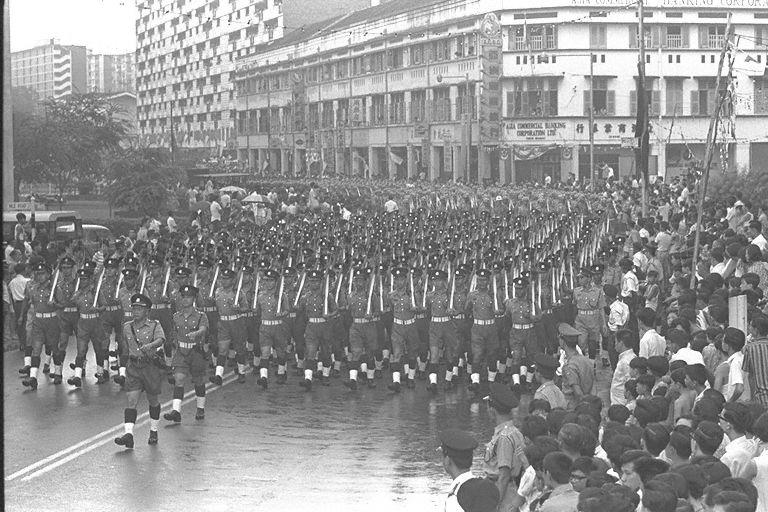
In the early days of independence, one of Singapore's economic lifelines was the consumption and employment brought by the British military presence. British military bases contributed about 20% of the GDP at the time. Singapore was not unaware of the fragility of this dependence, but for a newborn nation, there was no room to be picky about clients. Survival was the top priority.
In 1968, Britain announced it would withdraw all military forces east of the Suez Canal by 1971. This was akin to pulling the rug out from under Singapore. But it was this "abandonment" that forced Singapore to seriously consider: if the protective umbrella is gone, what do I rely on to survive?
Solana's SBF Era (2020-2022)
The Solana mainnet launched in March 2020, but what truly set it apart from the many "Ethereum killers" was Sam Bankman-Fried and his empire. FTX and Alameda Research were not only the largest sources of capital injection into the Solana ecosystem but also its credit endorsers. Early core ecosystem projects like Serum, Raydium, and Maps.me were almost all deeply involved with FTX-affiliated capital.
During this period, the Solana ecosystem resembled Singapore during the British military presence: superficially prosperous, with impressive data (TVL once exceeded $12 billion), but the foundation was fragile. A significant portion of on-chain activity came from Alameda's market-making funds circulating within the ecosystem, with real organic demand far less healthy than the data suggested.
Singapore relied on British military consumption; Solana relied on SBF's capital. Their common characteristic: the prosperity was real, but its source was exogenous, concentrated, and could disappear at any time.
The Collapse of the Umbrella
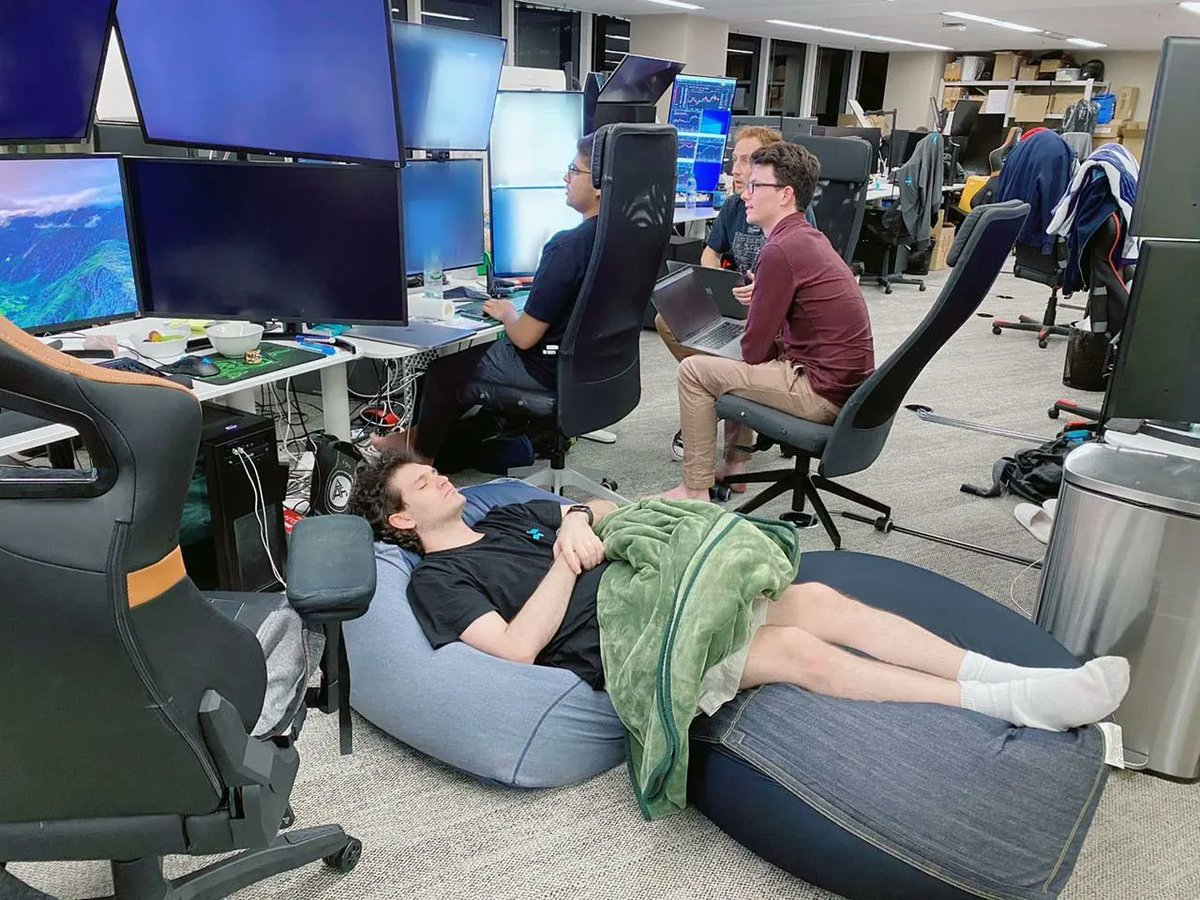
In November 2022, FTX went from the world's second-largest exchange to ruins in 72 hours. The impact on Solana was systemic: Serum's governance keys were controlled by FTX, paralyzing the project; treasury assets of numerous ecosystem projects were frozen on FTX; SOL's staking concentration issues were exposed; market confidence plummeted to zero, and developers began to leave.
This was Solana's "1968 moment." The protective umbrella was not slowly withdrawn but blown up overnight.
Chapter 2: How a Small Nation Without Resources Survives—Solana's Underlying Endowments
Singapore's "Only Resource": Geographic Location
Singapore has no oil, no minerals, and not enough freshwater, which it imports from Malaysia. But it has one thing given by nature: the strategic location of the Strait of Malacca. About 25% of global maritime trade passes through here. Lee Kuan Yew realized early on: I don't need to have resources; I just need to be the best node for resource circulation.
Solana's "Only Resource": Performance and Cabal
In the world of public chains, Solana lacks Ethereum's first-mover advantage, Bitcoin's narrative myth, and Cosmos's modular flexibility. But it has one thing:极致 performance at the native layer. 400-millisecond block times, a theoretical peak of 65,000 TPS, and extremely low transaction fees (typically below $0.001).
This is not an optional technical parameter. Just as the geographic location of the Strait of Malacca determined that Singapore could become a trade hub, Solana's performance characteristics make it naturally suited to carry high-frequency, small-amount, and massive on-chain activities.
Geographic location is to Singapore what block speed and transaction costs are to Solana: this is the entry ticket that makes cabals willing to come here to compete.
Chapter 3: The Wisdom of Survival in Gray Areas—From Money Laundering Hub to Meme Casino
Singapore's "Less Glorious" Intermediate Stage
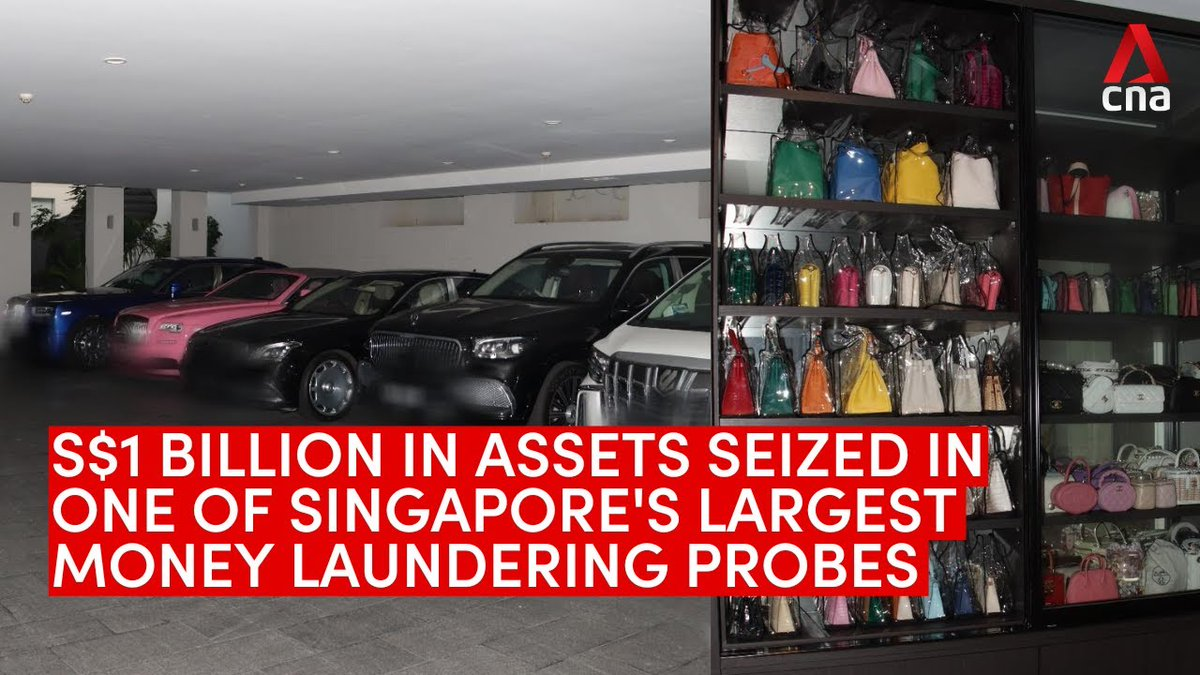
This is a period of history often downplayed in Singapore's official narrative. During the rapid development phase from the 1970s to the 1990s, Singapore became a regional financial center not solely due to its "clean and efficient" reputation.
A harsh reality: in that era in Southeast Asia, surrounding countries—Suharto's regime in Indonesia, the Marcos family in the Philippines, Myanmar's military junta—generated大量 funds that needed "cleaning." These funds needed a safe,不问来路的, predictable legal system to park. Singapore恰好 provided such an environment: strict bank secrecy laws, efficient financial infrastructure, and a pragmatic attitude of "as long as you follow my rules, I won't ask where your money came from."
Business has no moral judgment, only survival strategies. A small nation without resources, in its early stages, must accept some "imperfect money" to accumulate sufficient capital stock for future transformation.
The key: Singapore never let things slide. While attracting funds, it always maintained extremely high administrative efficiency and legal certainty (Temasek and GIC are among the world's top 10 sovereign wealth funds). You can bring gray money, but you can't cause trouble in my turf. This "orderly gray" is an极其精妙的 balancing act.
Solana's Meme Season and Pump.fun (2023-2024)
After FTX's collapse, Solana faced survival pressure no less than Singapore in its early independence. TVL dried up, developers left, and the narrative collapsed. What it needed was not "correct" growth but "any form of" growth—survive first.
From late 2023 to 2024, the Meme wave swept through Solana. The emergence of Pump.fun lowered the barrier to Meme creation to almost zero: anyone could create a token in minutes, no code or audit required. The wealth creation myths of Memes like BONK, WIF, and BOME attracted a flood of speculative funds.
From the perspective of traditional finance or technological purism, this was a disaster. The Solana chain was filled with Rug Pulls (project founders absconding), Sniper Bots (front-running bots), and countless worthless垃圾代币. But if understood through the lens of Singapore's history, it is strikingly similar and充满合理性:
Meme is to Solana what gray funds were to early Singapore—it may not be fit for the big stage of tech geeks, but it brought three key things:
-
Capital inflow (foreign exchange reserves): Meme trading brought massive on-chain transaction volume and fee income, directly enriching the economic model of validators and stabilizing the network's basic operation.
-
User base (population): Millions of new users接触了 Solana wallets (Phantom's downloads surged during this period), even if they initially came to gamble.
-
Infrastructure stress testing (urban construction): The extreme transaction load during Meme peaks exposed Solana's real bottlenecks, forcing accelerated development of key infrastructure like the Firedancer client.
Singapore's wisdom lay not in "accepting gray funds" but in "never stopping the construction of正规的制度基础设施 while accepting gray funds." Similarly, the key for Solana is not the Meme itself but whether it is simultaneously advancing truly valuable underlying construction under the cover of the Meme frenzy.
Chapter 4: Currency as Sovereignty—The Governance Logic of Token Economics
Singapore's Monetary Policy Philosophy
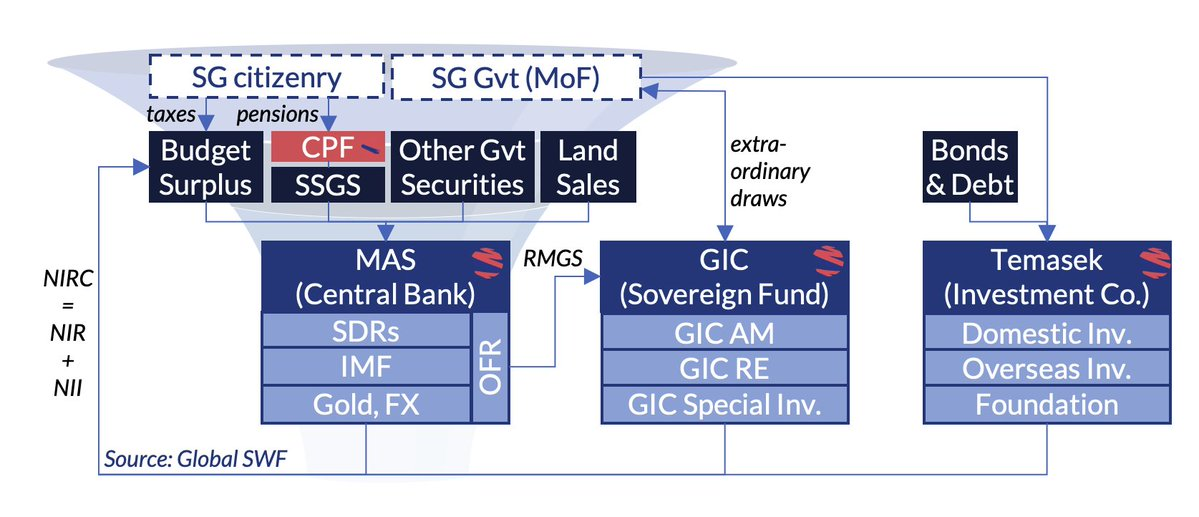
The monetary policy of the Monetary Authority of Singapore (MAS) is unique among global central banks: it does not use interest rates as the primary tool but manages the Singapore dollar's exchange rate fluctuation band to regulate the economy. An appreciation channel is used to curb inflation and attract capital; a depreciation channel is used to stimulate exports and maintain competitiveness.
The core logic is: currency is not static; it must be dynamic and responsive. How much money to print, whether to appreciate or depreciate the currency, depends on the needs of the current economic cycle. Excessive issuance dilutes national wealth and causes inflation; excessive tightening stifles economic vitality. Good monetary policy is a continuous balancing act.
SOL's Token Economics: The Dynamic Game from Inflation to Deflation
Solana's token economics have undergone a similar evolution.
Initial Inflation Phase (Quantitative Easing): At the launch of the Solana mainnet, an annual inflation rate of about 8% was set, decreasing by 15% each year, with a long-term target converging to 1.5%. These newly issued SOLs were used to pay staking rewards, essentially a "fiscal expenditure" subsidizing validators—just like emerging nations investing heavily in infrastructure early on to attract "citizens" (validators) to stay and maintain network security.
Introduction of a Burn Mechanism (Tightening Policy): In 2023, Solana introduced a partial burn of transaction fees—50% of the base fee for each transaction is permanently burned. When on-chain activity is sufficiently active, the amount of SOL burned may接近 or even exceed the amount of new issuance, putting SOL into a de facto deflationary state.
This is like a country's central bank finally having the ability to "raise interest rates": when the economy (on-chain activity) is prosperous enough,回收货币供给 to maintain currency value.
But the problem is: Solana currently lacks a truly dynamic, responsive monetary policy framework. Its inflation rate decreases mechanically according to a preset curve, and the burn rate depends entirely on market activity, with no "smart adjustment mechanism"类似 MAS between the two.
This is a deep governance issue尚未解决 by Solana (and almost all public chains): the issuance and burning of tokens should not be a fixed curve but should be dynamically adjusted according to the network's "economic cycle," like the monetary policy of a sovereign nation. When the network is congested (economic overheating), the fee burn ratio should be increased to抑制投机; when the network is quiet (economic recession), perhaps the staking门槛 for validators should be lowered, and incentives increased.
A truly mature public chain economy needs not an inflation curve written in code but an on-chain "central bank" governance mechanism.
Only few understand, tokens do not only appreciate by being burned.
Chapter 5: HDB Politics—"Those Who Have Assets Will Defend the Nation"
The Real Crisis in Early Singapore: Not Poverty, but the Sense of Division Among Ethnic Groups
When most people talk about the Singapore miracle, they focus on economic growth. But Lee Kuan Yew repeatedly emphasized that the most dangerous enemy in the early days of nation-building was not poverty but racial撕裂.
In 1965, Singapore's population was about 75% Chinese, 15% Malay, and 7% Indian. The three ethnic groups spoke different languages, had different beliefs, and distrusted each other. One of the triggers for Singapore's expulsion from the Malaysian Federation was the irreconcilable racial矛盾 between Chinese and Malays—in the 1964 racial riots, 23 people died and hundreds were injured.
After independence, Singapore faced a harsh reality: the people on this island did not consider themselves "Singaporeans." The Chinese identified with Chinese culture, the Malays with the Malay Federation, and the Indians with India. No one felt a sense of belonging to "Singapore," let alone was willing to sacrifice for it.
The fundamental problem Lee Kuan Yew needed to solve was: How to make a group of people who distrust each other voluntarily stay under the same roof and be willing to付出 to maintain it?
HDB: Not Just Housing, but a National Binding Mechanism
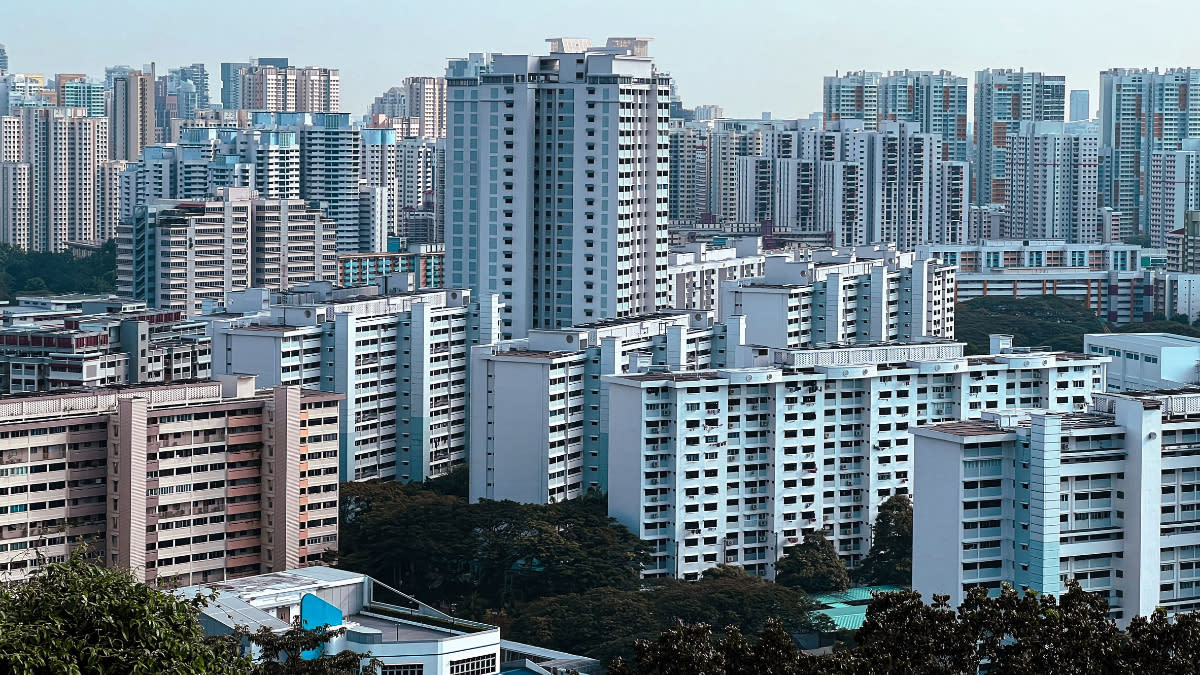
The answer was HDB public housing—perhaps one of the most ingenious social engineering projects in human history.
On the surface, HDB solved the housing problem. In the 1960s, a large population in Singapore lived in squatter settlements and slums. The government massively built public housing, selling it to citizens at prices far below market rates and allowing the use of公积金 (CPF) to pay mortgages. Today, over 80% of Singaporeans live in HDB flats.
But the true genius of HDB lies in its underlying political logic. Lee Kuan Yew once said something极其坦率 (paraphrased): "A person who owns assets in a place is more willing to defend it."
The HDB system achieved at least three strategic goals simultaneously:
First, creating "stakeholders." When you are just a tenant, the rise and fall of the city have little to do with you—you can just move away. But when you own a property, your net worth is tied to the nation's fate. If property prices rise, your net assets increase; if the country is in turmoil, your assets shrink. Every HDB owner becomes a "shareholder" in Singapore's national destiny.
Second,强制种族融合. This is the most underestimated design of the HDB system. HDB implements a strict Ethnic Integration Policy (EIP): each HDB community has quotas for the proportion of Chinese, Malays, and Indians, ensuring no single-ethnicity enclaves. Your neighbors will definitely be different from you. Children play together downstairs and attend the same schools. After a generation, racial barriers are slowly dissolved by the强制混合 of physical space.
Third, linking personal wealth to the quality of national governance. The appreciation of HDB flats depends on Singapore's continued prosperity and good governance. If the government governs well, the area develops,配套设施 improve, and your property appreciates. This creates a powerful positive feedback loop: citizens have an incentive to support good governance because good governance directly enhances their asset values.
One HDB flat simultaneously accomplishes three tasks: "binding interests—eliminating divisions—incentivizing governance." This is not just housing policy; it is the cornerstone of the nation. To secure the outside, one must first secure the inside—Lee Kuan Yew understood this deeply.
Solana's "Race Problem": A Divided Community
Shift the perspective back to Solana. After FTX's collapse, the Solana community faced a level of撕裂 no less than that of Singapore in 1965.
There are at least three "ethnic groups" on the chain with截然不同 interests:
Speculative traders and Meme players. They are the largest contributors to on-chain activity, bringing transaction volume, fees, and话题热度. But they have no loyalty to Solana; they go to whichever chain has the hype, essentially a floating population.
Native developers and builders. They have invested significant time and technical capital in Solana, building DeFi protocols, infrastructure tools, and DePIN projects. Their relationship with Meme speculators is微妙而紧张: they need them (users and流量) but dislike them (lowering the ecosystem's seriousness).
Validators and stakers. They are the cornerstone of network security, investing real money in hardware and staking capital. They care about network stability, staking yields, and SOL's long-term value, neither participating in nor caring about short-term speculation.
The competitive tension among these three groups is divisive. Meme players complain about unfair priority queues for retail users during network congestion; developers complain that Memes吸走了 all attention and funds; validators complain about opaque MEV distribution mechanisms. Without a mechanism to align the interests of these three parties, the centrifugal force of the Solana community will only grow.
Where is Solana's "HDB"?
Lee Kuan Yew's wisdom—making citizens hold assets, binding personal interests to collective fate—what启示 does it offer for Solana? Some mechanisms类似 "HDB" already exist in the Solana ecosystem, but they are far from systematic:
Staking mechanisms are the closest design to "HDB." When you stake SOL, you lock assets into the network, and your收益 directly depends on the network's health. Stakers naturally become "shareholders" in network security. But currently, Solana's staking is concentrated in the hands of large holders and institutions, with普通用户的参与率和参与感 insufficient—this is like if HDB flats were only sold to the rich, the poor would still be tenants, and the "interest binding" effect would be greatly reduced.
Governance tokens and airdrops are a form of "housing distribution." Ecosystem projects airdrop governance tokens to early users and developers (e.g., JTO, JUP airdrops), essentially "allocating assets"—turning participants from bystanders into stakeholders. Jupiter's JUP token airdrop covered nearly a million active wallets, instantly creating a large number of "homeowners" with a sense of belonging to the Jupiter protocol. If well-designed, this mechanism is no less effective than HDB.
Superteam DAO's globalized community is an attempt at "ethnic integration." Superteam establishes localized communities in different countries and regions, enabling developers from India, content creators from Turkey, and DeFi users from Nigeria to collaborate within the same organizational framework. This is somewhat like HDB's ethnic quota system—reducing cliques and factionalization through structured mixing.
But what Solana still lacks is a truly systematic "asset binding—interest alignment" mechanism. Imagine a more完善 version: if the Solana ecosystem could establish a system where developers receive continuous protocol-layer revenue sharing for deploying successful applications on the chain; where active users accumulate some non-transferable "on-chain credit" or "citizenship" through long-term use; where validators' rewards are linked to the reliability of their services and their contribution to decentralization—then every participant's personal wealth would be tightly bound to Solana's overall prosperity.
When speculators, developers, and validators all become "homeowners" rather than just "tenants," they will truly be willing to fight for the long-term interests of this chain. This is the most profound lesson Lee Kuan Yew taught us with HDB: people will not fight for abstract ideals, but they will fight desperately for their own assets.
Chapter 6: The Crossroads of Transformation—"What Comes After?"
Singapore's Three Leaps
Singapore's economic transformation can be roughly divided into three stages:
First Stage (1960s-1970s): Labor-intensive manufacturing. Utilized low-cost labor to attract multinational companies to set up factories, earning foreign exchange and solving employment. This was the "survival" stage.
Second Stage (1980s-1990s): Financial and trade hub. Leveraged geographic location and institutional advantages to become a regional fund distribution center and shipping logistics hub. Gray funds played a不可忽视 role in this stage. This was the "站稳脚跟" (gaining a foothold) stage.
Third Stage (2000s-present): Knowledge economy and high-end manufacturing. Heavily invested in education, attracted talent (Global Talent Program), and developed high-value-added industries like biomedicine, semiconductor design, and fintech. Simultaneously tightened anti-money laundering regulations, gradually "cleaning" the financial system. This is the "defining oneself" stage.
Each leap did not happen naturally but was initiated before the profits of the old model were exhausted. This requires极强的战略定力和政治意志—because transformation means主动放弃一部分当前的利益.
Solana's Current Position: The End of the Second Stage
Using Singapore's framework, Solana is currently in the middle to late second stage. The capital and user红利 brought by the Meme wave remain, but marginal effects are beginning to diminish. Market fatigue with "the next 100x Meme" is rising, and if Solana cannot complete its transformation before this hype subsides, it risks becoming a "casino chain"—just as if Singapore had remained stuck in the gray finance stage, it might today be just another Cayman Islands.
What Could Solana's Third Stage Be?
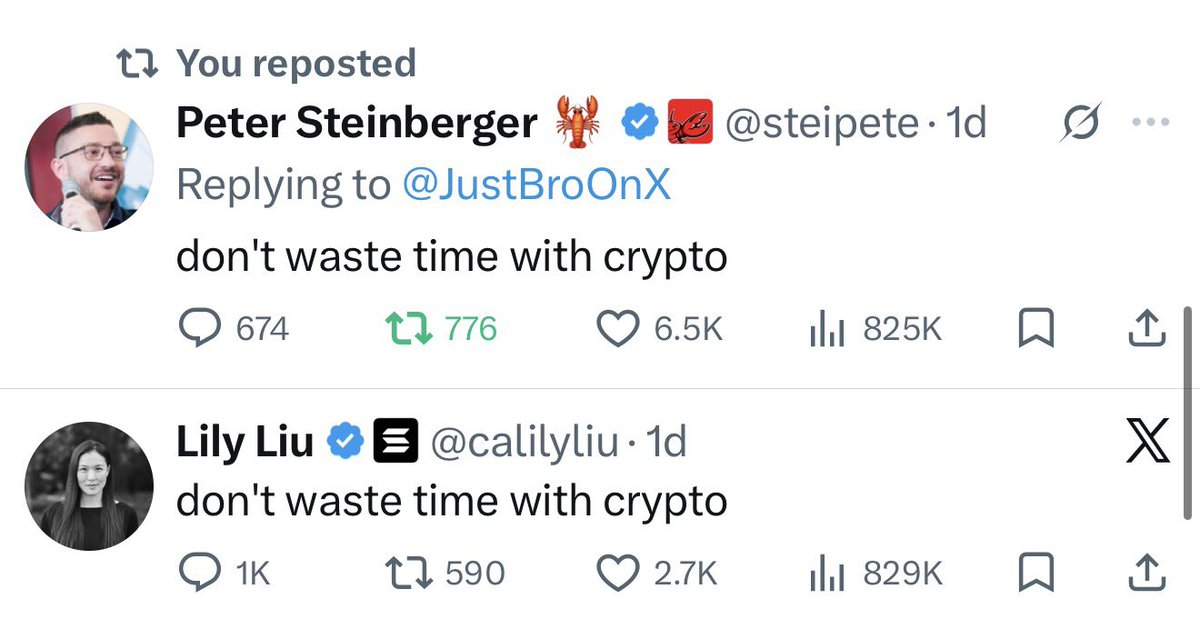
I don't know either, but it's definitely not some AI Agent.
Conclusion: The Fate of Public Chains Ultimately Lies in Governance
Looking back at Singapore's story, its success was not due to luck but because at every critical juncture, it made counterintuitive yet logical and commonsense decisions: opening up when it should (even accepting gray funds), controlling when it should (maintaining order with harsh laws), and transforming when it should (even at the cost of current interests).
Solana stands at a similar crossroads. The Meme热潮 has given it life-saving ammunition and an active user base, but if it cannot accomplish three things before this红利 subsides—establish a dynamic token economic governance mechanism, achieve true decentralization to win institutional trust, and cultivate core industrial ecosystems beyond Memes—then it could end up like the countless small nations in history that "almost succeeded" but hesitated at the window of transformation and were eventually淘汰 by the times.
The competition among public chains is about narrative in the short term, technology in the medium term, and governance in the long term.
Tokens are not just a price symbol; they are the currency of a digital nation. And monetary policy has never been a dead curve but an art of balance, timing, and restraint.
Postscript:
This article uses Singapore's development history as an analogical framework to analyze the Solana public chain ecosystem, aiming to provide a new perspective for thinking about public chain governance. The historical narrative of Singapore has been simplified to serve the analogical logic and does not constitute a comprehensive evaluation of Singapore's policies.
Also, you ask if the same comparison framework can be used for other public chains—sure, why not?
Twitter:https://twitter.com/BitpushNewsCN
Bitpush TG Discussion Group:https://t.me/BitPushCommunity
Bitpush TG Subscription: https://t.me/bitpush