From Libya to Iran: Nations in Blackout, Bitcoin Miners Uninterrupted

marsbitPublicado em 2026-02-02Última atualização em 2026-02-02

Resumo

From Libya to Iran: Nations in Darkness, Bitcoin Miners That Never Stop In the summer of 2025, Tehran and other parts of Iran faced extreme heat and severe power outages, forcing government offices and schools to shut down. Hospitals relied on diesel generators to keep life-saving equipment running. Yet, behind city walls, rows of Bitcoin mining machines continued operating at full capacity, almost never losing power. Similarly, in Libya, residents endure daily blackouts of 6 to 8 hours, while unauthorized mining farms in abandoned industrial sites run non-stop, using some of the world’s cheapest electricity—subsidized as low as $0.004 per kWh—to mine Bitcoin, often with outdated equipment smuggled into the country. This reflects one of the 21st century’s starkest energy paradoxes: in nations crippled by sanctions and civil conflict, electricity is no longer just a public service but a form of “exportable” hard currency. In Iran, mining was legalized in 2019 as a state strategy to bypass international financial sanctions. Miners were required to sell mined Bitcoin to the central bank. However, an estimated 85% of mining occurred illegally or semi-legally, often with ties to powerful entities. Despite temporary bans and crackdowns, mining rebounded quickly, draining the national grid and worsening public power shortages. Libya, fragmented since the fall of Gaddafi, lacks coherent regulation. Although cryptocurrency transactions and mining imports are officially banned, en...

On a summer night in Tehran, the heatwave felt like an airtight net, making it hard to breathe.

Amid the recurring power crises of recent years, the summer of 2025 became the most unbearable moment for this Iranian capital; that year, the city experienced one of the most extreme high temperatures in nearly half a century, with the mercury repeatedly breaking 40 degrees Celsius. Power rationing was enforced in 27 provinces, and numerous government offices and schools were shut down. In local hospitals, doctors had to rely on diesel generators to maintain power—if the blackout lasted too long, ventilators in the ICU could stop working.

But on the city's outskirts, behind walls, another sound was sharper: the deafening roar of industrial fans, rows of Bitcoin miners running at full capacity; large and small LED indicators twinkled like a sea of stars in the dark, and here, the power almost never went out.

On the other side of the Mediterranean, in the North African nation of Libya, the same scene plays out daily. Residents in the eastern region have long grown accustomed to daily rotating blackouts of 6 to 8 hours; food in refrigerators often spoils, children do homework by candlelight. But in abandoned steel mills outside the city, smuggled-in old mining rigs run nonstop, converting the country's nearly free electricity into Bitcoin, which is then exchanged for dollars through cryptocurrency exchanges.

This is one of the most absurd energy stories of the 21st century: in two nations battered by sanctions and civil war, electricity is no longer just a public service but is treated as a form of "exportable" hard currency.
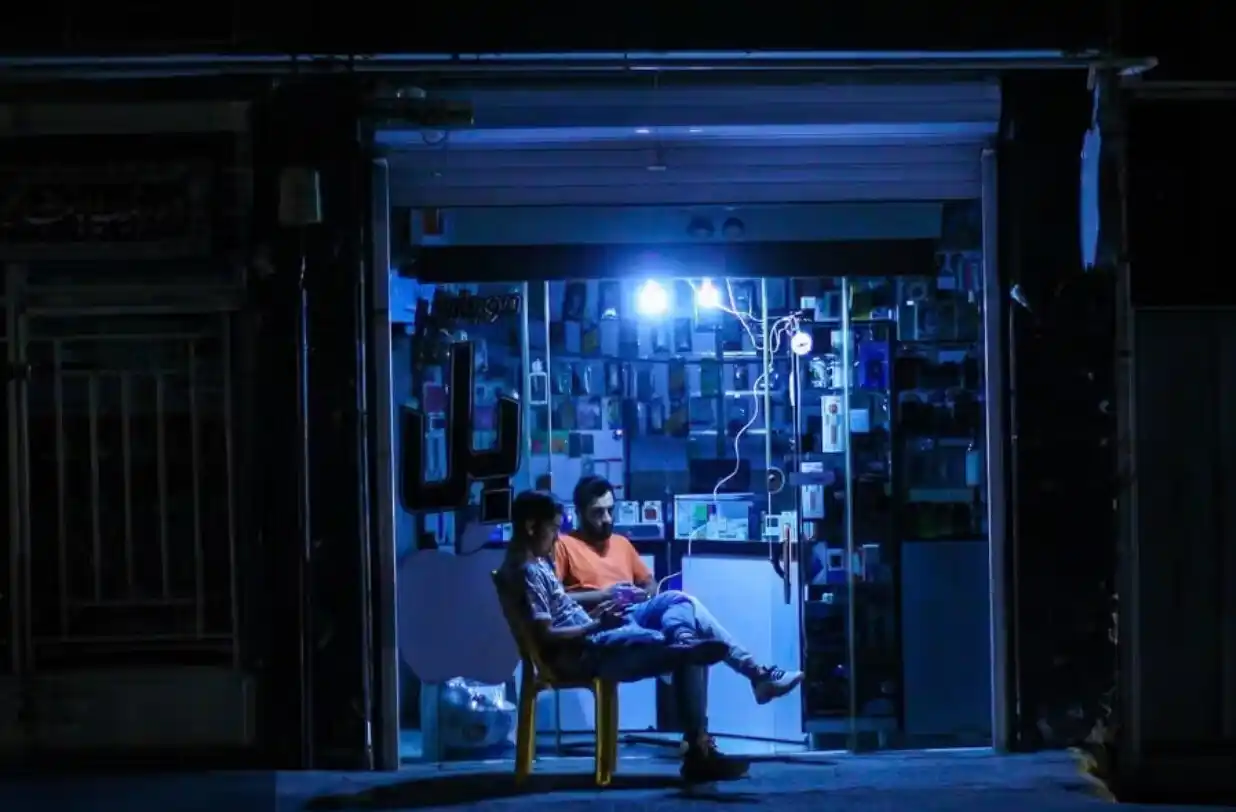
Image description: Two Iranian men sit outside their mobile phone shop, with only emergency lights on inside, as a power cut leaves the street in darkness.

Chapter One: Power Run: When Energy Becomes a Financial Tool
Bitcoin mining is, at its core, an energy arbitrage game. Anywhere in the world, if the electricity price is low enough, mining can be profitable. In Texas or Iceland, mine operators meticulously calculate the cost per kilowatt-hour; only the latest generation of efficient miners can survive the competition. But in Iran and Libya, the rules of the game are entirely different.

Iran's industrial electricity price is as low as $0.01 per kWh, Libya's is even more extreme—at approximately $0.004 per kWh, it is one of the lowest electricity prices in the world. Such low prices are possible due to massive government subsidies on fuel and artificially suppressed electricity tariffs. In a normal market, these prices wouldn't even cover the cost of generation.

But for miners, this is paradise. Even old mining rigs淘汰 from China or Kazakhstan—equipment long considered electronic waste in developed countries—can still turn an easy profit here. According to official data, in 2021, Libya's Bitcoin hash rate一度 accounted for about 0.6% of the global total, surpassing all other Arab and African countries and even some European economies.

This figure might seem small, but in Libya's context, it is absurd. This is a country of only 7 million people, with a grid loss rate as high as 40%, where daily rotating blackouts are the norm. At its peak, Bitcoin mining consumed about 2% of the country's total electricity generation, equivalent to 0.855 terawatt-hours (TWh) annually.

In Iran, the situation is even more extreme. The country possesses the world's fourth-largest oil reserves and second-largest natural gas reserves; theoretically, it should not lack power. But U.S. sanctions have cut off its access to advanced power generation equipment and technology, coupled with an aging grid and chaotic management, leaving Iran's power supply perpetually strained. The explosive growth of Bitcoin mining is pulling this taut string to its limit.

This is not ordinary industrial expansion. It is a run on a public resource—when electricity is treated as "hard currency" that can bypass the financial system, it no longer优先 flows to hospitals, schools, and residents, but to the mining rigs that can convert it into dollars.

Chapter Two: Two Countries, A Tale of Dual Mining

Iran: From "Exporting Energy" to "Exporting Hash Rate"
Under extreme sanction pressure, Iran chose to legalize Bitcoin mining, converting its cheap domestic electricity into globally tradable digital assets.

In 2018, the Trump administration withdrew from the Iran nuclear deal and reimposed "maximum pressure" sanctions. Iran was kicked out of the SWIFT international settlement system, unable to use dollars for international trade. Oil exports plummeted, foreign exchange dried up. In this context, Bitcoin mining恰好 provided a "energy monetization" side door: no need for SWIFT, no correspondent banks, just electricity, mining rigs, and a pipeline to sell the coins.

In 2019, the Iranian government formally recognized cryptocurrency mining as a legal industry and established a licensing system. The policy design seemed "modern": miners could apply for licenses, operate mines at preferential electricity rates, but had to sell the mined Bitcoin to the Central Bank of Iran.

In theory, this was a triple-win solution—the state exchanges cheap electricity for Bitcoin, then uses Bitcoin for foreign exchange or imports; miners get stable profits; grid load can be planned and regulated.

However, reality soon veered off course: Licenses existed, but the gray area was vast.

By 2021, then-President Rouhani publicly admitted that about 85% of Iran's mining activity was unlicensed; underground mines sprang up like mushrooms, from abandoned factories to mosque basements, from government office buildings to ordinary homes, mining rigs were everywhere. The deeper the electricity subsidy, the stronger the arbitrage motive; the looser the regulation, the more stealing electricity resembled a "default benefit."

Facing worsening power crises and illegal mining consuming over 2 gigawatts, the Iranian government announced a temporary ban on all cryptocurrency mining activities from May to September that year, for 4 months. This was the toughest nationwide ban since legalization in 2019.

During this period, the government organized large-scale raids: the Ministry of Energy, police, and local authorities stormed thousands of illegal mines, confiscating tens of thousands of mining machines in the second half of 2021 alone.

Yet after the ban ended, mining activity quickly rebounded. Many confiscated miners were put back into use, the scale of underground mines不减反增. This "crackdown" was seen by the public as a brief performance:表面上 cracking down on illegality, but in reality failing to address the deep-seated problems, instead allowing some well-connected mines to expand趁机.

More critically, multiple investigations and reports pointed out that entities closely linked to power structures had大规模介入 this industry, forming "privileged mines" enjoying independent power supply and law enforcement immunity.

When mines are backed by "untouchable hands," so-called crackdowns become political theater; and the public narrative is sharper: "We endure the darkness, just to keep the Bitcoin machines running."

Source: Financial Times

Libya: Cheap Power, Shadow Mining
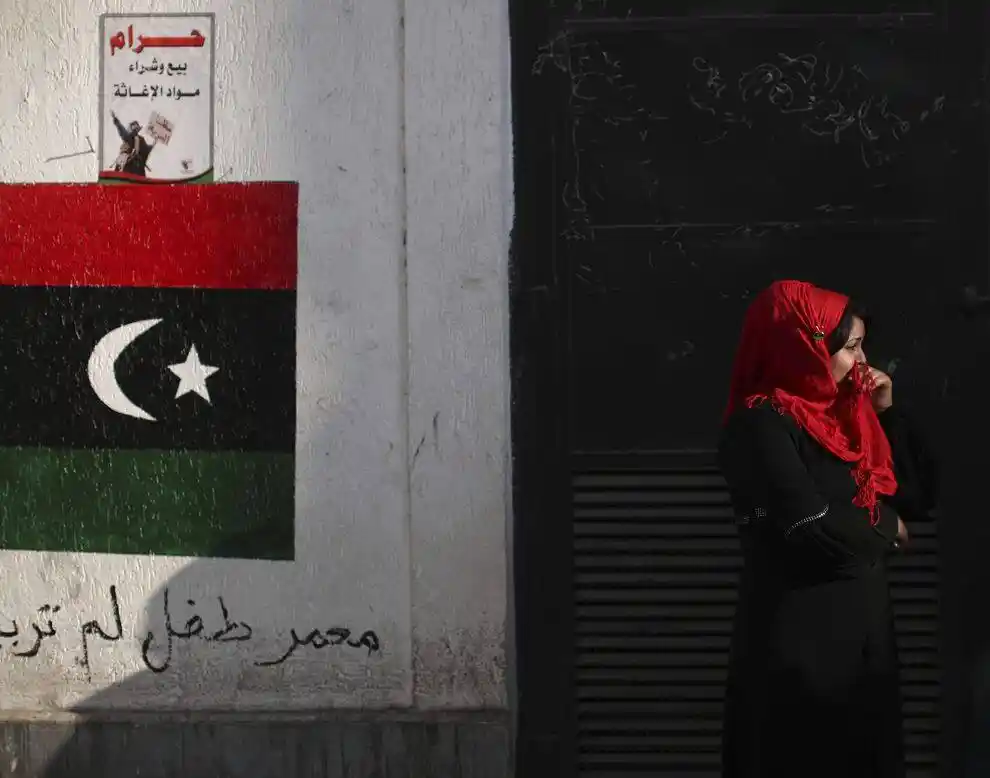
A wall graffiti in Libya condemns "buying and selling relief materials is illegal," reflecting public moral anger over unfair resource distribution—similar sentiments simmer quietly in the context of electricity subsidies being diverted for mining.

Libya's mining script is more like "wild growth in the absence of institutions."

Libya, this North African country (population approx. 7.3-7.5 million, area nearly 1.76 million sq km, the fourth largest country in Africa by area) on the southern Mediterranean coast, borders Egypt, Tunisia, Algeria, and others. Since the fall of Gaddafi's regime in 2011, the country has been mired in prolonged turmoil: recurring civil war, myriad armed factions, severely分裂 state institutions, creating a state of "managed fragmentation" (where violence levels are relatively controlled, but unified governance is absent).

What truly propelled Libya into a mining hotspot is its absurd electricity price structure. As one of Africa's largest oil producers, the Libyan government has long provided massive subsidies on electricity, keeping it at around $0.0040 per kWh—a price even lower than the fuel cost of generation. In a normal country, such subsidies are meant to safeguard people's livelihoods. But in Libya, it became a huge arbitrage opportunity.

Thus, a classic arbitrage model emerged:

  • Old mining rigs淘汰 in Europe and America can still be profitable in Libya;
  • Industrial zones, abandoned factories, warehouses are naturally suited to hide high electricity loads;
  • Equipment imports are restricted, but gray channels and smuggling keep machines coming in;

Although the Central Bank of Libya (CBL) declared virtual currency transactions illegal in 2018, and the Ministry of Economy banned the import of mining equipment in 2022, mining itself has not been explicitly prohibited by national law. Enforcement often relies on peripheral charges like "illegal electricity use" or "smuggling," and is ineffective in the reality of fragmented power, allowing the gray zone to persist and expand.

This state of "banned but not eradicated" is a typical manifestation of power fragmentation—decrees from the Central Bank and Ministry of Economy are often难以执行 in eastern Benghazi or southern regions. Local militias or armed groups sometimes even tacitly allow or protect mines, leading to wild growth in the gray zone.
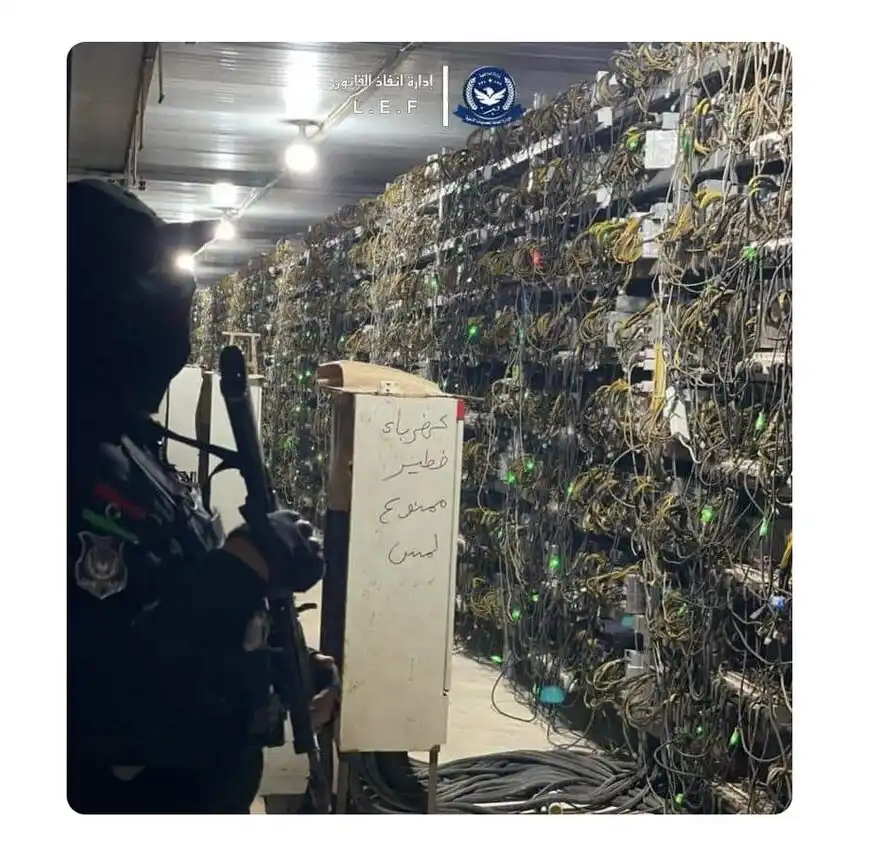
Source: @emad_badi

Even more absurd is that a significant portion of these mines are operated by foreigners. In November 2025, a Libyan prosecutor sentenced 9 people operating a mine inside the Zliten steel mill to three years in prison, confiscated equipment, and追缴 illegal proceeds. In previous raids, dozens of Asian nationals were arrested operating industrial-scale mines using old rigs淘汰 from China or Kazakhstan.

This old equipment早已无利可图 in developed countries, but in Libya, it's still a money printer. Because electricity is so cheap, even the least efficient miners can be profitable. This is why Libya has become the resurrection ground for the global "miner graveyard"—electronic waste淘汰 in Texas or Iceland finds a second life here.

Chapter Three: Collapsing Grids and Energy Privatization

Iran and Libya took two different paths: one tried to incorporate Bitcoin mining into the state apparatus, the other long let it drift in the shadows of the system. But the destination is the same—widening grid deficits, and the political consequences of resource allocation are beginning to show.

This is not merely a technical failure, but a result of political economy. Subsidized electricity creates the illusion that "electricity is cheap"; mining provides the temptation that "electricity can be monetized"; and the power structure determines who can cash in on this temptation.

When mining rigs share the same grid as hospitals, factories, and residents, the conflict is no longer abstract. Blackouts damage not just refrigerators and air conditioners, but also operating lights, blood bank refrigerators, and industrial production lines. Every blackout is a silent scrutiny of how public resources are allocated.

The problem is that the profits from mining are highly "portable." Electricity is local, its cost borne by society; Bitcoin is global, its value can be transferred instantly. The result is an extremely asymmetric structure: society bears the power consumption and blackouts, a few reap the cross-border mobile profits.

In countries with sound institutions and abundant energy, Bitcoin mining is usually discussed as an industrial activity; but in countries like Iran and Libya, the nature of the question itself changes.

Emerging Industry, or Resource Plunder?

Globally, Bitcoin mining is seen as an emerging industry, even a symbol of the "digital economy." But in the cases of Iran and Libya, it more closely resembles an experiment in the privatization of public resources.

If it were an industry, it should at least create jobs, pay taxes, accept regulation, and bring net benefits to society. But in these two countries, mining is highly automated, creating almost no jobs; a large number of mines are illegal or semi-legal, their tax contributions are limited, and even licensed mines lack transparency in where their profits flow.

Cheap electricity originally existed to safeguard people's livelihoods. In Iran, energy subsidies have been part of the "social contract" since the Islamic Revolution—the government uses oil revenues to subsidize electricity, and the people accept authoritarian rule. In Libya, electricity subsidies are also core to the welfare system inherited from the Gaddafi era.

But when these subsidies are used for Bitcoin mining, their nature fundamentally changes. Electricity is no longer a public service, but a means of production used by a few to create private wealth. Ordinary citizens not only do not benefit from it, but actually pay the price—more frequent blackouts, higher costs for diesel generators, and more fragile medical and educational services.

More importantly, mining does not bring real foreign exchange income to these countries. In theory, the Iranian government requires miners to sell Bitcoin to the central bank, but the actual implementation is questionable. In Libya, there is no such mechanism. Most Bitcoin is exchanged for dollars or other currencies on foreign exchanges, then流出 through underground banks or cryptocurrency channels. These funds neither enter the state treasury nor flow back into the real economy; they become the wealth of a few individuals.

In this sense, Bitcoin mining更像 a new form of "resource curse." It does not create wealth through production and innovation, but rather extracts public resources by leveraging price distortions and institutional loopholes. And those who pay the price are often the most vulnerable groups.

Conclusion: The True Cost of One Bitcoin

In a world of increasingly scarce resources, electricity is no longer just a tool to illuminate darkness, but a commodity that can be transformed, traded, and even plundered. When a nation "exports" electricity as "hard currency," it is essentially consuming the future meant for people's livelihoods and development.

The issue is not Bitcoin itself, but who controls the allocation of public resources. When this power lacks constraints, the so-called "industry" becomes just another form of plunder.

And those sitting in the darkness are still waiting for the lights to come back on.

"Not everything that is faced can be changed, but nothing can be changed until it is faced."

Perguntas relacionadas

QWhat is the core paradox highlighted in the article regarding electricity and Bitcoin mining in Iran and Libya?

AThe core paradox is that while the general population in Iran and Libya suffers from frequent and severe power outages, affecting hospitals, schools, and daily life, Bitcoin mining operations continue to run almost uninterrupted, consuming significant portions of the national power supply to generate a privately held, exportable digital asset.

QHow did the government of Iran attempt to regulate and benefit from Bitcoin mining, and what was the outcome?

AIn 2019, the Iranian government legalized cryptocurrency mining, established a licensing system, and required miners to sell their mined Bitcoin to the central bank. The intended outcome was a 'win-win' where the state could monetize its cheap electricity for foreign exchange. However, the reality was that an estimated 85% of mining remained unlicensed and illegal. A temporary ban and crackdowns failed to stop the activity, which rebounded afterward, with well-connected entities often operating with impunity.

QWhy is Libya, a country with a fragmented government and daily power cuts, an attractive location for Bitcoin mining?

ALibya is attractive due to its extremely low, heavily subsidized electricity price (approximately $0.004 per kWh), which is among the cheapest in the world. This makes it profitable to run even old, inefficient mining rigs that are obsolete in other countries. The lack of unified national governance and enforcement of bans allows mining to persist in a legal gray area, often protected by local militias.

QWhat is the fundamental economic and social problem created by Bitcoin mining in the context of these two nations?

AThe fundamental problem is the asymmetric distribution of costs and benefits. The cost of electricity (heavily subsidized by the state) and the social cost of frequent blackouts are borne by the public, affecting essential services like healthcare and education. Meanwhile, the profits from converting that electricity into Bitcoin are highly portable and are largely captured by a few private actors, often flowing out of the country without contributing to the national economy or tax base, resembling a form of resource掠夺 (plunder).

QAccording to the article, how does Bitcoin mining in Iran and Libya differ from how it is perceived in countries with robust institutions and ample energy?

AIn countries with robust institutions and ample energy, Bitcoin mining is typically discussed as an industrial activity or part of the digital economy. In Iran and Libya, however, it is less an industry and more a mechanism for the privatization and exploitation of a public resource. It creates few jobs, contributes little in taxes, operates largely outside of effective regulation, and ultimately functions as a form of resource extraction that benefits a privileged few at the expense of the broader population's well-being.

Leituras Relacionadas

Trading

Spot
Futuros

Artigos em Destaque

O que é BITCOIN

Compreender o HarryPotterObamaSonic10Inu (ERC-20) e a Sua Posição no Espaço Cripto Nos últimos anos, o mercado de criptomoedas assistiu a um aumento na popularidade das moedas meme, cativando não apenas os traders, mas também aqueles que procuram envolvimento comunitário e valor de entretenimento. Entre estes tokens únicos está o HarryPotterObamaSonic10Inu (ERC-20), um projeto intrigante que mistura referências culturais no tecido das criptomoedas. Este artigo explora os principais aspetos do HarryPotterObamaSonic10Inu, examinando os seus mecanismos, a sua ética orientada pela comunidade e o seu envolvimento com o vasto panorama cripto. O que é o HarryPotterObamaSonic10Inu (ERC-20)? Como o nome sugere, o HarryPotterObamaSonic10Inu é uma moeda meme construída na blockchain Ethereum, classificada sob o padrão ERC-20. Ao contrário das criptomoedas tradicionais, que podem enfatizar a utilidade prática ou o potencial de investimento, este token prospera no valor de entretenimento e na força da sua comunidade. O projeto visa promover um ambiente onde utilizadores envolvidos possam reunir-se, partilhar ideias e participar em atividades inspiradas por diversos fenómenos culturais. Uma característica notável do HarryPotterObamaSonic10Inu é a zero taxa sobre transações. Este elemento atraente visa encorajar a negociação e o envolvimento da comunidade, isento de encargos adicionais que podem desencorajar os traders de pequena escala. A oferta total da moeda está fixada em mil milhões de tokens, uma cifra que marca a sua intenção de manter uma circulação substancial dentro da comunidade. Criador do HarryPotterObamaSonic10Inu (ERC-20) As origens do HarryPotterObamaSonic10Inu estão um pouco envoltas em mistério; os detalhes sobre o criador permanecem desconhecidos. O desenvolvimento deste token carece de uma equipa identificável ou de um plano explícito, o que não é raro no setor das moedas meme. Em vez disso, o projeto surgiu de forma orgânica, com o seu progresso a depender fortemente do entusiasmo e da participação da sua comunidade. Investidores do HarryPotterObamaSonic10Inu (ERC-20) No que diz respeito a investimentos externos e apoios, o HarryPotterObamaSonic10Inu também permanece ambíguo. O token não lista quaisquer fundações de investimento conhecidas ou apoio organizacional significativo. Em vez disso, o “sangue vital” do projeto é a sua comunidade de base, que informa o seu crescimento e sustentabilidade através da ação coletiva e do envolvimento no espaço cripto. Como Funciona o HarryPotterObamaSonic10Inu (ERC-20)? Como uma moeda meme, o HarryPotterObamaSonic10Inu opera principalmente fora dos quadros tradicionais que muitas vezes governam o valor dos ativos. Existem vários aspetos distintivos que definem como o projeto funciona: Transações Sem Taxas: Sem taxas sobre transações, os utilizadores podem comprar e vender o token livremente, sem a preocupação de custos ocultos. Envolvimento da Comunidade: O projeto prospera na interação da comunidade, aproveitando plataformas de redes sociais para criar entusiasmo e facilitar a participação. Discussões, partilha de conteúdo e envolvimento são elementos cruciais que ajudam a expandir o seu alcance e a fomentar a lealdade entre os apoiantes. Sem Utilidade Prática: Deve ser notado que o HarryPotterObamaSonic10Inu não oferece utilidade concreta dentro do ecossistema financeiro. Em vez disso, é classificado como um token principalmente para entretenimento e atividades comunitárias. Referência Cultural: O token incorpora de forma inteligente elementos da cultura popular para atrair interesse, conectando-se tanto com entusiastas de memes como com seguidores de criptomoedas. HarryPotterObamaSonic10Inu exemplifica como as moedas meme operam de forma diferente de projetos de criptomoedas mais tradicionais, entrando no mercado como construções sociais inovadoras em vez de ativos utilitários. Linha do Tempo do HarryPotterObamaSonic10Inu (ERC-20) A história do HarryPotterObamaSonic10Inu é marcada por vários marcos notáveis: Criação: O token surgiu de um meme viral, capturando a imaginação de muitos entusiastas de criptomoedas. Datas específicas de criação não estão disponíveis, sublinhando a sua ascensão orgânica. Listagem em Exchanges: O HarryPotterObamaSonic10Inu conseguiu entrar em várias exchanges, permitindo um acesso e negociação mais fáceis pela comunidade. Iniciativas de Envolvimento da Comunidade: Atividades contínuas direcionadas a melhorar a interação comunitária, incluindo concursos, campanhas em redes sociais e geração de conteúdo por fãs e defensores. Planos de Expansão Futura: O roteiro do projeto inclui o lançamento de uma coleção de NFTs, mercadorias e um site de eCommerce relacionado aos seus temas culturais, envolvendo ainda mais a comunidade e tentando adicionar mais dimensões ao seu ecossistema. Pontos-Chave sobre o HarryPotterObamaSonic10Inu (ERC-20) Natureza Orientada pela Comunidade: O projeto prioriza a contribuição coletiva e a criatividade, assegurando que o envolvimento dos utilizadores está na vanguarda do seu desenvolvimento. Classificação como Moeda Meme: Representa o epítome da criptomoeda baseada em entretenimento, destacando-se dos veículos de investimento tradicionais. Sem Afiliação Direta com o Bitcoin: Apesar da semelhança no nome do ticker, o HarryPotterObamaSonic10Inu é distinto e não tem qualquer relação com o Bitcoin ou outras criptomoedas estabelecidas. Foco na Colaboração: O HarryPotterObamaSonic10Inu é projetado para criar um espaço de colaboração e partilha de histórias entre os seus detentores, proporcionando uma via para a criatividade e o fortalecimento da comunidade. Perspectivas Futuras: A ambição de expandir além da sua premissa inicial para NFTs e mercadorias delineia um caminho para o projeto potencialmente entrar em avenidas mais mainstream dentro da cultura digital. À medida que as moedas meme continuam a capturar a imaginação da comunidade cripto, HarryPotterObamaSonic10Inu (ERC-20) destaca-se devido aos seus laços culturais e abordagem centrada na comunidade. Embora possa não se encaixar no molde típico de um token orientado para utilidade, a sua essência reside na alegria e camaradagem fomentadas entre os seus apoiantes, destacando a natureza em evolução das criptomoedas em uma era cada vez mais digital. À medida que o projeto continua a desenvolver-se, será importante observar como as dinâmicas comunitárias influenciam a sua trajetória no panorama em constante mudança da tecnologia blockchain.

1.2k Visualizações TotaisPublicado em {updateTime}Atualizado em 2024.12.03

O que é BITCOIN

Como comprar BTC

Bem-vindo à HTX.com!Tornámos a compra de Bitcoin (BTC) simples e conveniente.Segue o nosso guia passo a passo para iniciar a tua jornada no mundo das criptos.Passo 1: cria a tua conta HTXUtiliza o teu e-mail ou número de telefone para te inscreveres numa conta gratuita na HTX.Desfruta de um processo de inscrição sem complicações e desbloqueia todas as funcionalidades.Obter a minha contaPasso 2: vai para Comprar Cripto e escolhe o teu método de pagamentoCartão de crédito/débito: usa o teu visa ou mastercard para comprar Bitcoin (BTC) instantaneamente.Saldo: usa os fundos da tua conta HTX para transacionar sem problemas.Terceiros: adicionamos métodos de pagamento populares, como Google Pay e Apple Pay, para aumentar a conveniência.P2P: transaciona diretamente com outros utilizadores na HTX.Mercado de balcão (OTC): oferecemos serviços personalizados e taxas de câmbio competitivas para os traders.Passo 3: armazena teu Bitcoin (BTC)Depois de comprar o teu Bitcoin (BTC), armazena-o na tua conta HTX.Alternativamente, podes enviá-lo para outro lugar através de transferência blockchain ou usá-lo para transacionar outras criptomoedas.Passo 4: transaciona Bitcoin (BTC)Transaciona facilmente Bitcoin (BTC) no mercado à vista da HTX.Acede simplesmente à tua conta, seleciona o teu par de trading, executa as tuas transações e monitoriza em tempo real.Oferecemos uma experiência de fácil utilização tanto para principiantes como para traders experientes.

3.9k Visualizações TotaisPublicado em {updateTime}Atualizado em 2025.03.21

Como comprar BTC

O que é $BITCOIN

OURO DIGITAL ($BITCOIN): Uma Análise Abrangente Introdução ao OURO DIGITAL ($BITCOIN) OURO DIGITAL ($BITCOIN) é um projeto baseado em blockchain que opera na rede Solana, com o objetivo de combinar as características dos metais preciosos tradicionais com a inovação das tecnologias descentralizadas. Embora partilhe um nome com o Bitcoin, frequentemente referido como “ouro digital” devido à sua percepção como uma reserva de valor, o OURO DIGITAL é um token separado projetado para criar um ecossistema único dentro da paisagem Web3. O seu objetivo é posicionar-se como um ativo digital alternativo viável, embora os detalhes sobre as suas aplicações e funcionalidades ainda estejam em desenvolvimento. O que é o OURO DIGITAL ($BITCOIN)? OURO DIGITAL ($BITCOIN) é um token de criptomoeda explicitamente projetado para uso na blockchain Solana. Em contraste com o Bitcoin, que fornece um papel amplamente reconhecido como armazenamento de valor, este token parece focar em aplicações e características mais amplas. Aspectos notáveis incluem: Infraestrutura Blockchain: O token é construído na blockchain Solana, conhecida pela sua capacidade de lidar com transações de alta velocidade e baixo custo. Dinâmicas de Oferta: O OURO DIGITAL tem um fornecimento máximo limitado a 100 quatrilhões de tokens (100P $BITCOIN), embora os detalhes sobre o seu fornecimento circulante ainda não tenham sido divulgados. Utilidade: Embora as funcionalidades precisas não estejam explicitamente delineadas, existem indicações de que o token poderia ser utilizado para várias aplicações, potencialmente envolvendo aplicações descentralizadas (dApps) ou estratégias de tokenização de ativos. Quem é o Criador do OURO DIGITAL ($BITCOIN)? Neste momento, a identidade dos criadores e da equipa de desenvolvimento por trás do OURO DIGITAL ($BITCOIN) permanece desconhecida. Esta situação é típica entre muitos projetos inovadores no espaço da blockchain, particularmente aqueles alinhados com finanças descentralizadas e fenómenos de moedas meme. Embora tal anonimato possa fomentar uma cultura orientada pela comunidade, intensifica as preocupações sobre governança e responsabilidade. Quem são os Investidores do OURO DIGITAL ($BITCOIN)? As informações disponíveis indicam que o OURO DIGITAL ($BITCOIN) não tem apoiantes institucionais conhecidos ou investimentos proeminentes de capital de risco. O projeto parece operar num modelo peer-to-peer focado no apoio e adoção da comunidade, em vez de rotas de financiamento tradicionais. A sua atividade e liquidez estão principalmente situadas em exchanges descentralizadas (DEXs), como a PumpSwap, em vez de plataformas de negociação centralizadas estabelecidas, destacando ainda mais a sua abordagem de base. Como Funciona o OURO DIGITAL ($BITCOIN) A mecânica operacional do OURO DIGITAL ($BITCOIN) pode ser elaborada com base no seu design de blockchain e nas características da rede: Mecanismo de Consenso: Ao aproveitar o exclusivo proof-of-history (PoH) da Solana combinado com um modelo de proof-of-stake (PoS), o projeto assegura uma validação eficiente das transações, contribuindo para o alto desempenho da rede. Tokenomics: Embora mecanismos deflacionários específicos não tenham sido extensivamente detalhados, o vasto fornecimento máximo de tokens implica que pode atender a microtransações ou casos de uso de nicho que ainda estão por definir. Interoperabilidade: Existe o potencial para integração com o ecossistema mais amplo da Solana, incluindo várias plataformas de finanças descentralizadas (DeFi). No entanto, os detalhes sobre integrações específicas permanecem não especificados. Cronologia de Eventos Chave Aqui está uma cronologia que destaca marcos significativos relacionados ao OURO DIGITAL ($BITCOIN): 2023: O lançamento inicial do token ocorre na blockchain Solana, marcado pelo seu endereço de contrato. 2024: O OURO DIGITAL ganha visibilidade ao tornar-se disponível para negociação em exchanges descentralizadas como a PumpSwap, permitindo que os utilizadores o negociem contra SOL. 2025: O projeto testemunha atividade de negociação esporádica e potencial interesse em envolvimentos liderados pela comunidade, embora não tenham sido documentadas parcerias ou avanços técnicos notáveis até ao momento. Análise Crítica Forças Escalabilidade: A infraestrutura subjacente da Solana suporta altos volumes de transações, o que pode aumentar a utilidade do $BITCOIN em vários cenários de transação. Acessibilidade: O potencial preço de negociação baixo por token pode atrair investidores de retalho, facilitando uma participação mais ampla devido a oportunidades de propriedade fracionada. Riscos Falta de Transparência: A ausência de apoiantes, desenvolvedores ou um processo de auditoria publicamente conhecidos pode gerar ceticismo em relação à sustentabilidade e confiabilidade do projeto. Volatilidade do Mercado: A atividade de negociação depende fortemente do comportamento especulativo, o que pode resultar em volatilidade significativa dos preços e incerteza para os investidores. Conclusão O OURO DIGITAL ($BITCOIN) surge como um projeto intrigante, mas ambíguo, dentro do ecossistema em rápida evolução da Solana. Embora tente aproveitar a narrativa do “ouro digital”, a sua divergência do papel estabelecido do Bitcoin como reserva de valor sublinha a necessidade de uma diferenciação mais clara da sua utilidade pretendida e estrutura de governança. A aceitação e adoção futuras dependerão provavelmente da abordagem da atual opacidade e da definição mais explícita das suas estratégias operacionais e económicas. Nota: Este relatório abrange informações sintetizadas disponíveis até outubro de 2023, e desenvolvimentos podem ter ocorrido além do período de pesquisa.

92 Visualizações TotaisPublicado em {updateTime}Atualizado em 2025.05.13

O que é $BITCOIN

Discussões

Bem-vindo à Comunidade HTX. Aqui, pode manter-se informado sobre os mais recentes desenvolvimentos da plataforma e obter acesso a análises profissionais de mercado. As opiniões dos utilizadores sobre o preço de BTC (BTC) são apresentadas abaixo.

活动图片














