From Crypto King to Pardon-Seeking Prisoner: SBF's Final Gamble Fails

比推Publicado em 2026-02-25Última atualização em 2026-02-25

Resumo

Sam Bankman-Fried (SBF), the convicted cryptocurrency fraudster and former major Democratic donor, has recently adopted a pro-Trump and MAGA-aligned rhetoric in a series of social media posts from prison, where he is serving a 25-year sentence. He publicly praised Donald Trump and criticized what he called a politically biased judicial system, aiming to seek a presidential pardon. Despite his efforts to align with conservative causes and even appearing on Tucker Carlson’s show, the Trump administration has explicitly stated it has no intention of pardoning SBF. His shift to the right—including attacks on the “deep state” and endorsements of free speech platforms like Truth Social—is seen as a strategic yet futile attempt to gain freedom, given his history as a top Biden donor and his notorious reputation in the crypto industry. SBF continues to appeal his conviction while maintaining an active, proxy-managed presence on X.

Author: Fortune

Compiled by: Felix, PANews

Original Title: "Startled from a dying illness," SBF desperately flatters Trump for pardon but gets rejected


Convicted cryptocurrency fraudster Sam Bankman-Fried (SBF) was once a major donor to the Democratic Party, but his recent public statements have taken on a distinct "MAGA" (Make America Great Again) flavor. In a recent manifesto posted on the X platform, he wrote: "Judge Lewis Kaplan, appointed by Clinton, showed no hesitation in revealing his political bias when sentencing me. I admire President Donald Trump because he dares to stand against this 'biased, out-of-control radical'!"

This is just one of dozens of tweets SBF has posted in recent weeks, filled with attacks on the "Deep State" and other MAGA villains. Despite being one of the most notorious financial criminals of the century, currently serving a 25-year sentence in federal prison, he remains active.

Although SBF has not explicitly stated it, the purpose of his social media frenzy is obvious: to persuade President Donald Trump to free him from prison. Given that Trump has pardoned several high-profile individuals convicted of financial crimes, including SBF's former rival, Binance founder Changpeng Zhao (CZ), this strategy seems logical.

However, for SBF, his plea for Trump's mercy appears futile. In response to recent social media advocacy, a White House spokesperson reiterated to Fortune magazine that Trump has no intention of pardoning SBF.

In an email, the spokesperson referenced Trump's remarks in January of this year, when the president clearly stated that he does not plan to pardon SBF or several other high-profile prisoners, including former New Jersey Senator Robert Menendez and ousted Venezuelan President Nicolás Maduro. The spokesperson wrote: "The president is the final arbiter of all pardon matters."

SBF's lawyers did not respond to this matter.

Failed Attempt

SBF has long been a supporter of progressive causes. His parents are Stanford law professors with considerable influence among top Democrats. But when SBF's fraudulent crypto empire collapsed in November 2022, the founder began planning a shift to the right. During the trial, a private document revealed that SBF planned to appear on conservative TV host Tucker Carlson's show and "come out as a Republican."

On the surface, this strategy seemed reasonable, especially in the current political climate. Trump is set to take office in January 2025 and has promised to roll back the Biden administration's crackdown on cryptocurrencies. Under Trump's leadership, regulators have withdrawn key lawsuits against blockchain companies, and the Department of Justice has shifted its approach to cryptocurrency enforcement.

However, Washington insiders say that SBF's status as a top donor to Biden, combined with his continued notoriety in the crypto industry, makes his pardon plea a long shot. Even his unauthorized appearance on Tucker Carlson's show last year (which reportedly landed him in solitary confinement) failed to turn the tide.

Despite the slim chances, SBF has not given up. He is also appealing his conviction in federal appellate court. His X account is filled with posts promoting his newly adopted conservative identity, which critics have dubbed a "puppet account." (In his bio, SBF clarifies that he conveys content to agents via Bureau of Prisons-approved phones and emails for posting.)

His recent post reads: "Democrats love to censor 'misinformation' on social media," followed by praise for Trump's campaign platform. "Truth Social and GETTR have always prioritized free speech."


Twitter:https://twitter.com/BitpushNewsCN

Bitpush TG Group:https://t.me/BitPushCommunity

Bitpush TG Subscription: https://t.me/bitpush

Original link:https://www.bitpush.news/articles/7614352

Perguntas relacionadas

QWhat was the main reason SBF (Sam Bankman-Fried) started publicly supporting Donald Trump and MAGA ideology?

ASBF started publicly supporting Donald Trump and the MAGA ideology in an attempt to seek a presidential pardon from Trump, hoping to be released from his 25-year prison sentence for cryptocurrency fraud.

QAccording to the article, what was the White House's response to SBF's attempts to gain a pardon?

AA White House spokesperson stated that President Trump has no intention of pardoning SBF, reiterating Trump's earlier position from January that he would not pardon SBF or other high-profile prisoners.

QHow did SBF's political affiliations change after the collapse of his crypto empire in November 2022?

AAfter the collapse of his crypto empire, SBF began to shift towards the right wing. He planned to appear on conservative commentator Tucker Carlson's show and present himself as a Republican, despite previously being a major donor to the Democratic Party.

QWhat method does SBF use to post on social media while in federal prison?

ASBF posts on social media by relaying content through an agent using a phone and email approved by the Bureau of Prisons, as clarified in his profile.

QBesides his appeal in federal appellate court, what other action is SBF taking to try to overturn his conviction?

ABesides his legal appeal, SBF is actively posting on social media to promote his newly adopted conservative identity and criticize his perceived political enemies, in a continued effort to seek a pardon.

Leituras Relacionadas

A 'Overlooked' Market Event: Joint US-Japan-South Korea Intervention, Rare US Treasury Involvement, and Bessent's Quiet 'Market Rescue'?

Summary: The United States, Japan, and South Korea executed their largest coordinated foreign exchange intervention in nearly 30 years. The action targeted depreciation pressure on the Japanese yen and South Korean won. This move is seen as a significant effort by the US to stabilize the financial markets of its key allies and prevent the spillover of risks. Key details: * Japan reportedly intervened on July 30 using approximately 8.45 trillion yen (about $52.8 billion). South Korean authorities also intervened that day, selling dollars to support the won. * Notably, the US Treasury Department intervened directly in yen markets for the first time in roughly 30 years. The New York Fed, reportedly acting on behalf of the Treasury, sold euros to buy yen via Goldman Sachs and Morgan Stanley on July 31. Analysts view the use of the euro-yen pair as a way to alleviate yen pressure without adding selling pressure to the US dollar. * Prior to the action, the New York Fed conducted "rate checks" on both USD/JPY and EUR/JPY, a newer signaling tool that falls between verbal and physical intervention. The intervention is interpreted as going beyond traditional currency stabilization. Analysts, such as Michael Hartnett of Bank of America, suggest it resembles a "Price Keeping Operation" for the AI era. The core US objectives are perceived to be: 1. Preventing rapid yen depreciation from triggering a sharp rise in Japanese government bond yields. 2. Containing financial stress from spreading across Asian markets like South Korea and Japan. 3. Reducing the risk of disorderly capital flows impacting the US bond market. This coordinated action underscores the importance of Japan and South Korea as critical partners in the US semiconductor and AI supply chain. Stabilizing their financial markets is seen as vital to mitigating risks to the broader tech industry and the US market itself. The intervention coincides with market pressures, including the KOSDAQ index hitting a low since October 2022. While seen as a move to control volatility, some analysts caution it may not fundamentally reverse existing market trends.

marsbitHá 3m

A 'Overlooked' Market Event: Joint US-Japan-South Korea Intervention, Rare US Treasury Involvement, and Bessent's Quiet 'Market Rescue'?

marsbitHá 3m

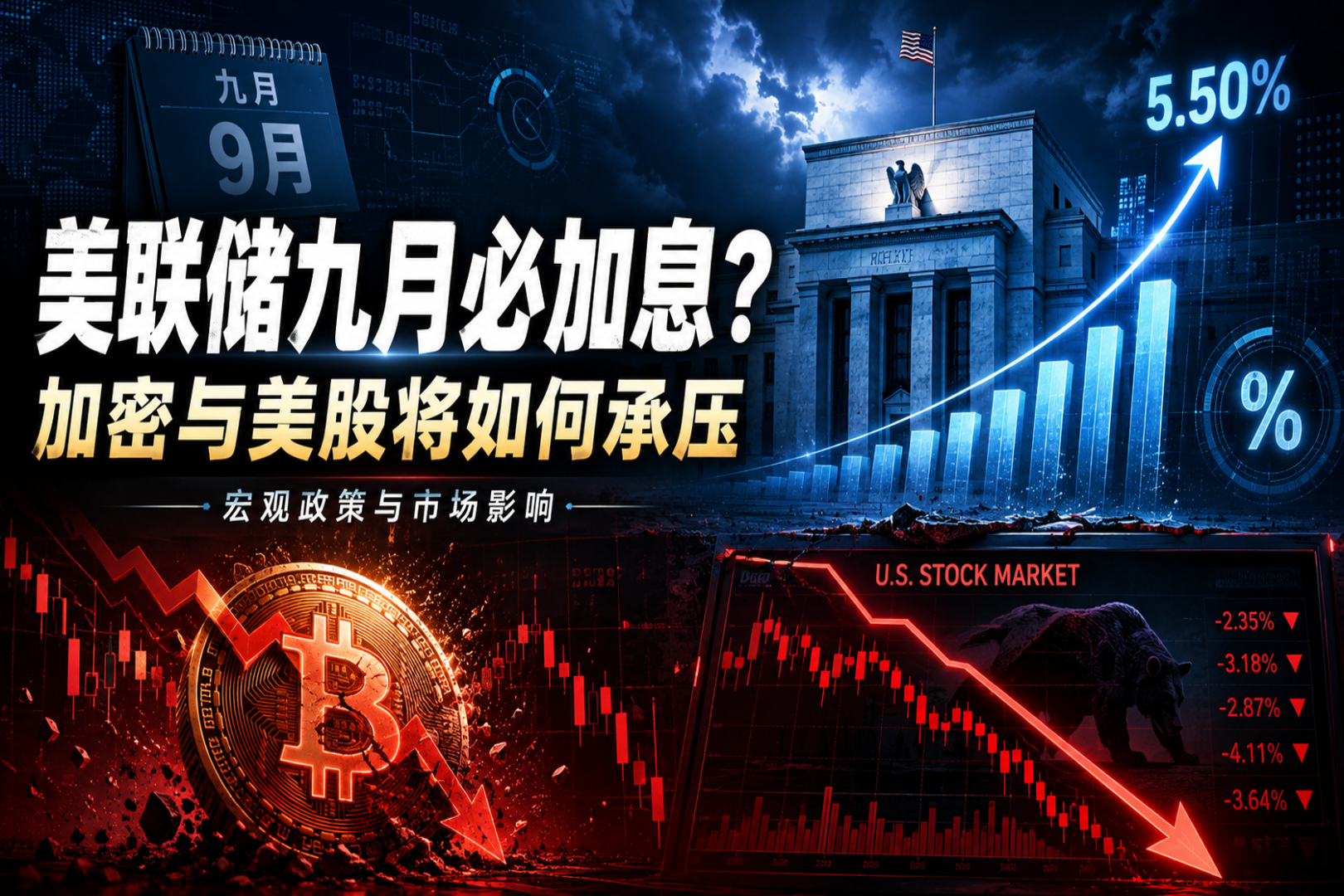
Will the Federal Reserve Definitely Raise Interest Rates in September? How Will Cryptocurrencies and US Stocks Bear the Pressure?

In early August 2024, market expectations for a September Federal Reserve rate hike surged dramatically, from below 50% to over 80%, driven by renewed inflation concerns. This shift followed a contentious July FOMC meeting where a 9-3 vote to hold rates revealed a growing hawkish faction advocating for an immediate hike, citing prolonged above-target inflation. The key catalyst is escalating conflict near the Strait of Hormuz, which has pushed oil prices up approximately 20% in July, threatening to reignite inflation. The next critical data point is the July CPI report on August 12th; a hot reading could solidify hike expectations. For crypto assets, particularly Bitcoin, this represents near-term pressure. Bitcoin continues to exhibit high-beta, risk-on characteristics, making it sensitive to tightening liquidity and higher opportunity costs. However, historical precedent suggests that if a hike is perceived as the cycle's end rather than its start, the negative impact may be brief, with markets quickly pivoting to anticipate future rate cuts. U.S. stocks, especially crypto-linked equities like Coinbase and high-valuation tech stocks, face amplified volatility. Higher rates increase discount rates in valuation models, pressuring growth stocks. This coincides with a pivotal tech earnings season where investor focus has shifted from massive AI capital expenditures to demonstrable revenue and cash flow generation. Companies with negative cash flows and weak growth narratives could see severe pressure if a September hike materializes, as financing costs would rise. Key indicators to watch include oil prices, upcoming inflation data, and Fed commentary at events like the Jackson Hole symposium.

Odaily星球日报Há 3m

Will the Federal Reserve Definitely Raise Interest Rates in September? How Will Cryptocurrencies and US Stocks Bear the Pressure?

Odaily星球日报Há 3m

From South Korea to the United States: Blue-Collar Jobs Are Becoming Increasingly Popular, Thanks to AI

AI is reshaping the labor market's value proposition. The traditional four-year college degree is losing its appeal as a guaranteed career path, while skilled blue-collar trades like electricians, welders, and plumbers are experiencing historic demand and wage premiums. This shift is driven by dual pressures: AI's displacement of certain white-collar roles and a booming need for physical infrastructure and data center construction. Data confirms the trend. In the U.S., vocational school revenue surged, and a significant portion of recent layoffs are AI-related. Surveys show a majority of Gen Z adults plan to pursue blue-collar work, citing better job security against AI automation. Vocational education interest has exploded recently. Experts cite a psychological shift as younger generations seek tangible, AI-resistant careers and avoid high student debt. In many cases, salaries for skilled trades now match or exceed those requiring a bachelor's degree. In South Korea, semiconductor vocational high schools boast near-total employment, with graduates securing high-paying roles at companies like Samsung. The shortage is structural, exacerbated by a retiring baby boomer workforce and massive infrastructure projects. Companies like JPMorgan Chase, Meta, and Lowe's are investing heavily in training programs. However, overcoming historical stigma and a "perception gap" around trade careers remains a key challenge to closing the talent gap.

marsbitHá 1h

From South Korea to the United States: Blue-Collar Jobs Are Becoming Increasingly Popular, Thanks to AI

marsbitHá 1h

Trading

Spot
活动图片