From Calling for $150 to Liquidating HYPE in Just Three Days, How Much Credibility Does Arthur Hayes Have Left?

Odaily星球日报Publicado em 2026-06-09Última atualização em 2026-06-09

Resumo

Arthur Hayes, co-founder of BitMEX and a prominent crypto figure, is facing scrutiny over his market credibility. Recent on-chain data and public criticism, notably from detective ZachXBT, question whether he uses his influence to create exit liquidity for his followers. Hayes has executed several abrupt sell-offs, including publicly advocating for HYPE to reach $150 before completely selling his holdings just three days later, after which the price dropped sharply. He similarly promoted WLD with a $10 target, only to sell his entire position three days afterward, citing vague concerns about SpaceX's pre-IPO activity and causing a significant price decline. Hayes justifies these moves with detailed macroeconomic analyses, such as a recent essay citing energy costs and AI market risks, explaining his shift into energy stocks and core cryptocurrencies BTC and ETH. However, his pattern of bullish public statements followed by unannounced sell-offs—previously seen with tokens like ETHFI and ENA—has led many investors to adopt a strategy of ignoring his commentary but closely monitoring his on-chain actions for sell signals. Analysts warn that this "cry wolf" pattern risks eroding his market trust, with Hayes himself admitting in a recent article, "I remain an unapologetic gambler."

Original |Odaily Planet Daily(@OdailyChina)

Author|Golem(@web3_golem)
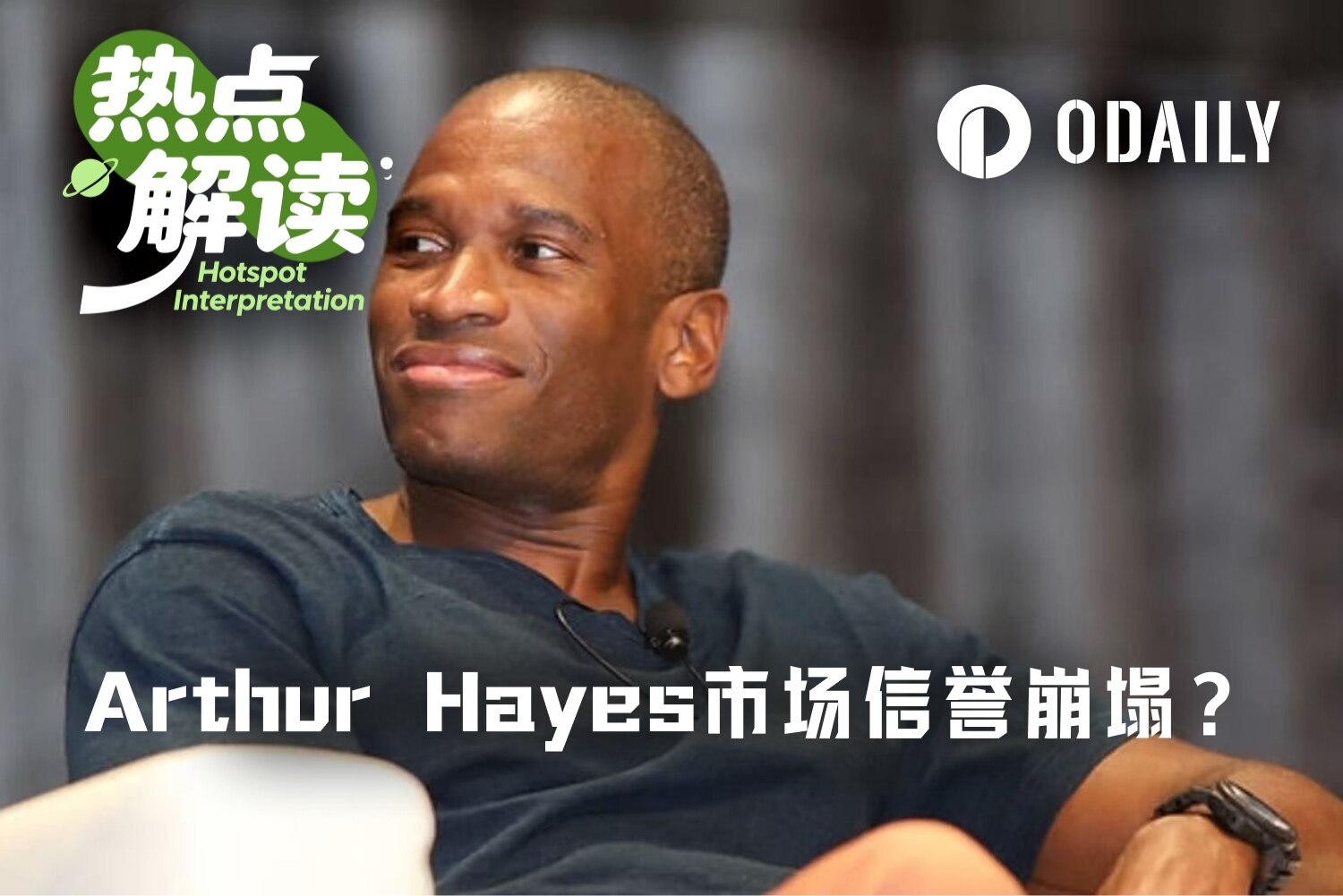
How much market credibility does Arthur Hayes have left? Recently, "the father of crypto perpetual contracts" and BitMEX co-founder Arthur Hayes has faced public criticism. On-chain detective ZachXBT has also publicly questioned how much exit liquidity he has created using his followers.

Liquidating HYPE, NEAR, WLD

Starting last week, Arthur Hayes performed several unexpected sell-offs to exit at the top.

Arthur Hayes had repeatedly stated publicly that HYPE would rise to $150 in this cycle. On June 1, Arthur Hayes passionately clashed with former Multicoin Capital co-founder Kyle Samani, who had disparaged Hyperliquid, and even made a $100,000 bet with him. However, just 3 days later, Arthur Hayes announced he had completely liquidated his HYPE and NEAR holdings. HYPE fell over 13.6% that day. His sell-off indeed allowed him to exit at the peak. HYPE reached a new high of $75.5 on June 4 before starting a continuous decline, currently trading around $62-64.

Besides HYPE and NEAR, Arthur Hayes also liquidated ZEC and WLD. Liquidating ZEC due to the Orchard Pool attack might be somewhat understandable. However, his sell-off of WLD resembles a classic "KOL dumping on retail" operation involving pre-positioning, public shilling, and finally pumping and dumping.

Because from publicly shilling WLD to liquidating it, Arthur Hayes only "pretended" for 3 days. On June 3, the day before selling HYPE, Arthur Hayes publicly shilled WLD with a $10 target, suggesting WLD would become an alternative for investors who couldn't directly participate in SpaceX equity trades. After the news spread, WLD rose over 35% that day. But by June 6, Arthur Hayes changed his tune, stating he had liquidated WLD because SpaceX's pre-IPO price action was "abnormal." This flimsy explanation caused WLD to drop over 20% that day.

The difference between Arthur Hayes and "third-rate KOLs" is that he writes lengthy posts, often justifying his actions from macroeconomic and top-level design perspectives.

On June 9, Arthur Hayes published a long article titled "Reality Test" (requiring about 20 minutes to read fully) explaining his recent moves. He believes three factors will burst the AI bubble: rising energy costs due to restricted traffic in the Strait of Hormuz, the IPOs of three major AI stocks (SpaceX, Anthropic, OpenAI), and Trump turning against AI for the midterm elections.

Therefore, his family office Maelstrom holds significant positions in U.S.-listed energy producers and has sold AI-related stocks and non-core crypto assets, holding only BTC and ETH.

Don't Listen to Arthur Hayes's Words, But Watch His Actions

Arthur Hayes's articles not only skillfully use extensive economic data and charts to argue his points but sometimes also overlay political and historical perspectives, which can be quite impressive. But when you take his words seriously and invest real money following his moves, he might announce a liquidation and turn bearish the very next day, seemingly forgetting what he said the day before, while your portfolio takes a simultaneous hit.

Such operations are not uncommon. As early as 2025, Arthur Hayes repeatedly performed the "bullish one day, liquidate the next" routine. The most classic example remains HYPE. In August 2025, Arthur Hayes promoted HYPE during a speech at Japan WebX, claiming the token still had up to 126x upside potential (Odaily note: the price was $45.9 that day). Yet just one month later, he announced liquidating HYPE, profiting millions, citing the need to avoid token unlock risks.

Arthur Hayes's sell-off then occurred precisely at the peak of HYPE's previous bull run, after which HYPE fluctuated downward. It wasn't until mid-January 2026 that Arthur Hayes again made large-scale purchases of HYPE. Judging from the price chart, his entry point for HYPE was again at the low point of this current cycle.

Similar examples include ETHFI and ENA, where he publicly expressed bullish views, then sold off without warning, achieving precise exits at the top. (Related reading:You Ran First Again! A Record of Arthur Hayes's Top Exits)

Long-term followers of Arthur Hayes have summarized a methodology: don't listen to Arthur Hayes's words, but you must watch his actions; follow his entries cautiously, and decisively liquidate when he sells.

However, if Arthur Hayes continues such performances, especially cases like manipulating WLD price volatility this time, no matter how reasonable the excuses are disguised, his market credibility will be threatened. This is like a crypto version of "The Boy Who Cried Wolf." In the end, Arthur Hayes will surely face backlash.

He said one thing right in his latest article—"I remain an unapologetic gambler," and gamblers usually don't end well.


Criptomoedas em alta

Perguntas relacionadas

QWho is Arthur Hayes and why is his market credibility being questioned?

AArthur Hayes is the co-founder of BitMEX, often called the 'father of crypto perpetual contracts.' His market credibility is being questioned due to recent actions where he publicly promoted certain cryptocurrencies like HYPE and WLD, only to sell his holdings shortly after, which critics label as a classic 'pump and dump' strategy, manipulating exit liquidity from his followers.

QWhat specific cryptocurrencies did Arthur Hayes recently sell, and what were the consequences?

AArthur Hayes recently sold his holdings in HYPE, NEAR, ZEC, and WLD. For example, after publicly stating HYPE would reach $150, he sold it three days later, causing its price to drop over 13.6%. He also sold WLD just three days after promoting it, leading to a price drop of over 20%.

QWhat reasons did Arthur Hayes give in his article 'Reality Test' for selling his AI-related crypto assets?

AIn his article 'Reality Test,' Arthur Hayes cited three main reasons for selling AI-related crypto assets: 1) Rising energy costs due to restricted traffic in the Strait of Hormuz, 2) The potential IPO of major AI companies (SpaceX, Anthropic, OpenAI) bursting an AI bubble, and 3) His belief that former President Trump would oppose AI to aid midterm elections. Therefore, his family office shifted to holding energy stocks and core cryptocurrencies like BTC and ETH.

QAccording to the article, what is the suggested strategy for investors regarding Arthur Hayes's actions?

AThe article suggests that investors should not blindly follow Arthur Hayes's public statements but should closely monitor his actual on-chain transactions. The recommended strategy is to be cautious when he buys ('建仓谨慎跟随') and to decisively sell when he sells ('卖出果断清仓').

QWhat historical example does the article provide to show a pattern in Arthur Hayes's behavior?

AThe article provides the example of HYPE from August 2025. Arthur Hayes publicly promoted HYPE at the Japan WebX conference, claiming it had 126x growth potential. Just one month later, he sold all his HYPE holdings near the peak of that price cycle, citing token unlock risks, and re-entered the market at a low point in early 2026.

Leituras Relacionadas

SemiAnalysis on the Epic Plunge: It's Not Over Yet

SemiAnalysis Weekly discusses the recent sharp correction in the semiconductor market after a historic first half. Analysts Doug O'Loughlin and Dylan note that despite healthy fundamentals, markets like South Korea's KOSPI have plunged 40%, wiping out leveraged retail investors. A core debate focuses on AI demand versus supply constraints. Dylan cites SemiAnalysis's internal use of AI coding agents, leading to a 100x increase in AI spending, as evidence of powerful demand. Doug agrees demand is strong but questions its exact magnitude, calling it a "trillion-dollar question." His primary concern is physical and financial bottlenecks: a shortage of 100,000 electricians in the US, massive $450B in corporate debt issuance by hyperscalers (funded by a shrinking pension pool), and labor/scale limits in regions like Taiwan, where TSMC constitutes 20% of GDP. The conversation covers market dynamics, including the typical semiconductor cycle where over-ordering leads to crashes, China's growing memory capacity, and the potential for older chips like the H100 to lose value as models scale. Politically, AI is seen as a likely scapegoat in upcoming elections, though not a top-tier voter priority. The analysts conclude that while the long-term potential is significant, the scaling path is narrowing. The challenge is matching exponential compute demands with real-world constraints on capital, labor, and permits, risking scenarios where massive investment outpaces near-term revenue generation.

marsbitHá 50m

SemiAnalysis on the Epic Plunge: It's Not Over Yet

marsbitHá 50m

After Robinhood's Aggressive Entry, Why is PUMP Defying the Trend and Rising?

Amid a prolonged crypto bear market that has strained many projects, Pump.fun stands out by maintaining strong profitability. Despite a major token unlock in mid-July that was expected to cause selling pressure, its native token PUMP has risen nearly 48% over the past month. Analysis shows only a small portion of unlocked tokens were sold, with 92% of investor allocations still held. A buyback-and-burn mechanism has also supported the price, though daily回购 funds have declined by 77.5% from their peak, partly due to a change in tokenomics and lower platform revenue. Pump.fun remains a top revenue generator in crypto, with annualized revenue of around $450 million, ranking just behind giants like Tether and Circle. However, its daily revenue is down about 69% from its all-time high, reflecting dependence on meme coin market cycles. The platform also faces a class-action lawsuit alleging market manipulation and securities violations. New competition has emerged with Robinhood Chain's launchpad, which recently saw higher weekly volume and active addresses than Pump.fun. While Pump.fun's metrics haven't declined yet, it has responded with a new token launch mechanism called BOOST to improve liquidity. This has increased platform activity but raised community concerns about potential exploitation for short-term pumps. Ultimately, Pump.fun's success remains tightly linked to meme coin speculation and broader market sentiment.

marsbitHá 50m

After Robinhood's Aggressive Entry, Why is PUMP Defying the Trend and Rising?

marsbitHá 50m

Trading

Spot

Artigos em Destaque

Como comprar HYPE

Bem-vindo à HTX.com!Tornámos a compra de Hyperliquid (HYPE) simples e conveniente.Segue o nosso guia passo a passo para iniciar a tua jornada no mundo das criptos.Passo 1: cria a tua conta HTXUtiliza o teu e-mail ou número de telefone para te inscreveres numa conta gratuita na HTX.Desfruta de um processo de inscrição sem complicações e desbloqueia todas as funcionalidades.Obter a minha contaPasso 2: vai para Comprar Cripto e escolhe o teu método de pagamentoCartão de crédito/débito: usa o teu visa ou mastercard para comprar Hyperliquid (HYPE) instantaneamente.Saldo: usa os fundos da tua conta HTX para transacionar sem problemas.Terceiros: adicionamos métodos de pagamento populares, como Google Pay e Apple Pay, para aumentar a conveniência.P2P: transaciona diretamente com outros utilizadores na HTX.Mercado de balcão (OTC): oferecemos serviços personalizados e taxas de câmbio competitivas para os traders.Passo 3: armazena teu Hyperliquid (HYPE)Depois de comprar o teu Hyperliquid (HYPE), armazena-o na tua conta HTX.Alternativamente, podes enviá-lo para outro lugar através de transferência blockchain ou usá-lo para transacionar outras criptomoedas.Passo 4: transaciona Hyperliquid (HYPE)Transaciona facilmente Hyperliquid (HYPE) no mercado à vista da HTX.Acede simplesmente à tua conta, seleciona o teu par de trading, executa as tuas transações e monitoriza em tempo real.Oferecemos uma experiência de fácil utilização tanto para principiantes como para traders experientes.

348 Visualizações TotaisPublicado em {updateTime}Atualizado em 2026.06.02

Como comprar HYPE

Discussões

Bem-vindo à Comunidade HTX. Aqui, pode manter-se informado sobre os mais recentes desenvolvimentos da plataforma e obter acesso a análises profissionais de mercado. As opiniões dos utilizadores sobre o preço de HYPE (HYPE) são apresentadas abaixo.

活动图片