From Aztec to Zcash: Privacy Evolving from 'Gray Industry Tool' to 'Institutional Necessity'

比推Publicado em 2025-12-26Última atualização em 2025-12-26

Resumo

From Aztec to Zcash: The Rise of Pragmatic Privacy in Blockchain In 2025, blockchain privacy evolved from a niche concern to a mainstream priority, driven by the concept of "pragmatic privacy" that balances individual anonymity with regulatory compliance. This shift is marked by the strong performance of privacy-focused assets like Zcash and new institutional initiatives. Several new privacy-centric blockchains launched or advanced significantly. Aztec Network's Ignition L2 mainnet went live, raising over 6,100 ETH. Nillion launched its "blind computer" mainnet for encrypted data computation. Cosmos-based Namada introduced a "composable privacy" L1, while Miden spun out from Polygon to build its own privacy chain. Umbra raised $154.9 million in an ICO to build on Solana. Horzen transitioned to a Base L3 privacy solution. Institutions are actively embracing privacy. Coinbase hired a team from Iron Fish to develop privacy primitives for Base. Circle is testing a privacy-preserving wrapped USDC (USDCx) on Aleo. The Canton Network and EY's Nightfall L2 are focusing on confidential enterprise solutions. The Ethereum Foundation formed a dedicated "Privacy Cluster" and an "Institutional Privacy Working Group." Vitalik Buterin also launched Kohaku, an open-source wallet framework for compliant privacy. At the application layer, tools like 0xbow's Privacy Pools (based on Vitalik's research) and Railgun (using "proof of innocence") allow users to anonymize transactions without aidi...

Source: The Block

Original Title: From Aztec to Zcash: The year 'pragmatic privacy' took root

Compiled and Edited by: BitpushNews


Since Satoshi Nakamoto wrote the Bitcoin whitepaper, the privacy limitations of blockchain have been evident. The cryptocurrency pioneer pointed out at the time: despite using anonymous mechanisms, Bitcoin addresses could still be traced back to real-world identities.

For many years since, this "pseudo-anonymous" characteristic has been tacitly accepted as "acceptable enough," causing most blockchain privacy projects to remain on the margins for a long time.

However, this year has seen a renewed interest in blockchain privacy, with Zcash becoming one of the best-performing assets of the year, and the Ethereum Foundation launching multiple end-to-end encryption initiatives. The concept of "Pragmatic Privacy" has also begun to take root, aiming to balance individual privacy with compliance considerations.

Emerging Privacy Chains

2025 has witnessed the launch of several new privacy-focused blockchains at various stages of development.

Perhaps the most notable is the Aztec Network's Ignition chain going live on mainnet in November. This is not only because it is the "first fully decentralized L2 on Ethereum," with multiple innovations in consensus and ZK technology, but also because it has overcome numerous obstacles since the project's inception in 2017.

Earlier this month, Ignition also raised 19,476 ETH (approximately $61 million) from 16,741 participants using a new "Continuous Clearing Auction" mechanism co-developed with Uniswap Labs.

Nillion is another blockchain project that launched its mainnet in 2025. This so-called "blind computer" aims to perform computations on encrypted data and has already integrated with multiple networks, including Layer 1's Near and Layer 2's Arbitrum, to enhance privacy at the application layer.

Namada, built on Cosmos, also launched its Layer 1 mainnet in June, focusing on "composable privacy" and supporting multiple blockchain ecosystems—including Bitcoin L2s (like Lombard and Babylon), Ethereum, and Solana—via cross-chain bridges.

Miden, which has been in development since at least 2022, is preparing to launch its mainnet next year. Even so, the project took a huge step towards independence this year: spinning off from Polygon and raising $25 million to build the privacy-focused blockchain Edge.

Similarly, the privacy protocol Umbra, powered by Arcium, conducted its Initial Coin Offering (ICO) on MetaDAO in October, raising $154.9 million. Umbra plans to launch concurrently with Arcium's mainnet Alpha, becoming one of the first privacy protocols built on Solana utilizing its infrastructure.

Horizen, one of the oldest crypto privacy projects, also underwent a major transformation this year: it shut down its proprietary Layer 1 and L2 incubator and relaunched as a Layer 3 privacy solution on Base, the network incubated by Coinbase.

Grayscale, which manages the ZEN token fund, also filed a registration statement with the U.S. Securities and Exchange Commission (SEC) to convert its Grayscale Zcash Trust into the first ZEC ETF. Zcash, which launched the Zebra 3.1 upgrade, has been one of the best-performing tokens in the second half of the year.

Institutional Privacy Initiatives

Coinbase signaled multiple times this year that privacy is not optional for Base. Earlier this year, the company announced it had hired a development team from Iron Fish (a long-standing PoW privacy project) to provide "privacy-preserving primitives" for Base.

Circle, the largest U.S. stablecoin issuer, also made waves by announcing it was testing a privacy-preserving wrapped USDC called USDCx on the Aleo testnet.

USDCx appears to focus on "configurable compliance," aiming to support enterprise-level use cases such as payroll management and e-commerce.

Meanwhile, the Canton Network, backed by Goldman Sachs and BNY Mellon, and Nightfall, an Ethereum L2 incubated by EY, focus on enterprise blockchain solutions that require extreme confidentiality. Nightfall has already announced support for two blockchains: the real-world asset (RWA) network Plume and CELO.

The Ethereum Foundation initiated multiple privacy programs this year, signaling that the topic has moved from a niche research area to a core concern for Ethereum developers. In October, the Foundation formed the so-called "Privacy Cluster," a dedicated team of dozens of engineers aimed at consolidating its privacy efforts, including a roadmap for achieving native end-to-end encryption. The Foundation also launched the "Institutional Privacy Working Group" to guide institutions and enterprises into Ethereum.
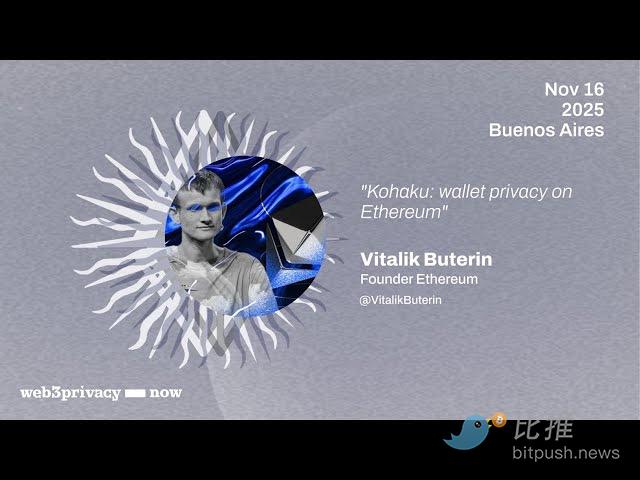
Ethereum's Vitalik Buterin also introduced Kohaku, an open-source centralized wallet framework for privacy, aimed at fostering "default and compliant" privacy features.

Pragmatic Privacy

The concept of "pragmatic privacy" is perhaps most fully realized at the application layer. This year, 0xbow launched Privacy Pools, a tool for ordinary blockchain users to erase transaction records without running into legal trouble.

Privacy Pools are based on research published by Buterin and several other senior cryptographers on "association lists," designed to prevent bad actors from profiting from crypto mixers. The 0xbow team recently raised a $3.5 million seed round, expanded support for Sky's USDS stablecoin, and provided a method for Tornado Cash users to remain anonymous "without helping hackers." It is also part of the Ethereum Foundation's Kahaku software framework.

Similarly, Railgun is listed in Kahaku's GitHub repository as a means of shielding funds. Railgun achieves blockchain privacy through a "proof of innocence" system, where users generate ZK proofs showing their funds/transactions do not belong to a preset list of flagged/malicious addresses.
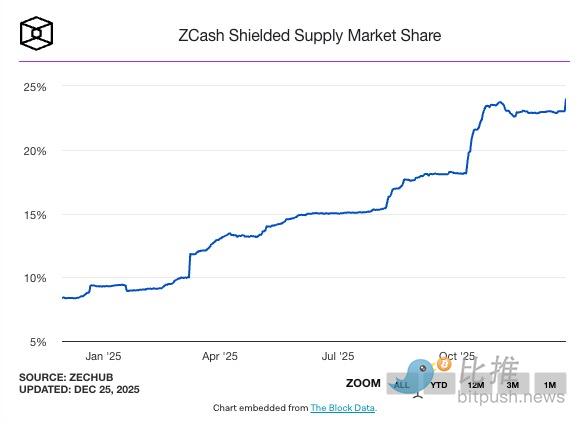
Finally, it's worth noting that as a standard-bearer for crypto privacy, Zcash's anonymous pool supply has grown to nearly 25%, marking a steady increase in network privacy adoption. Zcash provides users with functional privacy and the ability to achieve compliance through selective disclosure of information.


Twitter:https://twitter.com/BitpushNewsCN

Bitpush TG Discussion Group:https://t.me/BitPushCommunity

Bitpush TG Subscription: https://t.me/bitpush

Original link:https://www.bitpush.news/articles/7598558

Perguntas relacionadas

QWhat is the main concept that has gained traction in blockchain privacy in 2025, as discussed in the article?

AThe main concept is 'Pragmatic Privacy', which aims to balance individual privacy with compliance considerations.

QWhich privacy-focused blockchain launched its mainnet in November 2025 and is noted as 'Ethereum's first fully decentralized L2'?

AAztec Network's Ignition chain launched its mainnet in November 2025 and is described as Ethereum's first fully decentralized L2.

QWhat significant step did the Ethereum Foundation take in October 2025 regarding privacy?

AIn October 2025, the Ethereum Foundation formed a 'Privacy Cluster', a dedicated team of dozens of engineers to consolidate its privacy efforts, including a roadmap for native end-to-end encryption.

QWhat is the purpose of Privacy Pools, as mentioned in the article?

APrivacy Pools is a tool for ordinary blockchain users to erase transaction records without getting into legal trouble, based on research about 'association lists' to prevent bad actors from benefiting from crypto mixers.

QWhich stablecoin issuer is testing a privacy-preserving wrapped version of USDC called USDCx on the Aleo testnet?

ACircle, the largest U.S. stablecoin issuer, is testing a privacy-preserving wrapped version of USDC called USDCx on the Aleo testnet.

Leituras Relacionadas

North Korean Hackers Loot $500 Million in a Single Month, Becoming the Top Threat to Crypto Security

North Korean hackers, particularly the notorious Lazarus Group and its subgroup TraderTraitor, have stolen over $500 million from cryptocurrency DeFi platforms in less than three weeks, bringing their total theft for the year to over $700 million. Recent major attacks on Drift Protocol and KelpDAO, resulting in losses of approximately $286 million and $290 million respectively, highlight a strategic shift: instead of targeting core smart contracts, attackers are now exploiting vulnerabilities in peripheral infrastructure. For instance, the KelpDAO attack involved compromising downstream RPC infrastructure used by LayerZero's decentralized validation network (DVN), allowing manipulation without breaching core cryptography. This sophisticated approach mirrors advanced corporate cyber-espionage. Additionally, North Korea has systematically infiltrated the global crypto workforce, with an estimated 100 operatives using fake identities to gain employment at blockchain companies, enabling long-term access to sensitive systems and facilitating large-scale thefts. According to Chainalysis, North Korean-linked hackers stole a record $2 billion in 2025, accounting for 60% of all global crypto theft that year. Their total historical crypto theft has reached $6.75 billion. Post-theft, they employ specialized money laundering methods, heavily relying on Chinese OTC brokers and cross-chain mixing services rather than standard decentralized exchanges. Security experts, while acknowledging the increased sophistication, emphasize that many attacks still exploit fundamental weaknesses like poor access controls and centralized operational risks. Strengthening private key management, limiting privileged access, and enhancing coordination among exchanges, analysts, and law enforcement immediately after an attack are critical to improving defense and fund recovery chances. The industry's challenge now extends beyond secure smart contracts to safeguarding operational security at the infrastructure level.

marsbitHá 29m

North Korean Hackers Loot $500 Million in a Single Month, Becoming the Top Threat to Crypto Security

marsbitHá 29m

Circle CEO's Seoul Visit: No Korean Won Stablecoin Issuance, But Met All Major Korean Banks

Circle CEO Jeremy Allaire's recent activities in Seoul indicate a strategic shift for the company, moving away from issuing a Korean won-backed stablecoin and instead focusing on embedding itself as a key infrastructure provider within Korea’s financial and crypto ecosystem. Despite Korea accounting for nearly 30% of global crypto trading volume—with a market characterized by high retail participation and altcoin dominance—Circle has chosen not to compete for the role of stablecoin issuer. Instead, Allaire met with major Korean banks (including Shinhan, KB, and Woori), financial groups, leading exchanges (Upbit, Bithumb, Coinone), and tech firms like Kakao. This approach reflects a broader industry transition: the core of stablecoin competition is shifting from issuance rights to systemic positioning. With Korean regulators still debating whether banks or tech companies should issue stablecoins, Circle is avoiding regulatory uncertainty by strengthening its role as a service and technology partner. The company is deepening integration with trading platforms, building connections, and promoting stablecoin infrastructure. This positions Circle to benefit regardless of which entity eventually issues a won stablecoin. Allaire also noted the potential for a Chinese yuan stablecoin in the next 3–5 years, underscoring a regional trend of stablecoins becoming more regulated and integrated with traditional finance. Ultimately, Circle’s strategy highlights that future influence in the stablecoin market will belong not necessarily to the issuers, but to the foundational infrastructure layers that enable cross-system transactions.

marsbitHá 57m

Circle CEO's Seoul Visit: No Korean Won Stablecoin Issuance, But Met All Major Korean Banks

marsbitHá 57m

SpaceX Ties Up with Cursor: A High-Stakes AI Gambit of 'Lock First, Acquire Later'

SpaceX has secured an option to acquire AI programming company Cursor for $60 billion, with an alternative clause requiring a $10 billion collaboration fee if the acquisition does not proceed. This structure is not merely a potential acquisition but a strategic move to control core access points in the AI era. The deal is designed as a flexible, dual-path arrangement, allowing SpaceX to either fully acquire Cursor or maintain a binding partnership through high-cost collaboration. This "option-style" approach minimizes immediate regulatory and integration risks while ensuring long-term alignment between the two companies. At its core, the transaction exchanges critical AI-era resources: SpaceX provides its Colossus supercomputing cluster—one of the world’s most powerful AI training infrastructures—while Cursor contributes its AI-native developer environment and strong product adoption. This synergy connects compute power, models, and application layers, forming a closed-loop AI capability stack. Cursor, founded in 2022, has achieved rapid growth with over $1 billion in annual revenue and widespread enterprise adoption. Its value lies in transforming software development through AI agents capable of coding, debugging, and system design—positioning it as a gateway to future software production. For SpaceX, this move is part of a broader strategy to evolve from a aerospace company into an AI infrastructure empire, integrating xAI, supercomputing, and chip manufacturing. Controlling Cursor fills a gap in its developer tooling layer, strengthening its AI narrative ahead of a potential IPO. The deal reflects a shift in AI competition from model superiority to ecosystem and entry-point control. With programming tools as a key battleground, securing developer loyalty becomes crucial for dominating the software production landscape. Risks include questions around Cursor’s valuation, technical integration challenges, and potential regulatory scrutiny. Nevertheless, the deal underscores a strategic bet: controlling both compute and software development access may redefine power dynamics in the AI-driven future.

marsbitHá 1h

SpaceX Ties Up with Cursor: A High-Stakes AI Gambit of 'Lock First, Acquire Later'

marsbitHá 1h

Trading

Spot
Futuros
活动图片