From a $300 Million Valuation to a 'Fire Sale' at Tens of Millions: What Happened to Messari?

marsbitPublicado em 2026-06-15Última atualização em 2026-06-15

Resumo

On June 12, leading crypto data and capital markets platform Blockworks announced its acquisition of competitor Messari for over $10 million. This price represents a significant discount from Messari's 2022 valuation peak of approximately $300 million, highlighting the survival pressures faced by high-valuation startups during the bear market and a consolidation wave in data infrastructure. Blockworks, founded in 2018, began as a media and events company but has pivoted to focus on institutional-grade data, investor relations, and compliance tools. Its recent Series A extension round, valuing the company at $192 million, aimed to fund this shift and strategic acquisitions like this one. Messari, also founded in 2018, grew as a go-to platform for professional crypto research and data, raising a $35 million Series B at its $300 million valuation in late 2022. However, the prolonged bear market and subsequent internal changes, including founder Ryan Selkis's departure in 2024, increased operational pressures. The acquisition integrates Messari's extensive data platform and API capabilities with Blockworks's strengths in issuer-side disclosure, investor relations, and compliance workflows. The combined entity aims to build a unified "system of record" for the on-chain market. This reflects a broader industry trend where high-quality, structured data is becoming critical for institutional adoption, AI agents, and creating data moats akin to traditional financial platforms like ...

On June 12, Blockworks, a leading platform in crypto data and capital markets, announced its acquisition of its long-time competitor Messari for a deal value exceeding $10 million. Messari had reached a valuation of approximately $300 million in 2022. The significant discount in this transaction price highlights the survival pressure faced by high-valuation startups in a deep bear market and the consolidation wave within the data infrastructure sector.

In the official announcement, Jason Yanowitz, co-founder of Blockworks, stated, "For eight years, Messari has provided the industry with transparency, market intelligence, and comprehensive data coverage for every crypto asset, building the industry's most comprehensive dataset.

This integration will combine Blockworks' strengths in issuer disclosure, investor relations, and compliance workflows with Messari's strengths in data breadth and API capabilities, jointly building a 'single source of truth' for the on-chain market."

Transaction Details

According to Blockworks' official announcement and confirmation by multiple media outlets, upon completion of the acquisition, Messari CEO Diran Li will join Blockworks in a senior leadership role.

Messari's core assets, including its data platform and its API, will be integrated into the Blockworks ecosystem. This API supports multi-dimensional data including assets, markets, exchanges, news, research, stablecoins, protocols, networks, token unlocks, fundraising, social sentiment, event monitoring, watchlists, and more, and is already used by funds, exchanges, developers, and various market participants.

Blockworks indicated that this transaction is its first major acquisition following its Series A extension financing completed several weeks ago. That funding round, valued at approximately $192 million and co-led by ParaFi Capital and Reciprocal Ventures with participation from Coinbase Ventures, explicitly aimed to consolidate the fragmented data and information landscape in the crypto space.

Blockworks and Messari

Founded in 2018 by Jason Yanowitz and Michael Ippolito and headquartered in New York, Blockworks initially focused on media and events. It built significant influence among crypto practitioners and investors through podcasts (such as Empire), research reports, and offline summits.

As the industry matured, the company gradually shifted from content production to an on-chain capital markets intelligence platform, focusing on building institutional-grade data, investor relations, and compliance tools.

Around October 2025, Blockworks shuttered its news department to concentrate resources on data, investor relations, and compliance services, with its Blockworks Intelligence business line becoming a key growth focus.

The Series A extension financing completed this April was precisely to fuel this transition and subsequent acquisitions. Yanowitz publicly stated that the company's revenue is scaling rapidly, with this funding round clearly targeting the "consolidation of crypto's fragmented data and information landscape."

Blockworks' strength lies in its issuer-side capabilities: helping on-chain asset issuers (protocols, chains, foundations, applications, stablecoin & RWA issuers, prediction markets, etc.) establish standardized disclosure frameworks, investor relations processes, and compliance workflows. Its products already serve institutions looking to enter the on-chain market, providing end-to-end support from due diligence to continuous monitoring.

Messari, also founded in 2018 and headquartered in New York, was established by Ryan Selkis and Dan McArdle. The company initially focused on professional-grade crypto research and data analysis, quickly becoming the go-to platform for institutional and retail investors seeking reliable information.
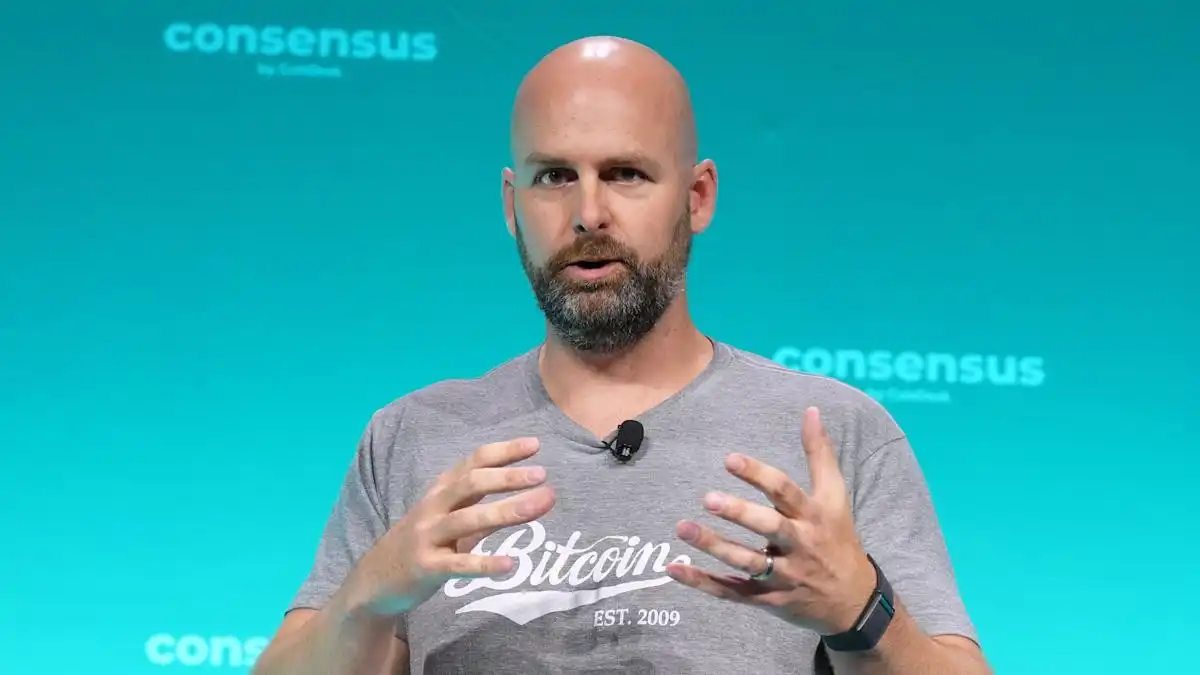
In September 2022, Messari completed a $35 million Series B funding round, led by the crypto arm of Brevan Howard with participation from Point72 Ventures and others, valuing the company at approximately $300 million. This funding round occurred near the peak of the bull market, reflecting the strong demand for high-quality data infrastructure at the time. However, the prolonged bear market post-2022, with tightening crypto project funding and pressure on trading volumes, presented real challenges for Messari. After co-founder and former CEO Ryan Selkis departed in 2024, the company underwent personnel optimization. In a bear market environment, high-valuation data companies struggled to maintain previous growth expectations, increasing survival pressure.

Behind the Acquisition

According to Architect Partners data, there have been 144 M&A transactions totaling $11.8 billion year-to-date in 2026, an increase of about 3.5% compared to the same period last year. Against a backdrop of pressured trading volumes and token prices, some high-valuation startups are opting for mergers and acquisitions to achieve resource consolidation or exit.

Eric Risley, founder of Architect Partners, pointed out that the industry is in a phase of differentiation, where pressure may lead to more distressed sales. Messari's fall from a $300 million valuation to a transaction price in the tens of millions is a microcosm of this phenomenon—valuations based on early growth narratives are being recalibrated in the face of fundamentals and capital efficiency.

Yanowitz emphasized in the announcement: "This acquisition connects the two sides of the market—issuers maintaining the trusted record of their business, and investors, exchanges, and regulators consuming those records through research, APIs, and automated workflows."

The core data foundation provided by Messari is precisely the prerequisite for AI agents to function: an agent's capability depends on the data it can access and the APIs it can call.

The crypto industry is currently at a critical inflection point: institutions are accelerating on-chain adoption, sectors like stablecoins, RWA, and prediction markets continue to expand, and demand for standardized disclosure, compliance monitoring, real-time data, and programmable access is surging.

In traditional financial markets, platforms like Bloomberg, FactSet, and S&P Global have built data moats through long-term consolidation. The crypto field similarly requires such infrastructure but must adapt to the characteristics of on-chain native, real-time, structured data.

Blockworks aims to build a full-cycle ecosystem, from data collection and verification to analysis, distribution, and compliance, using Messari's massive dataset as a foundation and overlaying its own issuer-side disclosure and IR capabilities.

The introduction of AI will further accelerate this process, as high-quality, structured data is the core fuel for training and running on-chain agents. For the Messari team, joining a platform with greater resources and strategic clarity will help its data assets create value within a larger ecosystem, rather than continuing to contract under the pressure of independent operation.

The crypto data and research landscape is transitioning from a flourishing diversity to consolidation by the fittest. Amidst cyclical fluctuations, data and trust are long-term moats, and consolidation is often one of the optimal paths to navigate through the cycles.


Perguntas relacionadas

QWhat was the acquisition price of Messari by Blockworks, and how does it compare to Messari's peak valuation in 2022?

ABlockworks acquired Messari for just over $10 million. This represents a significant discount compared to Messari's peak valuation of approximately $300 million in 2022, highlighting the pressure on highly-valued startups during the prolonged bear market.

QAccording to the announcement, what is the strategic goal of the integration between Blockworks and Messari?

AThe strategic goal of the integration is to combine Blockworks' strengths in issuer disclosure, investor relations, and compliance workflows with Messari's extensive data breadth and API capabilities. Together, they aim to build a 'single system of record' for the on-chain market.

QWhat was a key driver behind Blockworks's Series A extension funding, which was used to finance this acquisition?

AThe Series A extension funding, which valued Blockworks at about $192 million, was explicitly raised with the purpose of consolidating the fragmented data and information landscape within the cryptocurrency sector.

QWhat significant change did Blockworks undergo in late 2025, and what business line became its focus?

AIn late 2025, Blockworks shut down its news division to concentrate resources on its data, investor relations, and compliance services. Its Blockworks Intelligence business line became the primary focus for growth.

QHow does the article characterize the broader trend in the crypto sector regarding mergers and acquisitions (M&A) in 2026?

AThe article characterizes 2026 as a period of increased consolidation. According to Architect Partners, there have been 144 M&A deals totaling $11.8 billion year-to-date, representing a 3.5% increase compared to the same period last year, with some high-valuation startups opting for mergers or distressed sales under market pressure.

Leituras Relacionadas

Apple Sues OpenAI Sparking Feud, Musk Slams Altman for Fraud, Altman Retorts with 'Space Data Center' Boast

Apple Sues OpenAI as Musk-Altman Feud Escalates The public feud between Elon Musk and OpenAI CEO Sam Altman intensified, coinciding with their respective AI companies launching flagship models in the same week, highlighting fierce competition. On July 11, Musk posted on X, accusing Altman of taking "fraud to the next level" regarding OpenAI's commercial practices. Altman fired back, sarcastically suggesting Musk was the one selling "short-term space datacenter" concepts to public market investors. Musk countered with allegations that Altman "stole an open-source AI charity" and, amid Apple's recent lawsuit, "stole all of Apple's phone tech." He mockingly referenced Altman needing a "parole officer's" approval to travel. This exchange occurred against the backdrop of a significant legal development: Apple filed a lawsuit against OpenAI in a California federal court, alleging the AI company deliberately solicited Apple employees to leak confidential information on unreleased products to aid its own hardware plans. Apple demands OpenAI cease this activity, destroy proprietary materials, and redesign upcoming products. OpenAI responded, stating it has no interest in other companies' trade secrets and remains focused on innovation. This lawsuit could profoundly impact their two-year partnership where OpenAI provides key tech for Apple Intelligence and Siri. The rivalry extended to product releases. OpenAI launched GPT-5.6, while Musk's SpaceXAI unveiled Grok 4.5. Both are positioned as AI agents capable of multi-step tasks. GPT-5.6 is noted for strengths in broad reasoning, business workflows, and cybersecurity. Grok 4.5 is highlighted for higher efficiency in autonomous programming and developer workflows, with lower usage costs than GPT-5.6, though OpenAI's model reportedly still leads in areas like abstract reasoning. The differing strengths offer distinct choices for enterprises and developers based on their specific needs.

marsbitHá 4m

Apple Sues OpenAI Sparking Feud, Musk Slams Altman for Fraud, Altman Retorts with 'Space Data Center' Boast

marsbitHá 4m

Robinhood Chain's Success Proves Ethereum is Not Dead

Robinhood Chain's success demonstrates that Ethereum's L1+L2 model is thriving, not dying. Traditional crypto projects often focused on token sales and chose infrastructure to maximize token value. However, real-world businesses building cash-based products make different, pragmatic choices. When launching its chain, Robinhood chose Ethereum as its base layer and built a custom L2 using Arbitrum technology. It uses Ethereum blobs for data availability, ETH for gas, and relies on Ethereum for security. This mirrors Coinbase's earlier decision to build Base as an Ethereum L2. These are not ideological choices but sound business decisions driven by needs for security, liquidity, control, and predictable economics. The shift in the industry is from "token-centric" models to "cash business" models. Real companies serving broad user bases prioritize risk reduction, product improvement, and profit. For them, blockchain is infrastructure. The Ethereum L1+L2 "barbell" structure is ideal: the highly decentralized, neutral, and liquid L1 for settlement and security, combined with customizable, high-performance L2s for execution. This trend is positive for Ethereum and ETH. As more real businesses build on it, ETH becomes more integrated, distributed, and useful, strengthening its network effects and monetary premium. Robinhood's path—starting on an existing L2 and graduating to a dedicated one—is likely to become a standard playbook, proving the enduring utility of Ethereum's layered architecture for serious commercial adoption.

Odaily星球日报Há 23m

Robinhood Chain's Success Proves Ethereum is Not Dead

Odaily星球日报Há 23m

Tencent Heavily Invests in an IPO

"Tencent-Backed DPU Unicorn Leopard Cloud Intelligence Files for IPO on Shenzhen's ChiNext Board" Leopard Cloud Intelligence, a Shenzhen-based developer of Data Processing Unit (DPU) chips, has officially applied for an IPO on the ChiNext Board, aiming to become China's first publicly listed DPU company. Founded in August 2020 by Dr. Xiaoyang Xiao, a Stanford PhD graduate and serial entrepreneur who previously co-founded chip company RMI (acquired by Broadcom), the company focuses on the high-growth DPU sector. Its development accelerated following NVIDIA's formal introduction of the DPU concept in late 2020. The company has developed China's first high-performance, general-purpose programmable DPU SoC chip, boasting 400Gbps network bandwidth and claiming significant performance improvements and power savings over traditional solutions. Financially, Leopard Cloud's revenue grew exponentially from RMB 170,000 in 2023 to RMB 370 million in 2025, yet it remains unprofitable with substantial net losses. Its IPO application utilizes ChiNext's recently introduced fourth set of listing standards, which emphasize R&D and market valuation over short-term profitability. Tencent is the company's most significant backer and largest shareholder, holding a 19.78% stake after participating in multiple funding rounds. Other prominent investors include Sequoia Capital China, Shenzhen Capital Group, Five Dimensions Capital, and various government-guided funds from Shenzhen and Hangzhou. Pre-IPO, the company was valued at over RMB 14 billion. This listing is seen as a milestone for Shenzhen's semiconductor industry, complementing the recent successful IPO review of Yuexin Semiconductor (a Guangzhou-based wafer manufacturer) and signaling a wave of high-end hardware technology companies from the Greater Bay Area going public on the ChiNext Board.

marsbitHá 54m

Tencent Heavily Invests in an IPO

marsbitHá 54m

Trading

Spot
活动图片




