Free Mirror or Land Grab? OpenClaw Founder Blasts Tencent for Copying

Odaily星球日报Publicado em 2026-03-13Última atualização em 2026-03-13

Resumo

OpenClaw founder Peter Steinberger publicly criticized Tencent for creating SkillHub, a localized platform mirroring OpenClaw, accusing the tech giant of copying without supporting the project. Tencent responded by clarifying that SkillHub acts as a local mirror site, properly attributing OpenClaw as the data source and reducing bandwidth strain on the origin server by processing significant traffic locally. It also expressed willingness to become a sponsor. However, Steinberger remained unsatisfied, emphasizing that the core issue was not technical but ethical—Tencent failed to communicate beforehand. The dispute highlights deeper concerns about big tech’s approach to open-source ecosystems: while mirroring is common and often legal under open-source licenses, Tencent’s move is seen as an attempt to control user access, distribution channels, and future commercial influence within the AI agent ecosystem. The incident reflects a broader pattern in China’s internet industry, where major companies rapidly embrace emerging technologies like OpenClaw not purely for innovation, but to capture entry points, traffic, and platform dominance. By offering localized, convenient services, they risk enclosing open ecosystems within their own walled gardens—ultimately dictating which tools get visibility, monetization, and user adoption. As OpenClaw gains explosive popularity in China, the episode underscores a tension between open-source ideals and commercial strategies, where co...

Original | Odaily Planet Daily (@OdailyChina)

Author | Golem (@web 3_golem)

As domestic tech giants rush to launch "one-click OpenClaw installation," controversy has followed.

On March 12, OpenClaw founder Peter Steinberger publicly questioned Tencent's creation of Skillhub on X, accusing it of causing official speed reductions that prevent rapid data scraping, and stating, "they copy but do not support the project in any way."

In response to the controversy, Tencent quickly replied, expressing understanding of Peter Steinberger's concerns. They stated that SkillHub is a localized Skills platform built by Tencent based on the OpenClaw ecosystem. As a local mirror site, it always credits ClawHub as the data source. In its first week, it handled 180GB of traffic for users (870,000 downloads) and only pulled 1GB of non-concurrent requests from the official source. Tencent also expressed willingness to become a sponsor.

Logically, Tencent's response should have clarified the most contentious issue of "whether they are excessively consuming the source site's resources." However, Peter was not satisfied, stating that this was not the main point. He suggested that SkillHub could be made the official fifth mirror to synchronize download statistics, but Tencent should have proactively communicated with him beforehand.

Although the matter ended here, viewing it simply as "the OpenClaw founder's emotional outburst" or "a misunderstanding of a big tech company's normal localization efforts" would be a superficial understanding.

The Problem Isn't the Mirror, But the Big Tech's "High-Handedness"

If you only look at the technical actions, this is not unusual.

In China's developer ecosystem, mirroring open-source projects is a common practice. International open-source infrastructures like npm, PyPI, and Docker Hub have numerous local mirrors in China. Precisely because of this, Tencent denied that its creation of Skillhub was copying, but rather a localized Skills platform. It explained that it was not free-riding or draining the official site but was distributing, accelerating, and adapting to help OpenClaw land in China.

In a sense, Tencent's approach does address the most practical needs of Chinese "lobster farmers." OpenClaw is incredibly popular in China, but not everyone is willing or able to stably access the original community, let alone the fact that the installation, discovery, and retrieval experience for many Skills is still quite primitive.
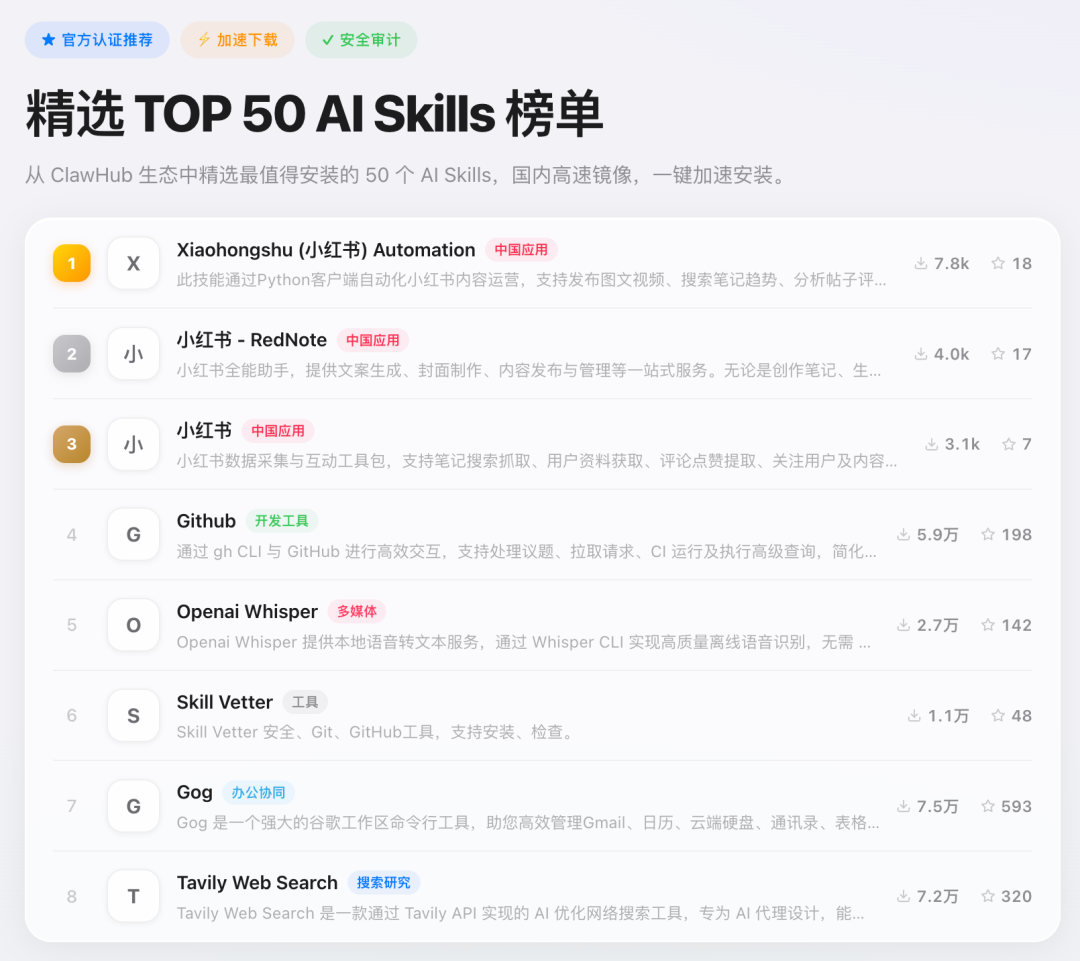
Skillhub

But is a mirror site inherently blameless? The answer is not necessarily.

Because what the open-source license allows, what community ethics accept, and what commercial reality ultimately brings are often three different sets of accounts.

At the license level, as long as the license is followed and the source is credited, many mirroring and redistribution actions are valid. At the community ethics level, Tencent's SkillHub credits the OpenClaw official source and has actively reduced the source site's bandwidth costs, seemingly taking responsibility.

But Tencent forgot that OpenClaw is not a small open-source project needing big tech's deliberate resource injection. It is the hottest project on GitHub with the most stars. In this context, Tencent's action without prior notice becomes "high-handed." It's no longer just a simple mirroring issue but quickly involves three more sensitive questions: Who represents the official ecosystem? Who is taking the user entry point? And who is defining the download, distribution, and statistical metrics?

This is what truly discomforted Peter, who stated that Tencent's behavior directly affects download statistics. Peter isn't opposed to Tencent localizing OpenClaw for China but believes they should have communicated first, rather than building the platform, onboarding users, and then explaining under public pressure that they were actually there to help.

Furthermore, from a commercial reality perspective, once a platform shell like SkillHub gains scale, the official status and statistical authority originally held by the OpenClaw community can easily be marginalized. Today it's a localized Skills platform; tomorrow it could be the "default Skills distribution market"; later, it might be "who decides which Skills are seen, installed, and commercialized."

This is the real danger signal behind this controversy and a scene all too familiar in the Chinese internet over the past decade: the enclosure movement.

Big Tech Isn't "Farming Lobsters"; They're Using Lobsters to Enclose AI Land

In the past period, "farming lobsters" has become the hottest meme in the Chinese AI circle, and OpenClaw has been rapidly pushed into an almost emotional industry symbol. Everyone says lobsters represent the new imagination of the Agent era and the future of personal AI assistants, which sounds very passionate.

But big tech doesn't look at lobsters with idealism; they see entry points, traffic, distribution power, and the shell of the next-generation operating system.

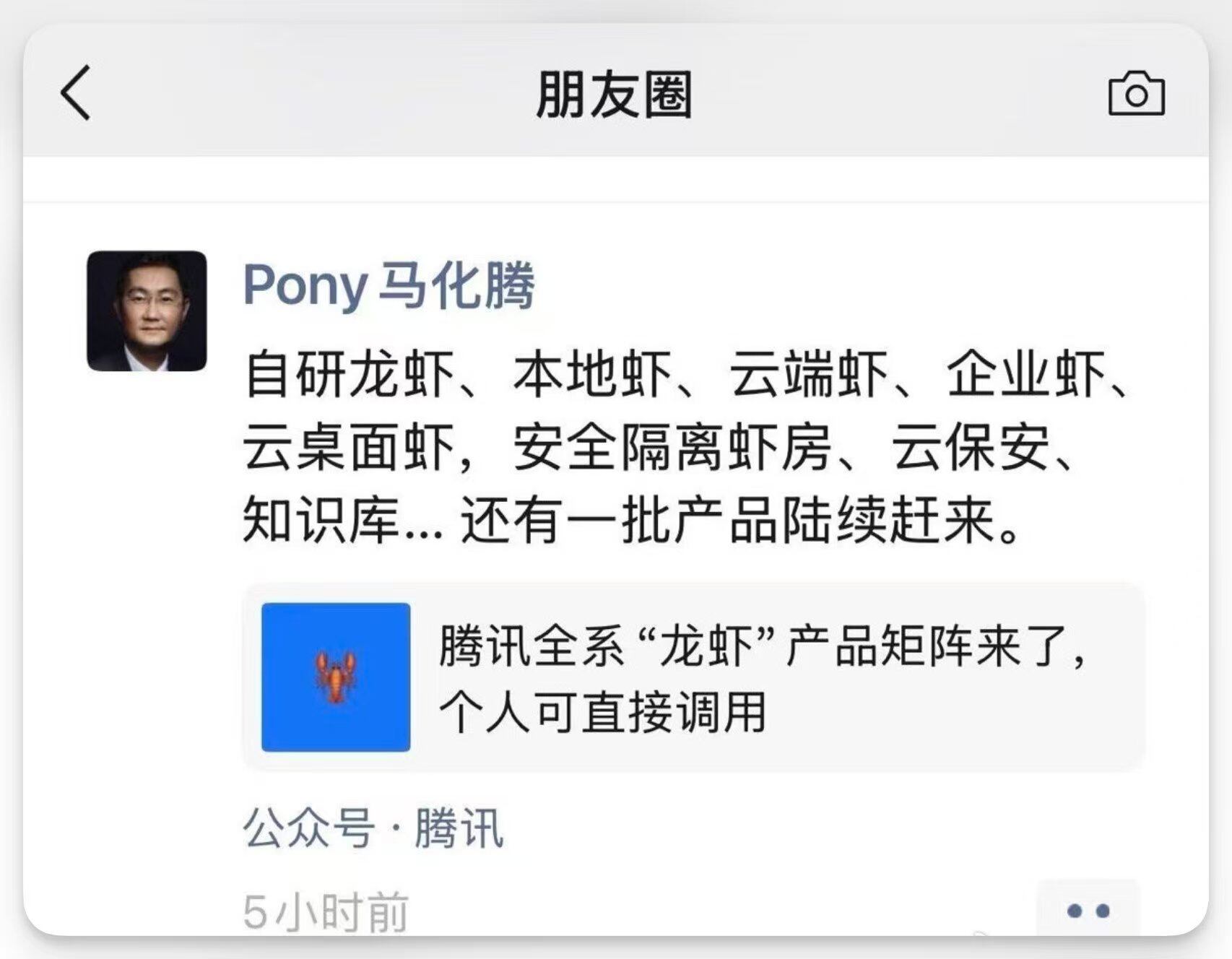
In the early hours of March 11, Pony Ma promoted Tencent's full suite of "lobster" products on his WeChat Moments. Tencent's "Lobster Family Bucket" customizes a "little lobster" for general users, developers, and enterprise users, supporting one-click installation with no threshold. SkillHub was launched simultaneously at this time, built with 13,000 localized Skills for one-click invocation, usable directly in scenarios like Xiaohongshu operations and Baidu search.
Of course, Tencent isn't the only one "smelling the wind and moving." If you stretch the timeline, you'll find that domestic tech giants have almost collectively jumped in to help users solve the "lobster farming"难题, their movements so整齐 they seem to have pressed the same switch, though Tencent is currently the most comprehensive.

On the surface, everyone means well, but in reality, this hides the most familiar path dependency in the commercial playbook of Chinese internet companies. Facing a new ecosystem already validated by the market and heated up by public opinion, the first move isn't about profit and business models, but grabbing the entry point first, building the platform first, onboarding users first.

What Tencent wants is not just to make it easier for Chinese users to "farm lobsters," but to ensure that when Chinese users truly start "using Agents to get things done," their first instinct is to do it within Tencent's product shell.

This is the most intriguing aspect of actions like SkillHub. It表面上 (superficially) is a mirror site, but in essence, it could be the starting point of a larger closed loop. Today users see local Skill search and download; tomorrow it might be default access to some cloud, some account system, some enterprise workbench. Later, developers might slowly realize that although they are still developing within the OpenClaw ecosystem, the real decisions about exposure, recommendation, review, and commercialization paths are made by the platform.

This script has been played out too many times in the Chinese internet. From ride-hailing to food delivery, from short-video platforms to cloud markets, almost every "ecological prosperity"背后 (behind it) has been accompanied by the same structural ending—the platform first uses free, open strategies to attract users, then builds walls, using traffic, advertising, and other means to turn the ecology back into its own附属层 (subsidiary layer).

Big tech companies all know that old entry points like search, social, content, and e-commerce are fiercely competitive to the limit, while Agent might be the most promising new entry point for the next round. In that case, rather than waiting for OpenClaw to grow wildly on its own, it's better to take it over while it's still in its explosive early stages, encapsulate it first, and get users accustomed to "bossing lobsters around" within their own systems.

Therefore, everyone is too familiar with what will happen next after big tech companies争先恐后 (scramble) to help users solve the OpenClaw installation problem. And Peter, who doesn't understand the Chinese internet, naturally can't comprehend why Tencent didn't communicate with him beforehand or synchronize data with him.

OpenClaw originally represented another AI future: local operation, personal control, community extension, open connection. Its most imaginative aspect is making Agents truly the user's own execution layer. But once this ecosystem gets repackaged by big tech with "localized mirrors," "domestic adaptation," "unified distribution," and "security review," the flavor changes. In the product logic of big tech, the entry point belongs to me, distribution belongs to me, so ultimately, payment and commercialization should also belong to me.

To put it more bluntly, big tech companies aren't "embracing lobsters"; they are "using lobsters to enclose territory in the AI era."

And this is the most unsettling aspect behind this small controversy. Walls are never built all at once; they always grow slowly under the guise of "more convenient" and "more stable." By the time developers, users, and traffic are all contained within the same shell, so-called openness and autonomy might ultimately just become a component within the big tech ecosystem.

OpenClaw currently faces the most paradoxical fate in China: The lobster hasn't fully grown yet, but big tech has already started setting up the nets.


Perguntas relacionadas

QWhat was the main criticism raised by OpenClaw founder Peter Steinberger against Tencent?

APeter Steinberger accused Tencent of copying OpenClaw without supporting the project, specifically criticizing their SkillHub platform for not communicating beforehand and potentially affecting official download statistics.

QHow did Tencent respond to the allegations made by the OpenClaw founder?

ATencent stated that SkillHub is a localized Skills platform based on the OpenClaw ecosystem, serving as a mirror site that credited ClawHub as the data source. They claimed to have handled 180GB of traffic for users in the first week while only pulling 1GB from the official source, and expressed willingness to become a sponsor.

QWhat broader concern does the article highlight beyond the technical aspects of mirroring OpenClaw?

AThe article highlights concerns about large tech companies like Tencent potentially seizing user entry points, distribution channels, and statistical control, ultimately leading to a 'walled garden' approach where the platform dictates visibility, installation, and commercialization of Skills, marginalizing the original open ecosystem.

QWhy does the author compare Tencent's actions to a 'land grab' in the AI industry?

AThe author compares it to a 'land grab' because Tencent and other large Chinese tech companies are rapidly integrating OpenClaw into their platforms to control the future AI agent entry points, user habits, and distribution power, rather than purely supporting open ecosystem growth.

QWhat is the ironic situation OpenClaw faces in China according to the article?

AOpenClaw faces the ironic situation where 'the lobster hasn't even grown up yet, but big tech companies are already building fences around it'—meaning the open ecosystem is being enclosed by platforms before it fully matures, risking loss of autonomy and community-driven development.

Leituras Relacionadas

STAR 50 Soars 10.73%, Why Did A-Shares Stage a "V-Shaped Reversal"?

After a prolonged decline, the Chinese A-share market staged a strong rally on July 21. The STAR 50 index surged 10.73%, its largest single-day gain in nearly a year, leading a broad-based "V-shaped" reversal. The Shanghai Composite Index rose 1.79%, the Shenzhen Component Index gained 4.81%, and the ChiNext Index jumped 7.05%. Total market turnover reached 2.97 trillion yuan, an increase of 256.1 billion yuan from the previous session, with over 3,100 stocks advancing. The semiconductor sector spearheaded the rebound, with related ETFs posting significant gains. Analysts attribute the surge to three converging factors. First, coordinated capital inflows from "national team" institutions, insurance funds, listed company buybacks, and fund house self-purchases have bolstered market liquidity and confidence. Second, supportive policy signals, including commitments from regulators to ensure stable market operations, provided a favorable backdrop. Third, a stabilization and recovery in overseas markets, notably South Korea, created a positive external environment. Institutions suggest the most severe panic selling phase for the tech sector has likely passed, following a significant digestion of crowded positions and leveraged funds. While short-term volatility may persist, the medium to long-term outlook remains underpinned by enduring trends like AI computing demand expansion and semiconductor localization. The market's focus now shifts to the sustainability of supportive fund flows, earnings reports, and upcoming catalysts from the global AI industry chain.

marsbitHá 39m

STAR 50 Soars 10.73%, Why Did A-Shares Stage a "V-Shaped Reversal"?

marsbitHá 39m

U.S. Tech Momentum Stocks Post Largest Single-Day Gain Ever, But Is the Plunge Over?

US tech momentum stocks staged a sharp rebound on Tuesday (July 21st). Morgan Stanley's TMT Momentum Factor surged over 12%, marking its largest single-day gain on record, exceeding even peaks from the 2000 dot-com bubble. Key momentum indices from Goldman Sachs also posted their strongest daily performances in years. The rally was led by semiconductors, with the Philadelphia Semiconductor Index jumping 4.6%. This rebound followed three consecutive down days and a cumulative 33% plunge in momentum stocks, one of the steepest drawdowns since the dot-com era. Analysts attribute the surge largely to a short squeeze. Heavy selling had pushed high-beta momentum stocks into deeply oversold territory, forcing many short sellers, particularly in Asia, to cover their positions, creating a self-reinforcing buying spiral. However, the rebound's internals appear weak. Trading volume was notably low, and advancing stocks still lagged decliners on the S&P 500, indicating a narrow, concentrated rally rather than broad market participation. Diverging views emerge on the outlook. BTIG warns the bounce has hit key resistance and recommends selling into strength, citing extreme volatility and historical parallels to past market tops. Conversely, Goldman Sachs and UBS believe the momentum unwind is nearing its end, suggesting it may be time to gradually add exposure, as positioning has been significantly reduced. They caution, however, that high volatility warrants a measured approach, potentially using defined-risk strategies. The upcoming earnings season, particularly reports from major tech firms like Alphabet, is seen as a critical test for the rally's sustainability. Simultaneously, bond markets flashed a warning, with yields rising partly due to spiking oil prices. Analysts note that if long-term Treasury yields break decisively higher, it could pose a significant headwind for equities, especially growth stocks.

marsbitHá 46m

U.S. Tech Momentum Stocks Post Largest Single-Day Gain Ever, But Is the Plunge Over?

marsbitHá 46m

U.S. Tech Momentum Stocks Record Largest Single-Day Gain Ever, but Has the Rout Ended?

U.S. tech momentum stocks staged a dramatic rebound on Tuesday, July 21st. Key momentum indices like the Morgan Stanley TMT Momentum Factor and Goldman Sachs' High Beta Momentum Long Index posted historic or near-historic single-day gains, fueled largely by semiconductor stocks. This sharp rally followed a severe three-day sell-off that saw momentum stocks plunge 33%, marking one of the steepest pullbacks since the dot-com bubble. Analysts attribute the bounce primarily to a short squeeze, as forced covering from over-leveraged traders, particularly in Asia, created a buying spiral. However, the rally's health is questioned due to weak market breadth—overall trading volume was low, and decliners outnumbered advancers in the S&P 500 despite the index's gain—suggesting a narrow, concentrated surge rather than broad recovery. Opinions on the sustainability diverge. BTIG strategists warn the rebound has hit key resistance levels, citing extreme volatility and historic stock dispersion as signs of an ongoing broader correction, and recommend selling into strength. Conversely, Goldman Sachs and UBS view the aggressive momentum unwinding as nearing its end, noting reduced positioning and a lack of new fundamental catalysts. They suggest the sell-off presents a selective opportunity to add exposure, albeit cautiously and gradually using defined-risk strategies. The immediate trajectory hinges on the ongoing earnings season, with market focus on Alphabet's capital expenditure guidance for AI investment clarity. Meanwhile, bond markets present a risk, with rising Treasury yields—potentially heading toward 5.5%—and widening credit spreads for mega-cap tech companies posing a threat to equity valuations. The combination of technical factors, earnings results, and macro conditions leaves the durability of the rebound in doubt.

链捕手Há 49m

U.S. Tech Momentum Stocks Record Largest Single-Day Gain Ever, but Has the Rout Ended?

链捕手Há 49m

Long-Divided Must Unite, Long-United Must Divide: When L1 Becomes Its Own Rollup, What Is Ethereum's Endgame?

"The Inevitable Cycle: When L1 Becomes Its Own Rollup – What is Ethereum's Endgame?" For years, the Ethereum community grappled with concerns that L2s were fragmenting the ecosystem and eroding L1's value. While L2s provided cheaper execution, they also splintered liquidity and the unified user experience of a single chain. This has prompted a fundamental reassessment of the relationship between L1 and L2. Ethereum's roadmap is evolving. The "Scale" initiative merges L1 and L2 expansion into a holistic framework. L1 itself is advancing with higher gas limits, statelessness, and zkEVM verification, no longer content to be just a low-throughput settlement layer. Consequently, the primary value proposition of L2s is shifting from merely providing cheap blockspace to offering L1 cannot easily provide: application-specific optimizations, privacy features, and flexible governance models. L2s are becoming a spectrum of execution environments with varying degrees of security inheritance from Ethereum. A critical challenge in this multi-chain future is interoperability. The vision is to make Ethereum "feel like one chain again." This relies on advancements in native account abstraction (like EIP-7702) and intent-based architectures (Open Intents Framework), where users declare desired outcomes, and solvers handle the complex cross-chain execution. Furthermore, shortening Ethereum's finality time from minutes to seconds is crucial, as it underpins trust between chains for bridges, stablecoins, and cross-chain applications. Perhaps the most provocative idea is that Ethereum L1 itself could become a form of "its own Rollup." As zkEVM and proof systems mature, high-performance nodes could execute transactions and generate validity proofs. Regular validators would then verify these proofs instead of re-executing all transactions. This blurs the traditional L1/L2 hierarchy, making "Rollup" more of a general execution-verification architecture. Native Rollup aims to integrate L2 validation more directly into the Ethereum protocol, allowing L2s to inherit L1's security more fully and move away from reliance on security councils. In the end, L2s are not destined to replace L1 or be made obsolete by it. The likely future is a unified system where diverse execution environments—each optimized for specific use cases like DeFi, gaming, or privacy—coexist. They will share a common foundation of security, liquidity, and verifiable state, seamlessly connected to restore a cohesive user experience. The next phase for Ethereum is not just about scaling through separation, but about intelligently reintegrating what was separated back into a coherent whole.

链捕手Há 1h

Long-Divided Must Unite, Long-United Must Divide: When L1 Becomes Its Own Rollup, What Is Ethereum's Endgame?

链捕手Há 1h

Trading

Spot
活动图片




