Four Outrageous Details Hidden in Justin Sun's Lawsuit Against WLFI

marsbitPublicado em 2026-04-24Última atualização em 2026-04-24

Resumo

Cryptocurrency billionaire Justin Sun has filed a lawsuit against World Liberty Financial (WLFI), accusing its executives of fraud, theft, and other violations. The complaint highlights four key allegations: First, it details the controversial history of WLFI co-founder Chase Herro, including past scams, a prison record, tax liens, and alleged visits to Jeffrey Epstein’s private island. Second, Sun claims WLFI secretly upgraded its smart contract without token holder approval, granting itself the power to freeze and seize WLFI tokens—a move allegedly used against Sun. WLFI defended the action as necessary to protect user interests. Third, the dispute may have been fueled by Sun’s $100 million purchase of TRUMP meme tokens issued by a Trump-affiliated project. WLFI reportedly objected, though the purchase was allegedly approved by a Trump family member involved with both projects. Finally, Sun accuses WLFI of operating an unlicensed money transmission business due to its centralized control over token transfers, potentially violating federal and state laws. WLFI CEO Zach Witkoff dismissed the suit as a desperate distraction from Sun’s own misconduct. Herro did not directly address the allegations.

Written by: Aleks Gilbert

Compiled by: Chopper, Foresight News

Cryptocurrency tycoon Justin Sun wants to maintain good relations with Donald Trump, but he has taken a hard line against the former president's business partners.

In a lawsuit filed on Tuesday, Sun accused World Liberty Financial executives of fraud, theft, and other illegal activities.

These allegations are not couched in lengthy, dry legal jargon. Instead, the complaint emphasizes that World Liberty Financial is facing "collapse and potential bankruptcy" and is struggling to operate.

Sun directs the most damaging content at one person: World Liberty co-founder Chase Herro, whom the complaint describes as a habitual fraudster and tax evader.

Some details have been reported before. And content such as World Liberty's imminent collapse is purely speculative. Nevertheless, this lawsuit will provide ample ammunition for the company's critics, including disgruntled investors and opposition lawmakers waiting to pounce.

When asked about the lawsuit on Wednesday, a spokesperson for World Liberty Financial pointed to a statement posted on social media by the company's co-founder.

The company's CEO, Zach Witkoff, called the lawsuit "a desperate attempt by Justin Sun to divert attention from his own misconduct."

Herro did not directly respond to the lawsuit. He reposted a motivational poem by Rudyard Kipling and Witkoff's statement, captioning it: "Building is never easy; it is often filled with successes and failures, like a huge maze you need to navigate."

Here are the four most noteworthy allegations and details from the 52-page lawsuit.

Herro's Past

Mainstream media reports have previously detailed Herro's checkered history, including a prison record, inflammatory remarks, questionable business practices, and involvement in a DeFi protocol in 2024 that lost almost all of its crypto assets due to a hack.

The complaint includes all of the above and adds several new details.

The complaint states: "Herro's business misconduct was so egregious that around 2010, deceived clients and partners set up a website called ChaseHeroScam.com."

The website was inaccessible on Thursday, and DL News could not verify whether the content mentioned in Sun's complaint existed on the site.

The complaint alleges that Herro has been subject to four federal tax liens, and a tax deed was issued for a property he owned in Florida.

The complaint also states that Herro "publicly boasted" about visiting Little St. James Island, the private island owned by the disgraced financier Jeffrey Epstein. However, the complaint does not provide evidence of this statement, and DL News has not been able to verify whether Herro made such remarks.

"Secret" Upgrade

Since the early stages of the project, holders of World Liberty Financial's governance token, WLFI, have had very limited rights.

According to company documents, token holders have no right to participate in the operation of World Liberty Financial but can vote on upgrades to the underlying technology.

Sun alleges that World Liberty executives broke their promise and unilaterally and quietly carried out two technical upgrades last year without any governance vote or disclosure to WLFI holders.

The upgrade allegedly gave World Liberty Financial the authority to freeze and seize WLFI tokens, and this authority has been used against Sun. Sun describes this upgrade as a devastating move.

"Although the upgrade is queryable on the public blockchain, World Liberty Financial hid it deep in the code, failing to inform token holders of the function's existence and potential impact," the complaint states. "The company secretly added a 'blacklist' function that could be activated at will."

World Liberty Financial stated that the freezing function is only used to protect user rights.

Witkoff said in a statement: "Justin Sun engaged in违规 behavior, and World Liberty Financial had to take action to protect its own and its users' rights. World Liberty Financial will continue to take all necessary measures to protect the community ecosystem."

TRUMP Meme Coin

World Liberty Financial's allegations of Sun's so-called misconduct have been vague. But Sun says company executives provided detailed explanations in private.

The reasons include: executives determined that Sun's selling of tokens caused the WLFI price to drop by 40%, that he违规 purchased tokens on behalf of others, and that he violated the "token purchase agreement," among others.

But the complaint points to another trigger for the conflict: the TRUMP Meme coin.

"World Liberty Financial stated that one of the reasons for freezing the WLFI tokens was dissatisfaction with Sun's purchase of $100 million worth of TRUMP tokens (issued by another Trump-backed project)," the complaint states. Part of the next sentence is redacted, but the ending indicates that something (likely the purchase of TRUMP tokens) "was approved in advance by a member of the Trump family, who is also a partner in both projects."

The complaint does not explain why World Liberty Financial would object to Sun buying TRUMP coins.

Money Transmission Business违规

Last year, two crypto developers were sentenced to prison for operating an unlicensed money transmission business, and another was convicted on the same charge but has not yet been sentenced.

Sun alleges that World Liberty Financial is also in violation of this regulation.

The complaint argues that by granting itself the power to transfer tokens on behalf of others, World Liberty Financial became a money transmitter.

"World Liberty's highly centralized control over WLFI tokens is not only completely contrary to the philosophy of DeFi but also indicates that it is conducting a money transmission business without registration or a license, violating numerous U.S. federal and state criminal laws."

Perguntas relacionadas

QWhat are the four key allegations or details highlighted in Justin Sun's lawsuit against WLFI?

AThe four key details are: 1) Chase Herro's alleged history as a 'recidivist fraudster and tax evader,' including a dedicated scam website and tax liens. 2) A 'secret' protocol upgrade that gave WLFI the power to freeze tokens without a governance vote. 3) A dispute partly fueled by Sun's purchase of $100 million in TRUMP meme coins. 4) An allegation that WLFI was operating an unlicensed money transmission business.

QWhat reason did WLFI's CEO, Zach Witkoff, give for the company's actions against Justin Sun?

AZach Witkoff stated that the lawsuit was a 'desperate attempt by Justin Sun to divert attention from his own misconduct' and that WLFI 'took action to protect itself and its users' from Sun's alleged violations, vowing to take all necessary measures to protect the community.

QAccording to the lawsuit, what was one of the controversial reasons WLFI gave for freezing Justin Sun's tokens?

AOne of the lawsuit claims is that WLFI was dissatisfied with Justin Sun's purchase of $100 million worth of TRUMP meme tokens, which were issued by a different Trump-affiliated project.

QWhat new power did the alleged 'secret upgrade' to the WLFI protocol grant the company?

AThe 'secret upgrade' allegedly granted World Liberty Financial the power to freeze and seize WLFI tokens, a function that was hidden deep within the code and enabled a 'blacklist' function without informing token holders.

QWhat specific federal violation does Justin Sun accuse World Liberty Financial of in the lawsuit?

AJustin Sun accuses World Liberty Financial of operating an unlicensed money transmission business, violating U.S. federal and state criminal laws, due to its highly centralized control over the WLFI tokens which allows it to transfer tokens on behalf of others.

Leituras Relacionadas

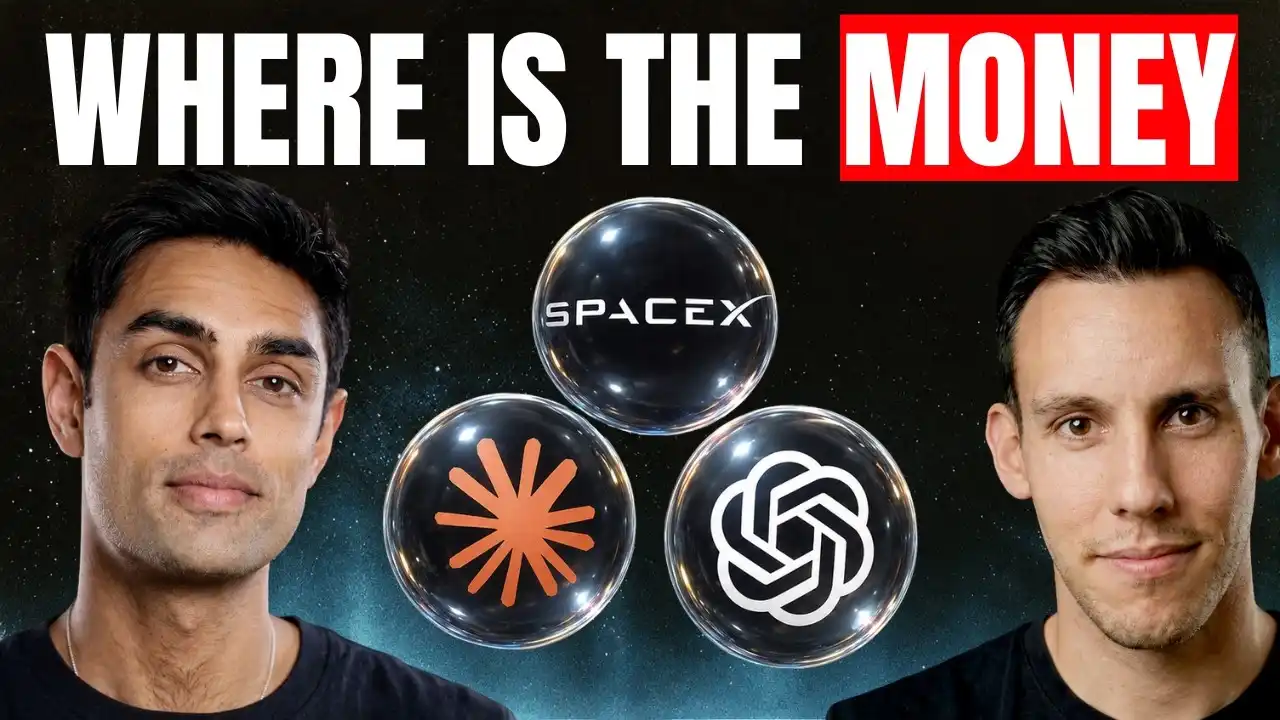
SpaceX, OpenAI, Anthropic: The Three AI Giants Racing for IPO, Which One Is Worth Betting On?

SpaceX, OpenAI, and Anthropic are poised for historic IPOs within weeks, potentially raising a combined $180 billion—a sum exceeding the entire internet bubble's fundraising. The hosts of the Limitless Podcast argue this isn't just individual company financing but an unprecedented capital concentration for AI infrastructure, driven by an insatiable need for compute, data centers, power, and chips. SpaceX's IPO is notable for reportedly changing market index rules to allow faster inclusion, potentially funneling trillions in passive retirement funds into its stock, despite its unproven space-based data center business model. In contrast, Anthropic demonstrates explosive growth, with ARR reportedly hitting $45 billion and approaching profitability, fueled by strong enterprise adoption of products like Claude Code. Google's separate $80 billion raise highlights the immense capital pressure, even for giants. The discussion acknowledges bubble risks but leans optimistic. The hosts contend the massive spending is building essential physical infrastructure for the next technological era. A key bottleneck isn't capital but the real-world limits of chip manufacturing and construction speed. As long as demand for AI compute outstrips supply, this investment cycle represents a foundational build-out rather than a purely financial bubble. All three companies are seen as foundational bets on the future, with Anthropic often cited as the most immediately compelling due to its proven revenue trajectory.

marsbitHá 19m

SpaceX, OpenAI, Anthropic: The Three AI Giants Racing for IPO, Which One Is Worth Betting On?

marsbitHá 19m

From 'Old Guys' to 'New Favorites': How AI Is Revaluing Old Infrastructure from Dell to Nokia?

From "Vintage Tech" to "New AI Darlings": How AI Revalues Old Infrastructure One year ago, tech giants like Dell, Nokia, Cisco, and Western Data were seen as slow-growth, low-valuation stories, far from the AI spotlight dominated by players like Nvidia. Now, these legacy tech stocks are gaining market attention, sparking debate on whether this is genuine industry revaluation or a temporary narrative. As AI moves from model parameters to real-world data centers, the market is recognizing companies with proven delivery and infrastructure capabilities. This shift marks a change in the AI investment thesis: from pure model and GPU focus to the complex systems engineering required for deployment. Companies like Dell, HPE, and Corning are being revalued not for being "sexy" AI innovators, but for their decades of accumulated expertise in supply chains, enterprise delivery, and infrastructure—assets that have become critical in the AI buildout phase. The revaluation is unfolding across three key infrastructure lines: 1. **Servers & System Integration:** Dell and HPE are emerging as crucial system integrators or "general contractors" for AI data centers, translating GPU orders into complete, deployable server racks integrated with power, cooling, and networking. 2. **Networking & Connectivity:** AI's scale demands robust high-speed connections. Corning (fiber optics), Nokia (AI-RAN, 6G), and Cisco (data center switches) are gaining importance for enabling efficient data transfer within and between AI clusters. 3. **Storage:** Beyond high-speed memory (HBM/DRAM), the AI data explosion is driving demand for high-capacity hard drives (HDDs) from companies like Western Digital and Seagate to handle training data, logs, and cold storage cost-effectively. For this revaluation to be substantive and not just a narrative, three criteria are key: 1) Concrete AI-related order and revenue growth (e.g., Dell's AI server sales), 2) Upward revisions to company financial guidance, and 3) Sustainable improvements in profit quality, not just top-line revenue spikes. In essence, AI's transition to a real construction phase is re-pricing "old assets" against "new demand." The opportunity, however, is selective. Only those legacy firms that are demonstrably integrated into the capital expenditure chains of data center and enterprise AI deployment are likely to experience a true "logic re-rating" rather than just a temporary valuation bounce.

marsbitHá 25m

From 'Old Guys' to 'New Favorites': How AI Is Revaluing Old Infrastructure from Dell to Nokia?

marsbitHá 25m

The Merger of Codex and ChatGPT Marks the Beginning of a Major Reshuffle in Programming Tools

OpenAI is shifting its strategic focus from ChatGPT to Codex, merging them along with the browser tool Atlas into a unified desktop super-app. This move signals an internal belief that Codex, originally a programming tool, represents the next evolution of AI more than conversational models like ChatGPT. Over the past year, Codex's weekly active users have surged past 5 million. The key distinction is that while ChatGPT answers questions, Codex executes tasks. Enterprises increasingly value this ability to get work done over simply receiving advice. Consequently, Codex is attracting professionals beyond developers, including analysts, bankers, marketers, and product managers. OpenAI's reorganization and increased investment in Codex stem from recognizing that the future of AI competition lies in execution capabilities, not just conversation. The company is launching role-specific plugins (e.g., for data analysis, sales, design) to transform Codex into a broad knowledge work platform that automates and redefines white-collar workflows. Beyond being a tool, Codex reflects OpenAI's ambition to redefine software. New features like "Sites"—which generates interactive websites from documents—and collaborative "Annotations" aim to create a paradigm where the AI understands the goal and handles the tools and steps, functioning more like a digital colleague than traditional software. The ultimate goal is a unified experience where the user cares only about the completed task.

marsbitHá 34m

The Merger of Codex and ChatGPT Marks the Beginning of a Major Reshuffle in Programming Tools

marsbitHá 34m

Interpreting Investment Opportunities in the Age of Great Navigation, Invesco Great Wall Fund Releases '2026 Report on Chinese Enterprises Going Global'

Invesco Great Wall Fund has released its "2026 China Corporate Globalization Report," titled "The 'Great Navigation Era' of Chinese Enterprises." The report analyzes the new trends and investment opportunities as Chinese companies expand globally, moving from simple product exports to comprehensive overseas operations involving services, branding, and local production. Driven by factors like trade friction, the pursuit of higher profit margins abroad, and policy support, globalization is becoming essential for Chinese companies. The report outlines an evolution: from early product export ("Globalization 1.0") to the current "Globalization 2.0," characterized by overseas capacity, capital goods investment, consumer brand expansion, and service exports. Chinese firms' competitive advantages are highlighted, including a vast engineer talent pool, low-cost and robust infrastructure, and complete industrial clusters. Specific sectors with significant出海 potential are identified: * **Capital Goods** (e.g., engineering machinery, power equipment): Benefiting from global demand, especially in Belt & Road markets and the AI-driven power grid upgrade cycle. * **Consumer Brands**: Transitioning from cost to brand advantage, leveraging供应链 efficiency. * **Technology & Innovation**: Including AI applications, optical modules within global tech supply chains, and new energy vehicles focusing on local production. * **Pharmaceuticals**: Chinese biotech firms are becoming preferred partners for global pharma, with potential for breakthrough drugs in areas like oncology and weight loss. The report concludes that corporate globalization represents a sustained, core theme for China's capital markets, though companies must navigate challenges like geopolitics and localization.

marsbitHá 46m

Interpreting Investment Opportunities in the Age of Great Navigation, Invesco Great Wall Fund Releases '2026 Report on Chinese Enterprises Going Global'

marsbitHá 46m

Trading

Spot
Futuros

Artigos em Destaque

Como comprar SUN

Bem-vindo à HTX.com!Tornámos a compra de SUN (SUN) simples e conveniente.Segue o nosso guia passo a passo para iniciar a tua jornada no mundo das criptos.Passo 1: cria a tua conta HTXUtiliza o teu e-mail ou número de telefone para te inscreveres numa conta gratuita na HTX.Desfruta de um processo de inscrição sem complicações e desbloqueia todas as funcionalidades.Obter a minha contaPasso 2: vai para Comprar Cripto e escolhe o teu método de pagamentoCartão de crédito/débito: usa o teu visa ou mastercard para comprar SUN (SUN) instantaneamente.Saldo: usa os fundos da tua conta HTX para transacionar sem problemas.Terceiros: adicionamos métodos de pagamento populares, como Google Pay e Apple Pay, para aumentar a conveniência.P2P: transaciona diretamente com outros utilizadores na HTX.Mercado de balcão (OTC): oferecemos serviços personalizados e taxas de câmbio competitivas para os traders.Passo 3: armazena teu SUN (SUN)Depois de comprar o teu SUN (SUN), armazena-o na tua conta HTX.Alternativamente, podes enviá-lo para outro lugar através de transferência blockchain ou usá-lo para transacionar outras criptomoedas.Passo 4: transaciona SUN (SUN)Transaciona facilmente SUN (SUN) no mercado à vista da HTX.Acede simplesmente à tua conta, seleciona o teu par de trading, executa as tuas transações e monitoriza em tempo real.Oferecemos uma experiência de fácil utilização tanto para principiantes como para traders experientes.

541 Visualizações TotaisPublicado em {updateTime}Atualizado em 2025.03.21

Como comprar SUN

Discussões

Bem-vindo à Comunidade HTX. Aqui, pode manter-se informado sobre os mais recentes desenvolvimentos da plataforma e obter acesso a análises profissionais de mercado. As opiniões dos utilizadores sobre o preço de SUN (SUN) são apresentadas abaixo.

活动图片