Former FTX Employee Secures $35 Million in Funding, This Time They Built a Special Exchange

marsbitPublicado em 2025-12-25Última atualização em 2025-12-25

Resumo

Former FTX US President Brett Harrison's fintech firm, Architect Financial Technologies, has raised $35 million in Series A funding at a $187 million valuation. The round was led by MIAX and Tioga Capital, with participation from ARK Invest, Galaxy Ventures, VanEck, and Coinbase Ventures, among others. Founded in January 2023, Architect aims to bridge traditional and digital asset markets by offering brokerage services, trading technology, and post-trade solutions for institutional clients. A key product is AX, a perpetual futures exchange for traditional assets like forex, interest rates, and metals—bypassing strict U.S. crypto regulations. The platform provides API-driven tools, multi-asset brokerage, and compliance with U.S. financial standards. Architect, which operates as a B2B infrastructure provider rather than a crypto exchange, targets hedge funds and asset managers seeking to integrate TradFi and DeFi. Harrison, a Harvard graduate and ex-Jane Street executive, left FTX US in early 2022 before its collapse. Architect’s focus on regulated, institutional-grade technology positions it to capitalize on the convergence of traditional and blockchain-based finance.

Original Author: 1912212.eth, Foresight News

On December 23, Architect Financial Technologies (hereinafter referred to as Architect), a fintech company founded by former FTX US president Brett Harrison, completed a $35 million Series A funding round, reaching a valuation of $187 million. This round was led by MIAX and Tioga Capital, with participation from ARK Invest, Galaxy Ventures, VanEck, Coinbase Ventures, CMT Digital, and others. As early as February 2024, Architect completed a $12 million funding round led by BlockTower and Tioga Capital.

In the current bear market for cryptocurrencies, gaining the favor of venture capitalists and securing tens of millions of dollars in funding is quite rare across the entire industry. What makes Architect stand out?

Centralized Traditional Asset Perpetual Contract Exchange AX

Architect was established in January 2023, right as the aftershocks of the FTX collapse were still being felt. The company aims to bridge centralized and decentralized digital asset markets, helping financial institutions efficiently handle trading and post-trade processing for asset classes such as stocks, ETFs, futures, and options.

Specifically, Architect's platform covers three main modules: brokerage services, trading technology, and post-trade solutions. First, its brokerage business provides multi-asset brokerage services under US regulation, supporting stocks, stock options, futures, and futures options. The platform is equipped with a full-featured API, SDKs in various programming languages (such as Rust, Python, JavaScript), paper trading simulations, execution algorithms, and customizable trading dashboards. Users can access major global markets, including CME Group, Cboe, Nasdaq, Coinbase Derivatives, and the NYSE. This makes Architect a one-stop portal for institutional investors to access both traditional and digital assets.

In September 2023, Architect was approved by the National Futures Association (NFA) to register as an independent introducing broker, allowing it to provide derivatives brokerage services.

Secondly, one of Architect's core products is AX—a perpetual futures exchange specifically designed for traditional assets. Perpetual futures are widely popular in the crypto market, but in the US regulatory environment overseen by the SEC and CFTC, perpetual contracts for crypto assets face strict restrictions. AX cleverly sidesteps this pain point by focusing on perpetual contracts for traditional financial asset classes such as foreign exchange, interest rates, and metals.

Finally, the Post-Trade module, targeting digital assets and derivatives, provides advanced post-trade reconciliation, real-time profit and loss tracking, and detailed transaction cost analysis (TCA). This service is particularly suitable for hedge funds, family offices, asset managers, and trading firms, helping them optimize operational efficiency.

Overall, Architect's platform emphasizes flexibility in self-custody and custody options, supports multi-language APIs, and facilitates developers in building custom execution algorithms, streaming market data, and position management tools. The company also has its own regulatory entities: Architect Financial Derivatives LLC (NFA ID 0556853) and Architect Securities LLC (an SEC-registered broker-dealer and FINRA/SIPC member), ensuring all operations comply with US financial regulatory standards.

From a business model perspective, Architect is not a crypto exchange but rather more like a FinTech infrastructure provider. It does not issue tokens, does not rely on community governance, and instead profits through trading fees and similar means. This B2B-oriented strategy makes it more resilient in a bear market, avoiding the severe volatility of cryptocurrency prices.

According to the company's website, Architect's target customer base is institutional players, such as hedge funds and asset management groups, who need reliable technology stacks to bridge TradFi and DeFi. The integration of traditional assets and Crypto is already a trend, and SEC Chairman Paul Atkins predicts that within the next two years, the entire US financial market might migrate to blockchain-based technology.

Impressive Resume, Left Before the FTX Collapse

Architect founder Brett Harrison has extensive fintech experience. His career trajectory is exemplary: from traditional high-frequency trading to a crypto leadership role, and then to independent entrepreneurship.
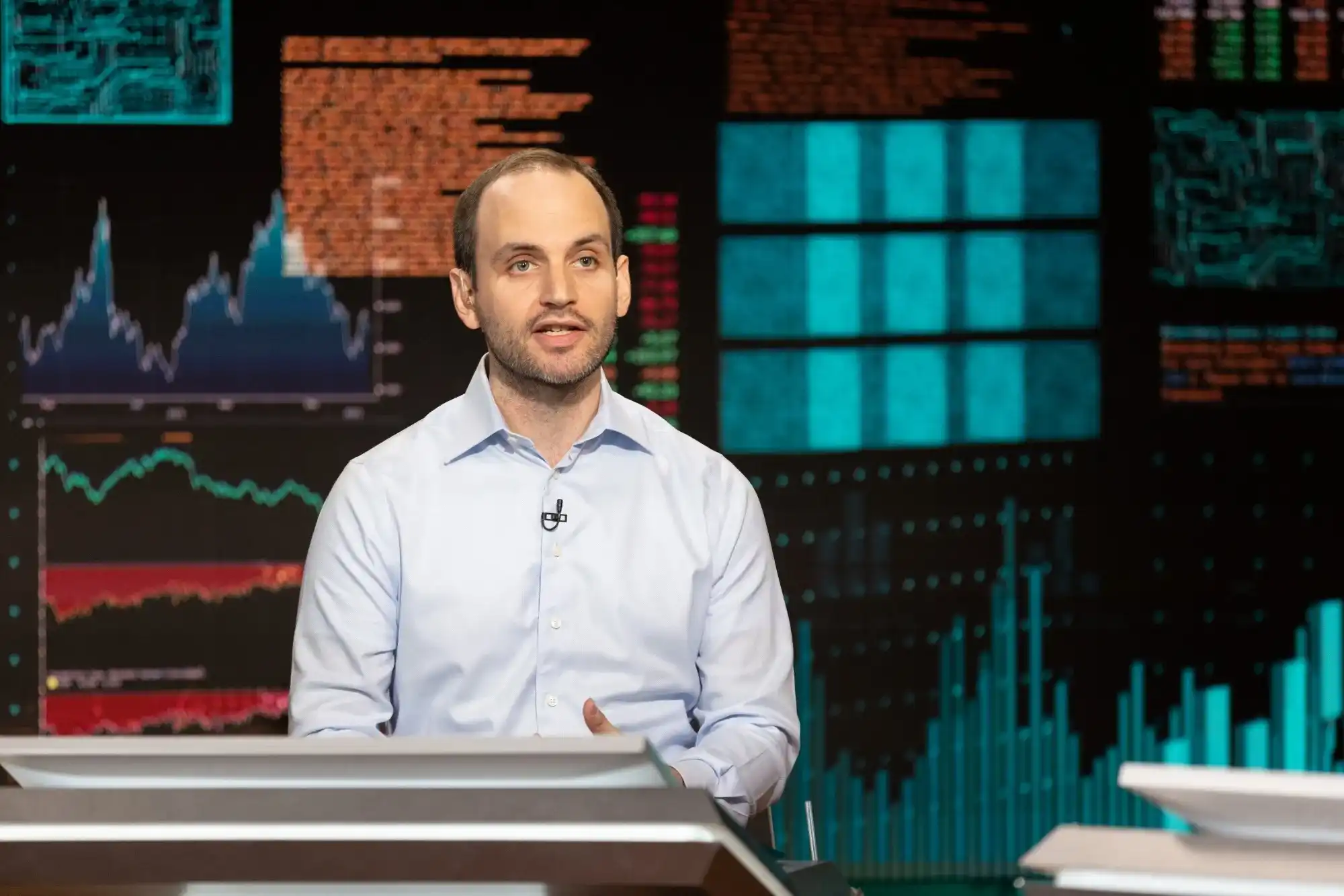
Harrison graduated from Harvard University with a Bachelor's and Master's degree in Computer Science. His career began at the top quantitative trading firm Jane Street, where from August 2010 to April 2021, he served as Head of Trading Systems Technology, responsible for building high-performance trading infrastructure. This experience gave him core skills in low-latency systems, algorithmic execution, and risk management.

In May 2021, Harrison joined FTX US as President, responsible for the expansion of the US business. At the time, FTX was at its peak, and he led the platform's technological upgrades and product innovations, including the development of derivatives tools. However, in January 2022, months before the FTX collapse, Harrison announced his resignation. In a public letter, he stated that the departure stemmed from management disagreements with founder SBF, not financial issues. According to the FTX report, it was due to a "lack of proper authorization, formal management structure, and key personnel."

This departure was seen as foresight, avoiding subsequent legal entanglements. During his time at FTX US, Harrison drove the platform's institutional transformation, attracting many traditional investors. Just months after leaving, Harrison founded Architect in January 2023 and completed a $5 million seed funding round the following month, with participation from Coinbase Ventures and others.

Currently, its AX exchange has opened its whitelist registration to both individual and institutional users.

In the macro environment of late 2025, Architect's rise is timely, coinciding with a collective surge in gold, silver, and stock assets. While the entire crypto asset market is languishing, tapping into the most profitable and fastest-growing markets, with compliance and technology as support, might be doing the right thing in the right direction.


Perguntas relacionadas

QWhat is Architect Financial Technologies and what recent funding milestone did it achieve?

AArchitect Financial Technologies is a fintech company founded by former FTX US president Brett Harrison, focusing on bridging centralized and decentralized digital asset markets. It recently completed a $35 million Series A funding round at a valuation of $187 million.

QWhat is the core product offered by Architect, and how does it differ from typical crypto exchanges?

AArchitect's core product is AX, a perpetual futures exchange designed for traditional assets like forex, interest rates, and metals, rather than cryptocurrencies. Unlike typical crypto exchanges, it operates as a B2B fintech infrastructure provider, emphasizing compliance, institutional services, and avoiding token issuance or community governance.

QWho led the Series A funding round for Architect, and which notable firms participated?

AThe Series A funding round was co-led by MIAX and Tioga Capital, with participation from ARK Invest, Galaxy Ventures, VanEck, Coinbase Ventures, CMT Digital, and others.

QWhat regulatory approvals has Architect obtained to operate its services?

AArchitect has registered as an independent introducing broker with the National Futures Association (NFA) and operates through its regulated entities: Architect Financial Derivatives LLC (NFA ID: 0556853) and Architect Securities LLC (an SEC-registered broker-dealer and FINRA/SIPC member).

QWhat is Brett Harrison's professional background prior to founding Architect?

ABrett Harrison has a computer science degree from Harvard and previously worked as the head of trading systems technology at Jane Street. He later served as president of FTX US before resigning in January 2022, months before FTX's collapse, due to management disagreements with founder SBF.

Leituras Relacionadas

Trade.xyz's Rebase Refusal Sparks Controversy, On-Chain Pre-IPO Market Faces Major Pricing Test

The debate surrounding Trade.xyz's refusal to adjust its SPCX (SpaceX pre-IPO) perpetual contract pricing amid updated share count revelations highlights a key challenge for on-chain pre-IPO markets. While several centralized exchanges (CEXs) paused and repriced their contracts after SpaceX's filing showed a ~10% increase in total shares, Trade.xyz maintained its market-driven pricing logic, which tracks expected per-share price sentiment rather than fundamental valuation metrics like market cap. This discrepancy triggered cross-platform arbitrage and caused leveraged long positions on Trade.xyz to suffer significant losses, as the platform's HIP-3 architecture lacks a native "Rebase" mechanism to neutrally adjust all user positions following such corporate actions. The incident underscores the difficulty for decentralized perpetual exchanges (Perp DEXs) to implement Rebase—a process CEXs handle by centrally pausing markets and adjusting ledger data. On-chain, this requires complex smart contract modifications, increasing gas costs, complexity, and potential attack surfaces. While some DEXs have managed similar adjustments, Trade.xyz's current design does not natively support it, though the team is reportedly exploring solutions for future events like stock splits. Ultimately, the controversy serves as a critical case study for the nascent on-chain pre-IPO sector, raising questions about price discovery reliability, transparent rule disclosure, and the readiness of DeFi infrastructures to handle traditional corporate actions as real-world assets (RWAs) gain traction.

marsbitHá 9m

Trade.xyz's Rebase Refusal Sparks Controversy, On-Chain Pre-IPO Market Faces Major Pricing Test

marsbitHá 9m

The 'Middle Eastern Prince' Swindles a Wealthy Woman: Renting Planes and Rolls-Royces, Scamming 120 Million Over Three Years

Two brothers who posed as "Middle Eastern princes" have been sentenced in the United States to 24 and 23 years in prison, respectively, and ordered to pay over $21.2 million in restitution and back taxes. Over three years, they fraudulently obtained approximately $21 million, primarily by promoting fictitious investment projects, including a non-existent cryptocurrency mining operation in a former General Electric industrial park in East Cleveland. The brothers, aged 42 and 33, created elaborate personas: one claimed to be a wealthy royal family heir and the city's "International Economic Advisor," while the other posed as a hedge fund manager with expertise from watching the TV show *Billions*. They bolstered their image by renting luxury cars and private jets and cultivating a relationship with a local mayor's chief of staff, who provided official-looking documents and government event access. A significant portion of the victims' funds, about $18 million, came from a single Chinese investor, a woman from Sichuan with experience in Bitcoin mining. The brothers also defrauded several women, including one former girlfriend. Their scheme unraveled when the primary investor discovered her $6 million worth of mining equipment had been sold off. The case highlights a trend of impostors using fabricated "Middle Eastern royal" identities to target wealthy individuals. Similar incidents include a "Dubai prince" who recently promoted a $500 million family office in Hong Kong and a Colombian man who impersonated a Saudi prince for decades in the US before being caught and sentenced in 2019.

marsbitHá 23m

The 'Middle Eastern Prince' Swindles a Wealthy Woman: Renting Planes and Rolls-Royces, Scamming 120 Million Over Three Years

marsbitHá 23m

a16z Partner: Being in the Flow of Capital Is the True Moat

A16z Partner: Standing in the Cash Flow is the True Moat Historically, many of the strongest companies built their moats by positioning themselves within "cash flows"—facilitating value creation and transfer in a network and taking a cut. The more value flows, the larger they grow. Crypto is the first modern technology natively built for this. With open ledgers, programmable settlement, and stablecoins enabling internet-speed global value transfer, it allows startups to inherit network effects from day one. Well-designed tokens align users, developers, and the protocol towards network growth, distributing value to contributors. This model isn't new (e.g., railroads, Visa, Google, AWS) but Crypto democratizes it. It lets entrepreneurs target areas with high inefficiency and profit extraction—like traditional finance's payments, custody, FX, and settlement—to compress costs, increase speed, and redistribute value by standing in the new flow. The opportunity extends beyond finance to emerging markets like GPU/compute, AI training data, energy, and space, where new, programmable infrastructure can be built without legacy constraints. Key questions for founders: Are you already in the cash flow? Does your revenue scale 10x with network activity? Where is profit extraction highest relative to value created in your market? The strategy is clear: compress the old cost structure, position yourself in the new value stream, and let the network compound.

marsbitHá 50m

a16z Partner: Being in the Flow of Capital Is the True Moat

marsbitHá 50m

Capturing 15 Top-Tier Zero-Day Vulnerabilities: A Consensus Protocol Debug Agent Framework Built by 0G Lab in Collaboration with Teams from NUS, PKU, and BUPT

"Agents Capture 15 Critical Zero-Day Bugs: 0G Lab's Multi-Agent Framework Automates Debugging in Consensus Protocols" Distributed consensus protocols are notoriously difficult to debug due to complex, intertwined states. A novel framework, Agora, developed by 0G Labs with researchers from NUS, Peking University, and Beijing University of Posts and Telecommunications, tackles this by fusing deep domain expertise with a collaborative multi-agent LLM architecture. Agora moves beyond the limitations of single LLMs and traditional testing like fuzzing. It employs three specialized agents: an Orchestrator for global state, a Strategy agent for generating attack scenarios using distributed systems knowledge, and a TestGen agent that creates executable tests. A core innovation is its efficient "Succinct Memory & Communication" mechanism and a dynamic test harness. This allows the system to translate abstract hypotheses into concrete tests across languages like Go and Rust, run them, capture failures, and refine the approach in a closed loop—all with minimal token overhead. In rigorous evaluations on production-level protocols including Raft, EPaxos, and components from etcd and Sui, Agora discovered 15 previously unknown deep logic bugs (e.g., execution divergence, liveness violations). In stark contrast, powerful standalone LLMs like GPT-5.2 and Claude 4.5 found zero such bugs. Agora achieved this with a high precision of 73.9% and at an average cost of only about $40 per bug found. The framework demonstrates high generalizability. Its decoupled design allows the "Multi-Agent + Hypothesis-Driven Testing" paradigm to be applied to other complex domains like database concurrency control, OS kernels, and Web3 smart contract auditing. By enabling efficient, automated detection of deep logic flaws, Agora points the way for AI-powered security in critical infrastructure, aligning with the growing trends of agentic systems and automated quality control.

marsbitHá 54m

Capturing 15 Top-Tier Zero-Day Vulnerabilities: A Consensus Protocol Debug Agent Framework Built by 0G Lab in Collaboration with Teams from NUS, PKU, and BUPT

marsbitHá 54m

Trading

Spot
Futuros

Artigos em Destaque

Como comprar BILL

Bem-vindo à HTX.com!Tornámos a compra de Billions Network (BILL) simples e conveniente.Segue o nosso guia passo a passo para iniciar a tua jornada no mundo das criptos.Passo 1: cria a tua conta HTXUtiliza o teu e-mail ou número de telefone para te inscreveres numa conta gratuita na HTX.Desfruta de um processo de inscrição sem complicações e desbloqueia todas as funcionalidades.Obter a minha contaPasso 2: vai para Comprar Cripto e escolhe o teu método de pagamentoCartão de crédito/débito: usa o teu visa ou mastercard para comprar Billions Network (BILL) instantaneamente.Saldo: usa os fundos da tua conta HTX para transacionar sem problemas.Terceiros: adicionamos métodos de pagamento populares, como Google Pay e Apple Pay, para aumentar a conveniência.P2P: transaciona diretamente com outros utilizadores na HTX.Mercado de balcão (OTC): oferecemos serviços personalizados e taxas de câmbio competitivas para os traders.Passo 3: armazena teu Billions Network (BILL)Depois de comprar o teu Billions Network (BILL), armazena-o na tua conta HTX.Alternativamente, podes enviá-lo para outro lugar através de transferência blockchain ou usá-lo para transacionar outras criptomoedas.Passo 4: transaciona Billions Network (BILL)Transaciona facilmente Billions Network (BILL) no mercado à vista da HTX.Acede simplesmente à tua conta, seleciona o teu par de trading, executa as tuas transações e monitoriza em tempo real.Oferecemos uma experiência de fácil utilização tanto para principiantes como para traders experientes.

248 Visualizações TotaisPublicado em {updateTime}Atualizado em 2026.06.02

Como comprar BILL

O que é ATWO

I. Introdução ao ProjetoArena Two é uma plataforma interativa descentralizada que permite aos fãs desempenhar um papel ativo e tokenizado nos resultados de eventos em tempo real. Ao contrário dos modelos tradicionais de transmissão que reduzem os fãs a espectadores passivos, a Arena Two utiliza a tecnologia blockchain para permitir que os fãs votem diretamente em tempo real e influenciem os resultados em campo.II. Informação sobre o TokenNome do token: ATWO(Arena Two)III. Links RelacionadosWebsite:https://arenatwo.com/Exploradores:https://basescan.org/token/0x499D35eBE6cEe9B2Ac35Fd003fcBbeeB9CFc7B32Twitter:https://x.com/arenatwoXNota: A introdução ao projeto provém dos materiais publicados ou fornecidos pela equipa oficial do projeto, que é apenas para referência e não constitui aconselhamento de investimento. A HTX não se responsabiliza por quaisquer perdas diretas ou indiretas resultantes.

226 Visualizações TotaisPublicado em {updateTime}Atualizado em 2026.06.02

O que é ATWO

Como comprar ATWO

Bem-vindo à HTX.com!Tornámos a compra de Arena Two (ATWO) simples e conveniente.Segue o nosso guia passo a passo para iniciar a tua jornada no mundo das criptos.Passo 1: cria a tua conta HTXUtiliza o teu e-mail ou número de telefone para te inscreveres numa conta gratuita na HTX.Desfruta de um processo de inscrição sem complicações e desbloqueia todas as funcionalidades.Obter a minha contaPasso 2: vai para Comprar Cripto e escolhe o teu método de pagamentoCartão de crédito/débito: usa o teu visa ou mastercard para comprar Arena Two (ATWO) instantaneamente.Saldo: usa os fundos da tua conta HTX para transacionar sem problemas.Terceiros: adicionamos métodos de pagamento populares, como Google Pay e Apple Pay, para aumentar a conveniência.P2P: transaciona diretamente com outros utilizadores na HTX.Mercado de balcão (OTC): oferecemos serviços personalizados e taxas de câmbio competitivas para os traders.Passo 3: armazena teu Arena Two (ATWO)Depois de comprar o teu Arena Two (ATWO), armazena-o na tua conta HTX.Alternativamente, podes enviá-lo para outro lugar através de transferência blockchain ou usá-lo para transacionar outras criptomoedas.Passo 4: transaciona Arena Two (ATWO)Transaciona facilmente Arena Two (ATWO) no mercado à vista da HTX.Acede simplesmente à tua conta, seleciona o teu par de trading, executa as tuas transações e monitoriza em tempo real.Oferecemos uma experiência de fácil utilização tanto para principiantes como para traders experientes.

132 Visualizações TotaisPublicado em {updateTime}Atualizado em 2026.06.02

Como comprar ATWO

Discussões

Bem-vindo à Comunidade HTX. Aqui, pode manter-se informado sobre os mais recentes desenvolvimentos da plataforma e obter acesso a análises profissionais de mercado. As opiniões dos utilizadores sobre o preço de A (A) são apresentadas abaixo.

活动图片













