Forget XRP, Market Expert Reveals The Real Winners If The CLARITY Act Is Passed

bitcoinistPublicado em 2026-05-12Última atualização em 2026-05-12

Resumo

Forget XRP, market expert Digital Oil reveals the real winners if the CLARITY Act passes. The legislation, set for a key Senate vote, ends regulatory uncertainty but notably excludes XRP from its list of beneficiaries. The top beneficiaries are: 1) The American public, gaining clearer protections; 2) Ethereum (ETH), poised to be classified as a commodity, attracting institutional investment; 3) Chainlink (LINK), as demand for oracles rises in a regulated market; 4) Circle, issuer of USDC stablecoin, directly impacted by the bill's rules; and 5) Major U.S. exchanges Coinbase and Robinhood, which will operate with greater clarity. Digital Oil further identifies Tom Lee, founder of Bitmine (which holds a massive Ethereum treasury), as the best-positioned individual, with ETH central to the bill's benefits while XRP lags behind.

XRP has been a major topic of discussion since the CLARITY Act was first proposed, with many in the crypto community suggesting that the altcoin could greatly benefit from the bill as a cross-border neutral bridge asset. However, a market expert has outlined several entities and cryptocurrencies he believes would benefit even from this upcoming legislation. He mentions a handful of coins, but XRP is not among his list of winners.

Analyst Picks CLARITY Act Winners, But No XRP

The Digital Asset CLARITY Act was first introduced in 2025, and since then, it has been stuck in months of back-and-forth negotiations because many banking trade groups disagreed with allowing stablecoins to pay interest to holders. They argued it would pull deposits out of the banking system and threaten financial stability. After the prolonged debate,a the bill has reached a final agreement, with stablecoin yield banned but activity-based rewards still allowed.

Now, all that’s left is the scheduled May 14 markup, where the Senate Banking Committee will vote on whether to advance the bill. Once the CLARITY Act is passed, a pseudonymous crypto market expert known as Digital Oil on X has said that there will be five big winners who will benefit significantly.

At the top of his list, he says the American people will be a major winner. This is likely because the bill ends years of regulatory uncertainty, giving US citizens clearer protections and rules when they invest in or use digital assets.

Coming in second is Ethereum (ETH), because as the dominant settlement layer for DeFi, Digital Oil believes that Ethereum stands to gain the most from the bill among all cryptocurrencies, which draws a clean legal line between commodities and securities. With ETH likely to be labeled as a digital commodity, institutional money that has been sitting on the sidelines will finally have the legal clarity needed to move in.

The third winner, Digital Oil, mentioned was Chainlink (LINK). As the leading “oracle network” that connects blockchains to real-world data, Chainlink benefits from a regulated crypto market, which means more institutions building on-chain, and this activity may increase demand for Chainlink.

The next company on the list is Circle (CRCL). As the issuer of USDC, one of the largest stablecoins in the world, Circle is perhaps the most directly affected by the CLARITY Act. The recent compromise in activity-based rewards is an ideal change for Circle.

Lastly, Digital Oil mentions Coinbase (COIN) and Robinhood (HOOD), the two biggest retail-focused crypto exchanges in the US. Coinbase, in particular, was at the center of the CLARITY Act negotiations, and its CEO Brian Armstrong publicly pushed the bill despite rejecting it twice before. Meanwhile, Robinhood has been expanding its crypto offerings, and if the bill passes, the exchange will have a much clearer path to growth.

Bitmine And Tom Lee Named Best Positioned Overall

In a separate post, Digital Oil stated that the “best positioned man and company” after the CLARITY Act is passed is Tom Lee, the founder of Bitmine (BMNR), which holds the world’s largest Ethereum Treasury.

With ETH at the center of the bill’s biggest benefits and XRP falling behind, a company built entirely around accumulating the altcoin is about as well-placed as anyone could be. This is especially true, as the CLARITY Act could soon become crypto’s biggest regulatory moment. Digital Oil reconfirms this, saying Lee “is the best positioned of all!”

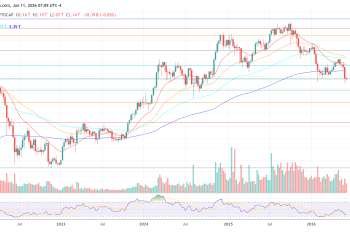
XRP continues to struggle | Source: XRPUSDT on Tradingview.com

Perguntas relacionadas

QAccording to the market expert Digital Oil, what are the five major winners if the CLARITY Act is passed?

AThe five major winners are: 1) The American people, 2) Ethereum (ETH), 3) Chainlink (LINK), 4) Circle (CRCL), and 5) The US crypto exchanges Coinbase (COIN) and Robinhood (HOOD). XRP is notably not included in this list.

QWhy does the market expert believe Ethereum (ETH) would be a major beneficiary of the CLARITY Act?

ABecause Ethereum is the dominant settlement layer for DeFi. The expert believes Ethereum stands to gain the most as the bill is expected to clearly label ETH as a digital commodity, providing the legal clarity needed for sidelined institutional money to enter.

QWhat was the major point of contention that caused prolonged debate over the CLARITY Act?

AThe major point of contention was the initial proposal to allow stablecoins to pay interest to holders. Many banking trade groups disagreed, arguing it would pull deposits out of the banking system and threaten financial stability.

QWho and which company does Digital Oil name as the 'best positioned' overall after the CLARITY Act?

ADigital Oil names Tom Lee, the founder of Bitmine (BMNR), and his company as the best positioned. This is because Bitmine holds the world's largest Ethereum Treasury, and ETH is seen as central to the bill's benefits.

QWhat is the significance of the upcoming May 14 event mentioned in the article for the CLARITY Act?

AOn May 14, the Senate Banking Committee is scheduled to hold a markup, where they will vote on whether to advance the CLARITY Act to the next stage. It is the final step before potential passage.

Leituras Relacionadas

STRC Breaks Below $95: Why Does It Continue to Depeg? Is There Default Risk?

"STRC Falls Below $95: Why the Persistent Depegging and Is There Default Risk?" The article discusses the recent decline in the price of STRC, a perpetual preferred stock issued by Strategy (MSTR) designed to trade around a $100 par value. As of publication, STRC traded at $94.65, raising market concerns. STRC is described as a high-yield cash flow product, offering an 11.50% annual dividend paid monthly. Its "preferred" status grants it priority over common stock for dividends and in liquidation. Key reasons cited for the price depegging include: 1. **Bitcoin's Price Drop:** MSTR's assets are heavily tied to Bitcoin (BTC), which fell over 21% from its recent high, pressuring all Strategy-related products. 2. **Competitive Pressure:** Rival Strive Asset Management's similar product, SATA, offers daily dividends and has maintained its $100 par value with a ~13% yield. In response, Strategy has proposed changing STRC's dividend frequency from monthly to bi-weekly, pending shareholder vote. 3. **Technical Selling:** A break below $100 may have triggered algorithmic selling and stop-losses, exacerbating the decline. Regarding default risk, the analysis suggests it is currently low. Strategy founder Michael Saylor confirmed the June 2026 dividend rate remains at 11.50% with no cuts or suspensions. The company's massive reserve of 843,706 BTC provides a significant backstop for its obligations. Industry opinions are mixed. Some analysts view the BTC holdings as reliable support for dividends, while critics like Peter Schiff warn of potential dividend cuts leading to price crashes and lawsuits. Others highlight inflation risk and the company's ability to reduce dividends without a formal default. In summary, STRC's drop is attributed to BTC volatility, competition, and technical factors. While immediate default risk appears contained, the product faces challenges from market conditions and competitive dynamics.

marsbitHá 1h

STRC Breaks Below $95: Why Does It Continue to Depeg? Is There Default Risk?

marsbitHá 1h

AI Trading Cools, South Korean Stocks Plunge 1.8%, Spot Gold Rises 1%, Bitcoin Dives

A sell-off in AI-related stocks, triggered by Broadcom's disappointing earnings forecast, sent shockwaves through global markets. South Korea's KOSPI led Asia's decline, plunging 1.8% as the risks from concentrated chip stock gains and surging leveraged investments came to the fore. The tech-heavy Nasdaq 100 futures fell 0.5% following Broadcom's 14% after-hours plunge, which signaled a slower-than-expected transition to AI clients. This pullback extended Wall Street's weakness, halting the S&P 500's nine-day rally amid hawkish Fed signals and renewed Middle East tensions. South Korean authorities convened an emergency meeting, pledging "immediate measures" against market volatility and warning of record-high stock margin debt. The adjustment rippled across assets: Bitcoin fell to around $64,000, its lowest since February, while safe-haven gold rose 1% on bargain hunting. Oil prices dipped on Middle East ceasefire news. Market analysts noted the sell-off was driven by profit-taking after massive gains, particularly in chip stocks like Samsung and SK Hynix, which now dominate the KOSPI. Wall Street banks are divided on Korea's outlook, with Goldman Sachs raising its target while Citigroup and others warn of overvaluation and a potential bubble. Bridgewater's Ray Dalio noted that great technological shifts often create bubbles. Meanwhile, Fed officials' hints at potential future rate hikes added to the cautious mood ahead of key U.S. jobs data.

华尔街日报Há 1h

AI Trading Cools, South Korean Stocks Plunge 1.8%, Spot Gold Rises 1%, Bitcoin Dives

华尔街日报Há 1h

Trading

Spot
Futuros

Artigos em Destaque

O que é XRP 2.0

XRP 2.0: Uma Nova Fronteira no Landscape das Criptomoedas Introdução ao XRP 2.0 No reino em constante evolução das criptomoedas, novos projetos surgem continuamente, lutando por atenção e adoção. Uma dessas iniciativas promissoras é o XRP 2.0, um novo projeto de criptomoeda concebido para aproveitar a tecnologia de blockchain avançada e as metodologias de criptografia robustas. Embora o nome tenha paralelos com o XRP da Ripple, é crucial notar que o XRP 2.0 opera de forma independente, focando em melhorar a segurança das transações, a privacidade e a escalabilidade. À medida que o panorama financeiro digital abraça cada vez mais soluções descentralizadas, o XRP 2.0 visa contribuir de forma significativa para a web3 e a expansão global dos projetos de criptomoedas. O que é o XRP 2.0? No seu núcleo, o XRP 2.0 é um projeto de criptomoeda que visa criar um ecossistema de moeda digital seguro e descentralizado. Sua tecnologia fundamental integra princípios de blockchain sofisticados com técnicas de criptografia de ponta. O objetivo abrangente do XRP 2.0 é estabelecer-se como uma plataforma confiável e eficiente que possibilita a execução rápida de transações, priorizando a proteção de privacidade aprimorada para os seus usuários. O projeto é promovido como uma solução para muitas limitações enfrentadas pelas criptomoedas existentes, propondo um sistema que pode lidar com um volume maior de transações com velocidade e privacidade melhoradas. Esta versatilidade posiciona o XRP 2.0 como um concorrente significativo em um mercado repleto de várias moedas digitais. Quem é o Criador do XRP 2.0? A identidade do criador por trás do XRP 2.0 foi identificada como 'Wilbur.' No entanto, detalhes abrangentes sobre Wilbur ou a sua entidade associada permanecem elusivos. O anonimato de muitos criadores de criptomoedas não é um fenômeno incomum na indústria, muitas vezes concebido para manter um grau de privacidade e segurança. Quem são os Investidores do XRP 2.0? Até agora, informações específicas relacionadas às fundações ou organizações de investimento que apoiam o XRP 2.0 não estão disponíveis publicamente. No setor das criptomoedas, o apoio de investidores reputados pode influenciar significativamente a credibilidade e o sucesso de um projeto, no entanto, a transparência em relação aos apoiantes financeiros do XRP 2.0 não foi estabelecida. Como Funciona o XRP 2.0? O XRP 2.0 destaca-se por empregar uma combinação de tecnologia blockchain e algoritmos de criptografia avançados que asseguram transações seguras e descentralizadas. Sua estrutura inovadora inclui características únicas projetadas para fomentar o envolvimento dos usuários e ampliar as funcionalidades além das transações convencionais de criptomoedas. Entre essas características, o XRP 2.0 incorpora capacidades potenciadas por IA, como funcionalidades de texto-para-imagem e texto-para-fala. Estas adições são projetadas para melhorar a experiência interativa dos usuários, promovendo uma maior aplicabilidade em vários setores. Ao unir avanços tecnológicos com um design centrado no utilizador, o XRP 2.0 pretende captar a atenção de uma diversa gama de indivíduos e empresas que procuram integrar soluções de criptomoedas em suas estruturas operacionais. Cronologia do XRP 2.0 Compreender o XRP 2.0 requer examinar os marcos que definiram sua jornada até agora: 23 de Julho de 2023: O XRP 2.0 é apresentado como um novo projeto de criptomoeda, visando revolucionar as capacidades de transação seguras e descentralizadas no domínio do blockchain. 8 de Setembro de 2023: O lançamento de outro projeto, XRP20, ocorre, marcando o surgimento de um token ERC-20 na blockchain Ethereum que permanece não relacionado ao XRP 2.0. 13 de Novembro de 2023: O XRP Ledger passa por uma atualização significativa com o lançamento da versão 2.0.0 do software do servidor rippled. É importante notar que este desenvolvimento está desconectado do projeto de criptomoeda XRP 2.0. Pontos-chave sobre o XRP 2.0 Para destilar a essência do XRP 2.0, vários fatores críticos emergem: Características Únicas: A inclusão de características como texto-para-imagem e texto-para-fala potenciadas por IA diversifica ainda mais as aplicações potenciais do XRP 2.0. Tecnologia Blockchain: A estrutura utiliza mecanismos de blockchain avançados e protocolos de criptografia, assegurando um ambiente seguro e descentralizado para transações. Escalabilidade e Privacidade: O XRP 2.0 prioriza proteção de privacidade aprimorada nos processos de transação e a escalabilidade necessária para acomodar uma base de utilizadores crescente. Sem Afiliação com a Ripple: Importante, apesar do seu nome, o XRP 2.0 não tem qualquer lealdade ou colaboração com o XRP da Ripple, distinguindo sua estrutura operacional e objetivos dentro do ecossistema das criptomoedas. Conclusão O XRP 2.0 representa uma empreitada ambiciosa no domínio das criptomoedas, visando oferecer uma combinação de segurança, privacidade e eficiência em transações digitais. Ao integrar tecnologias sofisticadas e características amigáveis ao utilizador, o projeto propõe-se a ampliar os horizontes do que as criptomoedas podem alcançar na economia digital atual. Embora o anonimato do seu criador e a falta de investidores divulgados possam levantar questões para alguns, o foco do XRP 2.0 em funcionalidades avançadas e descentralização aumenta seu apelo num mercado de criptomoedas cada vez mais congestionado. À medida que o panorama das criptomoedas continua a evoluir, o XRP 2.0 pode ainda emergir como um jogador crucial na expansão de soluções de blockchain seguras e escaláveis.

99 Visualizações TotaisPublicado em {updateTime}Atualizado em 2024.12.03

O que é XRP 2.0

Como comprar XRP

Bem-vindo à HTX.com!Tornámos a compra de XRP (XRP) simples e conveniente.Segue o nosso guia passo a passo para iniciar a tua jornada no mundo das criptos.Passo 1: cria a tua conta HTXUtiliza o teu e-mail ou número de telefone para te inscreveres numa conta gratuita na HTX.Desfruta de um processo de inscrição sem complicações e desbloqueia todas as funcionalidades.Obter a minha contaPasso 2: vai para Comprar Cripto e escolhe o teu método de pagamentoCartão de crédito/débito: usa o teu visa ou mastercard para comprar XRP (XRP) instantaneamente.Saldo: usa os fundos da tua conta HTX para transacionar sem problemas.Terceiros: adicionamos métodos de pagamento populares, como Google Pay e Apple Pay, para aumentar a conveniência.P2P: transaciona diretamente com outros utilizadores na HTX.Mercado de balcão (OTC): oferecemos serviços personalizados e taxas de câmbio competitivas para os traders.Passo 3: armazena teu XRP (XRP)Depois de comprar o teu XRP (XRP), armazena-o na tua conta HTX.Alternativamente, podes enviá-lo para outro lugar através de transferência blockchain ou usá-lo para transacionar outras criptomoedas.Passo 4: transaciona XRP (XRP)Transaciona facilmente XRP (XRP) no mercado à vista da HTX.Acede simplesmente à tua conta, seleciona o teu par de trading, executa as tuas transações e monitoriza em tempo real.Oferecemos uma experiência de fácil utilização tanto para principiantes como para traders experientes.

1.6k Visualizações TotaisPublicado em {updateTime}Atualizado em 2026.06.02

Como comprar XRP

Discussões

Bem-vindo à Comunidade HTX. Aqui, pode manter-se informado sobre os mais recentes desenvolvimentos da plataforma e obter acesso a análises profissionais de mercado. As opiniões dos utilizadores sobre o preço de XRP (XRP) são apresentadas abaixo.

活动图片