Fintech Stablecoins Just Got a Boost in South Korea as Lawmakers Oppose 51% Rule

ccn.comPublicado em 2025-12-23Última atualização em 2025-12-23

Resumo

South Korea is preparing to regulate stablecoins by 2026, with a key debate between the Bank of Korea (BoK) and the Financial Services Commission (FSC). The BoK supports a "51% rule" that would limit the issuance of KRW-backed stablecoins to entities majority-owned by banks, arguing that non-bank issuance could cause chaos. In contrast, the FSC favors a more open approach, allowing fintech companies to participate to encourage innovation. Recently, the Democratic Party of Korea’s Digital Asset Task Force expressed opposition to the BoK’s proposal, siding with the FSC. They argue that restricting stablecoin issuance to banks could hinder innovation and reduce competitiveness with global standards.

Key Takeaways
  • The Bank of Korea wants to limit KRW stablecoin issuance to entities that are at least 51% owned by banks.
  • Meanwhile, the Financial Services Commission (FSC) favors more fintech-friendly stablecoin regulation.
  • With legislation expected in 2026, influential lawmakers have sided with the FSC.

As South Korea prepares to regulate stablecoins in 2026, one question has come to dominate the policy debate.

Should legislation enshrine a role for banks in law, or should South Korea’s stablecoin market be open to a broader range of fintech players?

The latter position recently got a major boost from the Democratic Party of Korea’s Digital Asset Task Force, which looks set to oppose the central bank’s “51% rule.”
New Trending Crypto Wallet Offers
Sponsored
Disclosure
We sometimes use affiliate links in our content, when clicking on those we might receive a commission at no extra cost to you. By using this website you agree to our terms and conditions and privacy policy.

Tangem

promotions
Trusted & Secure
Coins
111
  • Aave
  • Uniswap
  • GMX
  • Pendle
  • Ondo
  • Ankr
  • Fantom
  • Synthetix
  • Curve DAO Token
  • Compound
  • Maker
  • THORChain
  • Stacks
  • Arweave
  • Sui
  • Immutable
  • Optimism
  • Arbitrum
  • VeChain
  • The Sandbox
  • Decentraland
  • Axie Infinity
  • Render
  • The Graph
  • Chiliz
  • Helium
  • PAX Gold
  • Bitcoin
  • Ethereum
  • Tether
  • USD Coin
  • Solana
  • Ripple
  • Dogecoin
  • Cardano
  • Toncoin
  • Shiba Inu
  • Avalanche
  • TRON
  • Chainlink
  • Polygon Matic
  • Polkadot
  • Wrapped Bitcoin
  • Litecoin
  • Dai
  • NEAR Protocol
  • Bitcoin Cash
  • Monero
  • Stellar
  • Cosmos
  • Filecoin
  • Ethereum Classic
  • Aptos
  • Cronos
  • Binance USD
  • Neo
  • APEcoin
  • Gala
  • Theta Network
  • Wrapped Ethereum
  • OKB
  • Pepe
  • Mantle
  • First Digital USD
  • Kaspa
  • Bittensor
  • Celestia
  • XDC Network
  • Artificial Superintelligence Alliance
  • Jupiter
  • Quant
  • Worldcoin
  • PayPal USD
  • Bonk
  • Rocket Pool ETH
  • Flare
  • Tether Gold
  • Sei
  • JITO
  • JasmyCoin
  • PancakeSwap
  • Core
  • Ethereum Name Service
  • SushiSwap
  • 1inch Network
  • Tezos
  • Algorand
  • Flow
  • Trust Wallet Token
  • KuCoin Token
  • MultiversX
  • GateToken
  • Zcash
  • IOTA
  • Basic Attention Token
  • Enjin Coin
  • Frax
  • Ethena
  • Ethena USDe
  • Ethena Staked USDe
  • Kusama
  • Celo
  • STEPN
  • Gemini Dollar
  • UNUS SED LEO
  • Internet Computer
  • EOS
  • BitTorrent
  • Mina
  • Dash
  • Zilliqa
  • Casper
  • TrueUSD
  • Floki Inu
  • IoTex
  • Build'N'Build
No result
Claim Offer

BitBox

promotions
Trusted, Secure & Crypto Friendly
Coins
Claim Offer

Blockstream

promotions
Trusted, Secure & Crypto Friendly
Coins
Claim Offer

South Korea’s 51% Rule for Stablecoin Issuers

Calls to anchor Won-backed stablecoins in the banking sector have been spearheaded by the Bank of Korea (BoK).

For instance, in July, BoK Governor Rhee Chang-yong cautioned that “If we allow non-banks to issue stablecoins, this will cause major chaos.”

To ensure banks have a controlling stake in the new market, the central bank has drawn up draft proposals for the Digital Asset Basic Act that would require stablecoin issuers to be at least 51% owned by licensed banks.

Any such provision would ensure that banking consortia effectively control South Korea’s stablecoin supply, while fintechs would be relegated to the sidelines, only ever able to play a supporting role.

However, as Digital Asset Basic Act negotiations enter the final stretch, powerful forces within the National Assembly are opposed to the 51% rule.

Digital Asset Task Force Opposes Stablecoin Restrictions

Opponents of the BoK’s proposal argue that limiting fintech involvement risks stifling innovation and would bring South Korea out of line with emerging global standards.

For instance, the Financial Services Commission (FSC) is reportedly preparing an alternative legislative draft that doesn’t include the 51% rule.

And there are signs that it has the support of National Assembly lawmakers.

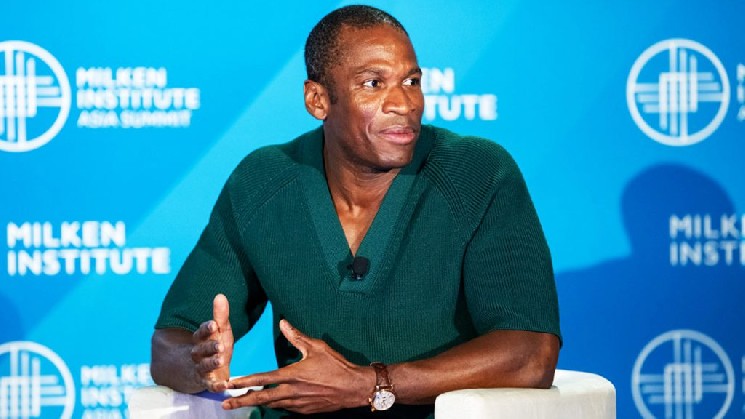
According to Ahn Do-geol, who leads the Digital Asset Task Force, a majority of the 20 experts on the group’s advisory committee expressed concerns about the BoK’s proposal.

“They argue that this governance structure could make it difficult to achieve the innovation and network effects that stablecoins are intended to achieve,” he observed, per local media reports .

“Issuers should be selected based on their ability to advance innovation rather than their institutional classification,” the lawmaker added.

Recommended Secure Partners
  • Safest Exchanges Best Safest (Most Secure) Crypto Exchanges? Check Out These Exchanges
  • File Crypto Taxes Easily Reviews of Top Crypto Tax Software
  • Play Crypto Poker Best PvP Crypto Poker Sites

Criptomoedas em alta

Perguntas relacionadas

QWhat is the '51% rule' proposed by the Bank of Korea for stablecoin issuance?

AThe '51% rule' is a draft proposal from the Bank of Korea that would require any entity issuing KRW-backed stablecoins to be at least 51% owned by licensed banks, ensuring banks have a controlling stake in the stablecoin market.

QWhich South Korean regulatory body favors more fintech-friendly stablecoin regulations and opposes the 51% rule?

AThe Financial Services Commission (FSC) favors more fintech-friendly stablecoin regulation and is preparing an alternative legislative draft that does not include the 51% rule.

QWhat is the name of the political group that has recently opposed the Bank of Korea's stablecoin proposal?

AThe Democratic Party of Korea's Digital Asset Task Force, led by Ahn Do-geol, has expressed opposition to the Bank of Korea's '51% rule'.

QWhat is the main argument against the Bank of Korea's proposal to restrict stablecoin issuance to bank-dominated entities?

AOpponents argue that the restriction would stifle innovation, make it difficult to achieve the intended network effects of stablecoins, and bring South Korea out of line with emerging global standards.

QBy what year is stablecoin legislation expected to be introduced in South Korea?

AStablecoin legislation is expected to be introduced in South Korea in 2026.

Leituras Relacionadas

Goldman Sachs: July Smashes Through Crowded Trades, U.S. Stock Bull Market Not Broken but Harder to Navigate

Goldman Sachs: July Sees Crowded Trades Unwound, U.S. Bull Market Intact but Getting Tougher. The U.S. stock market in July did not see an index-level crash, but rather a significant unwinding of speculative positions. While the S&P 500 remained stable—trading within a narrow 3.5% range and staying within 2% of its high—underlying market dynamics were volatile. Heavily crowded trades, particularly in high-momentum tech, AI-linked stocks, and Asian strategies, faced severe pressure and forced deleveraging. Data indicates this was a meaningful cleanse, not a minor adjustment. Global tech exposure saw its largest sell-off in over five years, leverage in Korean equity ETFs plummeted, and Goldman's prime brokerage recorded the largest gross exposure reduction since late 2022. Leverage on momentum factors among fundamental long/short clients fell to the 28th percentile of its one-year range. The AI trade narrative shifted from pure potential to a focus on tangible returns. While Meta failed to show clear AI monetization, Microsoft and Amazon provided evidence that massive capital expenditure is translating into scalable revenue and product growth, preventing a blanket sell-off of the AI sector. The Federal Reserve's more opaque communication style and volatility in long-end Treasury yields have introduced new friction, particularly for rate-sensitive growth and tech stocks. The broader outlook for U.S. equities remains favorable, supported by a strong economy, robust earnings, and substantial AI capital expenditure. However, risk/reward is no longer cheap, and the market's upward elasticity has weakened. The Nasdaq 100's trajectory—up 12% year-to-date despite significant pullbacks—illustrates that the bull trend persists but the path is becoming more difficult. The key lesson from July is that the market no longer rewards crowded, highly leveraged trades, requiring more disciplined and liquid portfolio approaches.

marsbitHá 1h

Goldman Sachs: July Smashes Through Crowded Trades, U.S. Stock Bull Market Not Broken but Harder to Navigate

marsbitHá 1h

Interview with Robinhood Executive: Meme + Tokenized US Stocks as "Barbell" Customer Acquisition Strategy, All Business Lines Achieve Hundreds of Millions in Revenue

Interview with Robinhood executive Johann Kerbrat reveals the company's "barbell" customer acquisition strategy for its new Robinhood Chain, combining meme tokens with tokenized stocks. Three weeks after mainnet launch, the chain has seen over $3B in weekly DEX volume and 105M transactions. Kerbrat explains the logic behind the permissionless chain: meme tokens attract DeFi users, while tokenized real-world assets (RWA), currently over 90 US stocks and ETFs accessible in 120+ countries, serve global users. The goal is to bring Robinhood's 27 million funded accounts on-chain by simplifying DeFi with a user-friendly interface, exemplified by features like Robinhood Earn which offers yield without requiring wallet management. Built on Arbitrum's technology stack for its speed, low cost, and Ethereum's security, the chain focuses on financial products like Earn, spot trading, and perpetuals. Kerbrat downplays direct competition with platforms like Base, emphasizing the goal of expanding the overall market for on-chain assets. He details selective partnerships (e.g., Morpho, Lighter) based on compliance, unique UX, and differentiation. While regulatory clarity is pending for US perpetuals, the expansion continues via Bitstamp in Europe. Finally, Kerbrat positions Robinhood as a "super app" integrating stocks, options, crypto, banking, and AI trading, with all major business lines generating hundreds of millions in revenue. For the chain, current priority is driving adoption over maximizing gas fee revenue.

marsbitHá 3h

Interview with Robinhood Executive: Meme + Tokenized US Stocks as "Barbell" Customer Acquisition Strategy, All Business Lines Achieve Hundreds of Millions in Revenue

marsbitHá 3h

Trading

Spot

Artigos em Destaque

Como comprar O

Bem-vindo à HTX.com!Tornámos a compra de O1 exchange (O) simples e conveniente.Segue o nosso guia passo a passo para iniciar a tua jornada no mundo das criptos.Passo 1: cria a tua conta HTXUtiliza o teu e-mail ou número de telefone para te inscreveres numa conta gratuita na HTX.Desfruta de um processo de inscrição sem complicações e desbloqueia todas as funcionalidades.Obter a minha contaPasso 2: vai para Comprar Cripto e escolhe o teu método de pagamentoCartão de crédito/débito: usa o teu visa ou mastercard para comprar O1 exchange (O) instantaneamente.Saldo: usa os fundos da tua conta HTX para transacionar sem problemas.Terceiros: adicionamos métodos de pagamento populares, como Google Pay e Apple Pay, para aumentar a conveniência.P2P: transaciona diretamente com outros utilizadores na HTX.Mercado de balcão (OTC): oferecemos serviços personalizados e taxas de câmbio competitivas para os traders.Passo 3: armazena teu O1 exchange (O)Depois de comprar o teu O1 exchange (O), armazena-o na tua conta HTX.Alternativamente, podes enviá-lo para outro lugar através de transferência blockchain ou usá-lo para transacionar outras criptomoedas.Passo 4: transaciona O1 exchange (O)Transaciona facilmente O1 exchange (O) no mercado à vista da HTX.Acede simplesmente à tua conta, seleciona o teu par de trading, executa as tuas transações e monitoriza em tempo real.Oferecemos uma experiência de fácil utilização tanto para principiantes como para traders experientes.

383 Visualizações TotaisPublicado em {updateTime}Atualizado em 2026.06.29

Como comprar O

Como comprar PROS

Bem-vindo à HTX.com!Tornámos a compra de Pharos (PROS) simples e conveniente.Segue o nosso guia passo a passo para iniciar a tua jornada no mundo das criptos.Passo 1: cria a tua conta HTXUtiliza o teu e-mail ou número de telefone para te inscreveres numa conta gratuita na HTX.Desfruta de um processo de inscrição sem complicações e desbloqueia todas as funcionalidades.Obter a minha contaPasso 2: vai para Comprar Cripto e escolhe o teu método de pagamentoCartão de crédito/débito: usa o teu visa ou mastercard para comprar Pharos (PROS) instantaneamente.Saldo: usa os fundos da tua conta HTX para transacionar sem problemas.Terceiros: adicionamos métodos de pagamento populares, como Google Pay e Apple Pay, para aumentar a conveniência.P2P: transaciona diretamente com outros utilizadores na HTX.Mercado de balcão (OTC): oferecemos serviços personalizados e taxas de câmbio competitivas para os traders.Passo 3: armazena teu Pharos (PROS)Depois de comprar o teu Pharos (PROS), armazena-o na tua conta HTX.Alternativamente, podes enviá-lo para outro lugar através de transferência blockchain ou usá-lo para transacionar outras criptomoedas.Passo 4: transaciona Pharos (PROS)Transaciona facilmente Pharos (PROS) no mercado à vista da HTX.Acede simplesmente à tua conta, seleciona o teu par de trading, executa as tuas transações e monitoriza em tempo real.Oferecemos uma experiência de fácil utilização tanto para principiantes como para traders experientes.

401 Visualizações TotaisPublicado em {updateTime}Atualizado em 2026.06.29

Como comprar PROS

O que é VERONA

I. Introdução ao Projeto VERONA é uma blockchain construída para todos, em todo o lado, através da abstração da cadeia. Utilizando a sua camada de Abstração Generalizada, a VERONA distingue-se por integrar funcionalidades complexas de blockchain, como contas, assinaturas e interoperabilidade, diretamente ao nível do protocolo. Esta abordagem permite a interação com aplicações de blockchain sem a necessidade de compreender as tecnologias subjacentes.1) Informação Básica Nome: VERONA (VERONA)III. Links Relacionados Link do site oficial: https://xion.burnt.com/ Whitepaper: https://xion.burnt.com/whitepaper.pdf Exploradores: https://explorer.burnt.com/ Mídias Sociais: https://x.com/burnt_xion Nota: A introdução ao projeto provém dos materiais publicados ou fornecidos pela equipa oficial do projeto, que é apenas para referência e não constitui aconselhamento de investimento. A HTX não se responsabiliza por quaisquer perdas diretas ou indiretas resultantes.

1.1k Visualizações TotaisPublicado em {updateTime}Atualizado em 2026.06.22

O que é VERONA

Discussões

Bem-vindo à Comunidade HTX. Aqui, pode manter-se informado sobre os mais recentes desenvolvimentos da plataforma e obter acesso a análises profissionais de mercado. As opiniões dos utilizadores sobre o preço de A (A) são apresentadas abaixo.

活动图片