Exposing $74 Billion Government Corruption, He 'Incidentally' Earned Millions on X Platform

比推Publicado em 2026-02-04Última atualização em 2026-02-04

Resumo

An anonymous X user known as Beaver won a $1 million creator competition on the platform by publishing an investigative article exposing a massive corruption scandal involving the consulting firm Deloitte and the U.S. government. The article, titled "Deloitte, a $74 Billion Cancer Metastasized Across America," revealed that Deloitte had received $40 billion in government contracts over two decades but caused approximately $34 billion in losses due to systemic failures, fraud, and deeply entrenched conflicts of interest, including frequent employee exchanges between the firm and government agencies. Beaver, who operates a data transparency website called SomaliScan, used public records to document the misuse of public funds. Although not primarily involved in cryptocurrency, Beaver had previously launched a memecoin called SS, which saw a temporary price surge following the article’s viral success—garnering 45 million views. The author pledged to use the prize money to purchase SS. The top three articles in the competition aligned with perennial popular themes: political exposure (winner), financial strategy (runner-up), and self-improvement advice (third place). The outcome underscores that high-impact content on X often revolves around uncovering hidden truths, offering practical guidance, or resonating with broad public sentiment.

Written by: Eric, Foresight News

Original Title: The Creator Who Took $1 Million from X Once Launched a Memecoin


At 00:00 Beijing time on February 4, 2025, X announced the results of its $1 million creator competition launched two weeks ago. The event was open only to U.S. participants, who were required to write an original article of at least 1,000 words. The article with the highest number of reads on the "Home Timeline" of X's paid users would win the exclusive million-dollar prize.

Given the precedent of "How to Completely Change Your Life in One Day" with 170 million views, many speculated that the winning article would likely be a similar "inspirational piece." However, the result was both unexpected and yet made sense.

Writing Articles Is More Profitable Than Trading Cryptocurrency

The creator who became a millionaire with a single article goes by the X username Beaver. His article, "Deloitte, a $74 Billion Cancer Metastasized Across America," garnered 45 million views.
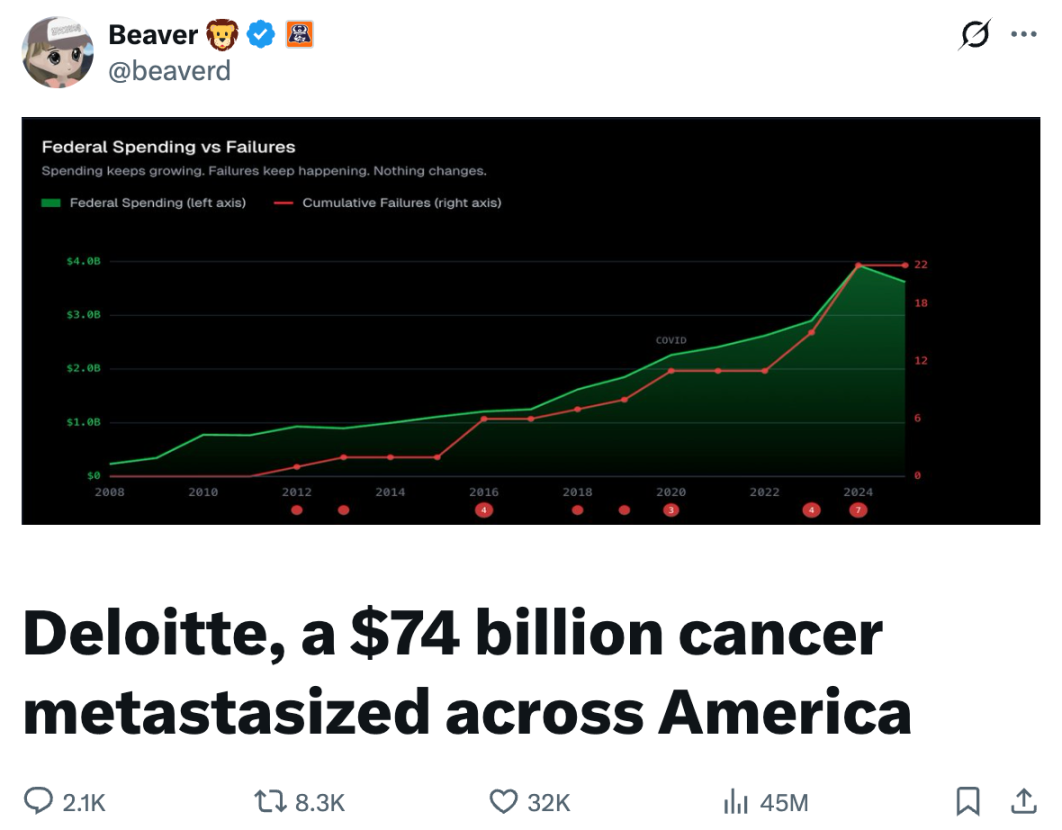
The winning article is an in-depth investigative report exposing a U.S. government scandal. The author, through analyzing public documents such as federal contracts, state contracts, recorded defaults, lawsuits, and audits, uncovered a history of "collusion between officials and businesses" involving tens of billions of dollars: Over the past 20 years, Deloitte has secured a total of $40 billion in contracts from federal and state governments. However, the various systems it developed, including unemployment benefit application systems, either suffered from vulnerabilities that led to billions in fraudulent claims or were abandoned after budgets were multiplied without results.

In summary, the government spent $40 billion on systems that ultimately caused $34 billion in losses. Even more alarming, there is frequent employee movement between Deloitte and the U.S. government, allowing Deloitte to infiltrate every aspect of the government, "like cancer cells spreading through the bloodstream," continuously siphoning taxpayers' money with no clear source or way to eradicate it.

Looking through Beaver's account, you'll find that its main theme is "concern for the country and its people," with topics almost always related to government, politics, and public welfare. Additionally, Beaver launched a website called SomaliScan, which compiles public data on government budgets, expenditures, federal grants, labor statistics, and includes information on political donations and other politically related data. The corrupt relationship between Deloitte and the government was uncovered by analyzing this data.
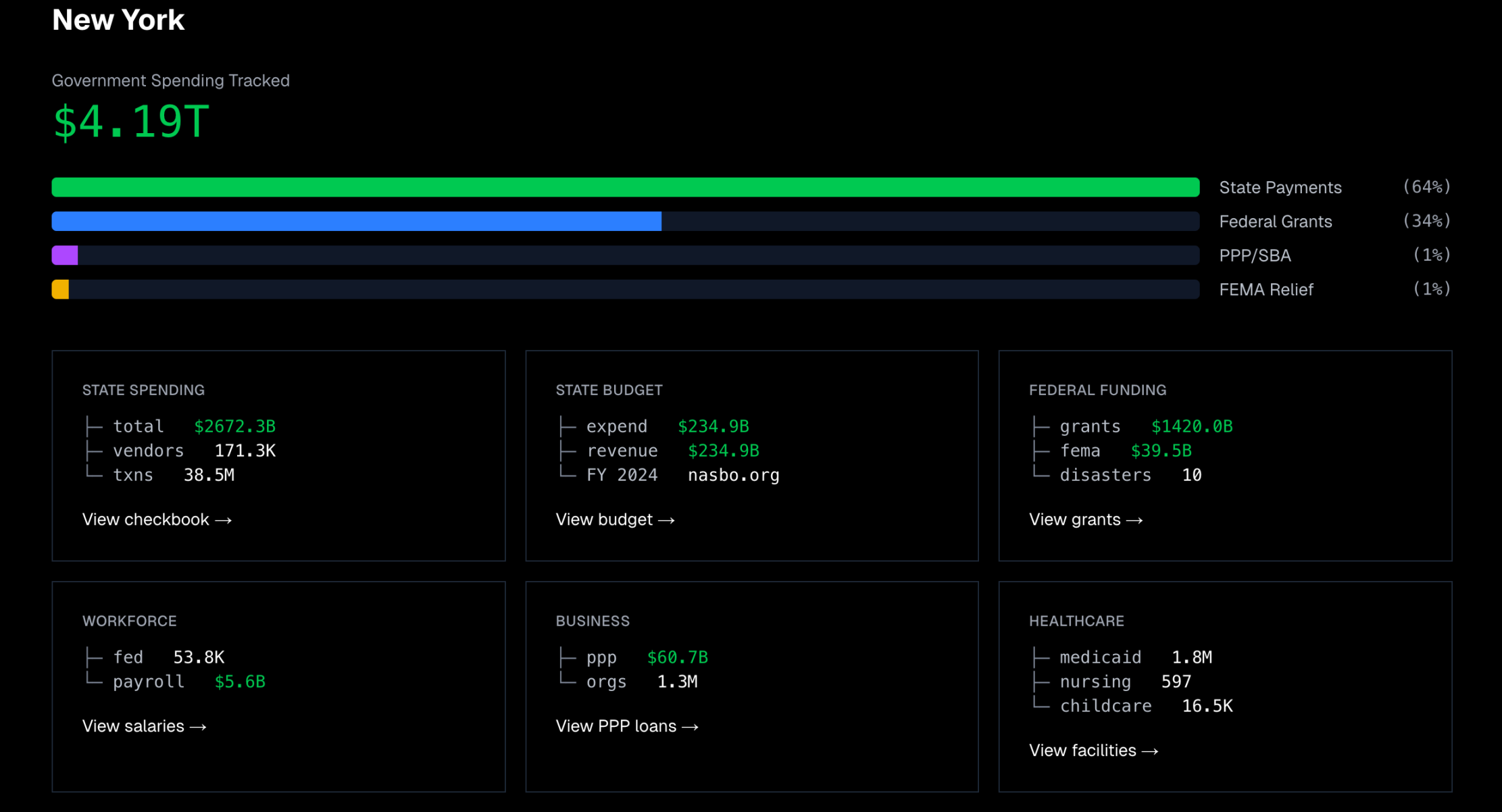
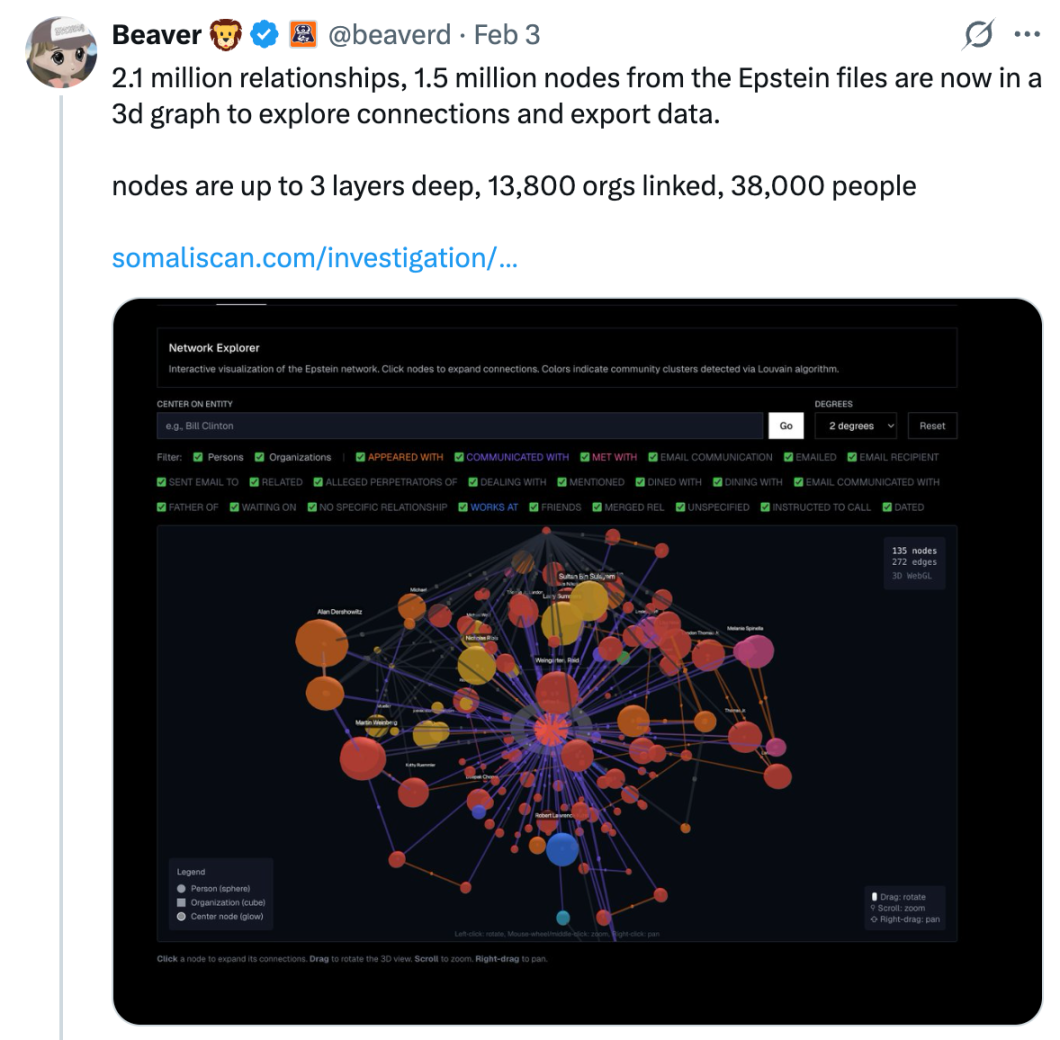
On February 3, Beaver also organized the massive "Epstein Files" released to the public into complex relationship diagrams on the website.
Interestingly, this political commentator launched a meme token called SS (9NrkmoqwF1rBjsfKZvn7ngCy6zqvb8A6A5RfTvR2pump) for the website on January 2 of this year. The token performed poorly initially but surged to a阶段性 high on January 28 after Beaver's article gained tens of millions of views, and spiked again when the winner was announced today. Compared to SS's dismal performance and the $1 million prize, this might be a rare case where "writing articles is more profitable than trading cryptocurrency."
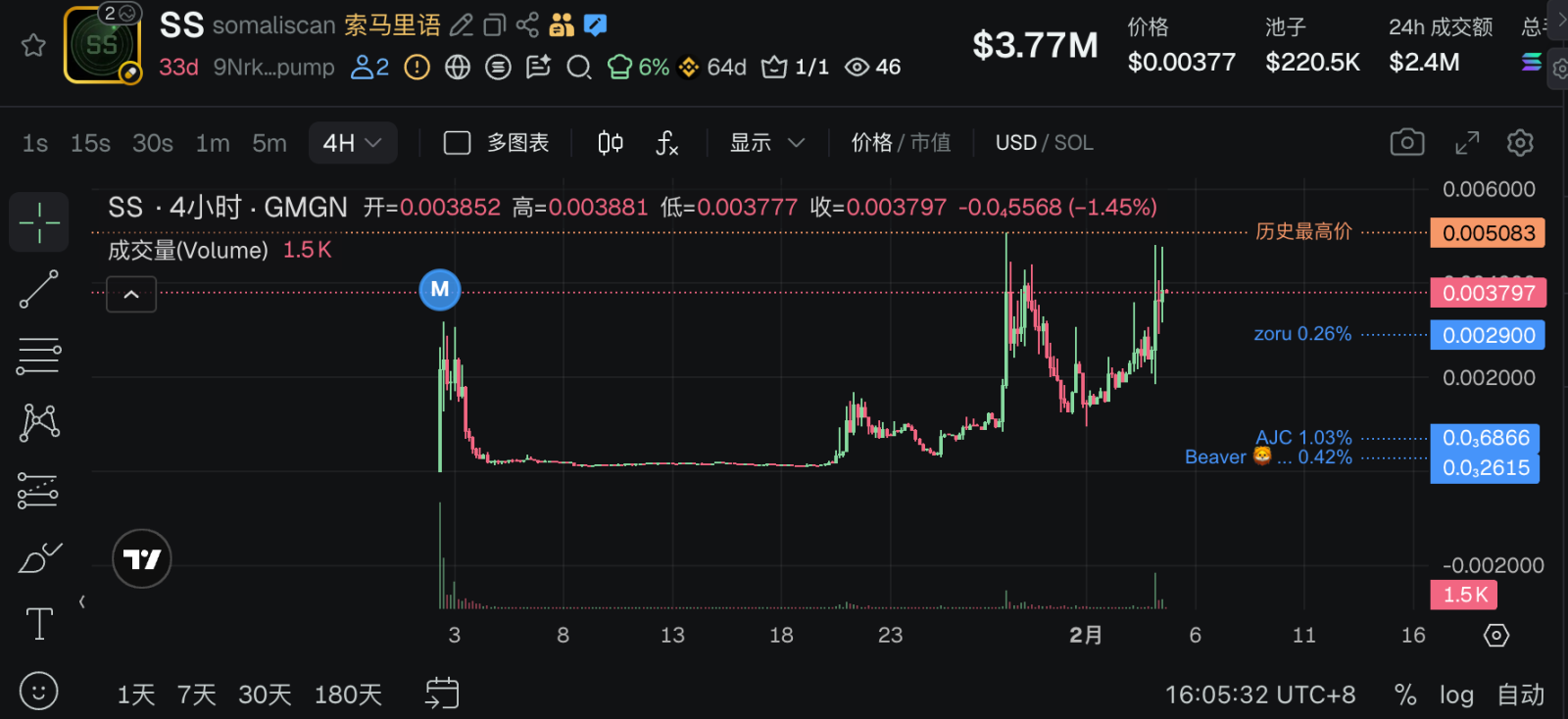
On January 25, Beaver stated that the competition prize money would be entirely used to purchase SS, with 10% of the total SS supply reserved for hackathons, 20% locked, and Beaver keeping only 4.5% for themselves.

It's certain that Beaver is not a "crypto insider." The market cap of less than $4 million also indicates that this meme token has little热度. Those who spend real money to buy SS are likely supporters of Beaver and SomaliScan. It's worth noting that the SomaliScan website also has a donation channel supporting Bitcoin, Ethereum, SOL, and XMR donations. If you enjoy stirring up trouble, you can support this "champion of democracy" who dares to expose U.S. government scandals.

Common Topics Among Netizens: Politics, Money, and Emotions

The Chinese internet has three enduringly popular topics: political trends, economic situations/how to make money, and personal emotions.

The top three articles in X's U.S.-only competition恰好 correspond to these points:

  • First Place: "Deloitte, a $74 Billion Cancer Metastasized Across America," exposing U.S. government corruption;

  • Second Place: "A Detailed Explanation of President Trump's Tariff Strategy: A Step-by-Step Guide on How to Operate," analyzing the patterns of Trump's tariff policies to derive an investment strategy应对变化;

  • Third Place (Official Favorite): "The Complete Guide: How to Achieve Extreme Focus," another piece of self-improvement鸡汤 from Daniel Koe.

High-readership Chinese articles on X also revolve around these topics.

If you read these articles carefully, you'll find that they aren't particularly flowery in language but mostly present facts and reasoning, satisfying readers' emotional or practical needs. For creators, the conclusion is very simple: At least on the X platform, to gain more exposure, you either tell a new story unknown to others, whether about yourself or social issues, or provide a detailed "operational guide"—be it on how to make money, how to adjust your mindset, or even, as shown in the image above, how to find video codes.


Twitter:https://twitter.com/BitpushNewsCN

BitPush TG Discussion Group:https://t.me/BitPushCommunity

BitPush TG Subscription: https://t.me/bitpush

Original article link:https://www.bitpush.news/articles/7608637

Perguntas relacionadas

QWho won the $1 million creator competition on X and what was the topic of their article?

AThe winner was a creator named Beaver, whose article titled 'Deloitte, a $74 billion cancer metastasized across America' exposed government corruption involving Deloitte and U.S. government contracts.

QHow much did Deloitte receive in federal and state contracts over 20 years, and what was the estimated loss caused by their systems?

ADeloitte received $40 billion in contracts over20 years, and their systems caused an estimated $34 billion in losses.

QWhat is SomaliScan, and how is it related to Beaver's work?

ASomaliScan is a website created by Beaver that compiles and analyzes public data on government budgets, spending, federal grants, labor, and political donations, which he used to investigate and expose the corruption between Deloitte and the government.

QWhat meme token did Beaver launch, and how did its performance compare to his competition winnings?

ABeaver launched the meme token SS (SomaliScan token). Its market performance was relatively poor with less than $4 million in market cap, making the $1 million prize from the competition a rare case where writing an article was more profitable than trading the meme coin.

QWhat were the top three topics of the highest-read articles in X's creator competition, and how do they relate to popular topics in Chinese internet culture?

AThe top three topics were:1) government corruption (winning article),2) investment strategies based on political policies (second place), and3) self-improvement and focus (third place). These align with the perennial popular topics in Chinese internet culture: politics, money/economics, and personal emotions/self-help.

Leituras Relacionadas

Podcast Notes | Conversation with GSR Asset Management Head: To Determine if This Crypto Rally is Real, Just Watch the Lending Rates on Aave

Podcast Summary: Dialogue with GSR's Head of Asset Management: To Determine if This Crypto Rally is Real, Just Check Lending Rates on Aave Andy Baehr, Managing Director of Asset Management at GSR, discusses the current crypto market, characterizing it as stuck in a state of "ambivalence" with short-lived, unsustainable rallies. He outlines a simple framework: the market moves between "ambivalence" and "conviction" (sustained upward momentum). Currently, every rally resembles a single-stage rocket booster that quickly fizzles out. Baehr identifies three key signals to watch: 1) DeFi lending rates, 2) the potential passage of the CLARITY Act, and 3) the market forming a consensus on the "Fed hawkish peak." He emphasizes that the most immediate indicator for the sustainability of the recent CPI-triggered rally is the USDC borrowing rate on Aave, currently around 3.75%—close to U.S. Treasury yields. The absence of a credit spread indicates low leverage demand and a lack of market energy. He explains that a healthy, sustained rally requires layered buying pressure. Last year's rally progressed from an ETH short squeeze to crypto-native trader influx and finally to ETF inflows. Currently, this structure is missing. Other potential structural buyers like Digital Asset Treasury (DAT) companies are absent, and ETF flows have proven transient. Baehr notes that while small-cap crypto tokens outperformed large caps in Q2—a potential sign of capitation in major assets—capital is also flowing to more exciting opportunities like AI stocks and tech IPOs, leaving crypto sidelined. Regarding DeFi, he highlights that platforms like Aave provide a clear, real-time signal of leverage demand through their supply/demand-driven interest rates. A significant, sustained rate increase would signal genuine market conviction. He also observes the quiet emergence of fixed-income-like products and vaults in DeFi. On regulation, the probability of the CLARITY Act passing before the August 7th deadline has dropped linearly from 75% to below 40% on Polymarket. Baehr suggests its passage would be treated as a bullish surprise, a potent driver for price movement. However, political hurdles, including ethical clause debates and disclosures about the First Family's crypto profits, remain significant obstacles. Ultimately, the market awaits clarity on the Fed's terminal rate under Chair Warsh. Until the "Fed Solstice"—the point where the market collectively understands the peak of hawkish policy—sustained conviction will be difficult to achieve.

marsbitHá 33m

Podcast Notes | Conversation with GSR Asset Management Head: To Determine if This Crypto Rally is Real, Just Watch the Lending Rates on Aave

marsbitHá 33m

7 Months After the Collapse of Huiwang, Southeast Asia's Escrow Platforms Undergo a Major Reshuffle

Following the collapse of Huione Pay—dubbed the "Alipay of Southeast Asia"—seven months ago, the region's underground financial guarantee platform sector is undergoing a significant reshuffle. This power vacuum has been swiftly filled by emerging platforms such as XinBi, Tiger/Navigator, JinBei (renamed JinBo), Dali/Tiancheng, and FullyLight. These platforms, operating largely via Telegram and offering services like escrow for illicit transactions, have absorbed the vast user base and markets left behind by Huione. While positioning themselves as "trust intermediaries," their primary clientele consists of networks involved in online scams, money laundering, illegal gambling, and even human trafficking. For instance, the Tiger/Navigator platform explicitly provides "escrow" services for kidnapping-for-ransom operations ("强押车交易"). Data underscores the immense scale: Huione alone processed over $103 billion in cryptocurrency payments and facilitated over $31 billion through its escrow market before its downfall, linking it to Cambodia's notorious Prince Group. Since its collapse, competitors have seen explosive growth. For example, the XinBi platform has accumulated over $1.6 billion in total USDT revenue, while platforms like NewPay, OkPay (under Dali), and FullyLight Wallet collectively processed over $4.8 billion in USDT in a single year. This ecosystem thrives in regions like Cambodia and Myanmar, where regulatory gaps allow these platforms to act as critical financial infrastructure for sprawling cybercrime industries, from scam compounds to online casinos. The article concludes that the moniker "Southeast Asian Alipay" is a misnomer, obscuring the platforms' fundamental role in enabling serious criminal enterprises rather than representing legitimate financial innovation.

Odaily星球日报Há 1h

7 Months After the Collapse of Huiwang, Southeast Asia's Escrow Platforms Undergo a Major Reshuffle

Odaily星球日报Há 1h

Trading

Spot
活动图片





