Exploring ChangXin Technology's Hefei Headquarters: The Rising Campus Ignites Changgang CBD, Grassroots Employees 'Witness' Wealth Creation Myth

marsbitPublicado em 2026-07-28Última atualização em 2026-07-28

Resumo

"On-the-Ground Visit to CXMT's Hefei Headquarters: Campus Boom Ignites Changgang 'CBD,' While Rank-and-File Employees Watch Wealth Creation Myth from the Sidelines." Following CXMT's (ChangXin Memory Technologies Inc., 688825.SH) explosive stock market debut on July 27, where its share price surged over fivefold, a site visit to its Hefei headquarters reveals a stark contrast. While the company's市值 soared, making it A-share's most valuable firm,基层员工 indicate the wealth creation has largely bypassed them. Employees reveal that股权激励 is restricted to managerial levels (Grade 9科长 and above), with most普通员工 at Grades 11 or 12. Salaries, while considered high for Hefei at around 200,000 RMB annually, fall short of the millions speculated online. Work routines remain demanding, with long hours, phone confiscation in sensitive areas, and strict保密 protocols forbidding unauthorized external communication. Simultaneously, CXMT's expansion is visibly transforming the once-rural Changgang area. Ongoing construction includes multiple new phases, with an industrial chain of supporting companies集聚 around the campus. This growth has spurred local development: housing prices initially skyrocketed, and a vibrant commercial district dubbed "Changgang CBD" now thrives, catering to the潮汐效应 of shift workers. The area has evolved from construction sites to a bustling hub, though the company's stringent安保, including high-voltage perimeter fencing, underscores its sensitive nature. The report conclude...

"How many shares does he have?"

"50,000 shares."

"That's a huge profit!"

"But they can't be sold for another 3 years..."

At 11:45 am on July 27th, a Time Weekly reporter overheard the above conversation among employees while dining near ChangXin Technology's (688825.SH) Hefei headquarters.

They all wore blue work badges, with the clear "CXMT" logo printed on the lanyards, making them easily identifiable as ChangXin Technology employees.

On July 27th, ChangXin Technology's stock price surged more than fivefold at market open. By the close, ChangXin Technology was quoted at 49 yuan per share, with a market capitalization reaching 3.28 trillion yuan, making it the highest-valued company on the A-share market.

However, the frenzy surrounding ChangXin Technology's stock price had no immediate connection to its grassroots employees. One employee revealed to Time Weekly that the company's equity incentive plan has clear job-level thresholds; only those at Level 9 (Section Chief) or above are eligible to participate, while the majority of ordinary employees are concentrated at Levels 11 and 12.

ChangXin Technology also maintains extremely strict external information control. A Time Weekly reporter attempted to contact employees for interviews through various channels, but most stated that "leadership has already instructed us not to accept any external interviews." They added that being found conducting private interviews could lead to dismissal in serious cases.

When the reporter attempted to take photos at the campus entrance, security guards from multiple areas came forward to dissuade them, explicitly stating that photography was prohibited. Even passersby smoking at the entrance were approached and asked to stop by security.

The strict campus controls have not, however, hindered the spillover effects of the industry. ChangXin Technology has tangibly driven the development of the surrounding area.

A Time Weekly investigation found that restaurants in the commercial street southeast of the campus are bustling with customers, supporting commercial districts north of the campus are under construction, and the Phase II construction site to the west has gathered a large number of migrant workers. The area has transformed from desolate construction sites into commercial zones, with property prices also climbing to over ten thousand yuan per square meter.

Hefei's Chip Giant: The Wealth Creation Myth in the Eyes of Grassroots Employees

Beyond the market fervor of its listing day, the work pace and daily operations within ChangXin Technology's campus continued along their established tracks.

Like most companies in Hefei, ChangXin Technology's workday also starts at 8:30.

By 9:00 am, the campus parking lot was already full. The bicycle sheds within the campus and the non-motorized vehicle parking spaces along the surrounding roads were also packed with electric scooters.

△Source: Time Weekly Photo

"Most of us have to hand in our phones during work hours," an employee told Time Weekly. Employees in R&D and wafer fabrication workshops are required to surrender their phones—the workshops due to cleanroom production requirements, and technical positions due to confidentiality needs. Upon entering R&D areas, phones must be stored uniformly.

"The working hours are similar. We work until 11:30 am, then have a lunch break until 1:00 pm," the employee added.

Overtime is the norm in the chip industry, and ChangXin Technology is no exception.

"For R&D, working until 9 or 10 pm is standard. Weekends also require on-duty shifts to ensure someone is always present. Some also voluntarily come to the office on weekends if their work isn't finished," an employee revealed. Overtime pay is not directly disbursed but is factored into quarterly bonuses and performance evaluations.

According to ChangXin Technology employees, the company's job level system is very detailed: Bachelor's degree graduates start at Level 12, Master's degree graduates at Level 11. Each level is further divided into A and B grades. Level 9 corresponds to Section Chief.

Regarding salary, "It doesn't reach 300,000 yuan, but 200,000 yuan is attainable, which is considered relatively high in Hefei," several employees explained.

Faced with widespread online claims about ChangXin employees "forming groups to buy houses," "wealth creation myths," and "net worth exceeding millions," interviewed ChangXin employee Wang Ming (a pseudonym) stated, "The frenzy surrounding ChangXin Technology's stock price has no immediate connection to grassroots employees."

One employee revealed to Time Weekly that the company's equity incentive plan has clear job-level thresholds; only those at Level 9 (Section Chief) or above are eligible to participate, while the majority of ordinary employees are concentrated at Levels 11 and 12.

"We haven't been with the company long. Normally, there are level restrictions; you need to reach the corresponding level to be eligible to buy shares," the employee said. When asked if purchases are made through an employee stock ownership platform, he indicated he had no relevant information and was unclear on the details.

The Still-Expanding Campus: Transforming the Area from Construction Sites to a Hub

Beyond the already operational production lines and R&D buildings, ChangXin Technology's expansion continues.

The aforementioned employee mentioned that they previously worked at a different location and only moved to the current campus last year. The newly constructed factory buildings are expected to be completed by the end of this year, with the wafer fabrication area located right next to the R&D building.
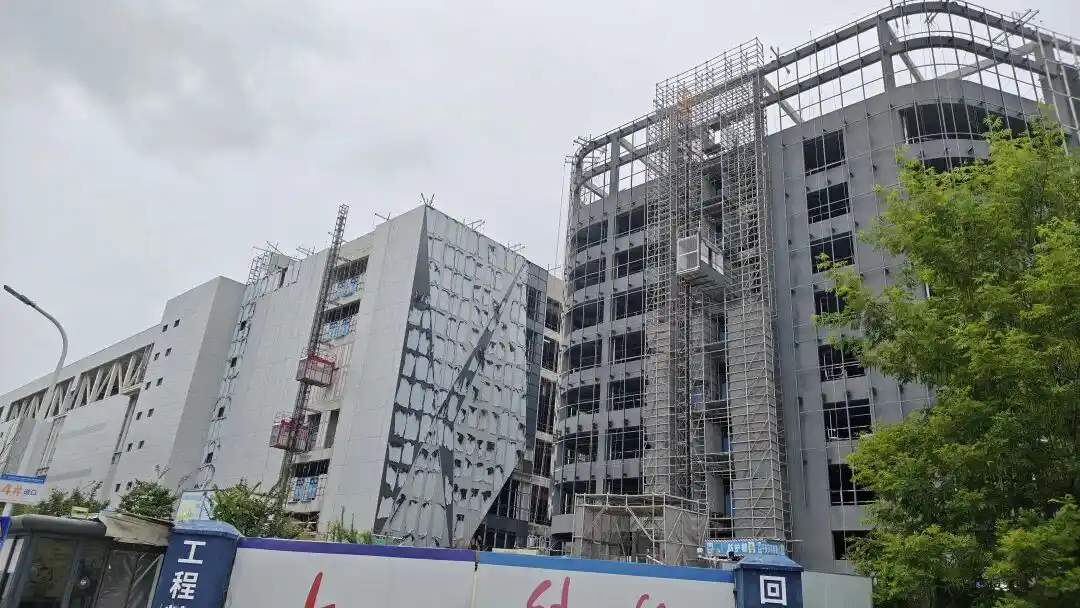
△Image Source: Time Weekly Photo

Time Weekly's visit found that the construction at the southwest gate of the campus is ChangXin Technology's Phase III project, contracted by the Information Industry Electronics Eleventh Design & Research Institute Science and Technology Engineering Co., Ltd. ("Eleventh Institute"), a wholly-owned subsidiary of the listed company TaiJi实业 (600667.SH).
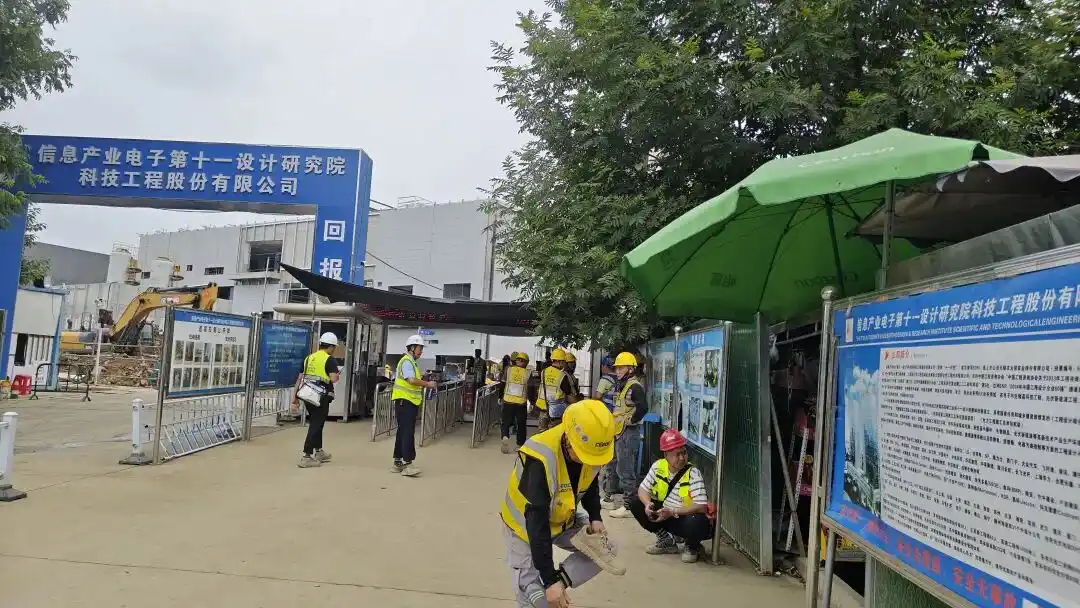
△Image Source: Time Weekly Photo

The periphery of the construction site has gathered a large number of workers, attracting mobile vendors selling meals, snacks, drinks, and cigarettes, with their tents lined up in a row. Separated by a single wall, one side features a modern wafer fab construction site, while the other side presents a lively consumption scene for migrant workers.
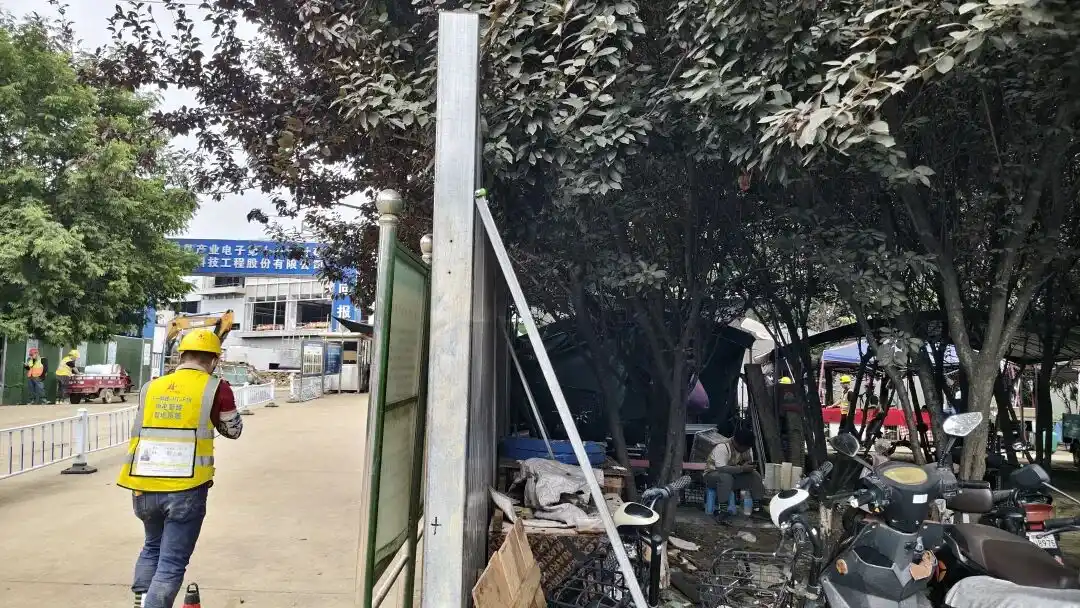
△Image Source: Time Weekly Photo

Many construction workers couldn't clearly state their specific contractor, but everyone knew this site was for the famous ChangXin Technology.

A person at the site told Time Weekly that ChangXin Technology currently has 11 ongoing construction projects, with bases also under construction in other areas of Hefei, Beijing, and Shanghai's Pudong New District.

Around the Phase III project, a cluster of supporting industrial chain enterprises has already gathered. Across the street from ChangXin Technology are the Xinqiao Integrated Circuit Industrial Park and Hefei Peidun Storage Technology Co., Ltd. Guanggang Gas (688548.SH) also has a supporting station within the campus.

The area north of the campus is surrounded by lawns and running tracks, creating a clean and open environment. Across the road is OCT (华侨城). A person working near the main gate told Time Weekly that a commercial district is being built opposite.
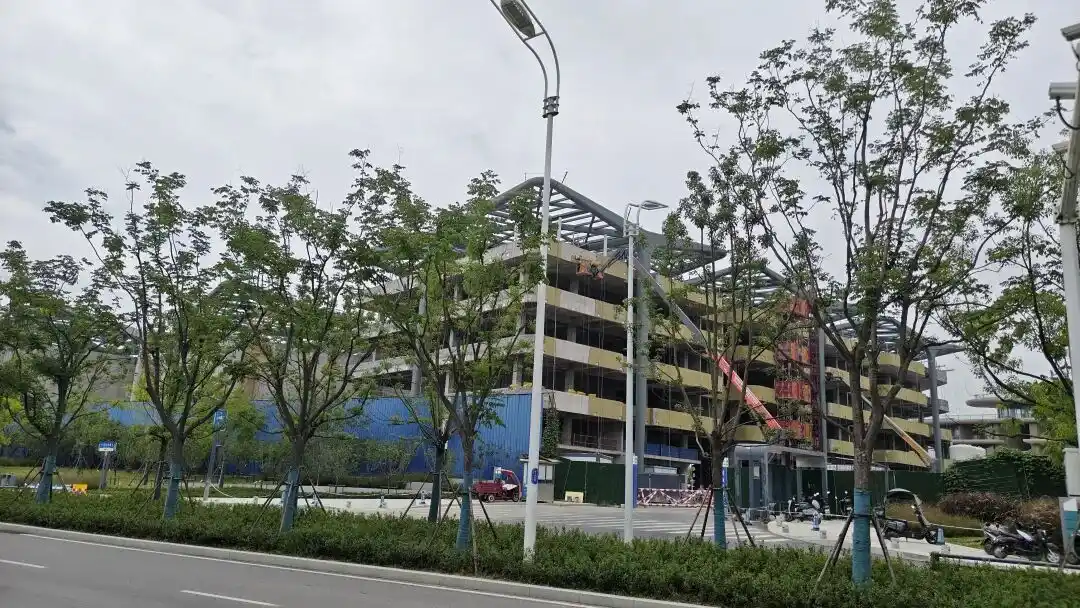
△Image Source: Time Weekly Photo

Notably, the entire ChangXin Technology industrial park is surrounded by high-voltage electric fencing, with a security level far exceeding that of ordinary industrial parks.
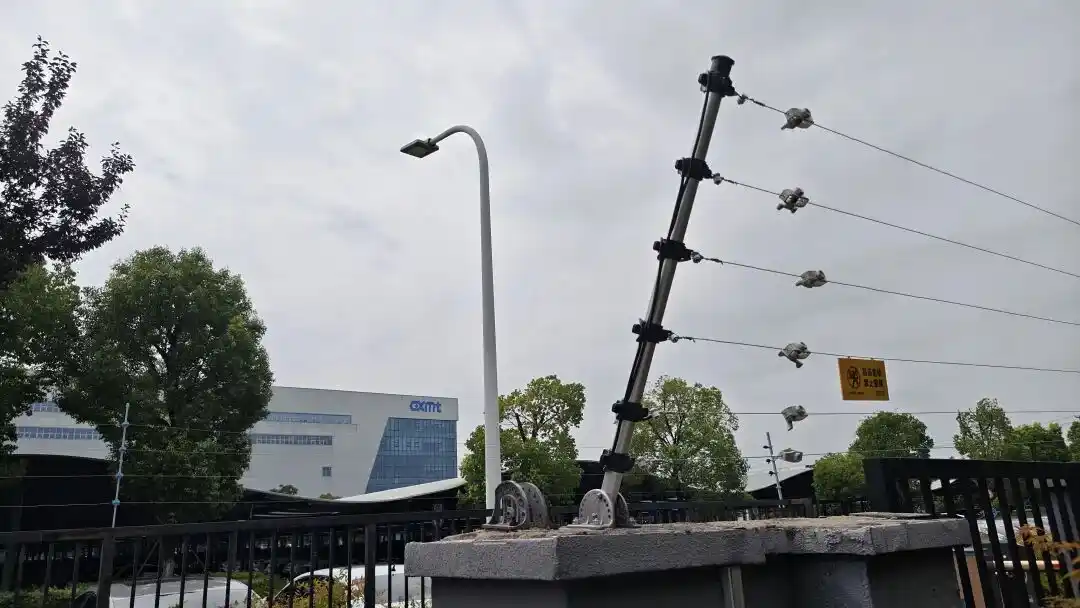
△Image Source: Time Weekly Photo

Walking and stopping to circle the entire ChangXin Technology campus took the Time Weekly reporter over two hours. Corresponding to the vast campus is the economic takeoff of the surrounding area.

"This place used to be farmland. Who would have thought there'd be such a huge factory here now," a rideshare driver living in a resettlement community near ChangXin Technology told Time Weekly. He revealed that since 2021, property prices in the Changgang area have been driven up by ChangXin Technology, peaking at over ten thousand yuan per square meter. "It's dropped quite a bit in recent years, but it's still around seven or eight thousand per square meter now."

In fact, ChangXin Technology is located over 40 kilometers from Hefei's main urban center, in what is considered the "outer ring of the outer ring" of Hefei. Taking just a few more steps beyond, the high-rises disappear, replaced entirely by villages and small roads.

Besides housing, the commercial streets here exhibit a clear tidal pattern—bustling and packed with customers during the morning, noon, and evening hours when ChangXin Technology employees get off work, but becoming almost deserted during work hours.

Particularly at the intersection of Shuofang Road and Jinlianhua Road, dubbed the core area of the "Changgang CBD" by locals, there's a strong sense of lively, everyday life. Every day around 5 pm, food carts collectively emerge, forming a long corridor around the area to provide meals for ChangXin Technology employees.

A restaurant owner told Time Weekly that from the early construction phase when the area was dominated by construction workers, to the current stage with multiple factory areas standing tall, the consumer base has shifted to ChangXin Technology employees and workers from supporting enterprises. The Changgang area has thus transformed from desolate construction sites into a bustling industrial hub.

This article is from the WeChat public account "Time Weekly" (ID: timeweekly), author: Guan Yue

Perguntas relacionadas

QWhat was the key difference in the response to ChangXin Technology's (CXMT) successful IPO between higher-level and entry-level employees according to the article?

AThe article states that the stock price surge following the IPO primarily benefited higher-level employees eligible for stock incentives (at Grade 9 'Section Chief' level or above), while entry-level employees (typically Grades 11-12) were excluded and were essentially 'spectators' to this wealth creation phenomenon.

QHow did the establishment and expansion of ChangXin Technology's headquarters in Hefei impact the surrounding Changgang area?

AThe development of ChangXin Technology's massive campus transformed the Changgang area from farmland and construction sites into a bustling commercial hub. It spurred the growth of commercial streets, restaurants, and new residential and business districts, significantly increasing local housing prices from a peak of over 10,000 yuan per square meter.

QWhat are some examples of the strict information and security controls implemented at ChangXin Technology's campus as described in the report?

AStrict controls included employees being instructed not to speak to media, with potential dismissal for violations; security personnel preventing photography on campus grounds; and restrictions like requiring employees in R&D and production areas to surrender their phones to maintain confidentiality and meet cleanroom standards.

QWhat was the typical work schedule and compensation structure for R&D employees at ChangXin Technology as mentioned by sources in the article?

AR&D employees reportedly worked from 8:30 AM, with overtime until 9-10 PM being common, including weekend shifts. Overtime pay was not directly issued but was factored into quarterly and performance bonuses. Annual compensation for such positions was around 200,000-300,000 RMB, which is considered high for the Hefei area.

QBesides its main facilities, what evidence does the article provide of ChangXin Technology's ongoing expansion and its effect on the local industrial chain?

AThe article notes ongoing construction of Phase III projects and mentions plans for 11 total engineering phases, with bases also in Beijing and Shanghai. Its presence has attracted supporting industries, creating an industrial cluster with neighboring companies like Hefei Peitun Storage Technology and Guangzhou Guanggang Gases setting up nearby facilities.

Leituras Relacionadas

Coinbase Vice President: The Wars Over Cryptocurrency Regulation Are Over

Coinbase's new Vice President, Ryan VanGrak, declared that regulatory wars in the cryptocurrency sector are over. Since taking office on July 9, 2026, he has shifted the company's approach from litigation and sanctions to focusing on growth and innovation. The industry can now concentrate on development rather than fighting for its right to exist. He highlighted that the Digital Asset Market Clarity Act (CLARITY Act), which aims to establish a clear federal regulatory framework dividing oversight between the SEC and CFTC, has gained significant momentum. This framework is intended to provide proper supervision, investor protection, and maintain U.S. leadership in digital assets. VanGrak's appointment marks a strategic shift from a "wartime" to a "peacetime" advisor, replacing former Chief Legal Officer Paul Grewal, who oversaw major litigation, including a dismissed 2023 SEC lawsuit. With his background at Citadel Securities and the SEC, VanGrak brings deep regulatory and institutional finance expertise as Coinbase expands beyond a simple exchange into a broader financial services provider, offering stocks, futures, prediction markets, and AI tools. For investors, bipartisan support for crypto legislation like the CLARITY Act represents a major shift from the enforcement-focused environment of 2023-2024. Lawmakers are now focused on *how* to regulate crypto, not *if* it should exist. However, risks remain, as the bill's passage is not yet guaranteed.

cryptonews.ruHá 33m

Coinbase Vice President: The Wars Over Cryptocurrency Regulation Are Over

cryptonews.ruHá 33m

Deep Dive into FWA: An Intriguing Experiment Turning NFTs into "On-Chain Gachapon"

A Deep Dive into FWA: The “On-Chain Gacha” Experiment for NFTs Fake World Assets (FWA), created by TokenWorks, introduces an innovative “NFT gacha machine” fully operating on-chain. Users can deposit eligible NFTs paired with ETH (called Backing) to create a Position, acting as a prize pool. Others can then pay a uniform Acquisition Price for a chance to win a random NFT from the pool. The core mechanism features a reverse probability system: Positions with lower Backing have a higher chance of being selected, serving as common prizes, while high-Backing Positions are rare “jackpots.” The acquisition price is calculated based on the harmonic mean of all Backings, keeping entry costs low. When a Position is won, the purchaser must choose: keep the NFT or accept the Standing Bid (85% of the Backing, claimable in ETH or $FWA tokens), returning the NFT to the original depositor. The protocol involves two main roles. Depositors provide liquidity (NFT + ETH), earning a share of fees from each draw, distributed equally per active Position, plus potential $FWA rewards. Purchasers pay to spin the gacha, receiving $FWA rewards for participation. A special “Crown” reward goes to the Position with the highest Backing. The $FWA token has a fixed supply and is initially obtainable only through protocol participation (depositing or purchasing), with external buying disabled early on to reduce sell pressure. Its value is supported by a built-in buy pressure: when purchasers opt for the $FWA settlement on a Standing Bid, the protocol uses the backing ETH to buy $FWA from the market. Revenue for the protocol comes from a 1% fee on each draw, a 1% settlement fee when an NFT is kept, and the 15% discount from Standing Bid settlements (currently allocated to the protocol). The design cleverly blends Uniswap-style liquidity provision, gacha mechanics, and tokenomics to create a novel, self-regulating marketplace for NFT liquidity and engagement.

marsbitHá 47m

Deep Dive into FWA: An Intriguing Experiment Turning NFTs into "On-Chain Gachapon"

marsbitHá 47m

10,000 Scientists Get 1 Year of Free Access: OpenAI Brings the Scientific Research Pipeline into ChatGPT

OpenAI has launched the "ChatGPT for Academic Researchers" program, offering free one-year access to its flagship models for 100,000 university researchers globally, with 10,000 spots available this summer. Selected institutions include prestigious centers like ENS Paris and the IAS at Princeton. The initiative provides an integrated research workspace within ChatGPT, bundling tools like ChatGPT, ChatGPT Work, and Codex, along with expanded Deep Research capabilities, higher usage limits, and specialized tools for life sciences. The suite connects to platforms like Zotero and GitHub, aiming to streamline the entire research workflow from literature review and coding to data analysis and manuscript drafting. OpenAI notes that about 1.3 million people already use ChatGPT weekly for advanced science and math. The program targets building long-term user dependency by embedding these tools into daily research habits. However, access comes with limitations: it does not include API credits or model weights, and eligibility is restricted to verified academic researchers from supported countries. This approach contrasts with Anthropic's "AI for Science" program, which offers API credits but not an integrated workspace. Both companies emphasize preventing misuse by withholding model weights, a point of contention for AI researchers seeking transparency. The core strategy remains clear: provide a powerful, integrated environment to foster user reliance ahead of the post-free period.

marsbitHá 52m

10,000 Scientists Get 1 Year of Free Access: OpenAI Brings the Scientific Research Pipeline into ChatGPT

marsbitHá 52m

What's Going On with Gigadevice? Major Shareholder Cashes Out 44 Billion, Then Announces 20 Billion Buyback

Gigadevice Innovation, a leading Chinese memory chip company, has executed a controversial financial maneuver. The company's controlling shareholder and chairman, Zhu Yiming, sold approximately 44 billion RMB worth of his shares between early May and mid-June 2026, capitalizing on a soaring stock price that peaked at 846.66 RMB on June 29th. Following a subsequent stock crash—plummeting to around 350 RMB in 22 trading days and erasing over 330 billion RMB in market value—Zhu announced a combined "market rescue" plan on July 29th. This plan includes his personal commitment to buy back at least 1 billion RMB in shares and a company proposal to repurchase 1 to 2 billion RMB worth of stock. This sequence of high-selling followed by a low-buying plan has confused and unsettled many of the company's 240,000 retail investors. The stock's dramatic decline was attributed to several factors: the successful IPO of its sister company, Changxin Technologies, which ended Gigadevice's status as a primary investment proxy for the domestic memory sector; a Morgan Stanley report warning of a potential peak in the memory chip cycle; and a severe loss of market confidence triggered by the chairman's massive sell-off. While the sell-off was procedurally compliant, its timing has been criticized. The company's fundamentals appear strong, with preliminary H1 2026 results showing revenue up 177% year-on-year to 11.5 billion RMB and net profit skyrocketing 1099% to 6.9 billion RMB, driven by a boom in memory chips and MCU demand. However, a significant portion (2.05 billion RMB) of this profit came from non-recurring gains like securities investment, and the memory industry is notoriously cyclical. Analysts highlight the company's role in the domestic substitution of niche DRAM and NOR Flash memory, with some maintaining bullish price targets. Yet, the recent events underscore key risks: its fabless model creates dependency on foundries like Changxin, and the chairman's actions have raised serious questions about management's alignment with minority shareholders. The promised buybacks cannot commence until December 13th due to a mandatory six-month cooling-off period following an insider sale, leaving the stock vulnerable in the interim.

marsbitHá 52m

What's Going On with Gigadevice? Major Shareholder Cashes Out 44 Billion, Then Announces 20 Billion Buyback

marsbitHá 52m

Trading

Spot
活动图片