Original | Odaily Planet Daily (@OdailyChina)
Author | Golem (@web3_golem)
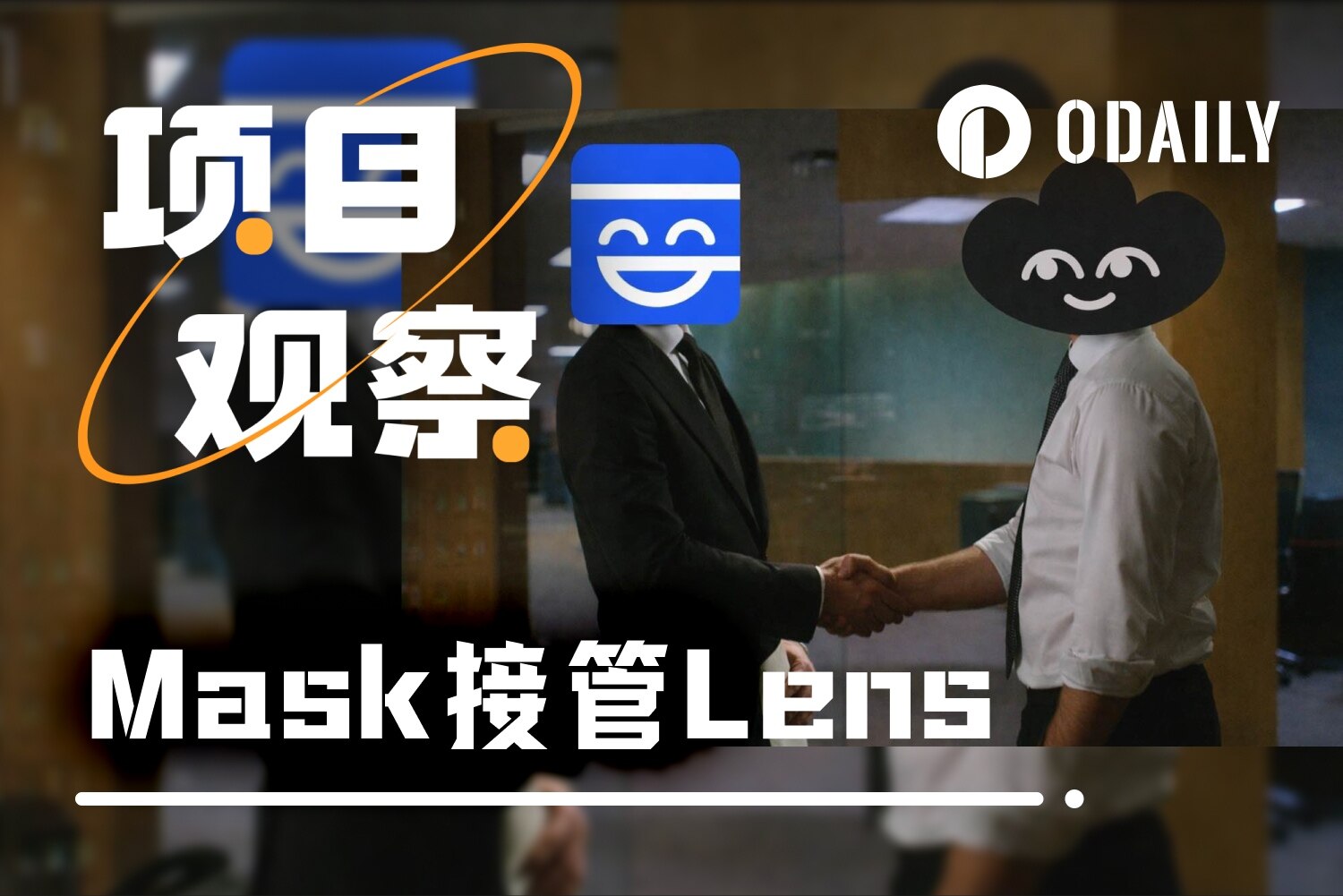
On January 20th, the team behind the decentralized social protocol Lens announced the transfer of project management authority to the Mask Network team, with the original team stepping back into an advisory role. This news garnered significant attention in the crypto space. Many were not particularly surprised by Stani Kulechov's decision to "offload" Lens, as withdrawing promptly is a wise move in the context of the decentralized social sector losing capital and user interest.
Lens was the center of attention in the SocialFi赛道 (SocialFi track/space) during 2023-2024—boasting the founder's光环 (halo/aura) from Aave, solid technology, and the compelling narrative of users自主掌握社交 (autonomously controlling their social experience)... Even after Lens removed registration restrictions in February 2024, its user count continued to grow. But by 2025, all of this turned to dust, especially after the launch of Lens Chain in May, when the team did not顺势推出发币 (seize the opportunity to launch a token).
This, instead, made me wonder: why was the Mask team willing to take on this "烂摊子" (mess/hot potato)?
In the official statements from both sides, Lens stated that the reason for handing the project over to the Mask team was that Lens had completed the construction of decentralized social infrastructure, and now it was time for Lens to transition from infrastructure to large-scale applications, with the Mask team being the right choice to help Lens achieve this goal.
But I don't think it's too harsh to compare Lens to a mess. According to web3.bio, the total number of Lens accounts created reached 808,000, with 680,000 unique users. Even compared not to Web2 social platforms but just to its counterpart in the same space, Farcaster, the performance is slightly worse. Farcaster's total accounts created reached 1.867 million, with 1.858 million unique users, both more than double Lens's numbers. There is also a gap in new user growth; Farcaster added 373,000 new registered users in January 2026, while Lens added only 1,492.
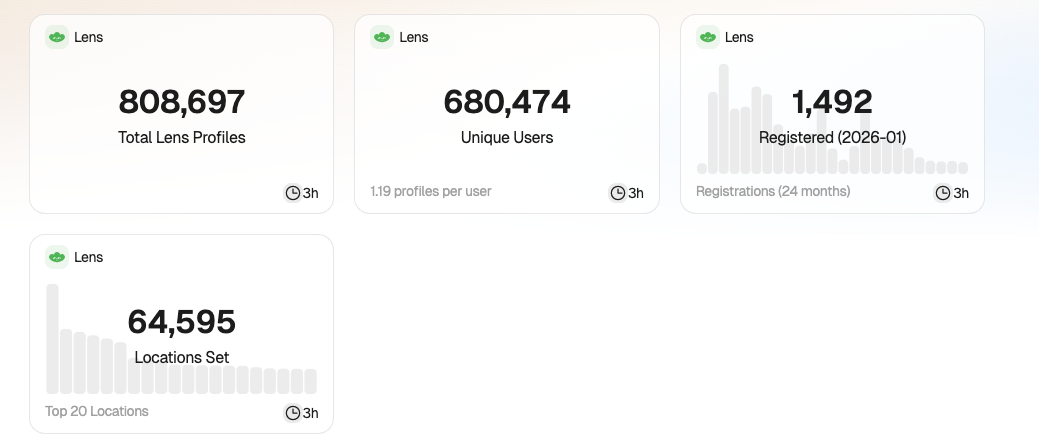
Lens User Metrics
Therefore, in this context where the decentralized social track is widely considered disproven and Lens is left with only a technical shell, what does the Mask team think? What magic do they plan to work after taking over Lens? With these doubts, Odaily Planet Daily spoke with Mask Network founder Suji Yan.
Token Launches Harmed Decentralized Social
Mask Network was founded in 2017. The project's vision is to build a bridge connecting Web2 and Web3 users. At the product level, Mask is a browser extension that allows users to seamlessly access various Web3 services on mainstream Web2 social platforms (like X, Facebook, etc.). After 2022, Mask became more deeply involved in the decentralized social ecosystem through investments and acquisitions; currently, Orb and Firefly are still key projects Mask is actively operating.
When discussing the reasons for taking over Lens, Suji Yan stated that Mask had actually been a shareholder of Lens very early on, and that Suji himself had even encouraged Stani to create Lens, so there is a deep trust relationship between the two parties. Besides this reason, Suji believes another more important reason is that Stani and he share similar philosophies.
"We are not people who lack money; we更多的是想 (more want) to do decentralized social well," Suji said, stating this is a consensus between him and Stani. Therefore, Suji believes thata core reason for the failure of past generations of decentralized social products was the attempt to give every user a token. Friend.tech failed because it made this mistake; Suji even called it a耻辱 (disgrace) for decentralized social, as it eroded market confidence in truly decentralized social.
Friend.tech was a decentralized social product born in 2023. Its core model was the tokenization of personal social influence; fans or other users could buy shares of a KOL and gain the opportunity to chat with them privately. Meanwhile, the share price would increase as more people joined, creating profit opportunities for holders. The simple model and the rapid fluctuation of token values in wallets caused immense FOMO in a short time; Friend.tech's daily fee income once surpassed that of TRON.
What brings success also causes failure. Once players understood this was just a game of "hot potato" under the banner of decentralized social, where KOLs could almost costlessly harvest retail investors, Friend.tech quickly collapsed. But to this day, whenever SocialFi is discussed, it remains the craziest case that pushed "Fi" to the extreme.
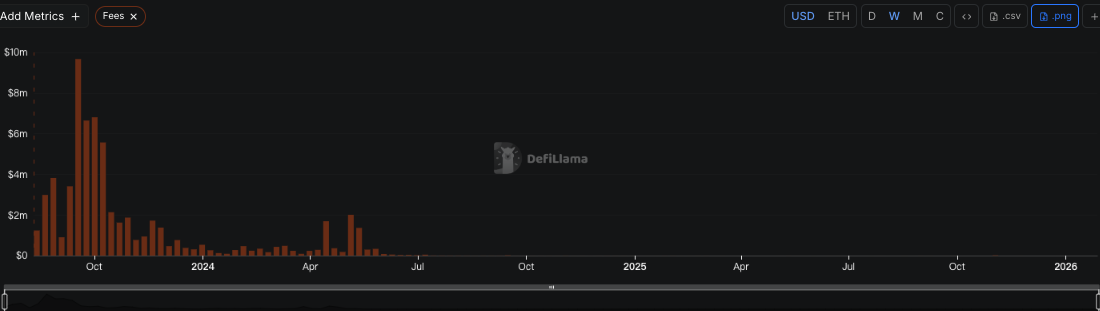
From mid-2024, Friend.tech's fee income dropped to 0
Although Farcaster's current metrics are better than Lens's, Suji believes Lens still has advantages. "The best thing about Lens is its neutrality and its lack of attachment to any exchange ecosystem," which is also one of the reasons Suji was willing to take over Lens.
In Suji's eyes, Farcaster completely lacks neutrality. "It is close to Coinbase and deliberately caters to the ideas of Coinbase's founder and Base protocol founder Jesse." Besides airdrop expectations, a large part of Farcaster's user growth came from Creator Coins, from Degen to the later AI token issuance trend, all following the same pattern. But Suji told Odaily that these are all "有毒的增长方案" (toxic growth strategies). (Odaily note: This interview took place before Neynar announced the acquisition of Farcaster;Suji is a shareholder of Neynar)
In this regard, Ethereum founder Vitalik Buterin also believes that decentralized social should not overemphasize "token issuance" as innovation, attempting to incentivize creators by creating price bubbles around individuals, because practice has shown that such models often reward existing social capital rather than content quality, and tokens have short lifecycles.
However, Suji also stated that after taking over Lens, a new entity will be spun off, which will not encourage airdrop farming behavior but also will not deliberately refuse to issue a token, waiting for the right opportunity.
Non-Neutrality Leads to Death
"Non-neutrality leads to death" is Suji's prophecy for decentralized social products. A product that is not neutral cannot be a qualified social product. Suji used Truth Social as an example. Truth Social is a social platform under Trump, existing specifically for Trump to "have a voice." It is the ceiling for non-neutral social platforms in the world; no other person has used their personal influence to create a social platform with traffic surpassing Truth Social.
But Suji stated that Truth Social's underlying code uses the code from the open-source project Mastodon (most of the code was donated by Mask). If the world's largest non-neutral social product is such a "草台班子" (makeshift/rudimentary operation), then what特殊性 (specialness) do other similar social products have?
Therefore, Suji believes that today's rapidly growing Binance Square is just a "small version" of Truth Social, and Farcaster is just a North American version of Truth Social. Lens, with its neutrality,注定 (is destined to have) a higher ceiling than them.
To better leverage Lens's advantages, Suji also revealed to Odaily that after taking over Lens, it will bedeeply integrated with Mask's products like web3.bio, Orb, and Firefly to form互补 (complementarity). Firefly has deeply integrated X functions (posting, liking, etc.), and Lens's social graph can help enhance user stickiness. Meanwhile, Lens will alsointegrate with prediction markets in the future to achieve personalized recommendations based on friends' dynamics (like NBA game betting information streams), improving prediction efficiency.
Web3 Social Must Be Built on Top of Web2 Social
Early Web3 social narratives, to be captivating, often criticized and accused Web2 social of exploiting users in terms of data ownership, privacy, and freedom of speech, highlighting Web3's advantages in these areas. Over time, this created an "either-or" competitive relationship between Web2 and Web3 social.
"We should respect Web2 as the data source because most people weren't born after decentralization became widespread," Suji believes that since most of us were born in the internet era, building Web3 social must be based on Web2 social foundations, meaning it must support Web2 databases.
Suji said they are correcting this obvious mistake. Firefly is one of the best products on the market for deeply integrating X functions, including synchronized posting, liking, bookmarking, history, and more. To achieve this leap of Web2 social data to Web3, Firefly also spends a significant amount of money each year purchasing X's API.
Vitalik Buterin stated in a post on January 21st that since the beginning of this year, all his content has been synchronized across platforms like X, Lens, Farcaster, and Bluesky through Firefly. Users don't have to abandon their original Web2 social platforms while simultaneously enjoying the advantages of Web3 social functions—this is perhaps Firefly's biggest selling point and, essentially, perfectly承接 (fulfills/continues) Mask's vision of connecting Web2 and Web3 users.
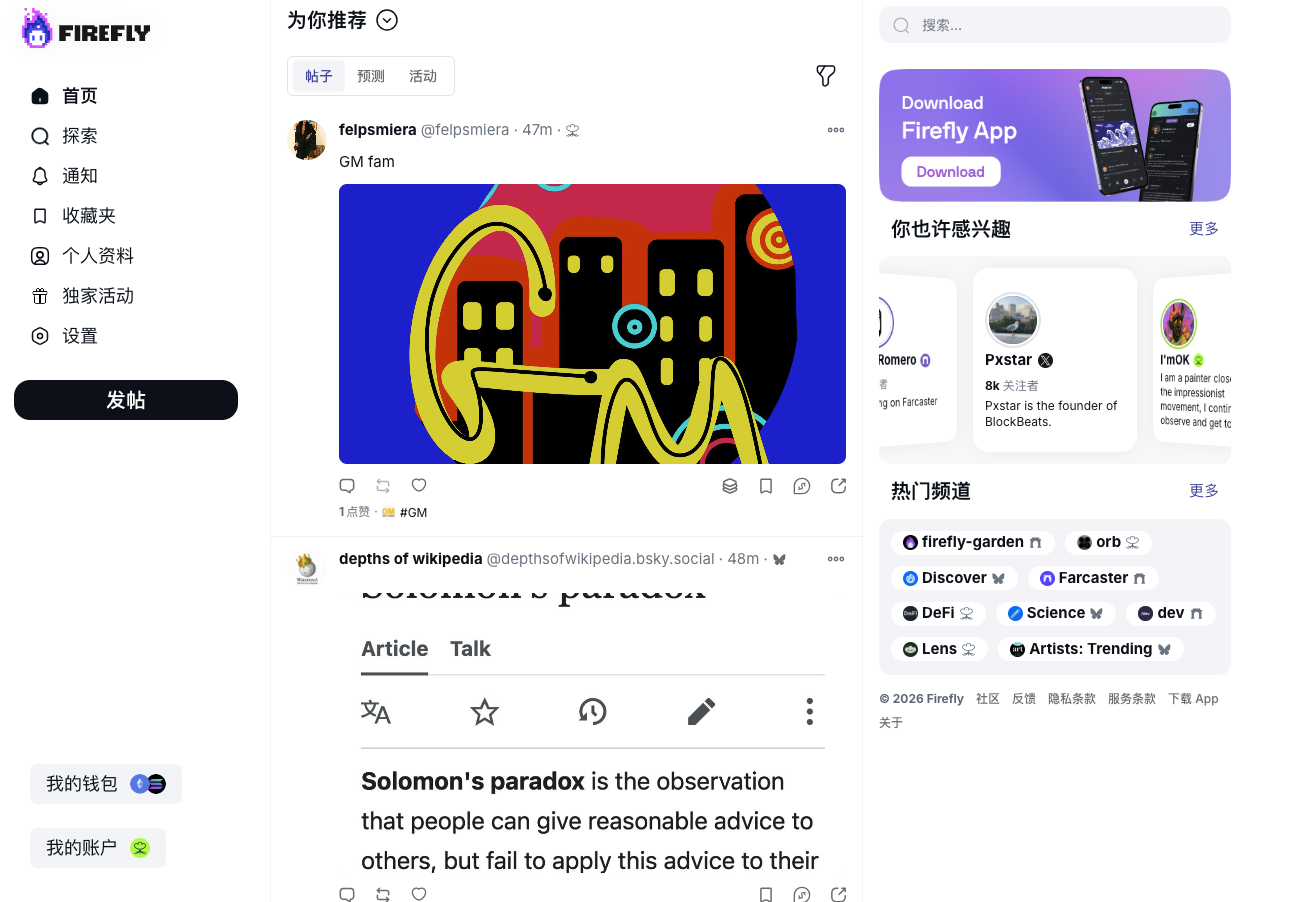
Firefly's UI is similar to X's
There is a contradiction in social applications: people don't want to be constrained by KYC, but they want a semi-anonymous environment with high-quality content and freedom of speech. To solve this contradiction, Suji revealed to Odaily that in the future they will integrate various Web2 social graphs to determine that a person is not a bot and can simultaneously be responsible for their speech. Suji believes this is also a key breakthrough point for Web3 social in the future.
A Founder Living in Their Own World?
But people with a geek mindset are always a minority in this world; not all users are Vitalik.
Firefly and all Web3 social applications have to answer a practical question: Your理念很正 (principles are very correct), but why should I use you?
Lens currently does have the infrastructure capability to support decentralized social operations, but as a user, without airdrop or token incentives, there is no motivation to create a unified account just to "move freely" among various decentralized applications. Similarly, since one can post directly on platform X, why actively put on an additional "shell" and use Firefly to do it?
Many believe the reason Web3 social has been disproven is that whether it is decentralized or has data autonomy is not the core competitiveness of social interaction. Differences on the product side and operational side—like content quality, creative incentives, and emotional identification—are the key factors that make a social product stand out today. Lens, immersed in technology for 5 years, has now realized this problem. "The ecosystem needs not more protocols, but卓越的用户体验 (excellent user experience)," which is why they handed over project management authority to Mask.
But what if Mask is also living in its own small world?
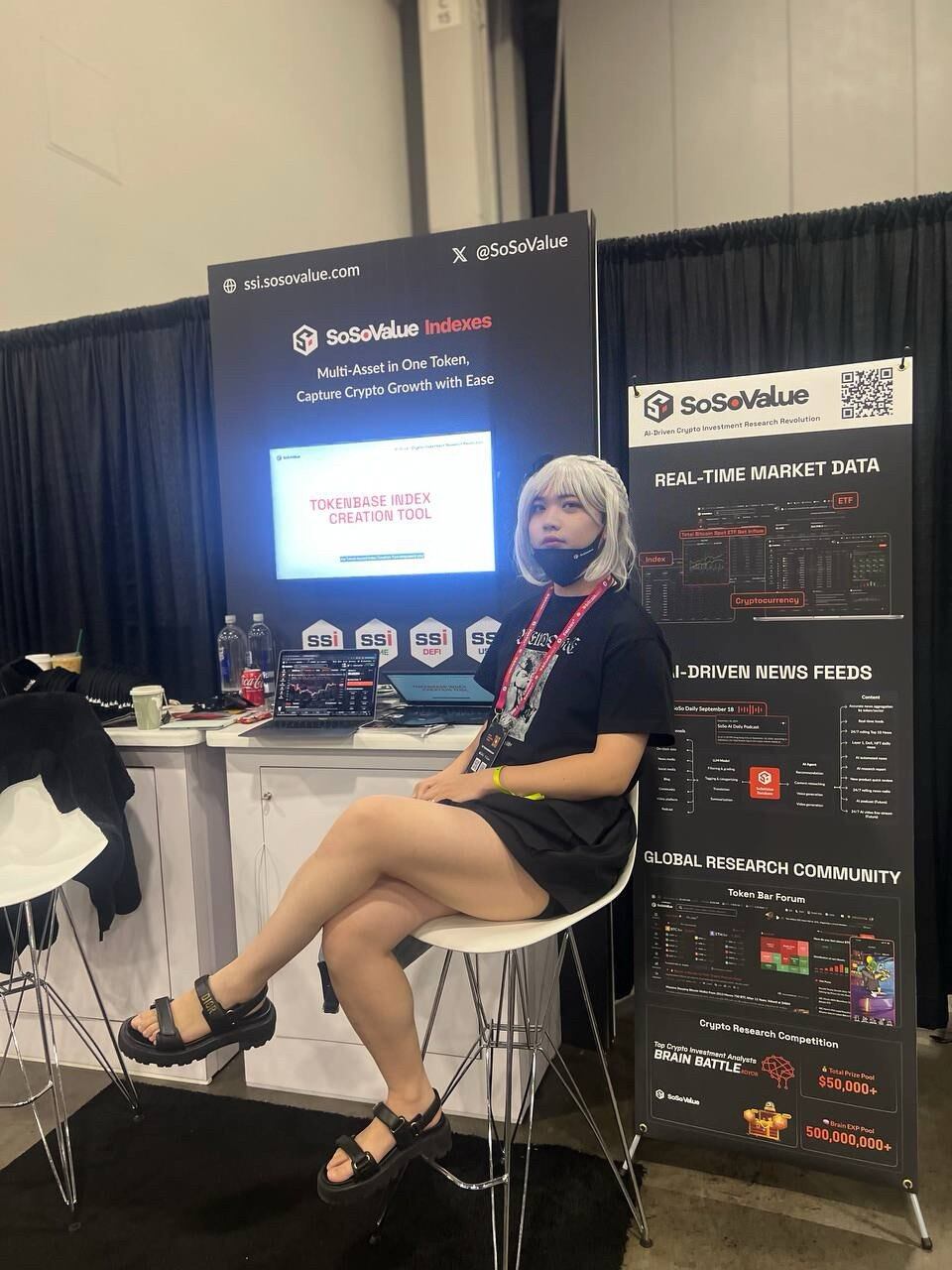
Suji大佬 (big shot) appearing at an industry event
When Odaily asked this question, Suji used Manus as an example. "Manus, simply put (简单来讲), supports AI like ChatGPT, Gemini, and DeepSeek to help users get work done. If users use AI themselves, they can also complete these tasks. Manus is essentially just an added layer, but it ultimately succeeded." Suji attributes this to the product's "品味" (taste). Therefore, he believes that in the future, more users will actively use Firefly, and what needs to be done now is to稳步推进 (steadily advance) the project and wait for the flower to bloom.
"After success, the market will ignore the painful waiting period before," Suji maintained an attitude of strong信念感 (conviction/belief) throughout the entire interview. He始终坚定认为 (firmly believes) that his cause will succeed in the future, and the vision of seamlessly connecting Web2 and Web3 users will ultimately be realized.
Ten years of drinking ice, hardly cooling hot blood (十年饮冰,难凉热血 - Idiom meaning enduring long hardship without losing passion). A more practical question is: will this hot potato, Lens, drag Mask down?
Facing uncertainty,开源节流 (increasing revenue and reducing expenditure - i.e., being frugal) has become Mask's survival strategy for the current stage. "Most projects actually don't need to hold big conferences; saving cash flow is key," Suji said, adding that while he won't refuse capitalization, he will definitely not rush to monetize. "The easy but wrong path will definitely not go far."