EU Proposes Ban On Russian Crypto Transactions To Crack Down Sanctions Evasion – Report

bitcoinistPublicado em 2026-02-11Última atualização em 2026-02-11

Resumo

The European Union is considering a comprehensive ban on all cryptocurrency transactions with Russia to prevent the country from using digital assets to evade sanctions. According to a report, the European Commission has proposed prohibiting engagement with any crypto asset service provider established in Russia, arguing that targeting individual entities would lead to the creation of new ones to circumvent restrictions. The proposal specifically aims to prevent the growth of platforms like the sanctioned exchange Garantex and targets the payments platform A7 and its ruble-pegged stablecoin. Additionally, the Commission suggested adding 20 Russian banks to the sanctions list, banning digital ruble transactions, and restricting certain exports to Kyrgyzstan. The measures require unanimous support from EU member states, though some countries have expressed doubts. This potential crackdown coincides with Russia's ongoing development of its digital assets regulatory system.

As Russia moves to regulate the crypto sector later this year, the European Union (EU) is considering implementing strict sanctions on all digital asset transactions linked to the country to curb sanctions evasion.

EU Seeks Sanctions On Russian Crypto Transactions

On Tuesday, the Financial Times (FT) reported that the European Commission (EC) is evaluating measures to prohibit all crypto transactions with Russia, stepping up its efforts to crack down on the country’s use of digital assets to evade sanctions.

According to documents reviewed by the FT, the Commission has seemingly proposed a broader prohibition “instead of attempting to ban copycat Russian crypto entities spun out of already sanctioned platforms.”

“In order to ensure that sanctions achieve their intended effect [the EU] prohibits to engage with any crypto asset service provider, or to make use of any platform allowing the transfer and exchange of crypto assets that is established in Russia,” explained the internal document outlining the proposed sanctions.

The Commission argued that “any further listing of individual crypto asset service providers ... is therefore likely to result in the set-up of new ones to circumvent those listings.”

Notably, the proposal reportedly focuses on preventing the growth of successors to the Russia-linked crypto exchange Garantex. In 2022, the US sanctioned the platform for “operating as the exchange of choice for cybercriminals”.

Moreover, the document is aimed at the payments platform A7, a company reportedly conceived as a mechanism to facilitate cross-border trades due to sanctions imposed after Russia invaded Ukraine, and its connected ruble-pegged stablecoin A7A5, previously used by Garantex to transfer funds to Kyrgyz exchange Grinex.

As reported by Bitcoinist, the EU, UK, and US have adopted restrictive measures against the payment platform. Despite this, recent reports revealed the stablecoin has an aggregate transaction volume of $100 billion.

In addition, the EC suggested adding 20 banks to the list of sanctioned entities and a ban on any digital ruble-related transactions. The Commission also proposed a ban on the export of certain dual-use goods to Kyrgyzstan, claiming that local companies have sold prohibited goods to Russia.

Nonetheless, imposing the measures would require the unanimous support of member states, and three of the bloc’s countries have reportedly expressed doubts, three diplomats briefed on discussions told the FT.

Russia’s Digital Assets Landscape

The potential crackdown comes as Russia continues to develop its upcoming digital assets framework. The CBR recently unveiled its comprehensive regulatory proposals to enable retail and qualified investors to buy digital assets through licensed platforms in the country.

Last month, the Committee on State Building and Legislation at the State Duma also advanced a bill to regulate the seizure of crypto assets in criminal proceedings and reduce the risks associated with the use of digital assets in criminal activities, including money laundering, corruption, and terrorist financing.

Meanwhile, Russia’s largest bank by assets, Sberbank, recently announced that it is preparing to offer crypto-backed loans to corporate clients following strong corporate interest.

The bank affirmed its readiness to work with the Central Bank of Russia (CBR) to develop regulations, and it is finalizing the necessary infrastructure and procedures for potential scaling of crypto-backed lending.
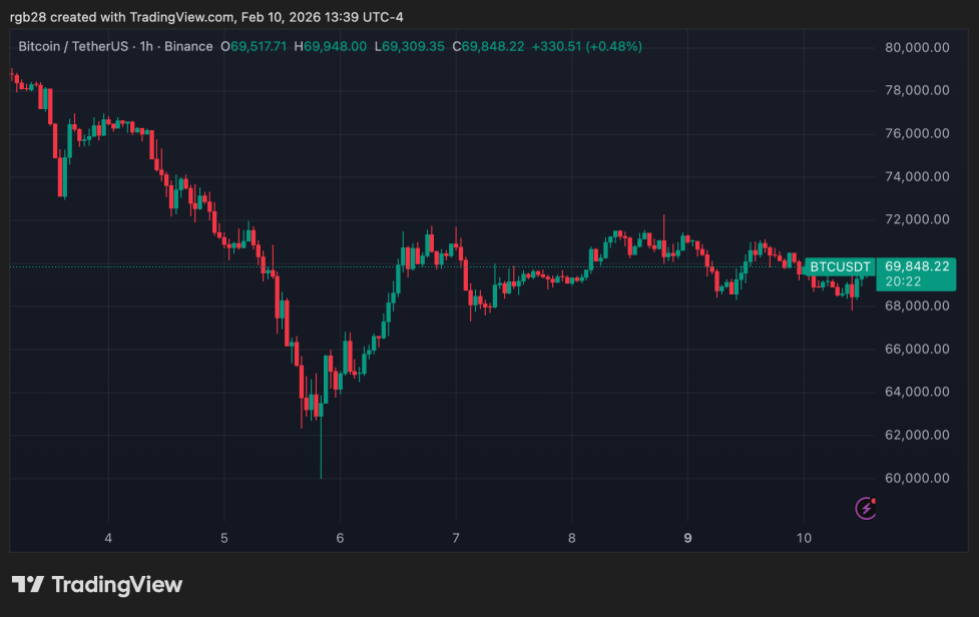
Bitcoin (BTC) trades at $69,848 in the one-week chart. Source: BTCUSDT on TradingView


Leituras Relacionadas

From Theft to Re-entry: How Was $292 Million "Laundered"?

A sophisticated crypto laundering operation was executed following the $292 million hack of Kelp DAO on April 18. The attack, attributed to the North Korean Lazarus group, began with anonymous infrastructure preparation using Tornado Cash to fund wallets untraceably. The hacker exploited a vulnerability in Kelp’s cross-chain bridge, stealing 116,500 rsETH. To avoid crashing the market, the attacker used Aave and Compound as laundering tools—depositing the stolen rsETH as collateral to borrow $190 million in clean, liquid ETH. This move triggered a bank run on Aave, causing an $8 billion drop in TVL. After consolidating funds, the attacker fragmented them across hundreds of wallets to evade detection. A major breakpoint was THORChain, where over $460 million in volume—30 times its usual activity—was processed in 24 hours, converting ETH into Bitcoin. This shift to Bitcoin’s UTXO model exponentially increased tracing complexity by shattering funds into countless untraceable fragments. The final destination was Tron-based USDT, the primary channel for illicit crypto flows. From there, funds were cashed out via OTC brokers in China and Southeast Asia, using unlicensed underground banks and UnionPay networks outside Western sanctions scope. Ultimately, the laundered money supports North Korea’s weapons programs, which rely heavily on crypto hacking for foreign currency. The incident underscores structural challenges in DeFi: its openness, composability, and lack of central control make such laundering not just possible, but inherently difficult to prevent.

marsbitHá 3h

From Theft to Re-entry: How Was $292 Million "Laundered"?

marsbitHá 3h

Trading

Spot
Futuros

Artigos em Destaque

Como comprar BAN

Bem-vindo à HTX.com!Tornámos a compra de Comedian (BAN) simples e conveniente.Segue o nosso guia passo a passo para iniciar a tua jornada no mundo das criptos.Passo 1: cria a tua conta HTXUtiliza o teu e-mail ou número de telefone para te inscreveres numa conta gratuita na HTX.Desfruta de um processo de inscrição sem complicações e desbloqueia todas as funcionalidades.Obter a minha contaPasso 2: vai para Comprar Cripto e escolhe o teu método de pagamentoCartão de crédito/débito: usa o teu visa ou mastercard para comprar Comedian (BAN) instantaneamente.Saldo: usa os fundos da tua conta HTX para transacionar sem problemas.Terceiros: adicionamos métodos de pagamento populares, como Google Pay e Apple Pay, para aumentar a conveniência.P2P: transaciona diretamente com outros utilizadores na HTX.Mercado de balcão (OTC): oferecemos serviços personalizados e taxas de câmbio competitivas para os traders.Passo 3: armazena teu Comedian (BAN)Depois de comprar o teu Comedian (BAN), armazena-o na tua conta HTX.Alternativamente, podes enviá-lo para outro lugar através de transferência blockchain ou usá-lo para transacionar outras criptomoedas.Passo 4: transaciona Comedian (BAN)Transaciona facilmente Comedian (BAN) no mercado à vista da HTX.Acede simplesmente à tua conta, seleciona o teu par de trading, executa as tuas transações e monitoriza em tempo real.Oferecemos uma experiência de fácil utilização tanto para principiantes como para traders experientes.

545 Visualizações TotaisPublicado em {updateTime}Atualizado em 2025.03.21

Como comprar BAN

Discussões

Bem-vindo à Comunidade HTX. Aqui, pode manter-se informado sobre os mais recentes desenvolvimentos da plataforma e obter acesso a análises profissionais de mercado. As opiniões dos utilizadores sobre o preço de BAN (BAN) são apresentadas abaixo.

活动图片