ETFs See Net Inflows for Two Consecutive Weeks, On-Chain Gold Surpasses $6.1 Billion, Crypto Outperforms US Stocks This Week

marsbitPublicado em 2026-03-15Última atualização em 2026-03-15

Resumo

Cryptocurrency markets outperformed traditional equities this week, with assets like HYPE (+18.8%), Ethereum (+5.2%), and Bitcoin (+4.7%) posting gains. Crypto ETFs recorded net inflows for the second consecutive week, totaling $609.9 million, signaling renewed institutional interest amid macroeconomic uncertainty. HIP-3 open interest reached a record $1.3 billion, largely driven by oil futures, which now account for 31% of total open interest—a significant shift indicating growing demand for real-world asset exposure on-chain. Tokenized gold supply also surged, surpassing 1.2 million ounces (worth ~$6.1 billion), reflecting increased demand for blockchain-based hard assets. Other notable developments include Mastercard’s expanded crypto partnership program, Coinbase’s potential collaboration with Bybit, and Kraken’s progress toward direct Fed payment access. These trends suggest a broader shift of capital into crypto and tokenized real-world assets as macro conditions favor alternative stores of value.

Author: Artemis Analytics

Compiled by: Deep Tide TechFlow

Deep Tide Insight: This weekly report illustrates one thing with data—the crypto market is shifting from defense to offense. ETFs recording net inflows for two consecutive weeks, on-chain gold tripling in scale, and HIP-3 open interest hitting a record high—the simultaneous strength of these three trends reflects macro uncertainties driving capital to reprice hard assets.

Market Overview: Weekly Review

Welcome back to Artemis' "Digital Finance Fundamentals" weekly report!

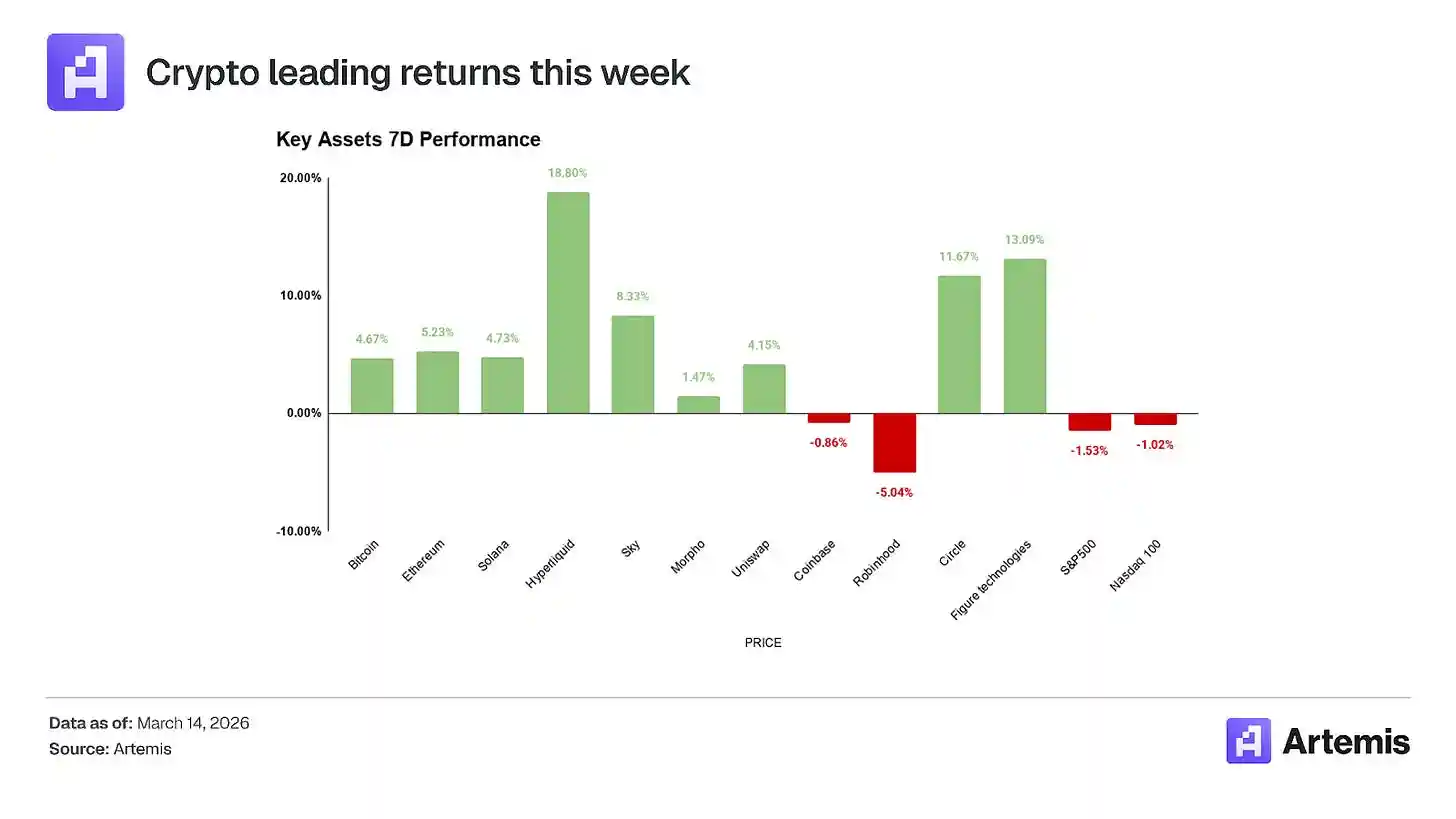
This week, crypto asset returns significantly outperformed. HYPE was the standout performer, surging +18.8% over the past 7 days; Figure Technologies (+13.1%) and Circle (+11.7%) also posted substantial gains. Among mainstream assets, Ethereum (+5.2%), Solana (+4.7%), and Bitcoin (+4.7%) all advanced, with Uniswap (+4.2%) and SKY (+8.3%) further boosting the overall rally in digital assets.

Notably, crypto clearly outperformed traditional stocks this week. Although digital assets and crypto-related stocks were mostly in the green, Coinbase (-0.9%) and Robinhood (-5.0%) underperformed the broader market, showing more divergence at the equity level. Among traditional benchmarks, the S&P 500 fell -1.5% weekly, and the Nasdaq 100 declined -1.0%. Overall, risk appetite clearly flowed back into crypto assets, with tokens and some crypto-linked instruments significantly outperforming the market.
Highlights of the Week

HIP-3 open interest and trading volume hit record highs, driven by oil futures

Crypto ETFs see net inflows for two consecutive weeks

On-chain tokenized gold supply exceeds 1.2 million ounces

1. HIP-3 Open Interest and Volume Hit Record Highs, Oil Futures Become Key Driver
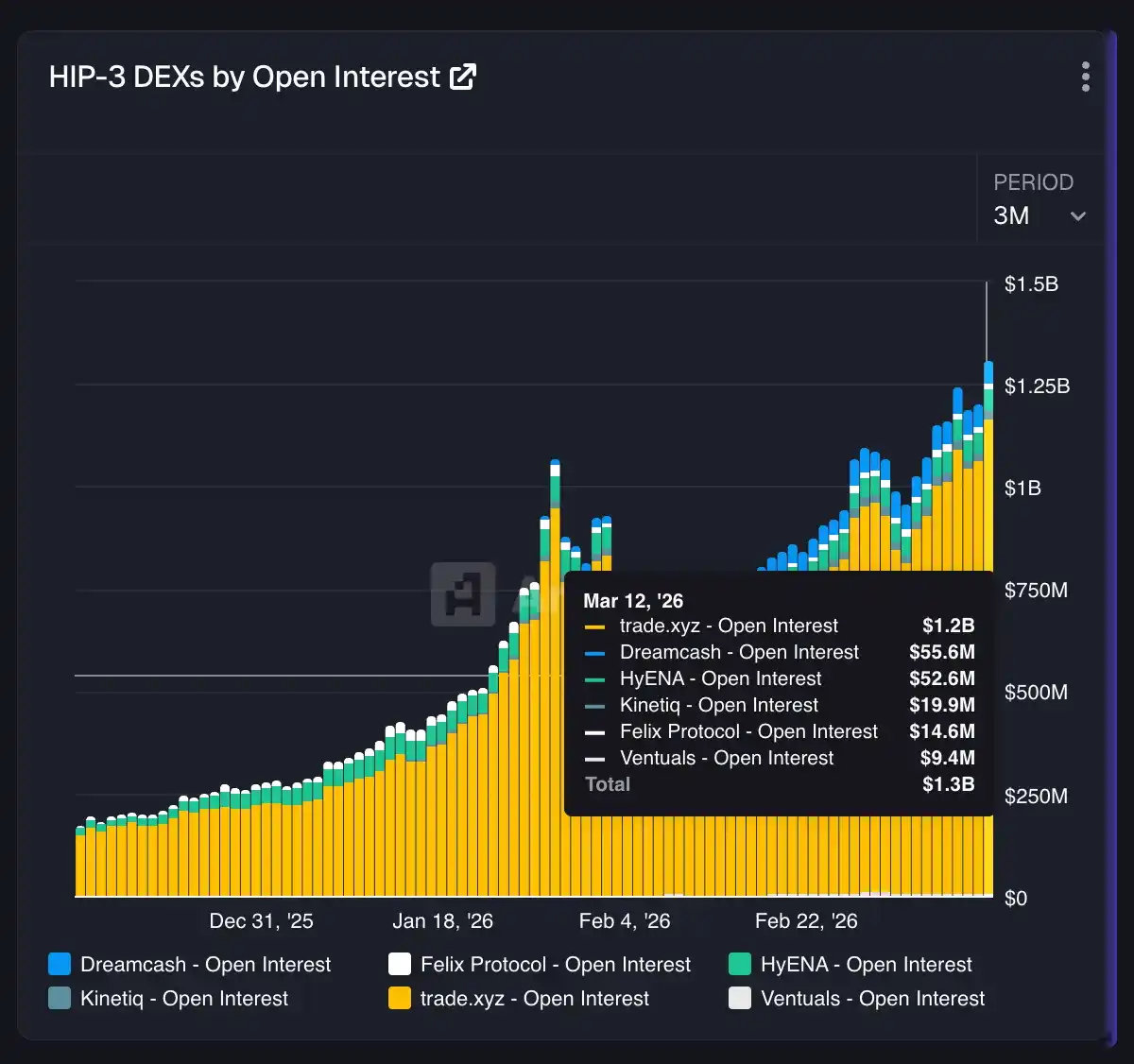
HIP-3 market open interest (OI) reached another record high this week: on March 12, total OI hit approximately $1.3 billion. The platform trade.xyz contributed about $1.2 billion of this, with smaller platforms like Dreamcash and HyENA providing additional depth.
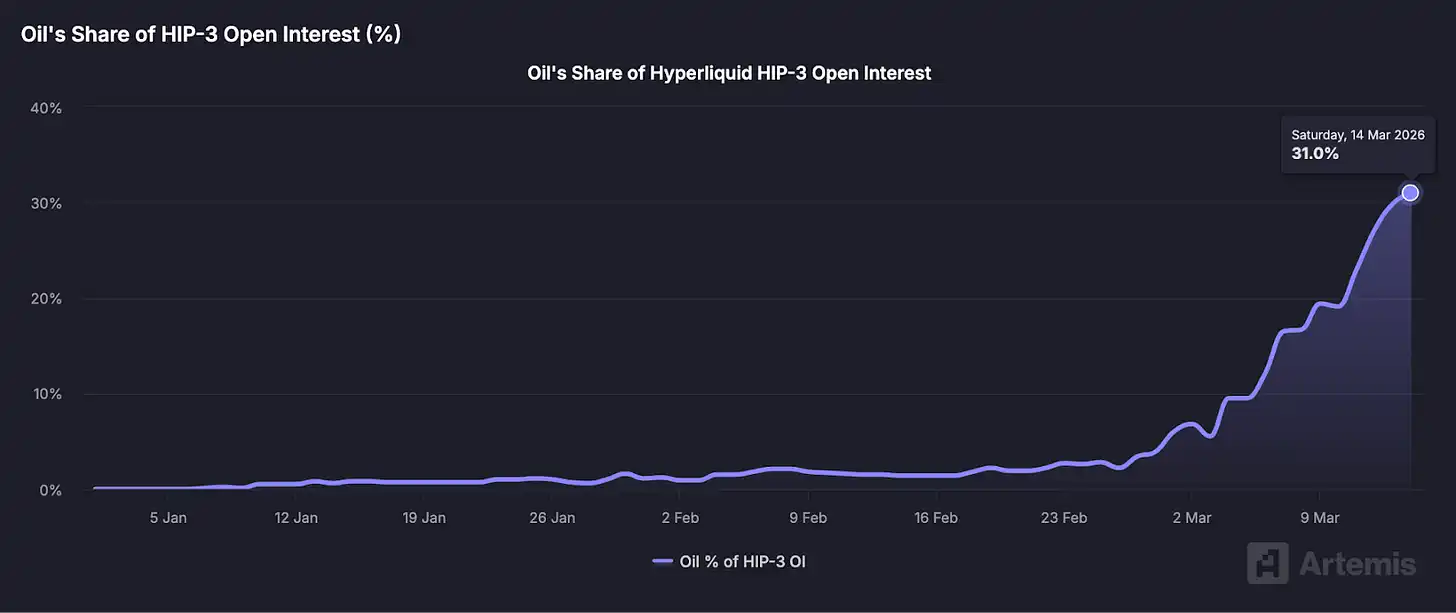
More important than the absolute numbers is the shift in drivers. Oil's share of HIP-3 total open interest rose to 31% by March 14—up from nearly negligible levels for most of January and February. In less than two weeks, oil went from a marginal role to one of the most in-demand sources in the entire ecosystem.

This shift signals that HIP-3 is evolving beyond crypto-native long-tail experiments into a truly permissionless venue for macro expression. When offshore traders seek quick exposure to oil, indices, and event-driven volatility, capital is accelerating its flow on-chain. If this trend continues, HIP-3 could become the clearest case of on-chain markets beginning to capture global commodity flows.

2. Crypto ETFs See Net Inflows for Two Consecutive Weeks

Crypto ETF flows remained positive for the second consecutive week, further indicating a resurgence in institutional demand. For the week ending March 8, net inflows totaled $609.9 million, led by Bitcoin ETFs (+$568.5 million), with healthy inflows also seen in Ethereum (+$23.5 million) and Solana (+$22.0 million). Ripple-related products saw minor outflows (-$4.1 million), but overall flows remained positive.
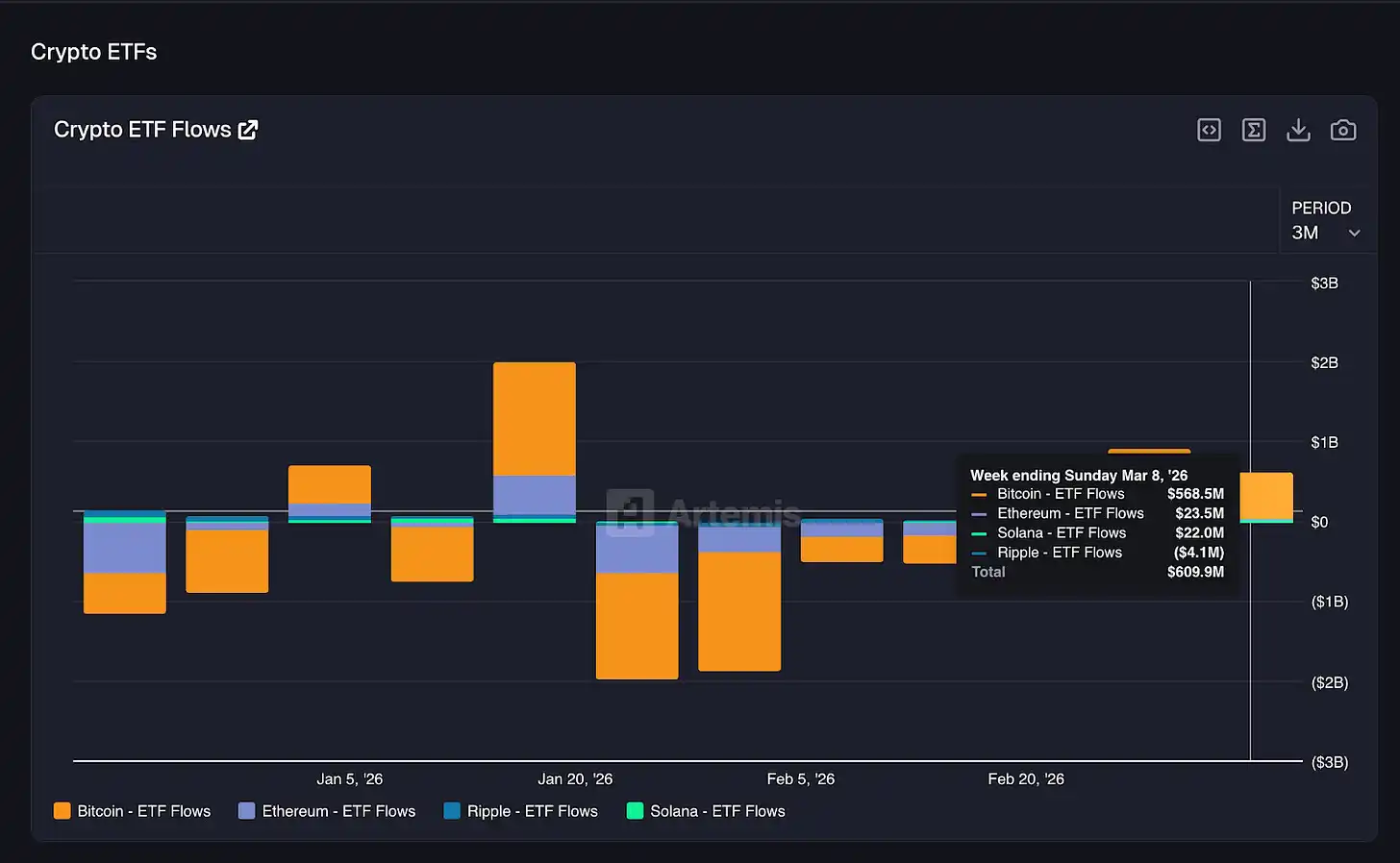
The more critical takeaway: this no longer appears to be a one-week rebound. After weeks of pressure, two consecutive weeks of positive data suggest asset allocators are gradually rebuilding crypto exposure.

The macro logic supporting these sustained flows is directly related to the Iran conflict.
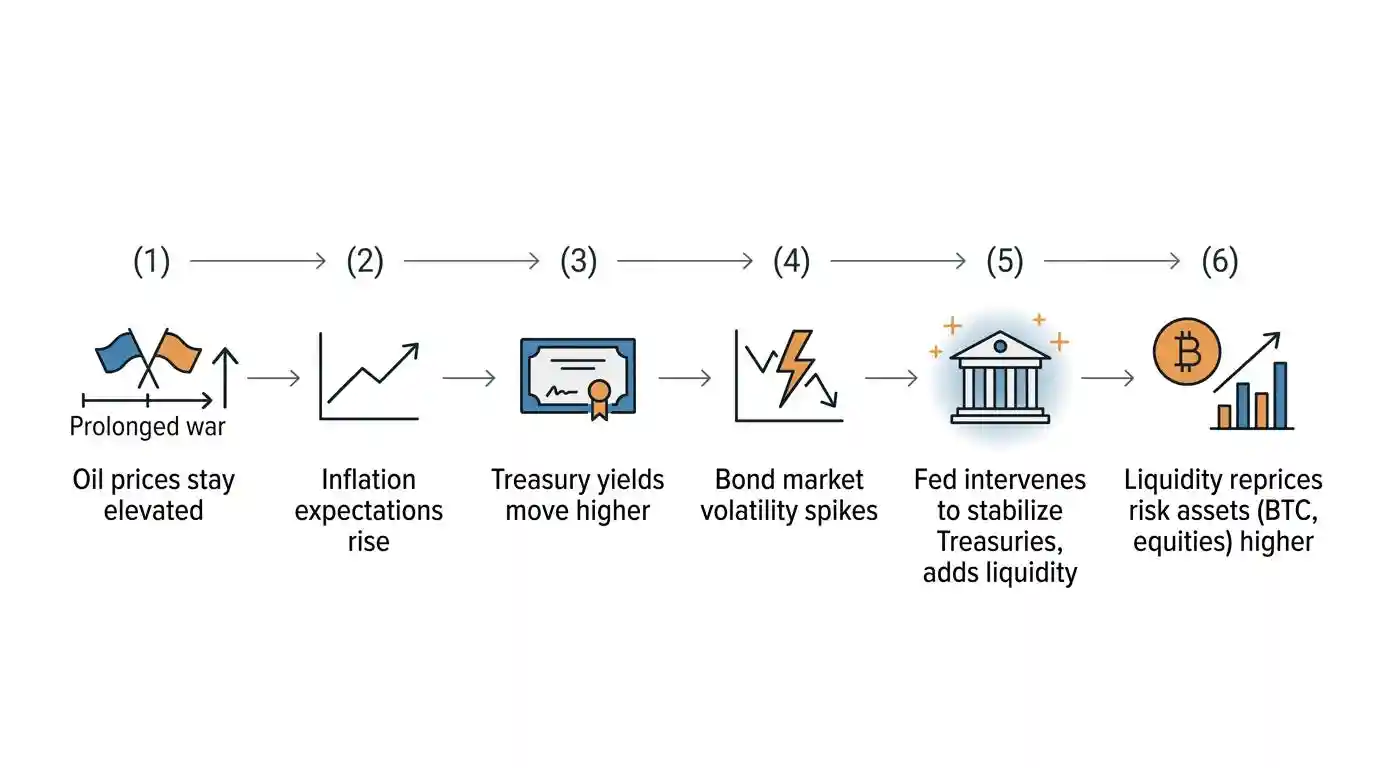
(Hayes' "iOS Warfare" is currently the most detailed exposition of this logic.)

The macro backdrop may continue to provide support. Geopolitical tensions, rising oil prices, and the market's reassessment of Fed rate cut expectations are pushing investors to more seriously consider hard assets and alternative stores of value. If macro uncertainties persist, ETF demand could remain robust as allocators rebuild crypto positions.

3. On-Chain Tokenized Gold Supply Exceeds 1.2 Million Ounces

Tokenized gold supply continued to breakneck growth this week, with on-chain holdings reaching approximately 1.2 million ounces, equivalent to about $6.1 billion. Compared to less than $2 billion just under a year ago, the rapid growth highlights investors' accelerating demand for blockchain-based hard asset exposure.
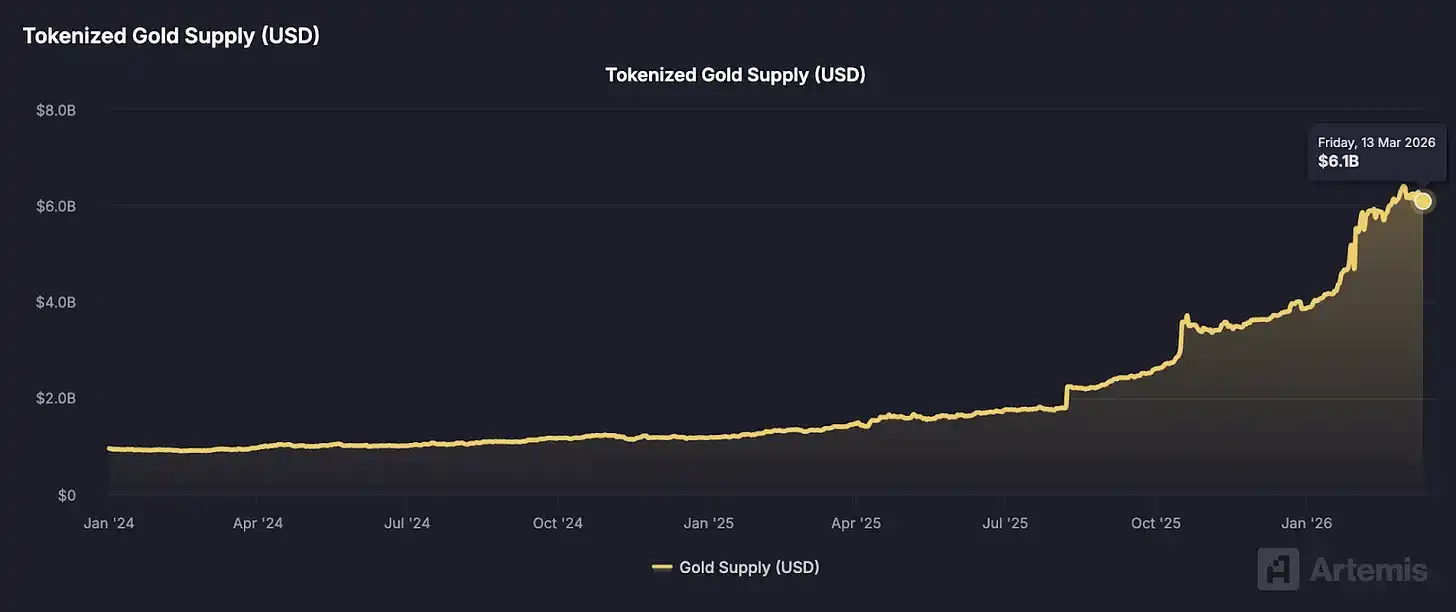
Amid increasing macro uncertainty dominating markets, tokenized gold is benefiting from two trends: gold's traditional role as a safe-haven asset, and growing acceptance of its on-chain wrapped form as a circulation channel.

The bigger conclusion: tokenization is no longer just a payments or stablecoin story; it is meaningfully extending to store-of-value assets, with gold emerging as one of the clearest real-world beneficiaries.

Chart of the Week

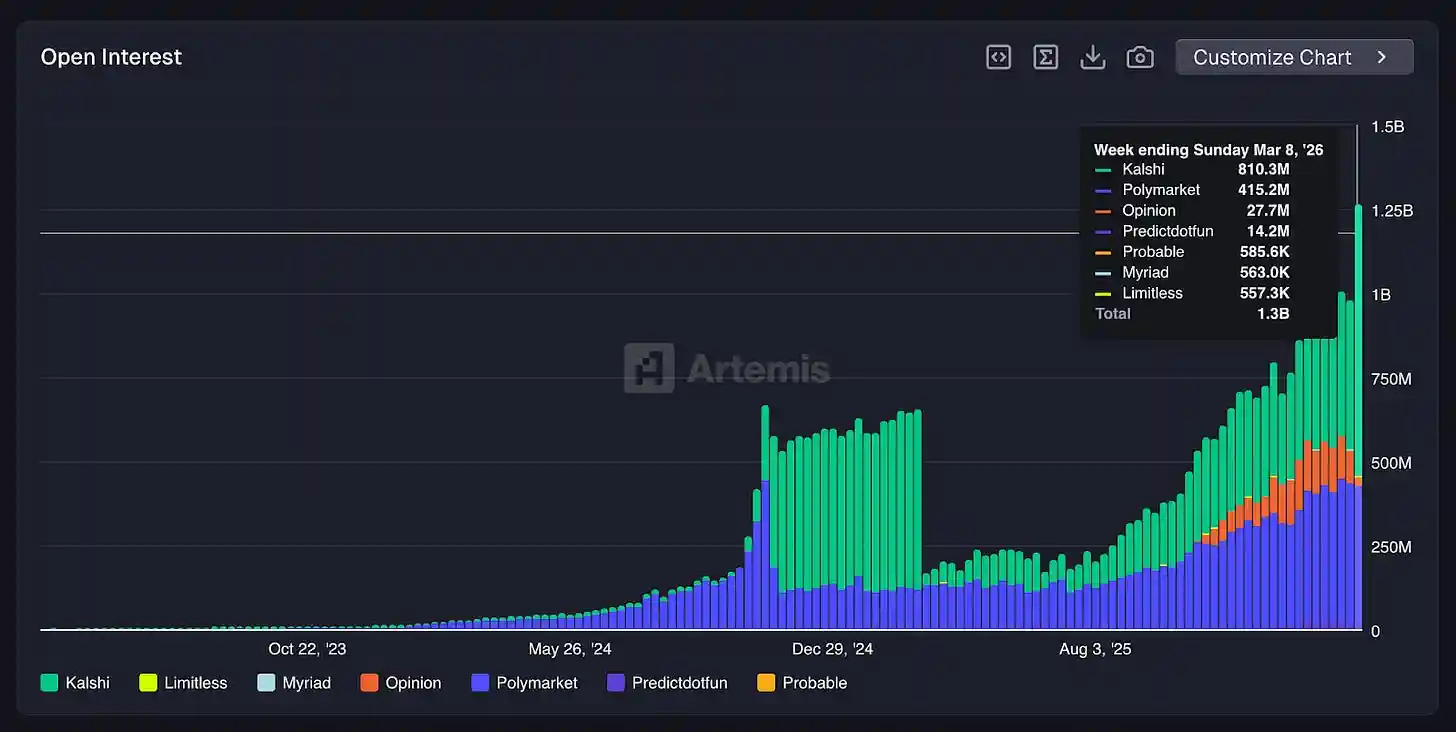
Prediction markets continued growing this week, with total open interest reaching approximately $1.3 billion, led by Kalshi and Polymarket. Traders are increasingly using event markets to express real-time views on political, macro, and geopolitical volatility. This landscape is worth watching—it indicates demand has expanded beyond pure crypto price speculation into broader real-world information and probability pricing markets.
Other Noteworthy News

Mastercard launches large-scale crypto partnership program. On March 11, Mastercard announced a new crypto collaboration program involving over 85 institutions, including Binance, Circle, Ripple, PayPal, Gemini, and Paxos. The initiative aims to leverage stablecoins and digital assets to support cross-border payments, B2B transfers, and global settlement on networks like Solana, Polygon, Avalanche, and Aptos. This marks another step in the integration of blockchain payment infrastructure with the mainstream financial system.

Coinbase in talks with Bybit for potential investment partnership. Reports on March 14 indicated Coinbase is negotiating a possible investment or strategic partnership with Bybit. A deal would bring Bybit closer to the compliant US market, while Coinbase would gain access to one of the largest offshore exchanges globally. From a macro perspective, such talks confirm a trend: as market structure matures, major global exchanges are increasingly aligning with regulated counterparts.

BitGo selected by SoFi to provide infrastructure and institutional distribution support for SoFiUSD. This partnership makes BitGo the core provider for issuance, custody, and distribution of SoFi's bank-issued stablecoin, with institutional clients able to access SoFiUSD directly via BitGo's platform. This again shows regulated banks moving from stablecoin experimentation to actual deployment, backed by crypto-native infrastructure providers.

Kraken's banking unit moves closer to US direct payment access. Kraken Financial's pursuit of a Federal Reserve master account continues to draw attention as one of the most significant infrastructure developments in the space. Direct access to Fedwire and related payment channels would reduce friction for institutional fiat transfers, representing another case of crypto companies integrating into core financial plumbing rather than building alternatives.


Perguntas relacionadas

QWhat were the main drivers behind the record high in HIP-3 open interest, and why is this significant?

AThe record high in HIP-3 open interest was primarily driven by a surge in oil futures, which grew from a negligible share to 31% of the total in under two weeks. This is significant because it signals that HIP-3 is evolving from a crypto-native experiment into a permissionless venue for macro-economic expression, potentially capturing global commodity flows on-chain.

QWhat does the data show about cryptocurrency ETF flows for the week ending March 8th?

ACryptocurrency ETF flows were positive for the second consecutive week, with a net inflow of $609.9 million. Bitcoin ETFs led with an inflow of $568.5 million, followed by Ethereum ($23.5 million) and Solana ($22 million), indicating a rebuilding of institutional crypto exposure.

QHow much has the supply of on-chain tokenized gold grown, and what does this trend indicate?

AThe supply of on-chain tokenized gold has grown to approximately 1.2 million ounces, valued at around $6.1 billion, a significant increase from less than $2 billion a year ago. This rapid growth indicates rising investor demand for blockchain-based hard asset exposure and greater acceptance of tokenized forms of traditional safe-haven assets.

QAccording to the report, how did the performance of crypto assets compare to traditional stocks this week?

ACrypto assets significantly outperformed traditional stocks this week. Major cryptocurrencies like HYPE (+18.8%), Ethereum (+5.2%), Solana (+4.7%), and Bitcoin (+4.7%) posted gains, while traditional benchmarks like the S&P 500 (-1.5%) and Nasdaq 100 (-1.0%) declined, showing a clear shift in risk appetite towards crypto assets.

QWhat major partnership did Mastercard announce, and what is its goal?

AMastercard announced a new Crypto Partner Program involving over 85 institutions, such as Binance, Circle, and PayPal. The program aims to leverage stablecoins and digital assets on networks like Solana and Polygon to support cross-border payments, B2B transfers, and global settlement, marking a step towards integrating blockchain payment infrastructure with the mainstream financial system.

Leituras Relacionadas

Stuck Polymarket: The Real Test After Riding the Traffic Boom Has Arrived

Polymarket, a leading prediction market platform, is facing significant technical challenges as its growth outpaces its current infrastructure on Polygon. Users are experiencing laggy transactions, unresponsive orders, and delayed confirmations, severely impacting the trading experience. In response, DeFi Engineering VP Josh Stevens outlined a comprehensive engineering overhaul. The plan includes reducing on-chain data delays, fixing order cancellation issues, rebuilding the central limit order book (CLOB), improving website performance, and developing a unified SDK and API. A major revelation was the ongoing "chain migration," indicating a potential move away from Polygon. The core issue is that Polymarket has evolved from a simple prediction market into a high-frequency trading platform, making Polygon's limitations—such as block space, gas fees, and block time—a ceiling for further growth. The migration is not just a simple chain switch but a fundamental rebuild of its trading system to support more complex products like perpetual contracts (Perps). This announcement has sparked competition among chains like Solana, Sui, and Algorand, all vying to host Polymarket. For Polygon, losing this key application, which contributes significantly to its gas fee revenue, would be a major setback. The real test for Polymarket is no longer attracting users but proving it can provide a stable, reliable trading environment that retains them.

Odaily星球日报Há 52m

Stuck Polymarket: The Real Test After Riding the Traffic Boom Has Arrived

Odaily星球日报Há 52m

Lowering Expectations for BTC's Next Bull Market

The author, Alex Xu, explains his decision to significantly reduce his Bitcoin holdings (from full to ~30% of his portfolio) during the current bull cycle, citing a lowered long-term outlook for BTC's price appreciation in the next cycle. He outlines six key reasons for this reduced expectation: 1. **Diminished Growth Drivers:** The narrative of exponential user adoption has largely played out with institutional ETF adoption. The next major growth phase—adoption by sovereign national reserves or central banks—seems unlikely in the near future. 2. **Personal Opportunity Cost:** More attractive investment opportunities have emerged in other assets, such as undervalued companies. 3. **Industry-Wide Contraction:** The broader crypto industry is struggling, with most Web3 business models (SocialFi, GameFi, DePIN) failing. This overall萧条 (depression) reduces the fundamental demand and consensus for Bitcoin. 4. **Strain on Major Buyer:** MicroStrategy, a major corporate buyer of BTC, faces rising financing expenses for its debt, which could slow its purchasing rate and create significant marginal pressure on the market. 5. **Increased Competition from Gold:** The emergence of "tokenized gold" has closed the functional gap (portability, divisibility) between physical gold and Bitcoin, offering a strong competitor in the non-sovereign store-of-value space. 6. **Security Budget Concerns:** The block reward halving continues to exacerbate the long-standing issue of funding Bitcoin's network security, with new fee source explorations like Ordinals and L2s largely failing. The author's decision to hold a significant (though reduced) position reflects a cautious, not bearish, outlook. He remains open to increasing his exposure if the fundamental reasons for his skepticism change or if new positive catalysts emerge.

marsbitHá 1h

Lowering Expectations for BTC's Next Bull Market

marsbitHá 1h

Can Iran 'Control' the Strait of Hormuz?

Iran has announced a comprehensive plan to assert control over the strategic Strait of Hormuz, a critical global oil shipping chokepoint. The proposed measures include requiring all vessels to obtain Iranian permission for passage, imposing fees for security, environmental protection, and navigation management—preferably paid in Iranian rials—and absolutely banning Israeli ships. Vessels from countries deemed hostile by Iran’s top security bodies may also be barred. Analysts suggest Iran’s motives are multifaceted: increasing pressure on the U.S. and Israel by leveraging control over oil transit to influence global prices and inflation; creating a new revenue stream, potentially exceeding $7.7 billion annually, to counter Western sanctions and support postwar reconstruction; and using transit permissions as bargaining chips in future negotiations, notably with the U.S. However, the plan faces significant practical and diplomatic challenges. Enforcing comprehensive interception and fee collection in the busy waterway, patrolled by international military forces, would be difficult. The U.S. has already countering with a blockade of Iranian ports and threats to intercept any ship paying fees, potentially strangling Iran’s oil exports and fee revenue. Broad international opposition, led by European and Gulf states, and legal controversies further complicate implementation. The proposal may ultimately serve more as a negotiating tactic than a feasible policy, with its execution remaining highly uncertain.

marsbitHá 2h

Can Iran 'Control' the Strait of Hormuz?

marsbitHá 2h

Trading

Spot
Futuros
活动图片




