Encrypted Workplace Survey: Low Salaries Widespread and Layoffs Without Compensation, How Should Practitioners Respond?

比推Publicado em 2025-12-26Última atualização em 2025-12-26

Resumo

Based on a survey of 506 professionals, the crypto industry's workplace reality is revealed to be starkly different from its "get-rich-quick" myth. Key findings show over 70% of respondents earn a monthly salary below $4,000, with compensation and benefits lagging behind traditional tech sectors. Nearly half have experienced layoffs, and 40% of those received no severance pay. Furthermore, 70% reported never receiving token-based incentives, and a quarter are in a "pay-to-work" situation, having lost money overall in the sector. Despite these challenges, factors like remote work flexibility (available to 70%), manageable working hours, and the freedom to take on side jobs contribute to a moderate job satisfaction score of 3.51/5. Over 80% of respondents plan to remain in the industry, driven by the long-term goal of accumulating $1-5 million for retirement, though most are pessimistic about the 2026 job market outlook.

Author: Deep Tide TechFlow

Original Title: 2025 Crypto Industry Workplace Survey: 70% Earn Less Than $4,000 Monthly, N+1 Severance Becomes a Distant Hope


While Xiaohongshu still glorifies the "get-rich-quick myths" and "six-figure salaries" of Web3, what is the true state of the crypto industry?

Through 506 survey questionnaires, we engaged in a candid conversation with practitioners, and the results were surprising, even harsh: there is no gold rush here. Over 70% of people earn less than $4,000 per month, which is generally lower than in developed regions like Europe and the United States. Even a quarter of respondents are in a "pay-to-work" loss-making state; there is also no comprehensive protection, with nearly half having experienced layoffs, and most not receiving N+1 compensation.

Yet, despite this, over 80% choose to stay. Is it because of the 70% remote work freedom? Or is it because of the shared dream of "retiring with $5 million"?

In this report, we attempt to use cold, hard data to reveal the most genuine anxieties, desires, and survival strategies of Web3 workers.

This content is the questionnaire results section of the "Web3 Recruitment and Job Hunting 2025 Year-End Review: Who's Making Money, Who's Paying to Work?" Full report available at:

https://www.techflowpost.com/article/detail_29702.html

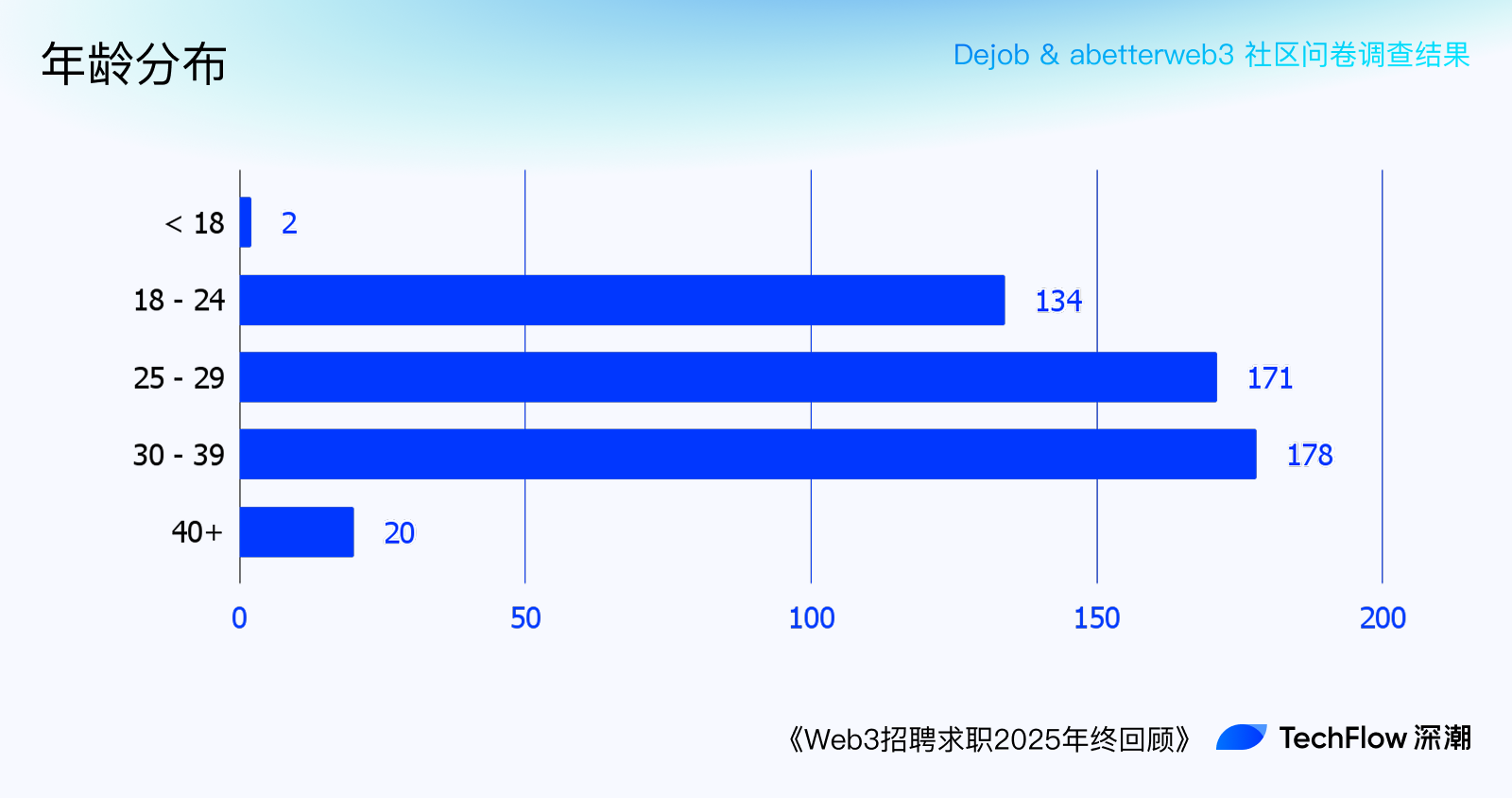
Regarding age distribution, the main workforce aged 18-29 is indeed the majority, but middle-aged practitioners (>30 years old) are also quite numerous. This might be related to the less severe "age 35 ceiling" in the Web3 industry. Compared to internet companies, Web3 companies value experience, ability, and efficiency more, with many hoping that seasoned professionals can quickly build products "plug-and-play".
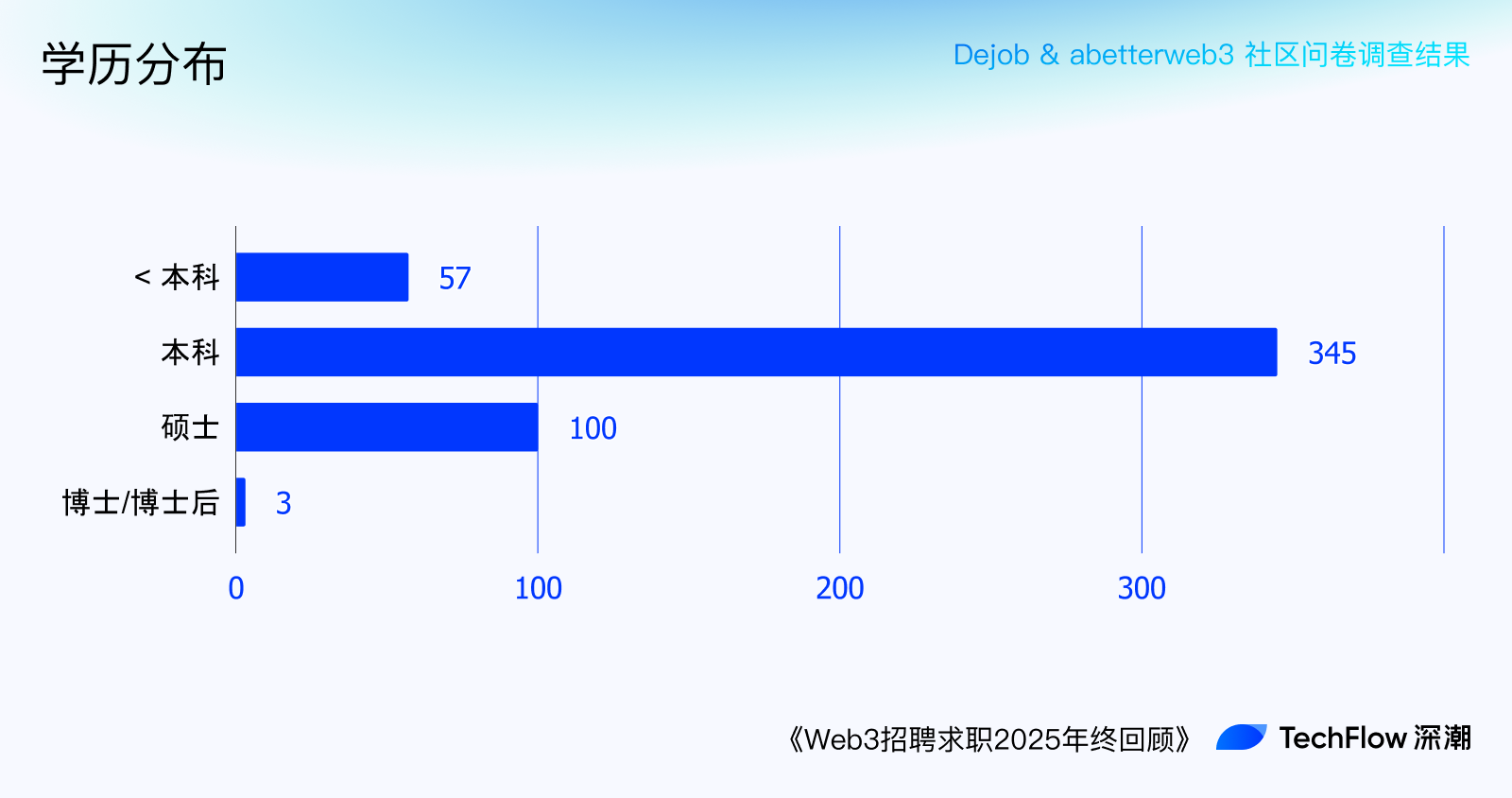
The distribution of educational background is largely consistent with the earlier talent data statistics, predominantly undergraduate degrees, with some having less than a bachelor's and others holding master's or doctoral degrees, though the proportion of postgraduates is not high.
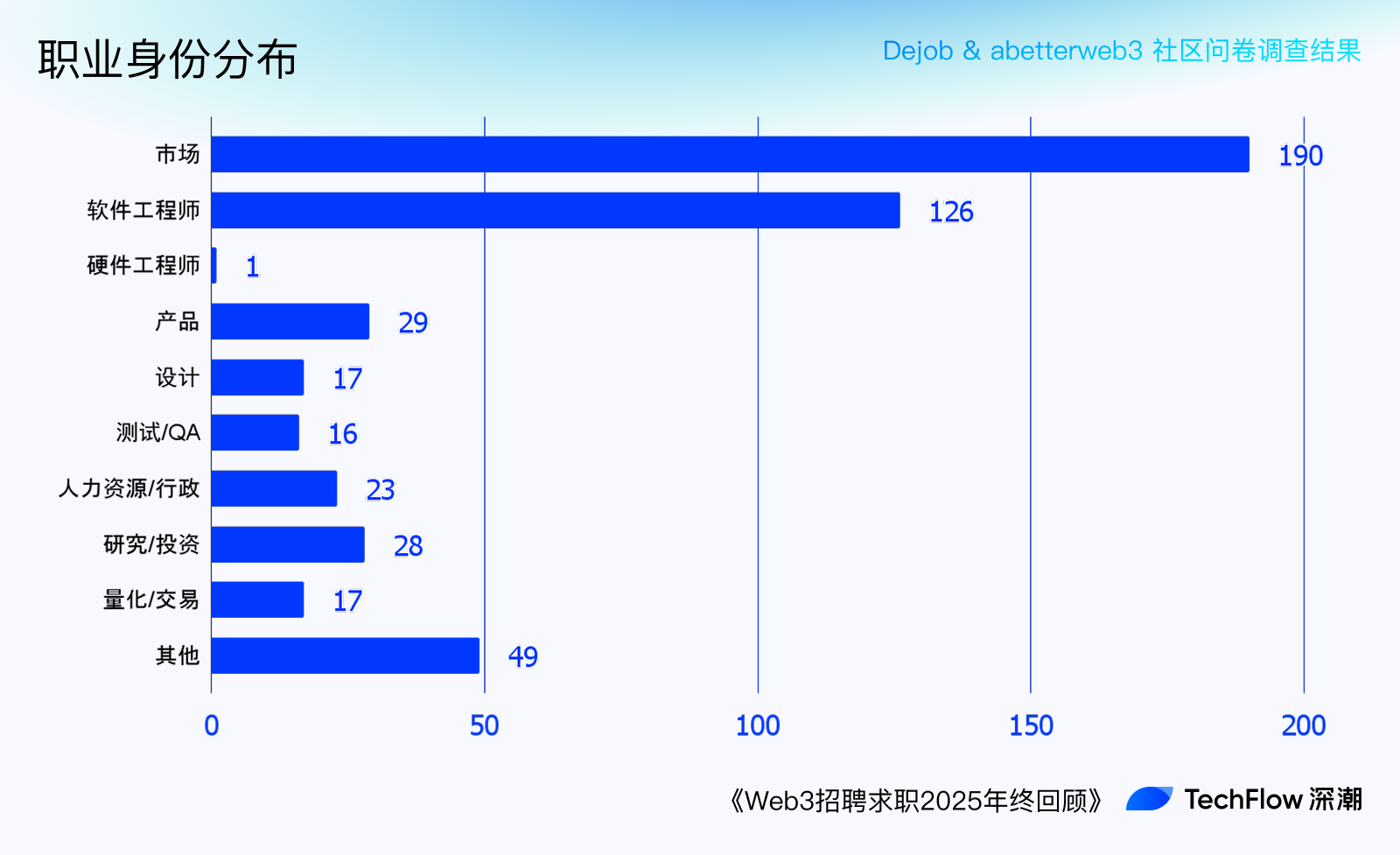
In terms of professional roles, the largest group is in market-related roles (operations/BD/customer service, etc.), followed by developers (front-end/back-end/smart contracts/blockchain, etc.). Then come product, human resources, investment research, design, trading, etc. Among the "other" submissions, common roles included risk control & security, KOLs, etc.
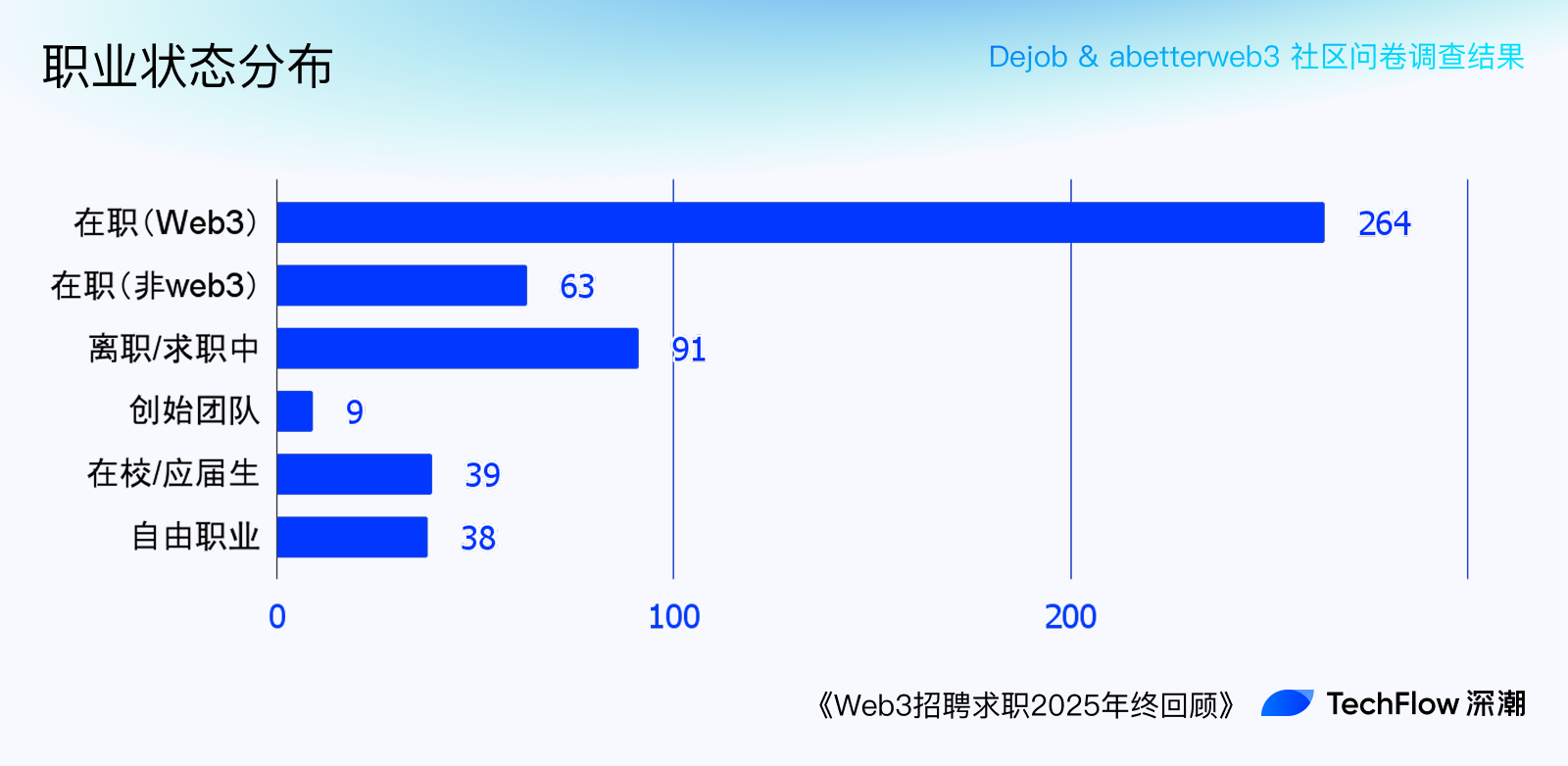
Regarding employment/attrition status, only 52% of respondents are currently employed in Web3. Over 30% are in a more flexible life situation. This indicates, on one hand, that market conditions affecting company headcount have impacted many; on the other hand, it might be because certain unique Web3 business models have made some people less reliant on traditional employment for cash flow, such as KOLs and traders.
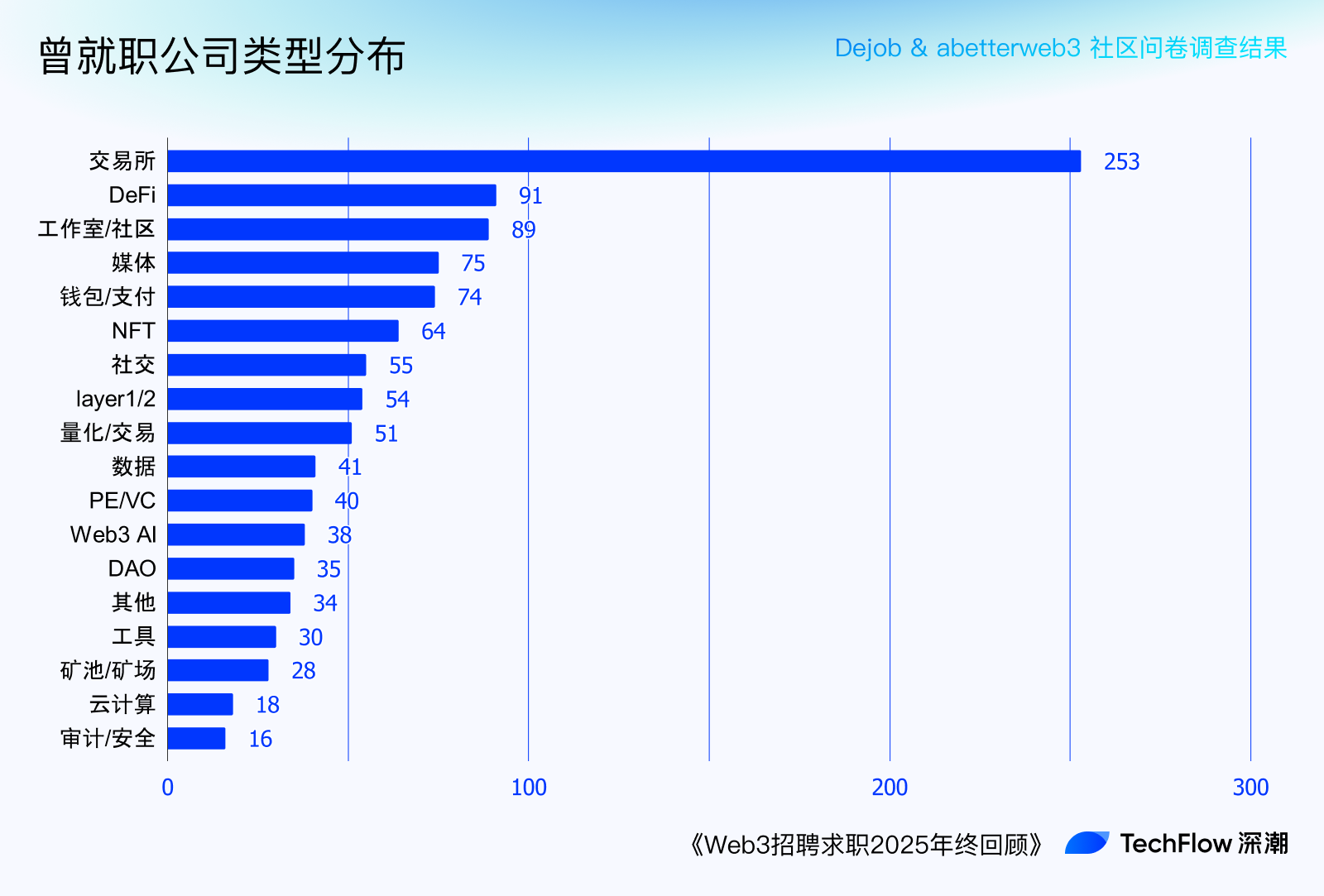
Over half of the submissions indicated having worked at exchanges, followed by studios/communities, DeFi, media, wallets, and other common business types. Both talent and job providers are heavily concentrated in exchanges due to the Matthew Effect. This also reflects, to some extent, the current industry dilemma: apart from exchanges, the revenue-generating capabilities of other business models mostly decrease from C-end — tools — underlying layers.
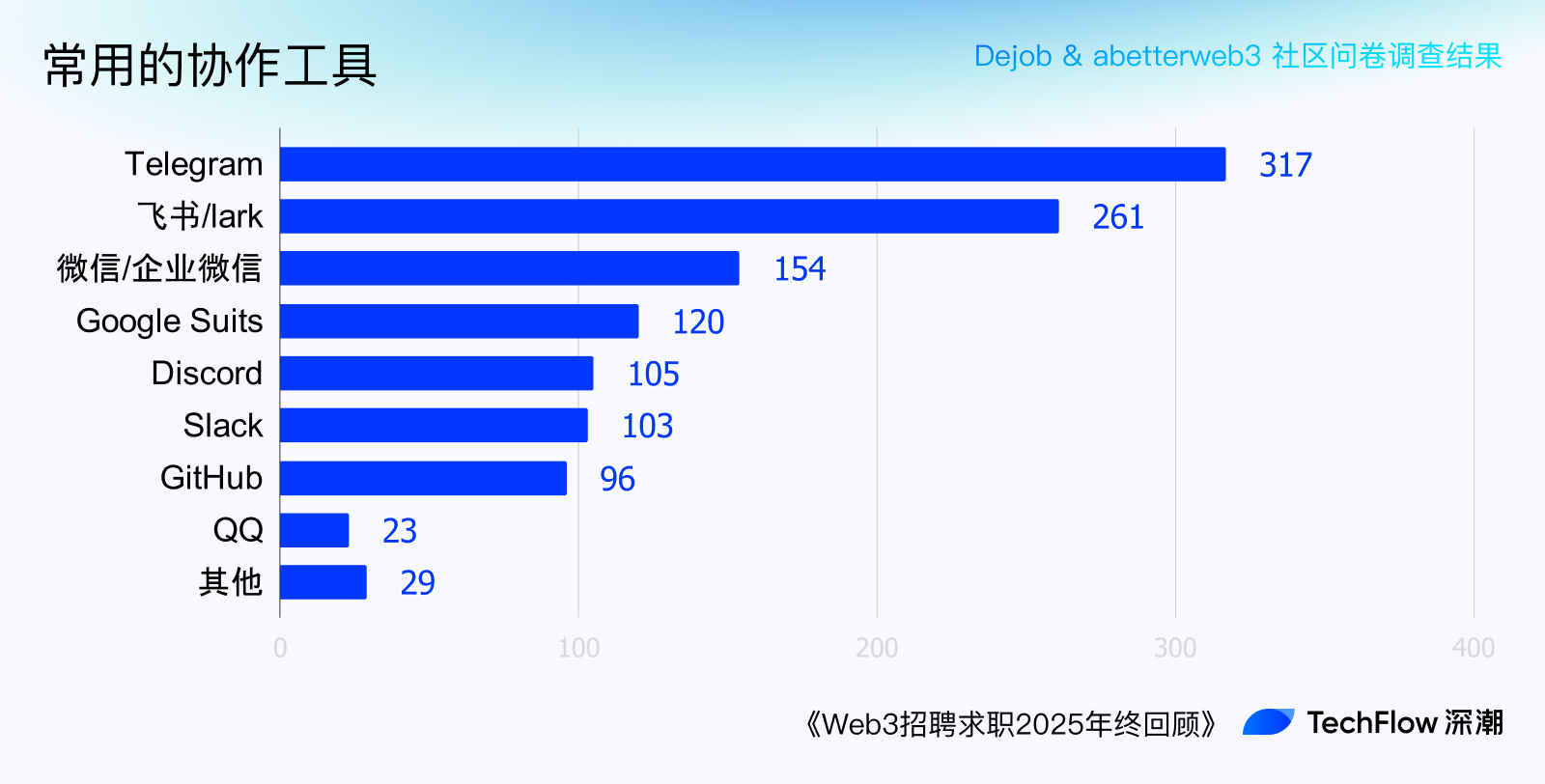
Regarding remote collaboration tools, as this survey took place in a Chinese-language vertical Web3 recruitment community, Telegram is favored by most companies for its confidentiality and usability, followed by mainstream Chinese tools like Feishu and WeChat, and finally tools commonly used by foreign companies like Google Suite, Discord, Slack, etc.
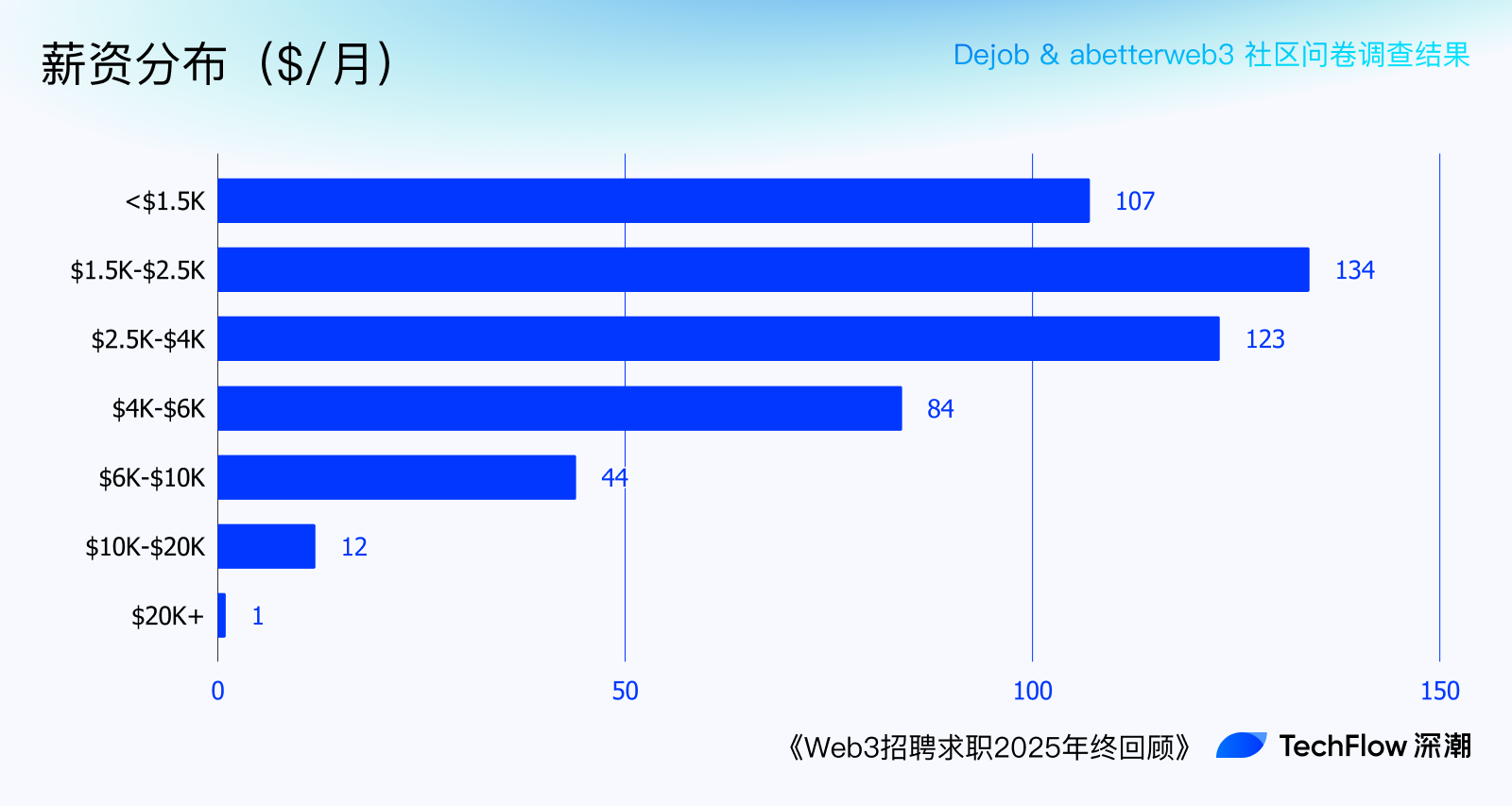
In terms of income levels, contrary to the external myths of immense wealth, most Web3 workers' incomes are not only lower than those in many top internet companies but also severely lacking in long-term incentives (tokens/equity), year-end bonuses, and layoff compensation.

Over 70% of people have a monthly salary income of less than $4,000 (approximately RMB 28,000), and the frequently mentioned monthly salary of $10,000 on Xiaohongshu is a rarity.
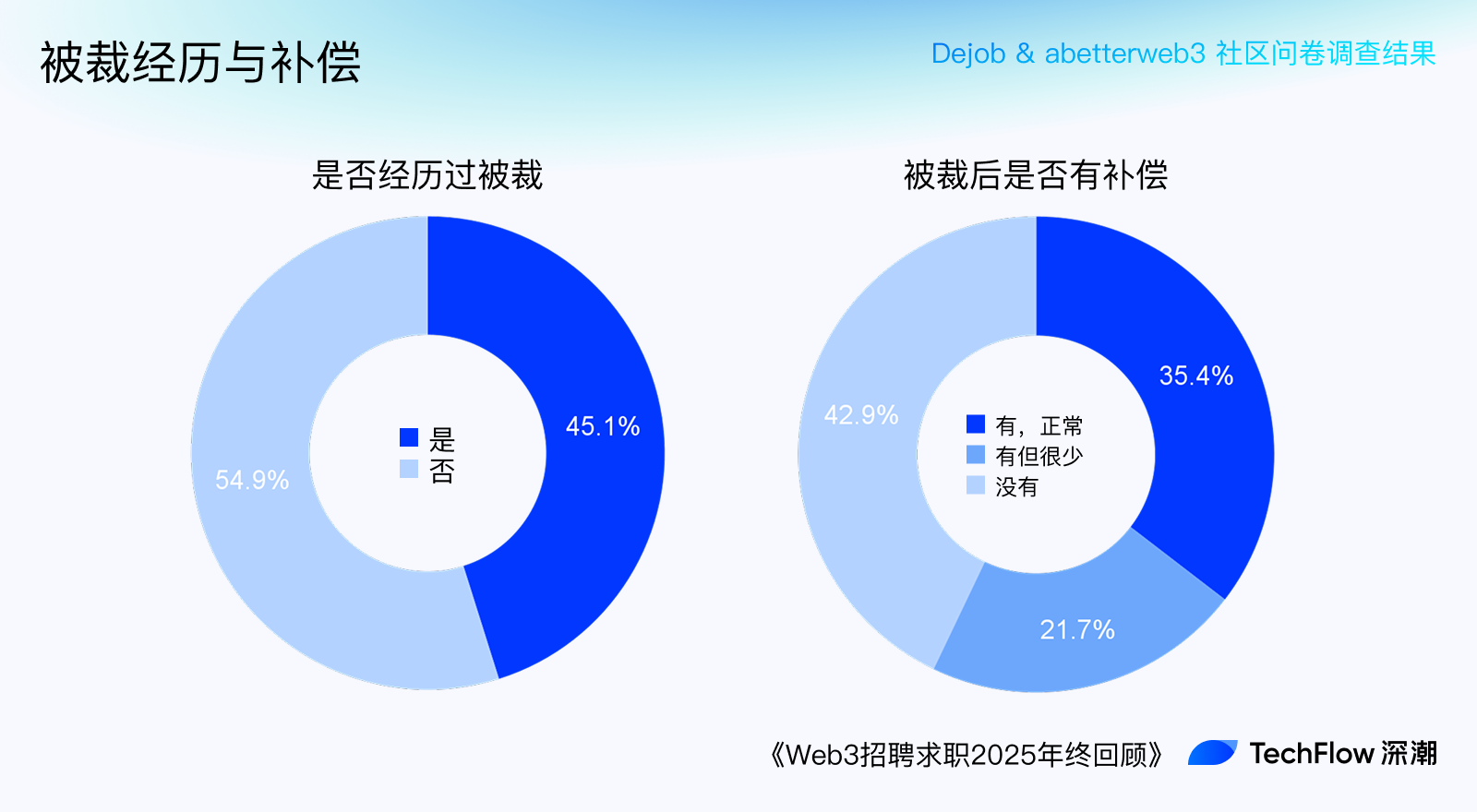
Close to half of the people have experienced layoffs, and 40% of those laid off reported no compensation, while 21% said that even if there was compensation, it fell far short of legal standards (e.g., n+1).
Nearly half reported not having received a year-end bonus; even among those who did, it was generally 1-3 months' salary, on par with most internet companies outside the Web3 industry.
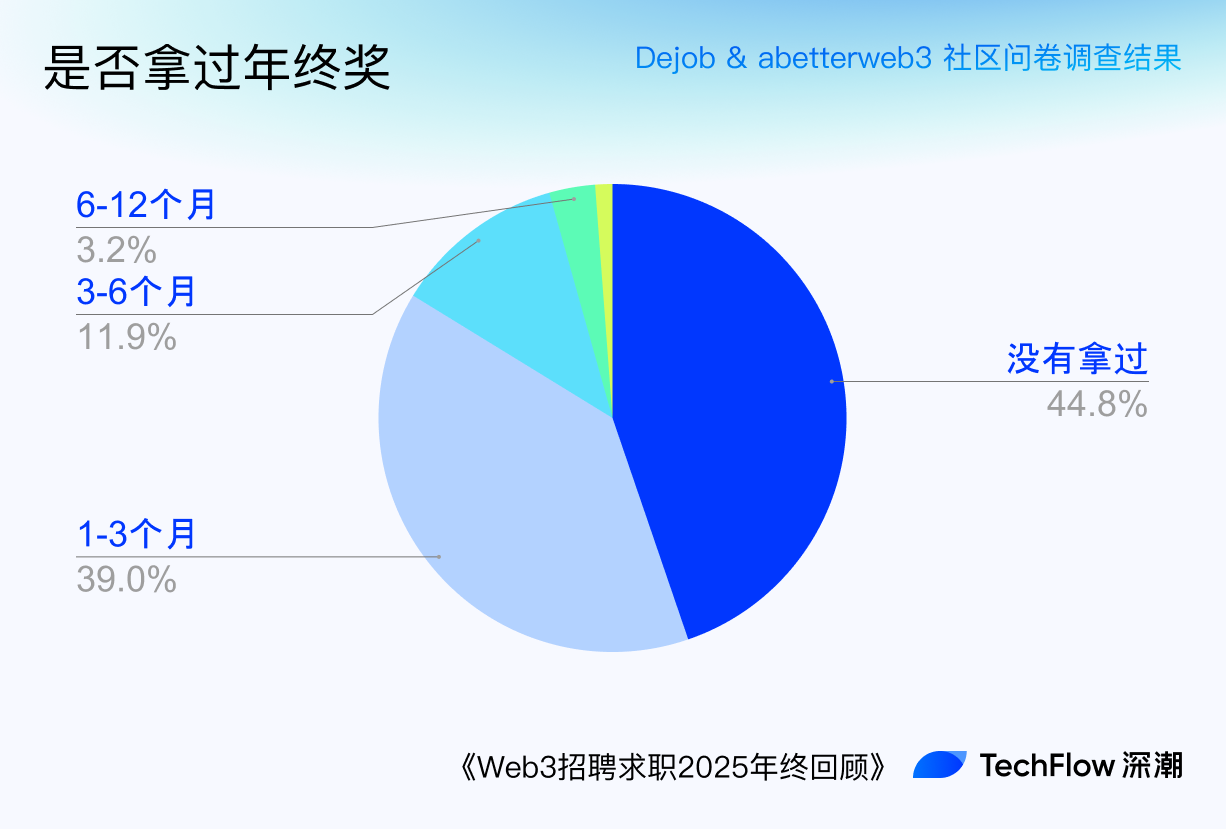
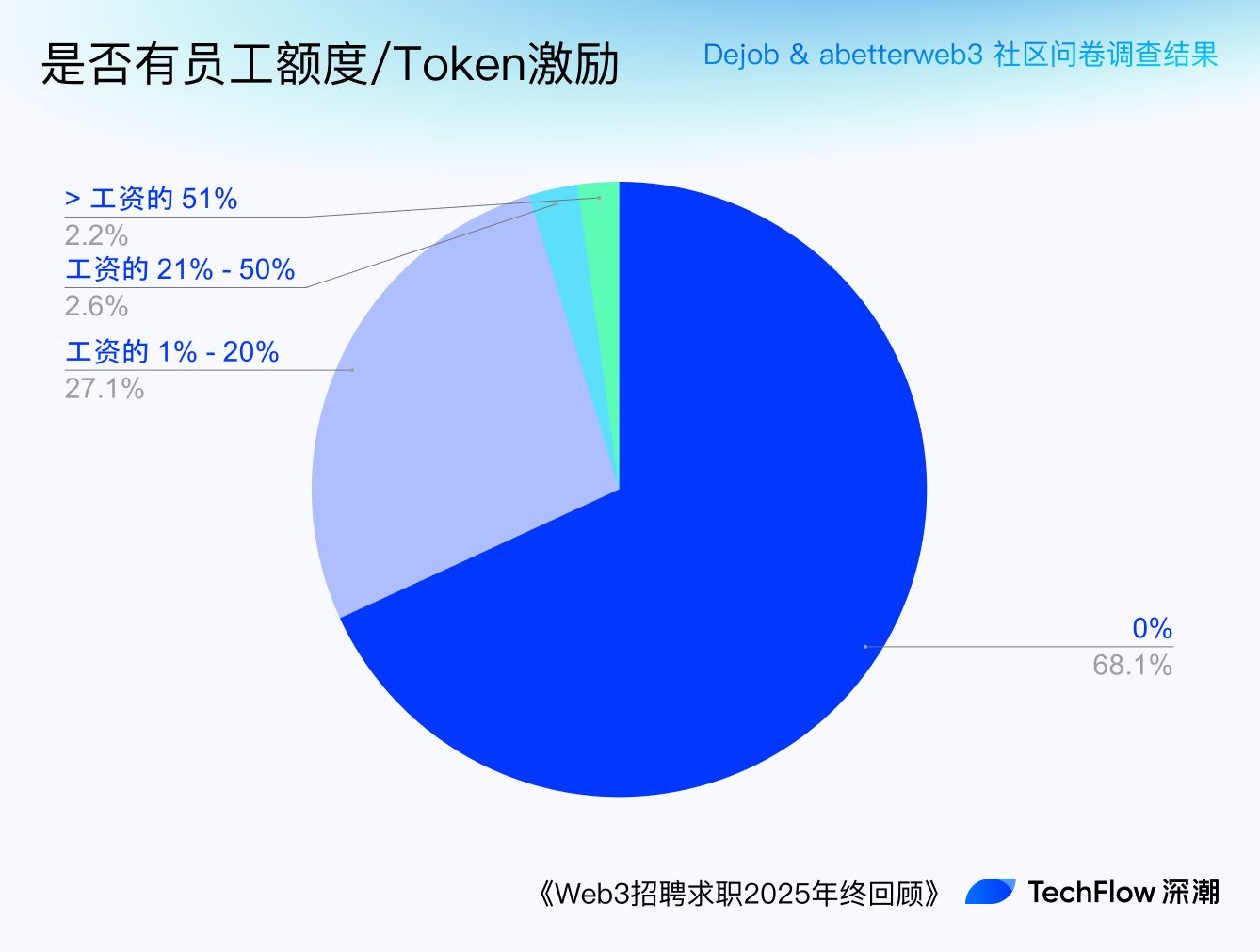
Regarding the well-known "upward channel" of token equity incentives, nearly 70% of practitioners reported not having received any. Even among those who did, very few received more than 20% of their salary's value.
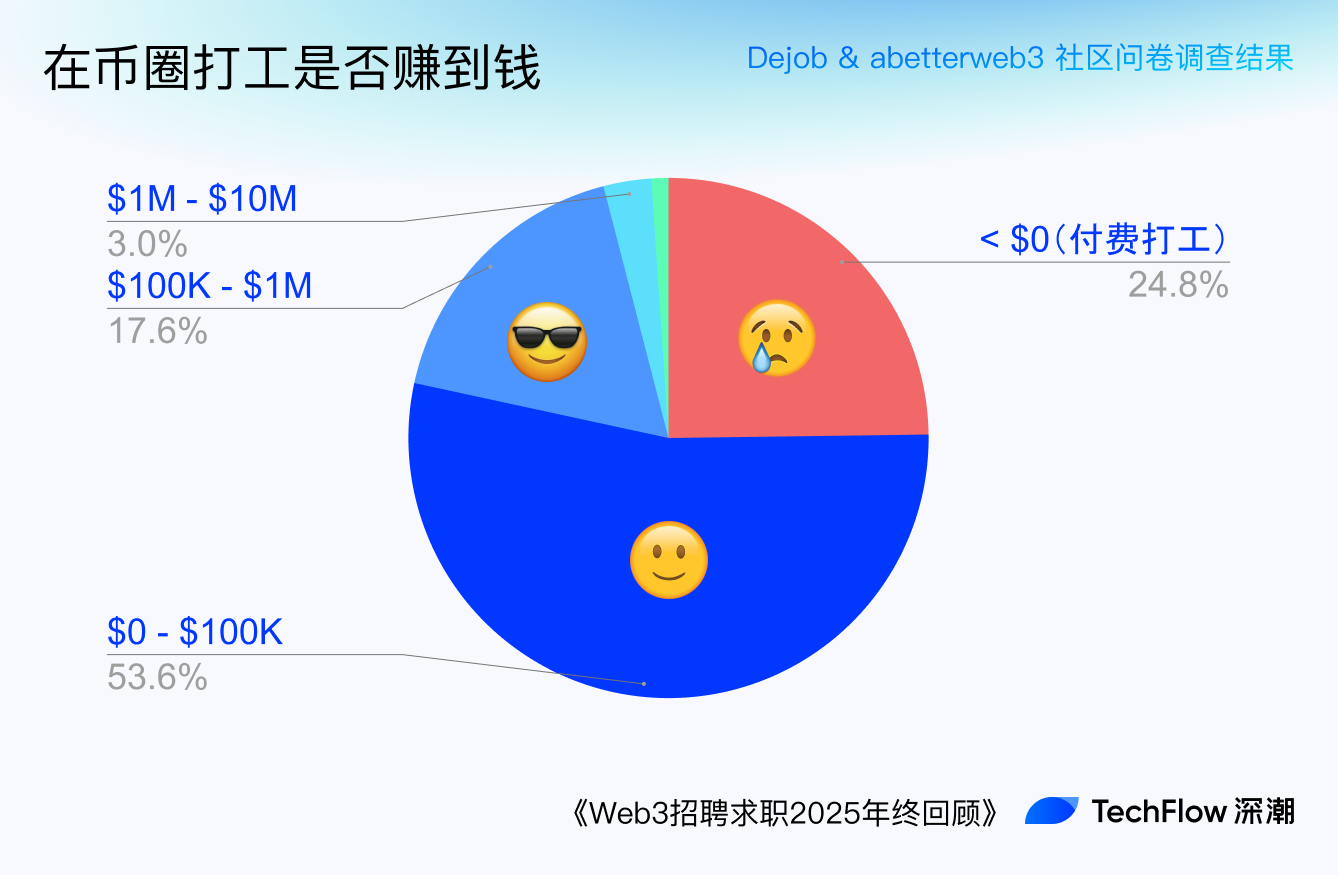
Even a quarter of people have accumulated an overall wealth "loss" since entering the crypto space, in a "pay-to-work" state; other respondents mostly accumulated wealth around $100K (approximately RMB 700,000).
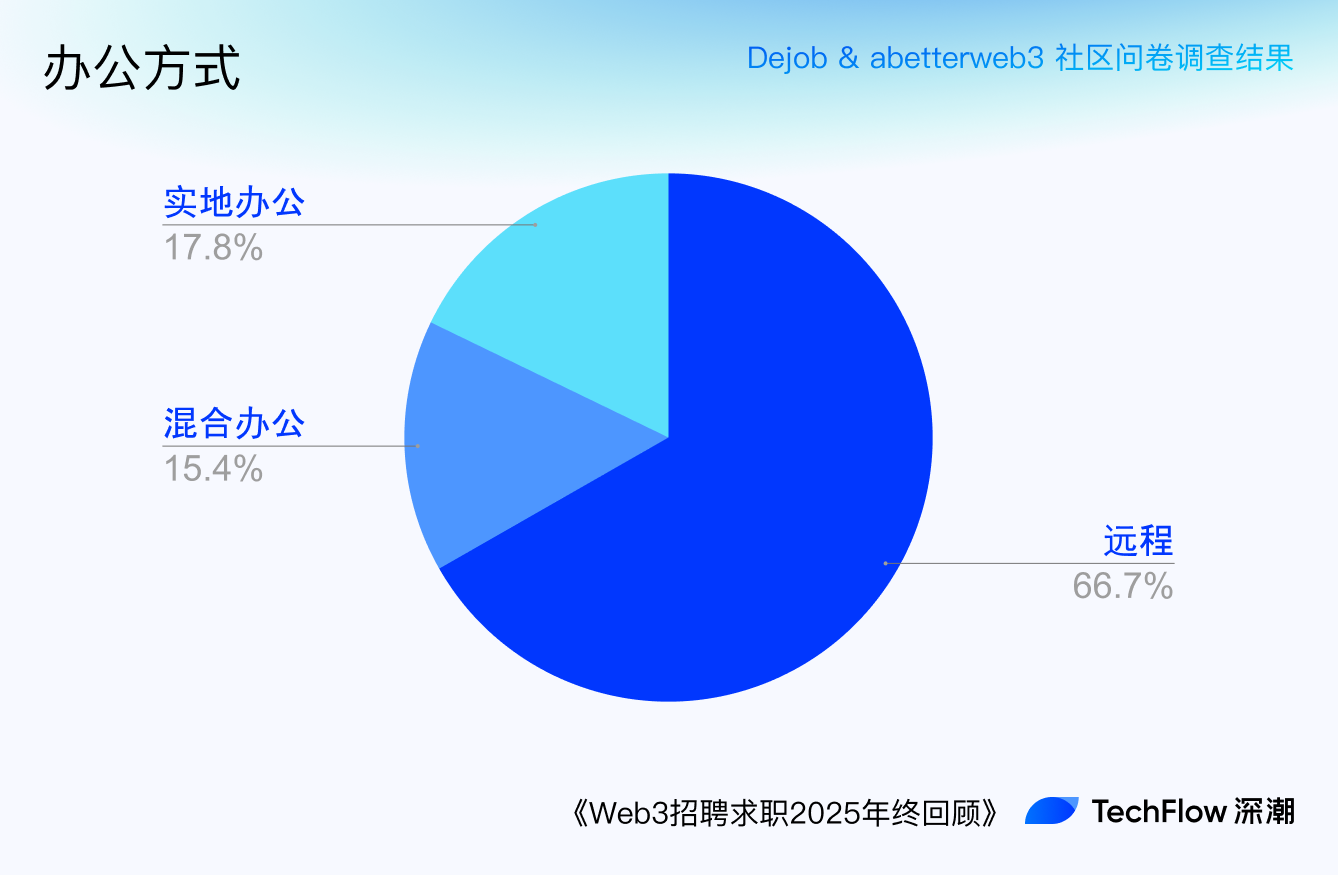
However, on the flip side of this seemingly hopeless income level, Web3's strong remote work culture offers some relief. Nearly 70% of respondents indicated their companies support remote work, and another 15% reported support for hybrid work, meaning虽然有办公室 but attendance is not mandatory, or working from home is allowed a few days a week.
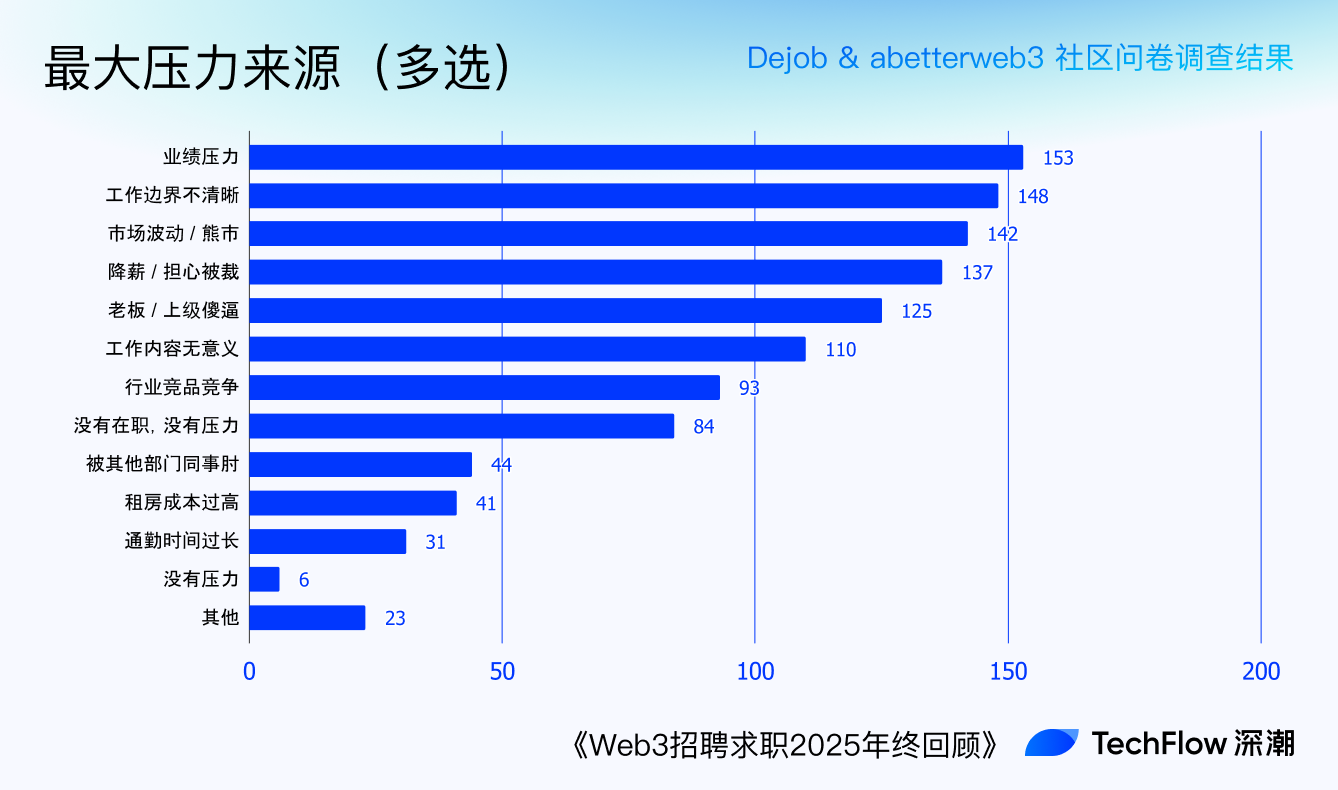
Remote work does alleviate some of the pain of being a worker. In the "biggest source of stress" question, 31 respondents selected "excessively long commute." Other top sources of stress included product growth, work boundaries, market volatility, fear of being laid off, and having a foolish boss.
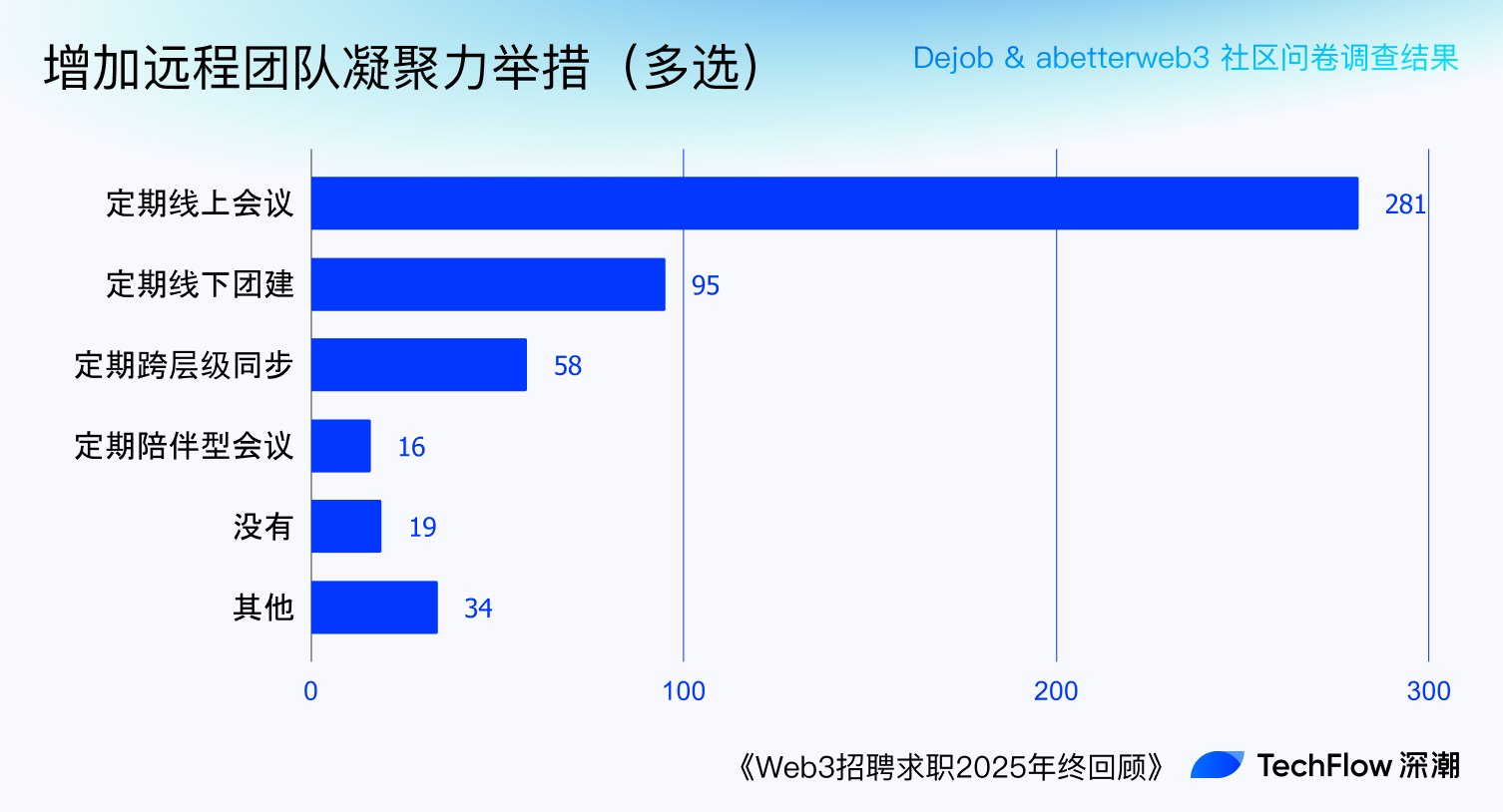
To maintain employees' mental health as social beings, many companies have taken measures to sustain team cohesion.
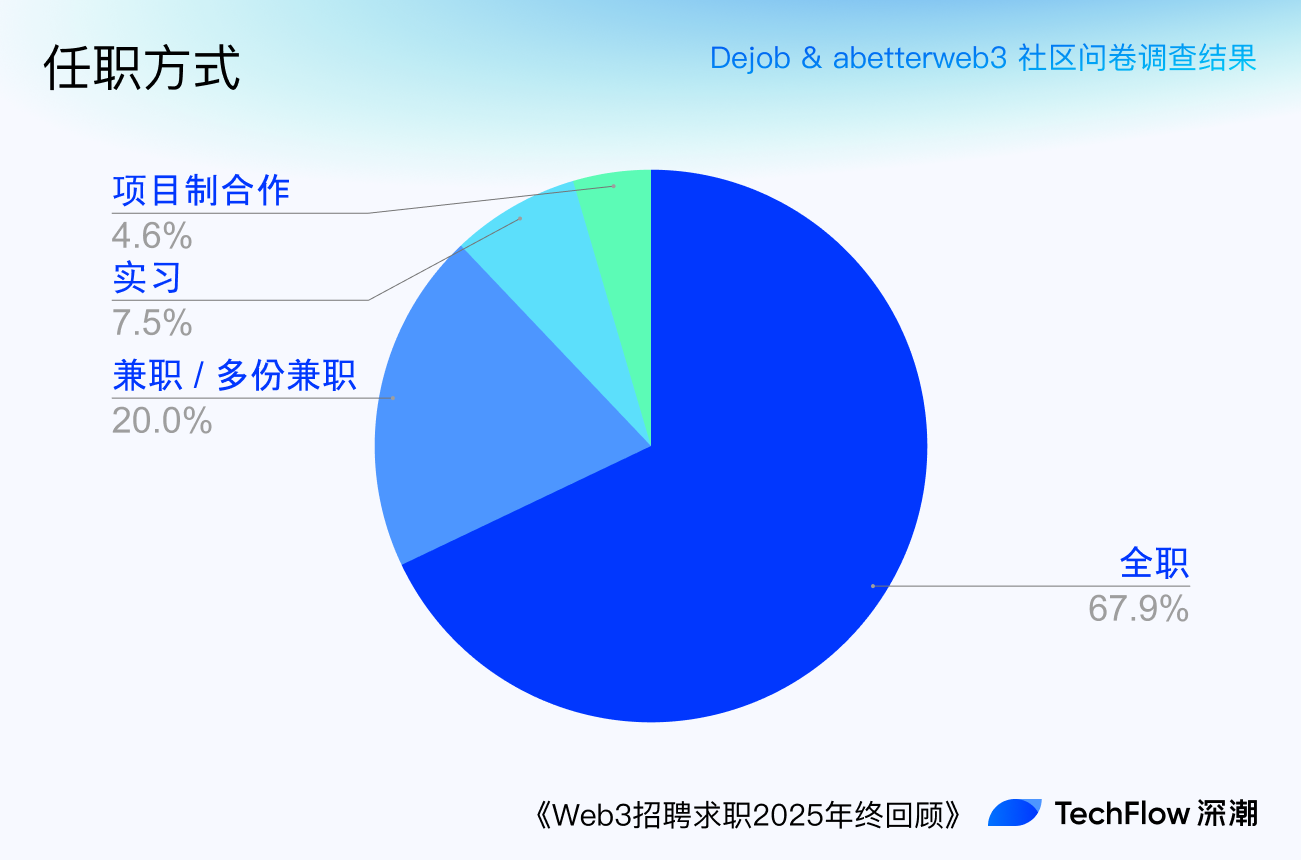
Under the combined effect of low income and instability, many choose to hold multiple jobs. 20% of respondents indicated having side jobs. This also reflects the tech-oriented culture of most Web3 companies: as long as problems are solved and competence is demonstrated, they don't interfere with employees' lifestyles and income methods.
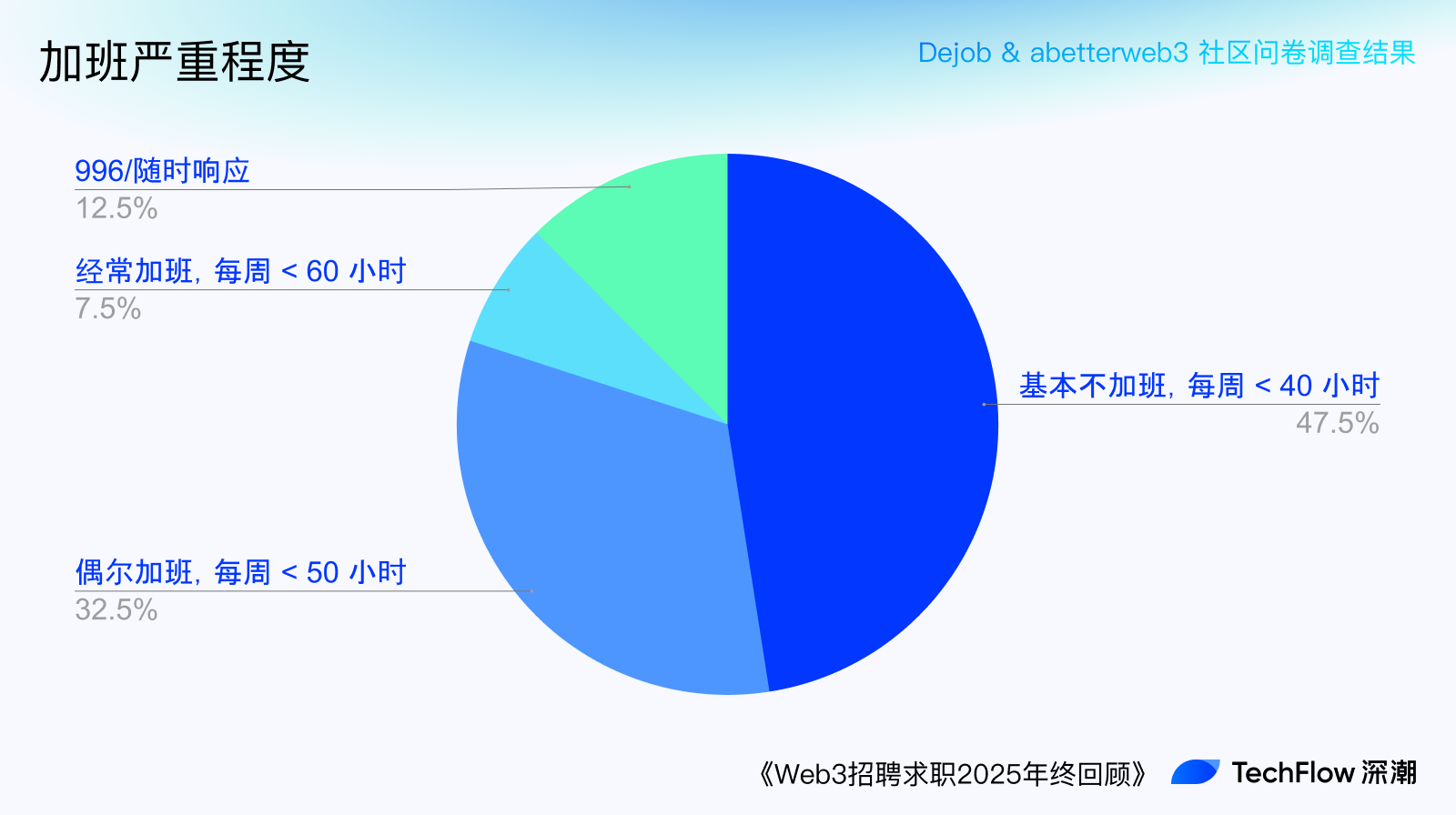
Regarding overtime intensity, 80% of people work approximately 40-50 hours per week. Thus, Web3 overtime seems less intense than many 996/007 sweatshops in web2.
Regarding job hopping, over half want to change companies, with 30% planning to do so within 3-6 months. But about a quarter are satisfied with their current situation, and 8 respondents even found "companies they hope to work for for a lifetime".

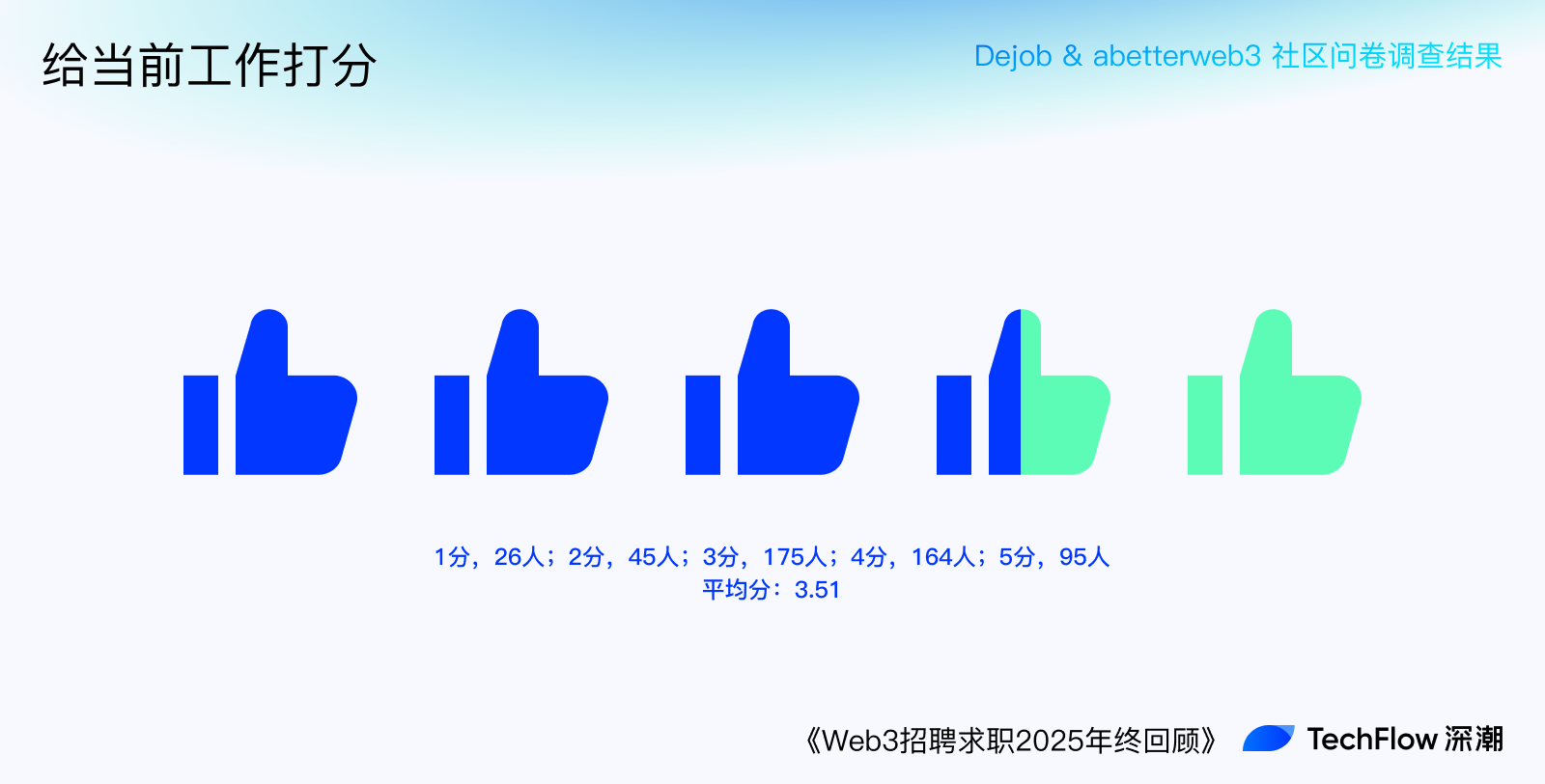
Considering factors like minimal overtime, remote work options, and side jobs allowed, many rate their current job positively. In the rating section for their current job, the average score was 3.51.
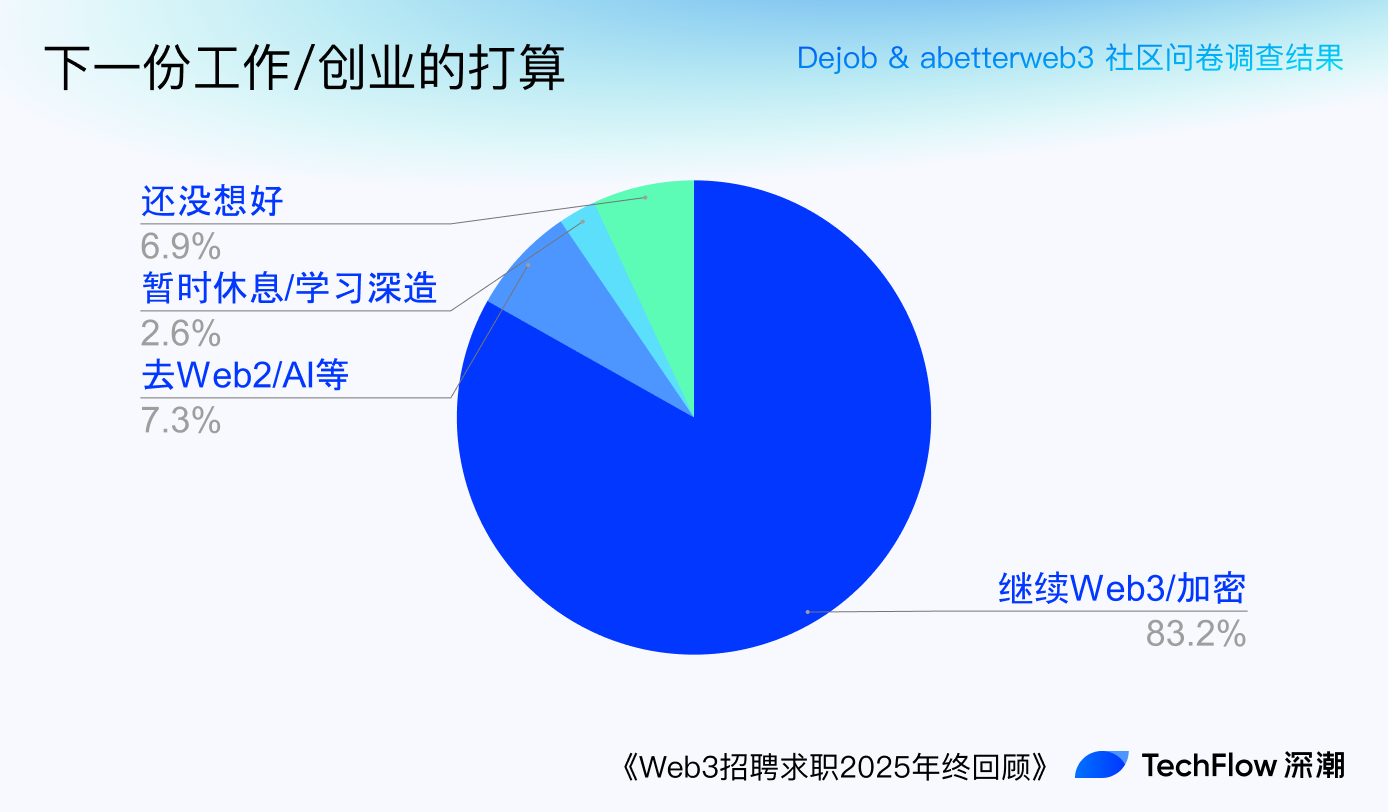
Regarding whether their next job will still be in the crypto space, over 80% choose to stay, while 7% choose to leave.
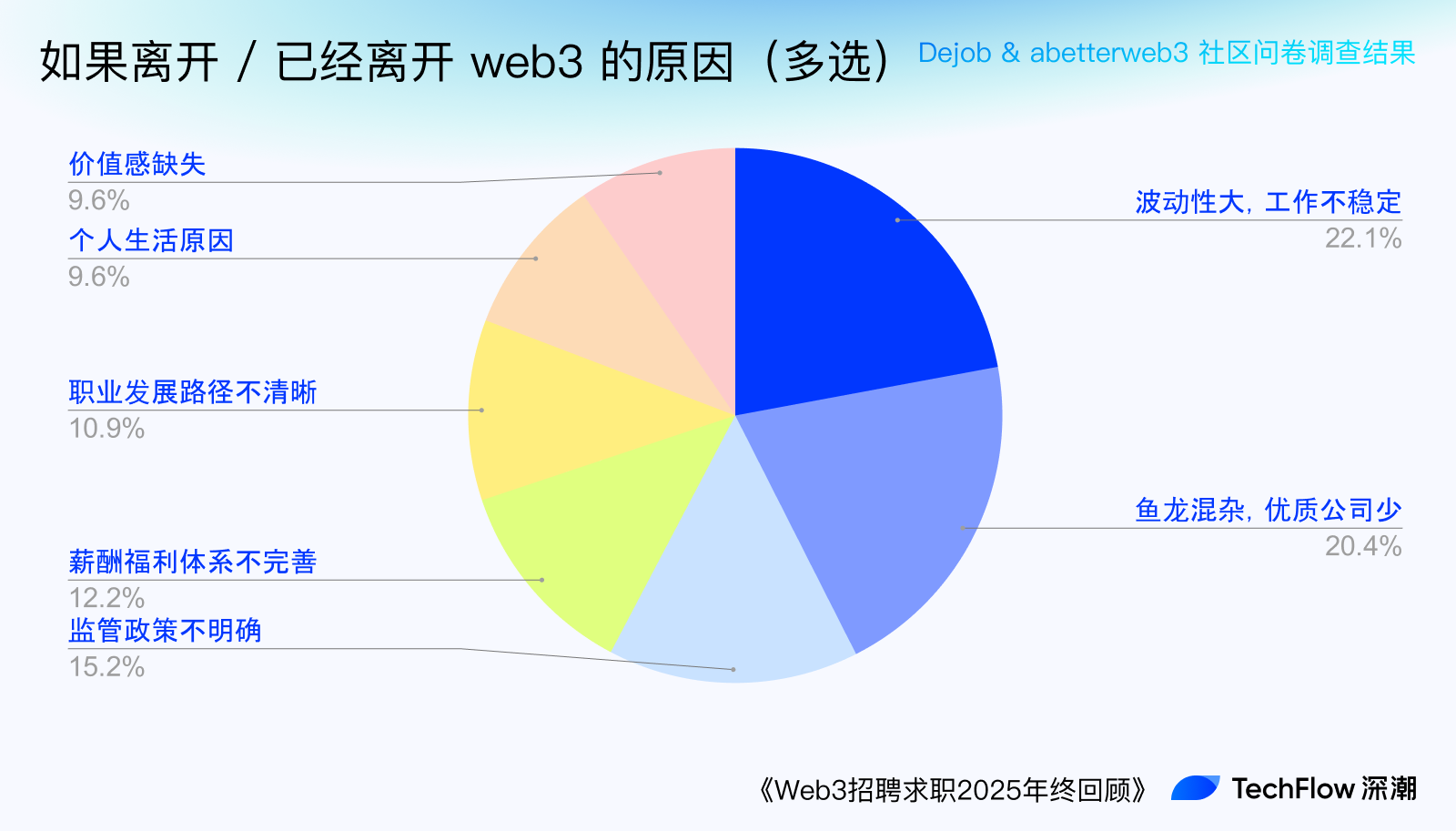
In the reasons for leaving section, the choices reflect the industry's most genuine, cold inner reality.
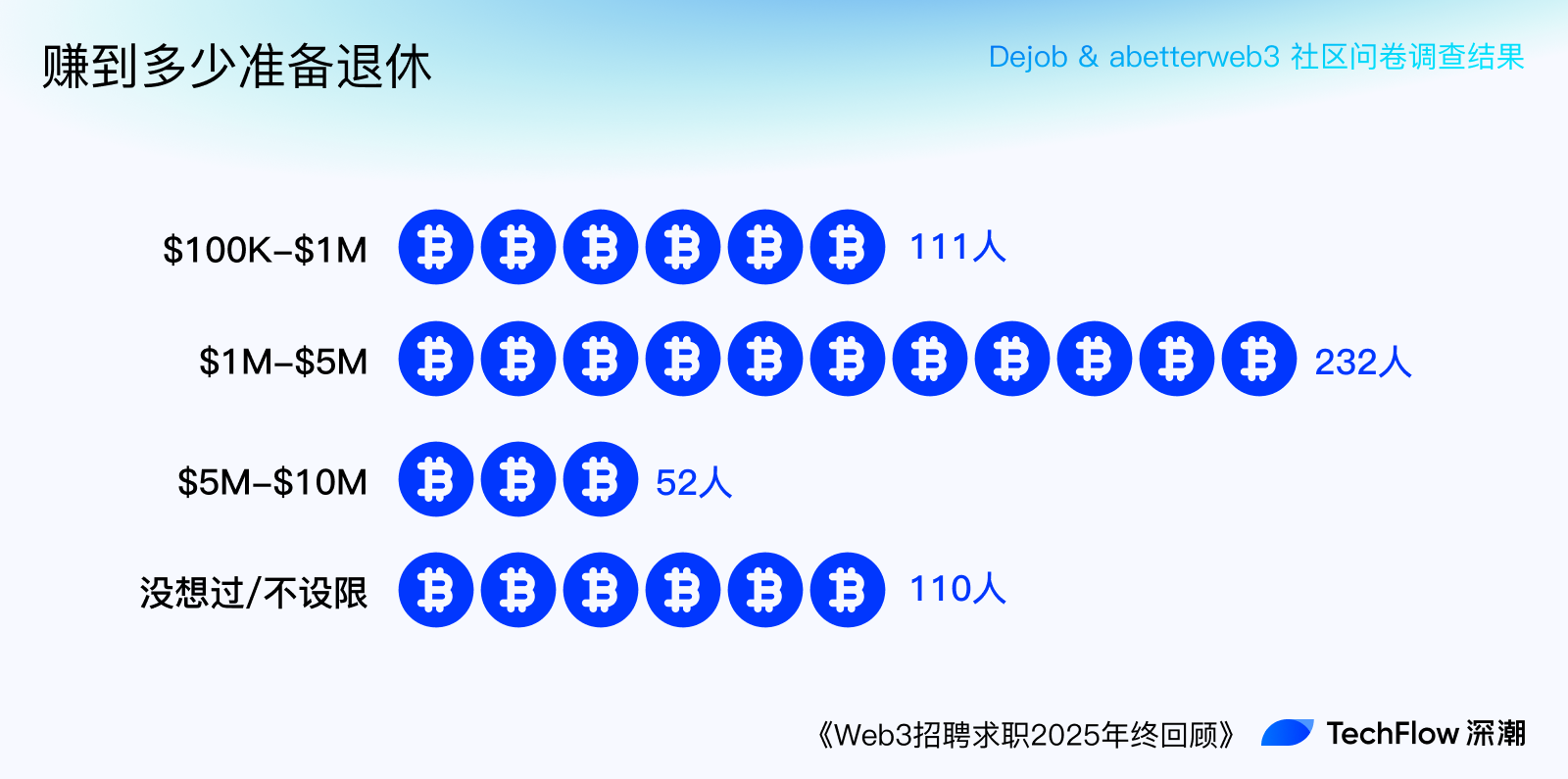
But all this preparation is for early retirement. For "how much wealth would make you consider resigning", the vast majority chose $1M – $5M (approximately RMB 7 million ~ 35 million). This might indeed be the wealth limit one can achieve through salaried work. But 20% chose "no limit", reflecting confidence in their abilities.
Regarding optimism about the 2026 job market, only 28% believe it will improve, with most being pessimistic or taking a wait-and-see attitude.

Truth Session


Original link:https://www.bitpush.news/articles/7598504

Perguntas relacionadas

QWhat percentage of crypto industry workers earn less than $4000 per month according to the survey?

AOver 70% of crypto industry workers earn less than $4000 per month.

QHow many respondents reported experiencing layoffs in the crypto industry, and what portion received no compensation?

ANearly half of the respondents experienced layoffs, and 40% of those laid off received no compensation.

QWhat is the primary reason most workers choose to stay in the crypto industry despite low pay and instability?

AOver 80% of workers choose to stay, largely due to factors like remote work flexibility (70% support remote work) and the dream of achieving financial freedom (e.g., retiring with $1-5 million).

QWhich type of company employs the most people in the crypto industry based on the survey?

AExchanges employ the most people, with over half of the respondents having worked at an exchange.

QWhat percentage of crypto workers have not received any token-based incentives (币权激励)?

ANearly 70% of crypto industry workers have not received any token-based incentives.

Leituras Relacionadas

Missed Out on SpaceX's IPO? Take a Look at SpaceX's Complete Supply Chain

SpaceX is now public, but its high valuation and losses may deter some investors. However, the real opportunity, as seen with Apple, Tesla, and Nvidia, may lie in its extensive supply chain. SpaceX, funded primarily by its profitable Starlink service, spends hundreds of billions annually on components for its rockets, satellites, and planned orbital AI data centers, creating significant revenue streams for suppliers. Key suppliers are categorized by their indispensability. The first group includes irreplaceable players like **NVIDIA** (GPUs for AI supercomputers), **Eutelsat (SATS)** (spectrum rights), **Filtronic** (millimeter-wave amplifiers), **Materion (MTRN)** (beryllium alloys), and **STMicroelectronics (STM)** (phased array chips). The second category comprises suppliers costly to replace due to long certification cycles or deep integration, such as **Honeywell (HON)** (flight controls), **Carpenter Technology (CRS)** (specialty steel), **Hexcel (HXL)** (carbon fiber), **Broadcom (AVGO)** (data switching), and **Linde** (industrial gases). The third group involves high-volume, cost-critical manufacturers for mass-produced items like Starlink terminals. Major players here include Taiwanese contract manufacturer **Wistron NeWeb (6285)** and several Chinese-listed firms: **Sunway Communication (300136)**, **Parker Advanced Materials (605123)**, **Western Superconducting (002149)**, and **Yingliu Co., Ltd. (603308)**. Other niche providers include **Tianyin Electromechanical**, **Tongyu Communication**, **Trimble (TRMB)**, **Astronics (ATRO)**, and **CTSH**. The timing is now relevant because: 1) SpaceX's procurement is accelerating with plans for 100 launches in 2026, 30 million Starlink terminals, and orbital data centers. 2) Its IPO has brought unprecedented transparency to its supply chain. 3) This phase mirrors early days of the Tesla supply chain boom. The investment thesis shifts from betting on SpaceX's stock to betting on the steady, order-book-driven revenues of its essential suppliers. Risks remain, such as commodity cycles, geopolitical factors, and technological shifts, but the supply chain offers a potentially less speculative path to participate in SpaceX's growth.

marsbitHá 6m

Missed Out on SpaceX's IPO? Take a Look at SpaceX's Complete Supply Chain

marsbitHá 6m

Jane Street: The Most Powerful Behind-the-Scenes Operator in the Crypto Industry

Jane Street: Crypto's Most Powerful Behind-the-Scenes Operator A recent 13F filing revealed Jane Street, the secretive Wall Street quant giant, drastically reduced its Bitcoin ETF holdings while increasing stakes in Ethereum ETFs. This move highlights its role not as a directional investor, but as a critical infrastructure player extracting "tolls" from crypto's institutionalization. The firm, founded in 2000 and famously lacking a CEO, has systematically embedded itself across crypto markets. It acts as a key Authorized Participant (AP) and market maker for major Bitcoin and Ethereum ETFs, profiting from arbitrage between ETF shares and underlying assets. Its approach combines quantitative prowess with a willingness to hold positions for structural arbitrage, differing from pure high-frequency traders. Jane Street faces allegations related to the 2022 Terra (LUNA) collapse. A lawsuit claims it used non-public information to withdraw $85 million in UST minutes before a critical withdrawal by Terraform Labs, allegedly exacerbating the crash and avoiding over $200 million in losses. The company denies the claims. Further indicating its reach, a wallet suspected to be operated by Jane Street ("JaneStreetIndia") was identified on the prediction market Polymarket. This bot executed over 11,000 high-frequency trades on short-term crypto price movements with a near-perfect win rate, showcasing a套利 strategy divorced from traditional prediction. Beyond trading, Jane Street holds equity in crypto infrastructure like Kraken, 1inch, and Arbitrum, and mining stocks. Its strategy is clear: avoid betting on winners, but secure a position in the market's essential plumbing. By becoming a ubiquitous part of the liquidity infrastructure—from ETFs to OTC trading and potentially链上 markets—Jane Street operates as a market force itself, raising questions about whether crypto's decentralized,散户-friendly alpha is being permanently eroded by traditional finance's most sophisticated players.

Foresight NewsHá 10m

Jane Street: The Most Powerful Behind-the-Scenes Operator in the Crypto Industry

Foresight NewsHá 10m

U.S.-Iran Ceasefire: How Much of a Bitcoin Rally Can a Truce Agreement Support?

Headline: "U.S.-Iran Truce: How Much Can a Ceasefire Agreement Propel Bitcoin's Rebound?" On June 15th, Bitcoin rebounded to around $67,255, marking its first return to the $67,000 level since falling below $60,000 earlier in June. Ethereum and Solana also saw significant gains. The immediate driver for this market-wide recovery in crypto and global risk assets was the signing of a U.S.-Iran ceasefire memorandum, with a formal ceremony scheduled for June 19th. The agreement, which includes reopening the Strait of Hormuz, caused oil prices to plunge roughly 5%, easing inflation expectations and boosting prospects for Federal Reserve rate cuts. This macroeconomic shift fueled a rally in U.S. equities, with the Dow Jones hitting a record high. SpaceX's spectacular post-IPO performance further energized market sentiment. However, on-chain and derivatives data from Glassnode suggest this move is more indicative of a technical rebound from deeply oversold conditions rather than a confirmed trend reversal. The crypto market is undergoing noticeable capital rotation. While Bitcoin ETFs recently saw their worst outflows on record, the bleeding has slowed significantly. Meanwhile, new altcoin ETFs for assets like XRP and Solana are attracting substantial inflows, causing Bitcoin's market dominance to drop to 58%. Despite the rebound, the Crypto Fear & Greed Index remains in "Extreme Fear" territory at 22. The price quickly retreated after touching the $67,000 resistance level, indicating selling pressure persists. Analysis shows short-term speculative supply has been heavily washed out, with holder structure shifting toward a more long-term profile. While panic is subsiding and some on-chain metrics point to accumulation at lower prices, the market currently lacks the strong, sustained institutional buying needed to establish a new bullish trend.

Foresight NewsHá 26m

U.S.-Iran Ceasefire: How Much of a Bitcoin Rally Can a Truce Agreement Support?

Foresight NewsHá 26m

Copper, the Gold of 2026

Copper: The New Gold for 2026? Market focus has shifted from AI chips to underlying infrastructure, with copper emerging as a key narrative. Its role is evolving beyond "Dr. Copper"—a traditional indicator of economic cycles—due to structural demand growth from AI data centers (requiring massive electrical infrastructure), grid expansion, EVs, and re-industrialization. Estimates suggest data centers alone could require 300,000 tons of copper by 2050. The core bullish thesis is not just demand but a severe supply constraint. New copper mines take ~17 years to develop, while ore grades are declining and new discoveries are scarce, potentially leading to a 30% supply deficit by 2035. This supply rigidity, coupled with strategic importance, is giving copper a "gold-like" scarcity narrative. Major macro investors, including Stanley Druckenmiller, are allocating to copper as a hedge against dollar weakness and for its exposure to energy transition and geopolitics. Traders like Pierre Andurand have projected prices could reach $40,000/ton. Capital inflows are visible in surging futures trading volumes. Copper mining stocks act as leveraged plays on copper prices. Companies like Freeport-McMoRan (FCX) and Southern Copper (SCCO), as well as Chinese miners like CMOC, have seen significant volatility, offering high upside but also steep drawdowns, reflecting operational and geopolitical risks. While copper remains cyclical and won't fully replicate gold's monetary role, its long-term fundamentals have shifted. Its new scarcity premium, driven by a tightening supply structure and expanding electrical demand, suggests its "goldification" is just beginning.

marsbitHá 33m

Copper, the Gold of 2026

marsbitHá 33m

Trading

Spot
Futuros
活动图片