Early Trading Made a Fortune? A Comprehensive Guide to Genius's New Rules

Odaily星球日报Publicado em 2026-01-20Última atualização em 2026-01-20

Resumo

**Title: Early Traders Made Huge Gains? Understanding Genius' New Rules** Genius, a highly discussed DEX, announced new GP points rules for its Season 1, ending April 12, with a 50% increase in airdrop allocation. The team confirmed that GP points earned from early trading volume remain valid, benefiting users who followed initial interaction guides. Key updates: - Total S1 GP points are fixed at 200 million, with 75 million already distributed from pre-whitepaper trading. The remaining 125 million will be distributed weekly starting January 20, at 10 million GP per week. - Distribution is weighted to prevent whales from dominating, allowing smaller traders to earn points. - Stablecoin swaps (e.g., USDT/USDC) now have a 0.5x weight; other spot trades retain 1.0x. - Previous task-based and referral GP rewards were removed. Now, points are earned solely via spot trading volume. - New trading tiers introduce fee discounts based on cumulative trading volume, though zero-fee trading remains active indefinitely. - Referrals now offer 35% commission on invitees’ trading fees post-zero-fee campaign. - The GENIUS token will be created before April 12, 2026, with a TGE expected randomly before then. Despite platform bugs from high traffic, Genius’ strong backing (including investment from YZi Labs and CZ as advisor) and confirmed TGE make it noteworthy. With a potential $300M FDV and 10% airdrop, each GP point could be worth ~$0.15. Early participants may have profitable opportuniti...

Original | Odaily Planet Daily (@OdailyChina)

Author | Asher (@Asher_ 0210)

Yesterday, Genius, a DEX that has been highly discussed recently, announced new point rules on platform X: Season 1 will end on April 12, with an additional 50% airdrop quota.

Notably, the Genius team stated that the GP points earned from trading volume have been retained. Congratulations to those who participated early through the point-earning guide shared by Odaily Planet Daily (click here to jump to the article: YZi Labs Invests Tens of Millions, CZ as Advisor—How to Earn Genius Points?). These users may have already "made a fortune" in GP points (platform website: https://www.tradegenius.com/).
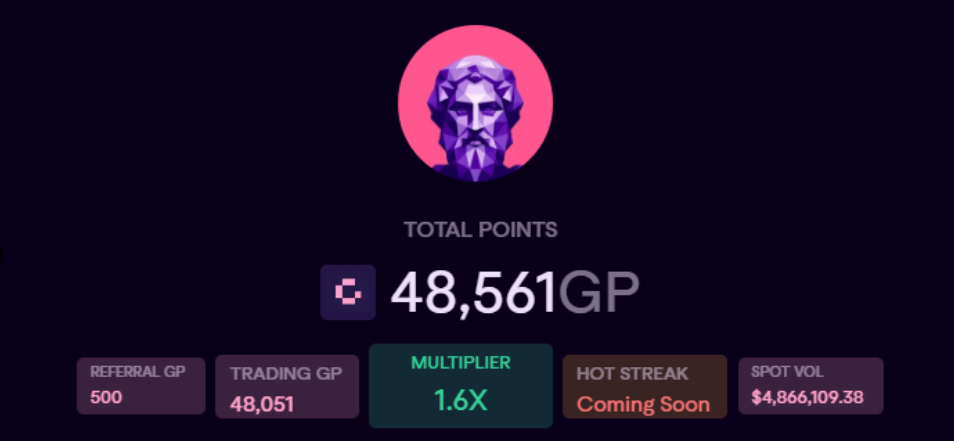
Early users "aggressively" traded to earn massive GP points from volume

Below, Odaily Planet Daily explains Genius's new GP point rules to help users better participate in platform interactions and earn GP points.

Season 1 Total of 200 Million GP Points, 125 Million GP Points Still to Be Distributed

The community had many questions about GP point distribution. This time, the official emphasized that Season 1 has a total of 200 million GP points, with no additional issuance. The specific distribution is as follows:

  • 75 million GP points have been distributed, which are the trading points earned by users before the platform updated the whitepaper. GP points from referral rewards have been reclaimed;
  • 125 million GP points are still to be distributed, including 5 million GP points from the wheel-of-fortune reward. Referral reward points and trading task points have been canceled.

The remaining 125 million GP points will be distributed starting at 5:00 AM UTC+8 today (January 20), with 10 million GP points distributed every weekend. Additionally, points are allocated using a weighted distribution to ensure that whale traders do not monopolize all GP releases, allowing smaller traders to also receive GP allocations.

Notably, the trading volume weight for stablecoin USDT to USDC conversions has been adjusted to 0.5x, while the weight for other spot trading volumes remains 1.0x.

Other Changes in the New Rules

As explained by the team members in the official Telegram, on one hand, all previous GP task points (trading tasks + referral tasks) have been cleared; on the other hand, under the new rules, GP points can only be earned through spot trading volume.
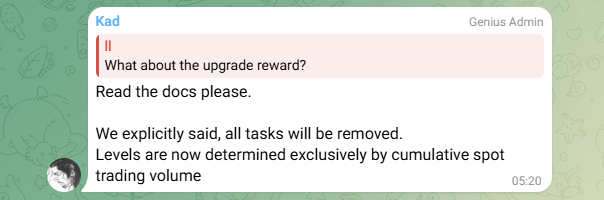
Official explanation of the new rules

New Trading Tiers

The new trading tier divisions and fee discounts are as follows:

  • Level 1—Smart: Cumulative trading volume of $100,000, trading fee 0.3%;
  • Level 2—Ultra Genius: Cumulative trading volume of $1 million, trading fee 0.2%;
  • Level 3—Mastermind: Cumulative trading volume of $10 million, trading fee 0.1%;
  • Level 4—Mogger Genius: Cumulative trading volume of $100 million, trading fee 0.05%.

The current zero-fee trading promotion's end date has not been announced.

Referral Rewards

Referring friends for trading no longer earns GP points, but after the zero-fee promotion ends, users can earn a 35% commission from the trading fees of invited friends.

For example, if an invited user's trading fee tier is 0.2%, the rebate earned would be 0.07% (35% * 0.2%).

GENIUS Token to Be Created Before April 12, 2026

According to the documentation, the GENIUS token will be created before the end of Season 1. Therefore, TGE will occur randomly between now and April 12.

Platform Has Many Bugs, But Strong Funding Background and Confirmed TGE Make It Worth Attention

Since its launch a few days ago, Genius has been overloaded due to a large influx of studios, resulting in frequent bugs. Although the team has been working to resolve issues, some functions still have problems and cannot fully satisfy users. As of now, referral points and trading tasks have not been fully removed, and the wheel-of-fortune reward is still under maintenance.

With the new rules update, TGE will occur before April 12, significantly increasing the certainty of earning from Genius. With only 200 million GP points distributed before TGE, GP points will be particularly "valuable," and the cost of earning them will only increase. KOL Nathan stated, "With tens of millions in investment, the FDV should be around $300–500 million. Congratulations to those who got on board early, earning 37.5% of the total airdrop in just 3 days." Based on the data below, with a $300 million FDV and a 10% airdrop allocation, each point would be worth $0.15.
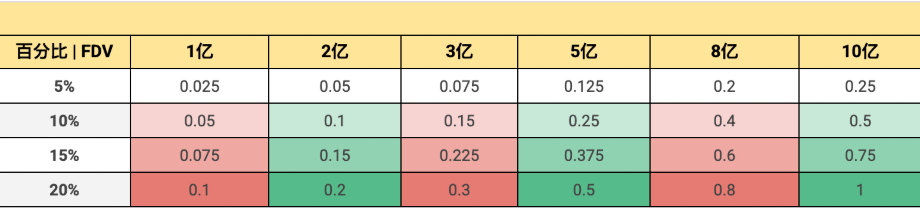
Genius Point Value Estimation

Perhaps it is still worth interacting now, while trading fees are still zero and the new rules have just been launched.


Perguntas relacionadas

QWhat is the total amount of GP points allocated for Season 1 on Genius, and how much remains to be distributed?

AThe total amount of GP points for Season 1 is 200 million. 75 million GP points have already been distributed, and 125 million GP points remain to be distributed.

QHow has the new rule changed the way users can earn GP points?

AThe new rule has removed all previous GP task points (trading tasks and invitation tasks). Users can now only earn GP points by generating trading volume through spot trades.

QWhat is the new weight assigned to the trading volume of stablecoin USDT to USDC conversions?

AThe trading volume weight for stablecoin USDT to USDC conversions has been adjusted to 0.5x.

QWhen is the GENIUS token expected to be created (TGE)?

AThe GENIUS token is expected to be created before the end of Season 1, which is April 12, 2026. The TGE will occur randomly between now and that date.

QWhat is the referral reward structure under the new rules?

AReferring friends no longer generates GP point rewards. However, after the platform's zero-fee trading activity ends, users can earn a 35% commission from the trading fees of the users they invite.

Leituras Relacionadas

Amidst Capital's Encirclement, Decentralization is the Sole Defense for Public Blockchains

In a landscape dominated by power and profit motives, the author argues that decentralization is not merely one desirable feature among many in blockchain design—it is the singular, non-negotiable defense against corporate and capital capture. The article adopts a Machiavellian, realist perspective on human institutions, positing that businesses will inevitably attempt to co-opt any valuable network to protect their profits and dominance. While external attacks like 51% forks are often discussed, the greater existential risk is internal capture—the gradual erosion of a protocol’s neutrality by vested interests, as seen historically with platforms like Visa and Google. The piece critiques permissioned chains, highly centralized “permissionless” layer-1s, and layer-2s without sufficient decentralization (e.g., single sequencers) as inherently vulnerable. These compromised systems, promoted by established financial players, are framed as delaying tactics to stifle truly open networks that threaten existing high-fee, inefficient business models. Real-world examples, such as closed enterprise consortiums that exclude competitors, illustrate how such systems cement oligopolies rather than foster innovation. The author concludes that while decentralized protocols like Ethereum are imperfect and costly to operate, they represent the only viable long-term equilibrium. In a market where value naturally flows to the most secure and neutral settlement layer, only maximally decentralized public blockchains can resist being subsumed by capital and powerful incumbents.

Foresight NewsHá 13m

Amidst Capital's Encirclement, Decentralization is the Sole Defense for Public Blockchains

Foresight NewsHá 13m

Who Decides the Rules of Bitcoin? BIP-110 Ignites Governance Debate

Bitcoin's governance is once again at the center of a heated debate, this time ignited by BIP-110, the "Reduced Data Temporary Softfork." This proposal aims to curb non-monetary data (like inscriptions and Runes) by introducing seven new consensus-layer restrictions over a year, such as limiting new output scripts to 34 bytes and restoring the OP_RETURN cap to 83 bytes. The controversy stems from BIP-110's fundamental shift: it moves the battle against "spam" from node relay and miner policies to the consensus layer, rendering currently valid transactions invalid. Supporters, arguing that default policy governance has failed (highlighted by Bitcoin Core v30's relaxation of OP_RETURN limits), see this as necessary to protect node resources and Bitcoin's monetary focus. Opponents, led by figures like Michael Saylor and Adam Back, warn it dangerously centralizes governance. Saylor listed 110 reasons against it, criticizing its low 55% miner activation threshold and potential for chain splits. Back emphasized Bitcoin's "permissionless" ethos, arguing no single group should impose value judgments via consensus rules. Further complicating matters, technical critiques suggest BIP-110 may be technically circumventable, and a "BlockSlop" vulnerability in its upgrade path poses a consensus risk. The debate has drawn in diverse stakeholders: miners (with pools like Ocean signaling support and Foundry polling clients), node operators (like Bitcoin Knots), and new players like corporate treasury holder MicroStrategy (Saylor), whose market influence adds a novel dimension. Ultimately, BIP-110 acts as a governance stress test, exposing the unresolved question: who decides Bitcoin's rules? It pits the authority of miners, node operators, developers, and capital holders against each other, with each side claiming to defend Bitcoin's core principles of neutrality and security.

marsbitHá 30m

Who Decides the Rules of Bitcoin? BIP-110 Ignites Governance Debate

marsbitHá 30m

Who Decides Bitcoin's Rules? BIP-110 Ignites Governance Debate

Title: Who Decides Bitcoin's Rules? BIP-110 Ignites Governance Debate A new technical proposal, BIP-110 (Reduced Data Temporary Softfork), has sparked a fundamental governance debate within the Bitcoin community. It aims to impose new consensus rules for one year to limit non-financial data (like inscriptions and Runes) on-chain, moving beyond simple node and miner policy filters to invalidate currently valid transactions. Supporters argue that default policies have failed due to workarounds, necessitating consensus-layer changes to protect Bitcoin's core monetary function from data spam. Critics, including Michael Saylor and Adam Back, contend this dangerously centralizes judgment, undermines permissionlessness, and sets a risky governance precedent. They advocate for market-based solutions like fees or Layer 2s instead. The debate exposes deeper tensions: miners are divided on activation; node operators assert their sovereignty; Bitcoin Core developers influence defaults without direct accountability; and large corporate holders like MicroStrategy now wield narrative influence. Technically, BIP-110 may not fully block data and carries a disclosed consensus bug risk. Ultimately, BIP-110 acts as a stress test, forcing the community to confront the unresolved question: who legitimately decides what Bitcoin is and how it evolves, amidst competing claims from miners, nodes, developers, and capital holders.

链捕手Há 41m

Who Decides Bitcoin's Rules? BIP-110 Ignites Governance Debate

链捕手Há 41m

Zcash's New Node Zakura Goes Live: Privacy Payments Can Reach 50,000 TPS, Aiming to Rival Visa and Mastercard

Zcash, a privacy-focused cryptocurrency, has launched a new full node software called Zakura version 1.0.0. Developed by Zcash co-founder Sean Bowe and Dev Ojha, with private ZEC donations, its goal is to enable Zcash to process over 50,000 transactions per second (TPS)—matching the scale of Visa and Mastercard—while maintaining full transaction privacy and verifiability. This addresses a key bottleneck, as Zcash currently handles only about 1 private transaction per second. Zakura is a fork of the Zcash Foundation's Zebra node. It features chain pruning and snapshots, reducing disk usage and allowing new nodes to sync in under two minutes. It also offers compatibility with the legacy `zcashd` client interface. The scalability challenge stems from the large data size of privacy proofs. Bowe's Tachyon project aims to use recursive proofs to reduce consensus-layer data needs from ~500 MB/s to ~100 MB/s. For wallet scalability, Valar Group is researching Private Information Retrieval (PIR) tech to allow wallets to fetch their data privately. Zakura supports fast block propagation and the upcoming "Ironwood" network upgrade (NU6.3), scheduled for activation around July 28th. Ironwood was created to contain a critical inflation bug discovered in the Orchard shielded pool in May 2024. The fix uses "turnstiles" to trap any counterfeit ZEC created during the vulnerability period within the shielded pool, preventing it from entering circulation and restoring supply integrity.

marsbitHá 56m

Zcash's New Node Zakura Goes Live: Privacy Payments Can Reach 50,000 TPS, Aiming to Rival Visa and Mastercard

marsbitHá 56m

Trading

Spot
活动图片