Author: Kunal Doshi
Compiled by: Deep Tide TechFlow
Deep Tide Guide: This is an original analysis backed by real data. Taking advantage of the COMEX closure during this weekend's geopolitical crisis, the author compared the pricing of gold and silver perpetual contracts on Hyperliquid and Binance, finding that the former not only reacted earlier but also came closer to the actual price when COMEX reopened. The data methodology is clear, and the conclusions are persuasive, making it a rare sample for understanding the question of 'whether DEXs possess true price discovery capability.'
Full Text Below:
When geopolitical risks erupted this weekend, COMEX was closed, but Hyperliquid and Binance were not. Both platforms continued trading gold and silver perpetual contracts. I compared the pricing of Hyperliquid's Trade.xyz and Binance relative to COMEX, observing which venue moved first and which was closer to the actual price upon reopening.
Under normal weekday conditions, both platforms trade at a structural discount of about 14 to 30 basis points relative to COMEX. This is an expected outcome. COMEX near-month futures include carrying costs, while perpetual contracts track closer to the spot price. This discount is the baseline.
Against this backdrop, the price deviations over the weekend were not noise.
After COMEX closed on Friday, prices on both platforms began to drift upward. Hyperliquid moved more aggressively, maintaining a sustained premium throughout the weekend.
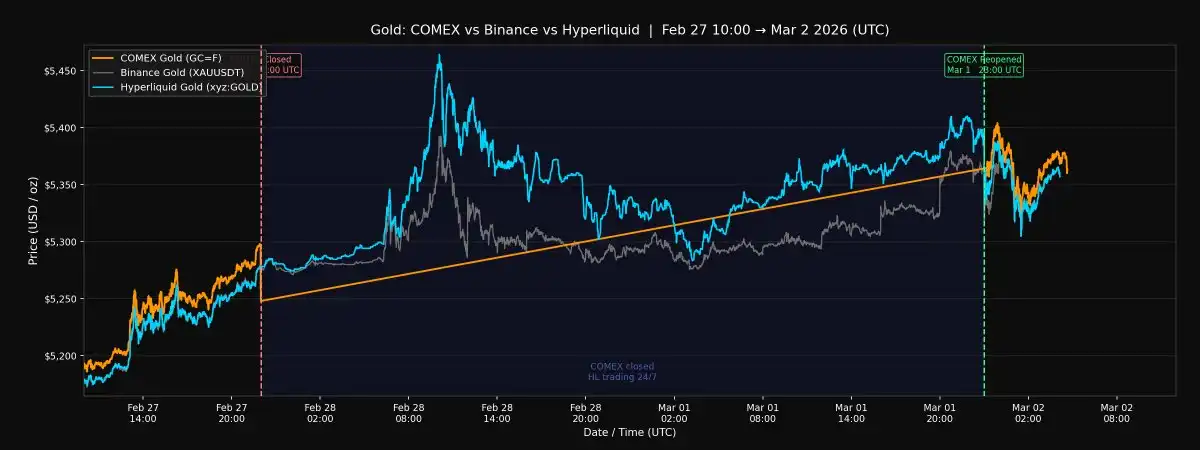
Gold Prices
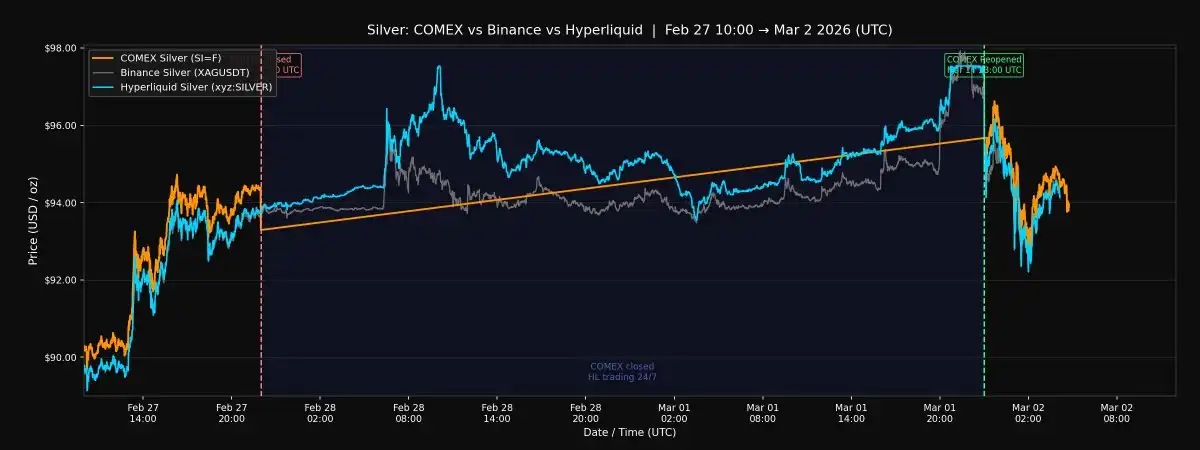
Silver Prices
When news broke of the airstrike on Iran, both exchanges reacted immediately. But during the most volatile periods, Hyperliquid's pricing for gold and silver was higher than Binance's.
Throughout the weekend, the median premium for gold and silver on Hyperliquid relative to Binance was 75 and 78 basis points, respectively. On normal weekdays, this cross-platform premium is typically near zero. This deviation indicates that traders on Hyperliquid priced geopolitical risks significantly higher than those on Binance.
The real test came at the moment of reopening.
I benchmarked against COMEX's first opening price using the same one-minute candlesticks. When COMEX reopened, futures prices were higher than on both platforms. Hyperliquid was 22 basis points closer for gold and 31 basis points closer for silver to the reopening price. In other words, Hyperliquid's weekend pricing proved to be a more accurate prediction of the traditional market's reopening price.
But trading volume tells a completely different story.
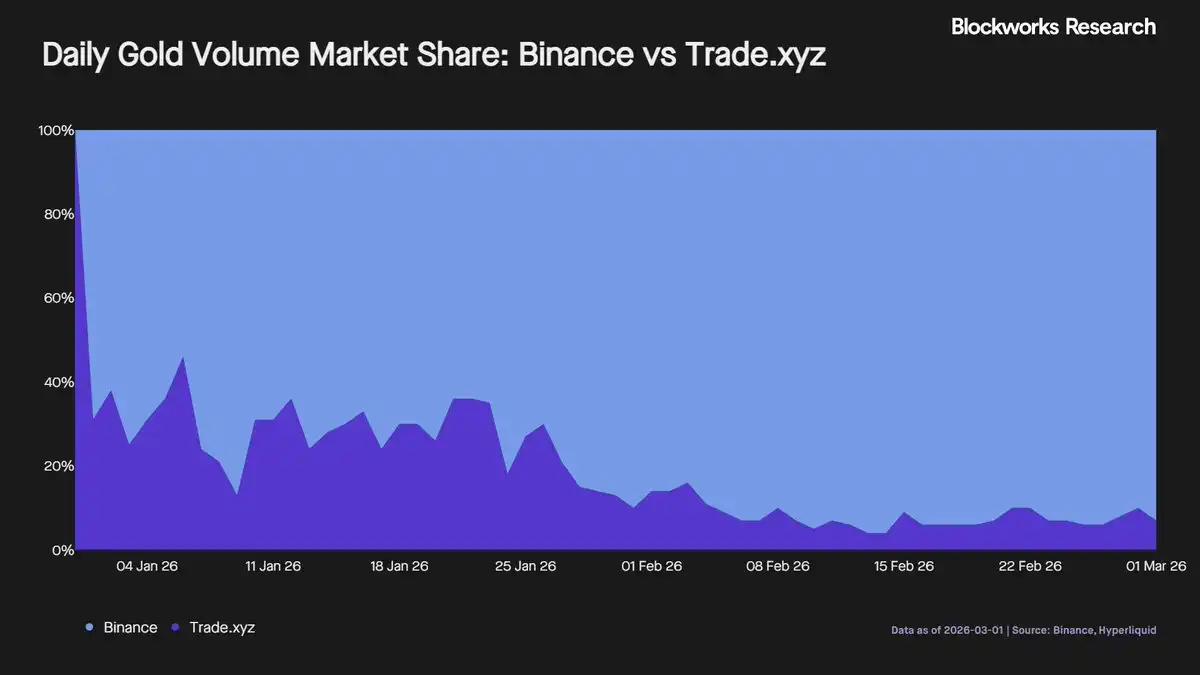
In absolute dollar terms, Binance dominates. For gold, Binance's share relative to Hyperliquid rose from a low of 54% to 93% today.
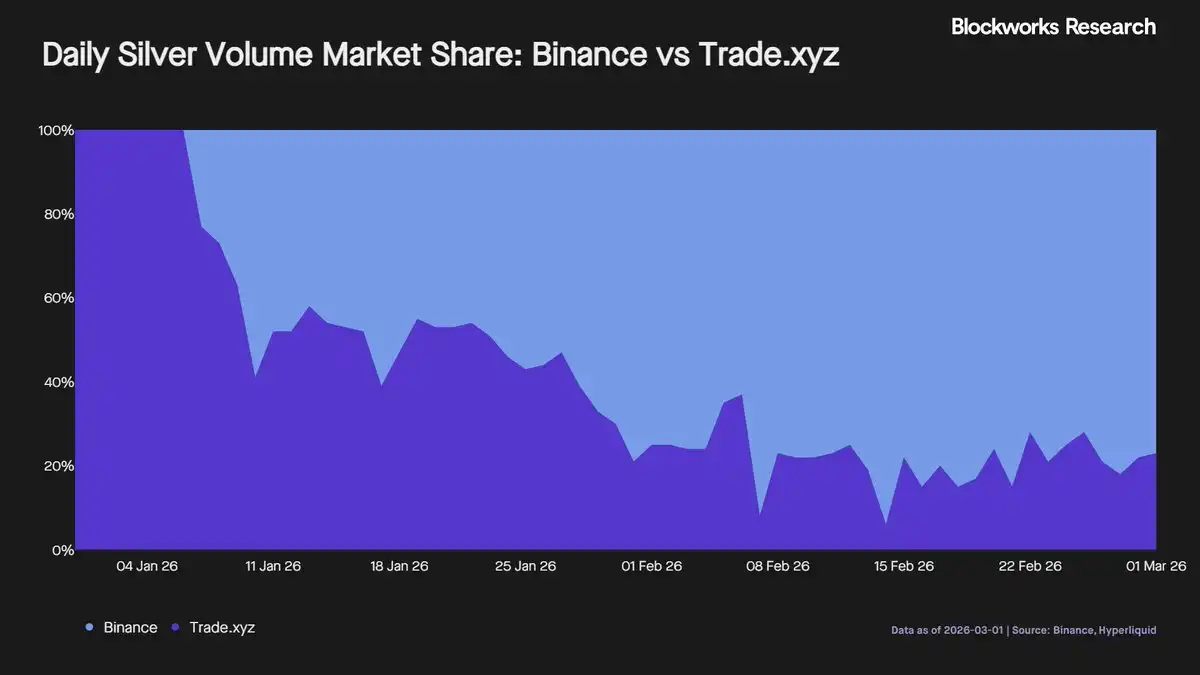
For silver, Binance's share increased from 23% to 77%.
If we stopped here, Binance would appear to be the clear winner.
But open interest tells a different story. The scale of open interest held on both platforms is similar. However, Binance generates far more trading volume per unit of open interest. The same size positions are turned over many more times.
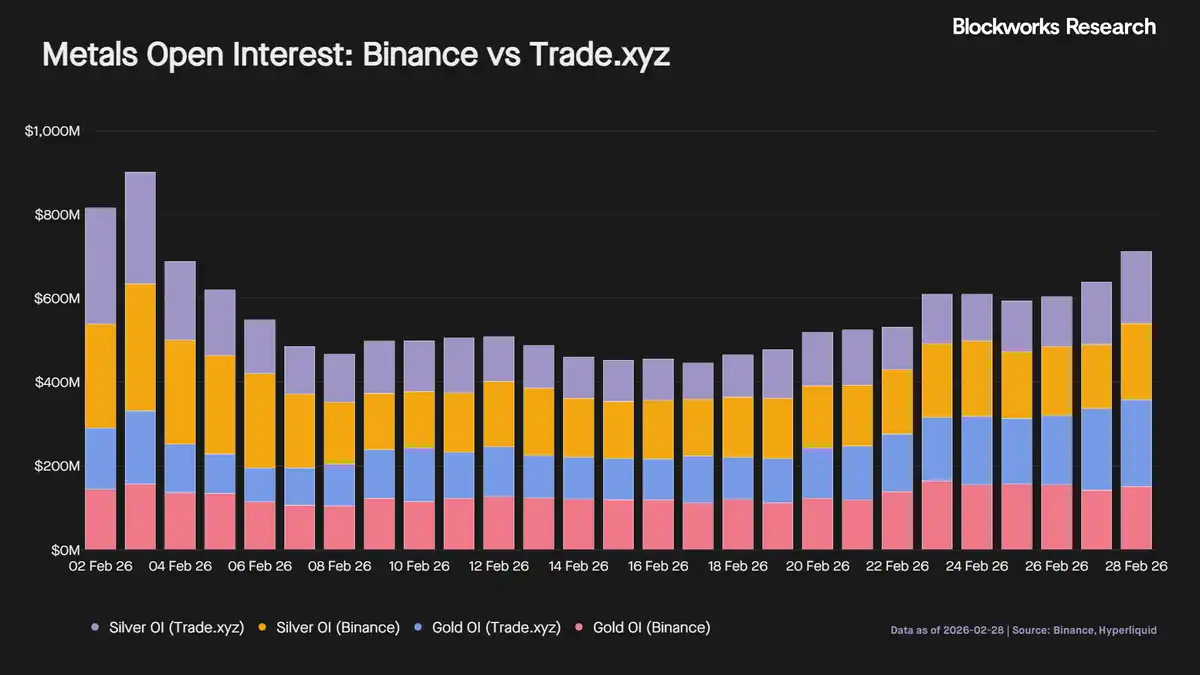
Binance's daily trading volume for gold relative to open interest is 12.6 times that of Hyperliquid, and for silver, it is 2.8 times. This is not a marginal difference but an entire order of magnitude gap in activity intensity.
If open interest is similar, but one platform's trading volume is significantly higher, this activity warrants scrutiny. It suggests that a larger proportion of Binance's volume may be repeatedly flipping the same positions rather than reflecting genuine directional conviction.
Liquidity provides another dimension, particularly evident in gold.
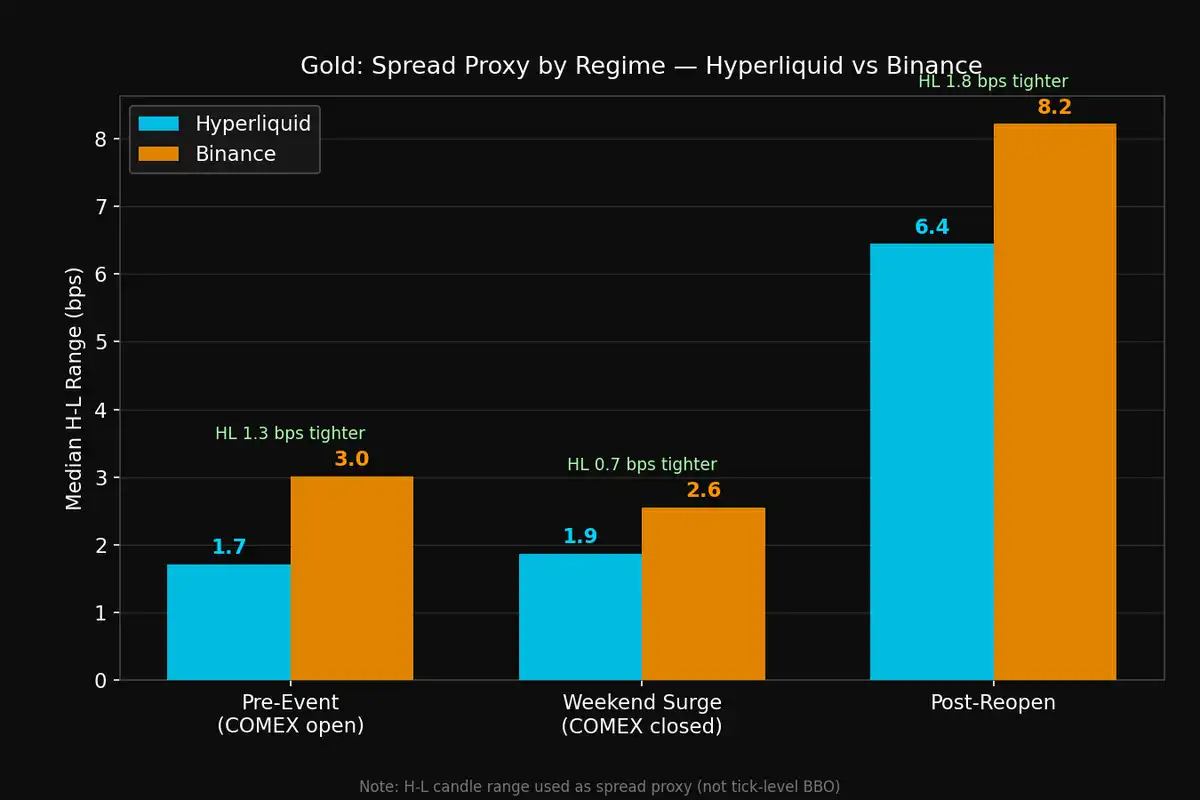
For gold, Hyperliquid's spreads were consistently narrower. Before the event, Hyperliquid's average spread was 2.9 basis points, compared to Binance's 3.7 basis points. During the weekend volatility, Hyperliquid averaged 1.9 basis points, while Binance averaged 2.6 basis points. After reopening, spreads widened on both platforms, but Hyperliquid's remained narrower at 6.4 basis points versus Binance's 8.2 basis points.
The situation for silver was different.
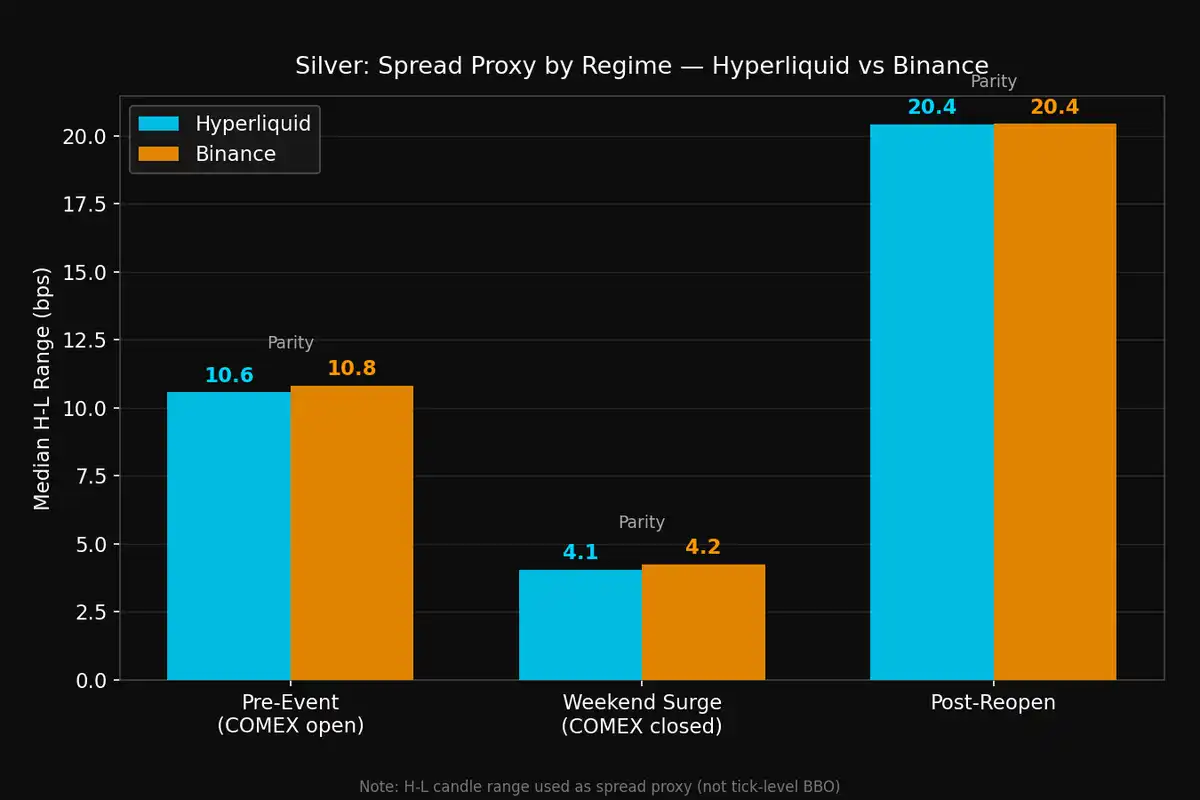
Before the event, spreads on both platforms were already high and nearly flat: Hyperliquid at 12.1 basis points and Binance at 11.8 basis points. During the weekend, both narrowed to 4.1 and 4.2 basis points. After reopening, they widened sharply to 20.4 basis points on both platforms.
On this metric, silver showed no structural liquidity advantage, and the spread performance was virtually indistinguishable between the two.
Funding rates provide another layer of information.
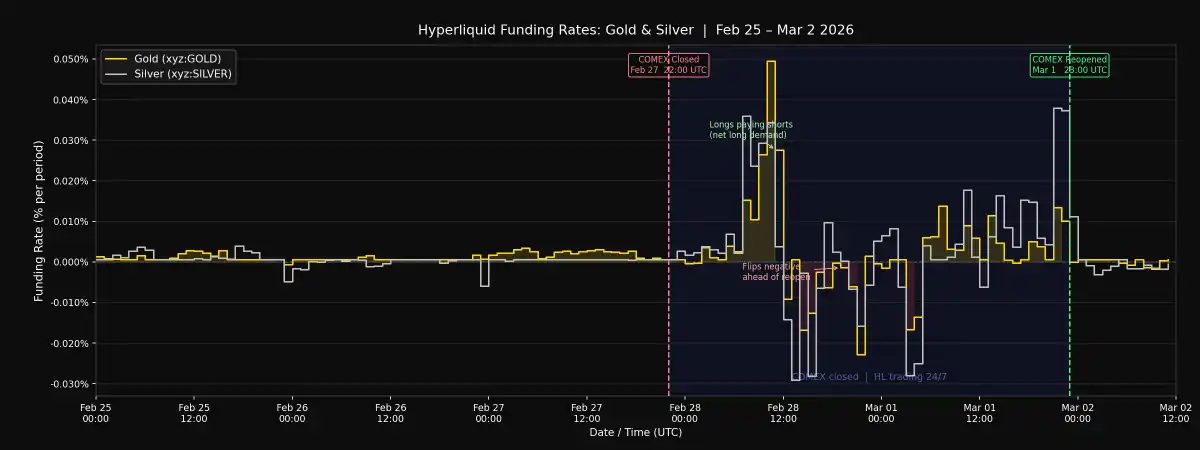
Hyperliquid's funding rates were positive early in the weekend, with longs paying shorts. This indicates net directional demand for upside exposure as geopolitical risks evolved. Entering Sunday evening, as traders positioned ahead of the COMEX reopening, funding rates turned slightly negative.
Summary
Binance dominates in trading volume, with more transactions and a larger share of activity.
But not all volume is created equal. When markets were closed and geopolitical risks needed real-time pricing, Hyperliquid moved first and came closer to the final futures reopening price. Accurate pricing under pressure is a core function of any exchange, and HYPE's movement this weekend indicates that the market is beginning to price in this shift.