Dubai Web3 Week High-End Side Note: DID Alliance Debuts with Asia-Pacific Innovation Center, Building a New Global Hub for Capital and Commerce

深潮Publicado em 2025-12-10Última atualização em 2025-12-10

Resumo

During the Dubai Binance Blockchain Week, the "KOL GOLF After Party" was co-hosted by Klickl, Techub News, and 1783DAO, with support from BroadChain, WIS, JDI, and the DID Alliance. The event gathered global investors, industry experts, and KOLs for private, high-level discussions on digital economy trends and collaboration. A key focus was the strategic vision presented by Eugene Xiao, Chairman of the DID Alliance, who emphasized decentralized identity (DID) as a foundational trust layer for the future digital economy, enabling secure, cross-border applications in DeFi, SocialFi, and RWA. He also introduced the Asia Pacific Innovation Center (APIC) in Kuala Lumpur, positioning it as a global hub for Web3 innovation, traditional business transformation, and cross-market education—connecting Asia, the Middle East, and beyond. The event underscored DID Alliance’s expanding global strategy to bridge digital infrastructure and real-world business adoption.

As the Dubai Binance Blockchain Week (BBW) captured the global Web3 industry's attention, a series of in-depth industry exchange activities were also launched simultaneously. On December 4th, the "KOL GOLF After Party", jointly hosted by Klickl, Techub News, 1783DAO, and co-organized by BroadChain, WIS (World in Shadow), JDI, and the DID Alliance, was held in Dubai.

This event brought together representatives from global investment institutions, industry veterans, and key opinion leaders (KOLs), aiming to build an efficient and private dialogue platform to discuss the development trends and cooperation opportunities in the digital economy.
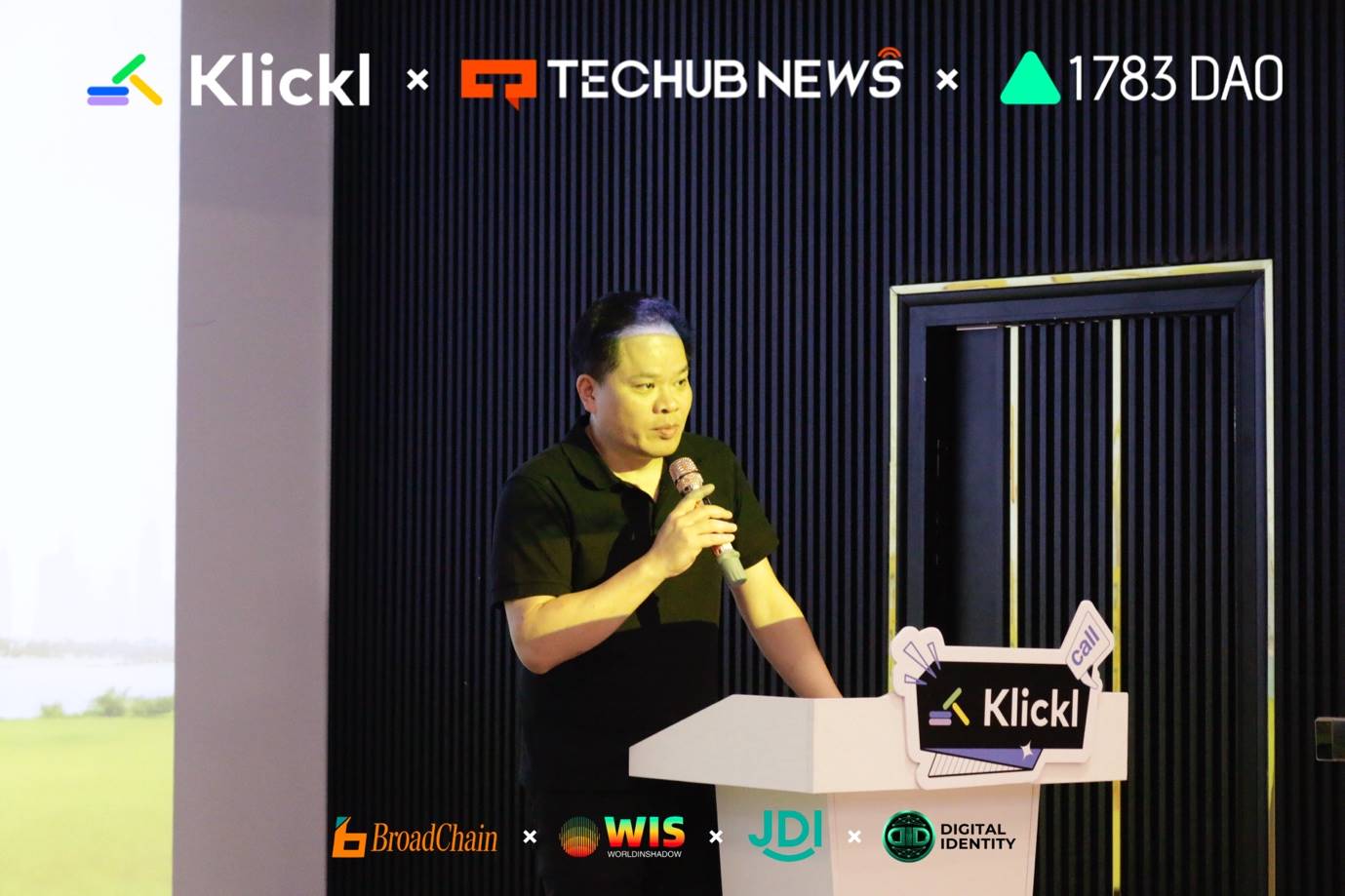
Focusing on In-Depth Industry Dialogue, Discussing the Future of Digital Trust

As one of the Side Events during the Binance BBW in Dubai, this activity used high-end indoor golf as a social vehicle, with the core purpose of providing an exchange field for industry leaders away from the exhibition hustle and focused on the collision of ideas.

In a relaxed atmosphere, participants discussed core issues in the current Web3 industry—including the application of Decentralized Identity (DID) in compliant finance, the path selection for Real World Asset (RWA) tokenization, and the evolution direction of infrastructure. This form of deep social interaction brought industry builders closer together and facilitated the reaching of multiple strategic cooperation intentions.
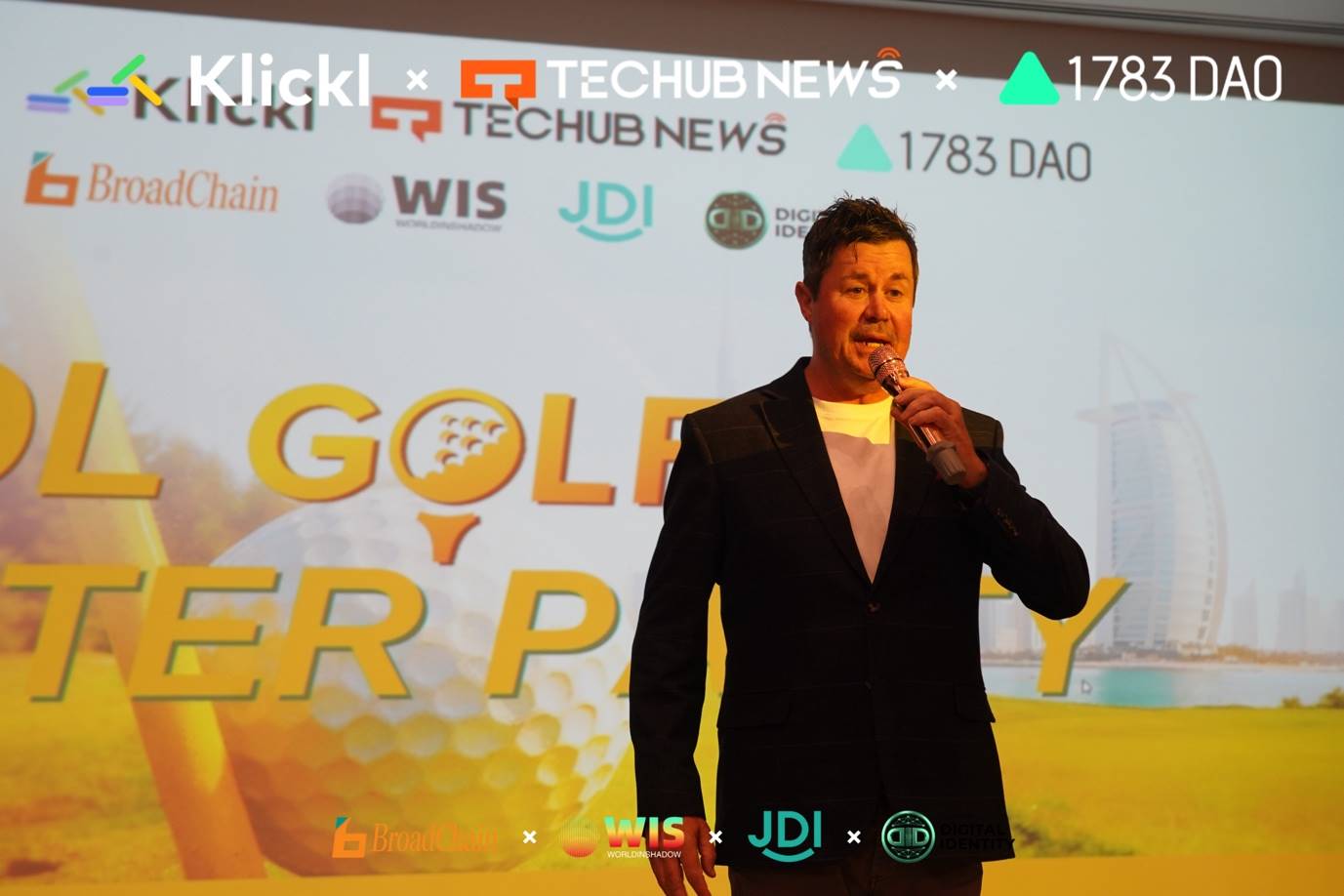
Strategic Roadshow: DID Alliance Building Web3 Digital Sovereignty Infrastructure

As one of the core organizers of this event, DID Alliance Chairman Eugene Xiao delivered a brief speech titled "Linking the Globe: From Digital Sovereignty to Business Empowerment" on site, presenting the vision and ecosystem layout of the DID Alliance to the global elite present.

Eugene first elaborated on the core mission of the DID Alliance. He pointed out that as the Web3 industry penetrates the mainstream world, traditional centralized identity systems can no longer meet the growing demands for privacy protection, data sovereignty, and cross-chain interoperability.

"DID (Decentralized Identity) is not just a technical standard; it is the cornerstone of trust for the future digital economy." Eugene stated that the DID Alliance is committed to building a decentralized, cross-sovereign, and compliant digital identity infrastructure. By returning ownership of identity to users, DID technology can effectively solve the trust issues in the development of the digital economy, providing secure and reliable underlying support for application scenarios such as DeFi, SocialFi, and RWA.

Empowering Global Business: The Strategic Positioning of the Asia-Pacific Innovation Center

After introducing the technical foundation, Eugene introduced the recently inaugurated ecological component—the Asia-Pacific Innovation Center (APIC) in Kuala Lumpur—to partners in the Middle East and globally.

Eugene defined APIC's strategic role in his speech: "APIC is not just a physical space; it is a bridge for the DID ecosystem connecting the实体商业 (entity business) and the Web3 world. It is a business accelerator and capital connector we have built for global enterprises."

He detailed the three core functions of APIC as an "independent platform for business, finance, and trade empowerment":

1. Web3 Innovation Incubation: Serving as a global expansion base for cutting-edge projects, leveraging the advantages of DID technology to provide start-ups with full-chain support from technical solutions and compliance consulting to market implementation.

2. Traditional Business Transformation: Building a bridge between Web2 and Web3, assisting traditional enterprises in using blockchain technology for digital upgrade, achieving asset tokenization and business model innovation.

3. Global Education and Overseas Expansion Empowerment: Relying on cooperative resources with top academic institutions such as MIT and UCLA Anderson School of Management, as well as Kuala Lumpur's geographical advantage as a Southeast Asian hub, helping enterprises connect with markets in China, the US, Asia-Pacific, and the Middle East, and cultivating compound talents with a global perspective.

Eugene pointed out that although APIC is headquartered in Kuala Lumpur, its vision is global. This trip to Dubai aims to extend APIC's empowerment network to the Middle East, an active capital center, promote in-depth对接 (connection) of Eastern and Western resources, and build a more open and inclusive global business ecosystem.
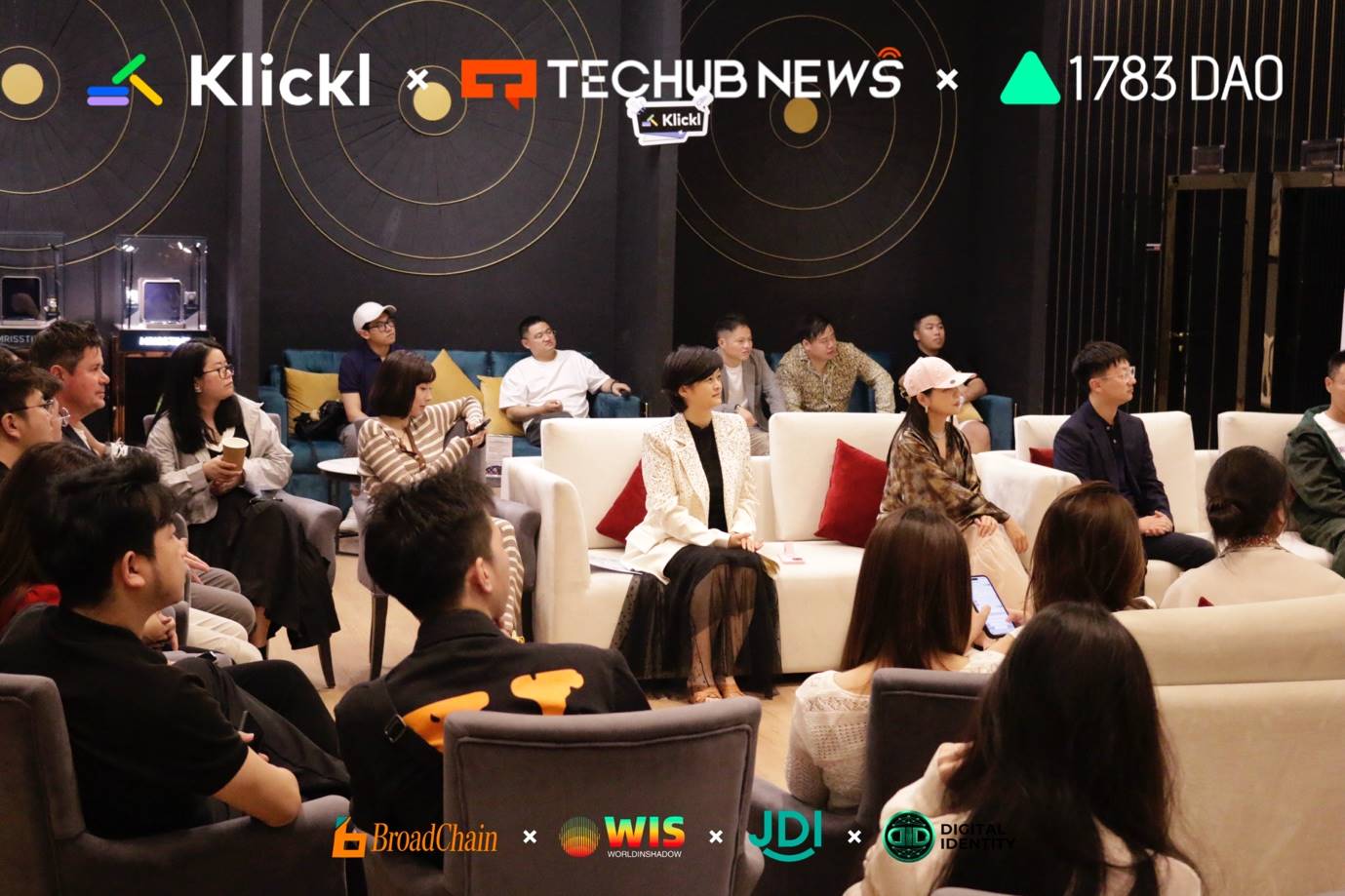
Accelerating Global Layout, Co-building a New Digital Ecosystem

This exchange event in Dubai is an important part of the DID Alliance's globalization strategy. Through joint actions with partners like Klickl, Techub News, and 1783DAO, the DID Alliance demonstrated its ecological connectivity within the industry.

With the continuous maturation of DID technology and the gradual release of the strategic functions of the Asia-Pacific Innovation Center (APIC), a global empowerment ecosystem covering the technical底层 (underlayer), capital operation, education and training, and business implementation is accelerating its formation. From the inauguration in Kuala Lumpur to the debut in Dubai, the DID Alliance is steadily advancing its global layout, committed to linking global value and reshaping the new order of digital commerce.


Criptomoedas em alta

Perguntas relacionadas

QWhat was the main purpose of the 'KOL GOLF After Party' event held in Dubai Binance Blockchain Week?

AThe main purpose was to serve as a high-level, private dialogue platform for global investment institution representatives, industry veterans, and key opinion leaders (KOLs) to discuss digital economy trends and collaboration opportunities.

QWho is Eugene Xiao and what key concept did he present at the event?

AEugene Xiao is the Chairman of the DID Alliance. He presented the core mission and vision of the DID Alliance, focusing on building a decentralized, cross-sovereign, and compliant digital identity infrastructure as the trust cornerstone for the future digital economy.

QWhat are the three core functions of the Asia Pacific Innovation Center (APIC) as introduced by Eugene Xiao?

AThe three core functions are: 1) Web3 Innovation Incubation, providing full-chain support for startups; 2) Traditional Business Transformation, assisting Web2 companies with blockchain upgrades; 3) Global Education and Expansion Empowerment, connecting enterprises to major global markets and cultivating talent.

QWhich organizations were the main co-organizers of the 'KOL GOLF After Party' event?

AThe event was jointly hosted by Klickl, Techub News, and 1783DAO, and co-organized by BroadChain, WIS (World in Shadow), JDI, and the DID Alliance.

QHow does the DID Alliance view the role of Decentralized Identity (DID) technology in the Web3 ecosystem?

AThe DID Alliance views DID not just as a technical standard, but as the foundational trust cornerstone for the future digital economy. It aims to return identity ownership to users, solving trust issues and providing secure, reliable underlying support for applications like DeFi, SocialFi, and RWA.

Leituras Relacionadas

Stablecoin Salaries: Why Are They Becoming the First Choice for Cross-Border Workers?

Stablecoin Salaries: Why They're Becoming the Top Choice for Global Remote Workers The traditional global salary system carries hidden exchange rate risks for freelancers in countries like India, Argentina, and Turkey who earn in USD but spend in local currencies. When salaries are instantly converted to local currency, workers lose purchasing power if that currency depreciates against the dollar. For instance, an Indian designer converting a $2000 monthly salary to rupees lost over 10% in purchasing power last year due to the rupee's decline. Holding even a portion of income in USD or USD-pegged stablecoins can preserve value. Stablecoins offer a solution by breaking down barriers to holding dollars. Opening foreign USD bank accounts is difficult, and international wire transfers incur high fees (averaging 6.5%) and delays. In contrast, stablecoin transfers are fast and low-cost. Furthermore, many countries with high inflation and depreciating currencies restrict citizens' access to foreign currency. Self-custody stablecoin wallets enable workers to hold dollar-equivalent assets without needing bank approval, bypassing these limits. These wallets integrate multiple functions: they allow users to convert only what's needed for daily expenses into local currency, keep the remainder in stablecoins, connect to on-chain lending or yield products, and even link to payment cards for direct spending. While challenges remain—such as the lack of deposit insurance and evolving regulatory frameworks—the trend is clear. Reports indicate a growing preference for USD or stablecoin payments among freelancers in high-inflation countries. This shift represents a fundamental restructuring of salary functions: payment currency, asset storage, yield generation, spending, and cross-border flow. It offers the freedom and flexibility that are core to money's purpose, signaling a profound change in the global financial landscape.

Foresight NewsHá 12m

Stablecoin Salaries: Why Are They Becoming the First Choice for Cross-Border Workers?

Foresight NewsHá 12m

Don't Just Focus on Layoffs, The New Structure of the Ethereum Foundation is More Worthy of Appreciation

The Ethereum Foundation (EF) has undergone a significant organizational restructuring, with the most notable change being a strategic refocusing of its priorities rather than just a 20% staff reduction (approximately 54 people). The new structure clearly prioritizes the Protocol and Access layers, which now comprise the largest teams (57 and 34 people, respectively). This signals EF's intent to concentrate its core resources on fundamental, hard-to-outsource aspects of Ethereum: protocol evolution, security, privacy, client development, and the foundational access layer. Key areas within the Protocol layer, led by an architecture group including Vitalik Buterin and Justin Drake, receive heightened emphasis. These include post-quantum security, zkEVM, formal verification, and long-term roadmap development ("Strawmap"). This reflects a shift towards tackling complex, interdependent challenges like scalability, privacy, and future-proofing the protocol, potentially moving from a pure "redundant security" multi-client model towards more specialized clients aided by AI-assisted formal verification. Financially, EF's budget is being reduced by approximately 40%. The goal is to transition from spending about 15% of its remaining funds annually to a more sustainable 5% rate, akin to a long-term endowment, ensuring its longevity. Concurrently, the restructuring involves pushing certain responsibilities—such as application development, adoption, and ecosystem coordination—to external organizations like EthLabs, the Ethereum Apps Guild, and others. This "multi-node" model aims to increase ecosystem resilience by decentralizing functions beyond the EF, though it introduces new coordination challenges. In essence, the reorganization represents EF consciously narrowing its scope to focus on the hardest, most critical protocol-level problems while fostering a more distributed and sustainable ecosystem structure for Ethereum's future growth.

Foresight NewsHá 40m

Don't Just Focus on Layoffs, The New Structure of the Ethereum Foundation is More Worthy of Appreciation

Foresight NewsHá 40m

Report Analysis: What Is Coherent Planning as CPO Booms?

Title: Report Interpretation: What Moves Is Coherent Making Amid the CPO Boom? Summary: JP Morgan analyst Samik Chatterjee reiterates an Overweight rating on Coherent (COHR), citing undervalued growth potential across three core areas: data center optical transceivers, co-packaged optics (CPO) chips, and industrial lasers/thermal management. COHR's 1.6T data center transceivers are in high demand, with pricing remaining firm. The rise of CPO is seen not as a threat but as a catalyst, creating higher demand for sophisticated optical components, an area where COHR holds a competitive edge with its comprehensive portfolio (lasers, isolators, VCSELs, thermoelectric coolers). Each CPO chip offers significantly greater revenue potential than traditional transceivers. Furthermore, its Optical Circuit Switch (OCS) technology targets a potential $4B market with reliability and power advantages. The company is expanding its InP (Indium Phosphide) device capacity fourfold within two years, securing substrate supply and transitioning to more cost-effective 6-inch wafers. As one of only two major suppliers of high-quality pump lasers—currently in severe shortage—COHR can now move up the value chain from components to complete line cards/systems, boosting ASP over tenfold. Gross margin targets (>42%) may be revised upward due to high-end product premiums, cost improvements from the wafer transition, and contributions from new high-margin products like CPO and OCS. Its efficient thermadite thermal material also offers long-term growth. Industrial segment revenue grows at a steady 5-10%, supported by semiconductor equipment orders. Changes in Apple's Face ID protocol present a re-competition opportunity for 3D sensing. Overall, Coherent is positioned as a key infrastructure provider, with AI-driven compute demand fueling the need for high-speed optical interconnectivity. Growth from CPO/OCS, stable industrial performance, and margin improvement support the bullish thesis. *Disclaimer: This summary interprets a third-party analyst report from JP Morgan. It does not constitute investment advice.*

marsbitHá 1h

Report Analysis: What Is Coherent Planning as CPO Booms?

marsbitHá 1h

After Laying Off 20% of Staff, What Are the Key Points of EF's New Structure?

Following the completion of a months-long organizational restructuring, the Ethereum Foundation (EF) announced a 20% workforce reduction (approximately 54 employees) on June 23rd. It reorganized its teams into five new core clusters: Protocol, Access, User, Community, and Institutional (plus Operations/Management support units). Officially, this move implements the EF's 2026 Mandate and 2025 Treasury Management Policy, aiming to create a more focused and "self-sovereign" organization. The restructuring prioritizes the CROPS principles—Censorship Resistance, Openness & Freedom, Privacy, and Security—as foundational organizational tenets. The Protocol cluster will focus on core protocol R&D, including MEV reduction and zkEVM. The Access cluster emphasizes preserving user "zero option" for non-custodial, permissionless interaction. The User, Community, and Institutional clusters will manage external engagement, with the latter handling institutional and regulatory matters. While offering enhanced severance and transition support for affected employees, the EF did not disclose budget allocations or specific KPIs for the new clusters. This has led to market uncertainty about the impact on project funding and development priorities. Analysts note the announcement's positive tone of mission focus contrasts with a backdrop of recent EF leadership changes and broader ecosystem pressures. The true impact—whether this signifies strategic realignment or reactive contraction—will become clearer as the new structure's resource allocation and project prioritization are revealed in the coming months.

marsbitHá 1h

After Laying Off 20% of Staff, What Are the Key Points of EF's New Structure?

marsbitHá 1h

Trading

Spot
Futuros

Artigos em Destaque

O que é NATGAS

O Contrato Perpétuo NATGASUSDT é o símbolo de negociação para o Gás Natural cotado em dólares americanos, representando 1 MMBtu (Milhões de Unidades Térmicas Britânicas) de gás natural.

12 Visualizações TotaisPublicado em {updateTime}Atualizado em 2026.06.18

O que é NATGAS

Como comprar NATGAS

Bem-vindo à HTX.com!Tornámos a compra de Natgas (NATGAS) simples e conveniente.Segue o nosso guia passo a passo para iniciar a tua jornada no mundo das criptos.Passo 1: cria a tua conta HTXUtiliza o teu e-mail ou número de telefone para te inscreveres numa conta gratuita na HTX.Desfruta de um processo de inscrição sem complicações e desbloqueia todas as funcionalidades.Obter a minha contaPasso 2: vai para Comprar Cripto e escolhe o teu método de pagamentoCartão de crédito/débito: usa o teu visa ou mastercard para comprar Natgas (NATGAS) instantaneamente.Saldo: usa os fundos da tua conta HTX para transacionar sem problemas.Terceiros: adicionamos métodos de pagamento populares, como Google Pay e Apple Pay, para aumentar a conveniência.P2P: transaciona diretamente com outros utilizadores na HTX.Mercado de balcão (OTC): oferecemos serviços personalizados e taxas de câmbio competitivas para os traders.Passo 3: armazena teu Natgas (NATGAS)Depois de comprar o teu Natgas (NATGAS), armazena-o na tua conta HTX.Alternativamente, podes enviá-lo para outro lugar através de transferência blockchain ou usá-lo para transacionar outras criptomoedas.Passo 4: transaciona Natgas (NATGAS)Transaciona facilmente Natgas (NATGAS) no mercado à vista da HTX.Acede simplesmente à tua conta, seleciona o teu par de trading, executa as tuas transações e monitoriza em tempo real.Oferecemos uma experiência de fácil utilização tanto para principiantes como para traders experientes.

9 Visualizações TotaisPublicado em {updateTime}Atualizado em 2026.06.18

Como comprar NATGAS

O que é NASDAQ100

O Índice Nasdaq-100 inclui 100 das maiores empresas não financeiras listadas no Mercado de Ações Nasdaq e é amplamente utilizado como referência para ações de crescimento e tecnologia de grande capitalização nos EUA.

9 Visualizações TotaisPublicado em {updateTime}Atualizado em 2026.06.18

O que é NASDAQ100

Discussões

Bem-vindo à Comunidade HTX. Aqui, pode manter-se informado sobre os mais recentes desenvolvimentos da plataforma e obter acesso a análises profissionais de mercado. As opiniões dos utilizadores sobre o preço de A (A) são apresentadas abaixo.

活动图片