Digital asset ETPs post third straight week of net inflows, led by US demand

cointelegraphPublicado em 2025-12-15Última atualização em 2025-12-15

Resumo

Digital asset exchange-traded products (ETPs) recorded $864 million in net inflows for the third consecutive week, driven primarily by U.S. demand, according to CoinShares. Bitcoin products led with $522 million in inflows, while Ether saw $338 million. Solana and XRP also attracted significant inflows of $65 million and $46.9 million, respectively. The U.S., Germany, and Canada accounted for the majority of regional inflows, while Switzerland posted outflows. Year-to-date, Bitcoin has attracted $27.7 billion, though still below 2024 levels. Multi-asset crypto ETPs and blockchain equity funds saw mixed flows during the period.

Crypto exchange-traded products (ETPs) recorded about $864 million in inflows last week, according to a report on Monday by European digital asset manager CoinShares.

The United States led regional inflows with about $796 million, followed by Germany with roughly $68.6 million and Canada with about $26.8 million. Together, the three countries account for approximately 98.6% of year-to-date (YTD) inflows into digital asset investment products.

Switzerland-listed crypto ETPs recorded about $41.4 million in weekly outflows, while YTD net flows were about $622.4 million, according to the data.
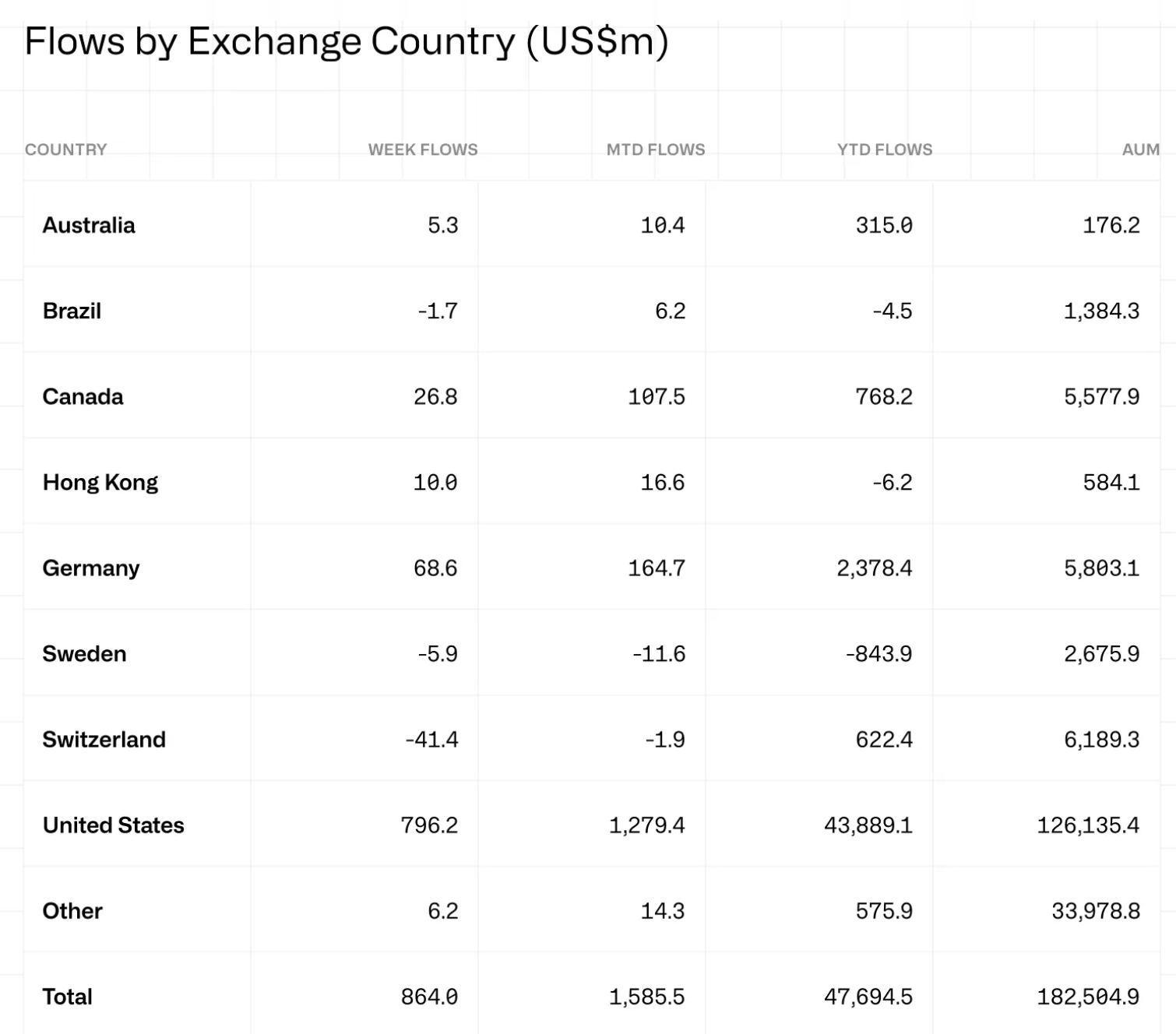
Flows by Exchange Country (US$m). Source: CoinShares’ Report

Bitcoin and Ether dominate inflows, followed by Solana and XRP

Bitcoin (BTC) investment products recorded about $522 million in weekly inflows, while short-Bitcoin products posted roughly $1.8 million in net outflows, “signalling a recovery in sentiment,” according to the report.

Ether (ETH) saw approximately $338 million in inflows during the week, lifting YTD to about $13.3 billion, up 148% from 2024.

Beyond Bitcoin and Ether, Solana (SOL) investment products recorded about $65 million in weekly inflows, bringing YTD inflows to roughly $3.46 billion, a tenfold increase from last year.

XRP (XRP) products also attracted fresh capital, with approximately $46.9 million added during the week and about $3.18 billion in inflows accumulated YTD, according to the data.

Smaller-cap products saw more mixed results, with Aave (AAVE)-linked products recording about $5.9 million in weekly inflows and Chainlink (LINK) adding roughly $4.1 million. Hyperliquid (HYPE) products posted net outflows of around $14.1 million during the period.

This is the third consecutive week of inflows for crypto ETPs, following about $716 million in inflows last week and roughly $1 billion the week before.

Bitcoin has attracted around $27.7 billion YTD, still below the $41 billion it recorded in 2024.

Related: XRP sinks below $2 despite $1B in ETF inflows: How low can price go?

Assets under management and equity ETP flows

By assets under management, Bitcoin investment products hold about $141.8 billion, while Ether-linked products account for roughly $26 billion.

Outside of single-asset products, multi-asset crypto ETPs recorded about $104.9 million in weekly outflows, extending net redemptions to roughly $69.5 million YTD, despite holding approximately $6.8 billion in assets under management, according to the data.
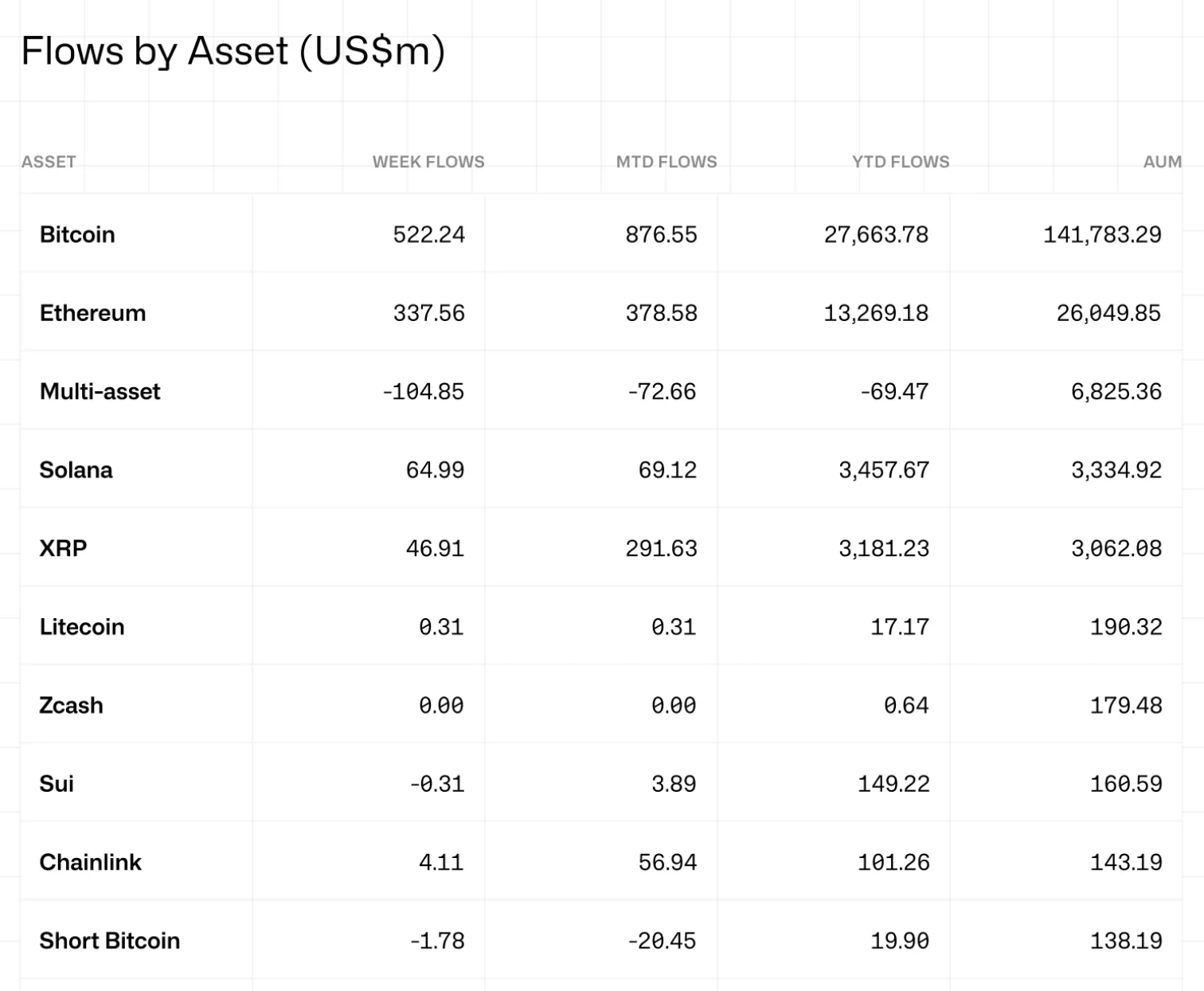
Crypto ETP USD flows by asset. Source: CoinShares

Funds that invest in publicly traded blockchain-related companies saw mixed investor flows during the week. VanEck’s Digital Transformation fund posted the largest weekly inflow at about $45.8 million, followed by VanEck Crypto and Blockchain at roughly $20.5 million and Schwab’s Crypto Thematic ETF at about $7.2 million.

Invesco CoinShares’ Global Blockchain and Bitwise Crypto Industry Innovators ETPs recorded modest net outflows during the week.
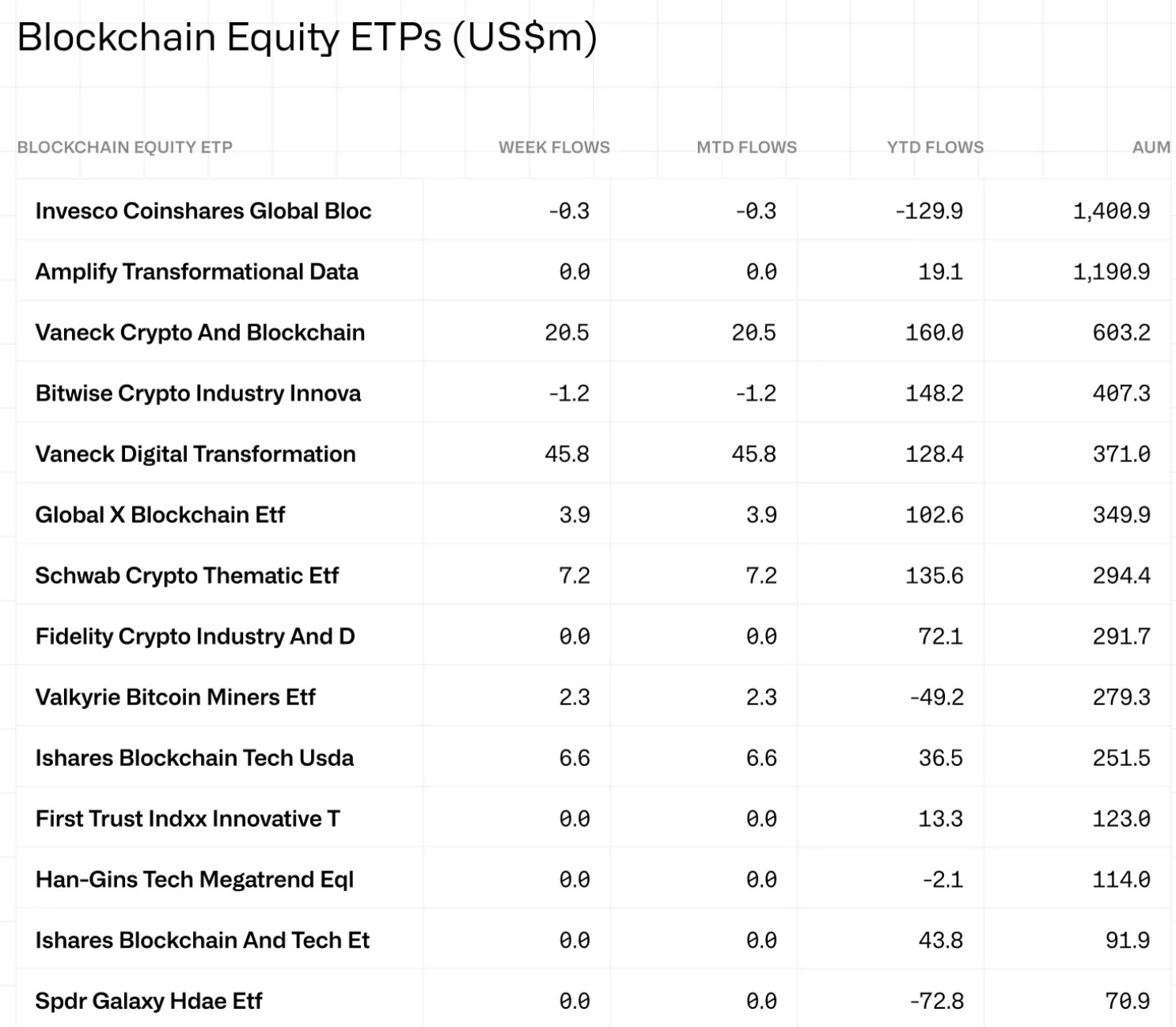
Blockchain Equity ETPs. Source: CoinShares’

Magazine: Big questions: Would Bitcoin survive a 10-year power outage?

Leituras Relacionadas

Why Do DeFi Users Reject Fixed Rates?

Despite the intuitive appeal of fixed-rate loans for providing payment certainty, they have consistently failed to gain mainstream adoption in DeFi. This is not due to user rejection alone but stems from a fundamental mismatch between product design and actual user behavior. DeFi protocols are built as on-demand money markets, where lenders prioritize liquidity, composability, and the ability to exit or rotate capital instantly—features inherent to floating-rate pools like Aave. They accept slightly lower yields for this flexibility. In contrast, fixed-rate products require capital lock-up, sacrificing this optionality. The modest premium offered is often insufficient compensation for this loss. Furthermore, most crypto borrowing is not long-term credit but short-term leverage, basis trading, and collateral management. These borrowers are unwilling to pay a high premium for fixed rates as they don’t plan to hold debt long-term. This creates a one-sided market where lenders demand a lock-up premium, but borrowers refuse to pay it. Fixed-rate mechanisms also suffer from fragmented liquidity across different maturities, leading to poor secondary markets and significant price impacts for early exits. This forces lenders to become bond managers rather than passive liquidity providers. Ultimately, fixed-rate lending can exist as a niche product but is structurally disadvantaged to become the default in DeFi. The ecosystem is dominated by mercenary capital that values liquidity over yield certainty. For fixed rates to succeed, they must be treated as true credit instruments with priced-in exit options, rather than attempting to mimic liquid money markets.

marsbitHá 35m

Why Do DeFi Users Reject Fixed Rates?

marsbitHá 35m

Why Do DeFi Users Reject Fixed Rates?

Fixed-rate lending has consistently struggled to gain traction in DeFi, not because users inherently reject it, but due to a fundamental mismatch between product design and the actual behavior of capital in the ecosystem. DeFi protocols are built as on-demand money markets, where lenders—acting like cash managers—prioritize liquidity, composability, and the ability to exit or reallocate funds instantly. They accept lower yields in exchange for these features. In contrast, fixed-rate products require locking funds for a duration, sacrificing this flexibility for a modest premium that often fails to adequately compensate for the loss of optionality. Most crypto borrowing is not long-term credit but leveraged, tactical activity like basis trading and collateral recycling, where borrowers also prefer floating rates for their flexibility. This creates a one-sided market: lenders demand a premium to lock funds, but borrowers are unwilling to pay it. Fixed-rate markets fragment liquidity across maturities, leading to poor secondary markets and significant price impacts for early exits. While fixed-rate products can exist in niche, hold-to-maturity forms, they are structurally disadvantaged. The lender base, composed of mercenary capital seeking liquidity, will likely keep floating-rate money markets like Aave as the default, with fixed-rate serving only as an optional overlay for those explicitly seeking duration exposure.

Odaily星球日报Há 38m

Why Do DeFi Users Reject Fixed Rates?

Odaily星球日报Há 38m

Trading

Spot
Futuros

Discussões

Bem-vindo à Comunidade HTX. Aqui, pode manter-se informado sobre os mais recentes desenvolvimentos da plataforma e obter acesso a análises profissionais de mercado. As opiniões dos utilizadores sobre o preço de US (US) são apresentadas abaixo.

活动图片