
Detained for 37 Days: The First Wave of People Who Got Rich from 'AI Gateways' Are Starting to Go to Jail

marsbitPublicado em 2026-05-21Última atualização em 2026-05-21

Resumo

A prominent AI proxy service operator was reportedly detained for 37 days and is now on bail pending trial, highlighting the legal risks in China's booming but unregulated AI intermediary market. These services act as "AI scalpers," providing domestic users with access to restricted overseas models (like OpenAI, Claude) by bundling APIs, handling payments, and bypassing network blocks, all for a fee. Their controversial profitability stems from practices like bulk-registering accounts to resell free credits, exploiting refund policies, overcharging for tokens, substituting cheaper models, and illegally selling user conversation data. Major figures, including cryptocurrency entrepreneurs, are now entering this space. Legally, these operations face severe risks. Their core model often involves unauthorized API access and operating without required telecom licenses, potentially constituting illegal business operations. They fail to meet data security obligations for the vast amounts of user data they process, risking charges for failing to fulfill network security duties. Crucially, the unauthorized collection and sale of user data, which can include personal and commercial secrets, easily meets the threshold for the crime of infringing on personal information. The case underscores a critical juncture for the AI industry. While proxies lower access barriers, they expose user data to unsecured middlemen and undermine the business models of AI developers, forcing them to divert...

Author: Lawyer Shao Shiwei

According to industry insider news, in May 2026, an operator of an AI gateway service publicly stated that they had been criminally detained for 37 days for illegally reverse-engineering, scraping, and reselling low-cost AI API resources, and is currently under a status of release on bail pending trial.

Although Lawyer Shao has also seen fellow lawyers commenting on this incident, stating that an AI gateway operator was criminally detained by Shanghai police, as there is no official announcement yet, the specific charges and handling of the case cannot be confirmed.

In the past two years, the demand for AI applications in China has exploded. However, due to regional restrictions on overseas large language models, more and more people are operating AI gateways. Simply put, domestic users want to use them but can't, so the gateway helps bridge the channel and charges a toll.

Therefore, using this case as an example, we can discuss: Can the currently booming business of AI gateways still be done? What risks might ordinary people face when operating an AI gateway?

The Lucrative Business of AI Gateways

According to a report by Xinhua News Agency, China's average daily Token usage has increased over a thousandfold from early 2024 to March 2026. The demand is clearly there.

However, if domestic users want to use overseas large models (OpenAI, Anthropic, Google, etc.), they encounter numerous hurdles such as network environment, payment channels, and identity verification.

Where there are hurdles, there is business. AI gateways have emerged accordingly. Currently, on many self-media platforms, it's claimed that AI API gateways are one of the most profitable projects in 2026, and this is not false.

AI gateways can also be understood as AI scalpers. They package interfaces from different AI model providers into a unified outlet, handling backend connections to all models for the user. Users also avoid the need for accessing restricted networks or figuring out foreign currency payments.

On platforms like Taobao, Xianyu, and Xiaohongshu, many such posts can be seen, with prices shockingly low.
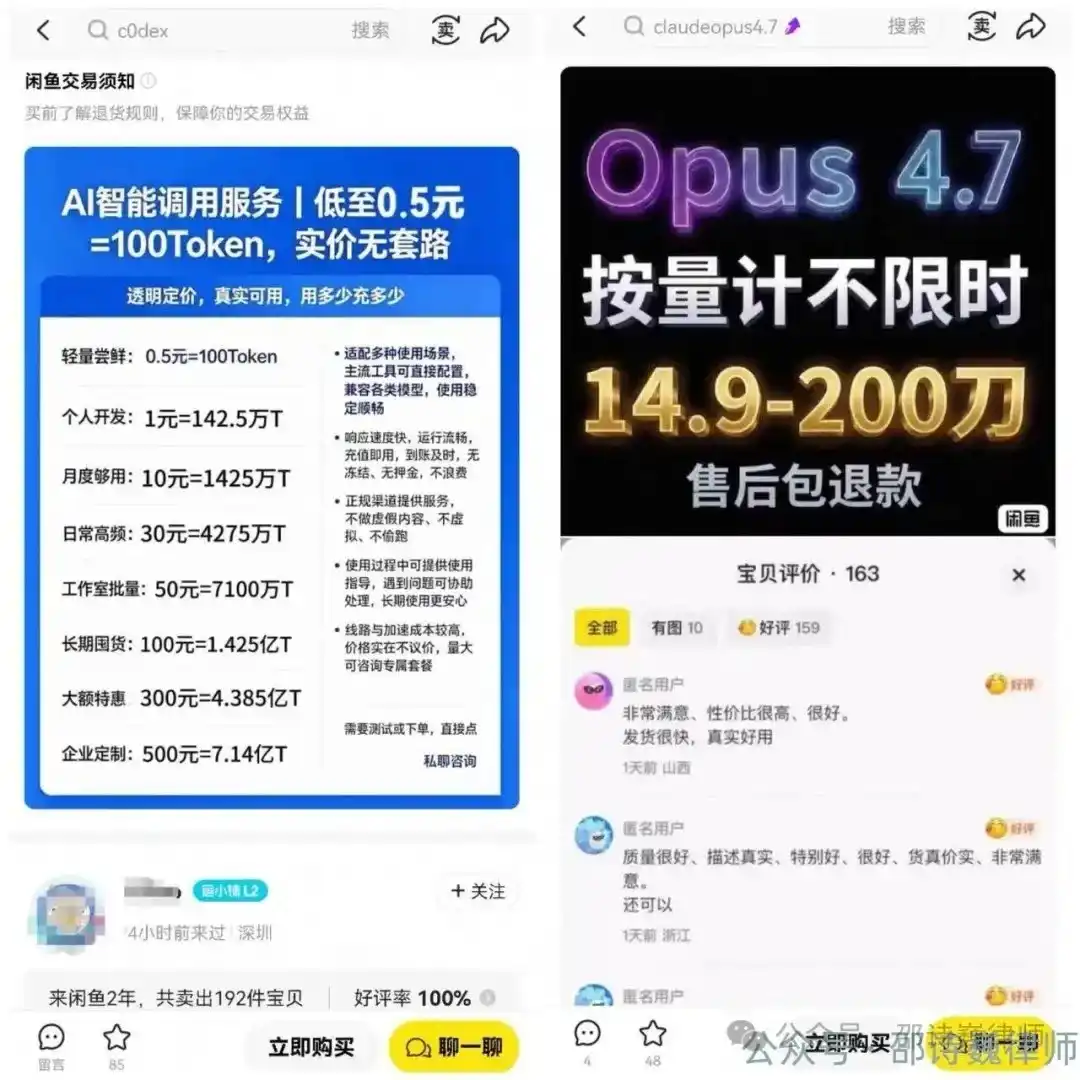
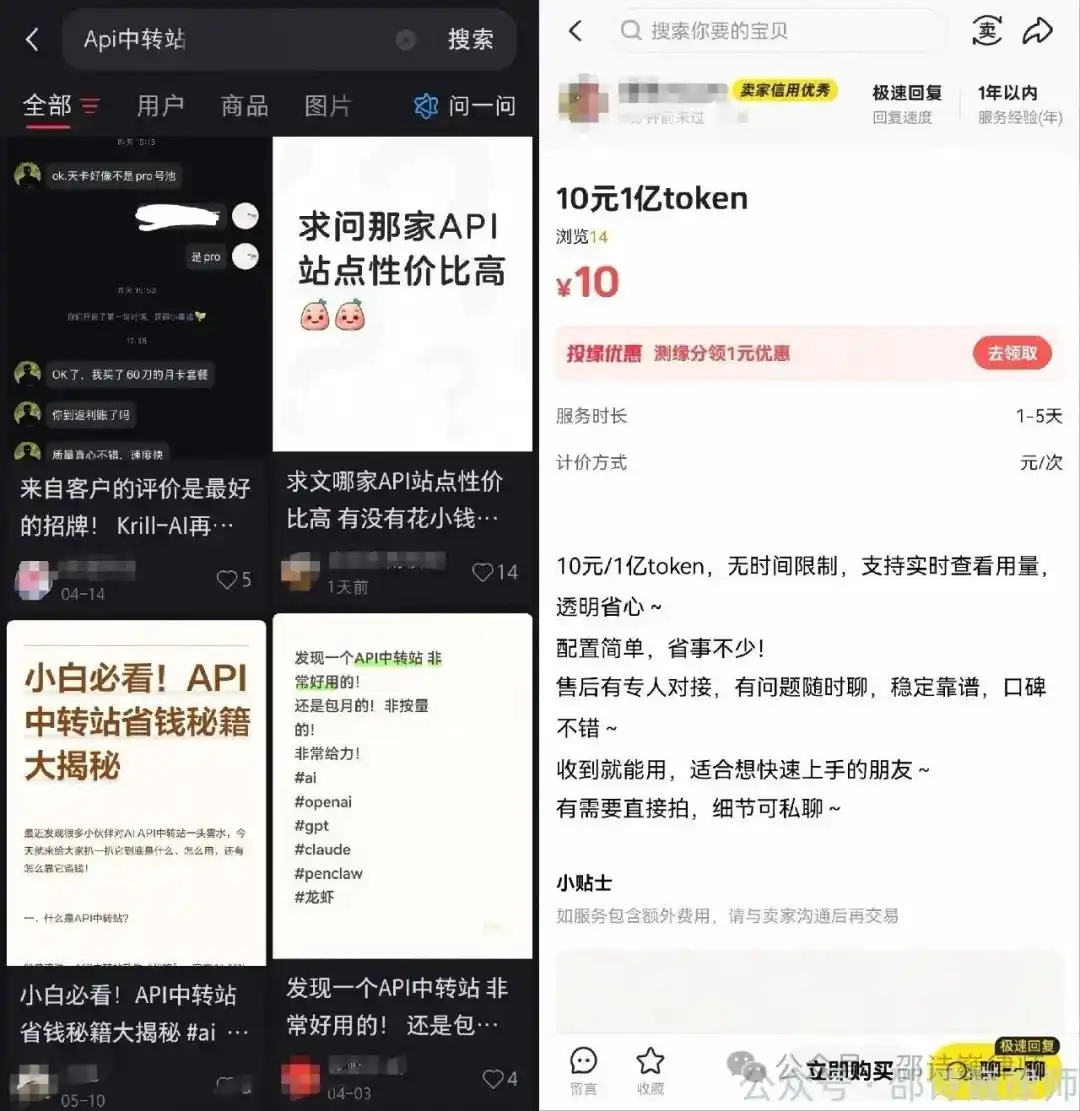
So the question arises: With prices pushed so low, how exactly do the gateway operators make money?

Reselling free credits. Platforms like ChatGPT and Claude offer free credits upon registering new accounts. The bulk account merchants behind the gateway service register large quantities of accounts, exploit the platform's free credits, then use technical means to reverse-engineer these accounts' web interfaces into standard APIs, and sell them uniformly. The cost is almost zero.

Refund arbitrage. They batch-register official accounts, top them up, and call the APIs. What if the account gets banned? Apply for a refund. In most cases, the pre-loaded money can be recovered. This means they use your money to call the APIs, and if banned, they get the cost back from the official source, profiting from both ends.

Over-reporting Tokens. Official APIs strictly charge based on the number of Tokens used, but the gateway's billing system is written by the operator themselves. Normally, 1 Chinese character is about 1.5 to 2 Tokens. Some gateways adjust the multiplier in the backend, so your 1 Chinese character could be charged as 3 to 4 Tokens. Users have no way to verify this.

Model swapping. You pay for Claude Opus 4.7, but you might actually be calling a small open-source model. This is also why many users feel that models via gateways seem "dumbed down".
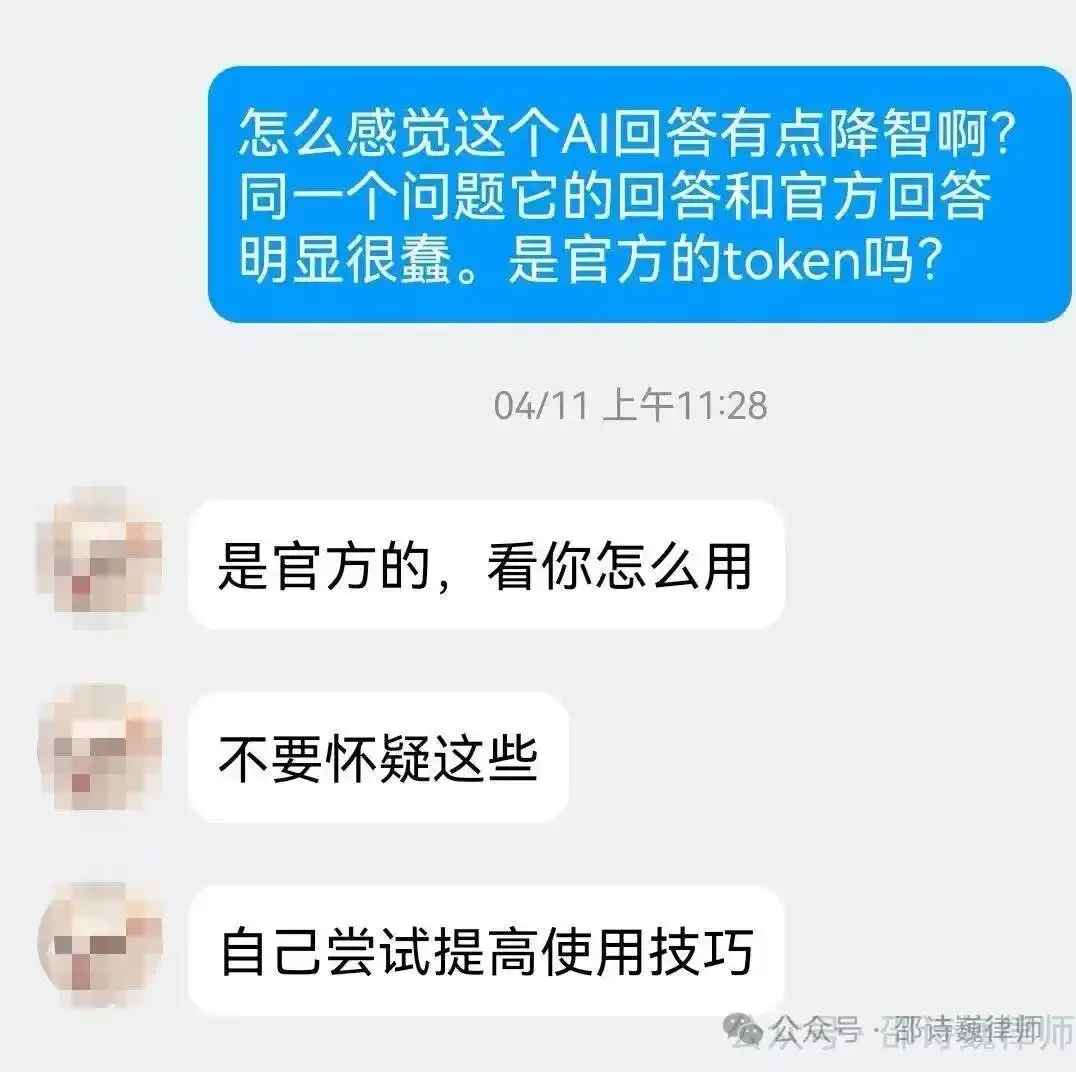
Data resale. They package and sell users' complete conversation records, especially high-quality training data like code in programming scenarios, reasoning processes, and engineering decisions, to model vendors. Why are gateways so cheap? They often profit by selling data.

This business has grown so large that even celebrities are entering the field. On May 1, 2026, Tron founder Justin Sun launched the AI gateway B.AI, with the slogan "One API Key = Claude + GPT + Gemini + Full Series of Domestic Large Models." On May 5, the cryptocurrency company WLFI, linked to the Trump family, launched WorldRouter, directly connecting AI calls with the cryptocurrency system.

But the greater the traffic, the greater the associated risks.

Why Could Running an AI Gateway Lead to Arrest?

Earlier, we outlined the profit models of AI gateways. As a gateway operator, one might be aware of the risks in such gray-area projects. However, after operating for some time and genuinely making money, and seeing peers doing the same without incident, one tends to become complacent.

From a legal perspective, the criminal risks of AI gateways mainly concentrate on three levels.

First, the business model itself may be illegal.

The computing resources of AI gateways are not obtained through legitimate procurement of API interfaces. Instead, they involve batch-registering accounts to exploit free credits or using technical means to reverse-engineer and obtain interface access. This no longer falls under the category of normal commercial agency.

Providing information relay and data processing services essentially constitutes a telecommunications value-added service. According to the "Regulations of the People's Republic of China on Telecommunications," operating such a business requires corresponding administrative permits. Operating without permission carries the risk of violating the crime of Illegal Business Operations.

Furthermore, overseas large model providers have access restrictions for users in China. Gateways help users circumvent these restrictions through proxy IPs, fabricated identities, etc., essentially assisting in bypassing the service provider's access conditions. If such acts are deemed as disrupting market order, they could also fall within the scope of the crime of Illegal Business Operations.

Second, lack of data security obligations.

AI gateways process a large volume of interaction data between users and models daily. User prompts, code snippets, business documents are all transmitted and processed through gateway servers. As the actual handler of the data, the gateway legally bears corresponding security management responsibilities.

However, the reality is that the vast majority of gateways have not established any data security management system—data storage locations, access control, and security measures are all non-existent. Once a data breach occurs, whether due to external attacks or internal mismanagement, the gateway, as a network service provider, could face criminal prosecution for the crime of Refusing to Perform Information Network Security Management Obligations. This crime targets precisely the act of "having a legal obligation but failing to fulfill it."

Third, illegal collection and sale of user data.

Some gateways package and sell user conversation logs to third parties, which is not an isolated phenomenon within the industry. However, the corresponding legal risk of this behavior is generally underestimated.

Conversation content between users and AI models often contains personal information, commercial secrets, and other sensitive data. Gateways rarely obtain explicit user consent when collecting this data, let alone inform users of the data's purpose and flow. Collecting and providing such information to third parties without consent, if serious, constitutes the crime of Infringing on Citizens' Personal Information.

The threshold for this crime is not high. According to relevant judicial interpretations, illegally obtaining, selling, or providing 50 or more pieces of personal information such as location tracking, communication content, credit information, property information, or 500 or more pieces of other personal information that may affect personal or property safety, such as accommodation information, communication records, health and physiological information, transaction information, meets the standard for prosecution. Considering the daily data processing volume of a gateway, reaching this threshold is not difficult.

Final Thoughts

Regarding the issue of AI gateways, Lawyer Shao does not wish to limit the discussion merely to whether operators will be prosecuted. The incident reflects issues the AI industry inevitably faces during its rapid development phase.

For users, gateways lower the usage barrier, but also expose users' sensitive data to an intermediate link without qualifications or security safeguards. Once problems occur, users might not even find a party against whom to assert their rights.

For model vendors, the existence of gateways consumes their technological investment and business models. Free credits are exploited in bulk, paid interfaces are reverse-engineered and misused, and pricing systems are undermined. Vendors are forced to divert significant resources from product development to risk control and countermeasures, and these costs ultimately get passed on to normal paying users. A deeper damage lies in the fact that when gateways dump computing power at low prices, the market's perception of the value of AI services is being distorted—users gradually come to believe that these capabilities should be almost free. This harms the sustainable development of the entire industry.

As a lawyer specializing in the new economy sector, Lawyer Shao has also been following the development of the AI industry and has served many practitioners in this field. How far an industry can go depends not on how fast it runs, but on whether it can establish a basic commercial order and foundation of trust. The AI industry is at a critical stage of transitioning from wild growth to standardized operation. The choices of every practitioner are shaping the future ecosystem of this industry.

A healthy AI industry requires vendors to continuously invest in technological R&D, users' data rights to be genuinely protected, and practitioners to participate in market competition in a compliant and responsible manner. These are prerequisites for the industry's long-term survival. What Lawyer Shao hopes to see is more practitioners choosing to do the difficult but right thing, making the foundation of this industry even more solid.

Special Disclaimer: This article is an original work by Lawyer Shao Shiwei. It represents only the author's personal views and does not constitute legal consultation or advice on specific matters.


Perguntas relacionadas

QWhat is an 'AI Relay Station' as described in the article?

AAn 'AI Relay Station' is a service that acts as an intermediary between Chinese users and overseas large AI models (like OpenAI, Anthropic, Google). It helps users bypass restrictions such as network access, payment channels, and identity verification, providing a unified API interface in exchange for a fee.

QWhat are some unethical profit models used by certain AI Relay Station operators mentioned in the article?

AThe article lists several unethical practices: 1) Reselling the free usage quotas from newly registered AI service accounts. 2) Refund arbitrage—charging users for API calls, then requesting refunds from the official service after the account gets banned. 3) Inflating token counts in their own billing systems to overcharge users. 4) Model swapping—delivering a less capable model than what the user paid for. 5) Collecting and selling users' high-quality conversation data, such as code and business discussions.

QWhat are the main legal risks for operating an AI Relay Station in China according to the article?

AThe main legal risks are: 1) Operating without the necessary telecom value-added service permits, which could lead to charges of illegal business operations. 2) Failing to implement data security measures, risking prosecution for refusal to fulfill information network security management obligations. 3) Illegally collecting and selling user conversation data, which may contain personal information or trade secrets, potentially constituting the crime of infringing on citizens' personal information.

QWhy does the article suggest that AI Relay Stations can harm the long-term development of the AI industry?

AThe article argues that these stations distort the market by devaluing AI services through predatory pricing (e.g., using stolen quotas). This forces legitimate model providers to divert resources from R&D to fraud prevention, increasing costs for genuine users. It also creates a perception that advanced AI capabilities should be nearly free, undermining sustainable business models and the industry's foundation of trust and fair competition.

QWhat event prompted the discussion in this article, and what was the reported outcome?

AThe discussion was prompted by an incident in May 2026 where the operator of an AI Relay Station publicly stated they had been criminally detained for 37 days for illegally reverse-engineering and reselling low-cost AI API resources. The individual was reportedly released on bail awaiting trial, though the article notes there was no official confirmation of the case details from authorities.

Leituras Relacionadas

Ten-Thousand-Word Analysis: From $10 to $290, MRVL Wins the Entire AI Era by 'Not Making GPUs'

Marvell Technology's stock price surged from under $10 in 2016 to a record $290 in June 2026, fueled not by making GPUs, but by dominating AI infrastructure connectivity. This analysis argues the market misvalues MRVL as merely a smaller Broadcom in custom AI chips, overlooking its true, unique position. Marvell's core strength lies in enabling high-speed data flow for AI clusters through three interconnected businesses. First, it holds a commanding ~70% market share in high-speed optical DSPs (essential for data center light modules), a deep-moat business with accelerating growth. Second, its custom AI chip design business serves hyperscalers like AWS, Microsoft, and Google, with a significant revenue pipeline despite lower margins. Third, stable cash flows come from Ethernet switch chips and enterprise storage controllers. Together, they form a full-stack "AI data movement" platform. CEO Matt Murphy's transformative leadership since 2016, involving strategic divestments, key acquisitions (like Inphi for optical DSPs), and securing long-term agreements with major cloud providers, repositioned the company. A pivotal $2 billion strategic investment from NVIDIA in 2026 underscored Marvell's critical role in the AI ecosystem, particularly through collaborations like NVLink Fusion. While Marvell faces risks—including client concentration (losing the Amazon Trainium3 design), lower-margin business mix, competitive threats, insider selling, and complex supply chains—its fundamentals remain strong. The optical interconnect moat is widening with the acquisition of Celestial AI (photonics fabric), and financial metrics show accelerating revenue growth and operating leverage. With a PEG ratio suggesting undervaluation relative to its growth, the thesis is that the market undervalues Marvell's monopolistic position in AI "plumbing" while overemphasizing its competitive custom chip segment. The story transcends investing, symbolizing how in any complex system—from the internet to AI—the value of "connection" ultimately surpasses that of individual "nodes."

marsbitHá 17m

Ten-Thousand-Word Analysis: From $10 to $290, MRVL Wins the Entire AI Era by 'Not Making GPUs'

marsbitHá 17m

AI Relay Stations Spark Heated Debate on Zhihu: Behind Cheap Tokens, What Are Users Really Worried About?

A discussion on Zhihu about "AI relay stations" shifted the niche developer topic of "cheap tokens" into broader user awareness. Users moved beyond simply questioning the legitimacy of these services to focus on practical concerns: Where do cheap tokens truly come from? Is the model being accessed the real one? Can relay stations see prompts, code, and API keys? For occasional users, are the risks worth it? The core debate centered less on price and more on trust. A primary worry is model authenticity—the risk of "model swapping," where users paying for a premium model might be routed to a cheaper one, creating an information asymmetry. Others argued that cost comparisons matter; while cheaper than official pay-as-you-go APIs, relay stations may not be the lowest-cost option versus subscriptions, domestic models, or free tiers, making user needs assessment crucial. Speculation about token sources ranged from legitimate bulk discounts to gray-area methods like account sharing or exploiting regional pricing. This opacity makes risk assessment difficult for users. Data security emerged as a critical concern, especially for enterprise use. When processing sensitive information like code, contracts, or client data, the inability to verify a relay station's data handling, retention, or access policies poses significant compliance and confidentiality risks. The evolving consensus suggests relay stations can be used cautiously for low-sensitivity, disposable tasks (e.g., summarizing public info, simple translation). However, they should not be the default for sensitive, professional, or production workflows involving proprietary data, Agents, or automated systems. Recommendations include avoiding large prepayments, not relying on a single service, using test prompts to monitor quality, anonymizing data where possible, and keeping official channels as backups. Ultimately, the discussion framed tokens not just as a billing unit but as a measure of real cost encompassing price, model integrity, data security, and service stability. The popularity of relay stations highlights user demand for affordable access, but the debate underscores a key trade-off: the savings from cheap tokens may come at the price of trust, transparency, and control over one's data and AI experience.

marsbitHá 47m

AI Relay Stations Spark Heated Debate on Zhihu: Behind Cheap Tokens, What Are Users Really Worried About?

marsbitHá 47m

In-Depth Research Report on TradFi: The Convergence Wave of Crypto and Traditional Finance

In 2026, the crypto industry is undergoing a profound infrastructure-level transformation—TradFi assets are migrating on-chain at an unprecedented pace. According to CoinGecko's Q1 2026 report, the total value locked (TVL) of tokenized real-world assets (RWA) has surpassed $31 billion, a nearly 4x increase from $7.8 billion at the beginning of 2025, with the sector’s aggregate market capitalization reaching $19.3 billion. Among these, the market cap of tokenized stocks surged from $2 million to $486 million, with Q1 spot trading volume reaching $15.1 billion—a single quarter already surpassing the entire second half of 2025. RWA perpetual contract Q1 trading volume reached a staggering $524.8 billion, far exceeding the $313 billion for all of 2025. Meanwhile, BlackRock's BUIDL fund has reached $2.3 billion in scale and has filed for two new tokenized funds, signaling that the world's largest asset manager's tokenization strategy is evolving from pilot to product suite expansion. HTX, as a core participant in the crypto exchange sector, officially launched TradFi perpetual futures products including NVDA, AAPL, MSFT, META, and SPY in 2026, enabling crypto users to gain 24/7 trading access to core U.S. equities. Boston Consulting Group predicts that global tokenized asset scale could reach $16 trillion by 2030, while McKinsey offers a conservative estimate of approximately $2 trillion. The on-chain migration of TradFi assets is no longer a "future narrative" but a structural transformation unfolding in real time, as crypto exchanges evolve from single crypto asset trading platforms toward "multi-asset-class trading infrastructure."

HTX LearnHá 49m

In-Depth Research Report on TradFi: The Convergence Wave of Crypto and Traditional Finance

HTX LearnHá 49m

Trading

Spot
Futuros

Artigos em Destaque

Como comprar PEOPLE

Bem-vindo à HTX.com!Tornámos a compra de ConstitutionDAO (PEOPLE) simples e conveniente.Segue o nosso guia passo a passo para iniciar a tua jornada no mundo das criptos.Passo 1: cria a tua conta HTXUtiliza o teu e-mail ou número de telefone para te inscreveres numa conta gratuita na HTX.Desfruta de um processo de inscrição sem complicações e desbloqueia todas as funcionalidades.Obter a minha contaPasso 2: vai para Comprar Cripto e escolhe o teu método de pagamentoCartão de crédito/débito: usa o teu visa ou mastercard para comprar ConstitutionDAO (PEOPLE) instantaneamente.Saldo: usa os fundos da tua conta HTX para transacionar sem problemas.Terceiros: adicionamos métodos de pagamento populares, como Google Pay e Apple Pay, para aumentar a conveniência.P2P: transaciona diretamente com outros utilizadores na HTX.Mercado de balcão (OTC): oferecemos serviços personalizados e taxas de câmbio competitivas para os traders.Passo 3: armazena teu ConstitutionDAO (PEOPLE)Depois de comprar o teu ConstitutionDAO (PEOPLE), armazena-o na tua conta HTX.Alternativamente, podes enviá-lo para outro lugar através de transferência blockchain ou usá-lo para transacionar outras criptomoedas.Passo 4: transaciona ConstitutionDAO (PEOPLE)Transaciona facilmente ConstitutionDAO (PEOPLE) no mercado à vista da HTX.Acede simplesmente à tua conta, seleciona o teu par de trading, executa as tuas transações e monitoriza em tempo real.Oferecemos uma experiência de fácil utilização tanto para principiantes como para traders experientes.

488 Visualizações TotaisPublicado em {updateTime}Atualizado em 2026.06.02

Como comprar PEOPLE

Discussões

Bem-vindo à Comunidade HTX. Aqui, pode manter-se informado sobre os mais recentes desenvolvimentos da plataforma e obter acesso a análises profissionais de mercado. As opiniões dos utilizadores sobre o preço de PEOPLE (PEOPLE) são apresentadas abaixo.

活动图片