Perpetual contract decentralized exchanges (Perp DEXs) will become the new Wall Street, AI Agents will enable autonomous trading, and trading platforms will transform into "super apps". Here are the core predictions from the report:
1. AI Agents Begin Autonomous Trading
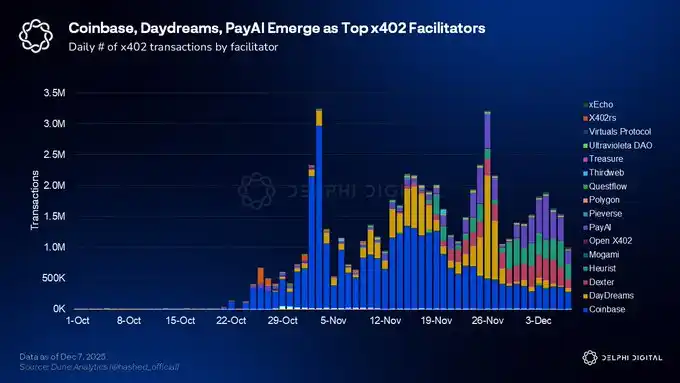
The x402 protocol allows any API to set access permissions via cryptocurrency payments. When an AI Agent requires a service, it can pay instantly with stablecoins, consuming a shopping cart or subscription. The ERC-8004 standard adds a layer of trust by establishing reputation (including performance history and staked collateral). The combination of these two forms the foundation of an autonomous agent economy. Users can delegate tasks like travel planning; the AI Agent will automatically subcontract to miner search agents, pay data fees via x402, and book tickets on-chain, all without human intervention.
2. Perp DEXs Devour Traditional Finance
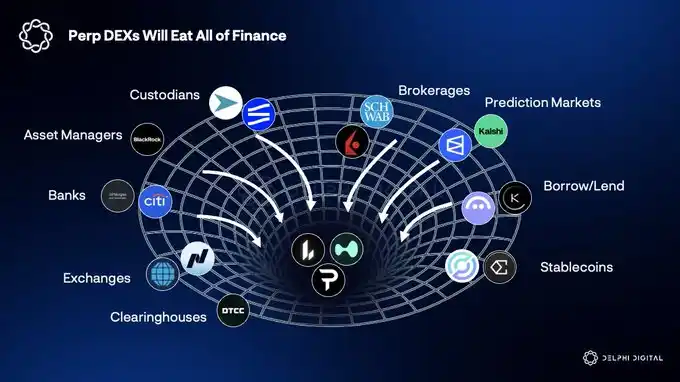
Traditional finance is expensive due to fragmentation: trading happens on exchanges, settlement at the NYSE, and custody at banks. Blockchain compresses all this into a single smart contract. Currently, Hyperliquid is building restructuring capabilities. Perp DEXs could simultaneously become dealers, exchanges, custodians, banks, and the Manhattan exchange. Ports like Aster_DEX, Lighter_xyz, and paradex are accelerating to catch up.
3. Prediction Markets Evolve into Traditional Financial Infrastructure
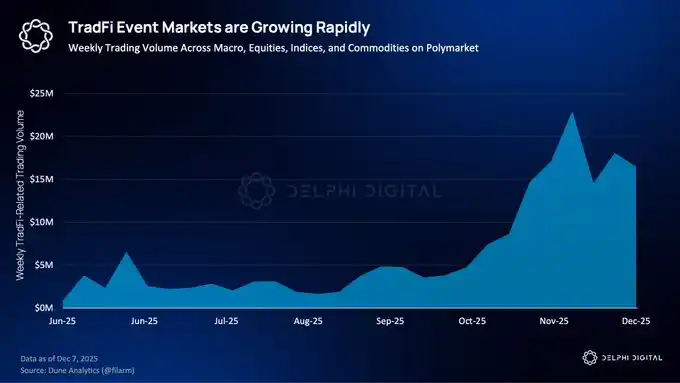
Interactive Brokers (IBKR) Chairman Thomas Peterffy views prediction markets as a real-time information layer for investment portfolios. Early demand is concentrated on weather consistency for energy, logistics, and insurance risks. 2026 will usher in new categories: equity event markets for earnings report performance, macro value indicator markets for CPI and Fed decisions, and cross-asset relative markets. A trader holding tokenized Apple stock (AAPL) can hedge earnings risk with simple binary contracts or operate complex options. Prediction markets will become primary derivative products.
4. Ecosystems Reclaim Stablecoin Revenue from Issuers
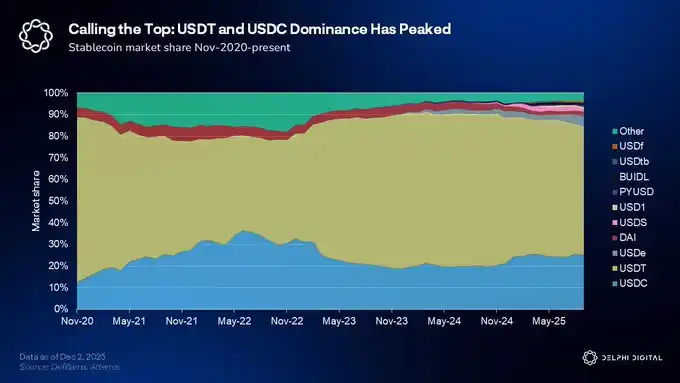
Last year, Coinbase earned over $900 million just from the issuance channel of USDC reserve interest. Public chains like Solana, BSC, and Arbitrum generate roughly $800 million in annual fees collectively, yet their networks host over $30 billion in idle USDC and USDT. This is changing. Hyperliquid has captured the reserve revenue for USDH through an auction model. Ethena's "stablecoin-as-a-service" model is being adopted by Sui, MegaETH, and Jupiter. Revenue that previously flowed to issuers is being recaptured by the platforms that create the demand.
5. DeFi Cracks Under-Collateralized Lending

While DeFi lending protocols have massive Total Value Locked (TVL), almost all require over-collateralization. zkTLS (Zero-Knowledge Transport Layer Security) is the key: users can prove sufficient bank balance without revealing identity or account details. 3jane leverages verified Web2 financial data to provide instant USDC under-collateralized credit lines, dynamically adjusting interest rates based on real-time monitoring. This framework can also provide financing directly based on an AI Agent's performance history (credit score). Maple Finance, Centrifuge, and USDai have been tackling related areas. 2026 is the year under-collateralized debt moves from experiment to infrastructure.
6. Onchain FX Finds Product-Market Fit
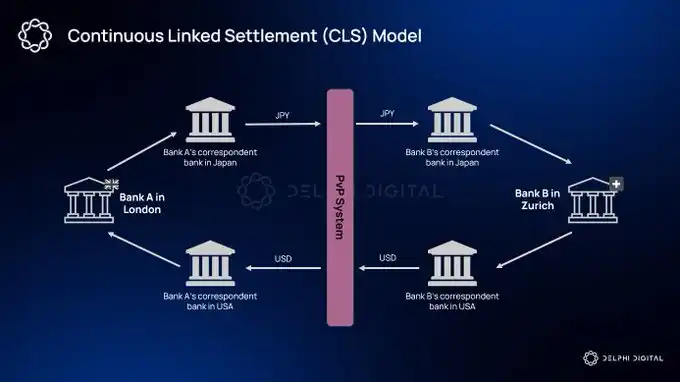
USD stablecoins account for 99.7% of supply, but this might be the peak of their dominance. The traditional forex market is vast but riddled with friction and inefficient settlement. Onchain FX eliminates intermediate steps by placing all currencies as tokenized assets on a shared execution layer. Emerging market currency pairs will explode, as traditional forex is most expensive and inefficient there. These neglected areas are where crypto carries the most obvious value proposition.
7. Gold & Bitcoin Lead the Currency Debasement Trade
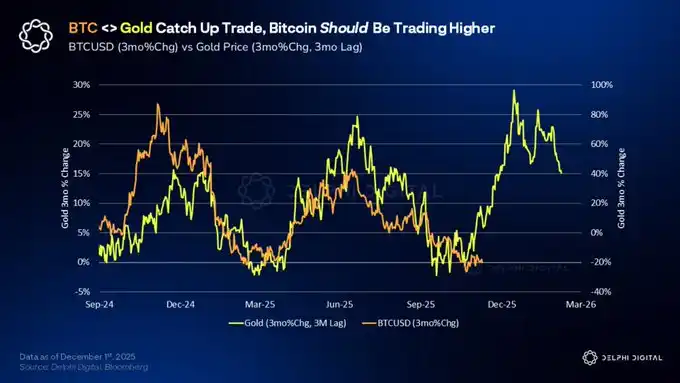
Gold surged 60% after breaking out and central banks bought over 600 tons even as prices hit record highs. The macro backdrop supports continued strength: global central banks cutting rates, persistent fiscal deficits, and global M2 at all-time highs. Gold typically leads Bitcoin by three to four months. As debasement becomes a central theme around 2026, both gold and Bitcoin will attract safe-haven inflows.
8. Exchanges Transform into "Everything Apps"
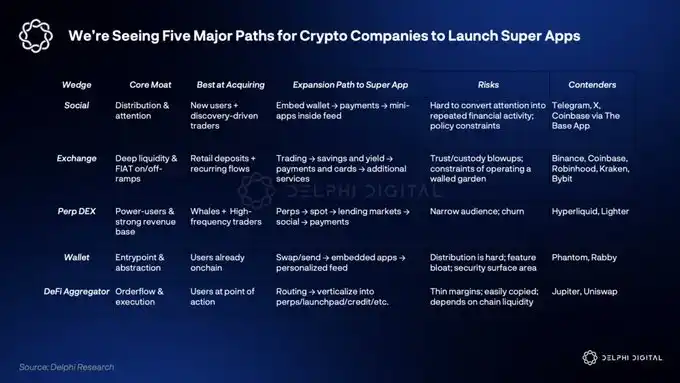
Coinbase, Robinhood, Binance, and Kraken are no longer just exchanges. Coinbase acts as a platform, the Base App as the interface, with USDC providing supplemental revenue. Robinhood's Gold membership grew 77%, becoming a retention engine. Binance has over 270 million users and payment volume reached $250 billion. When distribution costs decrease, the platforms that own the customer relationship capture the highest value. In 2026, the winners will begin to pull away.
9. Privacy Infrastructure Catches Up to Market Demand
Privacy is under immense pressure: the EU passed the "Chat Control Act," and cash transactions are limited to €10,000. Privacy infrastructure is rising to the challenge. payy_link launched a private crypto card, SeismicSys offers protocol-level encryption for fintech, and KeetaNetwork enables anonymous KYC. Without private payment rails, stablecoin adoption will hit a ceiling.
10. Altcoins Return to Dispersion (No Uniform Rally)
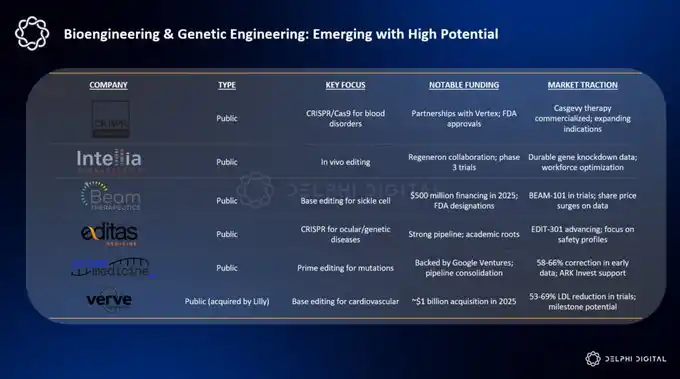
The era of "everything goes up" bull markets is over. Over $30 billion in token unlocks loom overhead, and there's competition for capital from AI, robotics, and biotech. Capital will concentrate around structural demand: tokens with ETF inflows, protocols with real revenue and buybacks, and apps with clear product-market fit. Winners will be concentrated among teams that have built moats around real economic activity.
Conclusion
Crypto is entering a new phase: institutionalization has arrived. Prediction markets, on-chain credit, the agent economy, and stablecoin infrastructure represent genuine paradigm shifts. Crypto is becoming the infrastructure layer for global finance.