Death Is the Largest 'Buyer' of Cryptocurrency

深潮Publicado em 2025-12-16Última atualização em 2025-12-16

Resumo

Death is the largest "buyer" of cryptocurrency, permanently removing coins from circulation when holders pass away without sharing access to their wallets. With an estimated 500 million global crypto holders—mostly young—and an annual mortality rate of 0.2%, around 1 million holders die each year. If just 10% of these leave wallets recoverable, approximately 100,000 wallets holding an average of $20,000 each become inaccessible annually, effectively burning $2 billion in crypto. This issue grows as the holder population ages. To address inheritance without reintroducing intermediaries, a self-custody solution is proposed: create a long-hosted personal website with an obscure domain; encrypt seed phrases by converting each word into a numeric code based on its location in a specific book (page, line, word position); and publish only the code sequence on the site. This method balances security, accessibility, and avoids reliance on third parties, ensuring assets remain both secure and inheritable.

Written by: Pix

Compiled by: Saoirse, Foresight News

People in the cryptocurrency space often say, "Not your keys, not your coins." This sounds powerful, and indeed it is true. But behind this statement lies a mirrored logic—"Only your keys can own your cryptocurrency."
If no one else knows how to access your wallet, then the moment you stop breathing, your cryptocurrency effectively "ceases to exist." Of course, this is not literal disappearance—it still exists on the blockchain ledger, but from an economic perspective, it is no different from being burned.

So, how large is this "death buyer"?

Today, most cryptocurrency holders are young, with the majority between their late twenties and early forties.
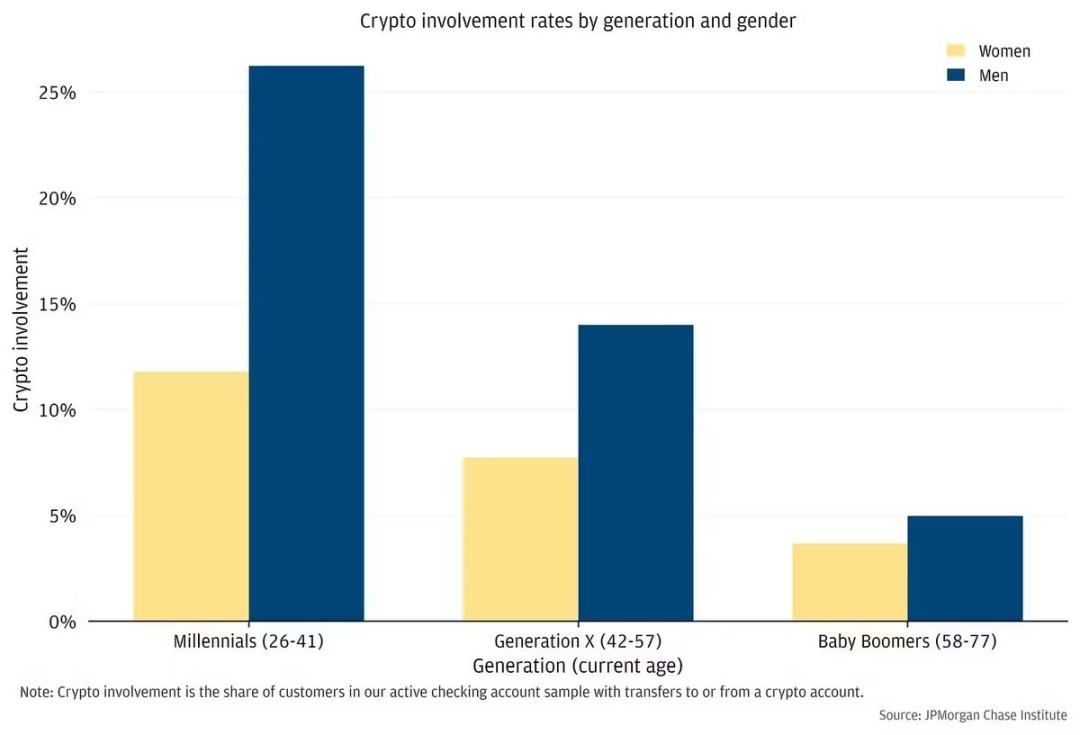
There are very few holders over retirement age, which makes the issue of "cryptocurrency loss due to death" easy to overlook. Even so, the relevant data is still staggering:

  • Approximately 60 million people die globally each year (based on a global population of about 8 billion);

  • There are about 500 million cryptocurrency holders globally (equivalent to 1 in 16 people holding cryptocurrency);

  • Since cryptocurrency holders are younger than the global average population, their mortality rate is lower, conservatively estimated at about 0.2% per year;

  • Based on this calculation, about 1 million people (500 million × 0.2%) among the holders will pass away each year.

Currently, most cryptocurrencies are self-custodied, and holders rarely make estate plans for them. Even if only 10% of the deceased's wallets become inaccessible due to no one knowing how to access them, about 100,000 wallets would become useless each year. If we conservatively assume that the average balance of these inaccessible wallets is only $20,000, then about $2 billion worth of cryptocurrency would exit circulation annually. Moreover, this number will continue to grow over time—after all, the younger generation will also age.
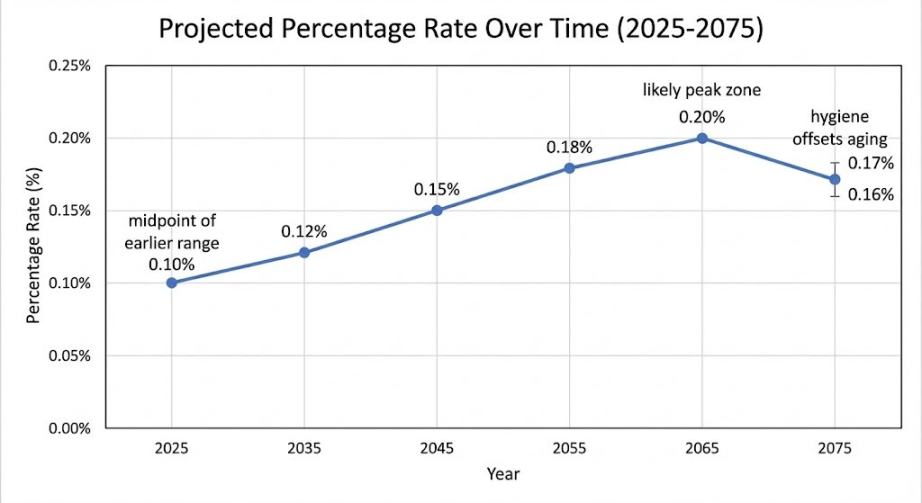
Percentage of cryptocurrency "destroyed" by death each year

This leaves us with a key question: Since the advantage of self-custodying cryptocurrency is the removal of intermediaries, how can we pass on these assets without reintroducing intermediaries?

Inheriting Assets Not Designed to Be "Inheritable"
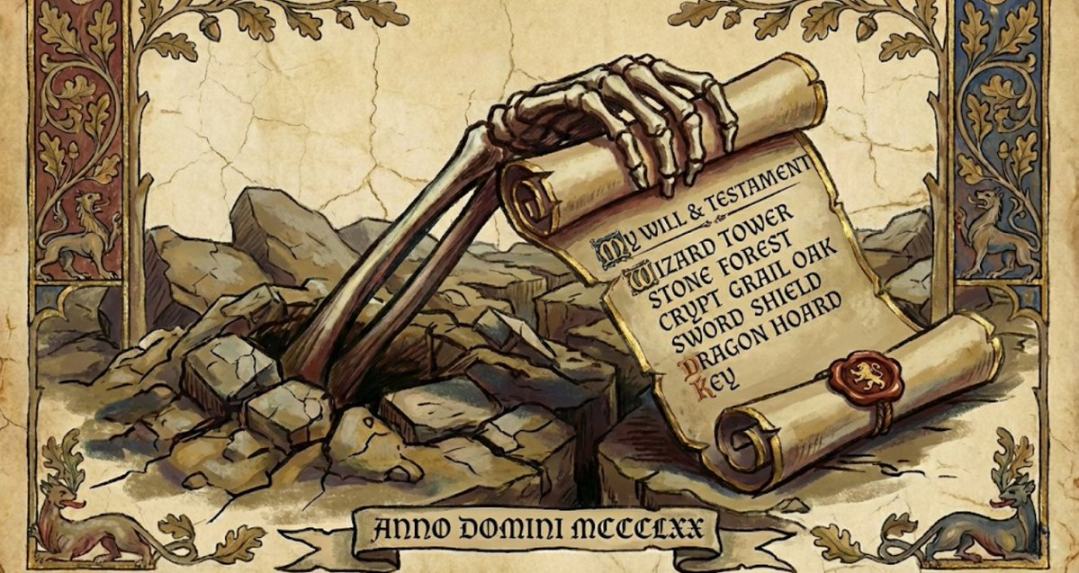
Most current solutions fall into two extremes: either simple but fragile, such as storing a seed phrase in a bank safe (easily lost or stolen); or secure but so complex that no one wants to use them in practice. Neither of these options is ideal, so I adopted a compromise—a simple three-step inheritance method that is easy to remember, difficult to crack, accessible anytime and anywhere, and 100% non-custodial (i.e., no reliance on intermediaries). The specific steps are as follows:

Step 1: Build a Dedicated Single-Page Website

Create a single-page website using a "niche domain" composed of 3-4 words—a domain that ordinary people would not easily type into a search bar but has personal significance to you, making it easy to remember. Prepay for hosting for 10 years or more and set up automatic renewal to ensure long-term accessibility.

Step 2: Encrypt and Convert the Seed Phrase into a Numeric String

First, choose a book you like, find the most common publisher of that book, and purchase 10 copies (ensuring the page numbers and layout are identical in each). Then, convert each word of your cryptocurrency wallet seed phrase into a numeric string: For each word in the seed phrase, find its location in the book and record the "page number - line number - word position in that line." For example, "112, 3, 5" represents "the 5th word on line 3 of page 112." Convert all seed phrase words into numeric strings using this method.

Step 3: Upload the Numeric String to the Dedicated Website

Simply publish the converted numeric string as a list on the dedicated website you built, in the following format:

By the way, this is a real numeric string corresponding to a seed phrase, linked to $500 worth of cryptocurrency. However, the website domain is fictional, and the real seed phrase is hidden in a book. Just one hint: I absolutely love good detective novels. Happy "treasure hunting"~

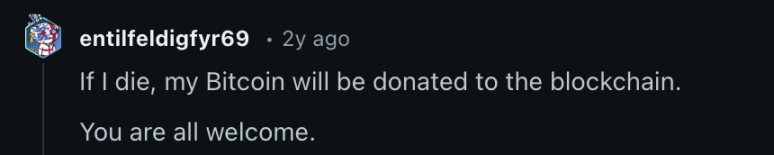
I know this might sound a bit "over the top," and some may think it unnecessary, but this method does make asset inheritance more flexible while ensuring security. You can further enhance security, such as by using rare books or self-printed copies of books to store the location information corresponding to the seed phrase; of course, you can also skip the hassle—just put a hardware wallet (like a Ledger) and a metal plate engraved with the seed phrase in a safe. Otherwise, your cryptocurrency may ultimately only "donate" to the blockchain (i.e., become permanently irretrievable).
Criptomoedas em alta

Perguntas relacionadas

QWhat is the main argument of the article 'Death is the Largest 'Buyer' of Cryptocurrency'?

AThe article argues that death acts as a significant and growing 'buyer' of cryptocurrency because when holders die without sharing access to their wallets, those assets become effectively destroyed—remaining on the blockchain but permanently inaccessible, thus removing them from circulation.

QAccording to the article, how much cryptocurrency is estimated to be lost from circulation annually due to holder deaths?

AConservative estimates suggest that approximately $2 billion worth of cryptocurrency is lost annually due to around 100,000 holders dying without sharing access to their wallets, assuming an average wallet balance of $20,000.

QWhat is the three-step inheritance method proposed in the article for passing on cryptocurrency without reintroducing intermediaries?

AThe three-step method involves: 1) Creating a dedicated single-page website with a memorable, obscure domain name and prepaying hosting for over 10 years. 2) Converting the seed phrase into a numeric string by mapping each word to its location in a specific book (page number, line number, word position). 3) Uploading this numeric string to the dedicated website for heirs to access and decode.

QWhy does the article suggest that the problem of cryptocurrency loss due to death is often overlooked?

AThe problem is often overlooked because the majority of cryptocurrency holders are relatively young (late 20s to early 40s), so the mortality rate among them is low. However, as this demographic ages, the issue is expected to grow significantly.

QWhat example does the article give to illustrate the numeric conversion of a seed phrase for inheritance purposes?

AThe article provides an example where each word in the seed phrase is converted to a numeric string like '112, 3, 5', which represents 'page 112, line 3, the 5th word' in a specific book. This numeric list is then posted on a dedicated website for heirs to retrieve and decode using the same book.

Leituras Relacionadas

STAR 50 Soars 10.73%, Why Did A-Shares Stage a "V-Shaped Reversal"?

After a prolonged decline, the Chinese A-share market staged a strong rally on July 21. The STAR 50 index surged 10.73%, its largest single-day gain in nearly a year, leading a broad-based "V-shaped" reversal. The Shanghai Composite Index rose 1.79%, the Shenzhen Component Index gained 4.81%, and the ChiNext Index jumped 7.05%. Total market turnover reached 2.97 trillion yuan, an increase of 256.1 billion yuan from the previous session, with over 3,100 stocks advancing. The semiconductor sector spearheaded the rebound, with related ETFs posting significant gains. Analysts attribute the surge to three converging factors. First, coordinated capital inflows from "national team" institutions, insurance funds, listed company buybacks, and fund house self-purchases have bolstered market liquidity and confidence. Second, supportive policy signals, including commitments from regulators to ensure stable market operations, provided a favorable backdrop. Third, a stabilization and recovery in overseas markets, notably South Korea, created a positive external environment. Institutions suggest the most severe panic selling phase for the tech sector has likely passed, following a significant digestion of crowded positions and leveraged funds. While short-term volatility may persist, the medium to long-term outlook remains underpinned by enduring trends like AI computing demand expansion and semiconductor localization. The market's focus now shifts to the sustainability of supportive fund flows, earnings reports, and upcoming catalysts from the global AI industry chain.

marsbitHá 4m

STAR 50 Soars 10.73%, Why Did A-Shares Stage a "V-Shaped Reversal"?

marsbitHá 4m

U.S. Tech Momentum Stocks Post Largest Single-Day Gain Ever, But Is the Plunge Over?

US tech momentum stocks staged a sharp rebound on Tuesday (July 21st). Morgan Stanley's TMT Momentum Factor surged over 12%, marking its largest single-day gain on record, exceeding even peaks from the 2000 dot-com bubble. Key momentum indices from Goldman Sachs also posted their strongest daily performances in years. The rally was led by semiconductors, with the Philadelphia Semiconductor Index jumping 4.6%. This rebound followed three consecutive down days and a cumulative 33% plunge in momentum stocks, one of the steepest drawdowns since the dot-com era. Analysts attribute the surge largely to a short squeeze. Heavy selling had pushed high-beta momentum stocks into deeply oversold territory, forcing many short sellers, particularly in Asia, to cover their positions, creating a self-reinforcing buying spiral. However, the rebound's internals appear weak. Trading volume was notably low, and advancing stocks still lagged decliners on the S&P 500, indicating a narrow, concentrated rally rather than broad market participation. Diverging views emerge on the outlook. BTIG warns the bounce has hit key resistance and recommends selling into strength, citing extreme volatility and historical parallels to past market tops. Conversely, Goldman Sachs and UBS believe the momentum unwind is nearing its end, suggesting it may be time to gradually add exposure, as positioning has been significantly reduced. They caution, however, that high volatility warrants a measured approach, potentially using defined-risk strategies. The upcoming earnings season, particularly reports from major tech firms like Alphabet, is seen as a critical test for the rally's sustainability. Simultaneously, bond markets flashed a warning, with yields rising partly due to spiking oil prices. Analysts note that if long-term Treasury yields break decisively higher, it could pose a significant headwind for equities, especially growth stocks.

marsbitHá 11m

U.S. Tech Momentum Stocks Post Largest Single-Day Gain Ever, But Is the Plunge Over?

marsbitHá 11m

U.S. Tech Momentum Stocks Record Largest Single-Day Gain Ever, but Has the Rout Ended?

U.S. tech momentum stocks staged a dramatic rebound on Tuesday, July 21st. Key momentum indices like the Morgan Stanley TMT Momentum Factor and Goldman Sachs' High Beta Momentum Long Index posted historic or near-historic single-day gains, fueled largely by semiconductor stocks. This sharp rally followed a severe three-day sell-off that saw momentum stocks plunge 33%, marking one of the steepest pullbacks since the dot-com bubble. Analysts attribute the bounce primarily to a short squeeze, as forced covering from over-leveraged traders, particularly in Asia, created a buying spiral. However, the rally's health is questioned due to weak market breadth—overall trading volume was low, and decliners outnumbered advancers in the S&P 500 despite the index's gain—suggesting a narrow, concentrated surge rather than broad recovery. Opinions on the sustainability diverge. BTIG strategists warn the rebound has hit key resistance levels, citing extreme volatility and historic stock dispersion as signs of an ongoing broader correction, and recommend selling into strength. Conversely, Goldman Sachs and UBS view the aggressive momentum unwinding as nearing its end, noting reduced positioning and a lack of new fundamental catalysts. They suggest the sell-off presents a selective opportunity to add exposure, albeit cautiously and gradually using defined-risk strategies. The immediate trajectory hinges on the ongoing earnings season, with market focus on Alphabet's capital expenditure guidance for AI investment clarity. Meanwhile, bond markets present a risk, with rising Treasury yields—potentially heading toward 5.5%—and widening credit spreads for mega-cap tech companies posing a threat to equity valuations. The combination of technical factors, earnings results, and macro conditions leaves the durability of the rebound in doubt.

链捕手Há 13m

U.S. Tech Momentum Stocks Record Largest Single-Day Gain Ever, but Has the Rout Ended?

链捕手Há 13m

Long-Divided Must Unite, Long-United Must Divide: When L1 Becomes Its Own Rollup, What Is Ethereum's Endgame?

"The Inevitable Cycle: When L1 Becomes Its Own Rollup – What is Ethereum's Endgame?" For years, the Ethereum community grappled with concerns that L2s were fragmenting the ecosystem and eroding L1's value. While L2s provided cheaper execution, they also splintered liquidity and the unified user experience of a single chain. This has prompted a fundamental reassessment of the relationship between L1 and L2. Ethereum's roadmap is evolving. The "Scale" initiative merges L1 and L2 expansion into a holistic framework. L1 itself is advancing with higher gas limits, statelessness, and zkEVM verification, no longer content to be just a low-throughput settlement layer. Consequently, the primary value proposition of L2s is shifting from merely providing cheap blockspace to offering L1 cannot easily provide: application-specific optimizations, privacy features, and flexible governance models. L2s are becoming a spectrum of execution environments with varying degrees of security inheritance from Ethereum. A critical challenge in this multi-chain future is interoperability. The vision is to make Ethereum "feel like one chain again." This relies on advancements in native account abstraction (like EIP-7702) and intent-based architectures (Open Intents Framework), where users declare desired outcomes, and solvers handle the complex cross-chain execution. Furthermore, shortening Ethereum's finality time from minutes to seconds is crucial, as it underpins trust between chains for bridges, stablecoins, and cross-chain applications. Perhaps the most provocative idea is that Ethereum L1 itself could become a form of "its own Rollup." As zkEVM and proof systems mature, high-performance nodes could execute transactions and generate validity proofs. Regular validators would then verify these proofs instead of re-executing all transactions. This blurs the traditional L1/L2 hierarchy, making "Rollup" more of a general execution-verification architecture. Native Rollup aims to integrate L2 validation more directly into the Ethereum protocol, allowing L2s to inherit L1's security more fully and move away from reliance on security councils. In the end, L2s are not destined to replace L1 or be made obsolete by it. The likely future is a unified system where diverse execution environments—each optimized for specific use cases like DeFi, gaming, or privacy—coexist. They will share a common foundation of security, liquidity, and verifiable state, seamlessly connected to restore a cohesive user experience. The next phase for Ethereum is not just about scaling through separation, but about intelligently reintegrating what was separated back into a coherent whole.

链捕手Há 30m

Long-Divided Must Unite, Long-United Must Divide: When L1 Becomes Its Own Rollup, What Is Ethereum's Endgame?

链捕手Há 30m

Trading

Spot

Artigos em Destaque

Como comprar PEOPLE

Bem-vindo à HTX.com!Tornámos a compra de ConstitutionDAO (PEOPLE) simples e conveniente.Segue o nosso guia passo a passo para iniciar a tua jornada no mundo das criptos.Passo 1: cria a tua conta HTXUtiliza o teu e-mail ou número de telefone para te inscreveres numa conta gratuita na HTX.Desfruta de um processo de inscrição sem complicações e desbloqueia todas as funcionalidades.Obter a minha contaPasso 2: vai para Comprar Cripto e escolhe o teu método de pagamentoCartão de crédito/débito: usa o teu visa ou mastercard para comprar ConstitutionDAO (PEOPLE) instantaneamente.Saldo: usa os fundos da tua conta HTX para transacionar sem problemas.Terceiros: adicionamos métodos de pagamento populares, como Google Pay e Apple Pay, para aumentar a conveniência.P2P: transaciona diretamente com outros utilizadores na HTX.Mercado de balcão (OTC): oferecemos serviços personalizados e taxas de câmbio competitivas para os traders.Passo 3: armazena teu ConstitutionDAO (PEOPLE)Depois de comprar o teu ConstitutionDAO (PEOPLE), armazena-o na tua conta HTX.Alternativamente, podes enviá-lo para outro lugar através de transferência blockchain ou usá-lo para transacionar outras criptomoedas.Passo 4: transaciona ConstitutionDAO (PEOPLE)Transaciona facilmente ConstitutionDAO (PEOPLE) no mercado à vista da HTX.Acede simplesmente à tua conta, seleciona o teu par de trading, executa as tuas transações e monitoriza em tempo real.Oferecemos uma experiência de fácil utilização tanto para principiantes como para traders experientes.

543 Visualizações TotaisPublicado em {updateTime}Atualizado em 2026.06.02

Como comprar PEOPLE

Discussões

Bem-vindo à Comunidade HTX. Aqui, pode manter-se informado sobre os mais recentes desenvolvimentos da plataforma e obter acesso a análises profissionais de mercado. As opiniões dos utilizadores sobre o preço de PEOPLE (PEOPLE) são apresentadas abaixo.

活动图片













