Death Is the Largest 'Buyer' of Cryptocurrency

深潮Publicado em 2025-12-16Última atualização em 2025-12-16

Resumo

Death is the largest "buyer" of cryptocurrency, permanently removing coins from circulation when holders pass away without sharing access to their wallets. With an estimated 500 million global crypto holders—mostly young—and an annual mortality rate of 0.2%, around 1 million holders die each year. If just 10% of these leave wallets recoverable, approximately 100,000 wallets holding an average of $20,000 each become inaccessible annually, effectively burning $2 billion in crypto. This issue grows as the holder population ages. To address inheritance without reintroducing intermediaries, a self-custody solution is proposed: create a long-hosted personal website with an obscure domain; encrypt seed phrases by converting each word into a numeric code based on its location in a specific book (page, line, word position); and publish only the code sequence on the site. This method balances security, accessibility, and avoids reliance on third parties, ensuring assets remain both secure and inheritable.

Written by: Pix

Compiled by: Saoirse, Foresight News

People in the cryptocurrency space often say, "Not your keys, not your coins." This sounds powerful, and indeed it is true. But behind this statement lies a mirrored logic—"Only your keys can own your cryptocurrency."
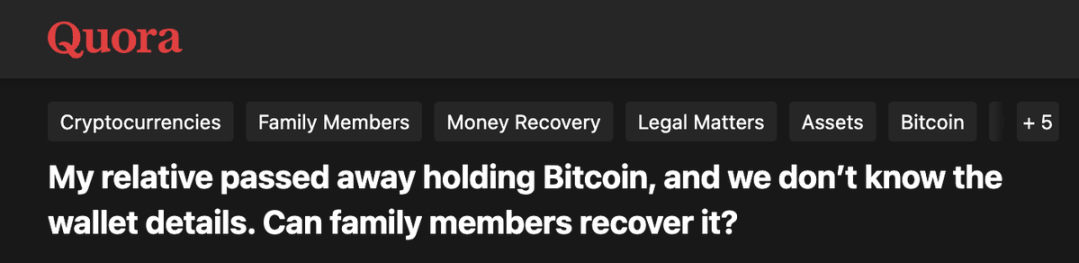
If no one else knows how to access your wallet, then the moment you stop breathing, your cryptocurrency effectively "ceases to exist." Of course, this is not literal disappearance—it still exists on the blockchain ledger, but from an economic perspective, it is no different from being burned.

So, how large is this "death buyer"?

Today, most cryptocurrency holders are young, with the majority between their late twenties and early forties.
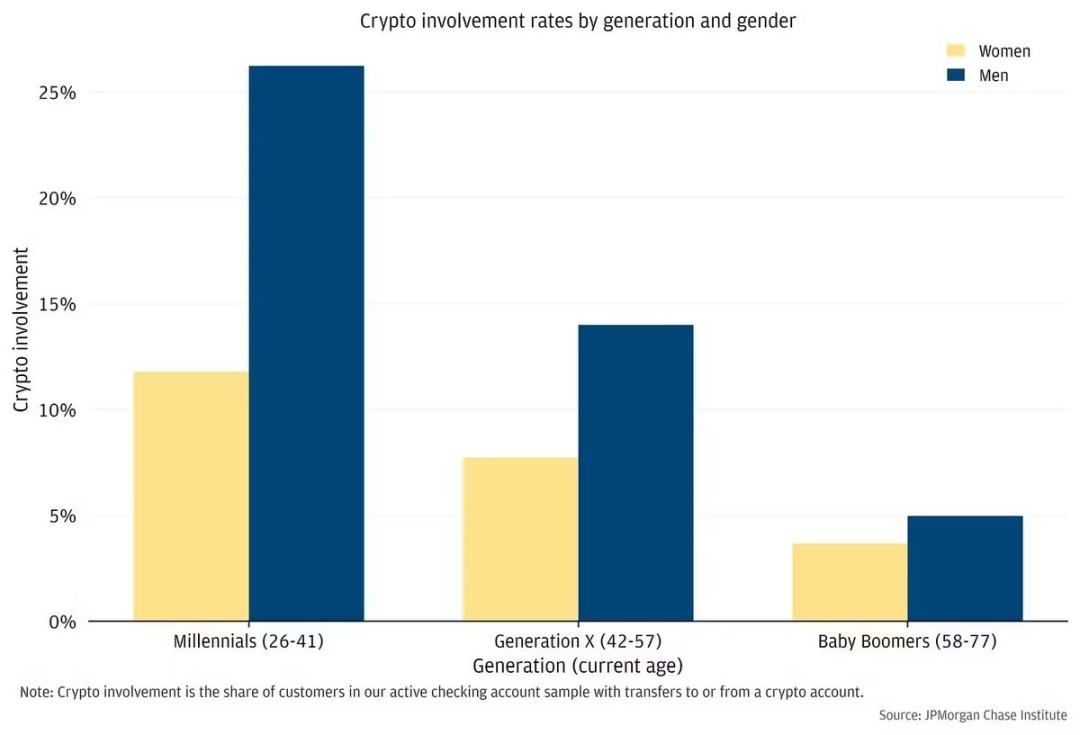
There are very few holders over retirement age, which makes the issue of "cryptocurrency loss due to death" easy to overlook. Even so, the relevant data is still staggering:

  • Approximately 60 million people die globally each year (based on a global population of about 8 billion);

  • There are about 500 million cryptocurrency holders globally (equivalent to 1 in 16 people holding cryptocurrency);

  • Since cryptocurrency holders are younger than the global average population, their mortality rate is lower, conservatively estimated at about 0.2% per year;

  • Based on this calculation, about 1 million people (500 million × 0.2%) among the holders will pass away each year.

Currently, most cryptocurrencies are self-custodied, and holders rarely make estate plans for them. Even if only 10% of the deceased's wallets become inaccessible due to no one knowing how to access them, about 100,000 wallets would become useless each year. If we conservatively assume that the average balance of these inaccessible wallets is only $20,000, then about $2 billion worth of cryptocurrency would exit circulation annually. Moreover, this number will continue to grow over time—after all, the younger generation will also age.

Percentage of cryptocurrency "destroyed" by death each year

This leaves us with a key question: Since the advantage of self-custodying cryptocurrency is the removal of intermediaries, how can we pass on these assets without reintroducing intermediaries?

Inheriting Assets Not Designed to Be "Inheritable"
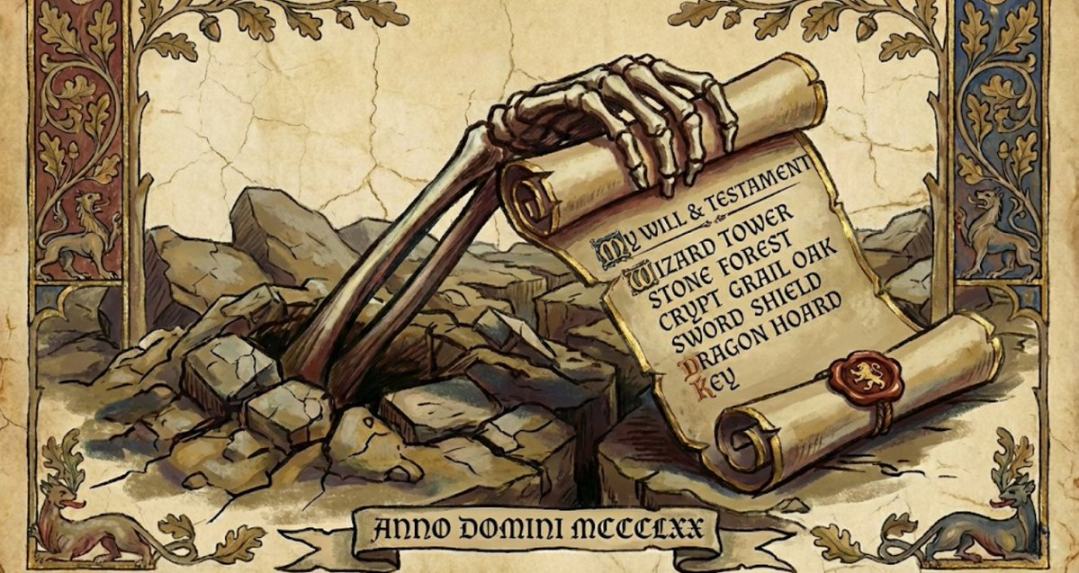
Most current solutions fall into two extremes: either simple but fragile, such as storing a seed phrase in a bank safe (easily lost or stolen); or secure but so complex that no one wants to use them in practice. Neither of these options is ideal, so I adopted a compromise—a simple three-step inheritance method that is easy to remember, difficult to crack, accessible anytime and anywhere, and 100% non-custodial (i.e., no reliance on intermediaries). The specific steps are as follows:

Step 1: Build a Dedicated Single-Page Website

Create a single-page website using a "niche domain" composed of 3-4 words—a domain that ordinary people would not easily type into a search bar but has personal significance to you, making it easy to remember. Prepay for hosting for 10 years or more and set up automatic renewal to ensure long-term accessibility.

Step 2: Encrypt and Convert the Seed Phrase into a Numeric String

First, choose a book you like, find the most common publisher of that book, and purchase 10 copies (ensuring the page numbers and layout are identical in each). Then, convert each word of your cryptocurrency wallet seed phrase into a numeric string: For each word in the seed phrase, find its location in the book and record the "page number - line number - word position in that line." For example, "112, 3, 5" represents "the 5th word on line 3 of page 112." Convert all seed phrase words into numeric strings using this method.

Step 3: Upload the Numeric String to the Dedicated Website

Simply publish the converted numeric string as a list on the dedicated website you built, in the following format:

By the way, this is a real numeric string corresponding to a seed phrase, linked to $500 worth of cryptocurrency. However, the website domain is fictional, and the real seed phrase is hidden in a book. Just one hint: I absolutely love good detective novels. Happy "treasure hunting"~

I know this might sound a bit "over the top," and some may think it unnecessary, but this method does make asset inheritance more flexible while ensuring security. You can further enhance security, such as by using rare books or self-printed copies of books to store the location information corresponding to the seed phrase; of course, you can also skip the hassle—just put a hardware wallet (like a Ledger) and a metal plate engraved with the seed phrase in a safe. Otherwise, your cryptocurrency may ultimately only "donate" to the blockchain (i.e., become permanently irretrievable).
Perguntas relacionadas

QWhat is the main argument of the article 'Death is the Largest 'Buyer' of Cryptocurrency'?

AThe article argues that death acts as a significant and growing 'buyer' of cryptocurrency because when holders die without sharing access to their wallets, those assets become effectively destroyed—remaining on the blockchain but permanently inaccessible, thus removing them from circulation.

QAccording to the article, how much cryptocurrency is estimated to be lost from circulation annually due to holder deaths?

AConservative estimates suggest that approximately $2 billion worth of cryptocurrency is lost annually due to around 100,000 holders dying without sharing access to their wallets, assuming an average wallet balance of $20,000.

QWhat is the three-step inheritance method proposed in the article for passing on cryptocurrency without reintroducing intermediaries?

AThe three-step method involves: 1) Creating a dedicated single-page website with a memorable, obscure domain name and prepaying hosting for over 10 years. 2) Converting the seed phrase into a numeric string by mapping each word to its location in a specific book (page number, line number, word position). 3) Uploading this numeric string to the dedicated website for heirs to access and decode.

QWhy does the article suggest that the problem of cryptocurrency loss due to death is often overlooked?

AThe problem is often overlooked because the majority of cryptocurrency holders are relatively young (late 20s to early 40s), so the mortality rate among them is low. However, as this demographic ages, the issue is expected to grow significantly.

QWhat example does the article give to illustrate the numeric conversion of a seed phrase for inheritance purposes?

AThe article provides an example where each word in the seed phrase is converted to a numeric string like '112, 3, 5', which represents 'page 112, line 3, the 5th word' in a specific book. This numeric list is then posted on a dedicated website for heirs to retrieve and decode using the same book.

Leituras Relacionadas

Cook's Curtain Call and Ternus Takes the Helm: The Disruption and Reboot of Apple's 4 Trillion Dollar Empire

Tim Cook has officially announced he will step down as CEO of Apple in September, transitioning to executive chairman after a 15-year tenure during which he grew the company’s market value from around $350 billion to nearly $4 trillion. He will be succeeded by John Ternus, a 50-year-old hardware engineering veteran who has been groomed for the role through increasing public visibility and internal responsibility. Ternus’s appointment signals a strategic shift toward hardware and engineering leadership, with Johny Srouji—head of Apple Silicon—taking on an expanded role as Chief Hardware Officer. This consolidation aims to strengthen Apple’s core technological capabilities. However, Cook’s departure highlights a significant unresolved issue: Apple’s delayed and fragmented approach to artificial intelligence. Despite early efforts, such as hiring John Giannandrea from Google in 2018, Apple’s AI initiatives—particularly around Siri—have struggled with internal restructuring and reliance on external partnerships, including with Google. The transition comes at a critical moment as Apple faces paradigm shifts with the rise of artificial general intelligence (ASI). The company’s closed ecosystem of hardware, software, and services—once a major advantage—now presents challenges in adapting to an AI-centric world where intelligence may matter more than the device itself. Ternus must quickly articulate a clear AI strategy, possibly starting at WWDC, to reassure markets and redefine Apple’s role in a new technological era. His task is not only to maintain Apple’s operational excellence but also to reinvigorate its capacity to innovate and lead in the age of AI.

marsbitHá 2h

Cook's Curtain Call and Ternus Takes the Helm: The Disruption and Reboot of Apple's 4 Trillion Dollar Empire

marsbitHá 2h

Trading

Spot
Futuros

Artigos em Destaque

Como comprar PEOPLE

Bem-vindo à HTX.com!Tornámos a compra de ConstitutionDAO (PEOPLE) simples e conveniente.Segue o nosso guia passo a passo para iniciar a tua jornada no mundo das criptos.Passo 1: cria a tua conta HTXUtiliza o teu e-mail ou número de telefone para te inscreveres numa conta gratuita na HTX.Desfruta de um processo de inscrição sem complicações e desbloqueia todas as funcionalidades.Obter a minha contaPasso 2: vai para Comprar Cripto e escolhe o teu método de pagamentoCartão de crédito/débito: usa o teu visa ou mastercard para comprar ConstitutionDAO (PEOPLE) instantaneamente.Saldo: usa os fundos da tua conta HTX para transacionar sem problemas.Terceiros: adicionamos métodos de pagamento populares, como Google Pay e Apple Pay, para aumentar a conveniência.P2P: transaciona diretamente com outros utilizadores na HTX.Mercado de balcão (OTC): oferecemos serviços personalizados e taxas de câmbio competitivas para os traders.Passo 3: armazena teu ConstitutionDAO (PEOPLE)Depois de comprar o teu ConstitutionDAO (PEOPLE), armazena-o na tua conta HTX.Alternativamente, podes enviá-lo para outro lugar através de transferência blockchain ou usá-lo para transacionar outras criptomoedas.Passo 4: transaciona ConstitutionDAO (PEOPLE)Transaciona facilmente ConstitutionDAO (PEOPLE) no mercado à vista da HTX.Acede simplesmente à tua conta, seleciona o teu par de trading, executa as tuas transações e monitoriza em tempo real.Oferecemos uma experiência de fácil utilização tanto para principiantes como para traders experientes.

474 Visualizações TotaisPublicado em {updateTime}Atualizado em 2025.03.21

Como comprar PEOPLE

Discussões

Bem-vindo à Comunidade HTX. Aqui, pode manter-se informado sobre os mais recentes desenvolvimentos da plataforma e obter acesso a análises profissionais de mercado. As opiniões dos utilizadores sobre o preço de PEOPLE (PEOPLE) são apresentadas abaixo.

活动图片