We have gathered the most important news from the world of cybersecurity for the week.
- In the US, the infrastructure of a crypto scam targeting Brighton Beach was dismantled.
- A GTA VI leaker promised to release the game if his memecoin rises to $30 million.
- The iOS exploit DarkSword learned to hunt for cryptocurrency.
- Microsoft and TRM Labs struck at the Chinese phishing market.
In the US, the infrastructure of a crypto scam targeting Brighton Beach was dismantled
On October 14, Brooklyn District Attorney Eric Gonzalez announced the dismantling of an international fraud network whose main targets were Russian-speaking residents of New York.
According to the department, law enforcement seized or disabled 241 domains and 112 servers. The machines were hosted with hosting providers in Eastern Europe and the US.
The scammers operated using the "pig butchering" scheme. Victims were lured through Russian-language investment ads placed on Facebook. Those who responded were called by "financial consultants" and helped open an account on a fake crypto platform. A few weeks later, the attackers contacted the victims again and promised to return what was lost for a fee.
The investigation began three years ago after appeals from the Russian-speaking community of Brooklyn. Over two years, the department blocked about 400 domains linked to investment crypto fraud, but new ones quickly appeared in their place.
This time, law enforcement targeted the technical infrastructure — the servers: they stored information about victims and working software.
The prosecutor's office estimated the damage at tens of millions of dollars. So far, about $300,000 has been seized.
Steal the key, not the money: how the economy of vibe hacking works
GTA VI leaker promised to release the game if his memecoin rises to $30 million
Leaker CyberLeek set a condition: the full build of GTA VI with the story "through the final credits" will appear online when the market capitalization of his memecoin CYBERLEEK on Solana reaches $30 million. Starting in August, he has been publishing stolen videos demonstrating, among other things, gameplay from the new installment of the cult franchise.
From Take-Two Interactive, the blackmailer demanded the release of the game on physical media and a public apology for the decision to distribute the product only via an activation code instead of the usual disc.
According to CoinGecko, on the day the ultimatum was announced, October 13, the capitalization of CYBERLEEK was about $3.8 million after a daily peak of $5.7 million. Already the next day, the token fell by more than 40%.
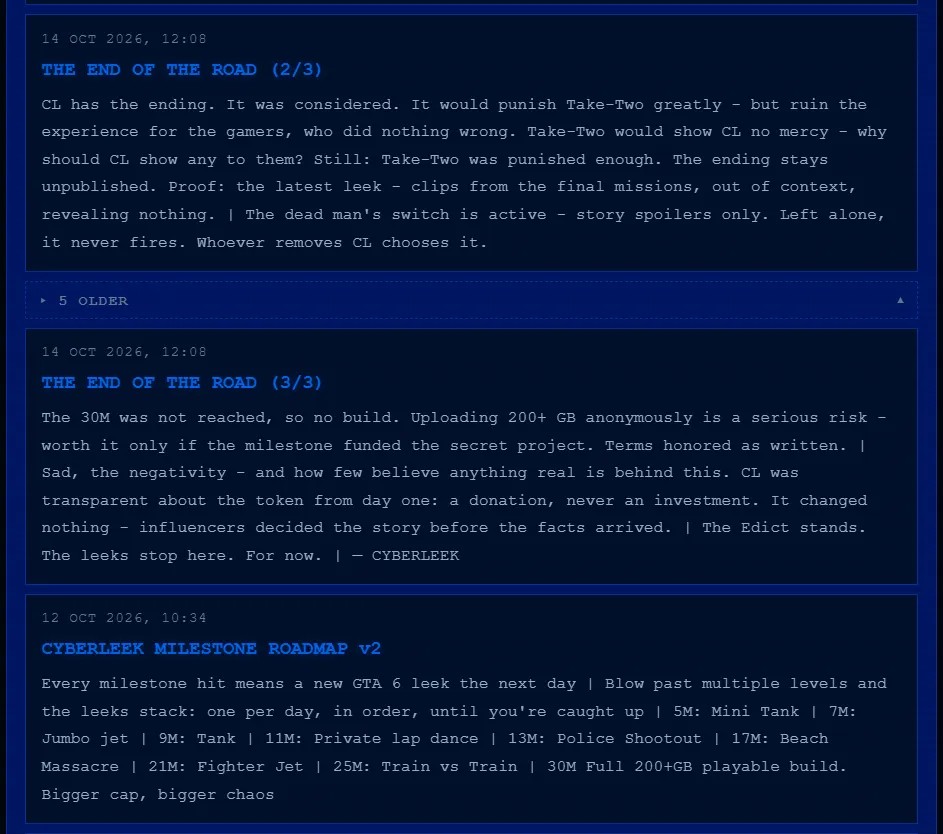
After that, CyberLeek announced a pause and refused to release the build, which was over 200 GB. Instead, he threatened a "dead man's switch": spoilers for the story ending would allegedly be posted online if he is caught. Later, a debug version of the game nevertheless appeared on the leaker's website for $40 per download. Its authenticity has not been confirmed.
At the end of August, CyberLeek had already dumped the price of the token of the same name, earning about $286,000 from sell-offs.
iOS exploit DarkSword learned to hunt for cryptocurrency
A new version of the DarkSword exploit kit for iPhone steals crypto wallet data and the keychain directly on the device, iVerify reported. The variant was called P7 after the prefix p7_, which the attackers added to the source code.
DarkSword itself was identified back in March. The vulnerability chain allows an attacker to escape the browser sandbox through a malicious website, gain kernel privileges, and inject into the system process SpringBoard. iPhones on iOS 18.4–18.7 are at risk. Initially it was a commercial tool, but after a leak, financially motivated groups began using it.
According to iVerify, P7 requests commands from the command-and-control server every 15 seconds. The implant searches for installed wallets, exfiltrates the contents of imToken, photos, notes, and iCloud Keychain records.
Report URI researcher Scott Helme discovered a new delivery channel. On September 15, the attackers re-registered the domain of a closed analytics service. Its trackers are still present on online store websites, and some visitors now end up on a fake crypto exchange that infects the iPhone. This build targets files from more than 25 coin storage applications.
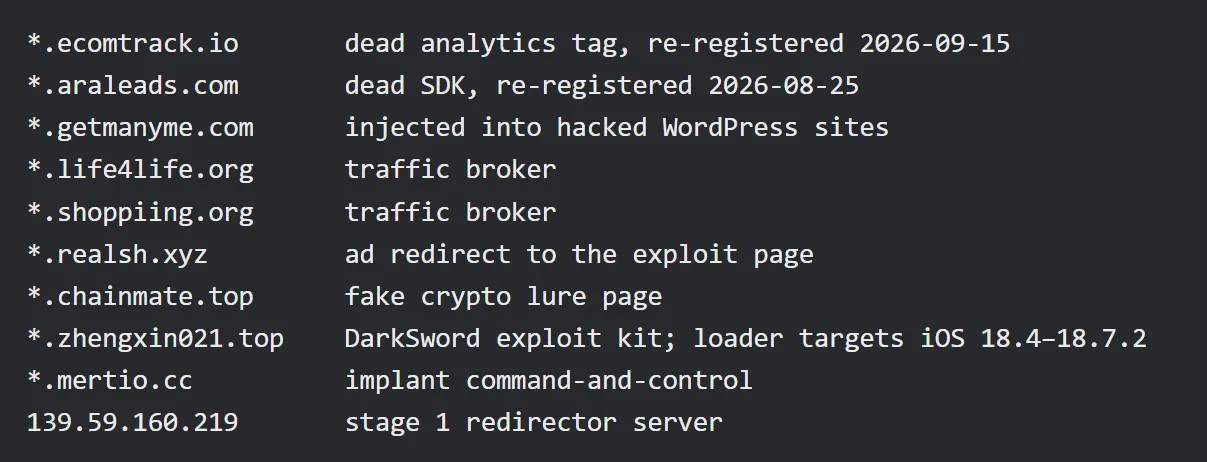
Censys experts found a panel of a Chinese-language EaaS service with its own network of agents and resellers. A copy of the working server contains 11 seed phrases of victims and other data from 179 devices.
Zero-day vulnerability market: discover, sell, and stay silent
Microsoft and TRM Labs struck at the Chinese phishing market
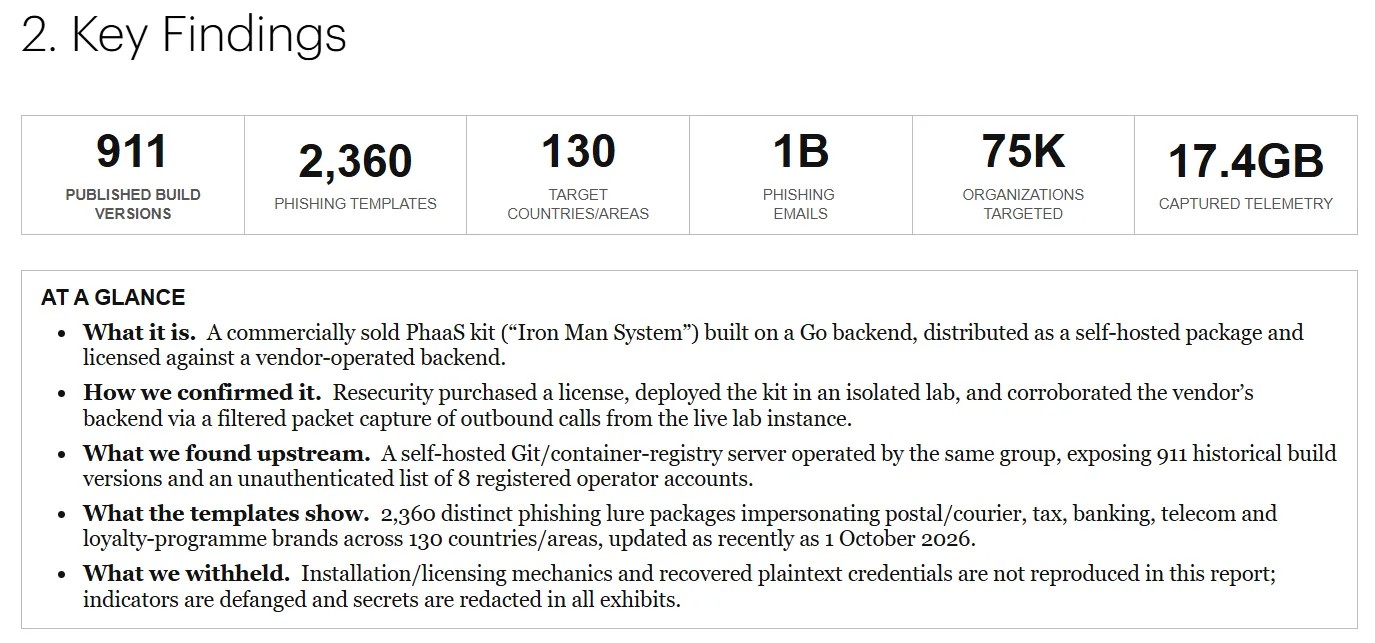
Since the beginning of 2026, using three phishing kits, CoGUI, Haozi, and Iron Man System, scammers have sent more than a billion emails and SMS messages. Their targets included over 75,000 organizations worldwide. On October 14, the software was disabled, Microsoft reported.
The investigation began at the end of 2025, when Japan's National Police Agency warned the American corporation about malicious campaigns against residents of the country. According to Health-ISAC, the operators earned tens of millions of dollars.
The tools were sold through the underground marketplace YAM Store. In addition to templates, it offered access to Microsoft and Google cloud environments that had been hacked or registered with false data. The hackers intercepted abandoned corporate Microsoft 365 accounts and turned their SharePoint and OneDrive storage into hosting for fake pages.
Sellers accepted payment in cryptocurrency, including USDT and ETH. TRM Labs analysts helped trace and freeze the group's assets.
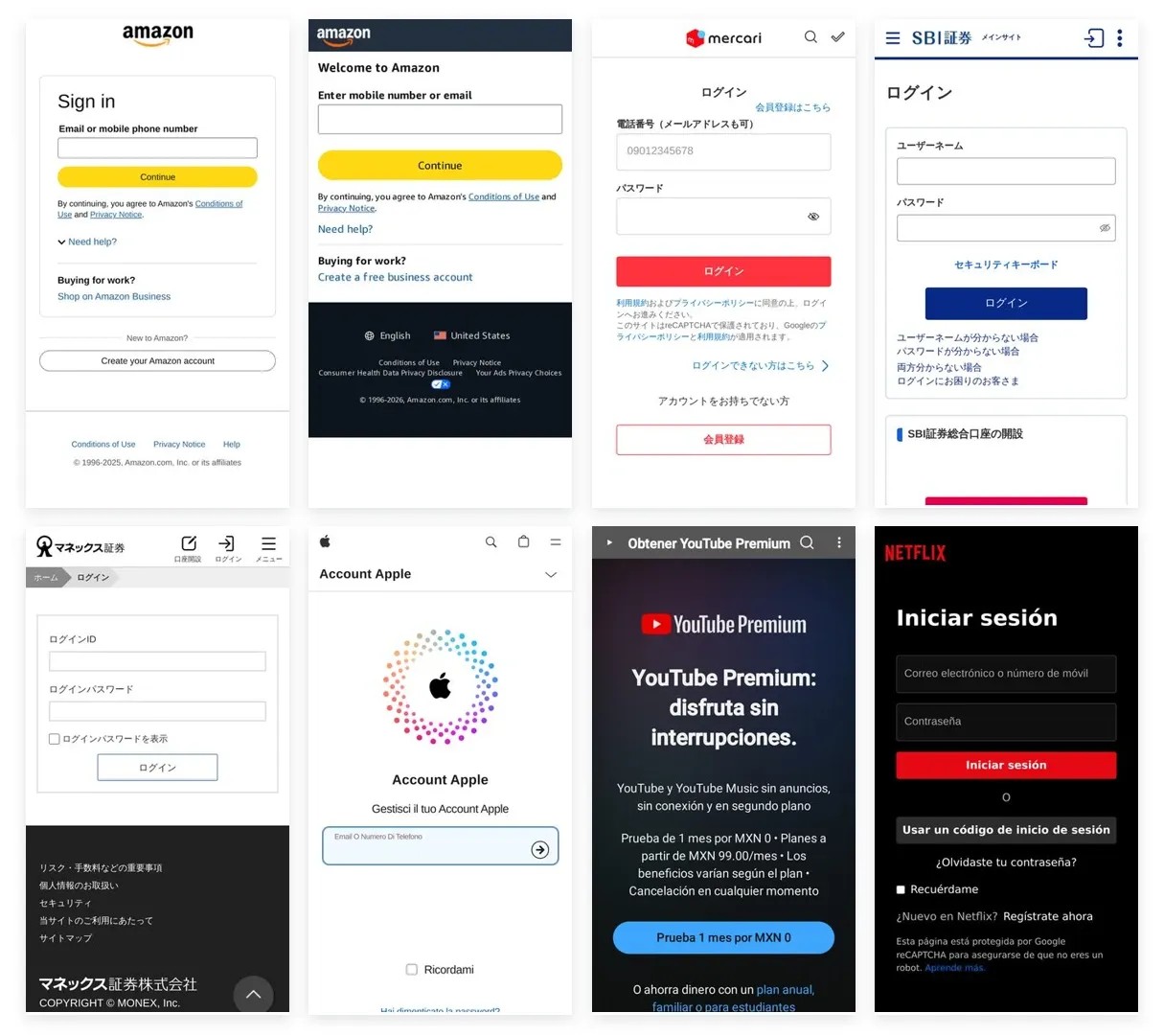
Resecurity specialists purchased Iron Man and studied the kit in an isolated environment. In the catalog, they found 2,360 lures impersonating postal, tax, banking, and telecom brands from 130 countries and regions. The program regularly checks in with the developer's licensing server, and if this node is disabled, all deployed copies will suffer.
AI agents helped hack Chrome in six days
On October 13, XBOW disclosed details of an exploit chain for Google Chrome that researchers assembled using AI agents based on GPT-5.6 Sol. Google paid $250,000 for the find — the maximum provided by the corporation's reward program for such a report.
The chain combined three previously unknown bugs: in the V8 engine, in the animated WebP decoder, and in the Crashpad crash handler. Together they broke through both browser sandboxes. For an attacker to execute code on a Windows computer, the victim only needed to open a page.
The work was carried out from August 2 to 7 during the Black Hat and DEF CON conferences. According to XBOW's estimates, the computations cost about $40,000. The agents searched for errors in the source code, tested hypotheses, and wrote draft attack code, while humans selected targets and decided which fragments to connect.
Google closed the vulnerabilities in Chrome 152 in late August and early September. No attacks using them have been recorded.
Before the advent of LLMs, such work took a team of four people from six to nine months, noted XBOW employee Brendan Dolan-Gavitt. The company prepared its first submission in two months, while the chain for which Google paid was assembled in six days.
In Texas, more than 40 DPRK "laptop farms" were shut down
Fourteen participants in a scheme whose creators helped IT specialists from the DPRK get jobs at American companies under false names were charged. The US Department of Justice reported this.
Among the defendants are citizens of China and the US. Two Americans were arrested: 31-year-old Michael Bostell from Philadelphia and 37-year-old Juan Cecilio Pena Carrillo from San Juan, Texas. The rest are at large, and the names of two are not disclosed. The charges include conspiracy to commit fraud, money laundering, and identity theft.
During Operation Lonestar Roundup, the FBI searched more than 40 homes in Texas where "laptop farms" were allegedly located and seized about 187 computers and special devices. At such locations, accomplices store work equipment, and North Koreans connect to it remotely, posing as US residents.
According to the investigation, the scheme operated from about 2019 to July 2025. More than 70 companies in healthcare, communications, retail, and manufacturing were affected, and the fake employees received about $3 million in income.
CrowdStrike added that to obtain laptops, the attackers file false police reports about the theft of work devices. In this way, they get replacements sent to the desired address.
At the same time, the FBI warned about new tactics. North Koreans are increasingly subcontracting received tasks to freelancers from Pakistan, India, and Nigeria in exchange for a share of the salary. Threats of physical reprisal against former managers and their families have also been recorded.
Also on ForkLog:
- In South Korea, 130 financial companies reported cybersecurity problems.
- Hinton, Bengio, and another 450 scientists called for disconnecting AI models from the internet.
- Experts criticized Drake's call to transfer bitcoins to new addresses because of the AI threat.
- An attack on South Korea's financial sector affected cryptocurrency exchanges.
- An OpenAI engineer was arrested for installing a wiretap.
- CryptoQuant: the Ledger incident accelerated the movement of old bitcoins.
- Anthropic allowed for the emergence of self-propagating AI on IoT devices in the coming months.
- Coinbase called for preparing bitcoin in advance for post-quantum migration.
- Ledger: an implant in CryptoBilis wallets transmitted seed phrases over LTE.
- Hackers unfroze refrigerators in hundreds of supermarkets in France.
- Aptos launched an encrypted mempool to protect against sandwich attacks.
- Bitquery estimated the damage from the attack on Ledger users at $93.2 million.
- A critical decade-old vulnerability was closed in the XRP Ledger.
- Anthropic deprived Claude of internet access in internal tests.
- Ledger began investigating the possible compromise of wallets sold by reseller CryptoBilis.
What to read on the weekend
An annual license for Pegasus cost up to $6.8 million, a contract with Candiru — from €16 million with monitoring of ten devices simultaneously, and one Graphite target costs about €20,000. ForkLog figured out who sells spyware to governments and why its victims repeatedly turn out to be journalists and human rights defenders rather than terrorists.
Surveillance as a service