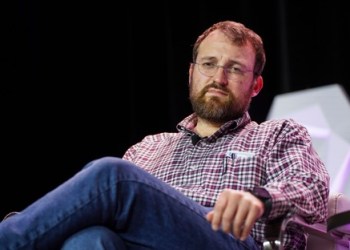
During a remote interview at the DC Blockchain Summit, Binance founder CZ and Perianne Boring, founder and board chair of The Digital Chamber, reviewed the development of the crypto industry over the past decade: from being ignored in the early days, then facing strong regulation and media suppression, to now gradually gaining regulatory clarity in the U.S., institutional adoption, and mainstream recognition. He connected this with his upcoming memoir, discussing how his personal journey mirrors the growth trajectory of the crypto industry and emphasizing that technological innovation will ultimately drive the industry into the mainstream.
The interview also focused on media narratives and legal disputes. CZ believes that some traditional media outlets (such as The Wall Street Journal) have long published one-sided or even false reports about him, Binance, and the crypto industry, while recent U.S. federal court dismissals of related lawsuits show that the judicial system relies more on evidence than on舆论. When discussing the prospects of the U.S. market, he acknowledged the current administration's support for the crypto industry and pointed out that for the U.S. to truly become the "global crypto hub," the key is not just friendly policies but also more robust market competition, lower transaction costs, and a better liquidity foundation.
PS: The audio transcription was done by GPT and may contain errors. Please watch the original video on YT. (Starts at 56:48)
Reviewing Over a Decade of Development in the Digital Asset Industry
Perianne: In a way, I feel that some of the challenges we wanted to solve back then still exist today. But even so, especially in Washington, we have indeed made a lot of progress. Looking back at the development of the digital asset industry over the past 10, 12, or 15 years, what are your thoughts? How would you measure the industry's success and how far we've come?
CZ: Sure. I've actually been doing a lot of reflection lately because I've been working on that "torturous" book, which is expected to be published in a few weeks. I think we met about 12 or 13 years ago.
I still remember very clearly the Chicago Bitcoin Conference in 2014. You spoke on a panel right before me, and you were talking about BitLicense. That was a very hot topic at the time, and by the time I got on stage, almost the entire audience was captivated by you. I remember that scene vividly.
Back then, an industry conference might have only about 200 people; today, depending on the location, it's easy to reach 5,000 or even 10,000 attendees.
Back then, Vitalik was only 19 years old and just talking about Ethereum. Today, Ethereum has grown into an asset worth hundreds of billions of dollars. So in my memory, the industry has come a long way from around 2013 to now.
The first five years, we were basically ignored; the next five years, we faced a lot of resistance, there were indeed forces working against us. And now, we are finally starting to be accepted.
Now we see the U.S. taking a leading role in the world with crypto regulation, and policy clarity is improving every day. Just in the past couple of days, we've seen more clear signals from the U.S. SEC. This is very significant progress.
So now, we are finally moving into the mainstream, and institutional adoption is increasing. The process has certainly had its ups and downs, but the industry has indeed made it to where it is today.
Writing a Book in Prison: CZ Wants the Outside World to See the Real Him
Perianne: There's no doubt about that. Especially yesterday on this very stage, we heard news about progress in the regulatory environment, which is very encouraging. Only by establishing a clear legal framework can businesses truly build and operate in the U.S. market, and investors can participate with more peace of mind.
You mentioned your book earlier. It's not some "silly book." I know it's coming out soon, and you were also generous enough to give me an advance copy. I've finished reading it. It's a memoir, and I have to say, it's an incredibly fascinating story, very engaging to read.
Even though I've known you for many years, I got to know you more deeply through this book. You shared a lot about your personal life experiences and showed that you've been through many difficulties both personally and professionally. What touched me the most was that no matter what you went through, you always maintained your principles and never lost your true self. You've always struck me as a very genuine person who doesn't pretend to be someone else for anyone. Whether before Binance, before Bitcoin and the crypto industry, or up to today, you've always been the same CZ. So, why did you decide to write this book? Can you share more about the motivation behind it and what you hope people will learn about you through this book?
CZ: Sure. I started writing this book when I was in prison. I didn't have much to do then, and I thought at least this project would keep me occupied.
But at the same time, I also started seriously reflecting on my life. I am actually a very ordinary person, but my life experiences have been like a roller coaster, and in a way, quite special.
I came from rural China and eventually built one of the world's leading crypto technology companies. There was certainly luck involved, and a lot of hard work, but ultimately, I am an ordinary person. I flipped burgers at McDonald's when I was 14, earning C$4.5 per hour. So I've always felt that anyone could walk the path I've walked and achieve what I've achieved.
I hope that through this book, first, people can get to know me better; second, I hope to bring some courage and experiential inspiration to more entrepreneurs, especially young entrepreneurs. So what I want to convey is that I am an ordinary person, but my story might not be so ordinary.
Why Negative Narratives About Crypto Have Never Stopped
Perianne: This is indeed a remarkable precedent. You came from rural China, from a very ordinary background, and ultimately founded, launched, and successfully operated one of the largest companies in the industry. This is very inspiring. I believe such a story will continue to move many people for years to come and inspire children around the world to understand that with hard work, determination, and a focus on education, they can achieve great things and change their destinies through their own efforts. I think you embody this spirit.
And I believe your personal journey actually mirrors the development of the crypto industry, Bitcoin, and digital assets very well. We all came from very early, very humble beginnings. You and I both experienced the earliest days of this industry. The entire asset class faced intense scrutiny and skepticism from the start. That's why we founded the Digital Chamber back then, because there was so much concern, criticism, and regulatory action around this space, many forces wanted to kill Bitcoin.
I specifically say Bitcoin because at that time, there was pretty much only Bitcoin. There wasn't the繁荣 (prosperity) of other crypto assets and digital assets that came later. It all started there. It's just that today, we have become a larger community.
But a core issue we wanted to address back then was that after Silk Road and Mt. Gox, the media kept proclaiming "Bitcoin is dead." But it didn't die. Even today, they are still saying it, which is of course混乱 (chaotic), wrong, and not factual. At the same time, the media kept pushing a narrative that this technology was only suitable for illicit finance, that it was the currency of choice for criminals. And these arguments still resurface today.
So let's talk about the media and today's headlines. Many headlines are almost identical to what we saw 10, 12 years ago, the same套路 (tactics), the same narrative.
Personally, I believe it's clear that someone is deliberately pushing a specific narrative, intentionally creating misinformation to slow down the industry's development and suppress innovation in the digital asset space. Even today, despite seeing a Congress supportive of crypto, even bipartisan attention to crypto issues, and welcoming the first U.S. President openly supportive of crypto, there are still strong forces trying to suppress this industry, and a large part of that happens at the media level.
And many of the attacks are focused on you. Of course, not just you, others too. But as someone who has known you for a long time, when I see a lot of what is said about you externally, I feel a strong sense of disconnect because I know much of it is simply inaccurate. What do you think is the biggest misconception the media has about you? For those who haven't had the chance to interact with you or truly spent time getting to know you, what is the thing they understand least about you?
CZ: Sure. First, I think the media itself is fragmented. Crypto industry media actually understand me because I spend a lot of time communicating on Twitter. But I haven't engaged much with traditional media, which might be one reason for the misunderstandings.
We also all know that there are one or two traditional media journalists whose career path seems to be consistently writing negative reports about the crypto industry, about me, about Binance, and even about the current administration because they support crypto. I don't engage much in U.S. politics, but we have indeed seen多次 (multiple times) people publicly declare a so-called "war on crypto." In my view, there is clearly an element of partisan opposition here. The U.S. political system is inherently about two opposing forces博弈 (contending), so one side will instinctively attack what the other side supports.
And at this stage, the negative narrative around crypto has actually become more complex. I've heard some say that some U.S. participants might be worried about the competition Binance would bring if it entered the U.S., so they might be behind some of the opposition. Also, they are influenced by lobbying from traditional banking, for example on issues like stablecoin interest rates. There are many different interest groups (stakeholders) intertwined here, forming various media narrative angles.
I'm not a media expert, but I always focus more on the technology itself. I think it's very clear now that this technology is revolutionary and will become a very fundamental part of the future. So no matter what the media says, I think they are wrong about many things, for various reasons.
For me, I确实 (indeed) haven't spent enough time communicating with traditional media. Maybe in the future, this is something I should do more. But that's not my expertise. My expertise has always been building platforms that people actually use. Now, although I no longer manage Binance, I am also helping more entrepreneurs through investments, mentoring, etc., to do similar things. That's what I'm mainly doing now.
As for media narratives, I believe they will eventually change over time. Especially as the crypto industry continues to普及 (become widespread), eventually, crypto will become mainstream. At that point, other things will become marginal, and the narrative will naturally have to change.
CZ: Many Things Said About Me Are Simply Not True
Perianne: I think maybe you should indeed spend a bit more time with those journalists who are always writing about you but often write things that I know are not true. Anyone who has actually spent some time with you, I think, can clearly feel that you are not only generous but also a very kind person.
I remember a small detail from over the years. I saw you at an event once, and there was someone next to you. Suddenly a gust of wind blew the plastic lid off his coffee cup; it hit you first and then fell to the ground. So there was a piece of someone else's trash right in front of you. Yet you specifically bent down, picked up that piece of trash, and helped dispose of it, the whole time with a smile, very naturally and gently.
I think this actually says a lot about your character. How a person behaves in the most ordinary daily小事 (small matters), how they treat ordinary people around them, often indicates how they conduct themselves professionally and in life. I believe this is precisely the point most easily misunderstood about your personal image externally.
CZ: Thank you for remembering such a small detail. I have a vague impression of it myself but can't remember which specific event it was. But thank you for mentioning it.
Going back to your earlier question, I actually forgot the main point for a moment just now. Some of the things the media says about me now are completely untrue.
For example, Forbes tried to portray me as someone who has become wealthier in the past six months, but that's simply impossible. I don't know how they calculated that.
Then there are reports like those in The Wall Street Journal, describing me as if I were trying to assist Iran-related terrorist financing activities. I have absolutely no interest in that. I currently live in a country that is under attack by Iran; the claim itself is utterly absurd. Not to mention, even before this, I would never have been interested in such things.
And I can say very clearly that no exchange, no normal business, would want to touch this kind of thing because there's simply no benefit. It's just a bit of trading fee revenue, but completely not worth it.
So the logic of these narratives is basically the same: they seize on any negative point and want to launch an attack. There are indeed many misunderstandings externally. As for the motives behind these attacks, I can understand them to some extent because different people have different positions and purposes.
But the problem is, the way they launch attacks is often based on completely wrong, baseless information. I hope this situation will slowly change in the future.
But I believe that eventually, the truth will surface. We have already seen that the truth emerges in court through evidence, and what they rely on is not evidence. This process is already happening.
Judicial Rulings Reflect Unjust Media Accusations
Perianne: Then let's talk about that, and thank you for bringing it up. The core narrative about this technology and the entire industry has always been: the only use for Bitcoin and crypto technology is to be a tool for illicit financial activity. Now, this narrative is constantly projected onto you personally and the company you founded, Binance. There have been many related accusations in the media lately.
But as you just mentioned, these matters have entered the court system. Perhaps you could talk about the status of these cases. You recently achieved a very important victory. I also find it a bit strange that the media and journalists who are highly focused on you, Binance, and the so-called "illicit finance" issues always report extensively when negative narratives emerge; but once you or Binance make progress in the cases, they suddenly fall silent and don't provide any updates.
And these developments are actually very critical but have hardly been widely reported. So why don't you just tell everyone directly what is happening. Because from the court's perspective, judgments based on facts and evidence clearly don't always align with the image the media is trying to塑造 (shape) about you and Binance.
CZ: Sure. First, let me clarify, I am not a lawyer, so what I say next may not be perfectly accurate in legal terms; it's just based on my personal understanding.
Myself and Binance, sometimes including Binance US, have been sued together regarding allegations related to terrorist financing. The plaintiffs usually name all three of us as defendants. I believe these cases fall under ATA (Antiterrorism Act) lawsuits, a type of litigation related to counter-terrorism. They try to link these cases to the plea agreement I reached with the U.S. government in 2023, while also piecing together some media content to construct the narrative they want as much as possible.
But the court ultimately relies on evidence. Just in the past two weeks, two U.S. federal courts have dismissed these cases. The judge's meaning was roughly that the other side submitted a material长达 (spanning) 900 pages, but it contained no real evidence. I recall the court used phrases like "lengthy and unnecessary." That is to say, the other side just wrote 900 pages, over 3000 paragraphs, trying to strengthen their argument by堆砌 (piling up) content, but didn't provide substantive evidence.
So frankly, I am actually very grateful for the U.S. court system. I think the U.S. judicial system is well-designed overall; it's independent and values evidence. The media can write all kinds of negative narratives, but the court looks at evidence, and ultimately the court dismissed these cases twice. This has happened twice in the past two weeks in two different U.S. courts, which itself says a lot.
But as you said, the mainstream media has几乎没有 (hardly) reported on this. From this, you can also see very clearly how biased they are.
For me, this matter is actually very clear now. I just hope more people can see this point. Unfortunately, there are still quite a few people who only follow what I call traditional media, and this does affect their perception and judgment of us. This is a pity. We can only continue to make more efforts to correct these biases.
Key to U.S. Crypto Competitiveness: Competition, Liquidity, and Infrastructure
Perianne: Yes, I think your statement just now was quite restrained and generous. But I agree with your assessment. We are here in the U.S., attending the DC Blockchain Summit, and the core theme of this event is, of course, changes in policy and regulatory frameworks. I know you are not very willing to comment on U.S. politics, but the U.S. now clearly wants to become the "global crypto hub," a direction pushed by the current administration. You have also publicly expressed support for this goal before.
So, what does the U.S. need to do to remain competitive in this field? Over the past few years, there have been many forces trying to drive this industry out of the U.S., force it overseas, and they have somewhat succeeded in this. How should we maintain a competitive environment so that digital asset investors and businesses are willing to continue operating and developing in the U.S.?
CZ: Sure. First, I think the current U.S. administration has actually done an excellent job. As you said, the previous administration basically pushed many entrepreneurs, startups, and innovators outside the U.S. I personally saw many people go to the UAE, like Abu Dhabi, Dubai, some went to Singapore, even to Hong Kong and other places in the world.
But recently, we have started to see a trend reversal: these entrepreneurs are returning to the U.S.
The U.S. is now attracting talent back. The U.S. itself has a very strong foundation in innovation, whether it's venture capital, Silicon Valley, the New York financial system, Wall Street-type financial and technical talent pool, or industrial capital and financing capabilities. The U.S. has these natural advantages.
And I think the policy environment in the U.S. today is already quite positive, even more positive than I expected. Frankly, if it were two or three years ago, I would never have thought the U.S. could become so supportive of the crypto industry in such a short time.
But if I may be direct, I think the U.S. now needs more competition.
The U.S. is built on capitalist principles, and the core of capitalism is free markets and free competition. I recently spoke with some very important, influential, and intelligent people in the U.S. I strongly agree with one statement: competition is the best consumer protection. This is also beneficial for the U.S.
If I look at it purely from the perspective of an exchange operator now, the trading fees on U.S. exchanges are still too high. This actually means that U.S. consumers are getting much worse prices than those available on the international market. Because of this, I also believe that the main liquidity pools are currently not in the U.S.
But if you look at traditional markets, like stocks, futures, foreign exchange, the largest liquidity is usually in the U.S. So in the crypto industry, it's actually quite strange that the largest liquidity pools are反而 (instead) not in the U.S. I think this is a part that is currently lacking in the U.S.
It's the same even looking at other industries. For example, the internet, e-commerce, like Amazon often offers the best prices globally in the U.S. market; the price experience in other regions is usually not better than in the U.S. Only in the crypto industry do U.S. consumers not have access to the best global prices. I think this is actually a very easy problem to fix.
The U.S. has a large number of institutional investors, ample funds, and a strong capital base, fully capable of becoming the world's largest liquidity center. Especially with policies now taking shape, I think this will happen eventually. It's just that for now, the U.S. market still lacks some truly充分的 (fully-fledged) competition.
Perianne: Exactly. If the U.S. is to become the global crypto hub, it must have the best infrastructure in the world. And this also means that the U.S. needs to cooperate with the world's best and largest companies to ensure this infrastructure can truly serve U.S. retail investors, U.S. institutional investors, and U.S.-based crypto businesses.
Original video link