Crypto.com says market maker boosts liquidity, denies trading edge on customers

cointelegraphPublicado em 2025-12-23Última atualização em 2025-12-23

Resumo

Crypto.com is establishing an internal market-making team to support its expansion into prediction markets, a move it states is fully compliant with regulations and designed to boost liquidity. The company denies its internal team has any unfair advantage, asserting it does not get a "first look" at customer orders or proprietary data. It emphasized that all market makers operate under the same rules to ensure fairness and that proprietary trading is not a revenue source. The practice is common among competitors like Kalshi and Polymarket, which also use market makers to provide liquidity.

Cryptocurrency exchange Crypto.com is building an internal market-making team as part of its expansion into prediction markets, a move the company says is fully aligned with federal regulations and intended to improve liquidity, even as market-making in outcome-based trading continues to draw scrutiny.

Bloomberg reported Tuesday that the exchange is recruiting for a new role on its market-making desk, citing a job posting for a “quant trader” who would help buy and sell contracts tied to the outcomes of sporting events on Crypto.com’s prediction platform.

Source: Bloomberg

The report has drawn attention to the practice of exchanges facilitating trading against customer orders, a structure that can raise questions about conflicts of interest as prediction markets gain traction across both crypto and traditional finance.

In a statement to Cointelegraph, a Crypto.com spokesperson said the company’s internal trading team is fully disclosed to the US Commodity Futures Trading Commission and makes markets across its North American derivatives business.

“The bottom line for customers is [that] more competition and liquidity on the platform creates a better overall experience,” the spokesperson said, adding that internal and external market makers operate under the same rules to ensure market fairness and integrity.

“No market maker at Crypto.com gets a ‘first look’, and our internal market maker does not have access to proprietary data or customer order flow before other market makers or market participants,” the spokesperson said.

They added that Crypto.com does not rely on proprietary trading as a revenue source. “We have a simple business model providing our retail customers access to digital assets for a fee, while staying risk neutral," they said.

Related: Phantom taps Kalshi to offer regulated prediction markets in wallet

Market-making isn’t unique to Crypto.com

Crypto.com is not the only prediction-market operator to rely on market makers to support liquidity.

The Bloomberg report noted that competitors such as Kalshi and Polymarket also use professional trading companies or dedicated liquidity providers to facilitate trading on their platforms.

Kalshi, which operates a federally regulated event-contract exchange, relies on designated market makers rather than a purely peer-to-peer order book, and those arrangements have largely been public. It has been reported that quantitative trading company Susquehanna International Group has provided market-making services to Kalshi since 2024, helping supply liquidity as trading volumes surged.

Polymarket, a decentralized prediction market that drew widespread attention during the US presidential election for accurately predicting the outcome, is also building an internal market-making unit, according to Bloomberg.
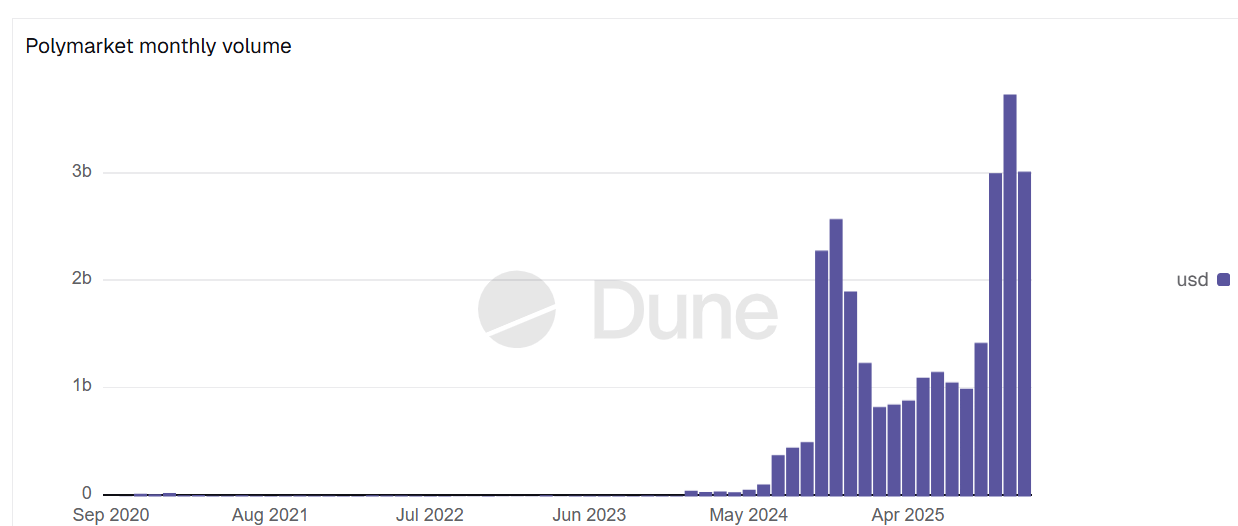
Polymarket’s monthly volumes began to surge in the run-up to the 2024 US presidential election. Source: Dune

Related: DraftKings eyes crypto offerings as it expands into prediction markets

Perguntas relacionadas

QWhat is the primary reason Crypto.com is building an internal market-making team, according to the company?

ACrypto.com states that building an internal market-making team is intended to improve liquidity and create a better overall experience for customers, and it is fully aligned with federal regulations.

QHow does Crypto.com address concerns about conflicts of interest and unfair advantages for its internal market maker?

ACrypto.com states that its internal market maker does not get a 'first look' at proprietary data or customer order flow before other market participants, and all market makers operate under the same rules to ensure fairness and integrity.

QBesides Crypto.com, which other prediction-market operators use market makers to support liquidity, as mentioned in the article?

AThe article mentions that competitors such as Kalshi and Polymarket also use professional trading companies or dedicated liquidity providers to facilitate trading on their platforms.

QWhat is Crypto.com's stated business model regarding proprietary trading and revenue?

ACrypto.com states that it does not rely on proprietary trading as a revenue source and has a simple business model of providing retail customers access to digital assets for a fee while staying risk neutral.

QWhich quantitative trading company has been reported to provide market-making services to Kalshi since 2024?

AQuantitative trading company Susquehanna International Group has been reported to provide market-making services to Kalshi since 2024.

Leituras Relacionadas

Bitcoin's 'Rally Ends,' Officially Entering the Later Stage of a Bear Market?

Bitcoin prices declined 13% this week, reversing the recent rebound and signaling a likely transition into the later stages of a bear market. Key on-chain metrics deteriorated, with the short-term holder cost basis falling below the Realized Price—a pattern last seen in early 2022, characteristic of bear market maturity. The rally to ~$82k proved to be a bear market bounce, as evidenced by the 90-day realized profit/loss ratio failing to sustain above the bullish threshold of 2. Daily realized losses surged to $1.35B, including significant selling from long-term holders who accumulated near cycle tops, indicating ongoing supply redistribution. Price was rejected almost precisely at the aggregate US spot ETF cost basis of ~$83k, turning that level into resistance and leaving the average ETF investor underwater again. Spot market selling pressure intensified, with the 7-day volume delta turning significantly negative to its weakest level since February. While a major long liquidation event cleared over $400M in leverage, spot demand has not yet stepped in to absorb the resulting supply. Options markets continue pricing in higher future volatility (elevated volatility risk premium) and maintain a skew toward put options, reflecting persistent demand for downside protection, though not yet panic. Overall, market structure remains fragile. Sustained recovery likely requires a reclaim of the ETF cost basis, a shift back to positive spot demand, and a slowdown in realized loss-taking. Until then, the market risks further downside or extended consolidation within the broader bear trend.

Foresight NewsHá 1h

Bitcoin's 'Rally Ends,' Officially Entering the Later Stage of a Bear Market?

Foresight NewsHá 1h

How Risky is the "Death Spiral" of MSTR and STRC?

Summary: This article explores the perceived "death spiral" risk between MicroStrategy (MSTR), its Bitcoin holdings, and its perpetual preferred stock (STRC), drawing comparisons to the LUNA-UST collapse. While both systems feature price anchors, high yields for holders, and potential feedback loops, their core mechanisms differ fundamentally. The MSTR-STRC structure relies on continuous financing to sustain its high dividend payouts, primarily through stock ATM offerings. A negative feedback cycle could occur: falling MSTR stock price makes raising equity capital harder, increasing pressure to sell Bitcoin, which undermines STRC confidence and further depresses MSTR. However, unlike LUNA-UST's automated, direct linkage, the MSTR-STRC loop is weaker and has brakes: STRC dividends can be deferred or rates lowered, and STRC holders have a $100/share liquidation preference in bankruptcy, providing a price floor. The company's sustainability hinges on its ability to continue financing. Its current ~$900 million USD reserves cover only about 6.3 months of its ~$1.71 billion annual interest/dividend burden. The next six months are critical, aligning with both the potential bottom in Bitcoin's four-year cycle and the depletion timeline of its reserves. While a LUNA-style catastrophic collapse is deemed highly unlikely due to structural differences, the key question is whether MicroStrategy can navigate this period through healthy deleveraging to restart its capital engine.

Foresight NewsHá 1h

How Risky is the "Death Spiral" of MSTR and STRC?

Foresight NewsHá 1h

Trading

Spot
Futuros
活动图片