Crypto Warning: Bonk.fun Domain Hack Exposes Solana Traders To Wallet Drain

bitcoinistPublicado em 2026-03-14Última atualização em 2026-03-14

Resumo

Crypto platform Bonk.fun suffered a domain hijacking attack on March 12, 2026, exposing users to a wallet-draining exploit. Hackers injected a malicious script on the website, prompting users to sign a fake "Terms of Service" agreement, which, when approved, allowed the attackers to steal funds. The team confirmed that only users who interacted with the fraudulent prompt after the hack were affected, and losses were reported as minimal. The breach was attributed to a Web2 infrastructure failure rather than a smart contract exploit. This incident highlights the growing threat of approval-phishing and domain hijacking attacks in the crypto space, underscoring the need for heightened user caution and improved security practices.

A Crypto platform confirmed that their main domain website had been hacked, which exposed its users to a wallet draining exploit.

A No-Fun Crypto Hijack

It is a truth universally acknowledge that, no matter the size of a global geopolitical crisis, hackers will continue to ravage through the crypto market. This time, the victim was memecoin issuance platform Bonk.fun. In a March 12 post on the social network X, Tom (@SolportTom), one of its operators, warned the users not to interact with the domain “until further notice”, as hackers had injected a crypto wallet drainer on it:

The official X account of the Solana token launchpad, backed by Raydium and the BONK community, also announced the hack and echoed Tom’s striking warning:

Who Is Affected And How

Tom explained that the phishing scam set up a fake “Terms of Services” (TOS) signature prompt which, when signed, allowed the drainer to move the unaware user’s funds. According to Tom, the only users compromised were the ones who interacted with the fake TOS. He clarified that neither previously connected users nor traders of bonk fun tokens on third-party terminals were affected. He also assured that the security breach was spotted early so “the losses are minimal to date”:

This is not a Raydium or BONK smart contract exploit, but the case of a Web2 infrastructure failure that bled directly into Web3. This type of domain hijacking and phishing drainer scripts work by the attackers taking over the frontend and presenting normal-looking prompts that abuse wallet approvals.

A Pattern Of Exploited Vulnerabilities

In recent years, approval-phishing and “fake UI” attacks have stolen billions of dollars: one Chainalysis investigation reported the amount of $14 billion in on-chain scam inflows in 2025, with projections pointing above the $17 billion as more wallets continued to be identified.

As scam revenues grow and AI‐driven impersonation scales, crypto security in 2026 is less about the perfect code and more about defending everything around it: from domains to social accounts, employees and users decision-making. In February last year, attackers hijacked Pump.fun’s X account to push a fake PUMP token, as covered by our sister website NewsBTC. Not too long ago, OG trader Sillytuna was drove out of the crypto market after a multimillion-dollar theft that combined online address poisoning and offline violent actions.

The times are testing traders online and offline, both inside and outside the bloc. As the crypto landscape grows more complex, traders would do well to heighten their caution: prefer direct contract interaction or trusted aggregators, and use tools to monitor and regularly revoke token approvals.
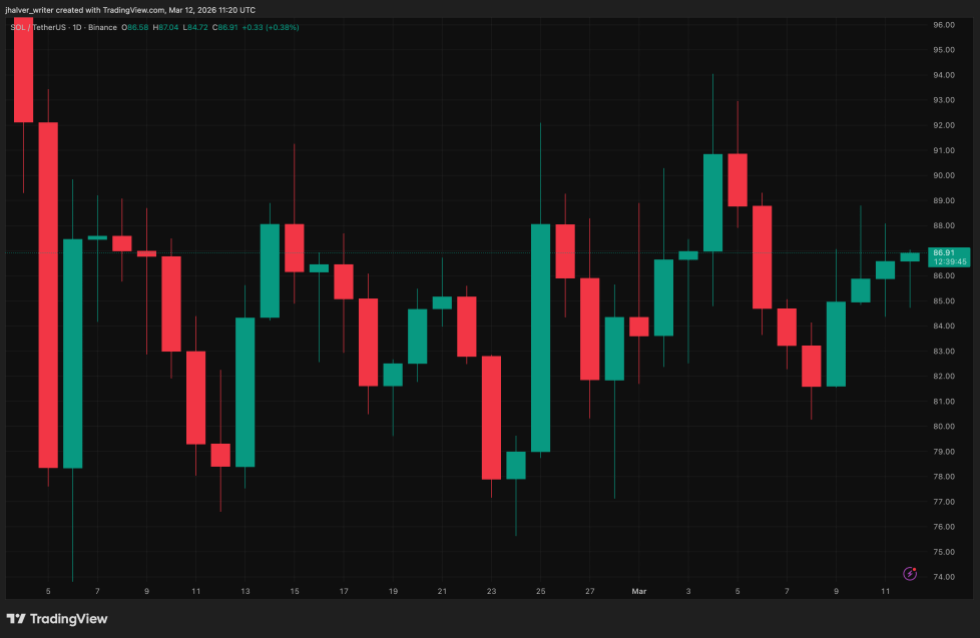
SOL’s price trends to the upside on the daily chart. Source: SOLUSDT on Tradingview

Cover image from Perplexity, SOLUSDT chart from Tradingview

Perguntas relacionadas

QWhat was the main security incident that occurred with Bonk.fun?

AThe main domain of Bonk.fun was hacked, and a wallet drainer was injected into the website, exposing users to a phishing scam.

QHow did the wallet drainer on Bonk.fun's compromised domain work?

AThe drainer set up a fake 'Terms of Services' (TOS) signature prompt. When users signed this prompt, it allowed the attacker to move their funds.

QAccording to the article, which users were affected by this security breach?

AOnly users who interacted with the fake TOS message on the compromised Bonk.fun domain after the hack were affected. Previously connected users and those trading on third-party terminals were not compromised.

QWhat type of exploit was this incident classified as, and what was its root cause?

AThis was not a smart contract exploit. It was a Web2 infrastructure failure (domain hijacking) that led to a Web3 phishing attack, where the frontend was compromised to present malicious prompts.

QWhat broader trend in crypto scams does the article mention, and what was a key statistic provided?

AThe article mentions that approval-phishing and 'fake UI' attacks have become a major trend. A Chainalysis investigation reported $14 billion in on-chain scam inflows in 2025, with projections exceeding $17 billion.

Leituras Relacionadas

Bitcoin Withdrawals Continue: 8 Years of Storage in a Coldcard Cold Wallet Ended in Zero

Coldcard Hardware Wallet Hacked: Losses Mount Due to Vulnerable Seed Generation A critical vulnerability in Coldcard hardware wallets has led to a continued wave of fund thefts. According to Galaxy Research, the total stolen has reached 1,367.05 BTC (approx. $88.6 million) from 4,585 addresses, a significant increase from the initial 594.5 BTC reported on July 30, 2026. Most of the stolen funds remain on the attackers' addresses. The issue is not with the current firmware, which Coinkite has updated, but with seed phrases generated on vulnerable devices between March 2021 and the release of fixed firmware versions. Due to a programmer error, devices switched from using a hardware random number generator to the software-based Yasmarang generator, which was initialized with publicly accessible data like the chip's serial number. This made the seed phrases predictable through offline brute-force attacks, meaning wallets remain at risk until funds are moved to a new wallet generated with the patched firmware. Affected devices include Mk2/Mk3 with firmware 4.0.1–4.1.9 (and up to 5.0.3), Mk4/Mk5 up to version 5.6.0, and Q models up to 1.5.0Q. The only exceptions are seeds created with a high-entropy method like at least 50 independent dice rolls or a strong unique BIP-39 passphrase. All other owners must generate a new seed on the fixed firmware and transfer their assets. A case highlighting the human impact involves a 39-year-old long-term investor who lost 2 BTC (approx. $130,000) in minutes. He had accumulated the Bitcoin over eight years through physical labor, viewing it as a financial lifeline and a retirement plan in a country suffering from hyperinflation. His story underscores that even conservative "buy and hold in cold storage" strategies can be compromised by such underlying technical flaws. From a technical perspective, this incident echoes historical failures where weak random number generators undermined cryptographic security, challenging the assumption that offline storage is automatically foolproof.

cryptonews.ruHá 5h

Bitcoin Withdrawals Continue: 8 Years of Storage in a Coldcard Cold Wallet Ended in Zero

cryptonews.ruHá 5h

Trading

Spot
活动图片





