Crypto Victory Ahead? This Senator’s Decision Clears Path For Market Structure Bill Approval

bitcoinistPublicado em 2026-01-28Última atualização em 2026-01-28

Resumo

A key amendment that threatened to delay the crypto market structure bill (CLARITY Act) has been withdrawn, potentially smoothing its path to approval. Senator Roger Marshall agreed not to propose his swipe-fee amendment during the Senate Agriculture Committee markup, a move seen as securing broader industry support. The amendment, which targeted credit card fees and was backed by Senators Durbin and Welch, was viewed as a major obstacle due to opposition from some Republicans and concerns it could derail the legislation. While this hurdle is cleared, other amendments—including ethics rules for officials, CFTC governance, anti-fraud measures, and foreign adversary restrictions—remain under consideration. The bill, which has received positive feedback from the crypto industry for its focus on intermediaries rather than protocols or users, remains divided along party lines despite weeks of negotiations.

A crucial amendment that was expected to delay passage of the CLARITY Act, also known as the crypto market structure bill, could be scrapped ahead of a vital committee vote this week, potentially simplifying the bill’s path forward.

Senate Crypto Bill Clears Key Hurdle

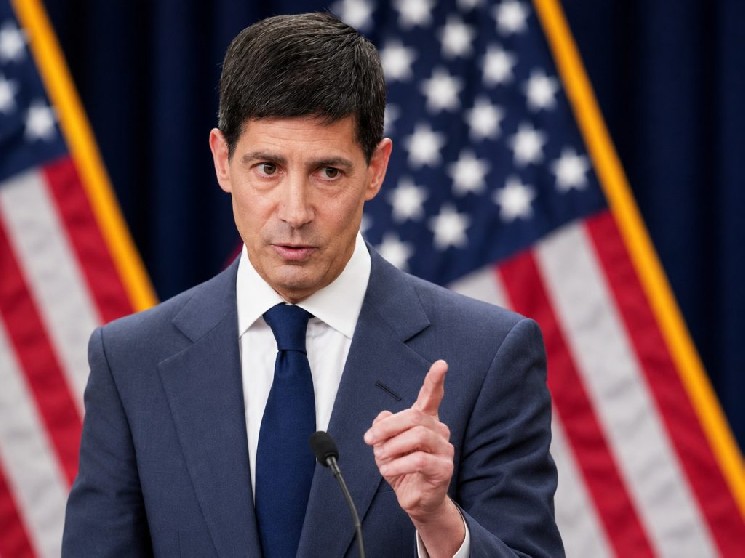
According to a report by Politico, Senator Roger Marshall of Kansas has agreed not to offer a proposed amendment targeting credit card swipe fees during the Senate Agriculture Committee’s markup of the crypto legislation, scheduled for Thursday, January 29.

Three people familiar with the private discussions said the decision was made over the weekend and could help secure broader backing for the bill from the cryptocurrency industry.

Marshall had filed the amendment just last week, seeking to force payment networks to compete on credit card swipe fees. The proposal closely mirrors the long‐running Credit Card Competition Act, which Marshall has championed for years alongside Senator Dick Durbin of Illinois.

However, in private conversations on Saturday, Marshall reportedly agreed not to bring the amendment forward during the markup, according to those with knowledge of the matter.

Marshall’s swipe‐fee amendment, which is also supported by Durbin and Senator Peter Welch of Vermont, was widely seen as a potential obstacle. Some Republicans who are inclined to support the crypto bill oppose the credit card provision, which would place major financial institutions in direct conflict with large retailers.

Durbin is not currently expected to introduce the amendment himself during the markup, according to a person familiar with the situation, although a final decision has not been confirmed.

Amendments Still Loom

The issue has reportedly drawn attention from the White House as well. Several people with insight into internal deliberations said administration officials became involved out of concern that the swipe‐fee amendment could derail the legislation.

One person described the amendment as something that would have “jeopardized” the bill’s passage, at a time when the White House is pushing for the measure to advance out of committee.

While the Marshall amendment may be off the table, other changes could still emerge. Journalist Eleanor Terrett noted on X (previously Twitter) that several amendments remain under consideration.

These include proposed ethics rules for US officials, a requirement that the Commodity Futures Trading Commission (CFTC) maintain at least four sitting commissioners following consultation with the minority party, anti‐fraud measures targeting crypto ATMs, and limits on participation by foreign adversaries in crypto markets.

Despite two additional weeks of bipartisan negotiations—negotiations that already delayed an earlier planned markup from January 15—the bill remains sharply divided along party lines. So far, only Republican members of the Senate Agriculture Committee have publicly expressed support for the legislation.

Nonetheless, the committee’s latest draft, posted on Wednesday, January 21, has received a positive response from the broader crypto industry. Industry participants have praised the text for providing explicit protections for noncustodial software developers and blockchain infrastructure providers.

The bill is seen as narrowly targeting intermediaries, rather than protocols or end users, a distinction many in the sector consider essential for maintaining innovation.

The draft also excludes provisions that would regulate stablecoin yields, a decision viewed as particularly significant following Coinbase’s recent withdrawal of support for the Senate Banking Committee’s version of the legislation.

The daily chart shows the total crypto market cap consolidating just above $2.9 trillion. Source: TOTAL on TradingView.com

Featured image from DALL-E, chart from TradingView.com

Perguntas relacionadas

QWhat is the name of the crypto market structure bill discussed in the article?

AThe CLARITY Act.

QWhich senator agreed not to offer an amendment targeting credit card swipe fees?

ASenator Roger Marshall of Kansas.

QWhy was the swipe-fee amendment considered a potential obstacle to the bill's passage?

ABecause some Republicans who support the crypto bill oppose the credit card provision, which would put major financial institutions in direct conflict with large retailers.

QWhat are some of the other amendments still under consideration for the bill?

AProposed ethics rules for US officials, a requirement for the CFTC to maintain at least four sitting commissioners, anti-fraud measures for crypto ATMs, and limits on participation by foreign adversaries in crypto markets.

QHow has the broader crypto industry responded to the latest draft of the bill?

AThe industry has responded positively, praising the text for providing explicit protections for noncustodial software developers and blockchain infrastructure providers.

Leituras Relacionadas

Bitcoin's 'Rally Ends,' Officially Entering the Later Stage of a Bear Market?

Bitcoin prices declined 13% this week, reversing the recent rebound and signaling a likely transition into the later stages of a bear market. Key on-chain metrics deteriorated, with the short-term holder cost basis falling below the Realized Price—a pattern last seen in early 2022, characteristic of bear market maturity. The rally to ~$82k proved to be a bear market bounce, as evidenced by the 90-day realized profit/loss ratio failing to sustain above the bullish threshold of 2. Daily realized losses surged to $1.35B, including significant selling from long-term holders who accumulated near cycle tops, indicating ongoing supply redistribution. Price was rejected almost precisely at the aggregate US spot ETF cost basis of ~$83k, turning that level into resistance and leaving the average ETF investor underwater again. Spot market selling pressure intensified, with the 7-day volume delta turning significantly negative to its weakest level since February. While a major long liquidation event cleared over $400M in leverage, spot demand has not yet stepped in to absorb the resulting supply. Options markets continue pricing in higher future volatility (elevated volatility risk premium) and maintain a skew toward put options, reflecting persistent demand for downside protection, though not yet panic. Overall, market structure remains fragile. Sustained recovery likely requires a reclaim of the ETF cost basis, a shift back to positive spot demand, and a slowdown in realized loss-taking. Until then, the market risks further downside or extended consolidation within the broader bear trend.

Foresight NewsHá 17m

Bitcoin's 'Rally Ends,' Officially Entering the Later Stage of a Bear Market?

Foresight NewsHá 17m

How Risky is the "Death Spiral" of MSTR and STRC?

Summary: This article explores the perceived "death spiral" risk between MicroStrategy (MSTR), its Bitcoin holdings, and its perpetual preferred stock (STRC), drawing comparisons to the LUNA-UST collapse. While both systems feature price anchors, high yields for holders, and potential feedback loops, their core mechanisms differ fundamentally. The MSTR-STRC structure relies on continuous financing to sustain its high dividend payouts, primarily through stock ATM offerings. A negative feedback cycle could occur: falling MSTR stock price makes raising equity capital harder, increasing pressure to sell Bitcoin, which undermines STRC confidence and further depresses MSTR. However, unlike LUNA-UST's automated, direct linkage, the MSTR-STRC loop is weaker and has brakes: STRC dividends can be deferred or rates lowered, and STRC holders have a $100/share liquidation preference in bankruptcy, providing a price floor. The company's sustainability hinges on its ability to continue financing. Its current ~$900 million USD reserves cover only about 6.3 months of its ~$1.71 billion annual interest/dividend burden. The next six months are critical, aligning with both the potential bottom in Bitcoin's four-year cycle and the depletion timeline of its reserves. While a LUNA-style catastrophic collapse is deemed highly unlikely due to structural differences, the key question is whether MicroStrategy can navigate this period through healthy deleveraging to restart its capital engine.

Foresight NewsHá 36m

How Risky is the "Death Spiral" of MSTR and STRC?

Foresight NewsHá 36m

How Much Debt Does Strategy Really Have? Is There a Risk of Implosion?

MicroStrategy's Debt Risk: A Turning Point in the "Never Sell" Strategy As of June 3, 2026, MicroStrategy holds 843,706 bitcoins (valued at ~$53.1B) but faces significant financial obligations. Its capital structure includes $6.75B in convertible notes and $15.48B in perpetual preferred stock (led by the $8.5B STRC series), creating an annual payout burden of ~$1.71B. With software revenue at only ~$500M, interest and dividend obligations far exceed operating income. A critical shift occurred in late May 2026 when the company sold 32 bitcoins for ~$2.5M to cover dividends, breaking CEO Michael Saylor's long-standing "never sell" pledge. This symbolic move triggered a sharp decline in both Bitcoin's price and MSTR stock, reflecting market fears about cash flow sustainability. The core of the strain is the STRC perpetual preferred stock, designed as a "permanent loan" with no maturity date but requiring high monthly dividends (currently 11.5%). Its business model relies on a three-part cycle: issuing new STRC shares, using proceeds to buy more Bitcoin and fund a USD reserve, and using that reserve to pay dividends. This cycle depends on continuous investor demand for STRC and Bitcoin's price appreciation. Analysis shows Bitcoin needs to appreciate at least 2.3% annually to cover the $1.71B in yearly obligations at current holdings. With Bitcoin price down ~22% from March 2026 highs, this pressure has intensified. The company's $900M USD reserve can only cover about 7 months of payments if STRC issuance stalls. Key risks are not immediate bankruptcy or forced Bitcoin liquidation (as BTC is not collateral), but rather: 1) The erosion of MSTR's premium to its Bitcoin holdings (mNAV), which would cripple its ability to raise cheap capital; 2) A vicious cycle where stagnant Bitcoin prices reduce STRC demand, draining the USD reserve and forcing BTC sales, further depressing prices. The period from February 2027 to September 2028 is a crucial test, with over $5.9B in convertible notes facing put options or maturity. In essence, MicroStrategy has evolved from a simple Bitcoin holder into a complex financial entity acting like a "private Bitcoin bank," leveraging its BTC holdings to create layered financial products. Its survival depends on maintaining Bitcoin's price trend, its stock premium, and market appetite for its preferred shares. The recent token sale marks not a betrayal of its Bitcoin thesis, but an admission that the leveraged strategy must eventually be paid for.

marsbitHá 46m

How Much Debt Does Strategy Really Have? Is There a Risk of Implosion?

marsbitHá 46m

Anthropic Cries Wolf: Is the AGI Threat Real, or Just an IPO Story?

Anthropic has published an article titled "When AI builds itself," discussing the emerging concept of "recursive self-improvement," where AI begins to actively participate in designing, training, testing, and optimizing its own subsequent versions. The company presents internal data showing that by May 2026, over 80% of code merged into its codebase was written by Claude, its AI model. Claude's capabilities have expanded to handling complex, open-ended engineering tasks, achieving a 76% success rate in such areas, and even contributing to research processes, such as optimizing code performance and conducting AI safety experiments. Anthropic outlines an evolution from human-driven development to AI-assisted workflows, culminating in the current stage where AI agents can autonomously write, run, and delegate code. The company cautions that the path toward a "closed loop," where AI continuously improves itself, is becoming visible. It calls for coordinated global mechanisms to potentially slow or pause frontier AI development to allow safety research and societal structures to catch up. However, the timing of this warning coincides with Anthropic's preparations for an IPO, framing the narrative not just as a safety concern but also as a demonstration of Claude's advanced capabilities and its integral role in accelerating Anthropic's own R&D—creating a potential "flywheel" effect for competitive advantage. This contrasts with OpenAI's recent, more policy-oriented discussion of the same risks, highlighting the competitive dynamics in the AI industry as companies position themselves in both the technological and regulatory landscape.

marsbitHá 1h

Anthropic Cries Wolf: Is the AGI Threat Real, or Just an IPO Story?

marsbitHá 1h

Trading

Spot
Futuros
活动图片