Crypto Systems Could Be Outpaced By Quantum Tech By 2033, Says Hoskinson

bitcoinistPublicado em 2026-05-18Última atualização em 2026-05-18

Resumo

Cardano founder Charles Hoskinson warns that quantum computers could break current blockchain cryptography by 2033, with a probability exceeding 50%. He highlighted Bitcoin Improvement Proposal (BIP) 361 as a potential path for Bitcoin to migrate to quantum-resistant addresses. Most blockchains, including Bitcoin, rely on encryption vulnerable to quantum attacks. Cardano is proactively researching lattice-based cryptography and plans to adopt federal quantum-resistant standards (FIPS 203-206), leveraging its scheduled annual hard forks for seamless upgrades. Hoskinson noted that while Cardano's transition could be straightforward, Bitcoin's path is less clear due to its slower, more contested upgrade process. The broader crypto industry faces an urgent deadline to overhaul its security systems.

Crypto may need a major overhaul sooner than most people think. Cardano founder Charles Hoskinson pointed to a specific proposal — Bitcoin Improvement Proposal BIP-361 — as a potential path forward for gradually moving Bitcoin users away from older wallet addresses toward ones built to resist quantum attacks.

Speaking at Consensus Miami, Hoskinson said the window to prepare may be closing faster than the industry has assumed.

A Deadline The Industry Cannot Ignore

Hoskinson put the odds of a capable quantum computer arriving before 2033 at above 50%. That kind of machine, he said, would be powerful enough to crack the cryptographic systems that currently protect digital wallets, private keys, and transaction signatures across most major blockchain networks.

If that happens, bad actors could potentially access wallets without authorization, forge transaction signatures, or disrupt how blockchains reach agreement. He was direct: this is no longer a problem for the next generation to solve.

Most blockchains today — Bitcoin included — rely on traditional encryption methods that were never designed with quantum computing in mind.

Those systems work by making certain math problems extremely difficult for classical computers to solve. A sufficiently advanced quantum machine could blow through those same problems in a fraction of the time.

Cardano’s Quantum Defense Plan

Cardano is not waiting around. According to Hoskinson, the network already has a research program focused on quantum security, with partners involved and specific technical goals in place.

The main focus is lattice-based cryptography, a form of encryption that quantum systems would find far harder to break than older models.

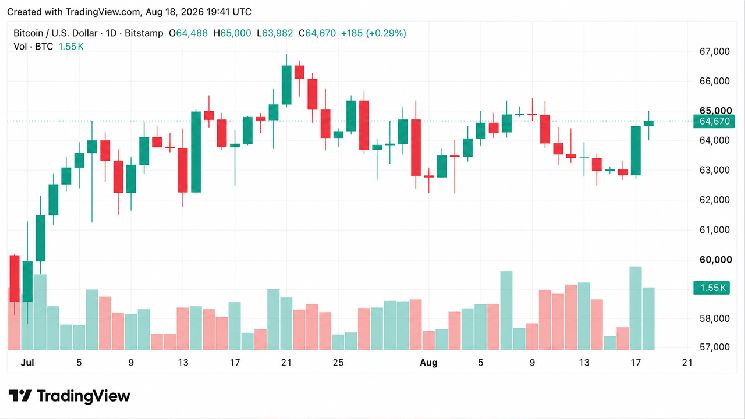
Bitcoin is currently trading at $78,371. Chart: TradingView

Cardano also plans to adopt federal quantum-resistant standards — known as FIPS 203 through 206 — which were developed to protect digital systems against future quantum-powered attacks.

Hoskinson noted that rolling out these changes on Cardano would be relatively straightforward. The network runs scheduled hard fork upgrades annually, which gives it a built-in mechanism for adopting new security standards without major disruption.
Source: Getty Images

Crypto Faces A Longer Road

For Bitcoin, the path is less clear. BIP-361 has been proposed as a way to phase in quantum-resistant wallet addresses over several years, but Bitcoin’s upgrade process is slower and more contested than Cardano’s.

Hoskinson acknowledged the difficulty but said a migration of that kind is achievable. He suggested Cardano could carry out a similar transition with relative ease given its existing upgrade structure.

Whether Bitcoin moves fast enough remains an open question — one the broader crypto industry may not be able to put off much longer.

Featured image from Unsplash, chart from TradingView

Criptomoedas em alta

Perguntas relacionadas

QAccording to Charles Hoskinson, by what year is there more than a 50% chance that quantum computers could threaten current cryptographic systems?

ABy 2033.

QWhat is the specific Bitcoin Improvement Proposal (BIP) mentioned as a potential path for moving towards quantum-resistant wallets?

ABIP-361.

QWhat type of cryptography is Cardano focusing on for its quantum security research program?

ALattice-based cryptography.

QWhy does Hoskinson suggest Cardano could transition to quantum-resistant standards more easily than Bitcoin?

ABecause Cardano has a scheduled annual hard fork upgrade mechanism, making adoption more straightforward.

QWhat are the potential risks if quantum computers break current blockchain cryptography, as stated in the article?

ABad actors could access wallets without authorization, forge transaction signatures, or disrupt how blockchains reach consensus.

Leituras Relacionadas

Stablecoins Are the 'Royalists' of the Crypto World: Open USD Brings the Old Monetary System into the Fray

Title: Stablecoins Are the "Royalists" of the Crypto World: Open USD Brings the Old Monetary System into the Fray The article analyzes the launch of Open USD, a new dollar-pegged stablecoin backed by a coalition of over 140 traditional financial, payment, and tech giants like Visa, BlackRock, and Google. Author Hu Yilin argues that stablecoins like Open USD represent not a "moderate" wing of the crypto revolution, but a "royalist reform" within the old monetary system. He posits that while stablecoins adopt blockchain's efficiency, programmability, and borderless nature, they fundamentally reinforce the US dollar's centrality and the Federal Reserve's authority. They aim to replace inefficient "bureaucrats" (like traditional payment networks) rather than challenge the "monarch" (the dollar-based system). Thus, Open USD symbolizes the old system co-opting blockchain technology to upgrade dollar hegemony, potentially marginalizing native crypto projects like Circle's USDC. Hu contrasts this with more revolutionary paths, like a "Bitcoin standard," which seeks to change the monetary base itself. He warns that if the crypto ecosystem's unit of account, collateral, and value anchor remain dollar-denominated stablecoins,链上繁荣 may enrich the traditional financial system ("off-chain") rather than granting monetary premium to native crypto assets like ETH. Projects with civilizational ambitions, he argues, cannot reduce their narrative to mere "fuel" or transaction fees but must grapple with the core revolutionary idea: that a decentralized market does not require a central bank as the anchor of monetary order.

marsbitHá 32m

Stablecoins Are the 'Royalists' of the Crypto World: Open USD Brings the Old Monetary System into the Fray

marsbitHá 32m

Standard Chartered Takes Over USDC Onboarding; Circle Cedes Control for Scale

Standard Chartered and Circle have announced a partnership where institutional clients can now mint and redeem USDC directly through Standard Chartered's existing banking infrastructure, eliminating the need for separate accounts with Circle. Initially launching in the Dubai International Financial Centre (DIFC), this service represents the first time a Global Systemically Important Bank (G-SIB) is offering such direct, integrated access. This move effectively "translates" USDC into a standard banking option, opening the door for major institutional capital like pension funds and sovereign wealth funds that require the trust, compliance, and risk frameworks of a major bank. For Circle, this is a strategic trade: ceding some direct client relationships to leverage Standard Chartered's vast distribution network, thereby potentially massively scaling USDC's circulation and its core interest revenue model. For Standard Chartered, it's a chance to offer a new digital asset service without building the underlying stablecoin infrastructure. The partnership signals a significant shift in the stablecoin narrative. Rather than bypassing traditional finance, stablecoins are becoming integrated into it, with major banks like Standard Chartered positioning themselves at the crucial entry point. The focus is moving from legitimizing stablecoins to determining how value and pricing power will be distributed among issuers, banking channels, and regulatory frameworks in this new, converging landscape.

marsbitHá 3h

Standard Chartered Takes Over USDC Onboarding; Circle Cedes Control for Scale

marsbitHá 3h

Trading

Spot

Artigos em Destaque

Como comprar ADA

Bem-vindo à HTX.com!Tornámos a compra de Cardano (ADA) simples e conveniente.Segue o nosso guia passo a passo para iniciar a tua jornada no mundo das criptos.Passo 1: cria a tua conta HTXUtiliza o teu e-mail ou número de telefone para te inscreveres numa conta gratuita na HTX.Desfruta de um processo de inscrição sem complicações e desbloqueia todas as funcionalidades.Obter a minha contaPasso 2: vai para Comprar Cripto e escolhe o teu método de pagamentoCartão de crédito/débito: usa o teu visa ou mastercard para comprar Cardano (ADA) instantaneamente.Saldo: usa os fundos da tua conta HTX para transacionar sem problemas.Terceiros: adicionamos métodos de pagamento populares, como Google Pay e Apple Pay, para aumentar a conveniência.P2P: transaciona diretamente com outros utilizadores na HTX.Mercado de balcão (OTC): oferecemos serviços personalizados e taxas de câmbio competitivas para os traders.Passo 3: armazena teu Cardano (ADA)Depois de comprar o teu Cardano (ADA), armazena-o na tua conta HTX.Alternativamente, podes enviá-lo para outro lugar através de transferência blockchain ou usá-lo para transacionar outras criptomoedas.Passo 4: transaciona Cardano (ADA)Transaciona facilmente Cardano (ADA) no mercado à vista da HTX.Acede simplesmente à tua conta, seleciona o teu par de trading, executa as tuas transações e monitoriza em tempo real.Oferecemos uma experiência de fácil utilização tanto para principiantes como para traders experientes.

1.3k Visualizações TotaisPublicado em {updateTime}Atualizado em 2026.06.02

Como comprar ADA

Discussões

Bem-vindo à Comunidade HTX. Aqui, pode manter-se informado sobre os mais recentes desenvolvimentos da plataforma e obter acesso a análises profissionais de mercado. As opiniões dos utilizadores sobre o preço de ADA (ADA) são apresentadas abaixo.

活动图片