Crypto moves on as banks push back – What Brazil and Venezuela reveal

ambcryptoPublicado em 2025-12-14Última atualização em 2025-12-14

Resumo

U.S. banking groups are challenging the OCC's approval of national trust charters for crypto firms, arguing it creates regulatory gray areas and risks financial instability. Meanwhile, regulatory and financial systems worldwide are advancing crypto integration. The CFTC is testing systems to include crypto in cross-margining with U.S. Treasuries. Brazil’s largest bank, Itaú Unibanco, advises clients to allocate up to 3% of their portfolio to Bitcoin as a long-term hedge. In Venezuela, stablecoins like USDT have become essential for daily transactions, remittances, and payroll due to hyperinflation and unreliable banking. Despite traditional resistance, crypto adoption continues to grow, signaling its irreversible integration into the global financial system.

U.S. banking groups are pushing back against the OCC’s approval of crypto trust charters. Elsewhere, the conversation has already moved on.

Brazil’s largest bank is advising Bitcoin [BTC] exposure. U.S. regulators are integrating crypto into treasury market plumbing. In Venezuela, stablecoins have become a necessity.

Traditional banks may still be arguing the case. The financial system, meanwhile, is getting on with it.

To be, or not to be…a bank?

Trade groups representing traditional banks challenged the Office of the Comptroller of the Currency’s (OCC) decision to approve national trust charters for crypto firms.

At the center of the dispute are conditional approvals granted to a handful of digital asset players. This is a move the OCC insists followed the same review process applied to any bank charter.

Banking groups disagreed.

They argued the move created a gray zone. These firms resembled banks, gained federal status, yet lacked deposit insurance and full bank-level oversight.

On behalf of the American Banking Association, Rob Nichols, President and CEO, said,

“We are concerned that expanding the trust charter in this way… could blur the lines of what it means to be a bank and create opportunities for regulatory arbitrage.”

The ICBA went further. In their statement, President and CEO Rebeca Romero Rainey noted,

“The OCC’s dramatic policy change… allows for an inconsistent regulatory framework that threatens financial instability.”

And while this chatter goes back and forth, crypto is gaining steam on higher levels.

Regulation takes over on the other side

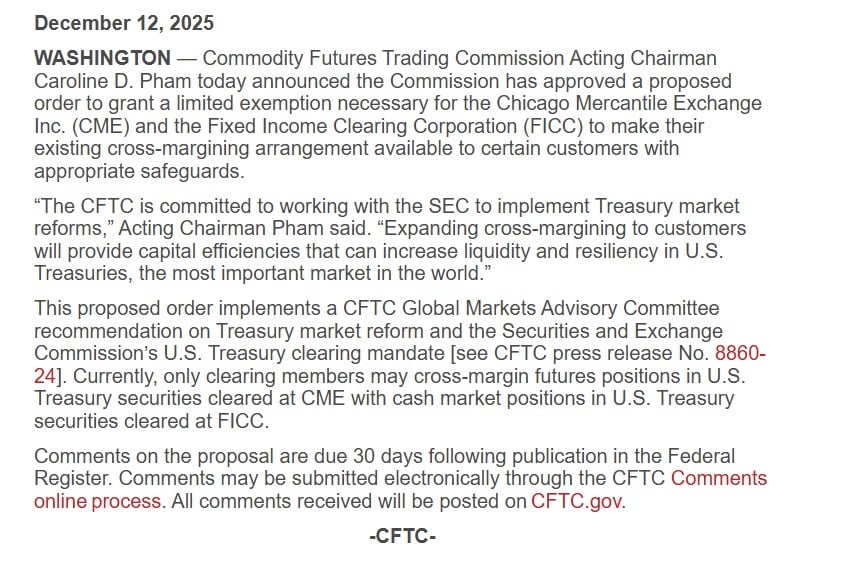
The CFTC’s recent move to expand cross-margining for U.S. Treasuries may sound technical, but the intent is pretty straightforward.

By letting Treasuries be netted alongside futures, regulators are testing systems that could eventually hold crypto and tokenized assets in the same portfolio. The idea is to increase efficiency and risk control.

In the press release, CFTC Acting Chairman Caroline Pham said,

“Expanding cross-margining to customers will provide capital efficiencies that can increase liquidity and resiliency in U.S. Treasuries, the most important market in the world.”

And whatever the industry debate looks like on the surface, the groundwork for integration is already being laid.

Source: cftc.gov

Brazil isn’t going to wait!

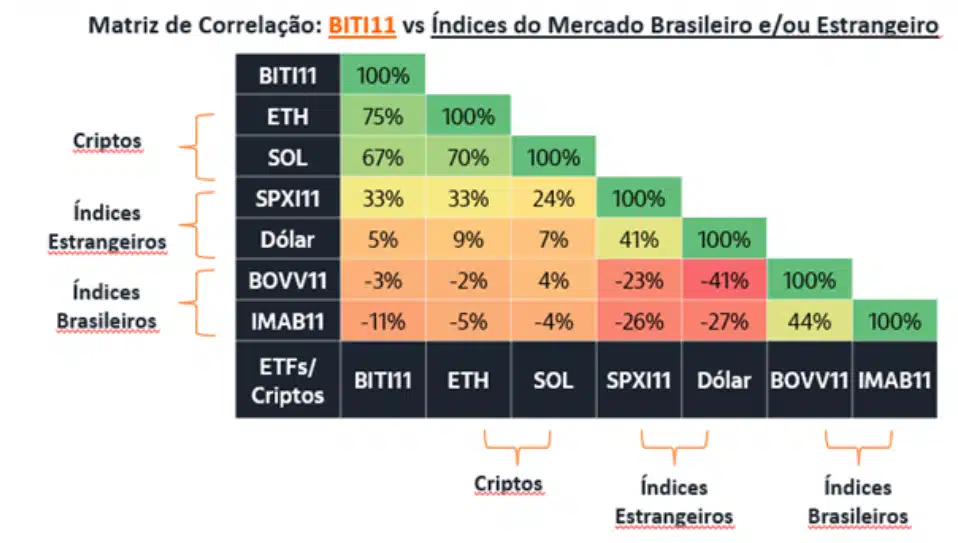
The country’s largest private bank is already treating Bitcoin like a portfolio tool.

Itaú Unibanco has recently advised clients to allocate a small slice (up to 3%) to Bitcoin. Not as a trade, but as protection!

Source: Itau

The logic is simple. Bitcoin doesn’t move like local stocks or bonds, and it offers some shelter when the real weakens. Itaú is clear this isn’t about chasing price swings or making crypto a core holding.

It’s meant to be limited, long-term, and disciplined.

For Venezuelans, crypto is non-negotiable

In Venezuela, stablecoins replaced traditional banking functions for many households and businesses.

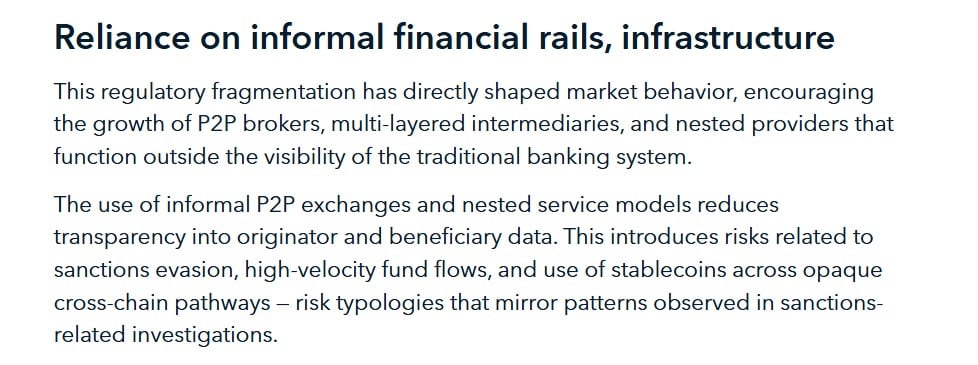
USDT supported payroll, remittances, vendor payments, and cross-border purchases. Peer-to-peer platforms played a central role.

More than 38% of local crypto traffic flowed through a single P2P service enabling crypto-to-fiat conversions.

Source: TRM Labs

A report from TRM Labs noted that, absent major economic or regulatory changes, demand for stablecoins will likely keep growing.

For Venezuelans, crypto means survival. It is a reliable medium of exchange where the bolívar continues to lose value and traditional banking remains unreliable.

A gap that keeps growing

The clash between banks and crypto-forward regulators brings to mind a fundamental gap in priorities. Traditional banks worry about rules, parity, and systemic risk.

Regulators, global institutions, and forward-looking banks are focused on efficiency, resilience, and meeting real market demand.

What happens next could will define crypto’s global role.

National charters, market-structure reforms, institutional allocations, and widespread adoption internationally all point to the same trend: digital assets are becoming part of the financial system, whether legacy banks like it or not.

Resistance from traditional players may slow the pace, but it can’t stop the integration.


Final thoughts

  • While US banks resist crypto charters, regulators and global institutions are already moving ahead.
  • Crypto adoption is advancing beyond regulatory debate.
Next: Bitcoin stuck below $94K: Demand fails to kickstart a recovery
Share
  • Share
  • Tweet

Leituras Relacionadas

DeepSeek Announces Permanent Price Cut, But Liang Wenfeng Is Not Trying to Be a "Cyber Bodhisattva"

DeepSeek has announced a permanent 75% discount on its V4-Pro API, significantly reducing its token prices. This move stands out as a major industry-wide price cut while competitors like Anthropic, OpenAI, and Google have been quietly raising theirs. The article contrasts this strategy with the broader trend of AI becoming more expensive, citing examples of companies like Microsoft and Uber struggling with high token costs as usage soars. While CEO Liang Wenfeng is hailed by some as a "Cyber Bodhisattva" for this普惠 approach, the article argues this is a strategic business choice, not mere altruism. DeepSeek's ability to maintain low prices is attributed to several structural advantages: lower-cost AI talent in China, the impending use of domestic昇腾 hardware for further cost reductions, and, most critically, access to China's cheaper and more abundant energy infrastructure, which drastically reduces the electricity costs dominating AI operations. The analysis suggests that for many commercial applications, a "good enough" model that is radically cheaper (e.g., 1% to 11% of GPT-5.5's cost) is more valuable than the absolute top-tier model. This allows for vastly more experimentation and iteration within a budget. Therefore, as AI generally becomes more expensive, DeepSeek's cost-competitiveness—rooted in China's energy and talent advantages—becomes its core strategic value and differentiator in the global market.

marsbitHá 31m

DeepSeek Announces Permanent Price Cut, But Liang Wenfeng Is Not Trying to Be a "Cyber Bodhisattva"

marsbitHá 31m

The Veil of Mythos Becomes Anthropic's Lever to Move Trillions

The article discusses Anthropic's reported upcoming $30 billion funding round, which would value the company at over $900 billion. It analyzes how the company has leveraged strategic narratives around its unreleased "Mythos" model, rather than just its publicly available products, to drive this massive valuation. Key points include Google's surprising $40 billion investment in a competitor, suggesting it is buying strategic positioning. Anthropic's "Glasswing" cybersecurity project and the unreleased Mythos model are portrayed not through direct proof, but through carefully crafted narratives of being "too powerful for public release," creating an aura of exclusive, high-level capability. This is bolstered by reports of the White House and NSA seeking access to Claude/Mythos despite previous security concerns, implying indispensable technology. Furthermore, Anthropic's reported rapid revenue growth—from a $1 billion annual run-rate in late 2024 to over $30 billion by April 2026, largely driven by enterprise API and Claude Code—provides a financial story for investors. The article concludes that Anthropic's core business model is effectively converting unverifiable technical potential, government interest, and future revenue projections into a compelling narrative that secures immense capital, using the actions of wealthy investors and powerful institutions as the ultimate validation of its worth.

marsbitHá 2h

The Veil of Mythos Becomes Anthropic's Lever to Move Trillions

marsbitHá 2h

Google CEO Admits Lagging Behind in Coding

Google CEO Sundar Pichai acknowledged in a recent interview that Google's Gemini AI models are currently "lagging behind" in coding capabilities, particularly for complex, long-horizon tasks requiring advanced developer expertise. He noted the field is advancing at an "unprecedented" pace, where 30-60 days now brings changes equivalent to five years in the past. Pichai expressed that achieving Artificial General Intelligence (AGI) now seems closer than previously imagined due to rapid progress. While highlighting strengths in text, multimodal, and reasoning tasks, Pichai admitted competitors like Anthropic and OpenAI have focused more intently on coding. He emphasized Google's commitment to catching up, citing internal tools like Antigravity 2.0 and the newly released Gemini 3.5 Flash, which aims to address previous shortcomings. Regarding Google Search's AI-driven overhaul, Pichai stated changes will be gradual to align with user needs, not disrupt the core search experience or its advertising model. He addressed public AI anxiety as understandable, given the technology's potential to reshape jobs and society, but remained optimistic about AI augmenting human capabilities and creating new opportunities. Pichai stressed the need for broad societal dialogue and responsible development as AI approaches more advanced, potentially recursive self-improvement stages. He affirmed Google's long-term commitment to leading in AI while navigating its profound implications responsibly.

marsbitHá 4h

Google CEO Admits Lagging Behind in Coding

marsbitHá 4h

Trading

Spot
Futuros

Artigos em Destaque

Como comprar PUSH

Bem-vindo à HTX.com!Tornámos a compra de Push Protocol (PUSH) simples e conveniente.Segue o nosso guia passo a passo para iniciar a tua jornada no mundo das criptos.Passo 1: cria a tua conta HTXUtiliza o teu e-mail ou número de telefone para te inscreveres numa conta gratuita na HTX.Desfruta de um processo de inscrição sem complicações e desbloqueia todas as funcionalidades.Obter a minha contaPasso 2: vai para Comprar Cripto e escolhe o teu método de pagamentoCartão de crédito/débito: usa o teu visa ou mastercard para comprar Push Protocol (PUSH) instantaneamente.Saldo: usa os fundos da tua conta HTX para transacionar sem problemas.Terceiros: adicionamos métodos de pagamento populares, como Google Pay e Apple Pay, para aumentar a conveniência.P2P: transaciona diretamente com outros utilizadores na HTX.Mercado de balcão (OTC): oferecemos serviços personalizados e taxas de câmbio competitivas para os traders.Passo 3: armazena teu Push Protocol (PUSH)Depois de comprar o teu Push Protocol (PUSH), armazena-o na tua conta HTX.Alternativamente, podes enviá-lo para outro lugar através de transferência blockchain ou usá-lo para transacionar outras criptomoedas.Passo 4: transaciona Push Protocol (PUSH)Transaciona facilmente Push Protocol (PUSH) no mercado à vista da HTX.Acede simplesmente à tua conta, seleciona o teu par de trading, executa as tuas transações e monitoriza em tempo real.Oferecemos uma experiência de fácil utilização tanto para principiantes como para traders experientes.

510 Visualizações TotaisPublicado em {updateTime}Atualizado em 2025.03.21

Como comprar PUSH

Discussões

Bem-vindo à Comunidade HTX. Aqui, pode manter-se informado sobre os mais recentes desenvolvimentos da plataforma e obter acesso a análises profissionais de mercado. As opiniões dos utilizadores sobre o preço de PUSH (PUSH) são apresentadas abaixo.

活动图片