Crypto moves on as banks push back – What Brazil and Venezuela reveal

ambcryptoPublicado em 2025-12-14Última atualização em 2025-12-14

Resumo

U.S. banking groups are challenging the OCC's approval of national trust charters for crypto firms, arguing it creates regulatory gray areas and risks financial instability. Meanwhile, regulatory and financial systems worldwide are advancing crypto integration. The CFTC is testing systems to include crypto in cross-margining with U.S. Treasuries. Brazil’s largest bank, Itaú Unibanco, advises clients to allocate up to 3% of their portfolio to Bitcoin as a long-term hedge. In Venezuela, stablecoins like USDT have become essential for daily transactions, remittances, and payroll due to hyperinflation and unreliable banking. Despite traditional resistance, crypto adoption continues to grow, signaling its irreversible integration into the global financial system.

U.S. banking groups are pushing back against the OCC’s approval of crypto trust charters. Elsewhere, the conversation has already moved on.

Brazil’s largest bank is advising Bitcoin [BTC] exposure. U.S. regulators are integrating crypto into treasury market plumbing. In Venezuela, stablecoins have become a necessity.

Traditional banks may still be arguing the case. The financial system, meanwhile, is getting on with it.

To be, or not to be…a bank?

Trade groups representing traditional banks challenged the Office of the Comptroller of the Currency’s (OCC) decision to approve national trust charters for crypto firms.

At the center of the dispute are conditional approvals granted to a handful of digital asset players. This is a move the OCC insists followed the same review process applied to any bank charter.

Banking groups disagreed.

They argued the move created a gray zone. These firms resembled banks, gained federal status, yet lacked deposit insurance and full bank-level oversight.

On behalf of the American Banking Association, Rob Nichols, President and CEO, said,

“We are concerned that expanding the trust charter in this way… could blur the lines of what it means to be a bank and create opportunities for regulatory arbitrage.”

The ICBA went further. In their statement, President and CEO Rebeca Romero Rainey noted,

“The OCC’s dramatic policy change… allows for an inconsistent regulatory framework that threatens financial instability.”

And while this chatter goes back and forth, crypto is gaining steam on higher levels.

Regulation takes over on the other side

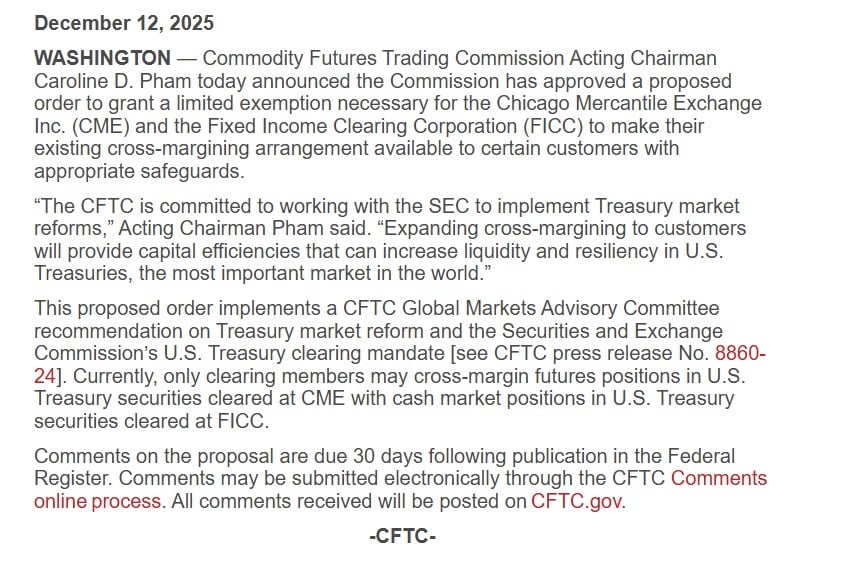
The CFTC’s recent move to expand cross-margining for U.S. Treasuries may sound technical, but the intent is pretty straightforward.

By letting Treasuries be netted alongside futures, regulators are testing systems that could eventually hold crypto and tokenized assets in the same portfolio. The idea is to increase efficiency and risk control.

In the press release, CFTC Acting Chairman Caroline Pham said,

“Expanding cross-margining to customers will provide capital efficiencies that can increase liquidity and resiliency in U.S. Treasuries, the most important market in the world.”

And whatever the industry debate looks like on the surface, the groundwork for integration is already being laid.

Source: cftc.gov

Brazil isn’t going to wait!

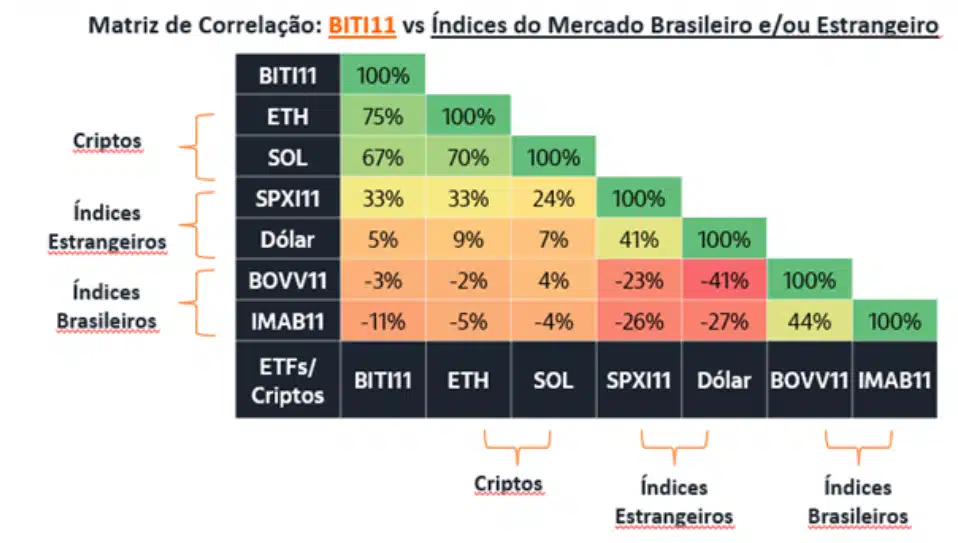
The country’s largest private bank is already treating Bitcoin like a portfolio tool.

Itaú Unibanco has recently advised clients to allocate a small slice (up to 3%) to Bitcoin. Not as a trade, but as protection!

Source: Itau

The logic is simple. Bitcoin doesn’t move like local stocks or bonds, and it offers some shelter when the real weakens. Itaú is clear this isn’t about chasing price swings or making crypto a core holding.

It’s meant to be limited, long-term, and disciplined.

For Venezuelans, crypto is non-negotiable

In Venezuela, stablecoins replaced traditional banking functions for many households and businesses.

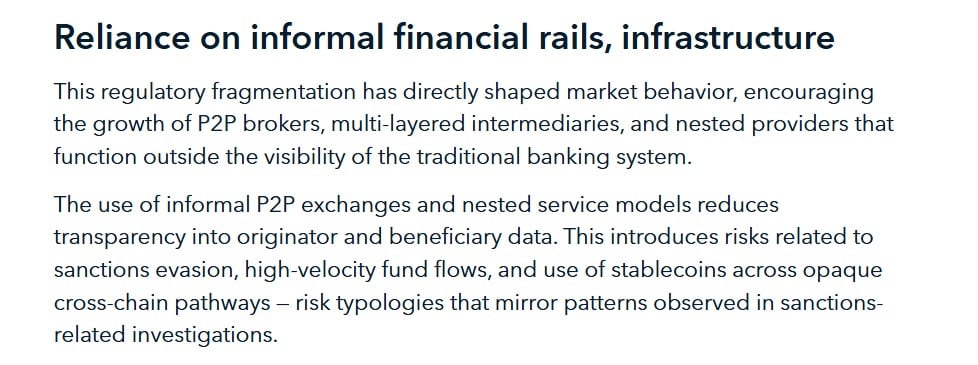
USDT supported payroll, remittances, vendor payments, and cross-border purchases. Peer-to-peer platforms played a central role.

More than 38% of local crypto traffic flowed through a single P2P service enabling crypto-to-fiat conversions.

Source: TRM Labs

A report from TRM Labs noted that, absent major economic or regulatory changes, demand for stablecoins will likely keep growing.

For Venezuelans, crypto means survival. It is a reliable medium of exchange where the bolívar continues to lose value and traditional banking remains unreliable.

A gap that keeps growing

The clash between banks and crypto-forward regulators brings to mind a fundamental gap in priorities. Traditional banks worry about rules, parity, and systemic risk.

Regulators, global institutions, and forward-looking banks are focused on efficiency, resilience, and meeting real market demand.

What happens next could will define crypto’s global role.

National charters, market-structure reforms, institutional allocations, and widespread adoption internationally all point to the same trend: digital assets are becoming part of the financial system, whether legacy banks like it or not.

Resistance from traditional players may slow the pace, but it can’t stop the integration.


Final thoughts

  • While US banks resist crypto charters, regulators and global institutions are already moving ahead.
  • Crypto adoption is advancing beyond regulatory debate.
Next: Bitcoin stuck below $94K: Demand fails to kickstart a recovery
Share
  • Share
  • Tweet

Criptomoedas em alta

Leituras Relacionadas

Bitcoin Falls Below $60,000 Again; After 20 Months, We've Reached a New Low

Bitcoin Drops Below $60,000, Hitting a 20-Month Low Bitcoin fell below the key $60,000 psychological level again, reaching a low of $59,023—its lowest point in approximately 20 months, dating back to October 2024. While it later recovered slightly to around $60,600, this marks its third significant breach of $60,000 this year. The downturn is attributed to two primary factors. First, U.S. spot Bitcoin ETFs are experiencing their longest streak of net outflows since launch, with nearly $5.94 billion withdrawn over 30 days. This creates sustained selling pressure as Authorized Participants sell Bitcoin to meet redemptions. Second, shifting macroeconomic expectations are adding pressure. Strong U.S. job data and hawkish remarks from Fed officials have increased market pricing for potential rate hikes, reversing the earlier liquidity-driven bullish sentiment and prompting a shift away from risk assets like Bitcoin. Analyst views are mixed. 21Shares maintains a bullish long-term outlook, expecting prices to recover towards $100,000, citing historical post-halving cycles and substantial ETF holdings as a base. In contrast, Arthur Hayes predicts a potential bottom around $40,000 within six months due to persistent Fed hawkishness. CryptoQuant suggests, based on on-chain data, that the market may not find a bottom until prices fall below the average investor cost basis around $53,000, potentially extending the bearish phase into late 2026 or early 2027. The immediate focus is on upcoming U.S. inflation data and Fed signals. Lower-than-expected CPI could offer relief, but confirmation of sticky inflation or continued ETF outflows may lead to further downside pressure. Bitcoin's ability to hold above $60,000 remains a critical test for the near-term market direction.

Odaily星球日报Há 41m

Bitcoin Falls Below $60,000 Again; After 20 Months, We've Reached a New Low

Odaily星球日报Há 41m

When Billions Begin to Operate Everything by Voice, How Far is ‘All Assets on Chain’?

In June 2026, WeChat began a limited rollout of "Xiaowei," its native AI assistant. This move is more than an upgrade to a smarter chatbot; it signals a crucial step from "universal internet access" toward the broader vision of "full asset tokenization." Xiaowei, powered primarily by WeChat's in-house WeLM model, demonstrates four key capabilities: 1) direct voice/web chat control of app functions, 2) automated access to mini-programs for services, 3) instant comprehension and summarization of complex documents like PDFs, and 4) generating functional mini-program prototypes from simple natural language requests. This represents a fundamental shift from GUI (Graphical User Interface) to LUI (Language User Interface), eliminating friction in human-digital interaction. The rollout is pivotal because it brings AI Agents to China's massive user base with zero friction—no new app downloads or accounts needed. This "seamless access" mirrors past platform revolutions like the App Store or WeChat Mini-Programs, potentially unlocking a global AI Agent market projected to grow from $7.92 billion in 2025 to nearly $295 billion by 2035. The article argues that China's internet evolution has moved from "connecting everyone" to "putting all services online." The next phase is "tokenizing all assets"—a concept broader than just Real World Assets (RWA) like real estate. It encompasses tokenizing personal assets like social influence, attention, and credit history. RWA tokenization itself is forecast to explode from $35 billion in 2025 to over $500 billion in 2026. The convergence of ubiquitous AI Agents and rapidly tokenizing assets points to a future paradigm for wealth management. Your AI Agent could autonomously manage a globally diversified, tokenized portfolio based on your preferences. Initiatives like EXIO Group's full-stack RWA services aim to lower investment barriers, paralleling WeChat's democratization of AI access. In conclusion, the launch of Xiaowei is not merely a technical upgrade but a historic inflection point. It marks AI Agents' transition from niche tools to essential utilities and accelerates the movement toward a future where voice commands seamlessly interact with tokenized value, redefining humanity's relationship with the digital and financial worlds.

marsbitHá 1h

When Billions Begin to Operate Everything by Voice, How Far is ‘All Assets on Chain’?

marsbitHá 1h

SoftBank CEO Masayoshi Son's New Trillion-Dollar "Gamble"

SoftBank founder Masayoshi Son is embroiled in a new trillion-dollar "bet" on Physical AI and humanoid robotics, even as his massive wager on OpenAI faces uncertainty ahead of its potential IPO. Recent reports reveal OpenAI's steep losses—$85 billion net loss by Q1 2026 and a $38.5 billion loss in 2025—casting doubt on its path to a trillion-dollar valuation. SoftBank, OpenAI's second-largest external shareholder with a planned 13% stake, stands to gain hugely if OpenAI succeeds. Undeterred, Son is already pushing forward with his next ambitious venture: consolidating SoftBank's AI and robotics assets into a new U.S.-based company named "Roze," targeting a $100 billion IPO as early as late 2026. This move aligns with his belief that Physical AI, merging AI cognition with robotic physical execution, is the next trillion-dollar frontier. Son's confidence stems from recent AI wins; SoftBank's stock surged and he briefly regained the title of Asia's richest person, largely due to OpenAI's soaring valuation. However, his aggressive strategy has raised internal concerns about over-reliance on OpenAI and strained finances. With competitors like Anthropic advancing rapidly and OpenAI's IPO timing uncertain, Son is racing to capitalize on the AI boom. His long-term vision for Physical AI includes a decade of investments in robotics, from Boston Dynamics to recent acquisitions like ABB's robotics unit, and a planned $1 trillion investment in U.S.-based AI robotics industrial parks. Yet, challenges remain: humanoid robotics firms like Figure AI lack the clear revenue paths of AI software companies, and Roze's lofty valuation faces skepticism. For Son, these bets are also driven by an unfulfilled promise of massive returns to key investors like Saudi Arabia's PIF. Despite risks, he continues to double down, betting that the fusion of AI and physical machines will define the next technological era.

marsbitHá 2h

SoftBank CEO Masayoshi Son's New Trillion-Dollar "Gamble"

marsbitHá 2h

Trading

Spot
Futuros

Artigos em Destaque

Como comprar PUSH

Bem-vindo à HTX.com!Tornámos a compra de Push Protocol (PUSH) simples e conveniente.Segue o nosso guia passo a passo para iniciar a tua jornada no mundo das criptos.Passo 1: cria a tua conta HTXUtiliza o teu e-mail ou número de telefone para te inscreveres numa conta gratuita na HTX.Desfruta de um processo de inscrição sem complicações e desbloqueia todas as funcionalidades.Obter a minha contaPasso 2: vai para Comprar Cripto e escolhe o teu método de pagamentoCartão de crédito/débito: usa o teu visa ou mastercard para comprar Push Protocol (PUSH) instantaneamente.Saldo: usa os fundos da tua conta HTX para transacionar sem problemas.Terceiros: adicionamos métodos de pagamento populares, como Google Pay e Apple Pay, para aumentar a conveniência.P2P: transaciona diretamente com outros utilizadores na HTX.Mercado de balcão (OTC): oferecemos serviços personalizados e taxas de câmbio competitivas para os traders.Passo 3: armazena teu Push Protocol (PUSH)Depois de comprar o teu Push Protocol (PUSH), armazena-o na tua conta HTX.Alternativamente, podes enviá-lo para outro lugar através de transferência blockchain ou usá-lo para transacionar outras criptomoedas.Passo 4: transaciona Push Protocol (PUSH)Transaciona facilmente Push Protocol (PUSH) no mercado à vista da HTX.Acede simplesmente à tua conta, seleciona o teu par de trading, executa as tuas transações e monitoriza em tempo real.Oferecemos uma experiência de fácil utilização tanto para principiantes como para traders experientes.

532 Visualizações TotaisPublicado em {updateTime}Atualizado em 2026.06.02

Como comprar PUSH

Discussões

Bem-vindo à Comunidade HTX. Aqui, pode manter-se informado sobre os mais recentes desenvolvimentos da plataforma e obter acesso a análises profissionais de mercado. As opiniões dos utilizadores sobre o preço de PUSH (PUSH) são apresentadas abaixo.

活动图片