Crypto market’s weekly winners and losers – OKB, PI, ADA, WLFI

ambcryptoPublicado em 2026-03-08Última atualização em 2026-03-08

Resumo

Bitcoin faced resistance near $74k, leading to an 8.9% pullback and increased altcoin volatility. Major weekly winners included OKB, which surged from $77 to $120 after Intercontinental Exchange invested in OKX, and Pi Network token, which broke key resistance levels with a bullish triangle breakout. Memecore and Mantle also posted gains. Losers featured Cardano, down 9.61%, facing renewed criticism over low on-chain activity and TVL. WLFI dropped 14% amid team token dumping concerns, while ZCash and Solana also declined. Bitcoin's retracement toward the $63k–$65k zone may set the tone for next week's market direction.

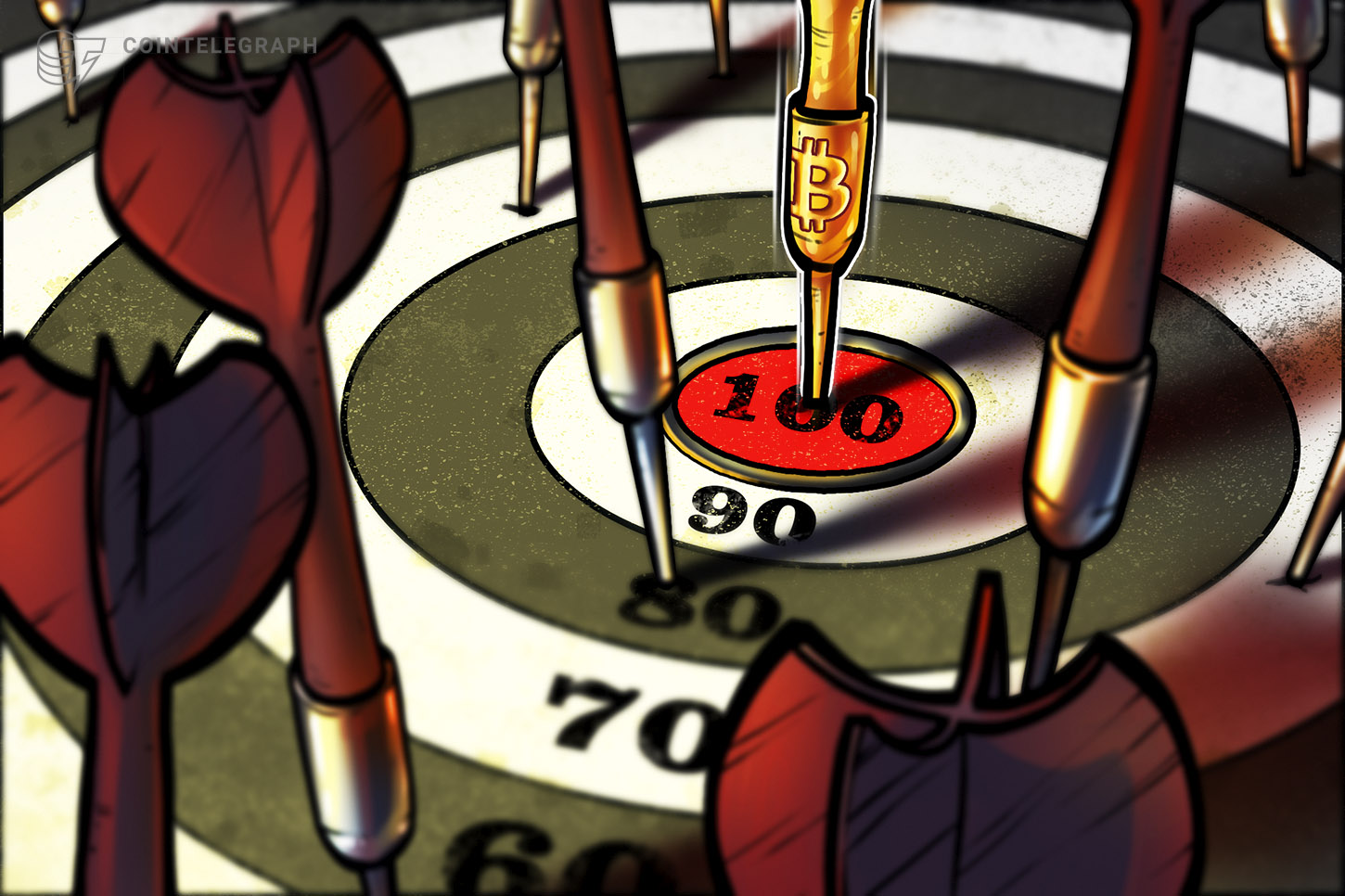
Over the past week, Bitcoin [BTC] challenged the $74k resistance but failed to break above it. Bears then forced an 8.9% retracement from the local highs within four days.

This short-term volatility triggered sharp moves across several medium-cap altcoins.

Weekly winners

OKB rallies beyond $100 after investment announcement

Intercontinental Exchange, the parent company of the New York Stock Exchange, acquired a minority stake in the OKX exchange. The deal saw the exchange receive a $25 billion valuation, although the exact investment figures were unknown.

This saw the OKB token prices rally from $77 to $120 within a day.

Additionally, the rally originated from around the $79 level, a key long-term support.

Long-term investors would want to see the $120 level, which has served as resistance since mid-November 2025, to be flipped to support before buying.

Pi Network token shrugs off bull trap fears

AMBCrypto had reported that the PI long-term trend was bearish. The $0.207 level was a key swing level, with the $0.215 also being a supply zone from December 2025 for buyers to beware of.

The triangle pattern saw a firm bullish breakout, breaching both resistances and flipping the long-term bias bullishly.

Traders and investors can wait for a retracement to look for buying opportunities.

Other notable winners

Memecore [M] was able to challenge the mid-range resistance at $1.57, noting a 9.2% rally compared to last Sunday’s low.

However, in recent hours of trading, it was forced to fall to the $1.5 level yet again. Traders could keep an eye on this memecoin and its mid-range resistance.

Mantle [MNT] was another altcoin to keep an eye on.

It has posted a 5.73% gain over the past week and has breached the local swing point at $0.68.

Weekly losers

Cardano faces renewed “ghost chain” criticism

Despite being a large-cap crypto asset, the Cardano [ADA] blockchain has faced criticism for low onchain activity for years.

This viewpoint surfaced once again as popular analyst Ali Martinez drew attention to the chain’s low activity and slow pace of development.

The analyst also observed that the chain’s Total Value Locked has never exceeded $1 billion.

For reference, industry leader Ethereum [ETH] boasted a $54.67 billion TVL at the time of writing.

On the price charts, ADA has shed 9.61% from last Sunday’s open at $0.281. The stiff resistance at $0.305 was not overcome, but a test of the $0.246 support zone could be interesting.

WLFI team dumps $1.74 million worth of tokens

World Liberty Financial [WLFI] has fallen 14% since last Sunday’s open, i.e., on the 8th of March.

AMBCrypto reported that the token could fall by 25% to $0.07 if the $0.097 support is not defended. At the time of writing, WLFI was trading at $0.0968.

Other notable losers

ZCash [ZEC] was down 10.4% from last week. It has made the losers’ list twice in a row now. The $187 support level was a key long-term retracement level that bulls will likely fight to defend.

Solana [SOL] tested the $90 supply zone but was unable to break through. Its onchain metrics signaled seller pressure was imminent, which could lead to further drawdown.

More losses to accompany the start of the next week

Bitcoin was falling toward the $63k-$65k demand zone, where the previous bullish impulse move originated.

The retracement and a subsequent bullish reaction could give certain altcoins the push to climb higher next week.

Volatility is expected to continue, and traders should wait for BTC to set the tone for next week’s trends.


Final Summary

  • OKB and Pi Network tokens grabbed the limelight with a strong bullish showing over the past week.
  • Cardano and Solana were popular large-cap coins that were unable to scale local supply zones recently.

Disclaimer: The information presented does not constitute financial, investment, trading, or other types of advice and is solely the writer’s opinion.


Criptomoedas em alta

Perguntas relacionadas

QWhat was the key factor behind OKB's significant price rally over the past week?

AThe key factor was the announcement that Intercontinental Exchange, the parent company of the New York Stock Exchange, acquired a minority stake in the OKX exchange, which received a $25 billion valuation.

QAccording to the article, what is a key level that long-term OKB investors should watch before buying?

ALong-term investors should wait to see if the $120 level, which has served as resistance since mid-November 2025, is flipped to support before buying.

QWhy did Cardano (ADA) face renewed criticism and what was one specific metric mentioned to support this criticism?

ACardano faced renewed 'ghost chain' criticism for its low onchain activity. A specific metric mentioned was that its Total Value Locked (TVL) has never exceeded $1 billion, compared to Ethereum's $54.67 billion TVL.

QWhat was the primary reason given for World Liberty Financial's (WLFI) 14% price decline?

AThe primary reason was that the WLFI team dumped $1.74 million worth of tokens.

QWhat does the article suggest traders should wait for to set the tone for the market trends in the upcoming week?

AThe article suggests traders should wait for Bitcoin (BTC) to set the tone for next week's trends, specifically watching for its retracement to the $63k-$65k demand zone and its subsequent bullish reaction.

Leituras Relacionadas

The End of APK Freedom? No, Google's Restrictions Will Not Affect Everyone or Everywhere

Google is introducing new rules for installing third-party APK files, but the restrictions will only affect some users and won't completely block app installation from unofficial sources. The company is implementing an "Advanced Flow" mechanism to combat fraud. However, its application is limited geographically, technically, and in timing. The new requirements will first take effect in Brazil, Indonesia, Singapore, and Thailand starting September 30, 2026, with a global rollout planned for 2027. The Advanced Flow system only works on Google-certified devices with pre-installed Google Mobile Services (GMS). Chinese versions of Android, which legally lack full GMS, are unaffected. Even on global devices with GMS, custom ROMs and ADB installations remain unrestricted. For affected users, a specific protocol is established. This involves enabling Developer Options, confirming no external pressure, rebooting, and then waiting a 24-hour protection period before a biometric/PIN confirmation grants installation permission for 7 days or indefinitely. Google states this creates friction for mass users while preserving technical capabilities for informed choice. A data-driven perspective notes that Advanced Flow is delivered via Google Play Services, not the core Android OS, meaning Google could modify or disable it remotely. Critics, including F-Droid and the EFF, warn this could follow a historical pattern where initial "trusted installer" mechanisms gradually expanded platform control over user choice. The long-term impact will depend on practical application beyond the stated policy.

cryptonews.ruHá 2m

The End of APK Freedom? No, Google's Restrictions Will Not Affect Everyone or Everywhere

cryptonews.ruHá 2m

AI Can No Longer Save Big Tech Stocks

Recently, after major Chinese internet companies disclosed their quarterly financial reports, an interesting phenomenon emerged: the stock prices of Tencent, Alibaba, Baidu, Kuaishou, and NetEase all fell. The sole exception was Xiaomi. The decline occurred despite these companies actively investing in and developing AI technologies. The consensus around AI's importance is stronger than ever, yet this very consensus is making it harder for AI alone to generate stock market premiums. The market's focus has shifted. Two or three years ago, simply announcing a large model or an "All in AI" strategy could boost valuations, as investors were judging who would secure a place in the AI era. Now, with nearly all major players having entered the AI arena, the key question has become: **What tangible change has AI brought to your company?** This question reveals six distinct challenges: * **Tencent** faces a capital allocation dilemma. Its core businesses (gaming, advertising) are highly profitable, and AI is enhancing their efficiency. However, massive AI investments (capital expenditure surged 176% YoY) are consuming this cash flow, altering the company's traditionally strong capital return model. The core question is: how much more needs to be spent? * **Alibaba** is attempting to rebuild part of its empire around AI, with a clear chain involving its Qianwen model, Alibaba Cloud, and AI infrastructure. While AI-related revenue is growing robustly, it has also triggered a massive reinvestment cycle (capex up 75% YoY), raising concerns that the company's renewed focus on profitability and shareholder returns might be undermined. * **Baidu** confronts a brutal race against time. Its core AI business is growing (up 25% YoY), but its legacy online marketing revenue is declining sharply (down 19%). The critical issue is whether its new AI-driven businesses can grow faster than its old search advertising engine shrinks. AI is not just an add-on but a necessary replacement. * **Kuaishou** presents a paradox. Its AI product, Kling, is a standout success, with revenue exceeding 850 million RMB (growth over 200% YoY), proving its commercial viability. However, this stellar performance is not yet large enough to offset slow overall group growth (revenue up only 1.4%), highlighting the gap between a "good" new business and one "big enough to change the company." * **Xiaomi's** primary growth engine is currently its electric vehicles, not AI. For Xiaomi, AI acts more as a foundational layer integrating its ecosystem of phones, cars, appliances, and robots. Its bet is that controlling numerous hardware endpoints could provide a significant future AI advantage, though this multi-front strategy (phones, cars, chips, AI) is capital-intensive. * **NetEase** offers a different perspective. It extensively uses AI in game development to boost efficiency and content creation but hasn't rushed to rebrand itself as an "AI company." Its core value still stems from gameplay, content, and operations. This suggests that not every internet company's worth needs to be redefined by AI; sometimes, AI is best as a powerful supporting tool. In conclusion, AI has not leveled the playing field. Instead, it acts as a **magnifying glass**, amplifying each company's existing strengths, weaknesses, cash flows, and historical burdens. With models and computing power becoming standard, the market is returning to fundamental questions: Is the core business healthy? Can AI be translated into revenue, profit, or efficiency gains? And what is the cost? The strong consensus on AI has made the "AI premium" elusive, leading to six different corporate destinies within the same AI era.

marsbitHá 5m

AI Can No Longer Save Big Tech Stocks

marsbitHá 5m

Trading

Spot

Artigos em Destaque

Como comprar WLFI

Bem-vindo à HTX.com!Tornámos a compra de Official World Liberty Financial (WLFI) simples e conveniente.Segue o nosso guia passo a passo para iniciar a tua jornada no mundo das criptos.Passo 1: cria a tua conta HTXUtiliza o teu e-mail ou número de telefone para te inscreveres numa conta gratuita na HTX.Desfruta de um processo de inscrição sem complicações e desbloqueia todas as funcionalidades.Obter a minha contaPasso 2: vai para Comprar Cripto e escolhe o teu método de pagamentoCartão de crédito/débito: usa o teu visa ou mastercard para comprar Official World Liberty Financial (WLFI) instantaneamente.Saldo: usa os fundos da tua conta HTX para transacionar sem problemas.Terceiros: adicionamos métodos de pagamento populares, como Google Pay e Apple Pay, para aumentar a conveniência.P2P: transaciona diretamente com outros utilizadores na HTX.Mercado de balcão (OTC): oferecemos serviços personalizados e taxas de câmbio competitivas para os traders.Passo 3: armazena teu Official World Liberty Financial (WLFI)Depois de comprar o teu Official World Liberty Financial (WLFI), armazena-o na tua conta HTX.Alternativamente, podes enviá-lo para outro lugar através de transferência blockchain ou usá-lo para transacionar outras criptomoedas.Passo 4: transaciona Official World Liberty Financial (WLFI)Transaciona facilmente Official World Liberty Financial (WLFI) no mercado à vista da HTX.Acede simplesmente à tua conta, seleciona o teu par de trading, executa as tuas transações e monitoriza em tempo real.Oferecemos uma experiência de fácil utilização tanto para principiantes como para traders experientes.

613 Visualizações TotaisPublicado em {updateTime}Atualizado em 2026.06.02

Como comprar WLFI

Discussões

Bem-vindo à Comunidade HTX. Aqui, pode manter-se informado sobre os mais recentes desenvolvimentos da plataforma e obter acesso a análises profissionais de mercado. As opiniões dos utilizadores sobre o preço de WLFI (WLFI) são apresentadas abaixo.

活动图片