Crypto Market Macro Report: Liquidity Repricing Amid Fed Rate Cuts, BOJ Rate Hikes, and the Christmas Holiday

marsbitPublicado em 2025-12-18Última atualização em 2025-12-18

Resumo

The Federal Reserve's anticipated 25-basis-point rate cut on December 11 did not signal a shift toward monetary easing. Instead, the Fed's hawkish forward guidance—indicating fewer future cuts and internal dissent among policymakers—suggested constrained future policy flexibility. This led to a "sell the news" reaction, with risk assets like U.S. equities and cryptocurrencies declining as markets repriced expectations for liquidity. Simultaneously, the Bank of Japan is expected to raise rates to 0.75% on December 19, a move that threatens the long-standing yen carry trade. Higher Japanese rates could trigger unwinding of global leveraged positions, causing broad-based selling in risk assets, including crypto, due to increased funding costs and currency risk. These events coincide with the Christmas holiday period, when reduced liquidity amplifies market volatility. The convergence of tighter Fed expectations, BOJ tightening, and seasonal illiquidity creates a fragile environment for crypto, prompting a recalibration of risk rather than a trend reversal. Investors should prioritize risk management amid heightened macro uncertainty.

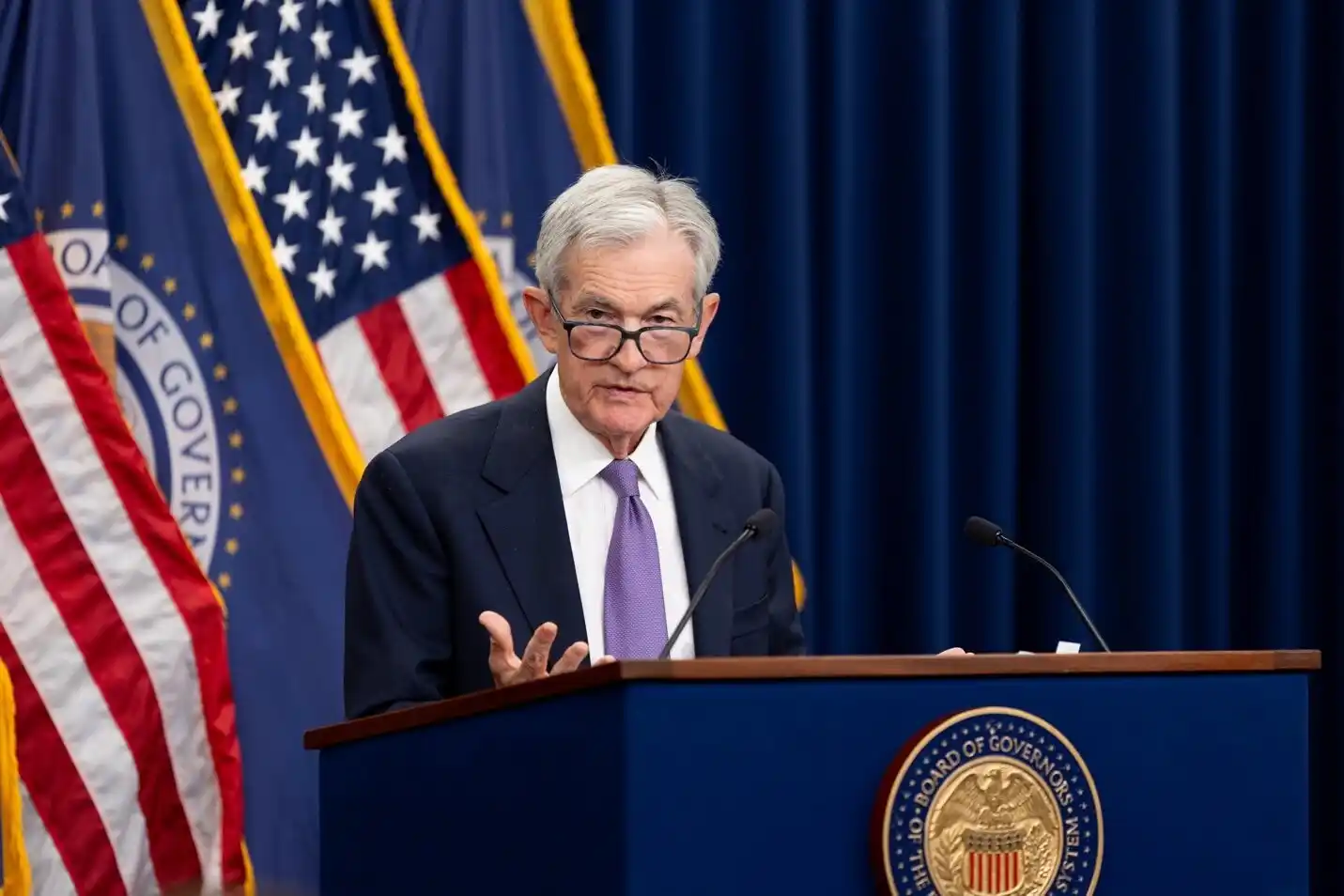
On December 11, the Federal Reserve announced a 25 basis point interest rate cut as expected. On the surface, this decision was highly consistent with market expectations and was even interpreted as a signal of a shift towards monetary easing. However, the market reaction quickly turned cold, with U.S. stocks and crypto assets falling simultaneously, and risk appetite contracting significantly. This seemingly counterintuitive trend actually reveals a key fact in the current macro environment: a rate cut itself does not equate to liquidity easing. During this super central bank week, the message conveyed by the Fed was not "re-flooding the market with liquidity" but rather a clear constraint on future policy space. From a policy perspective, changes in the dot plot had a substantial impact on market expectations. The latest forecast indicates that the Fed may only cut rates once in 2026, significantly lower than the previously priced path of 2 to 3 cuts. More importantly, in the voting structure of this meeting, 3 out of 12 voting members explicitly opposed the rate cut, with 2 advocating for keeping rates unchanged. This divergence is not marginal noise but clearly indicates that the Fed's internal vigilance toward inflation risks is far higher than the market previously understood. In other words, the current rate cut is not the start of an easing cycle but rather a technical adjustment to prevent financial conditions from tightening excessively in a high-interest-rate environment.
For this reason, what the market truly anticipates is not a "one-time rate cut" but a clear, sustainable, and forward-looking easing path. The pricing logic of risk assets relies not on the absolute level of current interest rates but on the discounting of future liquidity conditions. When investors realize that this rate cut does not open new easing space but may instead lock in future policy flexibility prematurely, the original optimistic expectations are quickly revised. The signal released by the Fed is akin to a "painkiller," temporarily alleviating tension but not changing the underlying issue. At the same time, the restrained stance revealed in the forward guidance forces the market to reassess future risk premiums. In this context, the rate cut has instead become a classic case of "buy the rumor, sell the news." Long positions built around easing expectations began to unwind, with high-valuation assets bearing the brunt. Growth and high-beta sectors in U.S. stocks were the first to come under pressure, and the crypto market was no exception. The pullback in Bitcoin and other major crypto assets was not due to a single negative factor but rather a passive reaction to the reality that "liquidity will not return quickly." When futures basis converges, marginal ETF buying weakens, and overall risk appetite declines, prices naturally gravitate toward a more conservative equilibrium level. A deeper change lies in the shifting risk structure of the U.S. economy. A growing body of research suggests that the core risk facing the U.S. economy in 2026 may no longer be a traditional cyclical recession but rather a demand-side contraction directly triggered by a significant correction in asset prices. After the pandemic, the U.S. saw an "excess retirement" group of approximately 2.5 million people. The wealth of this group is highly dependent on the performance of the stock market and risk assets, and their consumption behavior is highly correlated with asset prices. If the stock market or other risk assets experience a sustained decline, the consumption capacity of this group will contract simultaneously, creating a negative feedback loop for the overall economy. In this economic structure, the Fed's policy options are further constrained. On one hand, stubborn inflationary pressures persist, and premature or excessive easing could reignite price increases. On the other hand, if financial conditions continue to tighten and asset prices experience a systemic correction, it could quickly transmit to the real economy through the wealth effect, triggering a downturn in demand. The Fed is thus caught in an extremely complex dilemma: continuing to aggressively suppress inflation could trigger a collapse in asset prices, while tolerating higher inflation levels could help maintain financial stability and asset prices.

A growing number of market participants are beginning to accept the judgment that, in future policy games, the Fed is more likely to choose to "protect the market" rather than "protect inflation" at critical moments. This means that the long-term inflation center may shift upward, but short-term liquidity releases will be more cautious and intermittent rather than forming a sustained wave of easing. For risk assets, this is an unfriendly environment—the pace of interest rate declines is insufficient to support valuations, while liquidity uncertainty persists. It is against this macro backdrop that the impact of this super central bank week extends far beyond a single 25 basis point rate cut. It marks a further correction in market expectations of the "unlimited liquidity era" and sets the stage for the subsequent Bank of Japan rate hike and year-end liquidity contraction. For the crypto market, this is not the end of the trend but a critical phase where risks must be recalibrated and macro constraints re-understood.

II. Bank of Japan Rate Hike: The True "Liquidity Bomb Disposer"

If the Fed's role during the super central bank week was to disappoint and correct market expectations for "future liquidity," then the action the Bank of Japan is set to take on December 19 is closer to a "bomb disposal operation" directly affecting the底层 structure of global finance. The market's probability expectation for the BOJ to raise rates by 25 basis points, pushing the policy rate from 0.50% to 0.75%, is now close to 90%. This seemingly modest adjustment would mean Japan is raising its policy rate to its highest level in three decades. The key issue is not the absolute value of the rate itself but the chain reaction this change could trigger in the global capital flow logic. For a long time, Japan has been the most important and stable source of low-cost financing in the global financial system. Once this premise is broken, its impact will far exceed the Japanese domestic market.
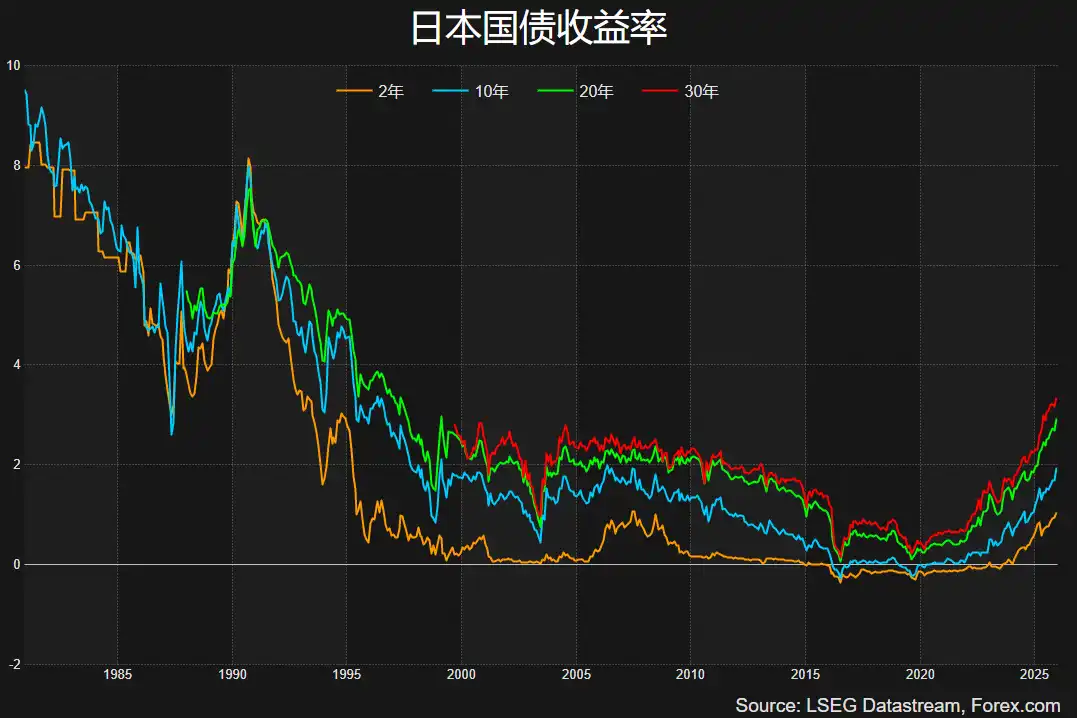
Over the past decade-plus, global capital markets have gradually formed an almost default structural consensus: the yen is a "permanent low-cost currency." Supported by long-term ultra-loose policies, institutional investors could borrow yen at near-zero or even negative costs, convert it into U.S. dollars or other high-yielding currencies, and allocate to U.S. stocks, crypto assets, emerging market bonds, and various risk assets. This model evolved from short-term arbitrage into a long-term capital structure worth trillions of dollars, deeply embedded in the global asset pricing system. Because it lasted so long and was so stable, yen carry trade gradually shifted from a "strategy" to a "background assumption," rarely priced by the market as a core risk variable. However, once the BOJ clearly enters a rate-hiking cycle, this assumption is forced to be reassessed. The impact of a rate hike is not limited to a marginal increase in financing costs; more importantly, it changes market expectations regarding the long-term direction of the yen exchange rate. When policy rates rise, and inflation and wage structures change, the yen is no longer just a passively depreciating funding currency but may transform into an asset with appreciation potential. Under such expectations, the logic of carry trade is fundamentally disrupted. Capital flows originally centered on "interest rate differentials" now incorporate considerations of "exchange rate risk," rapidly deteriorating the risk-reward ratio for capital.

In this situation, the choices facing carry trade capital are not complex but highly destructive: either close positions early to reduce exposure to yen liabilities, or passively endure the double squeeze of exchange rates and interest rates. For large-scale, highly leveraged capital, the former is often the only viable path. The specific method of closing positions is also extremely direct—selling the held risk assets, converting back to yen, and using the proceeds to repay financing. This process does not distinguish between asset quality, fundamentals, or long-term prospects but has the sole goal of reducing overall exposure, thus exhibiting clear "indiscriminate selling" characteristics. U.S. stocks, crypto assets, and emerging market assets often come under pressure simultaneously, forming highly correlated declines. History has repeatedly verified the existence of this mechanism. In August 2025, the BOJ unexpectedly raised its policy rate to 0.25%, a move not traditionally considered aggressive, yet it triggered a violent reaction in global markets. Bitcoin fell 18% in a single day, and multiple risk assets came under simultaneous pressure, taking nearly three weeks for the market to gradually complete the repair. The reason that impact was so severe was precisely because the rate hike came suddenly, forcing carry trade capital to deleverage rapidly without preparation. The upcoming December 19 meeting is different from that "black swan" event; it is more like a "gray rhino" whose tracks have been revealed in advance. The market already has some expectation of a rate hike, but expectation itself does not mean the risk has been fully priced in, especially when the hike is larger and叠加 with other macro uncertainties.

More notably, the macro environment in which this BOJ rate hike is occurring is more complex than in the past. Policies of major global central banks are diverging: the Fed is cutting rates nominally but tightening future easing space in terms of expectations; the ECB and the Bank of England are relatively cautious; while the BOJ is becoming one of the few major economies explicitly tightening policy. This policy divergence will exacerbate the volatility of cross-currency capital flows, making the unwinding of carry trades not a one-time event but potentially an evolving process that occurs in stages and repeats. For crypto markets, which are highly dependent on global liquidity, the persistence of this uncertainty means the center of price volatility may remain at a higher level for some time. Therefore, the BOJ's rate hike on December 19 is not merely a regional monetary policy adjustment but a potential trigger for a rebalancing of the global capital structure. What it "disposes of" is not the risk of a single market but the long-accumulated assumption of low-cost leverage embedded in the global financial system. In this process, crypto assets often bear the impact first due to their high liquidity and high-beta attributes. This impact does not necessarily mean a reversal of the long-term trend but is almost certain to amplify volatility, depress risk appetite in the short term, and force the market to re-examine the capital logic taken for granted over many years.

III. Christmas Holiday Market: The Underestimated "Liquidity Amplifier"

Starting December 23, major North American institutional investors gradually enter the Christmas holiday mode, and global financial markets随之 enter the most typical and最容易 underestimated period of liquidity contraction of the year. Unlike macro data or central bank decisions, the holiday does not change any fundamental variables but significantly weakens the market's "absorption capacity" for shocks in a short time. For markets like crypto assets, which highly rely on continuous trading and market maker depth, this structural decline in liquidity is often more damaging than any single negative event itself. In a normal trading environment, the market has sufficient counterparties and risk-bearing capacity. A large number of market makers, arbitrage funds, and institutional investors continuously provide two-way liquidity, allowing selling pressure to be dispersed, delayed, or even hedged.

More alarmingly, the Christmas holiday does not occur in isolation but恰好 overlaps with the current集中 release of a series of macro uncertainties. The "dovish cut but hawkish stance" signal released by the Fed during the super central bank week has significantly tightened market expectations for future liquidity; meanwhile, the upcoming BOJ rate hike decision on December 19 is shaking the long-standing capital structure of global yen carry trade. Under normal circumstances, these two types of macro shocks can be gradually digested by the market over a longer period, with prices completing repricing through repeated博弈. But when they恰好 occur during the Christmas holiday, the window of weakest liquidity, their impact is no longer linear but exhibits a clear amplification effect. The essence of this amplification effect is not panic itself but a change in market mechanisms. Insufficient liquidity means the price discovery process is compressed; the market cannot gradually absorb information through continuous trading but is forced to complete adjustments through more drastic price jumps. For the crypto market, a decline in such an environment often does not require new major negatives; merely the集中 release of existing uncertainty is enough to trigger a chain reaction: price drops trigger passive liquidation of leveraged positions, passive liquidation further increases selling pressure, selling pressure is rapidly amplified in shallow order books, ultimately forming剧烈 volatility within a short time. Historical data shows this pattern is not an exception. Whether in Bitcoin's early cycles or in the more mature stages in recent years, the period from late December to early January has always been a time when crypto market volatility is significantly higher than the annual average. Even in years with relatively stable macro environments, holiday liquidity declines are often accompanied by rapid price surges or plunges; in years with higher macro uncertainty, this time window is more likely to become an "accelerator" for trend行情. In other words, the holiday does not determine the direction but greatly amplifies the price performance once the direction is confirmed.

IV. Conclusion

In summary, the current pullback in the crypto market is closer to a阶段性 repricing triggered by changes in the global liquidity path, rather than a simple reversal of a trend行情. The Fed's rate cut did not provide new valuation support for risk assets; on the contrary, its constraints on future easing space in the forward guidance have led the market to gradually accept a new environment of "falling interest rates but insufficient liquidity." Against this backdrop, high-valuation and high-leverage assets naturally face pressure, and the adjustment in the crypto market has a clear macro logic foundation.

At the same time, the BOJ's rate hike constitutes the most structurally significant variable in this adjustment. The yen's long-standing role as the core funding currency for global carry trade means that once its low-cost assumption is broken, it triggers not just局部 capital flows but a systemic contraction of global risk asset exposure. Historical experience shows that such adjustments are often phased and repetitive; their impact is not fully released in a single trading day but rather completes the deleveraging process through sustained volatility. Crypto assets, due to their high liquidity and high-beta attributes, often reflect this pressure first, but this does not necessarily mean their long-term logic is negated.

For investors, the core challenge at this stage is not judging the direction but recognizing the environmental changes. When policy uncertainty and liquidity contraction coexist, the importance of risk management significantly outweighs trend judgment. Truly valuable market signals often appear after macro variables gradually land and arbitrage funds complete阶段性 adjustments. For the crypto market, the current period更像是一个过渡期 for recalibrating risks and rebuilding expectations, rather than the final chapter of the行情. The medium-term direction of future prices will depend on the actual recovery of global liquidity after the holiday ends and whether the policy divergence among major central banks deepens further.


Criptomoedas em alta

Perguntas relacionadas

QWhy did the market react negatively to the Fed's rate cut despite it being in line with expectations?

AThe market reacted negatively because the Fed's forward guidance, including the dot plot indicating only one rate cut in 2026 and internal dissent among voting members, signaled constrained future policy space rather than the start of a sustained easing cycle. This led to a reassessment of risk premiums and a 'sell the news' event where optimistic positions were unwound.

QWhat is the core risk facing the U.S. economy in 2026 according to the article, and how does it affect the Fed's policy dilemma?

AThe core risk is a demand-side contraction triggered directly by a significant correction in asset prices, not a traditional cyclical recession. The Fed is trapped in a dilemma: fighting inflation aggressively could cause an asset price collapse, while tolerating higher inflation could help maintain financial stability and asset prices, likely leading them to prioritize 'protecting the market' over 'controlling inflation'.

QHow does the Bank of Japan's expected rate hike act as a 'liquidity bomb disposal' for global markets?

AThe BoJ's rate hike challenges the long-standing assumption of the yen being a permanent low-cost funding currency for global carry trades. This forces a systemic unwinding of these trades, where investors sell risk assets (like crypto and stocks) to buy back yen and repay loans, causing correlated, indiscriminate selling pressure across global markets.

QWhy is the Christmas holiday period described as a 'liquidity amplifier' for market volatility?

AThe holiday period leads to a structural decline in liquidity as major institutional investors in North America reduce activity. This thin market depth weakens the ability to absorb shocks, causing price movements to be more abrupt and exaggerated, especially when macro uncertainties are high, amplifying any existing selling pressure.

QWhat is the overall conclusion about the current crypto market correction presented in the article?

AThe correction is a phase of repricing triggered by changes in the global liquidity path, not a simple trend reversal. It is driven by the Fed's constrained easing outlook and structural impact of the BoJ's policy shift. The market is in a transitional period recalibrating risk, with future direction depending on post-holiday liquidity recovery and further central bank policy divergence.

Leituras Relacionadas

After Three Consecutive Quarters of Decline, Can the Crypto Market Find a Window for Stabilization in Q3?

The cryptocurrency market has just concluded its worst-performing quarter since 2022, with total capitalization dropping 12.6% to $2.1 trillion. All core metrics indicate capital is leaving the sector, not just rotating within it. Bitcoin fell 14.2% and Ethereum dropped 25.4% in Q2, breaking their previous correlation with US tech stocks. A key driver is the reversal in US spot Bitcoin ETF flows, which saw a net outflow of approximately $4.67 billion in Q2, including a record monthly outflow near $4.5 billion in June. While recent data suggests long-term holders are accumulating again, sustained ETF outflows mean continued selling pressure. Market focus is now singularly on the Federal Reserve. The upcoming July FOMC meeting is seen as the most critical event for Q3. A dovish signal could support Bitcoin reclaiming a $68,000-$84,000 range, while a hawkish stance might establish a new trading band around $50,000-$56,000. Additionally, regulatory uncertainty persists, with the progress of the crucial *CLARITY Act* stalling in the Senate, reducing its perceived 2026 passage probability to 40-45%. Despite the broad downturn, a few sectors showed growth. Prediction markets saw nominal volume surge 48.7% year-over-year to $113.8 billion, and tokenized collectibles transaction volume rose 143% quarterly to $1.4 billion. The Real-World Asset (RWA) tokenization sector also continued steady growth, now representing ~$28.1 billion in on-chain value. The market's foundation for an extreme crash appears limited, with Bitcoin price hovering near its 200-week moving average. However, the trading paradigm has shifted from narrative-driven speculation to decisions based on price action, policy developments, and interest rate expectations, making a broad sentiment-driven rally unlikely in the near term.

marsbitHá 2h

After Three Consecutive Quarters of Decline, Can the Crypto Market Find a Window for Stabilization in Q3?

marsbitHá 2h

BIT Trading Moment: BTC Still Suppressed by Weekly 200 EMA, Rejection May Restart Decline; Storage and Semiconductors that Surged Last Night Begin Falling in Evening Trading

**Crypto & Stock Market Wrap: Bitcoin Tests Resistance, Stocks Retreat After AI Surge** Bitcoin consolidates around $66,000, facing key resistance near $68,000—an area seen as a major psychological and technical hurdle where previous rallies have failed. Analysts note the cryptocurrency is caught between its 200-week moving average (~$63,333) and 200-week EMA (~$68,328). A clear break above $68k is needed to signal a stronger bullish trend, while a rejection could lead to a retest of $63k support. Market sentiment remains cautious, with low futures open interest pointing to a low-liquidity rebound rather than a full bull market. Bitcoin spot ETFs saw another $203 million inflow. US stock futures pointed lower after a strong Tuesday session led by a massive rebound in semiconductors and memory stocks. The rally was fueled by renewed optimism about AI-driven hardware demand, with Micron, SanDisk, and SK Hynix surging. However, those gains reversed in pre-market trading. Super Micro Computer (SMCI) soared over 20% after hours on strong guidance and a record backlog. Other standouts included Rocket Lab and nuclear energy plays Oklo and X-Energy. Rising oil prices (Brent above $91) and climbing Treasury yields (10-year near 4.64%), however, are reigniting inflation concerns and acting as a headwind for equities. In Asia, markets were mixed. South Korea's KOSPI pared early gains to close slightly higher as semiconductor stocks like SK Hynix gave back initial surges. Japan's Nikkei edged lower as the yen hit a fresh 38-year low against the dollar, raising fears of potential market intervention. Key events to watch include the Samsung Galaxy launch, AMD's AI event, and a slew of major tech earnings from Alphabet, Tesla, and IBM after the close on Wednesday, followed by the ECB meeting and Intel's earnings on Thursday.

marsbitHá 3h

BIT Trading Moment: BTC Still Suppressed by Weekly 200 EMA, Rejection May Restart Decline; Storage and Semiconductors that Surged Last Night Begin Falling in Evening Trading

marsbitHá 3h

Former CFTC Chairman, Circle President Tarbert: Preaching Long-Termism While Cashing Out $30 Million Himself

Former CFTC Chairman and Circle President Heath Tarbert has consistently advocated for a long-term vision in public, urging patience from investors as Circle’s stock price has fallen significantly from its peak. However, it has been revealed that since Circle’s IPO, Tarbert has continuously sold his CRCL shares through pre-arranged trading plans, cashing out approximately $30 million, without making any public market purchases. This contrast between his public messaging and personal actions has drawn criticism. Tarbert joined Circle in July 2023 as Chief Legal Officer, leveraging his regulatory experience to help guide the company through its IPO and expansion. Despite promoting stablecoins as long-term infrastructure, he established a 10b5-1 trading plan just before Circle went public, leading to substantial stock sales over the following year. In March 2026, he initiated another plan to sell more shares. His career trajectory highlights a pattern of moving between high-level regulatory roles and influential positions in the financial sector. After resigning as CFTC Chairman in early 2021, he joined Citadel Securities as Chief Legal Officer just 27 days later, during a period of intense regulatory scrutiny for the firm. He later joined Circle, aiding its efforts to navigate regulatory challenges for its public listing. While Tarbert's expertise in policy and compliance is valuable to companies like Circle, his actions—advocating long-term confidence while personally divesting—raise questions about the alignment between his public statements and his private financial decisions, leaving investors who followed his advice to bear the market risks.

marsbitHá 3h

Former CFTC Chairman, Circle President Tarbert: Preaching Long-Termism While Cashing Out $30 Million Himself

marsbitHá 3h

Gate Research Institute: The 'Wall Street-ization' Wave of Crypto Financial Products – Competition or Integration?

The article titled "Gate Research Institute: Are Crypto Financial Products Sparking a 'Wall Street' Wave—Competition or Convergence?" explores the evolving relationship between the crypto ecosystem and traditional finance (TradFi). The piece begins by reflecting on Bitcoin's original 2009 vision of decentralization, disintermediation, and moving away from banks. It then contrasts this with the 2024 landscape, where key crypto assets like Bitcoin are increasingly held through Wall Street products like ETFs issued by giants like BlackRock. The article questions whether this signifies that TradFi is systematically taking over the rights to issue, price, custody, and distribute crypto financial assets. The core argument is that this is not a zero-sum takeover but rather a bidirectional convergence where each side addresses the other's weaknesses. Crypto offers 24/7 global markets, programmable settlement, and open access but lacks compliant channels, institutional-grade custody, deep fiat liquidity, and mainstream distribution. TradFi possesses these but is constrained by legacy systems, limited operating hours, and slow settlement. Two primary convergence paths are highlighted: * **Path A (CEX to TradFi):** Exemplified by Gate, which has progressed from offering tokenized stocks and CFDs to providing direct, real stock trading (US, Hong Kong, South Korea) within its platform, using USDT. * **Path B (TradFi to Crypto):** Exemplified by Robinhood, which has integrated crypto trading, acquired exchanges like Bitstamp, and is moving traditional assets like stocks onto the blockchain via tokenization and its own Layer 2. Both paths are ultimately competing to become the next-generation, unified financial account—a "super account" where users can seamlessly trade cryptocurrencies, stocks, ETFs, RWA (Real World Assets), and tokenized treasury products in one interface. The growth of RWA and tokenized treasuries (e.g., BlackRock's BUIDL) is presented as the asset-layer fusion, providing stable, yield-bearing assets on-chain and acting as a bridge between the two worlds. In conclusion, the "Wall Street-ization" of crypto is framed as a mutual transformation. Decentralized ideals persist in the protocol layer, while at the application layer, a more efficient, global, and accessible unified capital market is emerging from this convergence. The future competition lies not between crypto exchanges and stockbrokers, but between platforms vying to offer the most comprehensive asset coverage, liquidity, and user experience within a single account.

marsbitHá 3h

Gate Research Institute: The 'Wall Street-ization' Wave of Crypto Financial Products – Competition or Integration?

marsbitHá 3h

Trading

Spot

Artigos em Destaque

Como comprar O

Bem-vindo à HTX.com!Tornámos a compra de O1 exchange (O) simples e conveniente.Segue o nosso guia passo a passo para iniciar a tua jornada no mundo das criptos.Passo 1: cria a tua conta HTXUtiliza o teu e-mail ou número de telefone para te inscreveres numa conta gratuita na HTX.Desfruta de um processo de inscrição sem complicações e desbloqueia todas as funcionalidades.Obter a minha contaPasso 2: vai para Comprar Cripto e escolhe o teu método de pagamentoCartão de crédito/débito: usa o teu visa ou mastercard para comprar O1 exchange (O) instantaneamente.Saldo: usa os fundos da tua conta HTX para transacionar sem problemas.Terceiros: adicionamos métodos de pagamento populares, como Google Pay e Apple Pay, para aumentar a conveniência.P2P: transaciona diretamente com outros utilizadores na HTX.Mercado de balcão (OTC): oferecemos serviços personalizados e taxas de câmbio competitivas para os traders.Passo 3: armazena teu O1 exchange (O)Depois de comprar o teu O1 exchange (O), armazena-o na tua conta HTX.Alternativamente, podes enviá-lo para outro lugar através de transferência blockchain ou usá-lo para transacionar outras criptomoedas.Passo 4: transaciona O1 exchange (O)Transaciona facilmente O1 exchange (O) no mercado à vista da HTX.Acede simplesmente à tua conta, seleciona o teu par de trading, executa as tuas transações e monitoriza em tempo real.Oferecemos uma experiência de fácil utilização tanto para principiantes como para traders experientes.

167 Visualizações TotaisPublicado em {updateTime}Atualizado em 2026.06.29

Como comprar O

Como comprar PROS

Bem-vindo à HTX.com!Tornámos a compra de Pharos (PROS) simples e conveniente.Segue o nosso guia passo a passo para iniciar a tua jornada no mundo das criptos.Passo 1: cria a tua conta HTXUtiliza o teu e-mail ou número de telefone para te inscreveres numa conta gratuita na HTX.Desfruta de um processo de inscrição sem complicações e desbloqueia todas as funcionalidades.Obter a minha contaPasso 2: vai para Comprar Cripto e escolhe o teu método de pagamentoCartão de crédito/débito: usa o teu visa ou mastercard para comprar Pharos (PROS) instantaneamente.Saldo: usa os fundos da tua conta HTX para transacionar sem problemas.Terceiros: adicionamos métodos de pagamento populares, como Google Pay e Apple Pay, para aumentar a conveniência.P2P: transaciona diretamente com outros utilizadores na HTX.Mercado de balcão (OTC): oferecemos serviços personalizados e taxas de câmbio competitivas para os traders.Passo 3: armazena teu Pharos (PROS)Depois de comprar o teu Pharos (PROS), armazena-o na tua conta HTX.Alternativamente, podes enviá-lo para outro lugar através de transferência blockchain ou usá-lo para transacionar outras criptomoedas.Passo 4: transaciona Pharos (PROS)Transaciona facilmente Pharos (PROS) no mercado à vista da HTX.Acede simplesmente à tua conta, seleciona o teu par de trading, executa as tuas transações e monitoriza em tempo real.Oferecemos uma experiência de fácil utilização tanto para principiantes como para traders experientes.

160 Visualizações TotaisPublicado em {updateTime}Atualizado em 2026.06.29

Como comprar PROS

O que é VERONA

I. Introdução ao Projeto VERONA é uma blockchain construída para todos, em todo o lado, através da abstração da cadeia. Utilizando a sua camada de Abstração Generalizada, a VERONA distingue-se por integrar funcionalidades complexas de blockchain, como contas, assinaturas e interoperabilidade, diretamente ao nível do protocolo. Esta abordagem permite a interação com aplicações de blockchain sem a necessidade de compreender as tecnologias subjacentes.1) Informação Básica Nome: VERONA (VERONA)III. Links Relacionados Link do site oficial: https://xion.burnt.com/ Whitepaper: https://xion.burnt.com/whitepaper.pdf Exploradores: https://explorer.burnt.com/ Mídias Sociais: https://x.com/burnt_xion Nota: A introdução ao projeto provém dos materiais publicados ou fornecidos pela equipa oficial do projeto, que é apenas para referência e não constitui aconselhamento de investimento. A HTX não se responsabiliza por quaisquer perdas diretas ou indiretas resultantes.

778 Visualizações TotaisPublicado em {updateTime}Atualizado em 2026.06.22

O que é VERONA

Discussões

Bem-vindo à Comunidade HTX. Aqui, pode manter-se informado sobre os mais recentes desenvolvimentos da plataforma e obter acesso a análises profissionais de mercado. As opiniões dos utilizadores sobre o preço de A (A) são apresentadas abaixo.

活动图片













